
Top Factors That Could Sink Pittsburgh Steelers This Season
Though the Pittsburgh Steelers had an 11-5 record in 2016, were tops in the AFC North and made it all the way to the AFC Championship game, there are no guarantees the team will repeat that success in 2017.
Numerous factors can influence how well or poorly Pittsburgh's upcoming season plays out, from the seemingly benign to the obviously major.
Here are six factors that could ruin the Steelers' chances of remaining one of the top teams in the NFL for the upcoming season.
Injuries on Offense
1 of 6
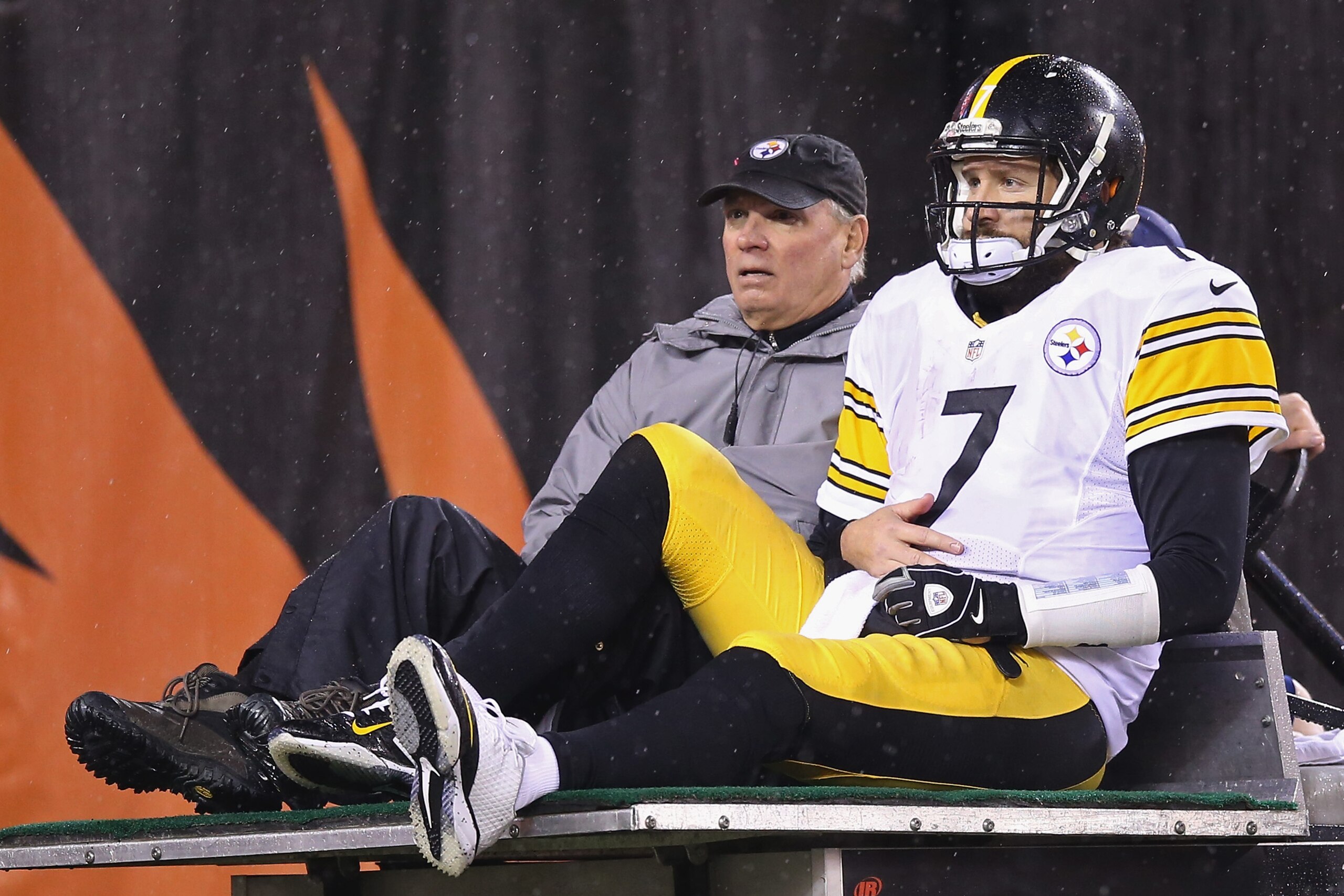
There are no injuries to any starting players that would ever be of service to the Steelers' bottom line of winning games. But there are players whose injuries would sting worse than others, most of whom lie on the offensive side of the ball.
Pittsburgh ranked 10th in points scored and seventh in overall yardage a season ago thanks to its big names on the offensive side of the ball, namely quarterback Ben Roethlisberger, running back Le'Veon Bell and receiver Antonio Brown.
Though there were times when two of the three were not on the field—Bell served a three-game suspension to open the year and Roethlisberger missed two games due to injuries—none spent an extended time away from the field. Should that change in 2017, the Steelers could find themselves in trouble.
A season ago, Bell averaged 105.7 rushing yards per game and 51.3 receiving, while Brown averaged 85.6 receiving yards. And Roethlisberger, with his size and overall toughness, is a world away talent-wise from either of his backups, Landry Jones and Josh Dobbs.
Any time any of these three are not on the field, it creates an opening for opposing defenses to get a rare advantage over what is otherwise an explosive and hard-to-manage Steelers offense.
Missing any one of the trio would force the Steelers into finding creative ways to get the ball moving. If Roethlisberger is out, then Bell and the run game will have to take the lead. Without Brown, Pittsburgh's other receivers, such as Martavis Bryant, JuJu Smith-Schuster and Eli Rogers, would need to pick up the slack. Without Bell, the team has to avoid one-dimensionality.
But should the Steelers be without two of the three in any one game—or more—that presents a problem. It's hard to imagine Pittsburgh having much sustained success if multiple offensive starters are missing time simultaneously.
Confusion in the Secondary
2 of 6
When the Steelers chose to move on from longtime defensive coordinator Dick LeBeau in 2015 and replaced him with linebackers coach Keith Butler, the secondary saw some of the most significant changes.
At the behest of head coach Mike Tomlin—a former defensive backs coach—the team began relying on Cover-2 zone coverage looks, and the results were, frankly, sort of a mess.
The best example of this was in last year's AFC Championship loss to the New England Patriots, who easily carved up Pittsburgh's zone coverage and took advantage of players such as cornerback William Gay, who were unable to adequately handle the few man-to-man assignments they were given. As a result, the Steelers have vowed to be more of a man-to-man defense this year in the secondary.
Steelers defensive backs coach Carnell Lake made that point clear after the team selected cornerback Cameron Sutton in the third round of this year's draft. Cornerback Senquez Golson also confirmed it in late May. Artie Burns, the Steelers' Round 1 draft pick from 2016, also said more man coverage is in the cards this year, noting "that's the way to win a Super Bowl" in today's NFL.
The question, though, is whether it will work. Declaring a scheme change and then stacking up players like Sutton, Burns, Golson and, via free agency, Coty Sensabaugh, who fit it are only the first two steps to doing so. The fact is, this summer will be spent installing these new defensive concepts in the secondary and it is up to the players to make it work.
The Steelers' zone philosophy worked in the sense that its bend-but-don't-break nature may have led to the defense ranking only 16th in passing yards allowed but an impressive fifth in passing touchdowns given up. The goal is for those yards to also decrease, keeping opposing offenses away from any sort of scoring position.
But just one cornerback or safety who cannot keep up with his assignment could mean more touchdowns allowed this year.
The Steelers need to be sure their players can handle what they are being asked to do. And they also must avoid panic—one bad game should not send them back to being a zone-first team in the secondary.
Scheme confusion is ultimately the worst outcome that could spring forth from any potential struggles in man-to-man coverage.
The Terrible Twos
3 of 6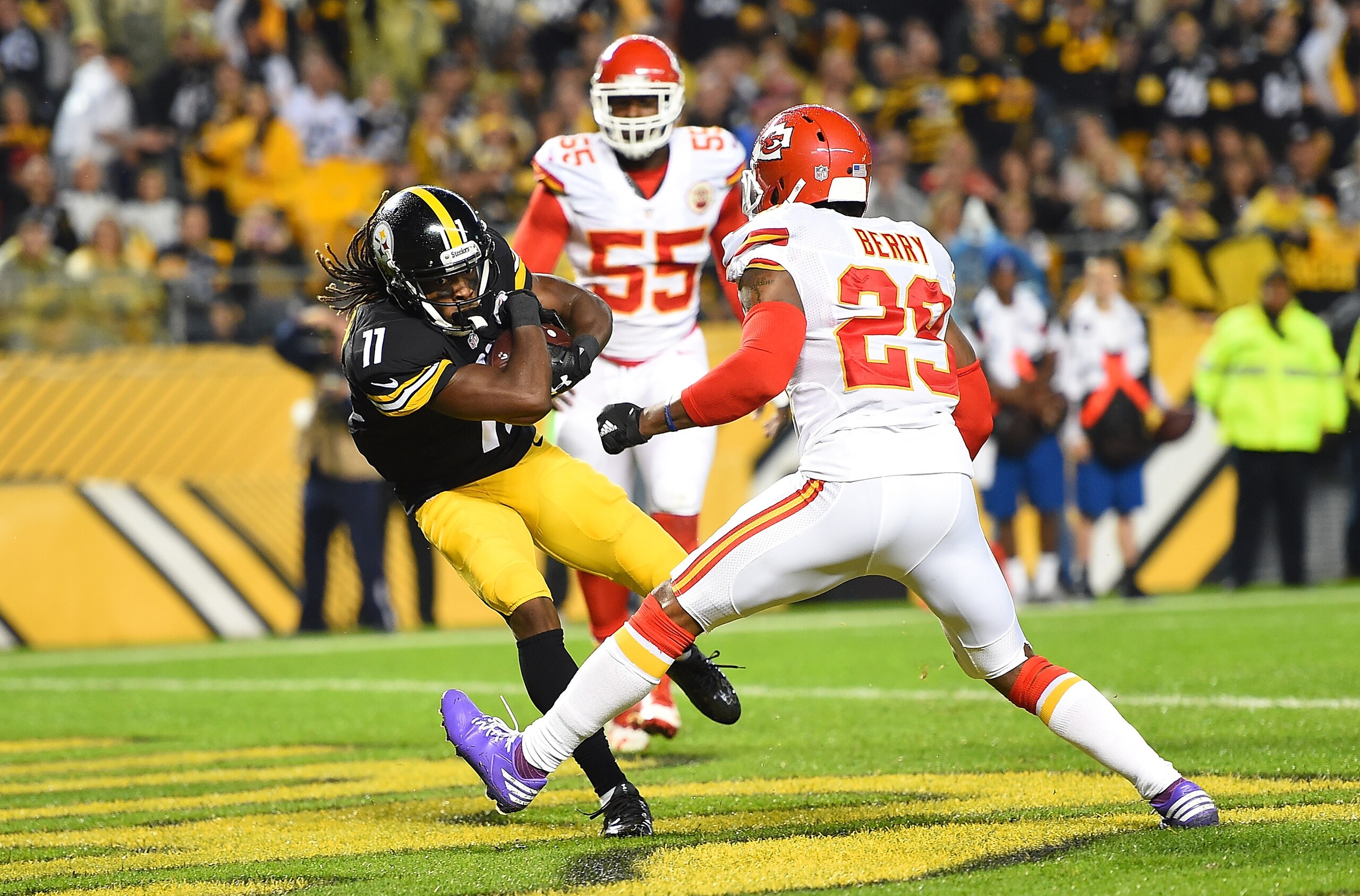
Since the NFL moved extra point attempts back to the 33-yard line in 2015, no team has opted to instead go for the two-point conversion more than the Steelers.
They have attempted the two-point try 20 times over the last two seasons, succeeding eight-of-11 times in 2015 and three-of-nine in 2016. This, despite kicker Chris Boswell going a perfect 36-of-36 in extra point attempts a year ago.
Most interestingly, the majority of the Steelers' two-point tries—13—have been in the first half of games. While this brings an element of surprise to the play and forces opponents to be ready for anything post-Pittsburgh touchdowns, there is also an inherent risk to them attempting these plays early in games. Namely, missing a two-point conversion early could put them in danger of losing close games in the fourth quarter.
Timing, therefore, is everything. Knowing when to go for two and when to kick the extra point instead is a delicate balance, one more informed by feel and instinct on head coach Mike Tomlin's part rather than anything the game itself is dictating.
Confidence cannot be overshadowed by the Steelers trying to get tricky and cute too early or too often. But being too conservative as an overcorrection may not be the wisest choice, either.
What is true, though, is that every point matters. If the Steelers have too many situations in which they go for two and fail when they could have tried for one and succeeded, it could mean the difference between wins and losses.

.jpg?w=2560 "Rams Raiders Football")
Offensive Line Regression
4 of 6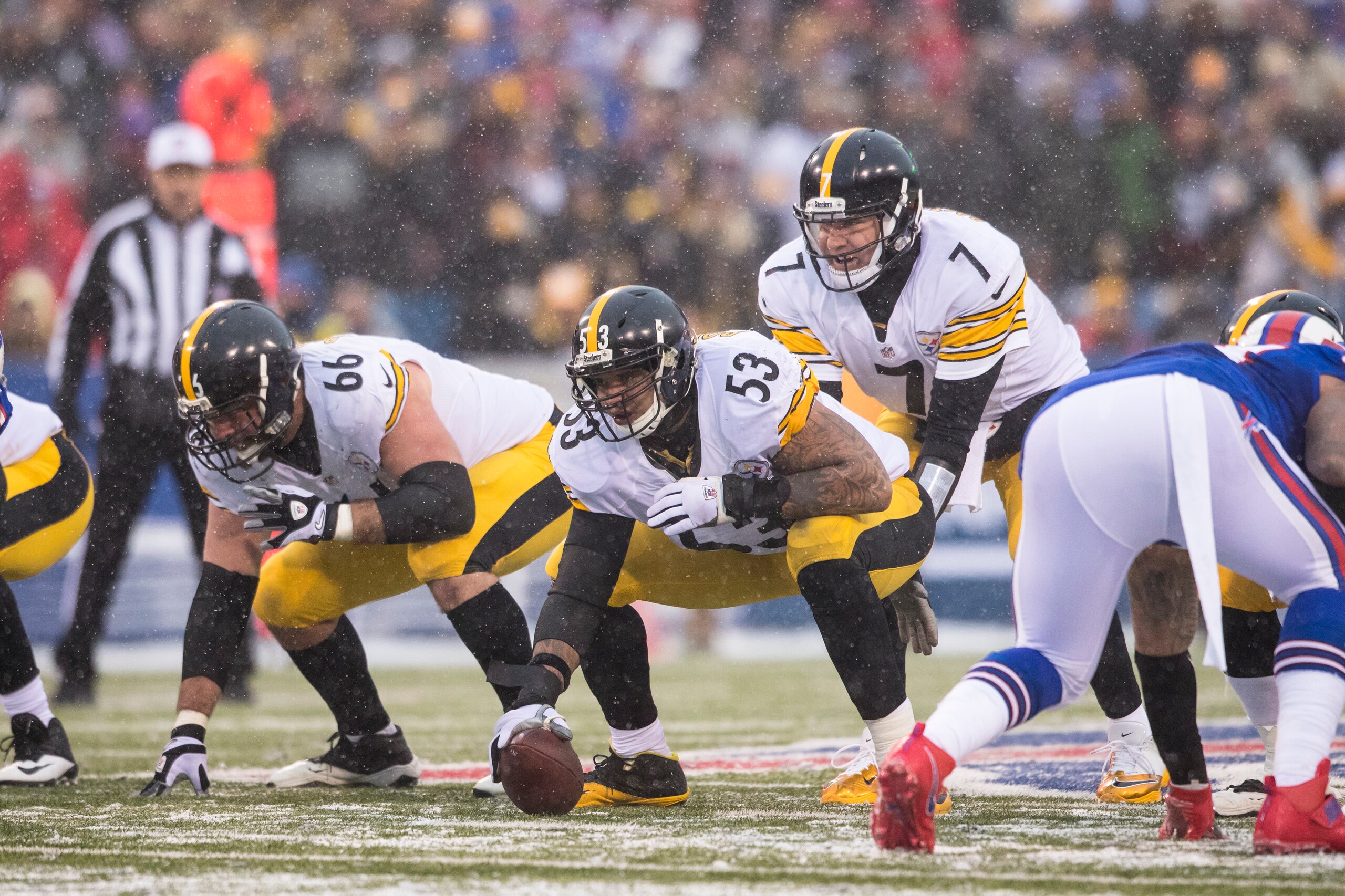
While players like Ben Roethlisberger, Le'Veon Bell and Antonio Brown get most of the credit when it comes to the impressive performance of the Steelers' offense, the real unsung hero is the team's offensive line.
The combination of tackles Marcus Gilbert and Alejandro Villanueva, guards Ramon Foster and David DeCastro and center Maurkice Pouncey combined forces to be, in Football Outsiders' estimation, the second-best run-blocking line and fourth-best pass-protecting line in the NFL a year ago.
Only 15 percent of the Steelers' rushing attempts were stuffed—stopped at or behind the line of scrimmage—while the team's quarterbacks were sacked just 21 times (17 for Roethlisberger and four for backup Landry Jones).
But injuries or regression could alter that picture significantly this year. The Steelers were fortunate to keep their starting offensive line on the field for the majority of the season; only Foster and Gilbert missed time (two games for the former and three for the latter). But any long-term losses could leave the team scrambling. And the same can be said if any of these starters do not, for whatever reason, perform as well as they did a season ago.
Bell's vision and patience mean nothing if the Steelers' line cannot hold up long enough for him to employ them. Roethlisberger's uncanny ability to connect with Brown doesn't matter if the quarterback cannot be kept upright long enough to get the ball out of his hands.
There's more to an effective offense than having big-name players at the skill positions. If Pittsburgh's line takes a hit for whatever reason this year, the Steelers could find themselves in trouble.
Prime-Time Problems
5 of 6
The first half of the Steelers' 2017 schedule is a relatively quiet, easily navigable affair. But, beginning Week 8, things get interesting. That week—a road game against the Detroit Lions—marks the team's first appearance in prime time on the season, but it's not their last.
They have four more to go, all of which are in a row: A Week 11 Thursday night game against the Tennessee Titans, a Week 12 Sunday night game against the Green Bay Packers, a Week 13 Monday night game at the Cincinnati Bengals and a Week 14 Sunday night home game against the Baltimore Ravens.
Further, Week 15 has the Steelers playing host to the New England Patriots, a game that, based on the NFL's flexible scheduling rules, could also be moved into prime time, bringing their total to potentially six in the regular season and five consecutively.
Not only are these games being played against some of the Steelers' toughest 2017 opponents, they are all taking place during the part of the year where playoff teams begin to separate themselves from the pack.
The Steelers will be under the national microscope and, based just on the structure of the schedule, the league believes Pittsburgh will be a major postseason contender.
There may be no team more on the radar than the Steelers in the second half of the season simply because no team will be exposed to the entire NFL audience more than them. Wins will seem more important, and losses will be that much more meaningful.
Since 2007, the Steelers have appeared in 47 prime-time regular-season games and have gone 31-16, so the big stage isn't one on which Pittsburgh tends to wilt. But this number of nighttime games crammed so close together is something they have no frame of reference to use in preparation.
What happens during this stretch will define the Steelers' 2017 season and likely determine whether they will reach the playoffs for the fourth straight year.
Wrong Roster Decisions
6 of 6
One factor that could determine the success or failure of the Steelers' efforts in 2017 comes into play before Week 1 even kicks off—how the roster looks once it is whittled down to 53 players.
While all teams have difficult decisions to make regarding who stays and who goes during the many rounds of roster cuts ahead, the Steelers have some particularly hard ones at certain positions.
Wide receiver and cornerback, particularly, are crowded with talent and finding the right combination of players to keep—and who to play where and when—will go a long way when it comes to the Steelers' ability to win games.
Even just figuring out who their kick and punt returners will be in 2017 could lead to a ripple effect that forces the Steelers to keep only five receivers on the roster instead of six or to cut a reserve offensive lineman who they may end up needing halfway through the season.
The Steelers are hoping to play Tetris with their roster—retaining and using the right pieces who fit together perfectly. But one wrong move could turn the team into human Jenga, where one piece is removed and the entire tower tumbles.
The Steelers are only as good as the players who take the field, and head coach Mike Tomlin, general manager Kevin Colbert and their staff must make the right decisions this summer about who those players will be.
.jpg?w=2560 "Steelers Saints Football")


.jpg?w=2560 "🚨 Week 8 AP Top 25 Poll")

