

Breaking Down Pittsburgh Steelers' Best, Worst Contracts
With the NFL's salary cap rising exponentially every year, it is becoming harder for teams to have numerous truly bad contracts on their financial books.
However, being close to the salary-cap limit does not necessarily mean a team lacks poorly structured or needlessly exorbitant salaries or contracts.
The Pittsburgh Steelers have done a good job of getting their spending under control and limiting the number of underperforming players being overpaid. But they still have a number of less-than-ideal contracts to go alongside those which have the greatest value to the team.
Here are the Steelers' best and worst contracts on the books for 2017.
Best: WR Antonio Brown
1 of 8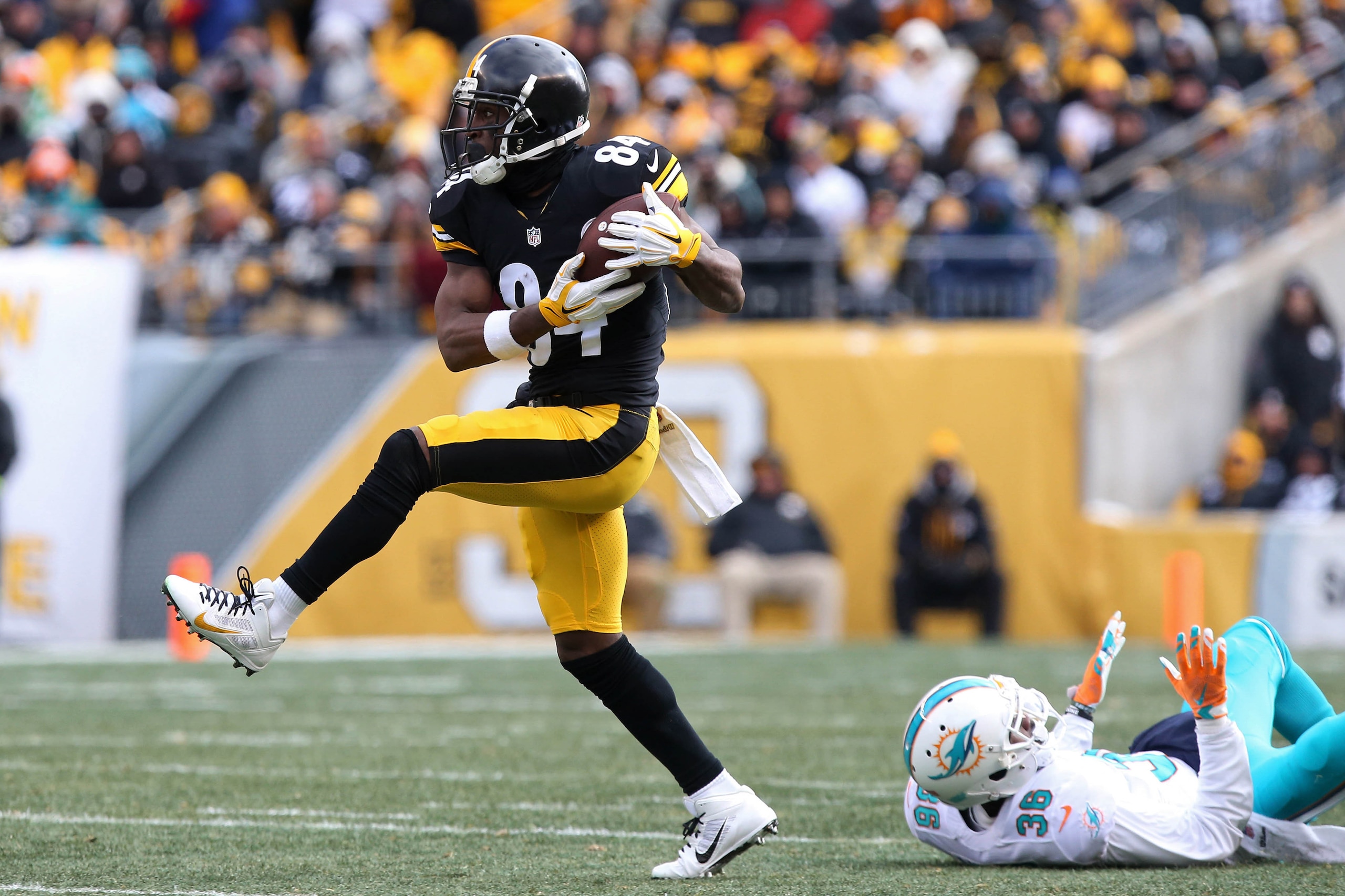
When the Steelers signed star wideout Antonio Brown to a contract extension in March, it was not surprising.
Brown had been promised such a deal prior to the start of the 2016 season when the Steelers, in good faith, restructured the remaining money on his previous contract to pay him over $11 million.
Then, in the spring, the pen hit paper: The Steelers gave Brown a four-year, $68 million deal with $19 million guaranteed. His $17 million per-year average thus became the highest in the league among wideouts.
Though this contract seems steep—Brown takes up the second-most cap space on the roster this year, behind quarterback Ben Roethlisberger—it is one that benefits the Steelers' bottom line as much as it does Brown's.
For one, the Steelers get to retain the services of the league's top receiver until 2022 if they so choose. But with only $19 million in full guarantees—all in the form of a prorated signing bonus—the Steelers aren't on the hook for as much in dead money should they choose to release him before the deal ends.
There are catches, to be sure: Brown will get a (guaranteed) $6 million roster bonus next year if on the roster on the fifth day of the league year, but that roster bonus dips to $2.5 million in 2019. And the Steelers can get out of the deal with a relatively manageable dead-money charge of $7.6 million in 2020 (versus a $15.1 million cap hit if he is on the roster).
With other top receivers around the league on contracts of comparable overall value, most of those players have full guarantees much larger than Brown's, making any attempt by teams at moving on an expensive one.
Brown's deal gives the receiver the money he's worth, while allowing the Steelers to hold on to the rights of one of the league's best at his position—and the ability to move on relatively painlessly if need be.
Worst: TE Ladarius Green
2 of 8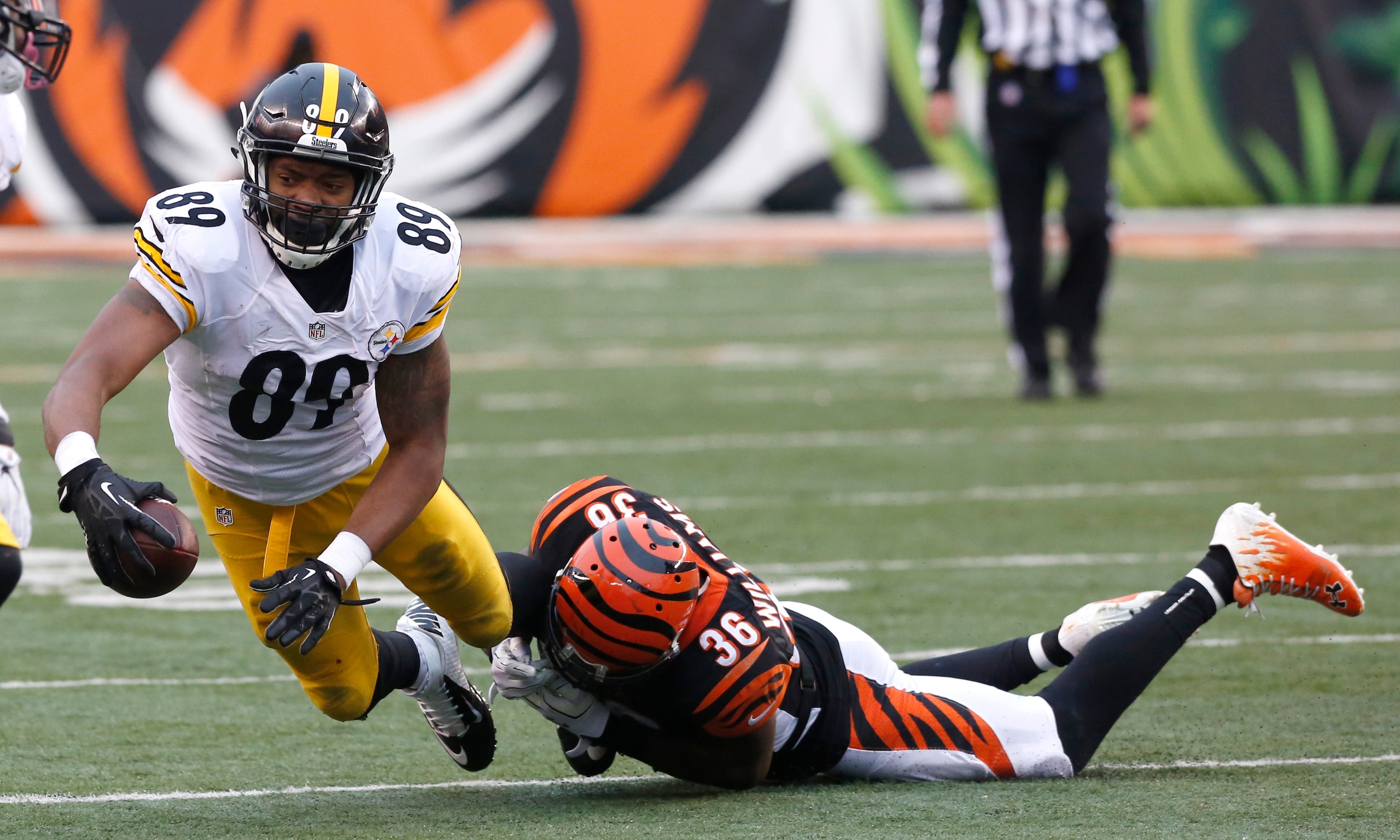
Tight end Ladarius Green is no longer on the Steelers' roster, having been released with a failed physical designation earlier in May, just over a year after Pittsburgh signed him as a free agent.
The problems with Green's contract—the effects of which the Steelers will feel in 2017—are myriad.
For one, the Steelers apparently didn't do enough research into Green's injury history, particularly the number of concussions he suffered in previous years and their current symptoms.
For another, the deal itself—four years, $20 million—indicated in Green a player the Steelers had planned on relying upon for years, something that should never happen with such a shallow look into his past ailments.
The good news is that the Steelers gave Green only $4.75 million in guaranteed money, all of which came in the form of a prorated signing bonus. The bad news, though, is that they were still on the hook for three years of that guaranteed bonus upon releasing him.
Green will now cost the Steelers $3,562,500 in dead money, accounting for over half of their current total dead-money charges of $6,361,221 for the year.
Ultimately, the Steelers have paid $6 million for Green—the $2,437,500 he earned last year plus the remaining dead-money guarantees—while the player appeared in just six games. And they will continue to pay for him in 2017 even though he is no longer with the team.
Best: G David DeCastro
3 of 8
It was somewhat of a coup that guard David DeCastro slipped all the way to the Steelers at No. 24 overall in the 2012 NFL draft.
And the pick certainly paid off—DeCastro was easily the best guard in the draft class and his athleticism has made him the perfect offensive lineman for the Steelers' run game as well as their passing offense led by quarterback Ben Roethlisberger.
For DeCastro's efforts, the Steelers picked up his fifth-year option for the 2015 season and gave him a new deal in 2016, a five-year, $50 million contract with $16 million in guarantees (again, in the form of a signing bonus).
Given what the Steelers have asked of DeCastro and his ability to do it, and at a high level, the second contract was a no-brainer.
DeCastro has appeared in 67 games, starting 66 of them while allowing just 9.5 sacks over the course of five seasons. And once his current deal expires in 2022, he will be only 32 years old and prime for a third contract with the Steelers, one that could allow him to play his entire career in Pittsburgh.
Guard may not be the flashiest position in the NFL nor the first one that comes to mind when thinking of big paydays that also reflect a player's value to his team, but DeCastro is one of the Steelers' most crucial players on offense and his deal perfectly encapsulates that fact.
.jpg?w=2560 "Chiefs Giants Football")
.jpg?w=2560 "Steelers Buccaneers Football")
.jpg?w=2560 "Titans Colts Football")
Worst: RB Le'Veon Bell
4 of 8
To be certain, the Steelers had no choice but to use the franchise tag on running back Le'Veon Bell this year in order to keep him on the roster for at least 2017.
However, the goal is to turn that into a long-term contract, and if that doesn't get done during the summer, 2018 could trigger a standoff between Bell and the Steelers.
Bell is currently set to make $12.12 million this year. Though Spotrac estimates that his next deal could average $10.6 million per year (on a five-year deal), it's entirely possible that he looks at the 2017 tag figure as the minimum per-year average he will accept moving forward.
This will be hard to argue against if Bell's 2017 season echoes or surpasses his 2016 performance, in which he was the first player to average 100 yards rushing and 50 yards receiving per game.
Things could also be further complicated if Bell suffers an injury this year. The player may not see the injury as a way to depress his future earnings, but the Steelers could. In that case, his demands may not be ones the Steelers are willing to meet.
But given Bell's productivity over the course of his career, that's a risk some other cash-flush team could pursue, thus leaving the Steelers with a gaping hole on offense that will not be easy—perhaps impossible—to fill.
Bell and the Steelers would both have been better served to come to a mutually agreeable contract situation in the 2017 offseason, rather than settle on the franchise tag.
Until this uncertainty is resolved, Bell's tag is one of Pittsburgh's worst current financial transactions.
Best: LB Vince Williams
5 of 8
Inside linebacker Vince Williams has been with the Steelers since 2013, when he was the team's sixth-round draft pick.
Though he has started only 17 of the 63 games he's appeared in, he has proved to be a reliable interior defender and special teamer, thus leading the Steelers to give him a three-year, $5.5 million contract extension in 2016.
In 2017, Williams will be a full-time starter alongside Ryan Shazier, as the Steelers chose to move on from longtime starting interior linebacker Lawrence Timmons in free agency.
But Williams' cap hit on the year will be just $2.5 million, with 27 inside linebackers set to cost their teams more money this season. That's the very definition of value, as far as NFL contracts are concerned.
Williams may not be among the league's most well-known inside linebackers, but he suits the Steelers' needs, has the ability to start and play well, and he does not command a bloated salary to do so.
Worst: S Mike Mitchell
6 of 8
When the Steelers added safety Mike Mitchell in free agency in 2014, they believed the hard-hitter would help improve a secondary that has seen many changes in recent years.
Mitchell, though, has not been as good as advertised; while talented enough to be a starter for Pittsburgh, his five-year, $25 million deal has proved to be one of the most bloated on the roster.
While Mitchell's deal had only $5.25 million in guarantees, his continued presence on the roster has come with attendant increases in his yearly salary-cap hit. In fact, in 2017, he has the fourth-highest cap hit among safeties, a number that more than doubled from 2016. This year, he will cost the Steelers $8,135,416, up from just over $4 million a season ago.
For a safety who was part of a defense that ranked a disappointing 25th in yards after the catch allowed last year, ranked 31st at his position, according to Pro Football Focus, and who routinely misses tackles, such a high cap hit is simply not warranted.
Mitchell has a similar cap hit for 2018 but will cost only $1.76 million to release; this could make 2017 his last with the Steelers.
Best: LB James Harrison
7 of 8
Since Steelers linebacker James Harrison briefly retired in 2014 before returning to the team he's spent most of his career with, Pittsburgh has been giving him a series of one- and two-year deals.
This has been a prudent move; Harrison was 36 years old when he unretired, and his age (and the possibility the retirement itch could strike again at any moment) means long-term contracts simply aren't a realistic option.
But Harrison has continued to reward the Steelers with inspired play. Thus, Pittsburgh gave him another new deal in the 2017 offseason, a two-year contract worth $3.5 million, with $500,000 in guaranteed money. In return, they get the services of Pro Football Focus' 11th-ranked edge defender in 2016, and a 39-year old player who has yet to appear ready to slow down.
Harrison ranked eighth among Steelers defenders in tackles last year and led the team with five sacks.
Though he may see some of his playing time decrease with the arrival of T.J. Watt in the draft, he will still be a key fixture of Pittsburgh's run defense and pass rush in 2017. He could feasibly stick around through the 2018 season, after which his current contract expires.
Teams will routinely pay two, three or four times as much for pass-rushers of Harrison's skill. The Steelers have one of the best outside linebackers in the league, but his cap hit ranks just 59th at the position. It's practically highway robbery.
Worst: DE Stephon Tuitt
8 of 8
The "worst" in this instance is not the current contract of Steelers defensive end Stephon Tuitt, but rather that the team and the player have yet to come to an agreement on a long-anticipated extension.
Currently, Tuitt is in the final year of his rookie deal and set to make $1,466,642 in 2017. But the goal is to make him simultaneously a more wealthy individual while the Steelers can retain a top-20 defensive lineman for years to come.
ESPN's Jeremy Fowler reported earlier in May that talks between the Steelers and Tuitt's camp are not yet underway, though he does note two caveats that have caused this: One, that the Steelers don't like to earnestly discuss extensions until closer to training camp and two, that the Steelers would like to get a long-term deal done with running back Le'Veon Bell before the July 15 deadline and then turn their attention to Tuitt.
Spotrac projects that Tuitt's next deal could be somewhere in the five-year, $90-plus million range, with an average of $15 million per year. That would make him rank in the top five when it comes to contract value at his position and would likely account for much of the Steelers' remaining salary-cap space in 2017.
But the alternative is not ideal; letting Tuitt reach free agency in a year's time will only drive his market value higher. The Steelers need to get his pen to paper this summer to maximize their remaining leverage.
.jpg?w=2560 "Steelers Saints Football")
.jpg?w=2560 "Eagles Jaguars Football")
.jpg?w=2560 "🚨 Week 8 AP Top 25 Poll")


.jpg?w=2560 "Updates from EVERY Game")