

Football in the Holy Land: The Green Line
Bleacher Report's James Montague travelled to Israel, the West Bank and Gaza to explore football's power to unite and understand the politics at play for those in love with the beautiful game there.
Part Two
GIVAT ZE'EV, Israeli settlement, West Bank — Only a few dozen of the town's 15,000 residents go to watch their local team, Beitar Givat Ze'ev Shevi FC. Those who do are pressed against tall wire fences erected around the pitch, not to keep fans at bay, but to prevent balls from disappearing down the steep hillside upon which it has been built.
TOP NEWS
Live Highlights and Viral Moments 🍿

Final Men's Ballon d'Or Rankings 📊

Carrick Replacement Options 📝
Their team is in the fourth tier of Israeli football. Its stadium is little more than a pitch cut into rock, with light sand-coloured blocks rising on two sides, surrounded by housing estates. Next door, a group of 14-year-olds are changing after finishing practice. Behind them hang posters of Paul Pogba and Lionel Messi. On one wall is a picture of a young David Beckham, in an England shirt with dyed blonde hair, taken before they were born.
Across the road, a path leads up to another cluster of temporary buildings. Gabi Perez can be found inside the largest, sitting behind a desk surrounded by pendants, cups and pictures of teams from the ages.
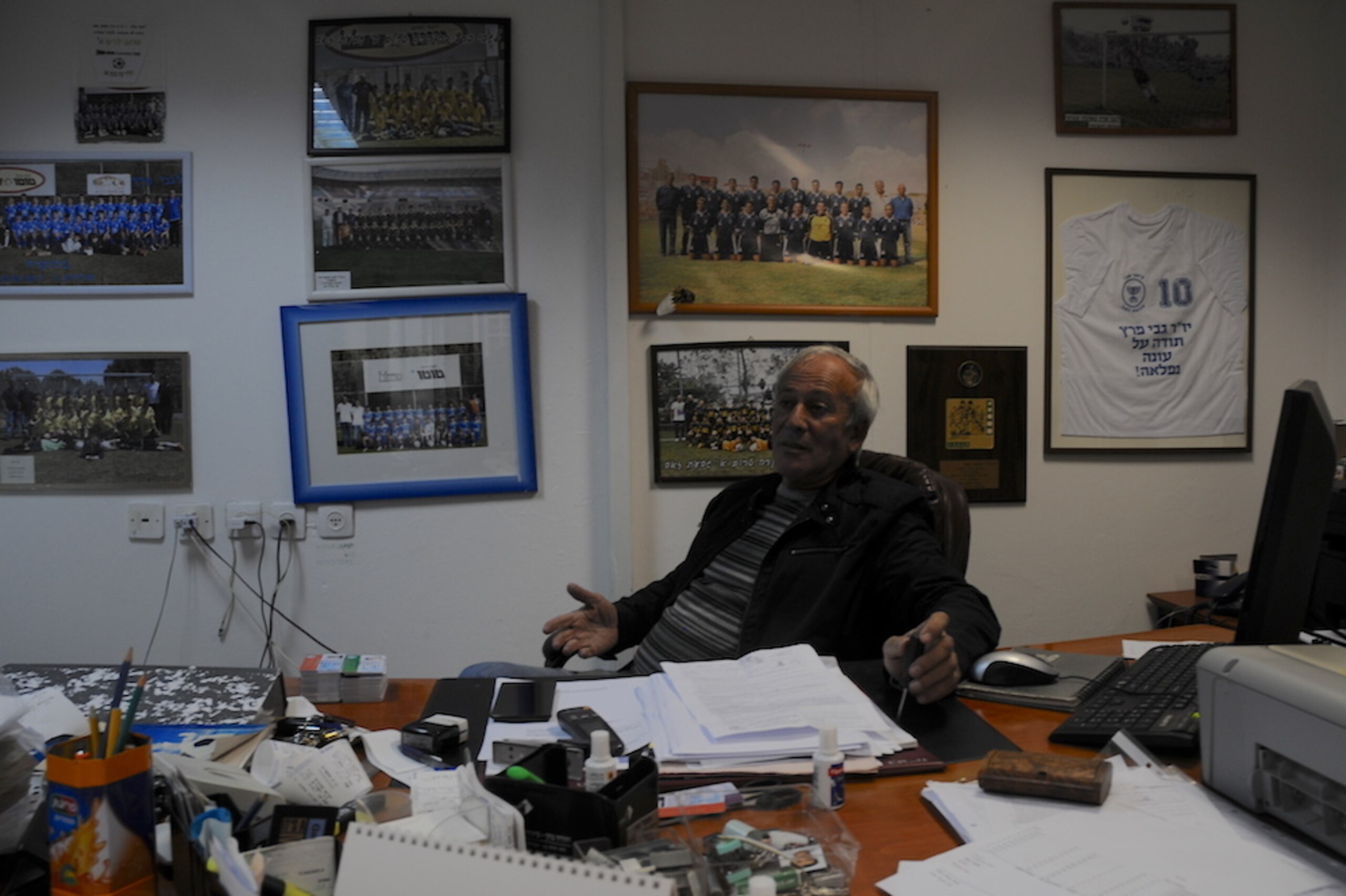
"We don't get many people come for the games, that is true, but we get big crowds when the kids play," says Perez, a big man with tanned skin and silver hair. "We have six teams, around 130 kids."
Beitar Givat Ze'ev might be a minor team in the lowest reaches of European football, but the club has found itself at the centre of a political battle between FIFA, the Israeli and Palestinian football federations, their respective governments and even international human rights organisations.
Givat Ze'ev is six kilometres south-west from the centre of Ramallah, the effective administrative capital of the Palestinian Authority. It is a so-called "settlement town" built in the West Bank behind the Green Line, drawn in 1949 to define Israel's border shortly after its War of Independence was won.
Under international law, Israel remains in custodial occupation of the Palestinian people who live there and is prevented from moving its citizens into the territory beyond the Green Line. But since 1967, Israeli settlements have spread throughout the West Bank, an area that Palestinians and many Israelis believe is rightfully theirs. Givat Ze'ev is one of the most controversial, built on land seized by the Israeli army in 1977.

Perez moved to Givat Ze'ev 34 years ago. "I want to make a political correction," he says. "Givat Ze'ev is not a settlement. It is a town built in 1981. Everyone was invited to buy ground. I came here in 1984 with a little money, bought my share. I don't see it as a settlement at all. It is my home."
For the Palestinians, settlement-building is perhaps the key issue that prevents a peace deal between the two sides. In December last year, the UN Security Council adopted Resolution 2334, which "reaffirms that the establishment by Israel of settlements in the Palestinian territory occupied since 1967, including East Jerusalem, has no legal validity and constitutes a flagrant violation under international law."
Perez was unperturbed. He set up this football club in 1991, he says, to give the kids something to do other than hang around and make trouble.
For most of its existence, Givat Ze'ev FC has bumped along the bottom of Israeli football, winning promotion to where it sits today. The only change he has noticed is that the crowds have become smaller. Givat Ze'ev has become more religious over the years, he says, and matches are played during Shabbat, the Jewish day of rest, meaning observant Jews will not attend.
The Palestinian Football Association, recognised by FIFA since 1998, believes clubs such as Beitar Givat Ze'ev FC are built on stolen land and contravene FIFA laws.
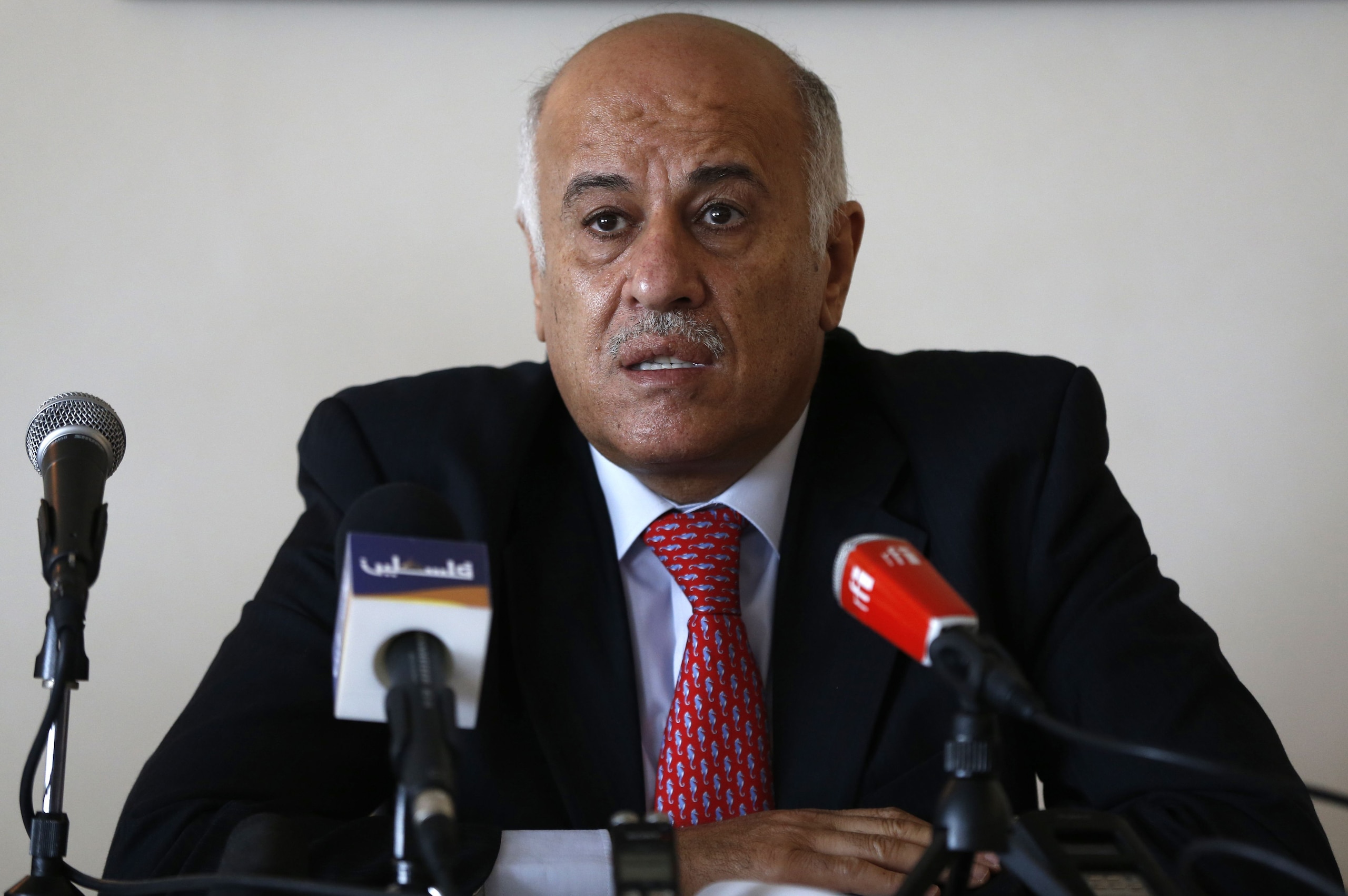
PFA president Jibril Rajoub moved to have any Israel clubs playing beyond the Green Line banned. If they resisted, he said, the Israel Football Association should be suspended from FIFA.

In a statement to Bleacher Report, an Israeli government spokesperson lambasted the PFA's actions over Israel's settlement clubs: "The Palestinian leadership acts incessantly to promote decisions and actions that aim to isolate and condemn Israel. Their objective is to transfer the issue of the Israeli-Palestinian conflict to the international arena, hoping thereby to impose upon Israel various parameters of a diplomatic resolution and avoid direct negotiations without preconditions."
Rajoub was once Yasser Arafat's West Bank security advisor. He is a formidable political figure who was jailed for 17 years as a youngster for throwing a grenade at Israeli troops.
Rajoub is considered one of the top candidates to lead the Palestinian Authority once the current president, Mahmoud Abbas, who is 82, steps down. But for now, he has been busy battling Israel in the sports courts, seeking justice on anything from the perennial problem of Israeli movement restrictions on Palestinian sportsmen and women to the issue of settlement clubs.
Last year, Human Rights Watch released a report on the six settlement clubs that currently play in the Israeli league system. It concluded Givat Ze'ev's stadium was built on private land taken from a Palestinian family. FIFA, unwilling to get involved, eventually appointed Tokyo Sexwale to head a committee looking into the issue. His report has been delayed on numerous occasions, but a final decision is expected on Thursday.
Perez was visited by FIFA officials last year and he didn't hold back.
"I said, 'Why are you stopping people from playing football here in Givet Ze'ev? People live here. We have schools. You want to abandon football from Givet Ze'ev?' Why not abandon literature lessons. Why not abandon TV at home? Abandoning football from a certain place is like abandoning a basic right from any human being."
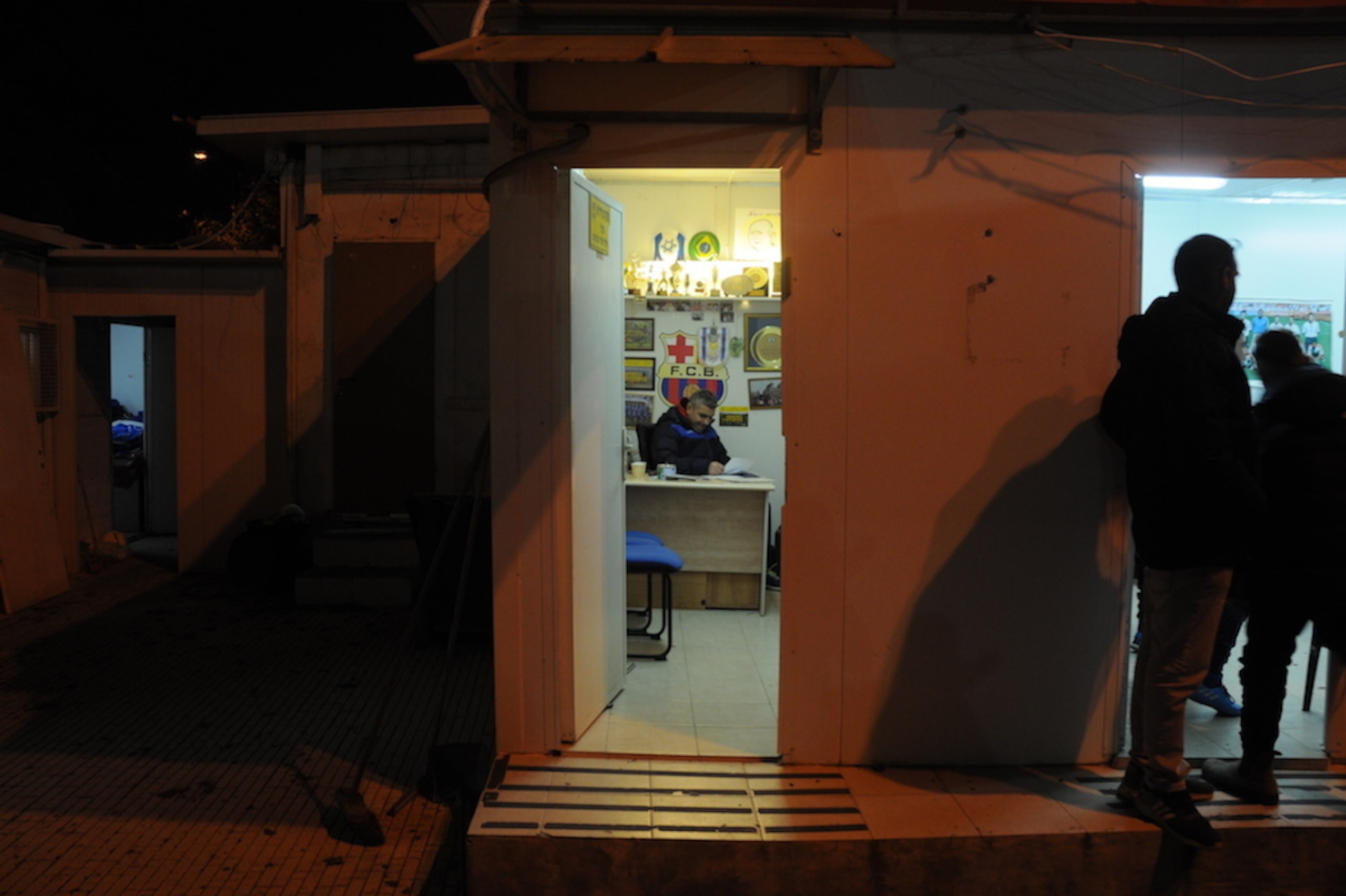
Perez can't understand the settlement-club issue. He has Arab friends, he says. Arab teams play there regularly. His general secretary is an Arab.
"Imagine there is a thief who wants to rob a bank," he says. "He's not able to rob the bank. It's a bank! So instead of robbing the bank, he goes to a homeless man and robs their small box with coins. The small box with coins, that is this football field."
If it weren't for the imminent threat of closure, Beitar Givat Ze'ev would consider this a fine season so far. They are in third place in the league and have a real shot in the promotion play-off. Perez lifts his large frame out of his seat and escorts me out. There is a match this weekend he has to prepare for against a team made up mainly of Bedouins from the south, another group who frequently cite prejudice and exclusion from Israeli society.
"In lower league football, we have a brotherhood of small teams," he says. "I know exactly what the sensitivities are of those who live in Bedouin villages. I am an outsider too."
Perez says he would have no problem inviting Palestinian children to play at the club, although one of the main issues is that they are currently barred from visiting. If FIFA bans the club, he will just change the name, or think of another way around it.
"I have a question for Rajoub," he says before I leave. "Let's say you succeed and there will be no football in the Givat Ze'ev. Then what?"
It is a short walk through Givat Ze'ev's small central parade of shops. They are open, with a group of Orthodox children excitedly accosting strangers as they pass with a box of cakes. One passes me a small strip of paper with writing in Hebrew. It reads:
"The Biggest Gift You'll Ever Give is 'Giving'
Operation Sweetheart—Gilad's Kitchen—in memory of Gilad Sha'ar RIP
Love, Givat Ze'ev Bnei Akiva Branch."
The children are members of Bnei Akiva, a group of ultra-religious scouts, and are giving away free cakes in memory of Gilad Sha'ar, one of three Israeli teenage West Bank settlers kidnapped while hitchhiking and murdered in 2014 by members of Hamas, the radical Islamist group that controls the Gaza Strip.
Their deaths sparked an Israeli bombing campaign in Gaza and retaliatory murders in the West Bank against Palestinians. Today would have been Sha'ar's birthday.
A smiling young boy with ringlets cheerfully hands me a cupcake paper, filled with cornflakes smothered in sticky chocolate, before running off to hand out more.
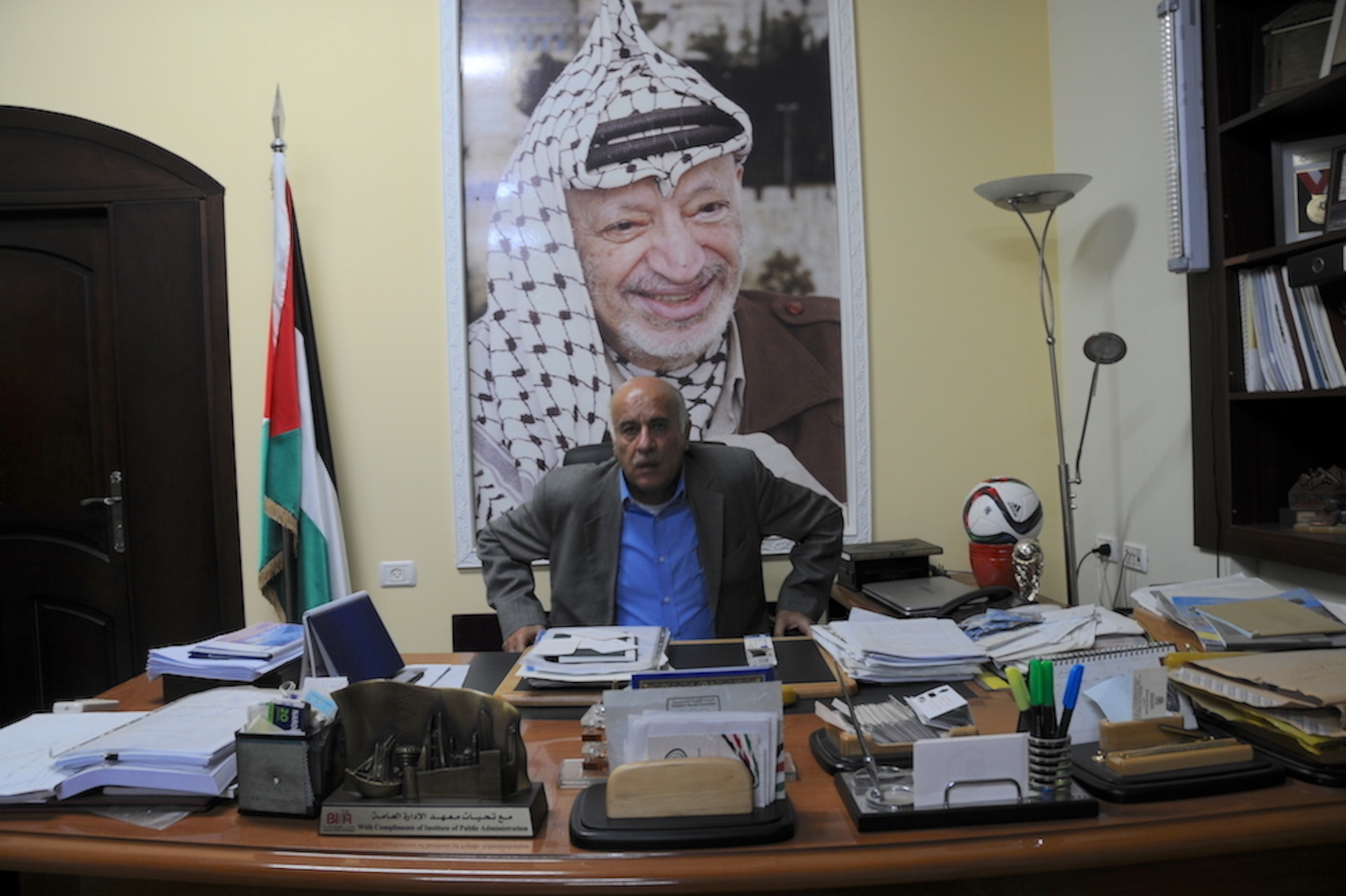
RAMALLAH, West Bank — Jibril Rajoub sits at his desk with a portrait of Yasser Arafat behind him, next to a Palestinian flag and a small silver replica of the World Cup trophy by his side.
It is the end of the day, and the president of the Palestine Football Association is answering a stream of phone calls from his office in an upmarket area of Ramallah in the West Bank.
"I think football is developing in Palestine and you can feel that everywhere," he says as we sit down, talking in a deep growl. "We have still a lot of restrictions by this racist, fascist occupation. But otherwise, everything is going OK. Now we have a very strong league, national teams of men and women and now about 500 coaches, at all levels, including two or three females."
In 1998, one of Sepp Blatter's first moves after becoming president of FIFA was to approve Palestine's membership. For decades, the Palestinians had fought an unsuccessful battle for official recognition as a state. FIFA's membership gave the Palestinians a national football team before it had a nation.
When I first visited the West Bank in 2006, there was no league. Matches were impossible to plan thanks to a network of heavily restrictive Israeli army checkpoints. Now, there is a thriving professional league with the top wages comparable to the Israeli league. There's a national stadium and the men's team qualified for the 2015 Asian Cup.
Rajoub can take a large part of the credit. Today, he channels his ambitions for change through sport and in particular, football. FIFA offers one of the few forms of international redress against what Rajoub sees as Israel's "bully-of-the-neighbourhood behaviour."
Players are regularly arrested or prevented from leaving to play matches abroad, including national-team players and especially players from the Gaza Strip.
Stadiums have been destroyed in Israeli bombing raids, rebuilt with FIFA money and then bombed again. (The Israeli government claim that the fields had been used to fire rockets at civilian populations in Israel. One former Israeli soldier I spoke to, who was inside Gaza during Operation Cast Lead in 2009, said the Yarmouk Stadium in Gaza City became known as "the hot spot" for the number of rockets fired off its roof. Hamas, who run Gaza, and the PFA, deny that.)
But the issue that is preoccupying Rajoub today is that of Israel's settlement clubs, such as Beitar Givat Ze'ev FC. "It is a violation of [UN] Security Council resolutions," he says, exasperated. "Confiscating Palestinian territories and building a stadium is a violation of human rights and a violation of FIFA statutes."
Though the residents of Givat Ze'ev see themselves as innocent bystanders, the Palestinians and much of the international community disagree. Givat Ze'ev is a few kilometres away from Rajoub's office, but the journey to Ramallah crosses into a different world.
First, you must pass through the Kalandia checkpoint, and through the separation barrier, before entering into the West Bank. Grey concrete watchtowers surround you as you enter the compound: a metal and concrete room with a single revolving door.
Dozens of elderly Palestinians—the women's heads covered in black, the men wearing traditional Keffiyeh scarves—push and jostle to get through the single exit as a room of teenage Israeli soldiers joke and laugh with each other on the side of the observation glass.
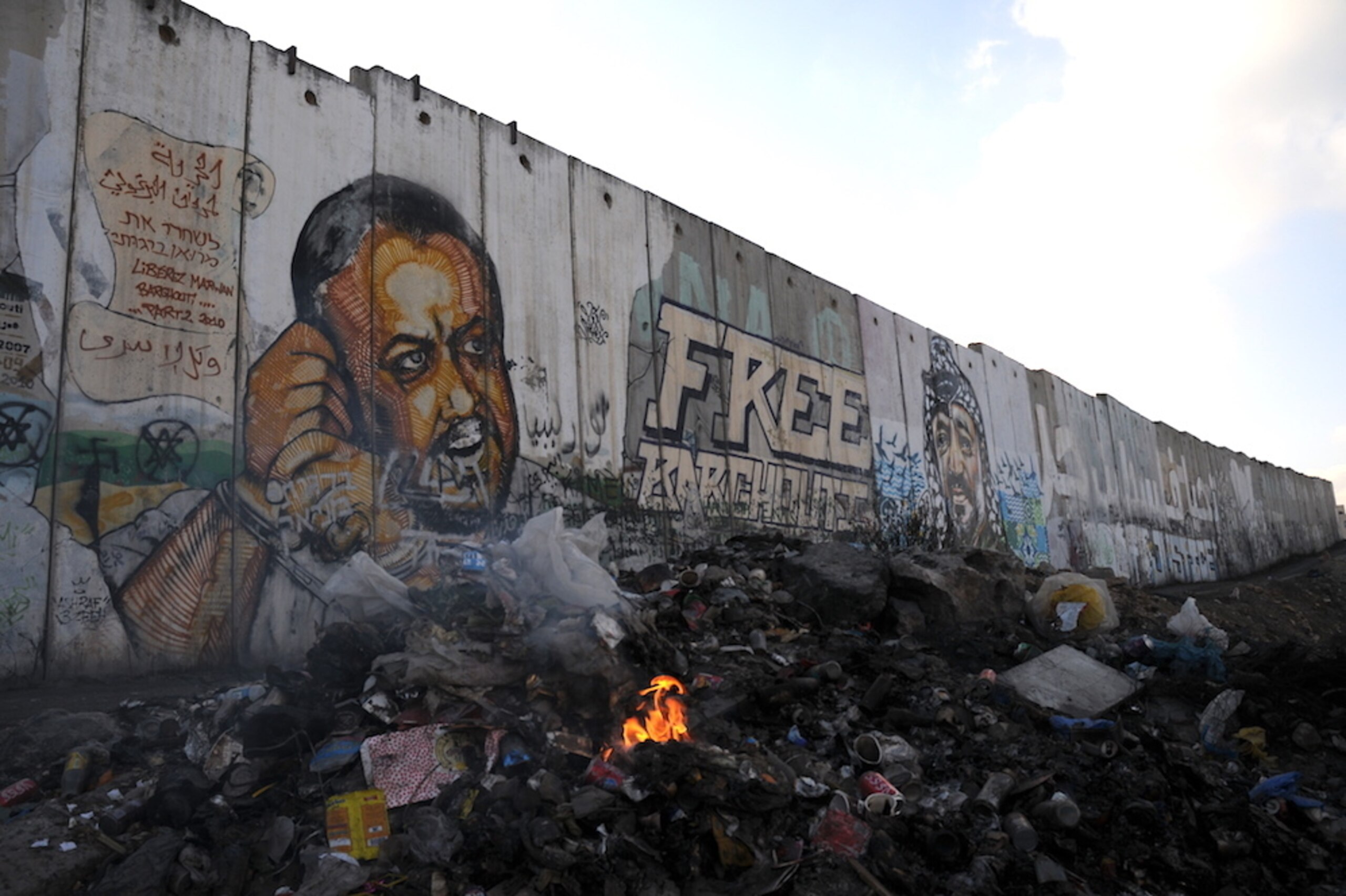
These are the lucky ones. The vast majority of Palestinians cannot pass through here. On the Palestinian side, the wall is covered in revolutionary graffiti denouncing Israel. Piles of trash burn on the wasteland. The contrast between the neat lines of houses, good roads and plentiful electricity of Givat Ze'ev is stark.
What about the children who play football in Givat Ze'ev, I ask.
"What about our kids?" Rajoub quickly replies. "Givat Ze'ev is five minutes from West Jerusalem. I recognise Israel within its '67 border. They can play, I wish them good within those border. I have my own kids who are denied this right. More than one time Israeli troops have stormed our stadiums with tear gas and we've never heard criticism from the other side."
The answer, for Rajoub at least, is for Israel to move the clubs behind the 1967 line. This would be a huge diplomatic coup for Rajoub and the Palestinian government.
"We are facing a fascist, expansionist, racist, imperialist, colonialist government with a strategy on the ground of gradual creeping annexation of the Palestinian territory day and night," he says. "We will not give up and we will never give up. "
For an hour, Rajoub talks about the daily privations that Palestinians in the West Bank and Gaza have to endure. Sport, and in particular football, has given him a chance to try to redress what he sees as an imbalance. "We are confronting daily Israeli restrictions," he says.
I thought of Perez, the owner of Beitar Givat Ze'ev Shevi FC who wanted to ask Rajoub about what would happen next if he won.
"Sport, football, is a good tool to expose the suffering of our people," Rajoub says. "To expose the suffering of our players. But also, it is a tool to send a message that we deserve independence on the field."
Yet even in the West Bank, conditions are far better than in the Gaza Strip, where a parallel league takes place under an Israeli and Egyptian blockade. At the end of the season, the champions of the West Bank and Gaza play each other home and away in a play-off, but there are always problems moving one team to play the other.
With our interview finished, Rajoub returns to answering his phone calls, and I return to Israel in the darkness, past the piles of smouldering rubbish and back through the separation barrier, and towards Gaza.
James Montague is a contributing feature writer for Bleacher Report. Follow him on Twitter @JamesPiotr.
.jpg?w=2560 "Chiefs Giants Football")

.jpg?w=2560 "Baker Gets Glove From Rays 🧤")
.jpg?w=2560 "5 Teams Eyeing Jonathan Taylor")
.jpg?w=2560 "🚨 Week 8 AP Top 25 Poll")

.jpg?w=2560 "NFL investigating Eagles")
.jpg?w=2560 "Steelers Roll Saints in Paris")
