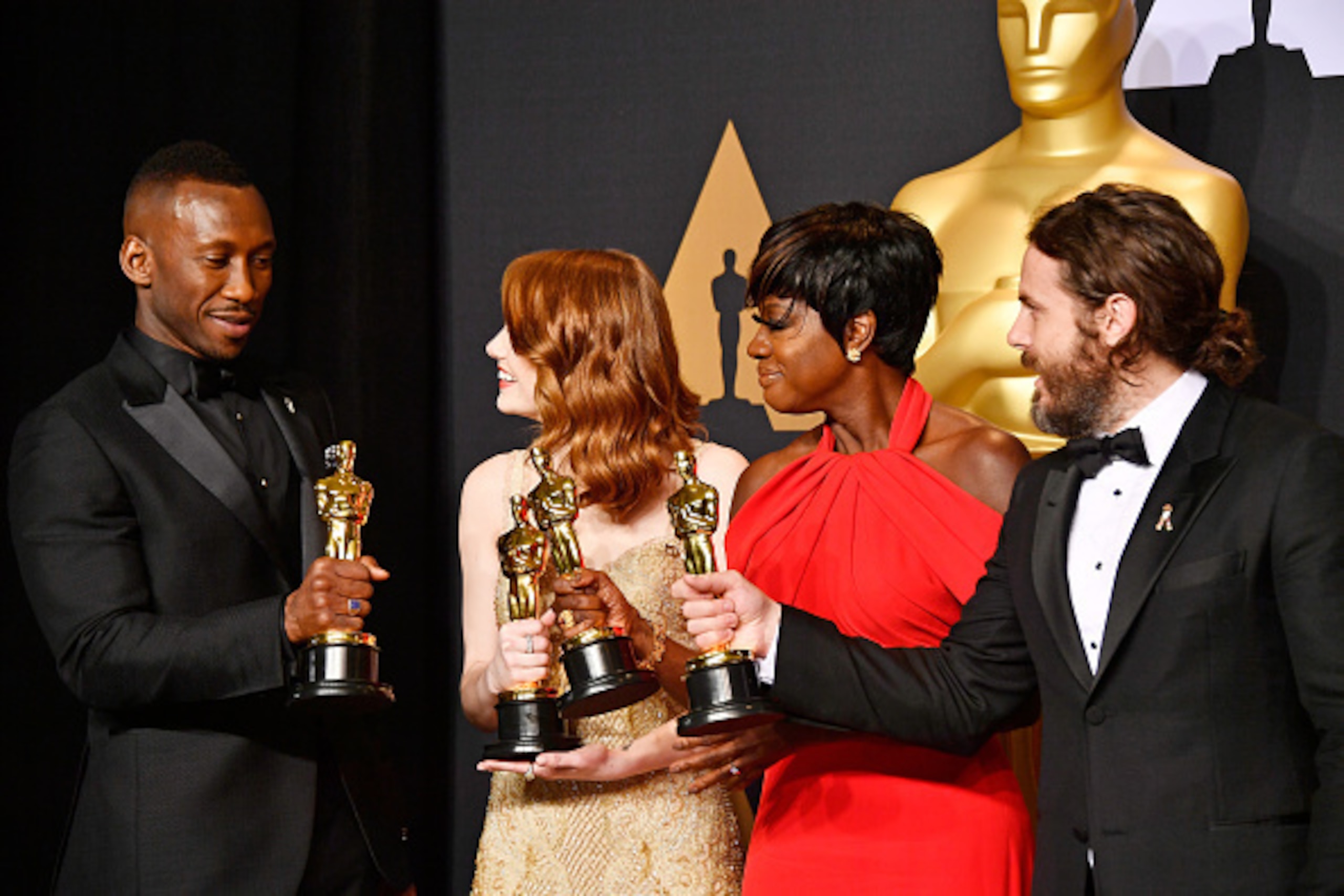
How Mahershala Ali of 'Moonlight' Found His True Passion After D-I Basketball
At halftime of Saturday's game against Santa Clara, nine former Saint Mary's players strode onto the court at McKeon Pavilion with their families and received a standing ovation from the sold-out crowd.
The 1997 Gaels had gathered back on campus to celebrate the 20th anniversary of their team, which had been just the third in school history to reach the Big Dance. That day, as they got reacquainted and reminisced, so many of their conversations centered on a player who had graduated in 1996 and never got a taste of the NCAA tournament. They had each followed his career after college with fascination.
TOP NEWS
.png?w=2560 "CFB Top 25")
B/R CFB Top 25 After Week 7 🔢

Multiple controversial finishes and more takeaways from CFB Week 7
Brooks Shades KD on IG 🍿
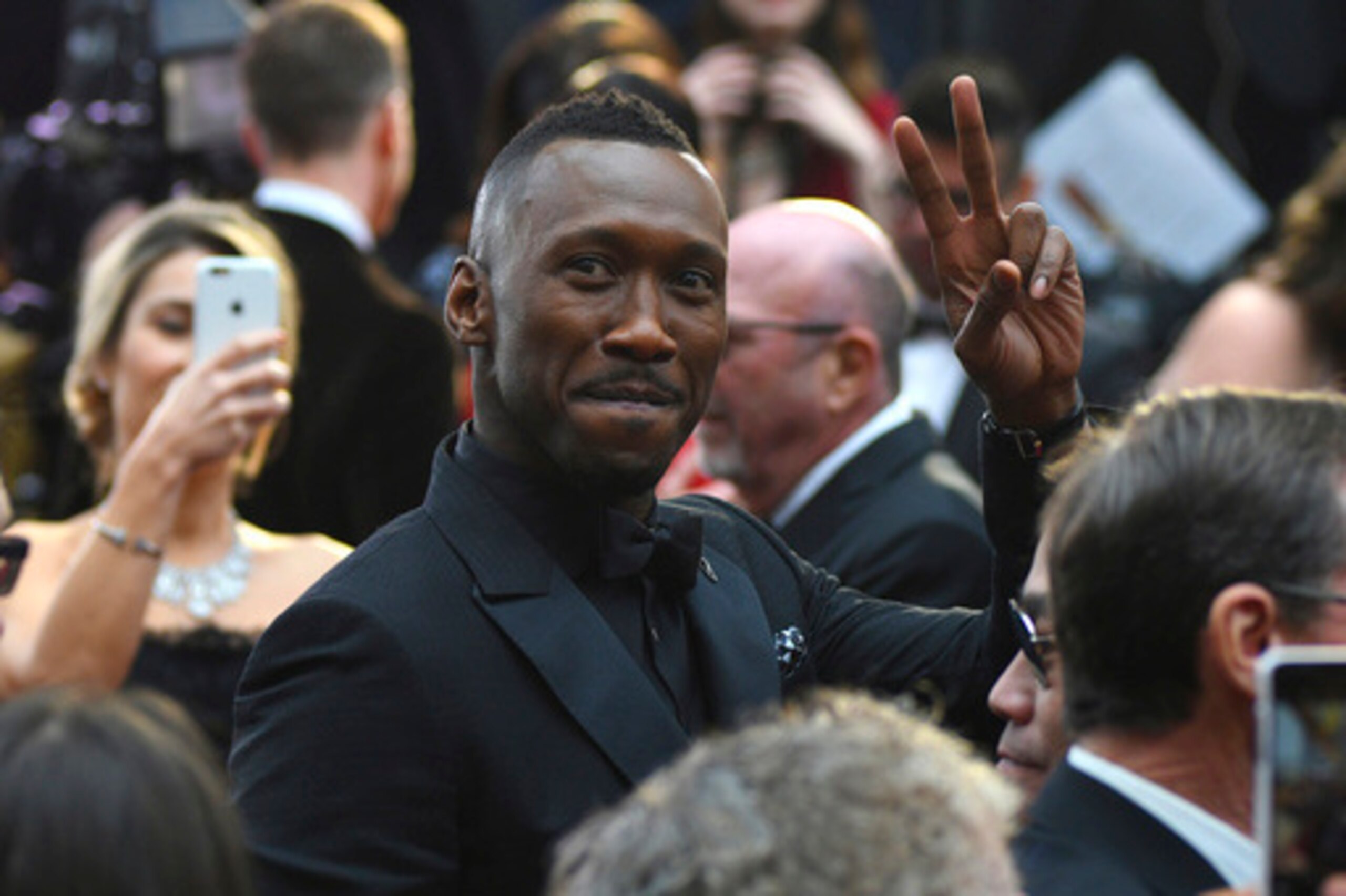
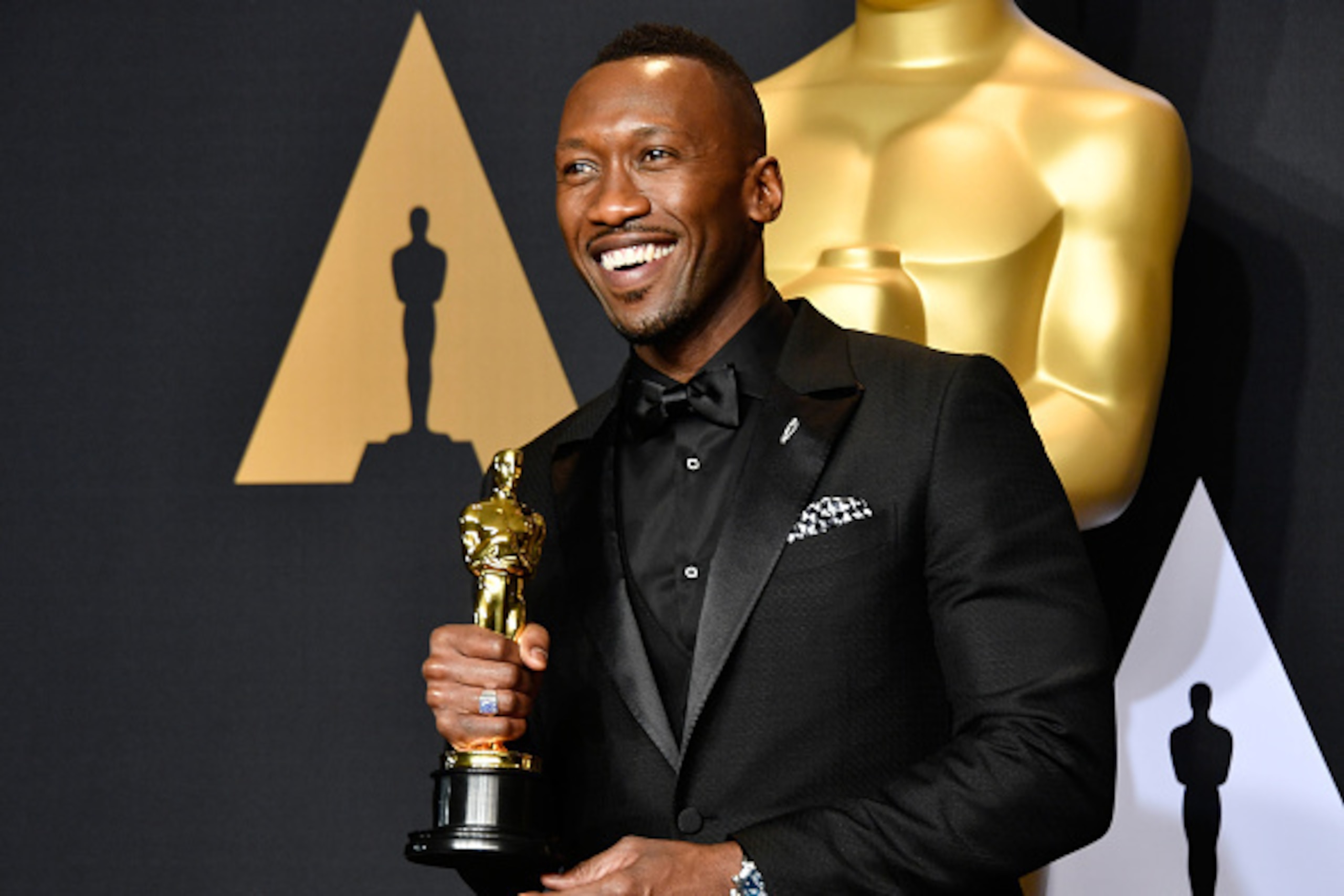
They had watched him become a detective, a bodyguard, a political lobbyist and a drug dealer. They'd even seen him die a few times. And on Sunday, they were hoping to witness their former teammate, Mahershala Ali, become an Academy Award winner. But for them, it has always been hard to think of him as anyone other than Hershal Gilmore, an unforgettable athlete, an unapologetic prankster and an uncommon friend.
Before ever winning an Oscar for Best Supporting Actor, Ali's path to the big screen began with a decision he made about basketball as a senior at Mount Eden High School in Hayward, California, about 30 miles southeast of San Francisco. He had attracted several Division I scholarship offers, and although he felt the most kinship with a UC San Diego assistant coach named Randy Bennett, he ultimately committed to Saint Mary's and head coach Ernie Kent. That decision would shape his professional future in a way that few college commitments ever do.
"I'm actually glad [Bennett] wasn't at Saint Mary's when I was there," Ali wrote on the Saint Mary's website in 2011, "because I probably would have had a great experience as a player and never discovered acting."
Instead, his playing career was marked more by valleys than peaks. He averaged 1.4 points a game as a freshman, 2.2 as a sophomore and 3.1 as a junior. During those three seasons, his main distraction wasn't his creative pursuits, but the failing health and ultimate death of his father, Phillip Gilmore. After his freshman season, Ali spent much of the summer with his father in New York rather than participating in the team's offseason regimen on campus. And after his father's death in the summer between his sophomore and junior years, his ambitions were consumed by his grief.
"I had mentally checked out," he wrote. "I didn't really care, and didn't feel like caring."
"He did the right thing when he went home," said A.J. Rollins, who was in the same recruiting class as Ali and was one of his closest friends. "He knew that you don't get an infinite amount of time with your loved ones, and he chose to be with his dad during the last years of his life.
"Coach Kent was a very methodical type of man. He had an offseason regimen, and Mahershala missed it. To Ernie's credit and detriment, he went with another guy as a starter. Coach Kent should have taken a step toward Ali, rather than Ali always having to take steps toward him."
Kent, who is now the head coach of Washington State, says that some players just develop more slowly in the big transition from high school to college hoops.
"I think his most difficult battle was that he just didn't get to play as much," Kent said. "But life doesn't stop when basketball does. He did what all young men playing college basketball should do—he took advantage of the platform, and I'm happy he did it."
But despite his personal disappointments, Ali was still one of the team's leaders—and top entertainers. He became the primary handler for recruits on their official visits, shepherding them around San Francisco's main tourist sites and guiding them through the Gaels' facilities. He helped to secure the commitments of many of the players who went on to star for the 1997 team.
And he seemed to be at the center of most of the team's funniest stories. Like the time he saw teammate Ali Peek attacking an ice cream cone on a road trip his freshman season. Mahershala asked Peek sarcastically if he was enjoying the cone—it was quite clear Peek was—and Peek took the bait by offering another emphatic lick. When he did, Mahershala slammed the cone in his face and sprinted away as Peek gave chase. Mahershala made it safely back to his dorm, only to watch in horror as Peek knocked the door off its hinges, forcing him to flee out of his first-floor window.
After his junior year, Ali was one of the stars of Saint Mary's trip to the Jones Cup in Taiwan in 1995, where the Gaels competed against several national teams. But for the teammates who were there to witness it, the most memorable moment didn't come from a visit to any monument or even winning gold; it happened in the hotel pool. For reasons that are still unclear to the former players, etiquette at this pool required men to wear speedos rather than long shorts. Although they thought it was strange, most players decided not to put up a fight and made a joke out of swimming in their jock straps.
Near the middle of the trip, though, Ali decided he'd had enough and jumped into the pool in his standard swim trunks. When the lifeguard began yelling at him to take the shorts off, he complied. He took off his only item of clothing, threw it at the guard and began doing backflips in the water buck-naked.
"We had another guy on the team, Reggie White, who is now a stand-up comedian," said Rollins, "and between the two of them, you could count on being entertained around the clock."
Ali was also quick to show off his more sensitive and creative sides. When he started writing poetry and rap lyrics, he'd perform them for the team. And he was always ready to arrive early at practice or stay late if a younger player needed tutoring.
"He was such an unselfish person, and that made him such a good friend, and I think it's part of the reason he's a great actor," said Josh Unruh, another one of his closest friends from the team. "I was a white kid from Salem, Oregon, and he was an African-American from Oakland, but he had a way of erasing differences with anyone around him. And he was willing to be vulnerable. We told each other we loved each other—and we still do to this day—a lot of dudes won't do that. There was just a specialness to him."
Although he did improve dramatically as a senior, averaging 7.1 points per game, by then he had found his true calling. That same year, he performed in a school production of a George C. Wolfe play called Spunk, the first credit in a career that would eventually include blockbuster and critically acclaimed movies like The Curious Case of Benjamin Button, The Hunger Games and Moonlight, among many others.
"I think he always had a love for sports, and I think that basketball was a confidence-building thing for him," said Eric Knapp, who played for the Gaels from 1994 to '99. "He was used to performing in front of thousands of people. I think he shifted his energy and priorities to the performance arts through his time in college, but it didn't impact the team. He had the support of the administration and the coaching staff, and he was a great asset on the team until his final day with us."
He continues to be an asset for the team. Randy Bennett, the UC San Diego assistant who recruited him in 1992, became the Gaels head coach in 2001 and rekindled the school's connection to many of its alumni, including Ali.
"We certainly want to claim him as ours in Saint Mary's," said Bennett. "It's unbelievable. It wouldn't have worked out unless he was the guy he was. He wasn't bitter about anything that happened in the past. He didn't blame his lack of success in basketball on the program. Instead, he went on to achieve at the highest levels."
By Sunday night, most of the members of that 1997 reunion were dispersed back to their homes around the country. A night after receiving a standing ovation of their own, they watched their former teammate's win send Hollywood A-Listers to their feet in applause. And as they listened to the words of his acceptance speech—joking about his grandmother's sartorial sense and thanking his professors and mentors with a palpable humility—they saw something truly remarkable: Even as he reached his professional peak, he was still the man they'd known all along.
All quotes and background information obtained firsthand unless otherwise noted.
.jpg?w=2560 "AEW WrestleDream Live Grades 🔠")
.jpg?w=2560 "Myles Garrett Got Warning 👀")
.jpg?w=2560 "Ex-NFLer BLASTS Fitzpatrick🤬")