NFL 1000 Presents the Ultimate Super Bowl Guide
Welcome to Bleacher Report's NFL1000 Super Bowl preview. It's the final installment of our weekly series throughout the playoffs where we use the power of a 17-man NFL1000 scouting department to bring you fresh insights into the league.
Here, we'll take a closer look at the biggest matchups and storylines in today's Super Bowl and give detailed insight into how these teams will fare against each other.
The NFL1000 team is composed of:
- Doug Farrar: Lead scout
- Cian Fahey: Quarterbacks
- John Middlekauff: Running backs/fullbacks
- Marcus Mosher: Wide receivers/tight ends
- Mark Schofield: Wide receivers/tight ends
- Duke Manyweather: Offensive tackles
- Ethan Young: Offensive guards/centers
- Joe Goodberry: AFC defensive ends
- Justis Mosqueda: NFC defensive ends
- Charles McDonald: Defensive tackles
- Zach Kruse: 3-4 outside linebackers
- Derrik Klassen: 4-3 outside linebackers
- Jerod Brown: Inside linebackers
- Kyle Posey: Cornerbacks
- Ian Wharton: Cornerbacks
- Mark Bullock: Safeties
- Chuck Zodda: Special teams
Is Matt Ryan Really This Good?
1 of 10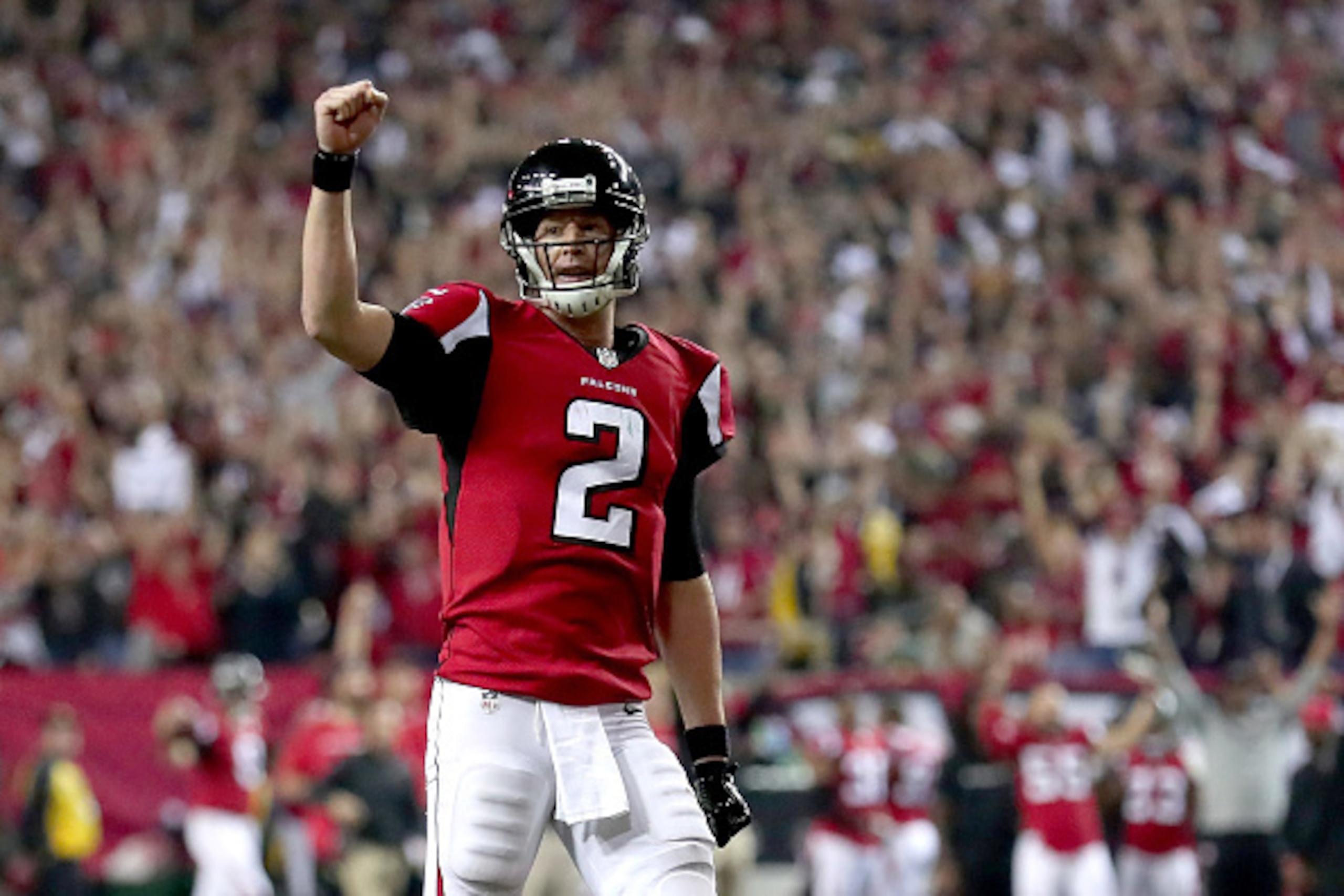
Written by NFL1000 Quarterback Scout Cian Fahey
Matt Ryan has played some of his best football of the season in the playoffs. Save for a fumble in each outing and a pair of passes that could have been intercepted on the same drive against the Green Bay Packers, Ryan has consistently made the right decision while throwing the ball with precision. The only reason to be concerned as a Falcons fan is the respective quality of opponents.
The Seattle Seahawks that Ryan faced weren't the fabled group of defenders from recent times. Richard Sherman was playing hurt, and Earl Thomas didn't play at all. In the NFC Championship Game, Ryan got to face one of the worst playoff defenses in years. The Patriots are healthier than the Seahawks. They have dramatically more talent than the Packers. They also have Bill Belichick.
With two weeks to prepare, Belichick should have enough time to mostly game-plan Julio Jones out of the Falcons offense.
That will be tough to do until the field tightens (closer to the end zone). When the field tightens, Belichick can double Jones without putting his other defenders in as much space in one-on-one matchups. That should force Ryan to throw into tighter windows. Tighter windows could be a big problem for the Falcons quarterback.
Jones offers Ryan a greater margin of error with his catch radius. Against tight coverage, Ryan doesn't need to throw precise, high-velocity passes to Jones the way he does his ancillary options. Ryan has rarely had to rely on precise, high-velocity passes this season.
For all of his success, he has been able to primarily throw the ball to wide-open receivers because of the design of the offense and execution at each level. This has meant that so long as Ryan has repeatedly found the right receiver, he hasn't had to throw into tighter windows. His targets were more likely than any others to be running wide-open downfield.
If Belichick succeeds in taking away those options, Ryan will need to match Tom Brady's output without giving up turnover opportunities. In a shootout between two unstoppable offenses, one or two turnovers can have a much greater impact. Ryan will need to show consistent velocity and placement to avoid turnovers; Brady should have a much easier day.
The greatest threat to Brady's output isn't the Falcons defense. It's LeGarrette Blount.
Brady's acumen and accuracy should allow him to easily pick apart the Falcons secondary. However, Blount is a nightmare matchup for the Falcons front seven. The Falcons have a small and fast front seven, and the 6'0", 250-pound Blount is a big, hulking figure who can run through you 30-plus times each game. Belichick can choose whichever weakness he wants to attack. While you always want to put the ball in Brady's hands, using Blount would allow for more sustained drives and eat the clock to keep the ball out of Ryan's hands.
If Ryan keeps up his recent form and the pieces around him continue to execute like they have all season, there is little reason to think he can't match Brady's performance. Whether that's enough for the Falcons to win the Super Bowl is another matter entirely.
It's Tom Brady's World, but Don’t Forget About the Patriots Run Game
2 of 10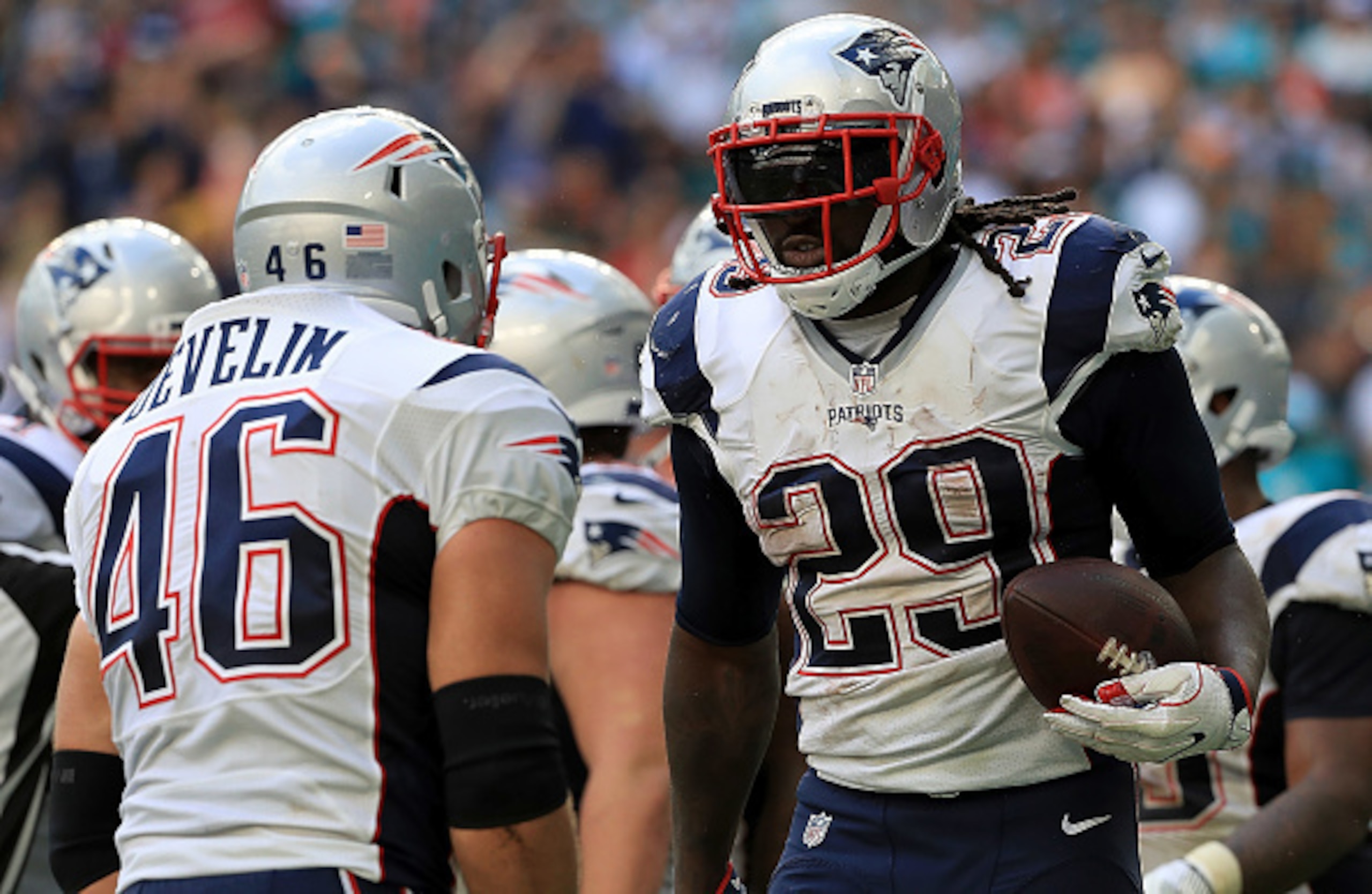
Written by NFL1000 Running Back Scout John Middlekauff
How will New England slow down Atlanta's offense? Simple: It will keep it off the field.
Nothing translates more in the playoffs than a run game, and New England has its most balanced unit of the Brady-Belichick era. Controlling time of possession and getting an early lead will be imperative for the Patriots. In New England's nine-game winning streak since Week 10, it has led every game at the half—except for Week 12 against the Jets when they were tied. The Patriots smother you in the second half with their talented backfield and ability to slow down the game. If the Falcons are behind heading into the final 30 minutes, they are in major trouble.
While Tom Brady gets all the credit for the Patriots' offensive successes, and rightfully deserved, it's the run game in 2016 that has helped separate this unit. The Patriots were at home last Super Bowl because their offense became a one-trick pony. This season, the Patriots have become much more balanced, finishing seventh in total rushing. While LeGarrette Blount led all running backs with 18 rushing touchdowns, Dion Lewis returned from an ACL injury in Week 11 and has destroyed defenses. They also have one of the most physical fullbacks in the NFL in James Develin.
According to PFF, no fullback has played more snaps since Week 8 than Develin, averaging 29.1 snaps per game. The Patriots love to line up in an I formation and play old-school smashmouth football. Develin is an excellent blocker and complements New England's resurgent offensive line. The Patriots move bodies on the line of scrimmage.
What makes the Patriots unique is they have two backs, Blount and Lewis, who excel in the I formations yet bring different skills sets to the table. Blount is one of the best inside runners in the NFL, and he breaks tackles and dominates in the red zone. There might not be a more physical combo than Blount and Develin. While they have no problem running Lewis between the tackles as well, what separates him is his ability to catch the football. He has four catches in the playoffs and will be able to keep Atlanta honest on defense.
On the flip side, the Falcons' best defense has been their offense. They are 27th in scoring defense, allowing 25.4 points a game. But they've really struggled stopping the run all season, allowing 4.5 yards per carry, which was 26th in the NFL. They lack a dominant run-stopping defensive lineman and lack the strength to win at the point of attack. If the Falcons attempt to bring extra defenders to help stop the run, Brady will have no problem checking into passes and finding single coverage. It's the ultimate chess match, and Brady is Bobby Fischer.
It's just hard to see the Falcons slowing down this running attack, and you know Belichick will use it to neutralize Atlanta's potent offense. If New England's ground attack controls the game, expect a fifth Lombardi Trophy in Foxborough.
Is There a Way to Stop Julio Jones?
3 of 10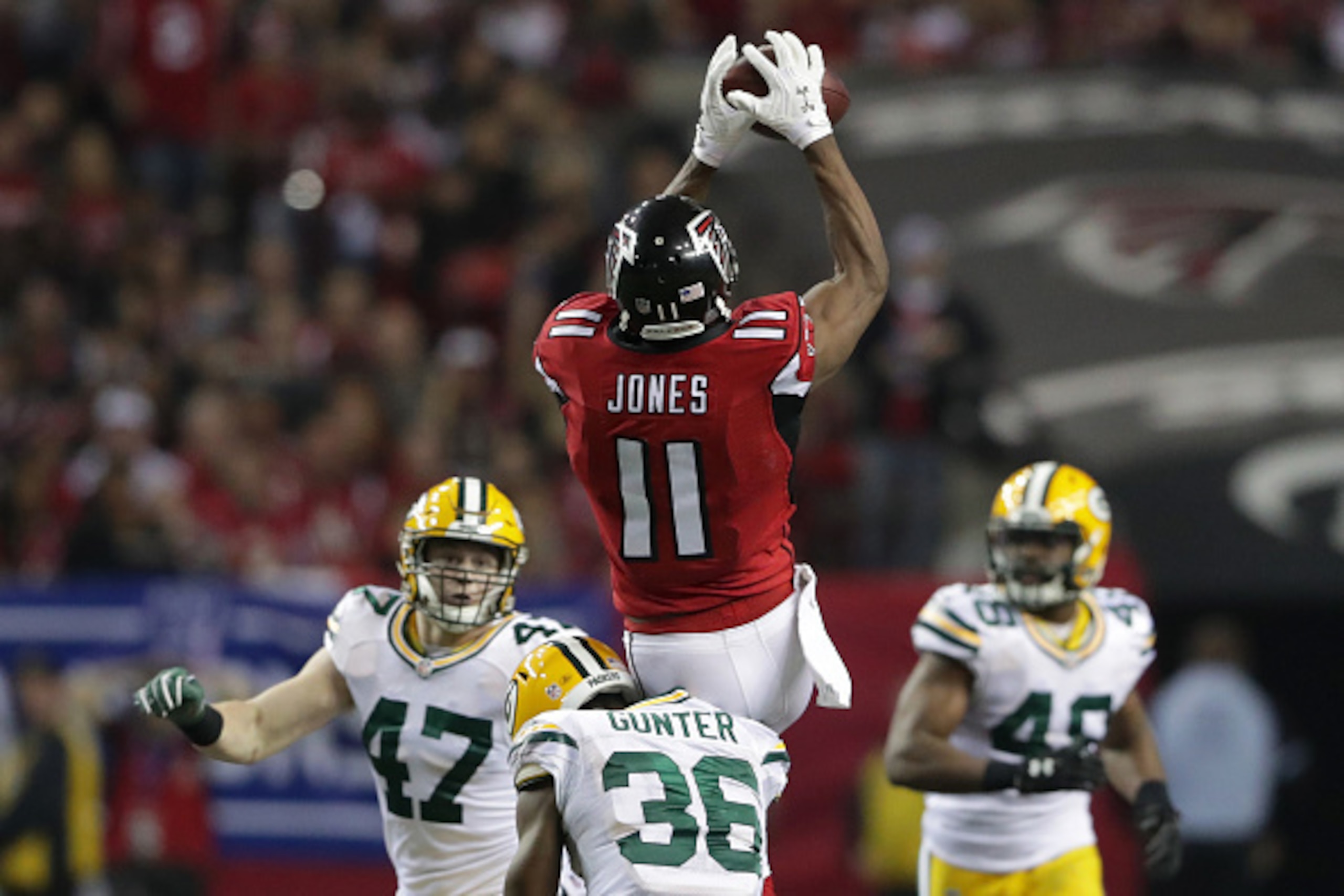
Written by NFL1000 Cornerback Scout Kyle Posey
It'll be interesting to see how the Patriots match up against Jones. New England has a top-20 corner in Malcolm Butler, who has been terrific this year. To give you an idea of how well Butler has played, he gave up 27 yards per game in coverage, per my personal charting in the second half of the season.
There were games where Butler followed the No. 1 receiver, but he usually didn't when he was a "bigger" receiver. The playoffs are a great example of this. Against the Texans, Butler stayed on the right side and played outside the whole game. He didn't shadow Houston's top receiver, DeAndre Hopkins. The next week against Pittsburgh, Butler followed Antonio Brown everywhere. Whether it was in the slot, or on the left or right side of the offense, Butler was there and usually up in Brown's face.
What will New England do? Nobody knows. It's the most unpredictable team in the NFL. What we do know is the Patriots take what you do best away. Let's look at the three lowest outputs Jones had this season. Starting with Week 3, against the Saints, Julio had one catch over the middle for 16 yards. The Falcons did a good job of not forcing the ball to Jones, who usually had at least two sets of eyes on him and faced press coverage at the line. Atlanta took what was there—whether it was all the space to operate on the other side of the field or the big holes in the running game from putting too much attention on Jones. Atlanta averaged seven yards a play, ran for 217 yards and scored 38 offensive points. Pick your poison.
When the Falcons faced Denver, which has the best trio of corners in the NFL, the Broncos played press-man coverage and put a safety over top. The corners were aggressive taking away underneath routes, and it worked. It helps when you have studs—Chris Harris Jr., Aqib Talib and Bradley Roby—and they limited Jones to two receptions for 29 yards. The catch? Atlanta's running backs were able to work one-on-one against Denver's linebackers with all kinds of space and went off for seven catches for 167 yards.
The final team is the Arizona Cardinals, who have Patrick Peterson. He always follows the No. 1 receiver and is in press coverage more often than not. He also happens to be a top-five corner and an athletic alien. Peterson ran with Jones deep. He was able to be physical with him underneath and followed him in the slot. Peterson also had two pass-interference penalties against Jones. However, Arizona had the best game plan to "stop" (I use this term loosely because nobody did) the Falcons' high-powered offense.
When Arizona was in zone coverage, it was able to make it appear Jones was open, and a defender would come out of nowhere and surprise Matt Ryan. The safety who jumped a route had the ball go right through his hands. Ryan had an even tighter window on another zone coverage that resulted in an interception. The Cardinals still ended up giving up 38 points.
However, that's what I expect the Patriots to do. Try to give different zone looks and disguises with safeties coming aggressively downhill in coverage. Jones is going to affect the game no matter what you do. The easy thing is to say "double him." Well, Kansas City did that, and he just beat the first guy guarding him so early that it didn't matter that the second guy was there, and Jones ended up with 113 yards that game.
With zone, you can be physical at different levels of the field, and you have more leeway if you're beaten in coverage. You also give the quarterback a different look. That's New England's best hope. Play aggressive, know that Jones will get his numbers, and make him beat you on the plays that only he can make. Take away the Falcons' run game, force them in long passing downs, and get after the quarterback.
.jpg?w=2560 "Colts Football")
.jpg?w=2560 "Commanders 49ers Football")
.jpg?w=2560)
How the Patriots LBs Can Match Up with Devonta Freeman, Tevin Coleman in Space
4 of 10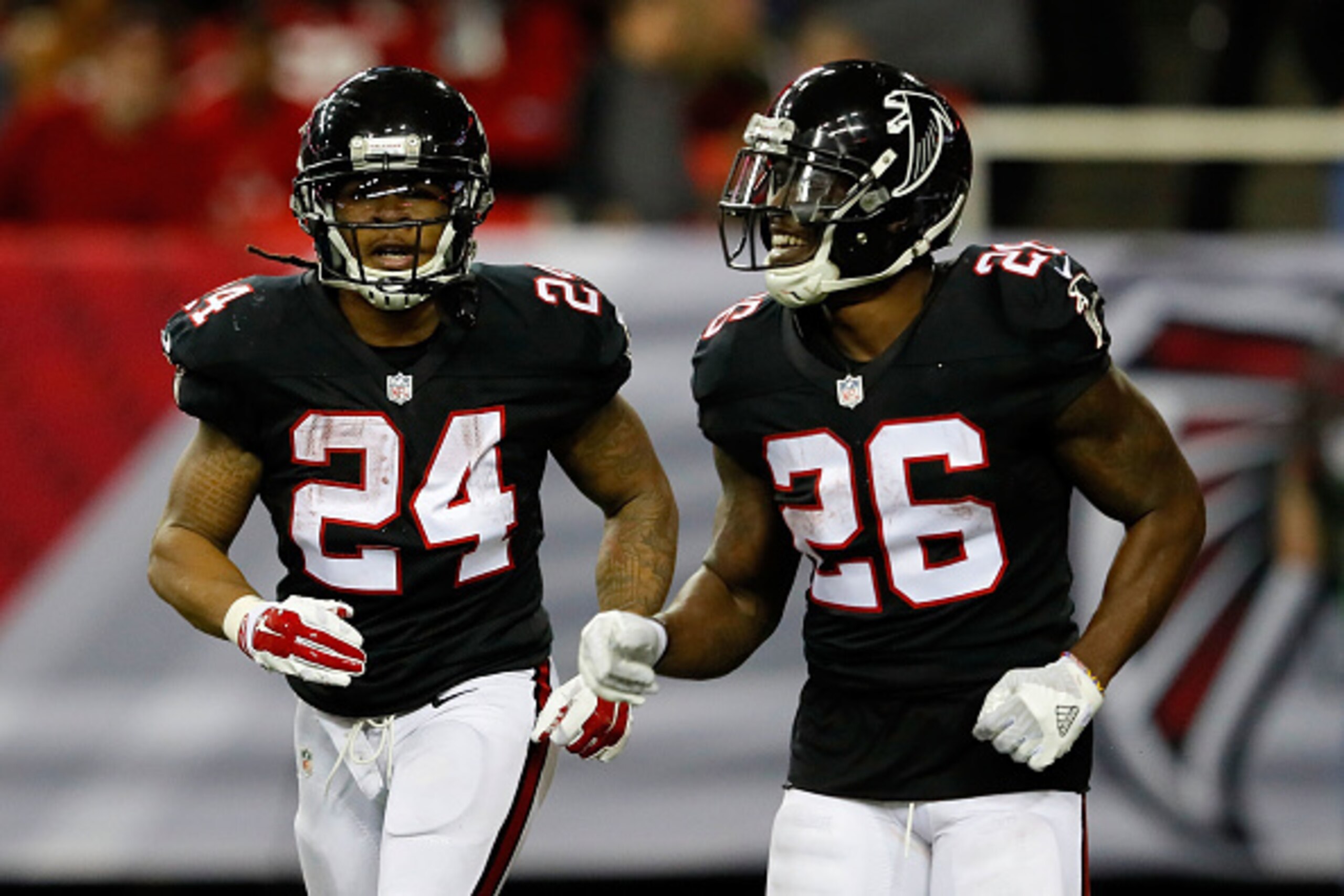
Written by NFL1000 Linebacker Scout Jerod Brown
Super Bowl 51 may be the first time this year the midseason trade of Patriots linebacker Jamie Collins looks like a mistake. The Patriots defense hasn't skipped a beat by inserting rookie Elandon Roberts as a part-time inside 'backer and using a rotation of Kyle Van Noy, Shea McClellin and Dont'a Hightower as edge players and coverage linebackers. However, that could be an indication of the talent they've faced.
Since a Week 8 win against the Buffalo Bills, the Patriots haven't faced an above-average receiving running back. LeSean McCoy and the Buffalo Bills offensive line combined to form an impressive run game, but even McCoy isn't on the level of the Atlanta running backs in the passing game. In the conference championship, Le'Veon Bell was injured early, leaving the Pittsburgh offense significantly less varied. The Patriots have largely finished the season by avoiding running backs who might exploit the skill sets of the remaining linebackers on the team.
After the Week 8 win, the Patriots traded linebacker Jamie Collins to the Cleveland Browns. Perhaps Bill Belichick looked at the schedule and recognized that Collins' skills wouldn't be nearly as valuable moving forward without elite receiving running backs on the schedule.
Against the Atlanta Falcons, however, the Patriots' linebackers, specifically Dont'a Hightower, will have to show they can compete with the Falcons' duo in space. Collins excelled in the open field, showing the hip fluidity and change-of-direction skills to minimize receivers of all varieties. While Hightower is an impressive player in his own right, he isn't Collins in coverage. Belichick has had time to scheme how the Patriots might stop the Falcons tandem, but if it comes down to one-on-one matchups, with Freeman flexed wide against Hightower, that's favorable for the Falcons every time.
Expect the Patriots to utilize plenty of underneath zone coverage to try to minimize the damage that the backs can do, with fundamental tackling to stop plays before they become explosive. The Patriots defensive backs will have enough on their plates trying to stop the Falcons receiving corps, and the task of containing Freeman and Coleman will likely fall on Hightower and Roberts.
The outcome of the game could be determined by the effectiveness of the Atlanta running backs versus the Patriots linebackers. Collins would have swayed this matchup closer to a push, but with Collins gone, Freeman and Coleman are heavy favorites to exploit the Patriots linebackers.
How Atlanta's Young Defense Can Defend New England's Angle Routes
5 of 10
Written by NFL1000 Cornerback Scout Ian Wharton
One reason the New England Patriots have been so successful for so long has been uncovering undervalued traits in players and then relentlessly exploiting the advantages they bring. This has especially been the case at wide receiver since Randy Moss retired, as the Patriots have almost exclusively used shifty, sharp-cutting receivers in a quick-hitting offense. But few others have been able to replicate such a seemingly basic offense, in part because no one else has Tom Brady, and also because of how consistently Julian Edelman, Chris Hogan and Danny Amendola can win isolated angle routes.
Slants, posts and corner routes are among the most effective but also dangerous that an offense can feature because of the precision and timing required to execute them. A defensive back who sniffs out the route early can undercut the ball easier than on other plays because the receiver must concede positioning for a second as he makes his cut. But with the quickness and sharp-cutting ability that the Patriots trio possesses, the margin for corners to recover is slim.
The last Patriots Super Bowl against Seattle also featured a Dan Quinn-led Cover 3 base defense, and the Patriots had great success with Edelman and running back Shane Vereen. Vereen is gone, but the Patriots can unleash a more explosive version of him in Dion Lewis in the same usage role. The good news for Atlanta is that it's more equipped to handle Lewis or even James White as a receiver thanks to rookie phenom Deion Jones, but the pressure will be on its young corners against New England's wide receivers.
Veteran Robert Alford has been an above-average starter all year and should match up well with whoever rotates to his side of the field. Both Jalen Collins and Brian Poole have been solid contributors, especially considering Collins wasn't penciled in as a starter until Desmond Trufant was injured. But now they're the key to defending New England's angle routes.
When Atlanta goes into nickel defense and Poole comes into the slot, the 4-2-5 look may feature safety Keanu Neal as a box defender, allowing him to roam and be fed slants from Poole. It's imperative that Neal and Jones be given the chance to jump some of the in-breaking routes, as their speed can be a game-breaker for the Falcons. This will require Alford and Collins to win at the line of scrimmage when pressing and not allow separation until they can hand off the receiver to the inside help. For Poole, he's likely to defend the curl/flat combination, so keeping everything in front of him and aggressively coming downhill on targeted receivers can set a tone of physicality.
Upsetting the Patriots' timing in the passing game is the key in all of this, so jamming receivers or at least mirroring them off the line is a huge answer to this puzzle. If Jones and Neal can be the fast and physical presences as zone defenders that they've shown throughout the season, then it's a matter of execution to finish plays and maybe force turnovers.
Marcus Cannon Has Huge Assignment Facing Off Against Vic Beasley
6 of 10
Written by NFL1000 Defensive End Scout Justis Mosqueda
Coming out of the 2015 season, the Atlanta Falcons needed to improve their pass rush. Despite the fact they had a Pro Bowl-caliber cornerback in Desmond Trufant, the team struggled in pass defense, largely because it couldn't get after the passer.
The Falcons found a few answers to their problem. First, they leaned on the development of first-round pick Vic Beasley, who increased his sack total by 11.5 in his second season to lead the NFL with 15.5. They also signed two free agents, aging future Hall of Famer Dwight Freeney and Derrick Shelby, a young player who was lost in the shuffle in Miami—a 4-3 defense with money now tied up in Ndamukong Suh, Cameron Wake and Mario Williams.
Unfortunately for Atlanta, the 27-year-old Shelby is now on the injured reserve list, as is Adrian Clayborn, a talented but injury-prone former first-round pick whom the Falcons signed from the in-division Tampa Bay Buccaneers in the 2015 offseason. Freeney, who turns 37 years old this month, can't play full time opposite of Beasley.
For reference, Freeney, who missed just one regular-season game this year, only played more than 50 percent of Atlanta's defensive snaps in two regular-season games in 2016, per PFF. At his age, he's a rotational player, which means that Brooks Reed, who in two years and 12 starts (28 games) with the Falcons has two combined sacks to show for it, will likely start the Super Bowl, while Courtney Upshaw, a 272-pounder who saw nose tackle reps this season, will spell Beasley and Reed on short and early downs.
If someone is going to rattle Tom Brady in a four-man rush, the same style of play that most Cover 3-heavy teams like to attack with, it's going to have to be Beasley, which means that the matchup between him and New England right tackle Marcus Cannon is going to be a huge deal-breaker for the Falcons.
In the playoffs, the Patriots have played against two 3-4 defenses, the Houston Texans and Pittsburgh Steelers. Because of that, there have only been limited reps to evaluate Cannon as a one-on-one pass-blocker in a playoff atmosphere this season—surprising for someone in the Super Bowl.
With that being said, it's not all because those ends are lining up on or inside of him instead of "half-manning" him on the outside. Some of that has to do with the Patriots' scheme, which involves a heavy amount of help on his side with tight ends and running backs. That shouldn't come as a surprise, considering the fact that no team has invested more in a two-tight end approach than New England in the last half-decade or so.
In many ways, Cannon acts more like a guard, looking for work in long and late downs, than a tackle working in isolation—the complete opposite of what the Falcons saw in Green Bay's offensive approach two weeks ago. If New England can continue to scheme around its right tackle not having to battle one-on-one matchups with the NFL's leader in sacks, it should be fine in this game.
To put it simply: The Patriots aren't afraid of allowing a free rusher to come off the right edge in empty sets on first down, because they trust quarterback Tom Brady to get the ball out of his hand before the defender gets home. As a pass-rusher, there's not much you can do against a quick-strike scheme, and that bodes well for New England.
In a shootout, the Patriots may have to take some longer, later shots down the field, which tips the scale Beasley's way, but as long as the Pats are playing in a manageable game, they won't have to make those calls. Cannon has one big blemish this offseason: a pressure allowed against Houston that led to a Brady interception. From that point on, it has been hard to find Cannon isolated on an edge defender. New England adapted to negate Cannon's impact on playoff games long before it started game-planning for Beasley.
Grady Jarrett Is Atlanta's X-Factor to Disrupting Tom Brady
7 of 10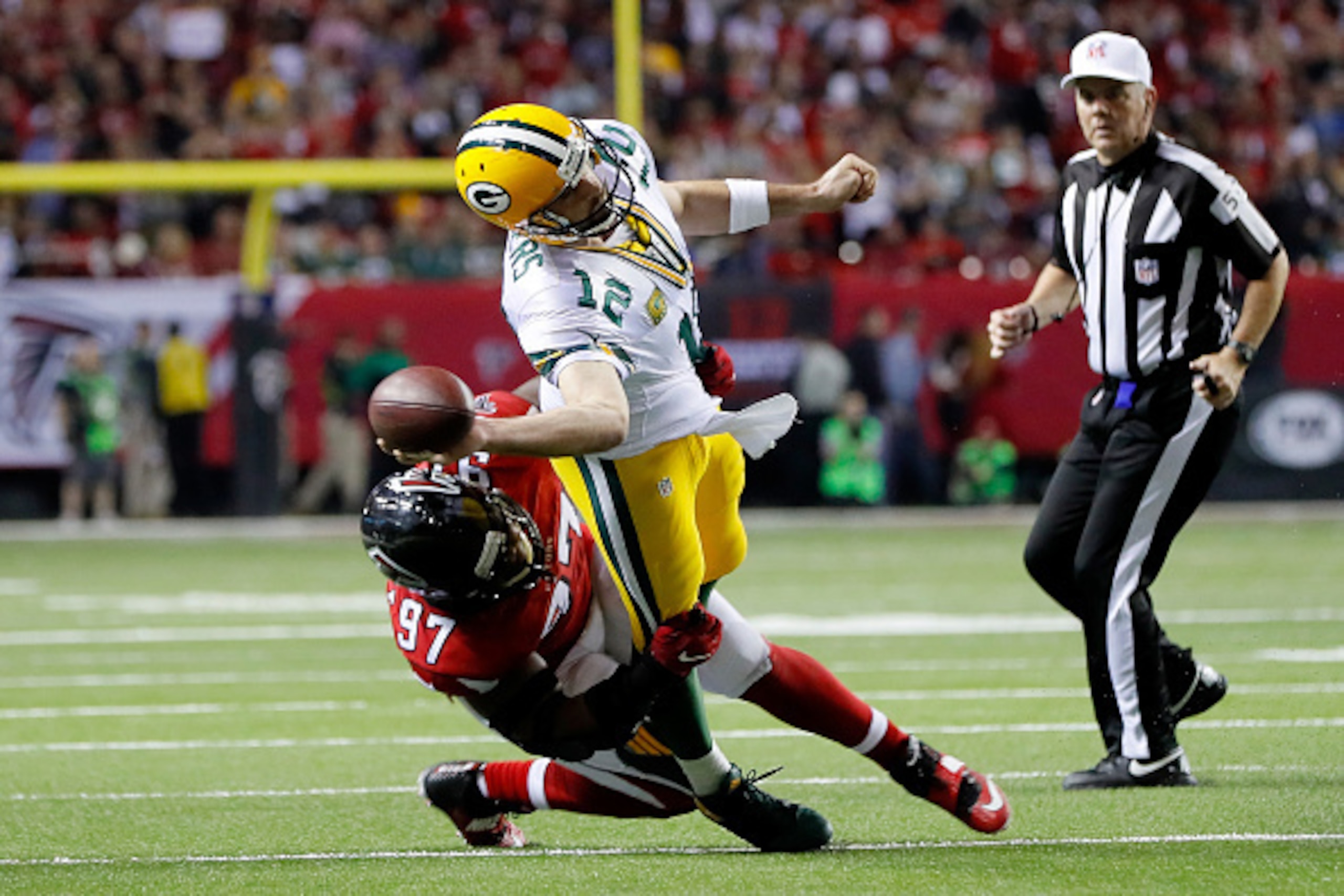
Written by NFL1000 Defensive Tackle Scout Charles McDonald
Grady Jarrett has been a nice pick for the Falcons as a second-year, fifth-round selection out of Clemson. He finished the season as a top-15 defensive tackle in the NFL1000 rankings and had a strong showing against the Green Bay Packers in the NFC Championship Game. Jarrett isn't the most polished pass-rusher yet, but he has the natural leverage and explosiveness to wreak havoc without being the most refined player.
In the Patriots' championship game against the Pittsburgh Steelers, Javon Hargrave gave David Andrews and Joe Thuney some issues in pass protection. Jarrett is a similar type of player who wins with a low center of gravity. Jarrett and Ra'Shede Hageman have been playing great football through the playoff stretch, and they'll be instrumental in trying to topple Tom Brady and the quick-strike Patriots offense.
With a sizable portion of the Patriots' passing game taking place with three-step drops, the Falcons edge-rushers will most likely be neutralized by New England's offensive tackles. Jarrett will need to have a huge game as a pass-rusher to disrupt the short passing game for New England.
Lately, Jarrett has been playing his more natural position of 3-technique that he played in college, with Hageman playing more nose tackle and 1-technique. The absence of Adrian Clayborn has kicked Courtney Upshaw out to the edge and moved Jarrett and Hageman back to more comfortable positions. Jarrett shined at 3-technique during his time at Clemson, and Hageman doesn't have to think quite as much playing right over the ball, allowing him to harness his freakish athletic abilities and play faster.
If Jarrett can continue his hot streak of penetration and continue to play up the field and disrupt the passing lanes for Brady, the Falcons may have a shot to slow down the Patriots passing attack. If they can get off the field on third down a few times in this game and give the ball back to their explosive offense, they'll have a chance to win the Super Bowl.
How Can the Patriots Defend the Falcons' Pre-Snap Motion?
8 of 10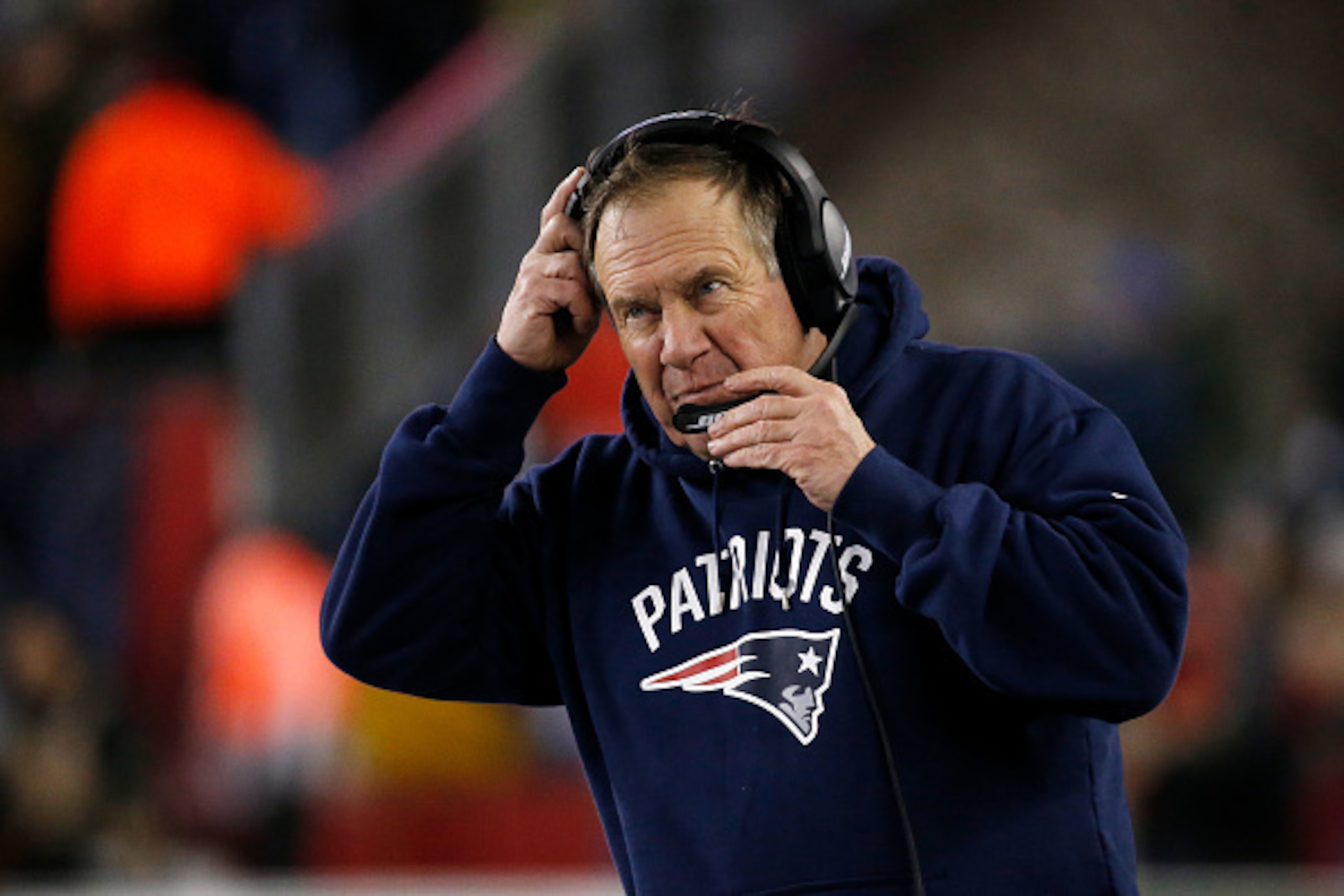
Written by NFL1000 Lead Scout Doug Farrar
Perhaps the most compelling and difficult-to-defend aspect of Kyle Shanahan's high-flying Falcons offense is the multitude of ways in which Atlanta moves players around in the pre-snap phase of the game. Running backs Devonta Freeman and Tevin Coleman are the prime movers in that they'll move from the backfield to the slot and even out wide as receivers, but you'll also see fullback Patrick DiMarco flare out of the backfield every so often and catch a pass.
It's an unnerving thing to happen to any defense, because offenses that stay static pre-snap are obviously easier to defend. Linebackers can read their initial keys, and they don't have to move around as much. But when you're dealing with an offense that changes its formation base before the quarterback takes the ball—and the Falcons will make major shifts pre-snap—everything has to change.
In Atlanta's case, flaring running backs out and slot receivers in movement concepts force those linebackers to stretch horizontally to meet the new coverage demands. Even if your defense has linebackers who can move and adjust to outside coverage, there's one problem: The Falcons will check your adjustments. And if your departing linebackers leave a hole in the middle of the defense, there is probably still a running back in the backfield (the Falcons love two-back sets), and that running back will have an easier time up the middle.
Such shifts demand adaptation, and it's why I think the most intriguing matchup in Super Bowl LI is how Bill Belichick and defensive coordinator Matt Patricia will counter all that movement.
First, if the Patriots play more than 25 percent of their snaps in their base 4-3, I'd be shocked. New England runs a ton of nickel and dime defenses, and it especially loves the "big nickel" setup with two cornerbacks and three safeties. In this formation, Patrick Chung is the underneath safety acting as a hybrid linebacker, Devin McCourty is the deep coverage safety, and Duron Harmon is the safety who can switch between the box and intermediate coverage.
The advantages of sub-package defenses? With extra corners and safeties instead of linebackers, the Patriots can disguise their pre-snap intentions with more versatility. They can use those extra secondary defenders as landmarks against extra receivers, and zone defenders when they decide to hang back. It's going to take everything this defense has to keep pace with what Shanahan puts on the field, especially when the formations change.
How Can the Falcons Slow Down Red-Hot Chris Hogan?
9 of 10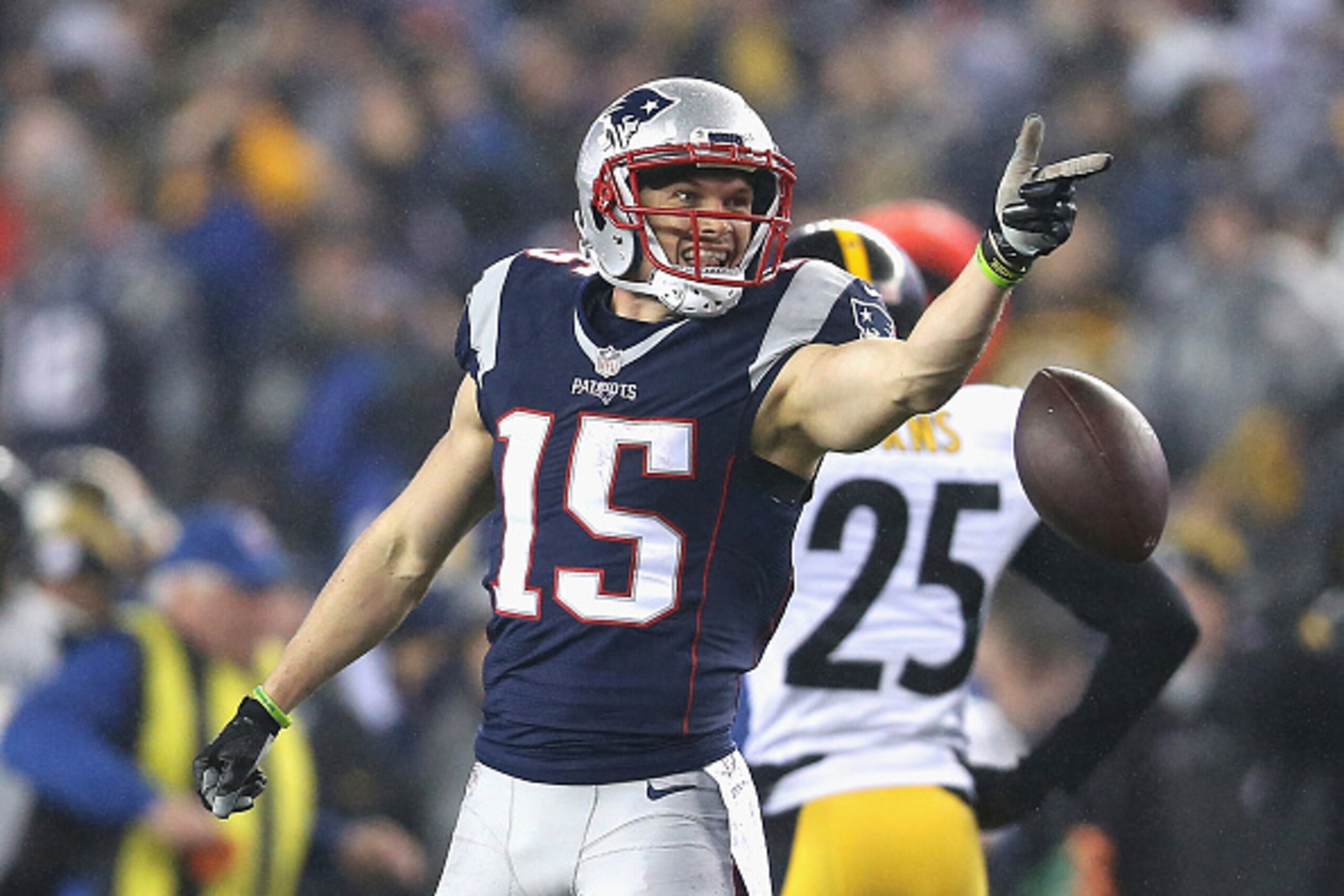
Written by NFL1000 Safety Scout Mark Bullock
The sudden spike in production from Patriots wide receiver Chris Hogan has been somewhat surprising. In the playoffs, Hogan had 13 catches for 275 yards and two touchdowns. Both touchdowns and 180 of those yards came against the Steelers in the conference championship game. The Falcons run some similar concepts defensively to the Steelers, with a lot of Cover 3 and some Cover 1 mixed in too, which makes that game a good case study for the Falcons.
The Patriots did an excellent job scheming Hogan open, testing the concentration and discipline of the Steelers defense. They did a particularly good job using pre-snap motion to force safety rotations from the Steelers secondary.
Tom Brady would often snap the ball as one safety was still rotating back to the deep middle section of the field, catching the safety out of position and forcing him to make his reads as he was still working back to his spot. New England would also show a variety of different looks, from run-heavy I formations to empty backfield looks, sometimes on the same play. That gives the defense a lot to think about and diagnose before the ball is even snapped.
The Falcons will also have to be weary of the Patriots' play-action game. This is where Hogan saw much of his success. Along with all the pre-snap motion and formation changes, the Patriots would sell run fakes to get underneath defenders to bite up before throwing over the top of them to Hogan. They used vertical routes from one side to occupy the deep safety, leaving a big gap in the middle of the field for Hogan. Brady hit Hogan on a deep over route off play action against the Steelers using this exact concept.
For Atlanta, free safety Ricardo Allen will have to be fully prepared for the variety of looks the Patriots will throw at him. Allen's role is primarily the deep middle safety in either Cover 3 or Cover 1 schemes. He can't afford to bite on play-action fakes, as Steelers safety Mike Mitchell did on the Patriots' flea-flicker play.
Allen has done a pretty good job in general not biting on play action and other misdirection plays, though he has been caught cheating to one side of the field on occasion. Against Brady and the Patriots, Allen has to be in the right spot the whole time.
But it's not all on Allen. The Patriots will try to occupy him with vertical routes from the outside, leaving Hogan open on deep hooks and deep over routes across the middle of the field. Allen has to stay deeper than the deepest receiver, so he can't cheat down on those routes.
He'll need the speedy linebackers the Falcons have to be able to recover from play-action fakes and get back into intermediate zones quickly, taking away easy throwing lanes over the middle. If they fail to do so, Hogan could continue his playoff hot streak.
Would Another Super Bowl Win Cement Tom Brady as the GOAT?
10 of 10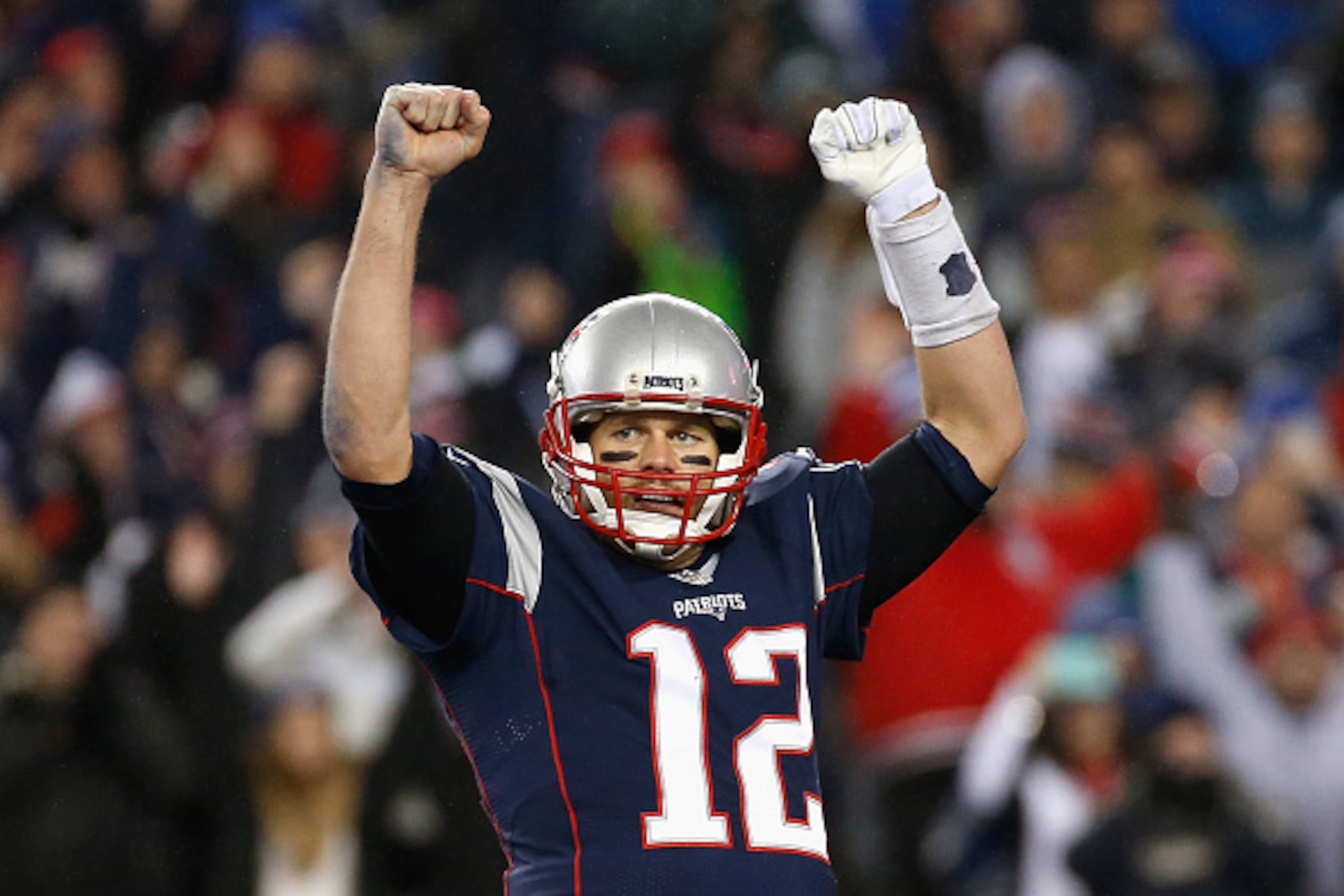
Written by NFL1000 Lead Scout Doug Farrar
Whether the New England Patriots win Super Bowl LI or not, I believe Tom Brady has already cemented his status as the greatest quarterback we've ever seen. Why? Because no quarterback has ever succeeded so consistently in so many different offenses.
Think about it. Peyton Manning basically had the same three-by-one offense all those years in Indianapolis, and as much as he engaged in mental gymnastics pre-snap, things were stable then and when he played for the Broncos. Joe Montana played in different iterations of Bill Walsh's West Coast offense, and though it was far more advanced in the late 1980s when Montana was at his peak, he wasn't dealing with entire system changes.
Brady is a different story. Early in his career, he was a complementary piece in an offense that was balanced between the run and pass. As the Patriots won their second and third Super Bowls in the mid-2000s, he was obviously more a part of the equation, but he was still dealing with receivers who didn't scare anyone. Remember David Patten? Reche Caldwell? Deion Branch?
Then, in 2007, the Patriots acquired Randy Moss and Wes Welker, and overnight, the Patriots became sort of a spread-offense team. The formations were far more diverse. When I was working for Football Outsiders in 2007, we discovered through our game charting that the 2007 Patriots became the first team in NFL history to line up in shotgun more than 50 percent of the time. It was on Brady to zing the ball all over the place, and he showed a deep accuracy he hadn't before.
In addition, New England's use of option routes increased with Welker, and option routes (which the Patriots run more than just about any other team) require a lot of communication between quarterback and receivers. It's on Brady to make that all work.
At the start of the new decade, as Moss started to decline, the Patriots drafted Rob Gronkowski and Aaron Hernandez, and New England became a marvelously diverse two-tight end team for a time. When Hernandez was released in the wake of murder investigations, it was up to other targets, specifically Julian Edelman, to deliver.
The 2016 Patriots resemble the first teams Brady played with. There's more emphasis on the run game in two-back sets, and Brady still doesn't have what you would call "elite" receivers. Still, he makes it all go. Through any group of receiver alignments. Through any offensive coordinator. Through any blocking scheme.
He is the only constant in an unprecedented history of schematic diversity under a single head coach, and he's destroyed opponents in every iteration. That's why Brady is already the best. Because he's done more, in more ways, than anyone else who's ever played the position.
.jpg?w=2560 "DOLPHINS-AIKMAN")




.png?w=2560 "Week 8 Winners & Losers 📊")