2017 NFL Draft: Top Prospects Who Fit Non-Traditional Roles
A handful of the most talented prospects available for the 2017 NFL draft don't fit traditional roles.
Society tends to box individuals into certain groups. Draft coverage isn't any different. Discussions regarding potential franchise quarterbacks and star players dominate. But football isn't played the same way today as it once was.
How certain positions are viewed around the league and the preponderance of sub-packages changed the game. As such, draft coverage should adapt as well.
Defensive tackles are no longer defensive tackles. They're 0-, 1- or 3-techniques. Arguments over scheme fits became irrelevant once NFL teams started to rely more heavily nickel packages. These examples aren't any different than when great fullbacks from the 1950s and '60s transitioned into a devalued position consisting of lead blockers.
There are certain vital roles found around the league that aren't given as much thought or value as their traditional counterparts.
Slot receivers and nickel corners are now starting positions. Safeties are being moved to linebacker. Third-down running backs and situational pass-rushers can be as important to a team's game plan as those on the field during the first two downs. The responsibilities of a tight end have completely flipped over the past two decades.
The first step in fixing a problem is admitting there is one. It's time to highlight these positions.
Slot Receiver
1 of 6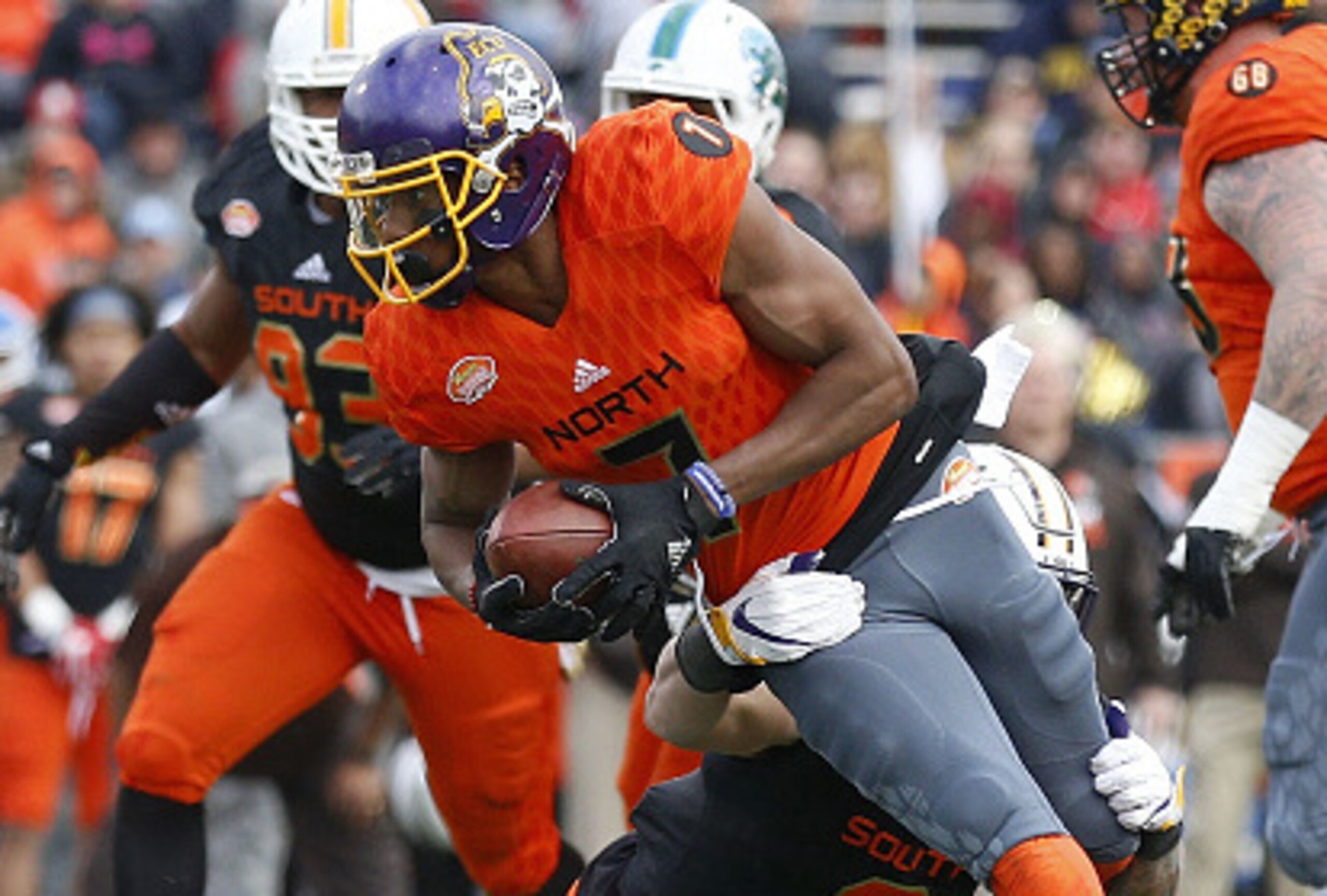
1. Zay Jones, East Carolina
2. Ryan Switzer, North Carolina
3. Artavis Scott, Clemson
4. Trent Taylor, Louisiana Tech
5. Austin Carr, Northwestern
How valuable are productive slot receivers in today's game? The Arizona Cardinals' Larry Fitzgerald led the NFL in 2016 with 107 receptions. Meanwhile, the Indianapolis Colts' T.Y. Hilton topped the league with 1,448 receiving yards. Those two receivers played more snaps from the slot than anyone else, per Pro Football Focus.
Three-receiver sets are the norm, and the ability to work out of the slot requires a different skill set than targets asked to win outside of the numbers. Slot receivers can be represented in a myriad of different body types and abilities.
East Carolina's Zay Jones is 6'2" and 202 pounds. He broke FBS records with 158 receptions in 2016 and 399 career catches. Pirates quarterbacks also targeted him out of the slot more than any other wide receiver, per PFF.
Others such at North Carolina's Ryan Switzer, Louisiana Tech's Trent Taylor and Northwestern's Austin Carr are pure slot receivers. They're undersized, but their short-area quickness make them impossible to cover. Clemson's Artavis Scott is a valuable chess piece that can be used in a number of ways as a YAC monster.
Numerous talented receivers will be available. For example, Eastern Washington's Cooper Kupp, LSU's Malachi Dupre, and Western Kentucky's Taywan Taylor are effective working from the slot but they're also good all-around targets.
Mississippi State's Fred Ross, Wyoming's Tanner Gentry, Florida State's Kermit Whitfield, Miami's Stacy Coley, Tulsa's Keevan Lucas, Western Kentucky's Nicholas Norris and Texas A&M's Ricky Seals-Jones represent the different shapes and skill sets found among slot receivers.
Third-Down Backs
2 of 6
1. Christian McCaffrey, Stanford
2. Joe Mixon, Oklahoma
3. Alvin Kamara, Tennessee
4. Jeremy McNichols, Boise State
5. Kareem Hunt, Toledo
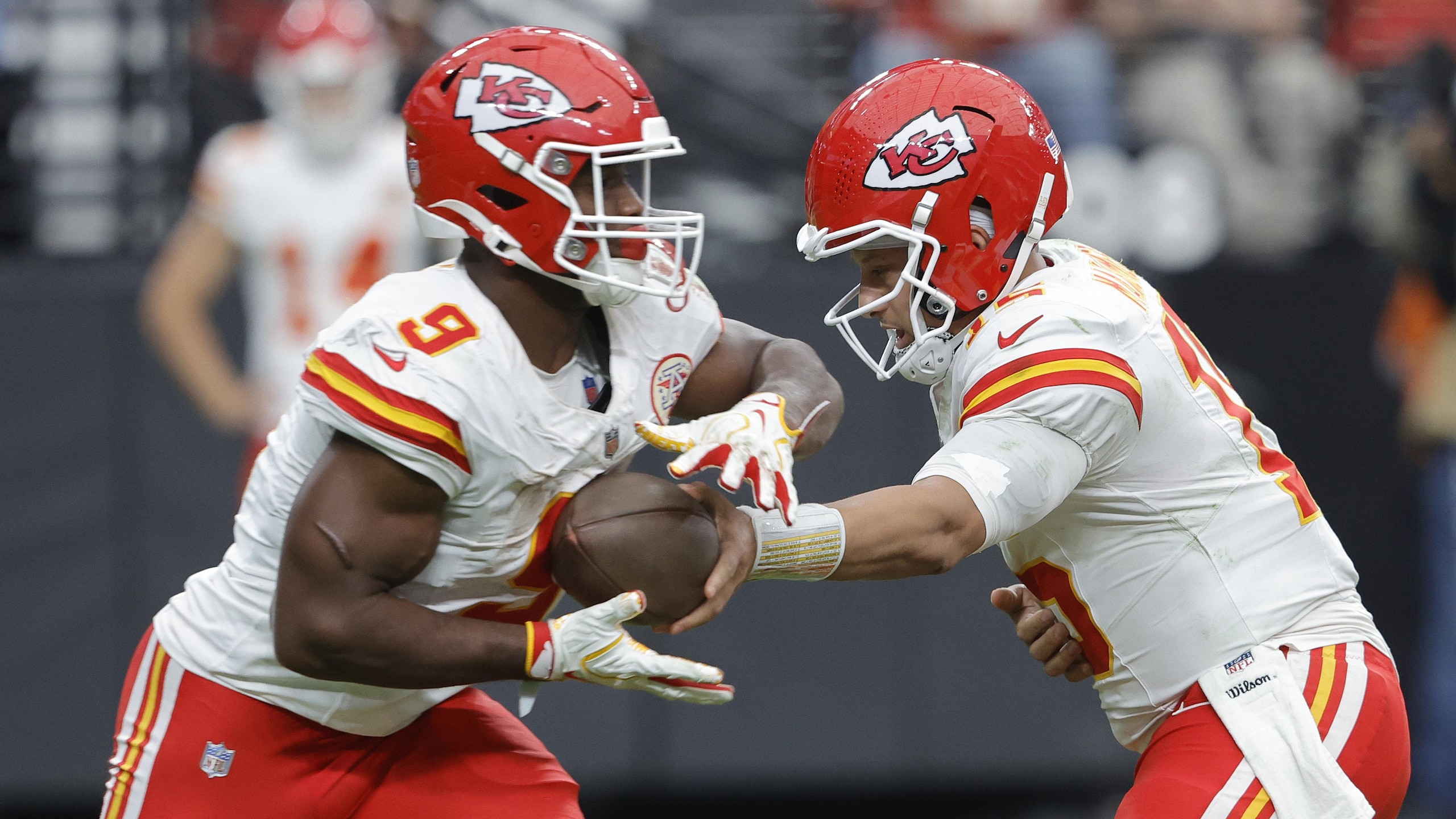
How the New England Patriots utilized James White in Super Bowl LI should change the way teams look at the usage of third-down backs. White set Super Bowl records with 14 receptions and 20 points scored. White wasn't just an afterthought in the scheme; he became the primary catalyst.
While a running back's primary goal remains the same, a capable blocker and receiving threat out of the backfield can be just as valuable. Running back rotations dominate the league. Workhorses are rare. Varied skill sets among a team's stable creates opportunities for individuals and wrinkles within the offense.
Stanford's Christian McCaffrey automatically jumps to the top of the list among potential third-down backs. McCaffrey wasn't as productive in 2016 when the Cardinal tried to force-feed the multi-purpose back. But he still managed 37 receptions for 310 yards.
The Colorado native graded much higher in 2015 when he finished second in Heisman Trophy voting and led the nation with 3.22 yards per route run, per Pro Football Focus. In three seasons, the Stanford back caught 99 passes for 1,206 yards and 10 touchdowns.
Oklahoma's Joe Mixon is another dynamic threat out of the backfield, who averaged 2.47 yards per route run over the last two seasons, per PFF. Tennessee's Alvin Kamara opened eyes with his 161 receiving yards (and 288 total yards) against the Texas A&M Aggies in October. Boise State's Jeremy McNichols and Toledo's Kareem Hunt each caught more than 40 passes during a season on campus.
All of these backs are capable receivers, and McCaffrey is the only one to finish with a pass-blocking efficiency lower than 96 percent this past season.
Move Tight Ends
3 of 6
1. David Njoku, Miami
2. Evan Engram, Ole Miss
3. Gerald Everett, South Alabama
4. Jordan Leggett, Clemson
5. Bucky Hodges, Virginia Tech
Tight end is arguably the deepest position in this year's NFL draft. Complete prospects, who are receiving threats and good in-line blockers, are rare, though. Due to his all-around skills, Alabama's O.J. Howard is the draft's top tight end prospect. However, multiple talented receiving threats will be highly regarded by NFL teams.
Miami's David Njoku is a potential first-round pick because of his tremendous physical attributes. The 6'4", 245-pound target is a former high school national high jump champion, and he's still developing as a tight end. Even so, the redshirt sophomore finished his final collegiate campaign with 43 receptions for 698 yards and eight touchdowns.
"Our TE coach said it's the most upside he's ever seen in a TE prospect," an anonymous NFL scout texted CBS Sports' Dane Brugler.
The Hurricanes still utilized Njoku at the end of the line of scrimmage. Ole Miss's Evan Engram, South Alabama's Gerald Everett, Clemson's Jordan Leggett and Virginia Tech's Bucky Hodges are far more comfortable working from the wing or slot. In fact, the 6'7" Hodges is more wide receiver than tight end.
These prospects aren't even average blockers, but their ability to create mismatches in the passing game set them apart.
.jpg?w=2560 "Cardinals Giants Football")
.jpg?w=2560 "Titans Giants Football")
Situational Pass-Rushers
4 of 6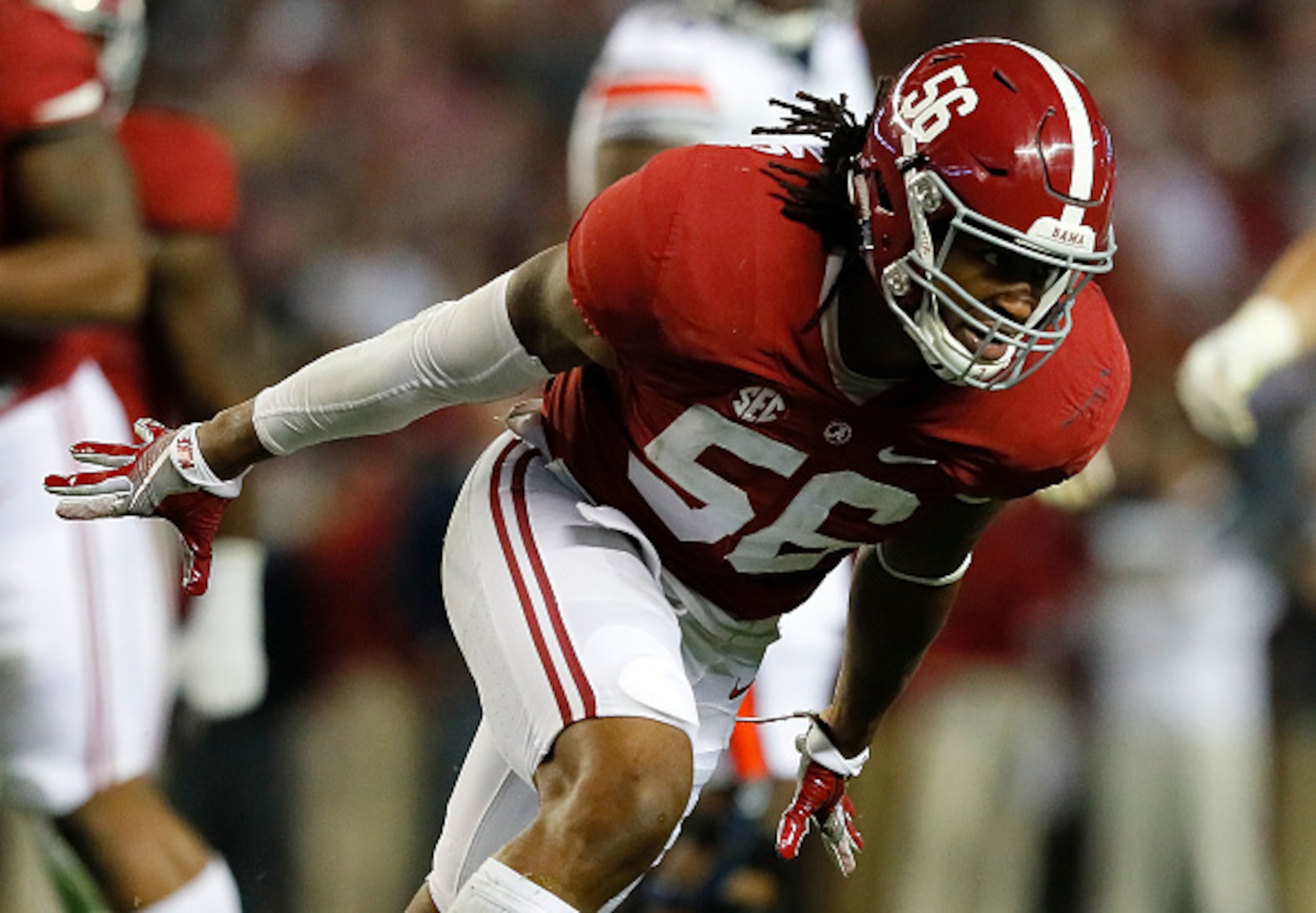
1. Tim Williams, Alabama
2. Derek Rivers, Youngstown State
3. Tyus Bowser, Houston
4. Carroll Phillips, Illinois
5. Daeshon Hall, Texas A&M
How we define pass-rushers has already started to evolve. Instead of trying to lump each prospect into a certain category as a 3-4 outside linebacker or 4-3 defensive end, they're all viewed as edge defenders.
Natural pass-rushers are valuable commodities throughout the NFL even if they're not complete players. Teams search for those defenders who display an explosive first step, flexibility to get under and around offensive tackles, core strength not to be driven off their path and speed to close on a quarterback. If an organization can find those traits, they'll overlook the fact a player isn't as effective against the run.
Alabama's Tim Williams only played 30.9 percent of the Crimson Tide's defensive snaps over the last two years, per Pro Football Focus. Yet he's still considered a first-round talent because he accumulated 19.5 sacks and 28.5 tackles for loss even in limited opportunities.
Youngstown State's Derek Rivers, Houston's Tyus Bowser and Illinois' Carroll Phillips will have trouble setting the edge since the trio weighs 243.7 pounds on average. But these three combined for 31.5 sacks last season. Hall is bigger (265 pounds) and a freak athlete, but he struggles against the run.
Auburn's Dee Ford, Pitt's Ejuan Price and Louisville's Devonte Fields can be lumped into this category, too. If an edge defender terrorizes quarterbacks, a team will make room for him.
Hybrid Linebackers
5 of 6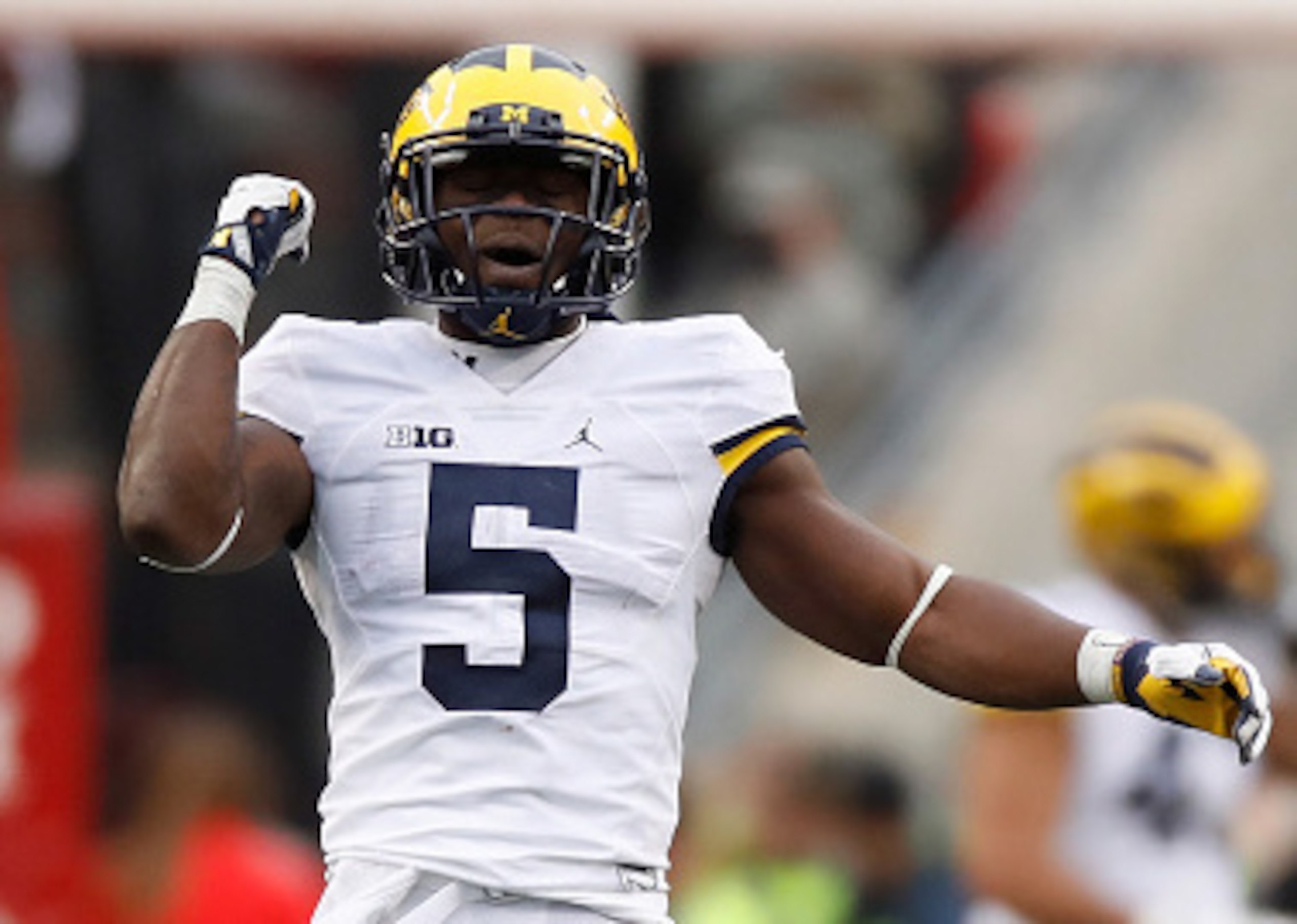
1. Jabrill Peppers, Michigan
2. Obi Melifonwu, Connecticut
3. Josh Jones, North Carolina State
4. Nate Gerry, Nebraska
5. Josh Harvey-Clemons, Louisville
The Arizona Cardinals' Deone Bucannon and Los Angeles Rams' Mark Barron revolutionized how teams evaluate and employ collegiate safeties who may not be fluid enough to remain in the secondary. As offenses continue to spread the field, more athletic defenders are needed.
Hybrid linebackers don't need to be 225-230 pounds, but they must be able to handle the physical rigors of playing close to the line of scrimmage, while being able to match up with tight ends or even wide receivers in pass coverage.
Michigan's Jabrill Peppers fits the role perfectly. After being recruited as a cornerback, the ultra-talented defender moved to safety before head coach Jim Harbaugh shifted him to linebacker in 2016. Peppers led the team with 16 tackles for loss. The Heisman Trophy finalist displays rare athletic traits at 6'1" and 205 pounds, but questions linger about his role at the next level. This is far less of an issue if a team views him as a hybrid being used in numerous ways.
Aside from Peppers, Connecticut's Obi Melifonwu may be the most interesting prospect in the entire class. The safety stands an impressive 6'4" and weighs 219 pounds. He displays tremendous instincts and closing speed. His combination of size and athleticism allow him to be used all over the field.
The 6'2", 215-pound Josh Jones transitioned to strong safety in 2016, and he led North Carolina State with 109 total tackles before declaring early for the draft. Nebraska's Nate Gerry and Louisville's Josh Harvey-Clemons each played linebacker at some point during their collegiate careers.
Nickel Corners
6 of 6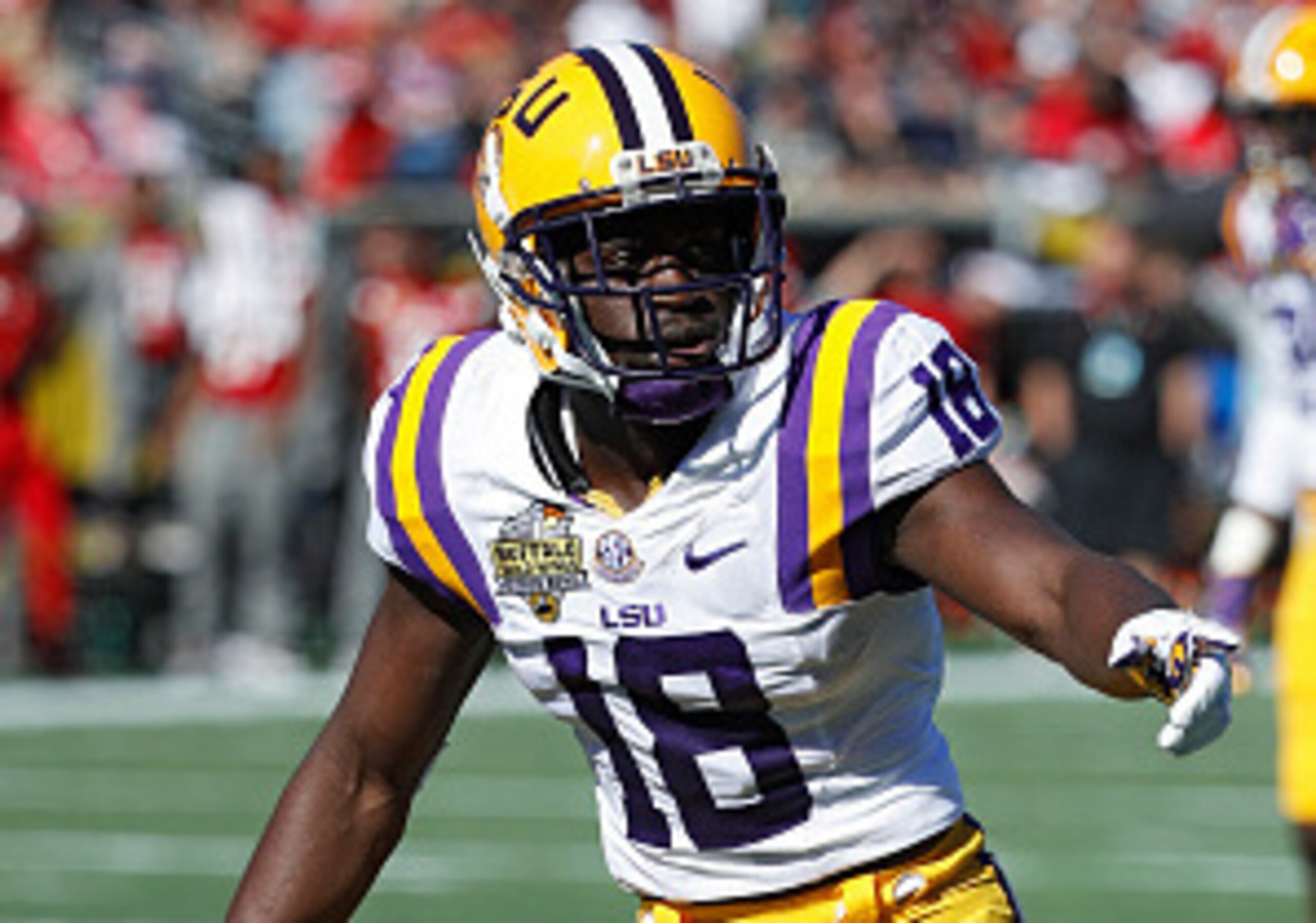
1. Tre'Davious White, LSU
2. Chidobe Awuzie, Colorado
3. Kevin King, Washington
4. Najee Murray, Kent State
5. Justin Thomas, Utah
What makes nickel corner such a unique position is that it requires a completely different skill set from a traditional cornerback. Those defensive backs who work out of the slot need to display a combination of toughness, short-area quickness, a nonchalant attitude toward working through clutter and instant recognition to succeed at the position.
Too often, an undersized corner is automatically labeled a potential nickel corner, because he doesn't display prototypical size, length or athleticism.
LSU's Tre'Davious White is a skilled corner with the ability to play outside the numbers or over the slot. Along with his silky smooth transition through his backpedal, White is considered a first-round talent. Of those listed, he played the fewest amount of snaps as a nickel corner, yet he performed well and only allowed 12 receptions, per Pro Football Focus.
Colorado's Chidobe Awuzie and Washington's Kevin King aren't typical nickel corners. Both are listed at 6'0" or taller. Length is usually viewed as an advantage over bigger targets on the outside of formations. However, offenses continue to use tight ends and taller receivers out of the slot. These corners' length and experience playing nickel provide a different option.
Kent State's Najee Murray and Utah's Justin Thomas are two lesser-known prospects who excelled in this specific role. Murray finished first last season in slot coverage snaps per reception and NFL QB rating against his coverage. Thomas, meanwhile, played more snaps over the slot than any other collegiate defensive back during the past three seasons.
Unless otherwise noted, all advanced statistics provided via Pro Football Focus.
.jpg?w=2560 "Dolphins Bills Football")