La Liga's Continued Domination of European Competition Is No Surprise
This time, it’s a full house. Real Madrid and Barcelona will always be Spain’s headliners, but as draws were made, the Ballon d’Or was awarded (with the podium composed exclusively of Spain-based players) and European football’s 2016 drew to a close, few could be in any doubt over La Liga’s position at the summit.
A year after Spain became the first nation in Champions League history to send five teams to the group stage—a legacy of Sevilla’s Europa League win and accompanying fifth-place finish in La Liga—it was able to reflect with satisfaction as all seven of its group-stage participants in Champions League and Europa League successfully qualified from their pools.
TOP NEWS
Billboard Trolls Man City 👀

New NFL contenders starting to emerge after Week 4
.jpg?w=2560 "Cardinals Giants Football")
NFL investigating 2 referees for separate viral exchanges
Spain head coach Julen Lopetegui was just one of the personalities to swiftly acknowledge that fact:
What’s more is that most of this magnificent seven will go into the knockout stages of their respective competitions as strong favourites, with the exceptions of Villarreal against AS Roma (despite Monday’s eye-catching demolition of Atletico Madrid), and Celta Vigo when they take on the seasoned Shakhtar Donetsk.
It’s quite a haul, and it makes mincemeat of suggestions that La Liga is a two-horse race and nine-tenths of a cakewalk for Real Madrid and Barca, even more than good one-off results for Las Palmas and Alaves (for example) against those two do. That almost half of the Spanish top division’s clubs are in Europe in the new year also backs those who believe it to be Europe’s best, emphasising its strength in depth.
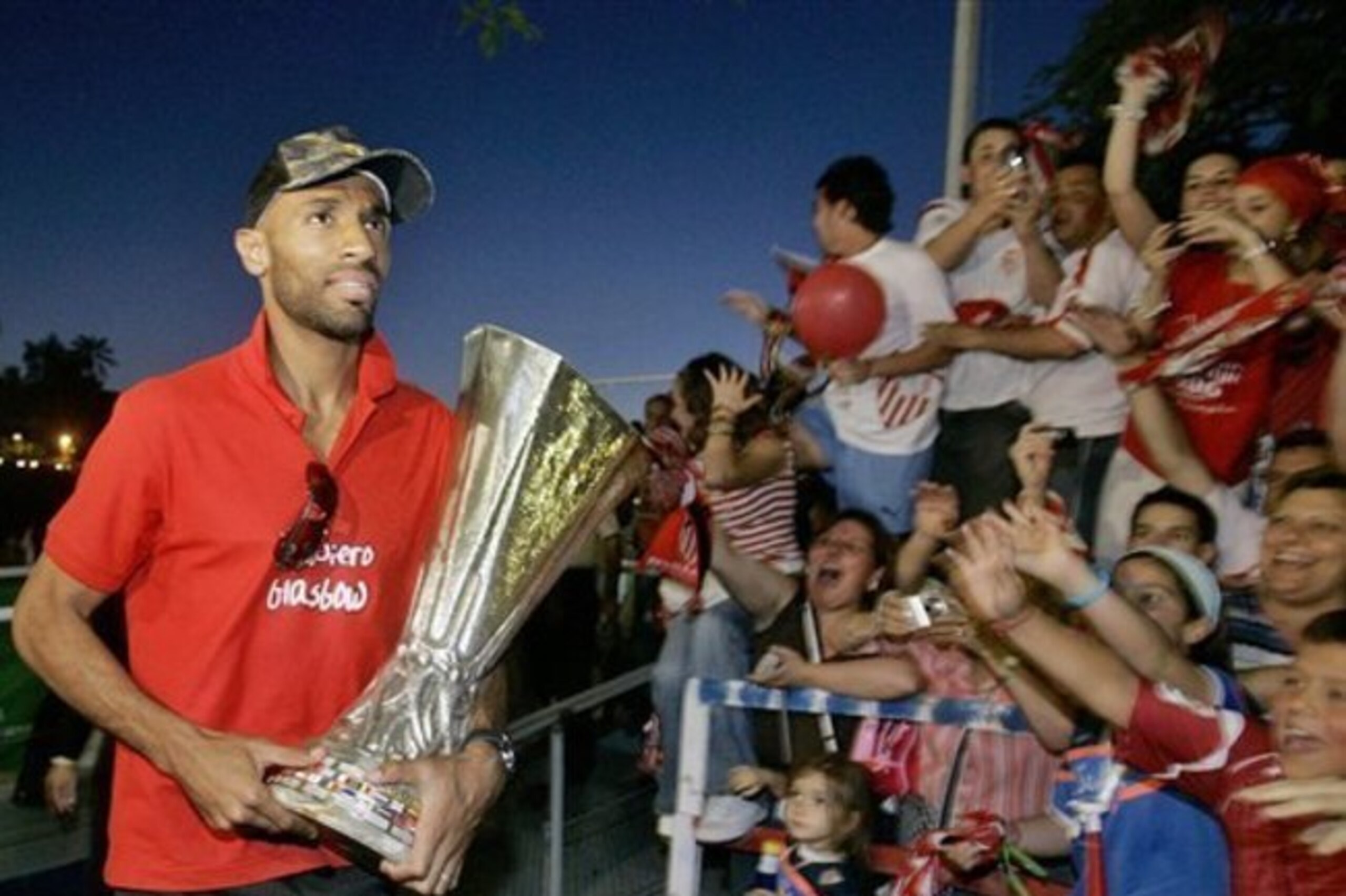
This was an argument widely used in the Spanish media as a riposte to those who claimed La Liga was on the wane in the years when English clubs hit hard in the Champions League. Many claimed that the Europa League was testament to the quality throughout Spanish football, not just in the ultra-elite.
Three Spanish representatives were in the 2012 semi-finals—eventual winners Atletico, Athletic Club Bilbao and Valencia—while as far back as the 2007 UEFA Cup, the semis contained three La Liga teams, with Espanyol and Osasuna joining Sevilla.
The reality, of course, is that Champions League success complemented by Europa League excellence is the only proof of the superior quality intrinsic in any particular domestic league.
Portugal, for example, contributed four semi-finalists, two finalists and one winner in the Europa League (with just four different clubs among them), but this alone is not indicative of depth, even if it is all handy in terms of UEFA coefficient points.
Few imagine that La Liga will be unable to continue fulfilling the top half of that clause. Real Madrid are expected to swat aside Napoli in the Champions League round of 16, despite the recent improvement of Maurizio Sarri’s side and the likely return of the injured Arkadiusz Milik by then.
Barcelona, for all their current stutters, should have ironed out the creases in their game as winter comes to an end. Their tie with Paris Saint-Germain, which one might expect to be viewed as an authentic clash of the titans in certain contexts, was simply framed as “the worst possible opponents for [Unai] Emery” in Marca (link in Spanish), given his personal record of only having beaten the Catalans once in 21 meetings over his combined spells with Almeria, Valencia and Sevilla.
Focusing just on meetings between the two clubs themselves, it only needed somewhere close to Barca’s best to be too good for PSG in both 2014 and 2015.

Maybe Atletico are the real threat here. They know the territory at the sharp end of the competition as well as anyone, and with the way their domestic campaign is going, are unlikely to be distracted by maintaining a title challenge when the Champions League restarts. That ship, it appears, has already sailed.
Granted, they struggled to dispatch Bayer Leverkusen at the same stage in 2015, but this perhaps is where their new, more attack-minded philosophy—with the addition of Kevin Gamiero, the unleashing of Yannick Carrasco and the movement of Koke into the centre of the pitch—starts to click. Manager Diego Simeone has until February to make it work.
Sevilla are an interesting addition, too. Jorge Sampaoli’s La Liga debut as coach, a 6-4 win over Espanyol, suggested a truckload of joyful anarchy on the horizon, but that hasn’t really materialised.
What has been apparent, as Sampaoli’s players learn his methods and philosophy (which are pretty much diametrically opposed to those of his predecessor, Emery), is that they already back him totally. So far, it has manifested itself in defensive excellence, with five clean sheets kept in the group stage—in fact, the only goals Sevilla conceded came when they were down to 10 men against Juventus.
The question is whether La Liga can continue this positive trend. The four Champions League last-16 entrants are all clubs with solid, continuous plans at executive level and are replete with experience in European club competition. Villarreal have to be regarded in a similar bracket (and are in fourth place in La Liga at the time of writing), with Athletic not too far behind them.
For those clubs below the top two, there is better backing, with a spike in the amount of income from domestic broadcast rights—which, proportionally, is far greater for clubs like Atletico, Sevilla, Villarreal, Athletic and struggling Valencia than it is for the division’s pair of giants.
According to figures published by AS in March, Athletic, for example, could bank €77 million this season compared to 2015-16’s €49 million, a 57 per cent bump, though it should be noted that these figures are estimates.
It’s worth recognising that money is not the only consideration in future success either—otherwise we’d already be in another period of English dominance of European competition.
As the effects of the new Premier League television deal begin to take hold, maybe that will still prove to be the case, but—as the likes of Atleti and Sevilla have consistently proved—cash is no substitute for strategy.
Those two, in particular, will have a big say in dictating how long Spain can keep up this golden era. Both face their challenges in the near future, with Simeone and Sevilla sporting director Monchi eyeing departures on the medium-term horizon.
Real Madrid and Barcelona aren’t going anywhere. It’s how La Liga’s middle class continue to evolve that will decide if its clubs can maintain and build on their current blanket success.

.jpg?w=2560 "Love's Body Already 'Tired'")
.jpg?w=2560 "OBJ Calls Out Giants 😳")
.jpg?w=2560 "Ward Nearly Walks Out of Presser ▶️")