Carlo Ancelotti: Portrait of an AC Milan and AS Roma Icon
AC Milan and AS Roma find themselves in similar situations ahead of their clash next Monday at the Stadio Olimpico. Both teams sit within the Champions League qualification spots in Serie A on 32 points—four ahead of the chasing pack, four behind champions and leaders Juventus.
Beyond the present circumstances, though, little appears to connect the two clubs; after all, they represent different cities and have experienced divergent histories. However, down the years a number of great players have pulled on the colours of both sides.
Reliable defender Christian Panucci and flying wing-back Cafu represented Milan and Roma throughout the 1990s and 2000s. Long before them, legends such as goalscoring supremo Pierino Prati and the rugged Fabio Capello did the same. But none played for both with the same level of distinction as Carlo Ancelotti.

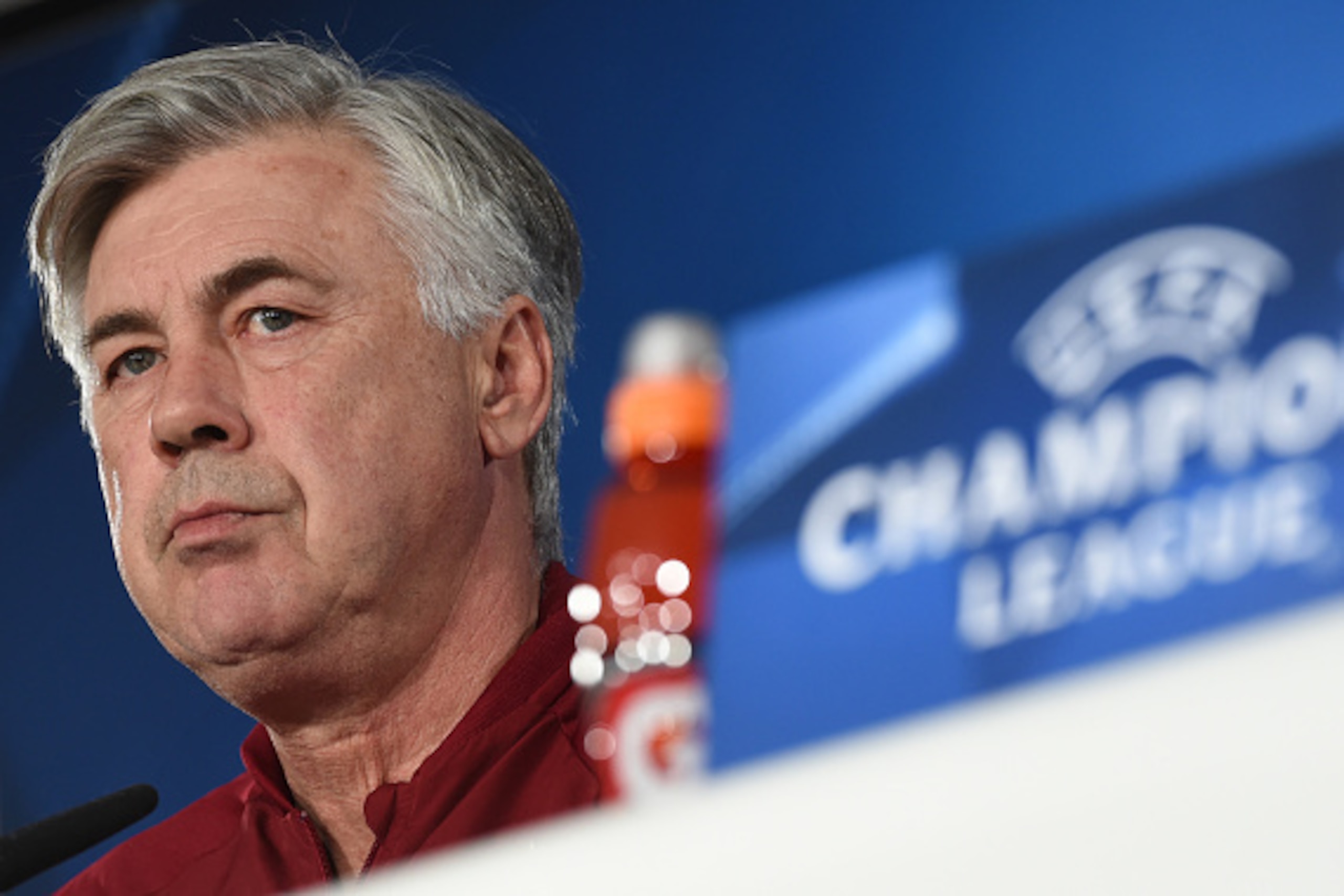
On Tuesday night, the Italian with the famously raised left eyebrow will lead Bayern Munich in UEFA Champions League action as the German giants take on Atletico Madrid. This will just be the latest step in a long and trophy-laden managerial career.
Yet, while he has become renowned as a coach to the stars over the last two decades, Ancelotti first made his name as an exceptional player for Milan and Roma.
Breakthrough with Parma
“We never had to go to the supermarket. Everything we produced at home. The bread, the milk, the cheese. We had chickens for the eggs,” Ancelotti told the Daily Mail’s Matt Lawton when reflecting on his upbringing in 2014. “You know I was 16 before I had my first shower. I remember standing under it thinking, ‘what is this?’ But we were comfortable, my sister and I, living with my parents and grandparents.”
Growing up in Reggiolo in the 1960s, Ancelotti became accustomed to farm life, even helping out his father, Giuseppe, in the production of parmesan cheese when he wasn’t studying. At the same time, his burgeoning passion for kicking a ball around could not be ignored. And in 1975, after years playing for the local youth team, he signed for Parma.
It was with the Crociati that he would not only make his professional breakthrough in Italian football’s third tier, but figure out his best position. For this he had a lot to thank former Milan captain Cesare Maldini, who became Parma coach in 1978.
Ancelotti had started out as a No. 9, but he lacked the speed necessary to operate effectively atop the team.
Maldini brought him back into a more withdrawn role, where he could scheme behind Fabio Bonci, focusing on linking play and creating chances. It was from this position that Ancelotti began to turn heads higher up the calcio hierarchy, helping Parma to promotion in 1979.
Settling in Rome
“Rome, a city of madness, the capital of my heart. I don’t know a thing about Milan, but I know everything about Rome,” Ancelotti wrote in his autobiography, Carlo Ancelotti: The Beautiful Games of an Ordinary Genius. “It was there that I learned to live.”
Adjusting to Italy’s capital city, a bustling commercial and historical hub, could be difficult for a 20-year-old born and raised in more rural environs. This was Ancelotti’s problem upon swapping Parma for Roma in 1979, though he would find the transition easier thanks to the guidance of a quality coach.
Nils Liedholm was a member of the famous "Gre-No-Li" trio also featuring Gunnar Nordahl and Gunnar Gren that helped Milan to four Scudetti in the 1950s. Having retired from playing, he spent time in charge of the Rossoneri as well as Verona, Monza, Varese and Fiorentina before joining Roma in 1973.
He would return for a second spell with the Giallorossi six years later and, taking over from Ferruccio Valcareggi, began to implement his own tactical ideas. One of his first orders of business was to replace the outgoing Giancarlo De Sisti, a deep-lying playmaker with fine passing ability who had retired at the end of the previous season.
Ancelotti had attracted attention with his performances for Parma as they won promotion to Serie B, and Liedholm desperately wanted him to add class to the midfield. Inter Milan were also interested, but Roma won the race for the youngster’s signature, for whom the proceeding years would prove a formative experience.
“Nils Liedholm … was a funny guy. If you asked him to name the best players of all time, he would say, ‘Me, Pele, Di Stefano.’ I loved that about him,” Ancelotti would later tell the Daily Mail’s Lawton. “But he was an inspiration and never once did I hear him shout at a player.”
Making his debut against Milan, Ancelotti would settle into a midfield that also featured Agostino Di Bartolomei, Romeo Benetti and Bruno Conti. And, one year after his arrival, he was joined by Brazilian technician Falcao.
Liedholm brought in more of a zonal-marking system and a rough 4-5-1 setup as Roma challenged for honours domestically and on the continent. In 1983, they would win only their second Scudetto, their first in over 40 years. And in the following season they would go all the way to the final of the European Cup, where they were defeated by Liverpool.
Ancelotti played a key role in these achievements, and even when a change of coach led to the departure of Liedholm, his influence didn’t wane. Instead, he was made club captain under Sven-Goran Eriksson and acted as a role model to Giuseppe Giannini, a playmaker so good he would one day garner the adulation of a young boy by the name of Francesco Totti.
Success with Milan
Having settled and thrived in a deeper midfield role during his eight years with Roma, Ancelotti’s development as a player was essentially complete. But his personal trophy haul didn’t quite match up to his immense talent. One league title and four Italian cups was an admirable collection, but it would be given an extra sheen following his departure in 1987.
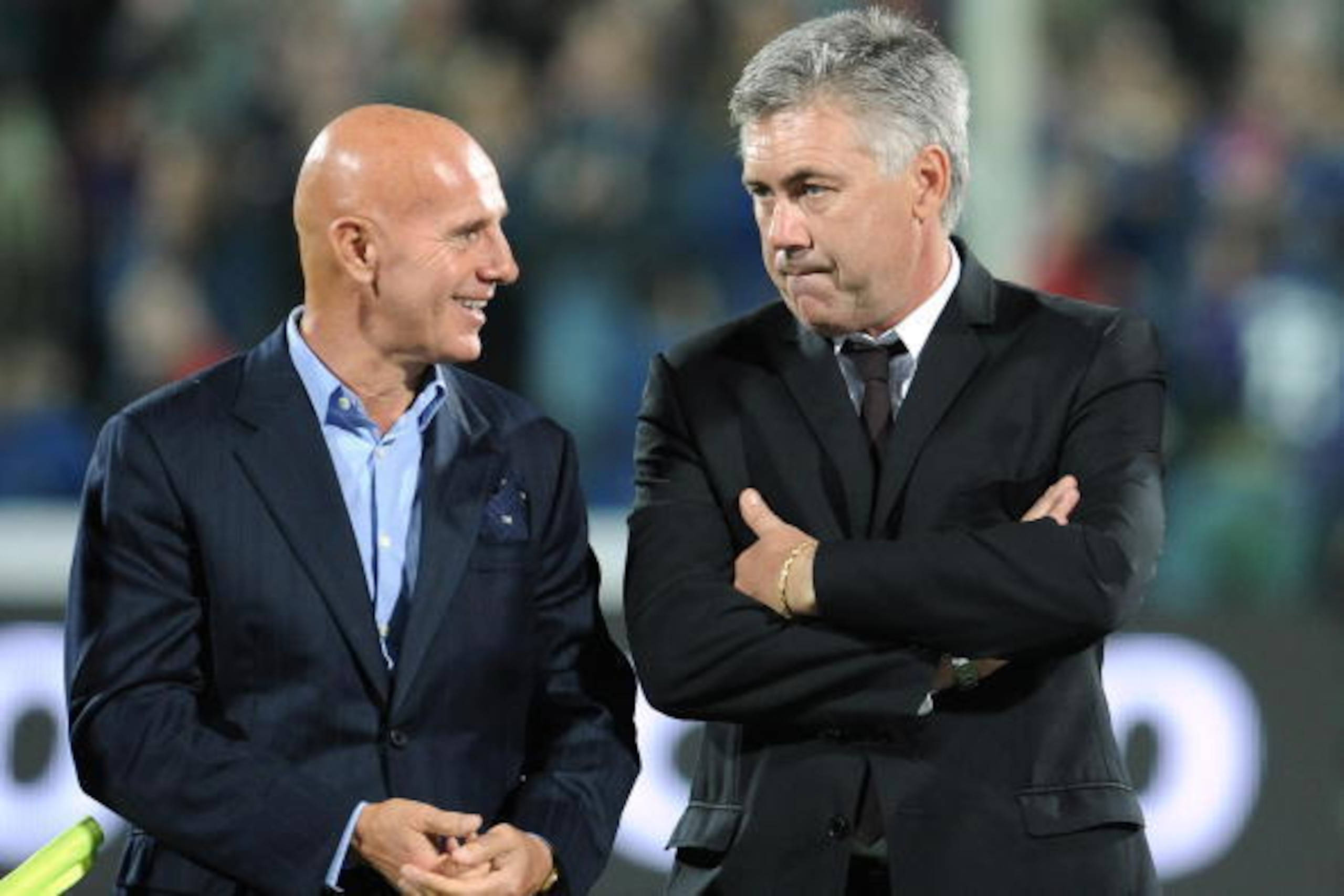
Ancelotti joined Milan not long after former coach Liedholm left. Arrigo Sacchi had been installed in the Diavolo dugout as club owner Silvio Berlusconi searched for a winning formula, and the newly appointed coach immediately set about reconstructing the team in his own image.
The ensuing period would see the club become kings of their continent.
“I chose the right time to go to Milan, didn’t I? It was a really, really fantastic team,” Ancelotti told FourFourTwo recently. “We played for a manager who knew exactly what he wanted. Arrigo Sacchi was doing something new in football with how we were organised, and he taught us to express ourselves … I had a great relationship with Paolo Maldini and Franco Baresi, but Sacchi was key.”
This era in Milan’s history would come to be defined by two remarkable but distinctly different groups of players. One was a fastidious all-Italian back line, with Maldini and Baresi alongside Alessandro Costacurta and Mauro Tassotti forming one of the most proactive and efficient defences of all time. The other was a luxurious trio of vibrant, artistic Dutch players comprising Frank Rijkaard, Ruud Gullit and Marco van Basten.
However, while these two groups were widely celebrated, Ancelotti played a less noticeable but equally pivotal role between them in central midfield.
In 1987-88, his first term at the San Siro, Milan lost just twice in league action as they won their first Scudetto in nine years. And, in his second season, the club would lift their third European Cup after a two-decade wait.
Ancelotti was by that point an experienced midfield competitor with supreme tactical awareness masking his relative lack of athleticism. His scoring instincts had been well and truly curbed since his early days at Parma, though he was nonetheless responsible for one of the most stunning and important goals of the Sacchi years.
On April 19, 1989, Milan took on Real Madrid at home in the second leg of the European Cup semi-final. History was at stake following a 1-1 draw in the Santiago Bernabeu. On 19 minutes, Ancelotti received the ball from Gullit about 25 yards out. He turned inside his marker, then jinked inside another opponent before unleashing a rocket of a shot beyond Real goalkeeper Paco Buyo.
That strike set the Rossoneri on the path to a momentous 5-0 win and a European Cup final, in which they beat Romanian champions Steaua Bucharest.
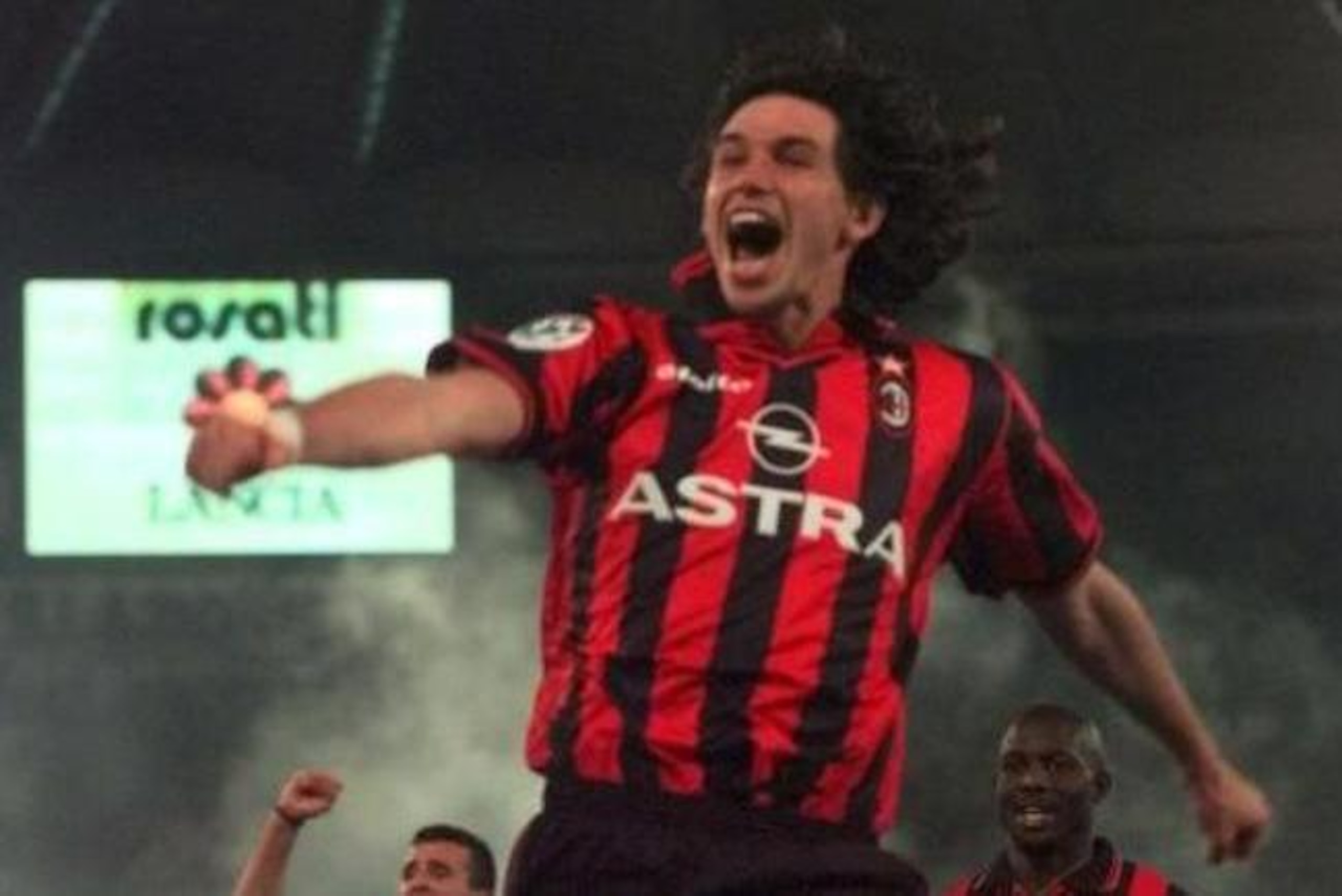
Ancelotti would help Milan retain their continental title in 1990 with a 1-0 final victory over Benfica, though knee injuries that had dogged him since his time at Roma were beginning to take their toll. Sacchi was replaced by Capello in 1991 and the new coach, with the future in mind, called in 20-year-old Demetrio Albertini.
The youngster would succeed Ancelotti in the centre of midfield, though not before the veteran had bowed out in glory. He made his final appearance in a 4-0 home win over Verona and scored two goals, one a drive from outside the box, the other a cool finish after a forward surge.
Coaching Destiny
A closer look at Ancelotti’s playing days reveals that he was destined to become a manager.
He showed adaptability to settle in Rome and Milan, separate worlds to where he grew up. In addition, he proved himself a versatile operator, taking up different tactical roles to suit both his skills and his teams’ needs.
When it came to nurturing promising young players, he was the man his coaches looked to set an example. Outstanding talents such as Giannini and Albertini benefited from his presence as a player of true class, intelligence and experience.
In essence, before he took to the touchline he was already a leader.
Ancelotti was a vital part of two great eras for two different teams. Throughout the 1980s and 1990s, he was a core component for Milan and Roma during spells of real success. In the process, he became an icon for both clubs.
.jpg?w=2560 "Rams to Sign New Kicker")
.jpg?w=2560 "Report: Giants Releasing Najee")
.jpg?w=2560 "Vet FAs Who Can Help Contenders")