La Liga at the Break: Scintillating, Fierce and Rejecting All the Stereotypes
The Ramon Sanchez-Pizjuan whistled for a few seconds and then it took its first breath. For almost two hours on that Sunday evening in Spain's south, it had been denied any chance to do so, an entire season seemingly rolling itself into a single 90-minute outing, 11 weeks reaching a crescendo and then exploding into one all-consuming note that was the extrapolation of them all.
Back and forth they went, trading blows as though they'd never play again. Sevilla went first. Barcelona went next. Vitolo, Mariano, Sergio Escudero, Steven N'Zonzi, Samir Nasri, Luciano Vietto and Franco Vazquez: Bloody hell, they were good, dashing and obliterating, storming forward in waves.
TOP NEWS

Sullivan, Hall Lead USMNT to Big Win 💥
.jpg?w=2560 "Titans Giants Football")
OBJ Calls Out Giants After Release

🚨 Week 5 AP Top 25 Poll
Lionel Messi then responded, turning the Pizjuan into his personal playground, becoming the best midfielder and forward in history at the same time. His team-mates then joined in. The Suarez pair in particular, Luis and Denis.
It was exhilarating, intoxicating: sprint, flick, layoff, nutmeg, shoot, block, save, sprint, repeat; our turn then your turn. It was football in fast-forward—football played with the "x3" button pressed on the remote.
When it was all done, Marca's match report (in Spanish) wondered whether the Pizjuan had seen anything like it, ever. The conclusion was that this was the best game of the season, but not only that: an ultimate reflection of the season. "La Liga is 'la leche.' Sevilla is 'la leche.' Messi is 'la releche,'" said beIN Sports' Miguel Angel Roman on Twitter.
Saying that something is "la leche" is not always to say it's milk. It's also a Spanish colloquialism to say something is awesome, incredible. The nuts. The business. Sevilla vs. Barcelona was that, but it wasn't alone in being so. In 2016-17, this is what La Liga is: scintillating, tense, fiercely competitive. And a joy for those who look.
"Premier League is nowhere near the level of the #Bundesliga and #LaLiga. Guardiola is perfectly precise on the intensity levels. pic.twitter.com/ILxIUuEOQA
— Nas (@NumberNineNas) October 17, 2016"
Somewhere in Manchester on Sunday night, watching on, perhaps wishing he could have a little Andalucian warmth, Pep Guardiola might have let go of a justified smile. He'd told them it was like this, after all, sound effects and everything.
It was after Manchester City had drawn 1-1 with Everton when Guardiola was posed the ever-so-tiresome question, fuelled by cliches, misconceptions and ignorance. He was asked about the Premier League's intensity compared to that of La Liga; Barcelona, who were awaiting City in the Champions League in the coming days, had won 4-0 against Deportivo La Coruna on the same day. The loaded question described it as a "recovery session."
Guardiola sat there for a couple of seconds, silent, mouth open almost in disbelief. "I hear a lot of times about the intensity of the Premier League when none of you have been in La Liga or the Bundesliga to know how it is," he retorted.
The Catalan smashed it out of the ballpark, but still the sentiment he rejected hangs heavily. Look at us in the Premier League with our passion and our intensity and our cash and our elite teams that don't win anything because we beat each other up every weekend. Look how brilliant we are, thumping our chests. Look at those Spaniards, look at pathetic little Eibar and Alaves ready to roll over and kiss Messi's boots as he sticks eight past them.
Except they're not. Alaves took three points from Messi and Co. at the Camp Nou and another from Atletico Madrid at the Vicente Calderon. Eibar took one from the Santiago Bernabeu. Villarreal did, too. Las Palmas did the same when Real Madrid visited. These are not one-off occurrences, they're happening regularly. La Liga is thrilling and diverse, volatile in its own way—"la leche."
| 1 | Malaga | 1-1 | Osasuna | Merida - 85’ |
| Deportivo La Coruna | 2-1 | Eibar | Lucas - 87’ | |
| Atletico Madrid | 1-1 | Alaves | Garcia - 94’ | |
| 2 | Espanyol | 2-2 | Malaga | Charles - 90’ |
| 3 | Sevilla | 2-1 | Las Palmas | Sarabia - 89’, Fernandez - 93’ |
| Valencia | 2-3 | Real Betis | Castro - 91’ | |
| Granada | 1-2 | Eibar | Enrich - 93’ | |
| 5 | Celta Vigo | 2-1 | Sporting Gijon | Aspas - 87’ |
| Valencia | 2-1 | Alaves | Parejo - 88’ | |
| 6 | Las Palmas | 2-2 | Real Madrid | Araujo - 85’ |
| Espanyol | 0-2 | Celta Vigo | Rossi - 91’ | |
| 7 | Sevilla | 2-1 | Alaves | Ben Yedder - 90’ |
| Osasuna | 2-2 | Las Palmas | Garcia - 91’ | |
| Deportivo La Coruna | 2-1 | Sporting Gijon | Babel - 91’ | |
| 8 | Leganes | 2-3 | Sevilla | Sarabia - 85’ |
| Alaves | 1-1 | Malaga | Rosales - 85’ | |
| 9 | Osasuna | 1-2 | Real Betis | Gutierrez - 91’ |
| Espanyol | 3-3 | Eibar | Baptistao - 91’ | |
| Valencia | 2-3 | Barcelona | Messi - 93’ | |
| Villarreal | 2-1 | Las Palmas | Bakambu - 91’ | |
| 10 | Eibar | 2-1 | Villarreal | Leon - 87’ |
| 11 | Las Palmas | 1-0 | Eibar | Viera - 93’ |
As Spanish teams romped their way to yet more success in continental competition last season, league president Javier Tebas said that Spain was "getting used to caviar [in Europe]," according to AS (in Spanish). Giants like Real Madrid and Barcelona make that possible, of course, but now the caviar is coming from everywhere.
Sevilla are in the middle of building something special in the country's south, Jorge Sampaoli leading the most progressive project in the land. Villarreal, one place ahead of them, are coming, too, firepower being added to solidity.
The top five are separated by six points; third, fourth and fifth are separated by one. For Barcelona and Atletico, this season has seen them make their worst starts in years. The paradoxical bit is that they have their best squads in years. Fixtures play a part in that, but so, too, does a depth and competitiveness that rejects the stereotype.
With five wins in seven, a resurgent Real Sociedad are a leading figure in the "next tier," their Anoeta remaining a graveyard for the big guns. The ferocious Athletic Club are just behind them. Then it's Celta Vigo, slayers of Barcelona at Balaidos, where the Catalans left butchered after conceding four.
Then it's Las Palmas, all expression and all joy—the tiny island team led by Quique Setien, who says his philosophy is that of Johan Cruyff, according to the club website (in Spanish); who means it when he says it; who has his team playing the most uplifting possession-based style around, his players having had more of the ball this season than Manchester United and Chelsea.
But it's not just individual teams, either. Look at the games: Sevilla-Espanyol, Valencia-Las Palmas, Real Betis-Granada, Barcelona-Atletico, Athletic-Sevilla, Malaga-Athletic, Celta-Barcelona, Valencia-Barcelona, Espanyol-Eibar, the Basque derby, the Seville derby and more—every single one of them have been breathless and seesawing, daring and skilful, endlessly entertaining.
Scorelines have found their way to 6-4, 6-2, 4-3, 5-2, 4-2, 3-3 and 3-2. Every week, there's an upset. Every week, there's a late winner or equaliser. More than one, in fact—there have been 23 winners or equalisers after the 85th minute in 11 rounds.
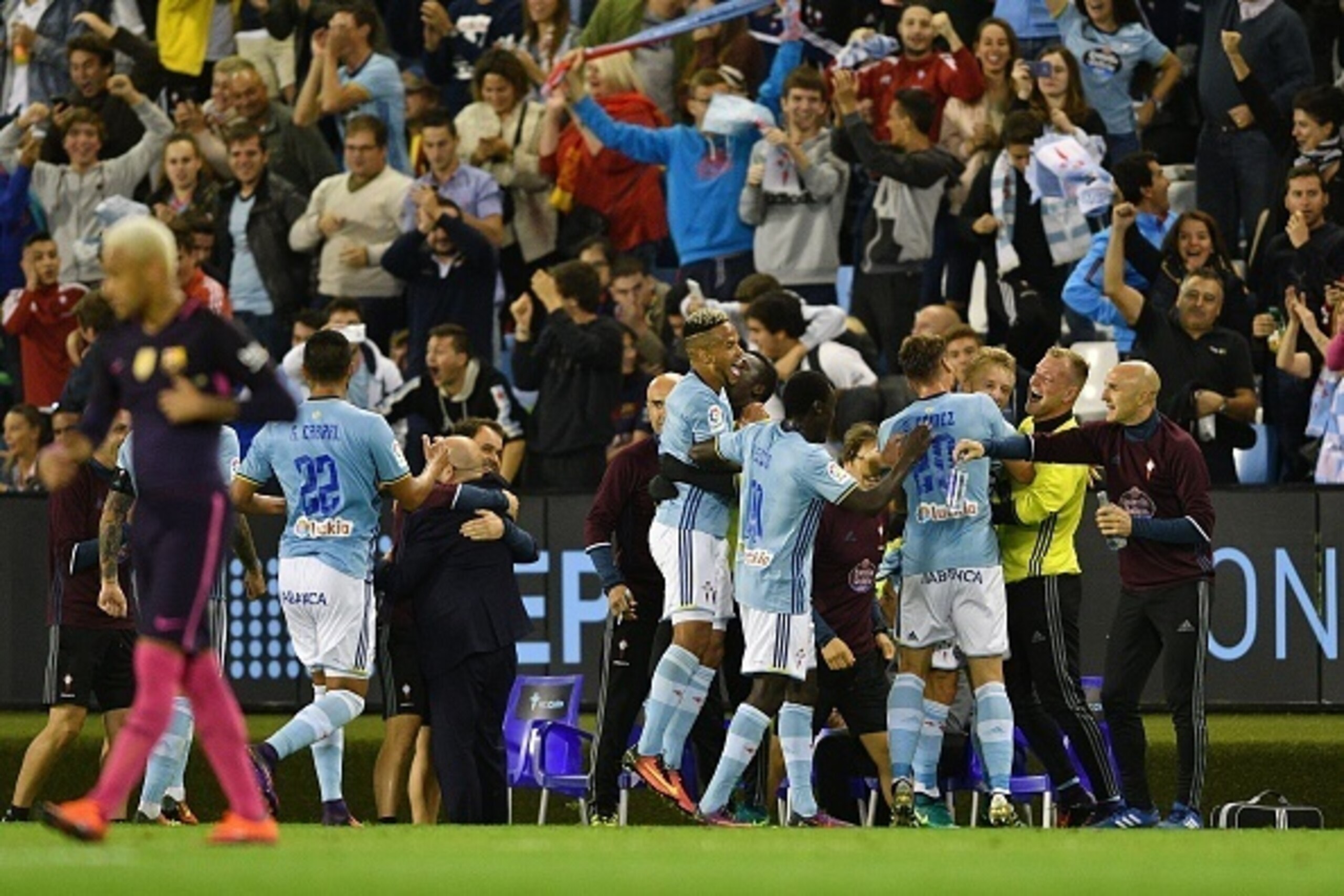
Somehow, though, it's all overlooked by so many. Flaws are jumped on and strengths dismissed. La Liga bashing is everywhere. When Liverpool thrash Watford 6-1, it's because Liverpool are brilliant, they say. When Real Madrid thrash Betis 6-1, it's apparently because Betis are rubbish and willing to roll over so they can grab a selfie with Cristiano Ronaldo afterward.
La Liga has its issues, sure, but its complexion is changing. At the beginning of this decade, football in Spain was hit hard by the financial crisis: More clubs in the top two divisions went through administration than didn't, players and assets were sold, squads were gutted and competition evaporated. That coincided with Barcelona and Madrid reaching levels they'd perhaps never touched before, led by Guardiola and Jose Mourinho amid a furious war.
But now the Spanish game is recovering. Debt is being steadily reduced across the country, mismanagement at club level is being addressed and a more equitable TV rights deal has been enshrined in law. Combined with that, coaching and scouting has remained as strong as ever, possibly stronger than anywhere. Clubs like Sevilla and Villarreal are evidence of it, leading the way when it comes to competing with limited resources.
Obstacles and challenges remain vast in number, but the on-field product is thriving. La Liga's title race in recent years has gone from a two-team affair to three. This time, it could be four. Sampaoli's Sevilla are following Atletico's lead in challenging existing barriers, their style captivating, their theme one of rebellion.
Only 11 weeks into a brand-new, audacious project, the Andalucians have overwhelmed Atleti and, for a half, outplayed Barcelona at their own game. The possibilities are intriguing, tantalising even. But more than anything, Sevilla are representative of what's happening beyond the league's big two: fun, freneticism and a rejection of the stereotypes.
La Liga is "la leche."


.jpg?w=2560 "Rap: Lions, LaPorta End Contract Talks")