

More Mistakes and Misjudgements from Zinedine Zidane Harming Real Madrid Outlook
Real Madrid were held to a surprising 3-3 draw by Legia Warsaw in the UEFA Champions League on Wednesday night, with Los Blancos giving up a two-goal lead before needing a late equaliser to salvage a point in the empty Polish Army Stadium.
It leaves Madrid two points behind Borussia Dortmund in Group F and needing to beat the Germans on home soil to reclaim top spot before the end of the group stage. Manager Zinedine Zidane—along with several of his players—was visibly frustrated by his team's inability to beat the Poles, who previously had zero points.
TOP NEWS
Sullivan, Hall Lead USMNT to Big Win 💥
.jpg?w=2560 "Titans Giants Football")
OBJ Calls Out Giants After Release

Pic of LeBron's Helicopter Commute 🚁
On this occasion, though, it was Zidane's choices—from the outset of the game with the team mentality and arrangement to his in-game decisions—that cost Madrid victory.
Lineup
Following a 5-1 win over the same opposition last time out in the Champions League, Zidane should have had two choices: play his usual side and system and get the result wrapped up early before making changes or else bring in some fringe players, the likes of Lucas Vazquez, James Rodriguez and Marco Asensio, and give them a chance to stake a claim.
Instead, he went with a frankly bizarre alternative: added another striker to his three-man attack, left the rest of his available first-teamers in place and assumed his four-man attack would simply overwhelm Legia.
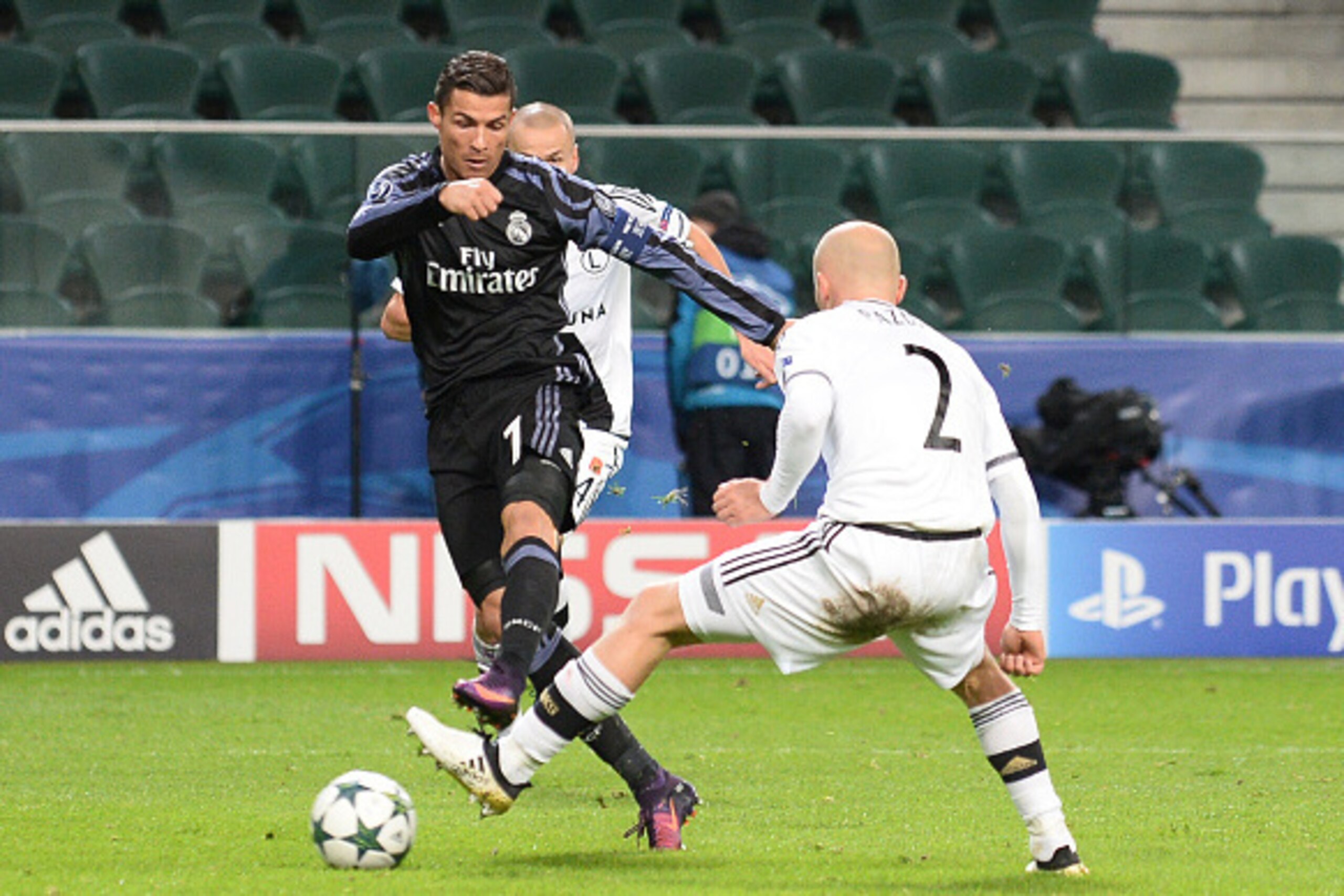
Zidane made a terrible error of judgement.
Sixth-place in the Ekstraklasa Legia might be, but the Champions League is no place for complacency and overbearing arrogance, which is what Madrid's lineup smacked of. Even at a goal or two up, the balance of the side was awful, Legia had chances and the way Madrid failed to control the match when in front was beyond irresponsible.
Zidane, who didn't make changes despite the clear progression of the game and the spaces within it, has to take responsibility for that.
Discord
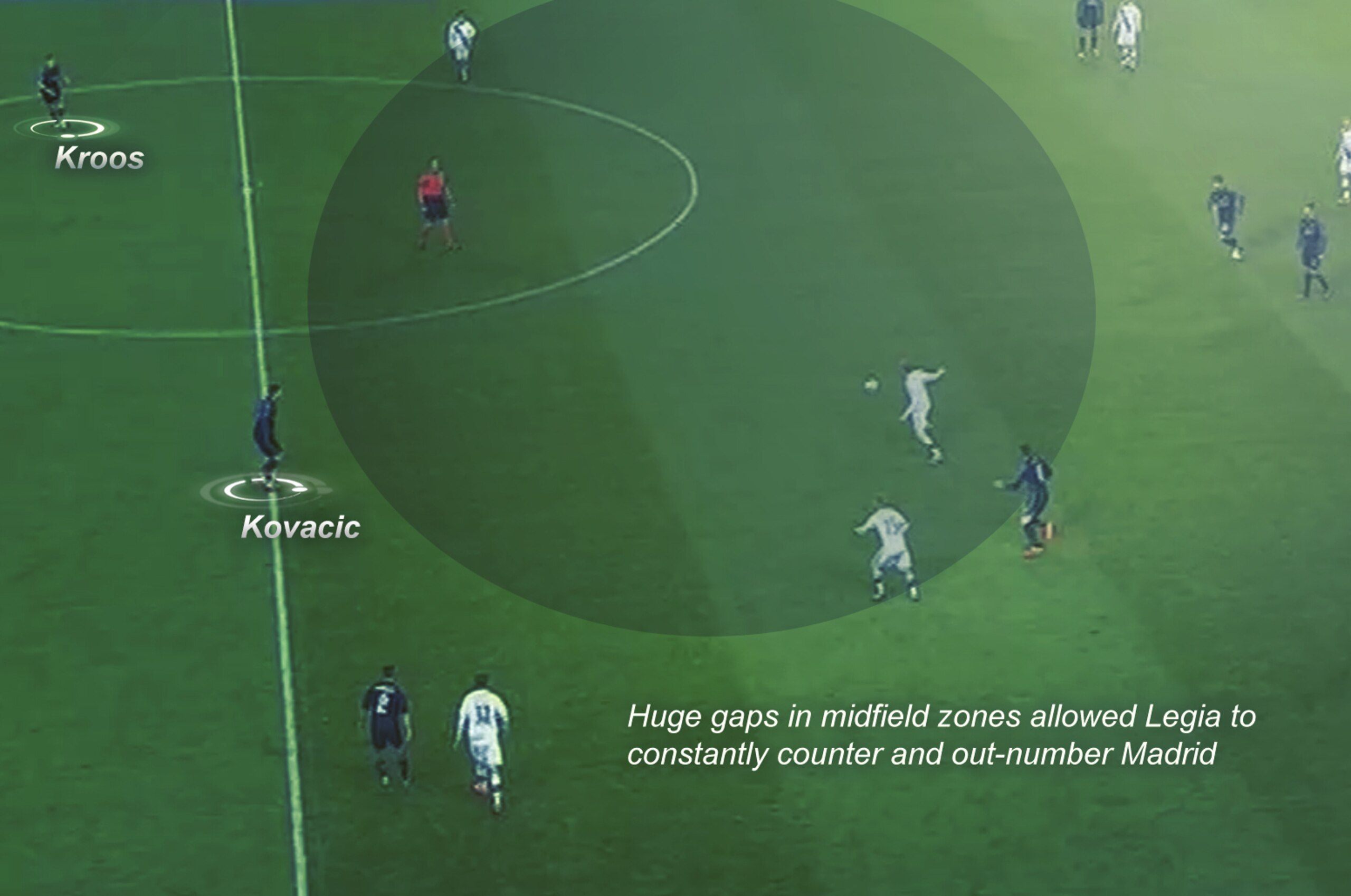
For much of the game, right from kick-off, Real Madrid had a back four and four up front. It left ridiculous gaps in midfield, a huge area of ground for midfielders Toni Kroos and Mateo Kovacic to cover and prevented any real semblance of build-up play.
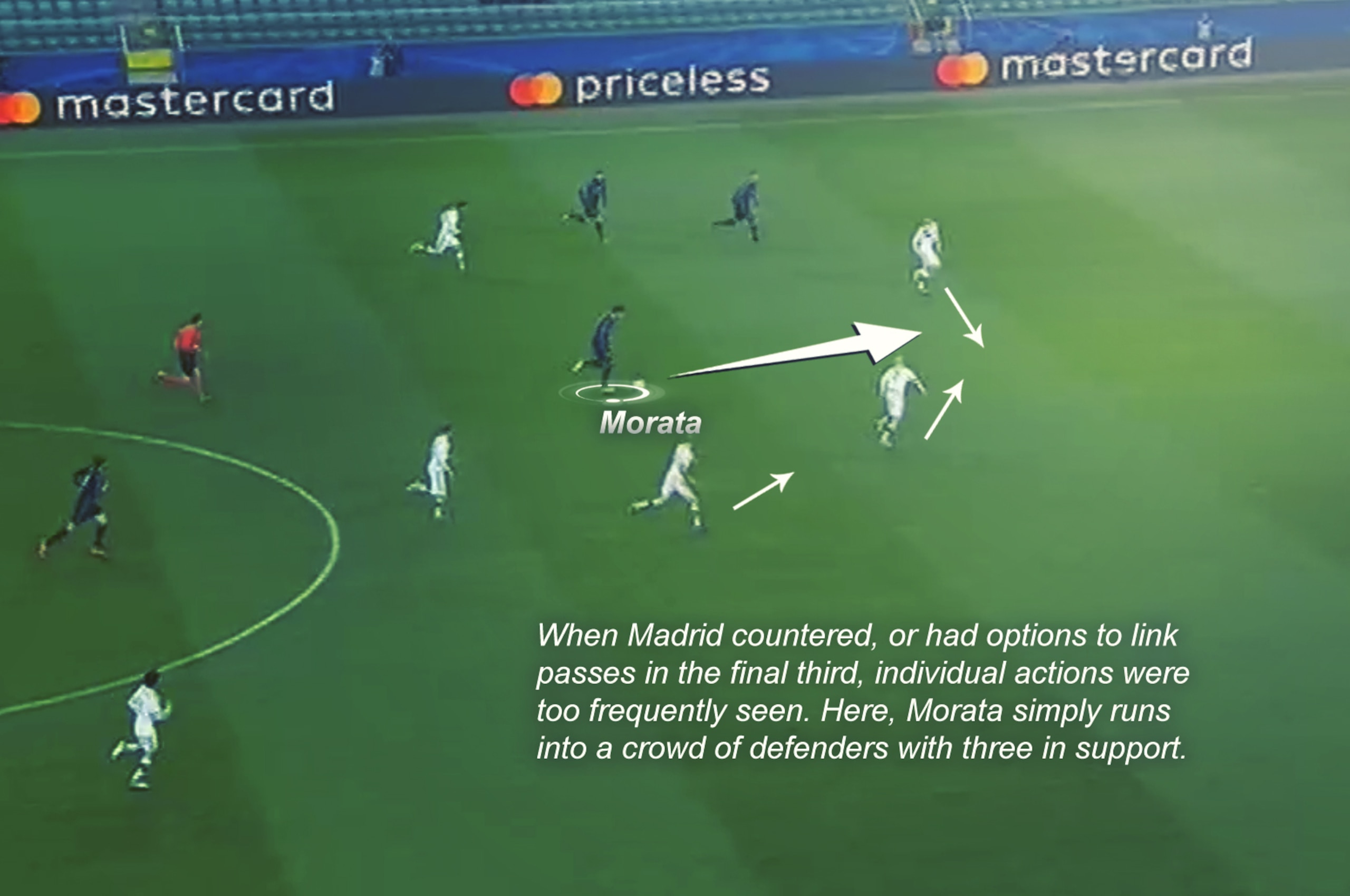
In fact, Madrid were regularly seen to use only two methods of attack: individual actions, attempting to run through two or three players at once, or relentlessly and pointlessly crossing the ball.
The triangles and quick exchanges of passing that can usually be seen when a wide forward, an advanced central midfielder and a striker link up were near nonexistent from Los Blancos, and the left side of the pitch was particularly responsible—especially considering it was Legia's strongest side for linking play in that way, building pass by pass down their right.
Early in the match, this disconnect between the midfield and forward lines was clearly visible, so why did Zidane wait so long to change anything?
Quite aside from the standard of delivery, Madrid's approach of monotonously attempting to cross from wide positions indicated at best a disrespect for the defence they were facing and at worst a complete shirking of responsibility to make an intelligent in-game decision, attempt to be creative or be patient enough to maintain possession in more dangerous areas.
It's notable that one of the few occasions when Madrid did attempt to pass centrally and show movement in the final third resulted in Karim Benzema's close-range finish.
Movement, numbers in the final third, exchanges of passes, goal.
A total of 34 crosses in the match (per WhoScored.com) indicates just how obvious and predictable Madrid's attack quickly became with a four-man line playing so high up, well above their usual (also reasonably high) averages of 26 per game in Europe and 25 per game domestically, the highest in La Liga.
Zidane
Zidane spoke in his post-game press conference about the team's lack of intensity, among other factors:
"When you go 2-0 up you have to think more and play together as a team, but we didn't do that and we allowed them to have more space. The game changed when they scored their first goal. Our desire and intensity dropped massively. We lacked a little bit of everything, especially our intensity which failed us.
"
"Intensity" has been one of the manager's buzzwords of the season, but whereas in other games he could rightly point to a sluggish start, a goal from Gareth Bale inside a minute doesn't give the same excuse this time around.
The visibility of the systematic problems on the pitch should have been clear to Zidane within minutes of that goal, though. Which of the following potential truths is more worrying: the manager saw the issues and didn't respond to them, or he didn't notice them until Legia pulled one back?
Not the all the fault lies with Zidane, though.
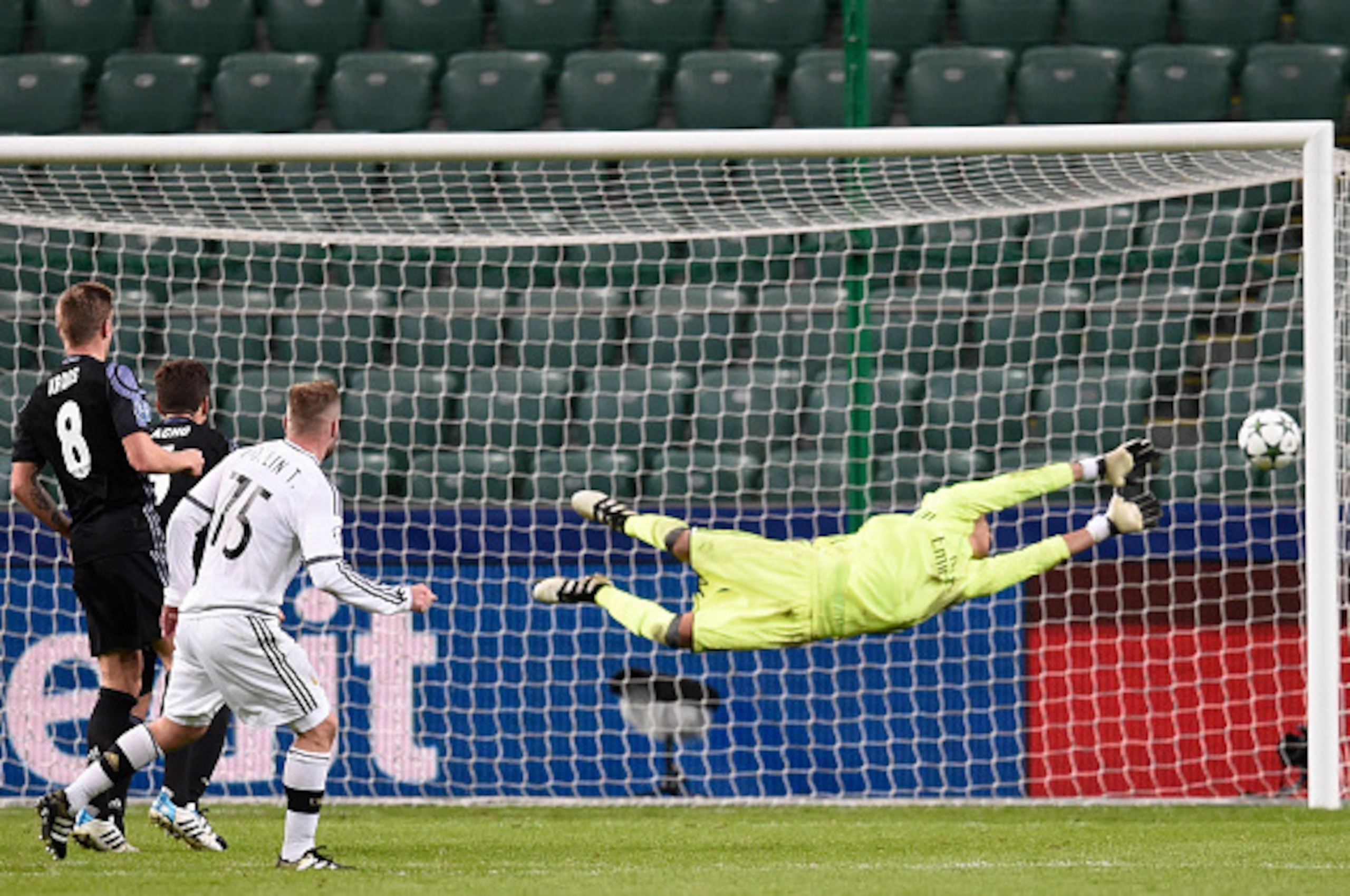
Defender Raphael Varane's game was littered with mistakes on the ball once more, and goalkeeper Keylor Navas should have dealt far better with Legia's equaliser.
But most of the problems during the match stemmed from the team's overall outlook, which is set out by the initial approach, lineup and mentality of the team. That lies with Zidane.
Positives
- Despite a poor result and several weeks' worth of disappointing performances overall, Real Madrid and Zidane remain unbeaten this season in any competition—and without a defeat in 27 competitive games, dating back to last term.
- Kovacic was again impressive with his energy, attempts to knit the team together and, most importantly, his late goal to equalise.
- A win on home soil would still see Real Madrid overhaul BVB to top the group, and they have looked good in some of their biggest games this season.
- Bale was the hardest-working member of the front four, the only one who attempted to drop back and form a midfield line out of possession. He was creative and selfless in the final third too.
- Fabio Coentrao managed 76 minutes. It wasn't a particularly noteworthy performance, but game time is required after such a long absence.

.jpg?w=2560 "Rap: Lions, LaPorta End Contract Talks")

.jpg?w=2560 "Report: Baker May Miss Up to 6 Weeks")