

Breaking Down Rafael Nadal's Only Hopes for a 2017 Renaissance
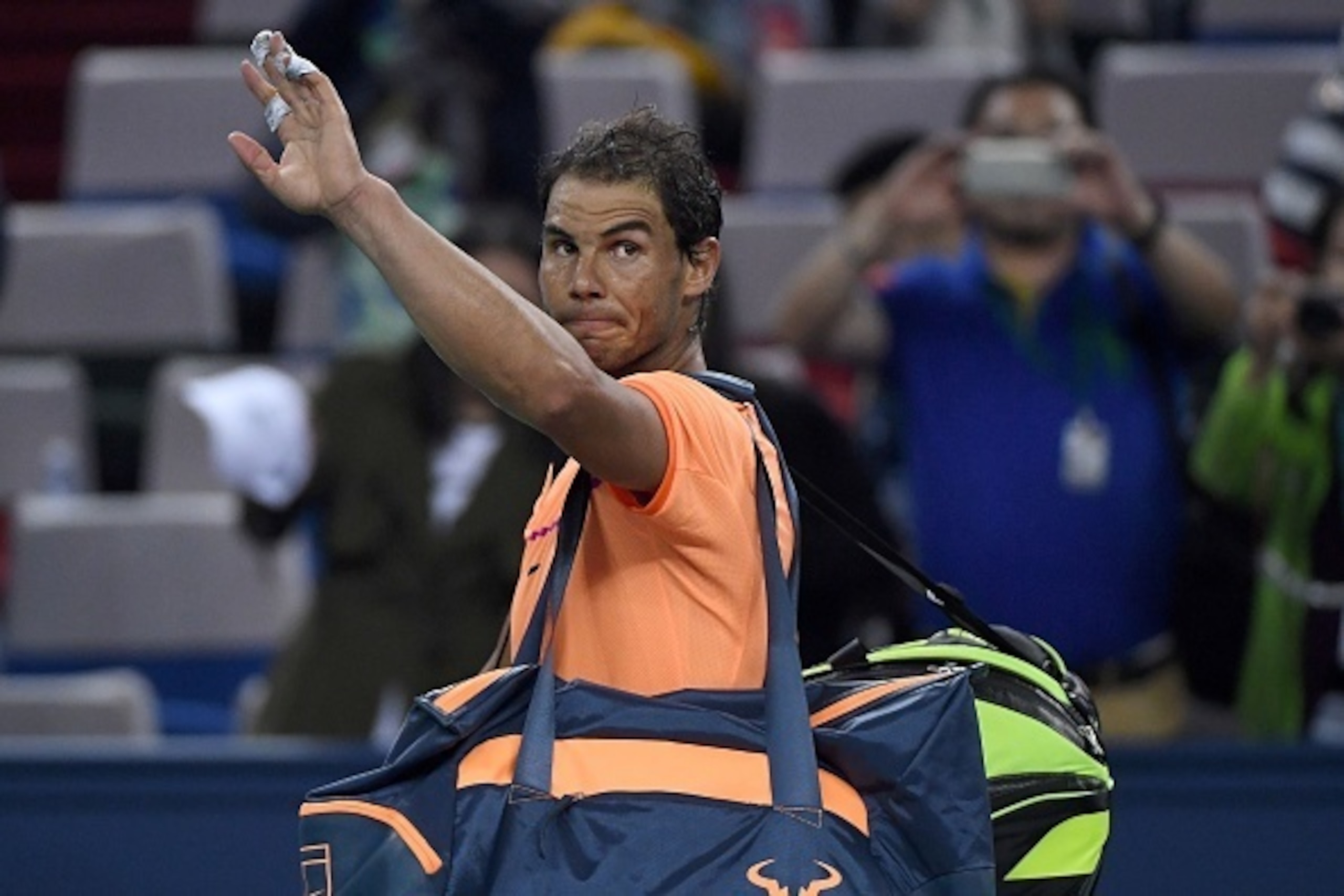
Tennis legend Rafael Nadal might not play again in 2016 after another crushing midweek defeat in China. He said, per Spanish newspaper Marca that “for me, the season is practically over now.”
With the Paris Masters coming late in October, Nadal could qualify for the lucrative World Tour Finals in November that showcases the top-eight tennis stars. But the Spaniard, currently No. 7 in the Race to London, is ambivalent at best about how to prepare for his immediate future.
“It is unclear what I am going to do during the next month, as I'm not sure about my schedule and the things that I need to do to try to be at 100 per cent ready for the next year,” Nadal continued in Marca.

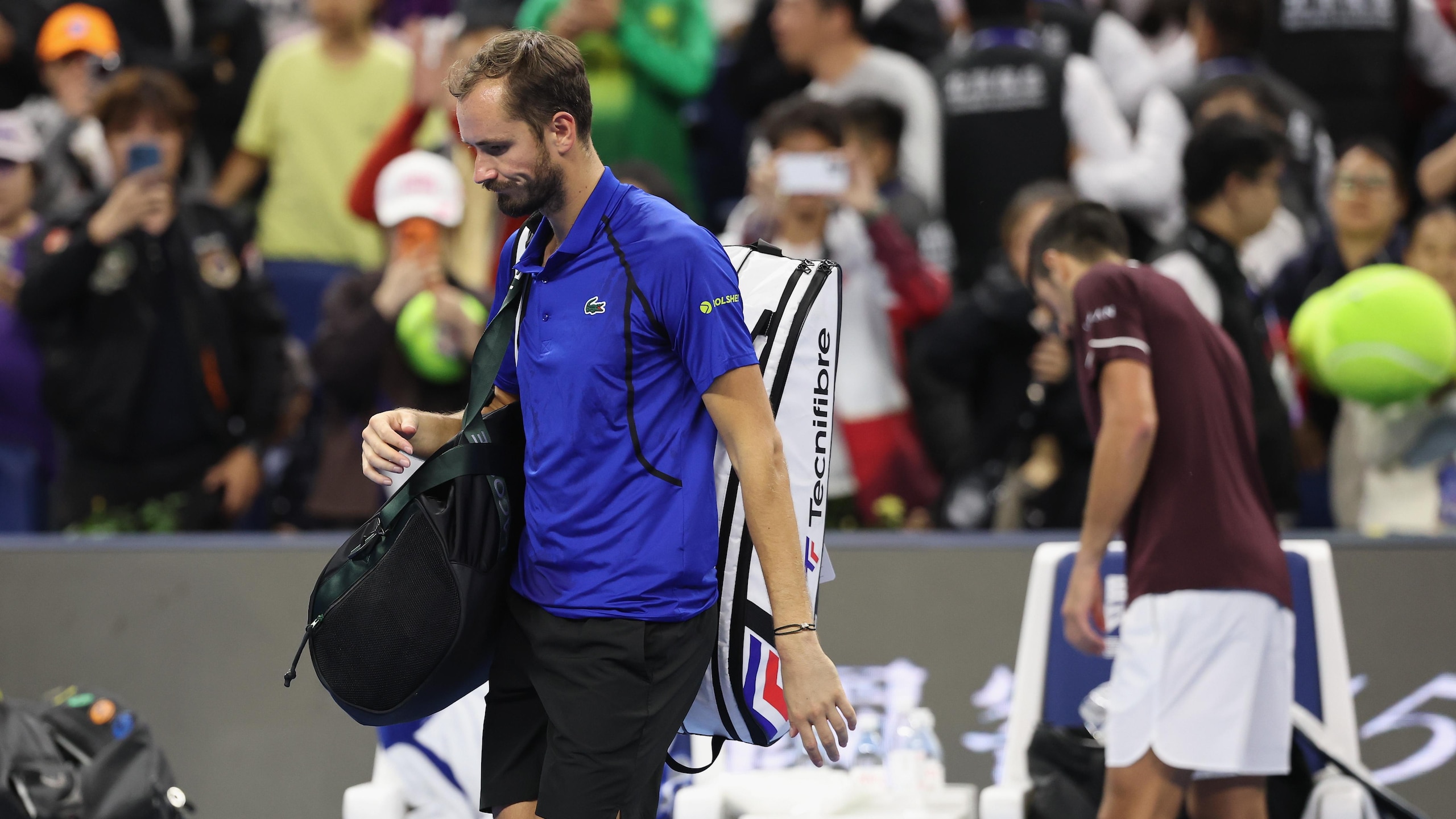

At the same time, Nadal said in ATP World Tour that “I need to play my matches, to practise more and just to keep playing. I know what I have to do, and I am going do it. I have two-and-a-half months until the new season starts, so I have two-and-a-half months to put myself at the level that I need to be. I have the confidence that I'm going do it.”
In other words, Nadal is looking past the rest of the season, and there will be a lot of soul-searching in the weeks and months ahead as he tries for one last mini-renaissance in 2017.
Can he do it?
The Schedule
Nadal came back after more than two months from an ailing left wrist to play in the Olympics in August, but he’s in a quandary. He needs matches to get stronger but too much play could send him back to the sidelines.
Consider two different outcomes with the past two autumns. In 2014, Nadal played a light fall schedule after coming back from summer injuries and missed Paris and the WTF because of appendix surgery. He looked for a strong return to the 2015 Australian Open but was only a shell of himself for nearly the entire year.
The second outcome in 2015 is Nadal’s best tennis of the year in Asia and the WTF. He continued to play tennis during the brief offseason, participating in the quasi-exhibitionist International Premier Tennis League. It might have been too much tennis, wearing him down like an old soldier at The Battle of Thermopylae.
He could have been fresher, but he went down early at the Australian Open. Only a brief early-clay-season title stretch at Monte Carlo and Barcelona had him hopeful for another French Open title. Then the wrist injury, the Roland Garros withdrawal after the second round and here he is.
What next? To play or not to play?
The best outcome might be to take this time off in the fall and through December, train and recover with his team and perhaps add another coach into his circle—someone who could lend a fresh approach for training routines and renewed enthusiasm if not fine-tune his fading skills.
Then, Nadal would be wise to pace himself with a less strenuous track. Skip Doha, play the Australian Open, skip February and play Indian Wells. Then he should definitely skip Miami and head over to Europe for one more great run on clay. Play Monte Carlo and Barcelona, skip Madrid and play Rome. Play the French Open and let the rest of the year take its course depending on how strong or worn down he becomes.

Renewing his Skills
No matter what else happens, Nadal will need to raise his game in three particular areas. First the forehand, the once-lethal hammer that ripped tennis balls into blurry ovals of topspin, fiery comets that chewed up his opponents’ backhands.
These days, the magic spin is gone, the power diminished and groundstrokes more frequently fail to probe the outer reaches of the baseline.
“I need to recover the forehand,” Nadal said in ATP World Tour after his Wednesday loss. “I know I need to hit forehands. Every time that I hit the forehand, I need to create pain for my opponent.”
Instead, it’s been painful for Nadal fans to watch his struggles.
Likewise, Nadal’s serve has been a letdown. Last week against Grigor Dimitrov, Nadal was broken five times in nine service games, and it could have been worse with 10 other break-point chances fended off. This is an area that has rarely been a strength, but it’s never been such a liability. He’s not going to serve like the 2010 or 2013 U.S. Open, but perhaps an added coach could help him revamp this part of his game.

Then there’s his footwork—the most important key to everything he tries to do on offense. After more than a decade of grinding through injuries and gruelling big matches, his wounded knees and battered legs do not have the youthful spring they once did. It might be too much to recover, but Nadal knows his legs and retrieving are crucial for better ball-striking if he is to rediscover his greatness.
“... I need to recover a little bit the electricity in my legs,” he said again in ATP World Tour. “I need to move faster to hit more forehands. But I need to be more confident with the forehand to make that happen. Everything is a cycle. I need to do the things together.”
Only then would Nadal be able to string together the consistency he needs to defeat top-10 opponents, win big matches and impose himself for a chance at the 2017 French Open title.
It’s his last chance.
Nobody knows the situation better than the proud Spaniard champion. His comments allude to everything he needs to do. Does he have enough left?
Things look bleak, but this is Nadal. He will fight for every point and a few more great moments. He’s down but not out.
.jpg?w=2560)
.jpg?w=2560 "Rams Eagles Football")
.jpg?w=2560 "Bijan's INSANE 1st Half 🤩")

.jpg?w=2560 "Injury-stricken Seahawks signing veteran RB")

.jpg?w=2560 "2 NFL Officials Suspended")
