Austrian Grand Prix 2016: Winners and Losers from Red Bull Ring Race
Lewis Hamilton claimed his third victory of the 2016 Formula One season in Sunday's Austrian Grand Prix at the Red Bull Ring.
The British driver started from pole position at the Spielberg circuit, but he was only assured of the win after emerging from a final-lap collision with Mercedes team-mate Nico Rosberg, whose attempt to take the three-time world champion out of the race backfired spectacularly.
Joining Hamilton on the podium were Max Verstappen, who became the first Red Bull-backed driver to finish in the top three at the team's home track, and Kimi Raikkonen, who secured a timely return to the rostrum on another frustrating weekend for Ferrari and Sebastian Vettel in particular.
On a day McLaren-Honda's Jenson Button offered a reminder of his qualities, Force India lost some of their mid-season momentum and Pascal Wehrlein scored Manor's first points finish in more than two years, here are the winners and losers from Austria.
Winner: Lewis Hamilton
1 of 7
Since Mercedes' rise to prominence at the beginning of 2014, Lewis Hamilton has spent much of his time fighting through the field, recovering from grid-place penalties, reliability issues and on-track incidents.
How pleasant it was, then, that when the three-time world champion climbed into his car on the Spielberg grid, his route to the top step of the podium was relatively simple.
With Nico Rosberg and Sebastian Vettel starting down the order due to five-place grid penalties, it seemed Hamilton's biggest obstacle to victory was how he would make it through an opening stint on ultrasoft tyres, which—as Pirelli's official website stated—were expected to last no more than 10 laps.
Well, in the cooler conditions, Hamilton made them last until Lap 21.
But he still somehow found himself behind his team-mate.
Rosberg's decision to follow Pirelli's guidelines, switching to the soft-compound rubber at the end of Lap 10, gave the German the pace he needed to move in front of Hamilton when the first round of stops were completed, suddenly moving the British driver from a position of strength to one of vulnerability.
Despite tracking the sister car closely, Hamilton was unable to get past. It was revealing that Mercedes opted to pit him first during the second round of stops when most teams normally allow the driver in front to stop first, almost as if the team were trying to help him regain a lead that was rightfully his.
As heard over the Formula One Management television feed, Hamilton didn't feel he was being given a helping hand when he complained about being put on a harder compound to his team-mate over pit-to-car radio.
But the advantage of the soft rubber became obvious in the latter stages, when he gained on the supersoft-shod No. 6 car and launched the move into Turn 2 on the final lap, surviving Rosberg's assault to cut the German's points lead from 24 to 11.
Even when the road to victory was laid out in front of him, Hamilton couldn't resist pulling it off in the most spectacular, tense fashion imaginable.
Loser: Nico Rosberg
2 of 7
This was Nico Rosberg's Jerez '97 moment.
Under attack from Lewis Hamilton on the run toward Turn 2 on the last lap, the only thought running through his mind—as with Michael Schumacher, his compatriot and former Mercedes team-mate, during his title-deciding battle with Jacques Villeneuve almost two decades ago—was to take him out.
And just like the seven-time world champion, Rosberg's desperate, dirty driving caused him much more harm than good.
His latest collision with Hamilton—their third in the last five races—was the final act on a strange weekend for the championship leader, who had the speed to win but was unable, or just plain unwilling, to piece it all together.
After dominating Friday practice, a suspension failure on the exit of Turn 2 on Saturday morning left him compromised ahead of qualifying, when he drove well to finish second to Hamilton.
Yet even then we witnessed the conservatism that has so far prevented Rosberg making the leap from race winner to world champion. The German was reluctant to switch from intermediate tyres to ultrasofts on a rapidly drying track in Q3, to the point where Mercedes ultimately took the decision out of his hands.
Starting sixth due to a gearbox penalty, there was an emphasis on Rosberg to produce a recovery drive of Hamilton-esque proportions in the race. And while he is renowned for his lack of overtaking prowess, he made good progress in the opening laps, passing Nico Hulkenberg and Jenson Button with bold, brave moves.
Hamilton's extended stint on ultrasoft tyres, while impressive, played Rosberg into race-winning contention, and the German did appear to be on course for one of the most remarkable, psychologically important victories of his career in the closing laps.
Yet there was also the suspicion that Rosberg, having often made mistakes when placed under sustained pressure over the last two years, would offer his team-mate one last chance, and an error at Turn 1 on the last lap gave Hamilton the momentum he needed.
Per Motorsport.com's Charles Bradley, Mercedes boss Toto Wolff later insisted the German—who made no visible attempt to avoid a collision with Hamilton at Turn 2—had suffered a "brake-by-wire failure."
Yet a driver with fundamental braking problems would surely have taken a more cautious approach at the biggest stopping zone on the circuit and settled for second, completing an exercise in damage limitation.
Left to stagger over the line in fourth place with his front wing tucked underneath his car, Rosberg was extremely fortunate to escape with a 10-second time penalty for the ugliest incident yet between the Mercedes drivers.
Winner: Max Verstappen
3 of 7
After his off-track adventures on Friday morning, when he took on the new yellow kerbs and lost twice, it felt as though this would be another of those lesson-learning weekends for Max Verstappen.
Outpaced by Daniel Ricciardo in all three practice sessions, the 18-year-old was forced to settle for ninth in qualifying, with a time almost two seconds slower than the Australian, when Red Bull were slow switching to slick tyres on an ever-drying track.
Having set their fastest times of Q2 on the supersofts, however, the Red Bull drivers—like their Ferrari counterparts—were guaranteed to start the grand prix on a more durable compound.
And it was on race day when Verstappen shone, producing a performance containing the skill and stamina of his victory in May's Spanish GP.
Having gained a number of positions in the first stint, the Dutchman crucially jumped Kimi Raikkonen after making his pit stop seven laps earlier than the 2007 world champion.
Committing to a one-stop strategy that saw him spend as many as 56 laps on the soft rubber, Verstappen eventually worked his way into the lead in the closing stages, although—despite his best efforts—he was unable to resist the might of the Mercedes drivers.
But he was, as in Barcelona, more than capable of withstanding the pressure of fellow one-stopper Raikkonen, crossing the finish line around 0.3 seconds in front of the Ferrari and claiming the second top-three finish of his career.
It was apt that Verstappen, very much a symbol of Red Bull's future, became the first Red Bull driver to stand on the podium at the team's home track since Spielberg rejoined the calendar in 2014.


.jpg?w=2560 "NBA Gambling Charges")
Loser: Ferrari
4 of 7
Shall we add Austria to the ever-growing list of races Ferrari could and should have won?
Even with Sebastian Vettel's five-place gearbox penalty, the Prancing Horse appeared to be in a reasonably strong position after qualifying, with the four-time world champion and team-mate Kimi Raikkonen guaranteed to start on the more durable supersoft tyres.
The cool conditions of race day undoubtedly aided Mercedes' management of the delicate ultrasoft compound, but Ferrari's afternoon was yet again undone by their mismanagement of the rubber.
As Vettel later told the team's official website, his highly scientific strategy was to simply "go on as long as possible" during his first stint and then hope for the best from there.
But a rear-right tyre explosion while leading at the beginning of Lap 27 left his master plan in ruins.
While he was not quite as damning of Pirelli as he was following a similar incident at Spa 2015, Vettel—having suffered his third retirement in nine races—was reluctant to even dare criticise Ferrari, telling the same source how the explosion came "out of the blue" and that "lots of people went longer than [him] on the same tyres."
Yet the fact Sauber's Felipe Nasr spent 27 laps on supersofts, the longest of any driver, would suggest Ferrari and Vettel—who would have completed several additional laps on that very set of tyres in qualifying—pushed their luck a little too far and paid the price.
With Vettel starting out of position, Raikkonen would have carried the team's hopes of victory at the Red Bull Ring. But his side of the garage were so obsessed with passing Lewis Hamilton that they were seemingly oblivious to the threat of those behind.
Hamilton's extra-long opening stint appeared to lure Ferrari into extending Raikkonen's first stint before he pitted at the end of Lap 22.
But with Daniel Ricciardo and Max Verstappen pitting on Laps 14 and 15 respectively, both Red Bulls managed to undercut the No. 7 car during the first round of stops, preventing Raikkonen from taking advantage of the handbags between Hamilton and Nico Rosberg later on.
After a dismal run of form, Raikkonen still made a timely return to the podium, but third place was only a consolation prize on a day the team's championship challenge suffered a potentially fatal blow.
Winner: Jenson Button
5 of 7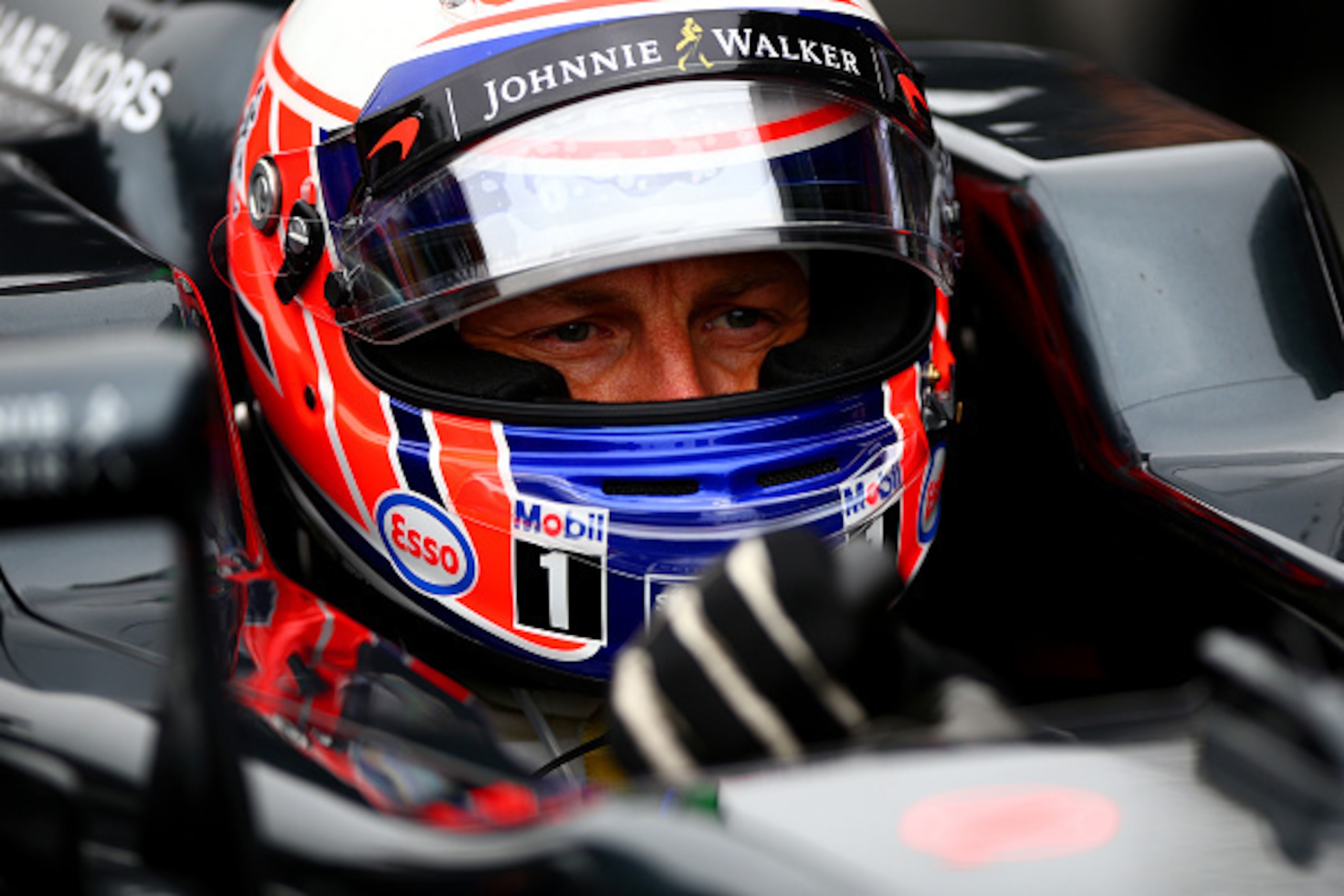
Ahead of the Austrian GP weekend, Jenson Button told Sky Sports' Pete Gill how, at this stage of his career—36 years of age with almost 300 grand prix appearances to his name—he simply wants to "enjoy" life in F1.
Limited to only occasional top-10 finishes over the last 18 months as a victim of McLaren-Honda's numbing lack of pace, merely "getting the most out of" himself and "getting the most out of the car" was enough for him to be satisfied.
With Button restricted to three minor points finishes in early 2016 while team-mate Fernando Alonso secured top-six results in Russia and Monaco, it was worth wondering whether the 2009 world champion was extracting as much as he thought from the MP4-31.
But he certainly did so at the Red Bull Ring, where he claimed his highest grid and finishing positions since 2014.
Fifth place in qualifying, achieved in the greasy conditions in which he has always excelled, seemed to take five years off Button, who approached the grand prix itself like a man who, after almost four years of suffering, had fallen in love with this sport all over again.
Starting as high as third after various grid-place penalties were applied, Button jumped to second place off the line and—surprisingly, given McLaren's straight-line speed shortcomings—stayed there for longer than he should have, with Kimi Raikkonen requiring seven laps to find a way past.
As the chasing pack began to ambush the No. 22 car, strategy became crucial to McLaren's hopes, and after Button's first stop for supersoft tyres on Lap 9, he pitted immediately when the safety car appeared following Sebastian Vettel's crash on Lap 26.
That free stop allowed him to run in the top five for a short time before Daniel Ricciardo, on fresh soft-compound tyres, demoted him to sixth in the closing stages.
With Stoffel Vandoorne almost certain to be promoted to a race seat for 2017, Button's performance is unlikely to have a real effect on his McLaren future. But it did, at least, prove he still remains among the classiest drivers on the grid.
Loser: Force India
6 of 7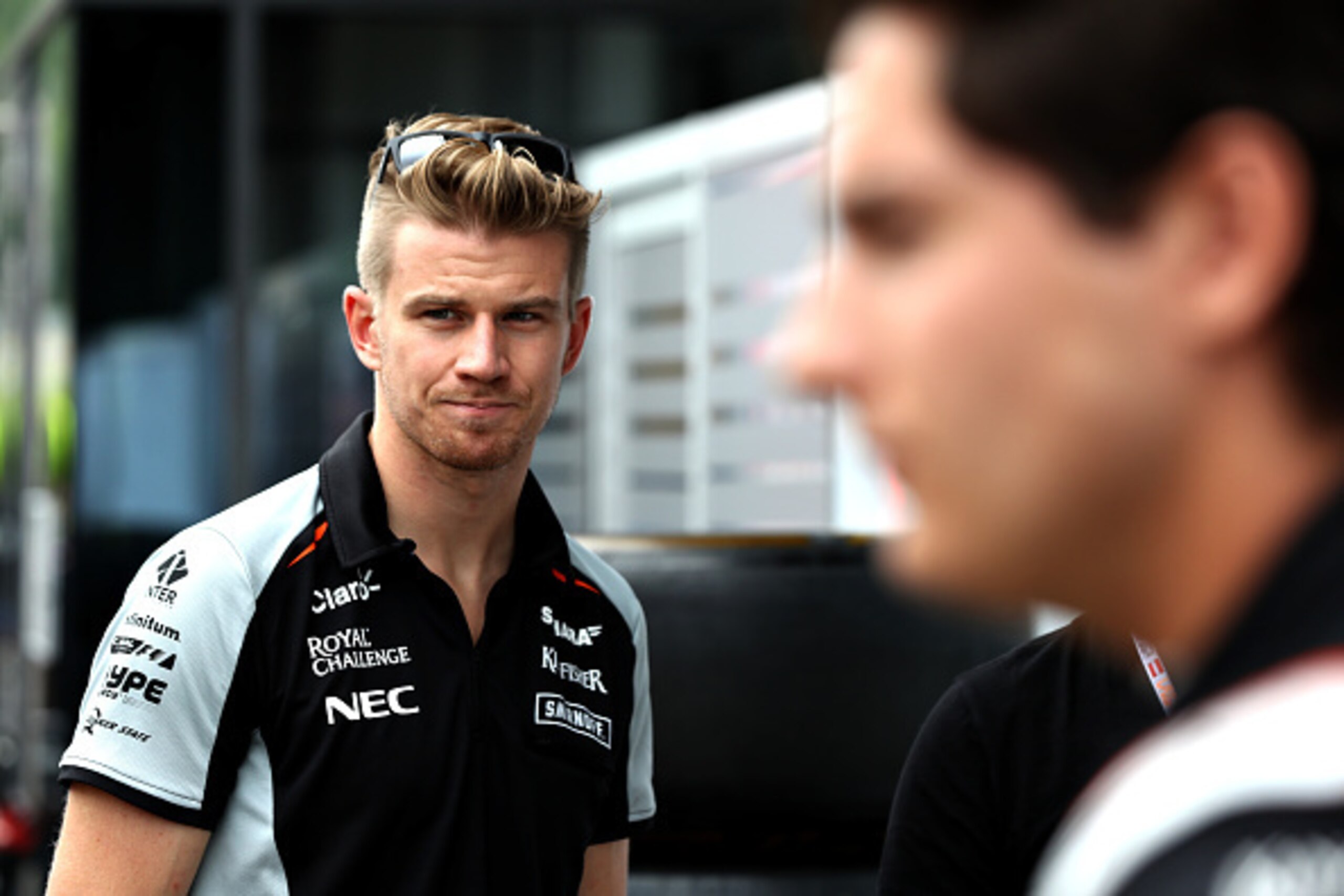
Like Jenson Button, Nico Hulkenberg rolled back the years in qualifying, easing to third place behind the Mercedes drivers in conditions not too dissimilar to the 2010 Brazilian GP, the scene of his only pole position to date.
Starting alongside Lewis Hamilton on the front row, the German might have fancied his chances of emerging from Turn 1 in the lead given the three-time world champion's habit of making poor getaways in 2016, yet the nature of his race brought him back down to earth with a considerable bump.
His hopes of a maiden podium finish were almost immediately extinguished when a sloppy start from the dirty side of the grid dropped Hulkenberg—normally so formidable off the line—from second to fourth on the opening lap.
As he told the team's official website, problems with his car sliding left him unable to preserve his tyres. In a race littered with one- and two-stop strategies, the No. 27 car made no fewer than three visits to the pit lane before Hulkenberg was put out of his misery after 64 laps.
Hulkenberg cited "critical" brake wear as the reason for his retirement, but while Force India were able to withdraw him in the nick of time, they were unable to do the same for Sergio Perez.
After becoming one of several drivers to suffer suspension failures on Saturday, the Mexican—utilising a two-stop strategy—had recovered well from 16th on the grid to challenge Haas' Romain Grosjean, facing a five-second time penalty, for seventh in the latter stages.
But a brake failure left Perez in the Turn 3 crash barriers on the final lap, bringing an end to his equal-career-best run of five successive points finishes.
Having claimed podium finishes in two of the last three races prior to Austria, this was the weekend Force India's early-season misfortune returned with a vengeance.
Winner: Pascal Wehrlein
7 of 7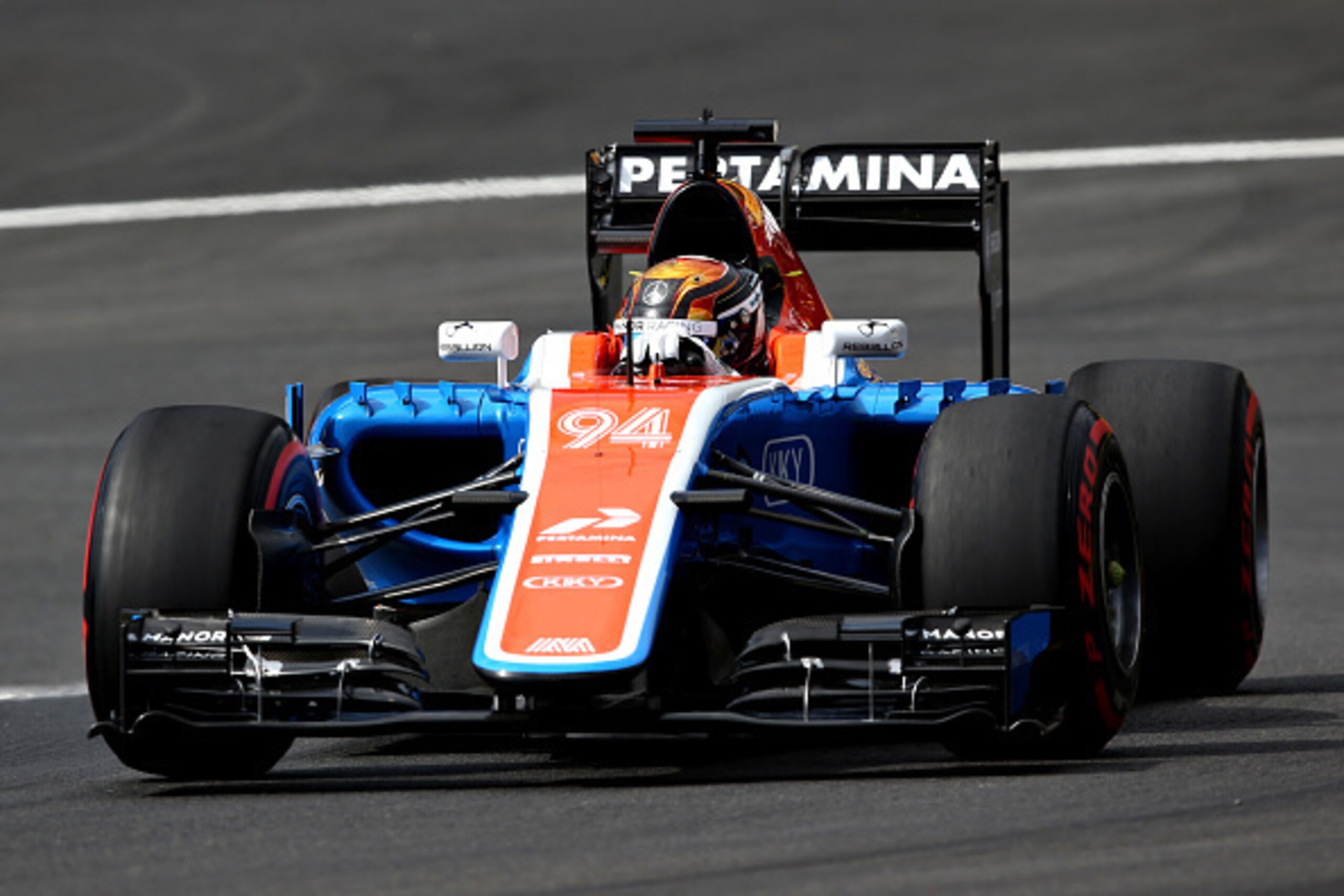
Pascal Wehrlein may have equalled Manor's best-ever grid position of 12th in qualifying for the Austrian GP, but his forecast for the race was not exactly encouraging on Saturday evening.
"I have to be honest and say that tomorrow is a different story," he told the team's official website. "We have struggled with tyre degradation in the races and we’re missing a bit of rear downforce at the moment, which is hard on the rear tyres."
The expectation was that the No. 94 car—having benefited from the Mercedes engine on a power-dependent track on an incident-packed qualifying session—would drop like a stone, back into its natural position at the rear of the field, when the serious business began on Sunday afternoon.
Indeed, Wehrlein ran the risk of throwing all his hard work away by parking in the wrong grid spot at the end of the formation lap and then reversing into his own place just seconds before the start lights illuminated.
But just like another former Manor driver whose day of destiny began by parking in the wrong place on the grid, he stubbornly refused to go away.
Even when Wehrlein slipped to the back during the safety car period, having made his second pit stop just three laps before Sebastian Vettel's crash, he—as he later told Autosport's Ben Anderson and Ian Parkes—"kept pushing," defying Manor's concerns over degradation to spend 47 laps on the soft-compound tyres.
Such was his pace on the yellow-marked rubber that Wehrlein came to threaten Valtteri Bottas, whose Williams was on much fresher supersofts, for the final points position in the closing stages before blue flags brought an end to the battle.
Yet Sergio Perez's crash on the last lap gave Wehrlein the place he needed to secure his maiden F1 point and the team's first since that emotional afternoon in Monaco in 2014.
Comparisons to the late Jules Bianchi are increasingly valid, and on a day yet more questions surfaced regarding Nico Rosberg's future at Mercedes, Wehrlein may yet give the world champions a decision to make.
Timing and tyre data sourced from the official F1 website, the FOM television feed and Pirelli's official race report.
.jpg?w=2560 "Aikman Blasts Cowboys WR 🫣")

.jpg?w=2560 "Jonathan Taylor Landing Spots")