

Matt Grevers is the reigning Olympic gold medalist in the men's 100-meter backstroke, but to defend his title, he had to earn a trip to Rio via the U.S. Swimming Trials at the CenturyLink Center in Omaha, Nebraska, just like everyone else.
The 31-year-old with six Olympic medals to his name had one hell of a swim in the finals of his best event Tuesday night.
NBC's Rowdy Gaines marveled over Grevers' 6'8" frame, saying his height could provide the necessary difference of a few hundredths of a second at the final touch. He put every inch of that body to flawless use, finishing the race in 52.76 seconds.
TOP NEWS
_0.png?w=2560 "CFB Top 25")
Unranked Teams Cause Chaos in Rankings 📊

Brown with an all-time summary of relationship with Tatum
.png?w=2560)
Week 8 Winners & Losers 📊
To put that time in its proper context, American Aaron Peirsol holds the world record of 51.94 seconds. Had Grevers swum 52.76 at the 2012 Olympics in London, he still would have won gold, as silver medalist Nick Thoman of the United States finished in 52.92 seconds.
But Tuesday, it wasn't even good enough to qualify for the 2016 Olympics, as Ryan Murphy (52.26) and David Plummer (52.28) finished a half-second ahead of Grevers in an event in which only the top two finishers go to Rio.
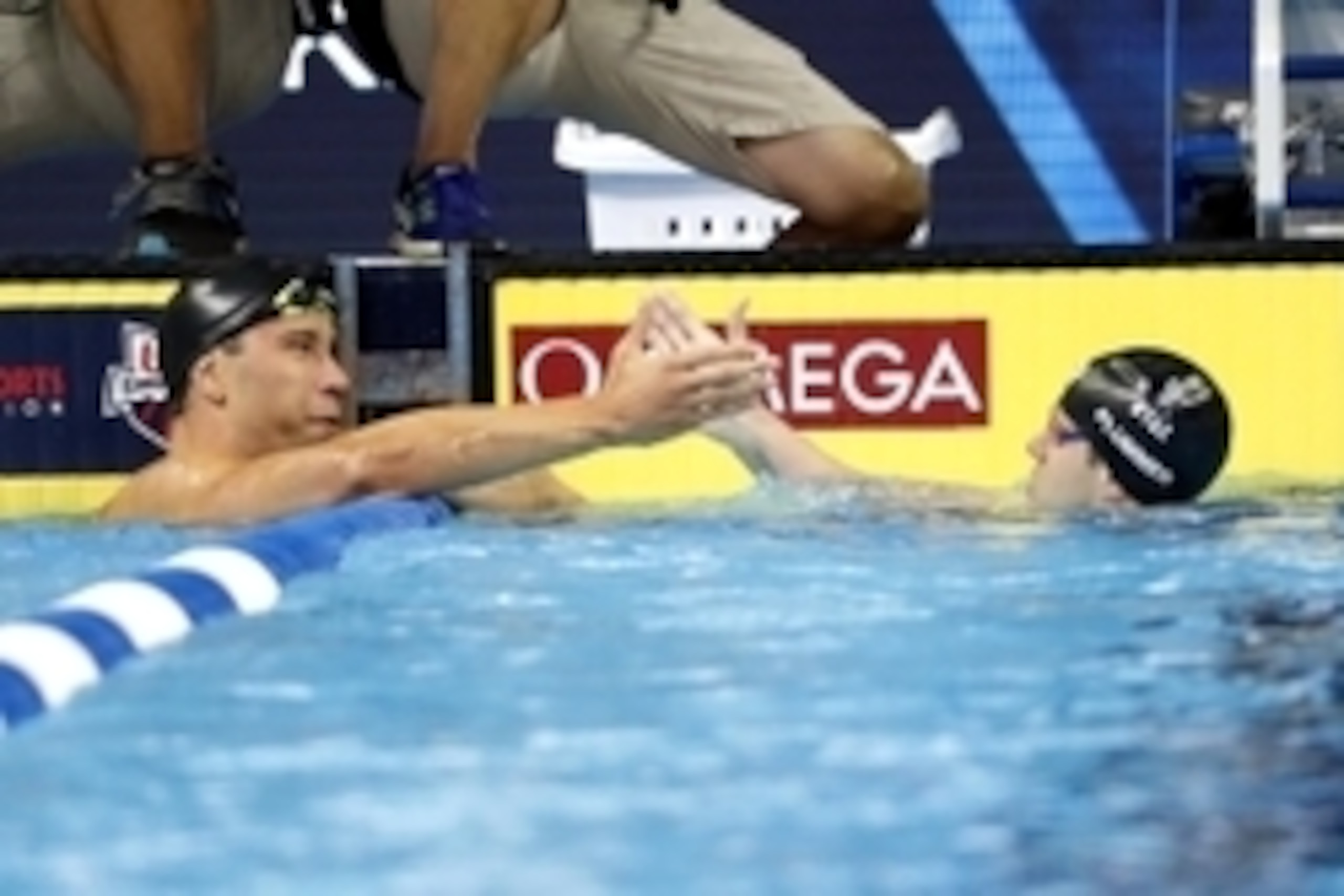
"The Olympic champion has been dethroned," bellowed Gaines. "And really, it wasn't even that close."
That's insane, right? Grevers would have won gold with that time four years ago, but he wasn't even close to qualifying for this year's games.
Such are the trials and tribulations of qualifying for the U.S. Olympic swim team.
Plummer knows that pain all too well. He finished third in the 2012 trials, just 12 hundredths of a second behind Thoman—the runner-up to Grevers. But swimming in his only event at this year's trials, he qualified for Rio, where he will almost certainly win a medal.
For you see, the United States of America owns the 100 backstroke.
"American men have struck gold each and every time at the last five Olympic games," Dan Hicks said as he narrated an NBC video previewing Tuesday night's final.
The competition is so fierce in the 100 backstroke, Hicks noted during the broadcast Peirsol had asked Grevers, Plummer and Murphy for their cellphone numbers so he could call and congratulate them if and when they broke his record.
Pat Forde of Yahoo Sports had a hunch it might take an unprecedented performance to qualify for Rio:
As Gaines added moments after the race began, "When you have this much talent in a stroke like this and you have to fight just to make it, that's why the U.S. has been so dominant in this event."
Or, as King Solomon wrote in the book of Proverbs, "As iron sharpens iron, so one person sharpens another."
That applied to the women's 100-meter backstroke as well, as reigning gold medalist Missy Franklin finished seventh in the final, clearing the way for Olivia Smoliga and Kathleen Baker to qualify for their first Olympics.
Add 11-time Olympic medalist Ryan Lochte (nursing a groin injury) failing to qualify in the 200-meter freestyle and Tuesday proved to be a rough night for a lot of familiar names.
But not all of them.
The one swimmer everyone is familiar with was up to his old tricks on his first day in the pool, decimating the competition in his signature event: the 200-meter butterfly.
"I was looking forward to today," Michael Phelps told Michelle Tafoya on Tuesday morning. "Being here for the last two finals sessions, every time I walked in, I would just get the jitters and feel the excitement running through my body."
His nerves were far from apparent. He swam 1:55.17—the sixth-fastest time in the world this year, according to NBC's announcing crew and a full second faster than anyone else swam Tuesday—to advance to Wednesday night's final.
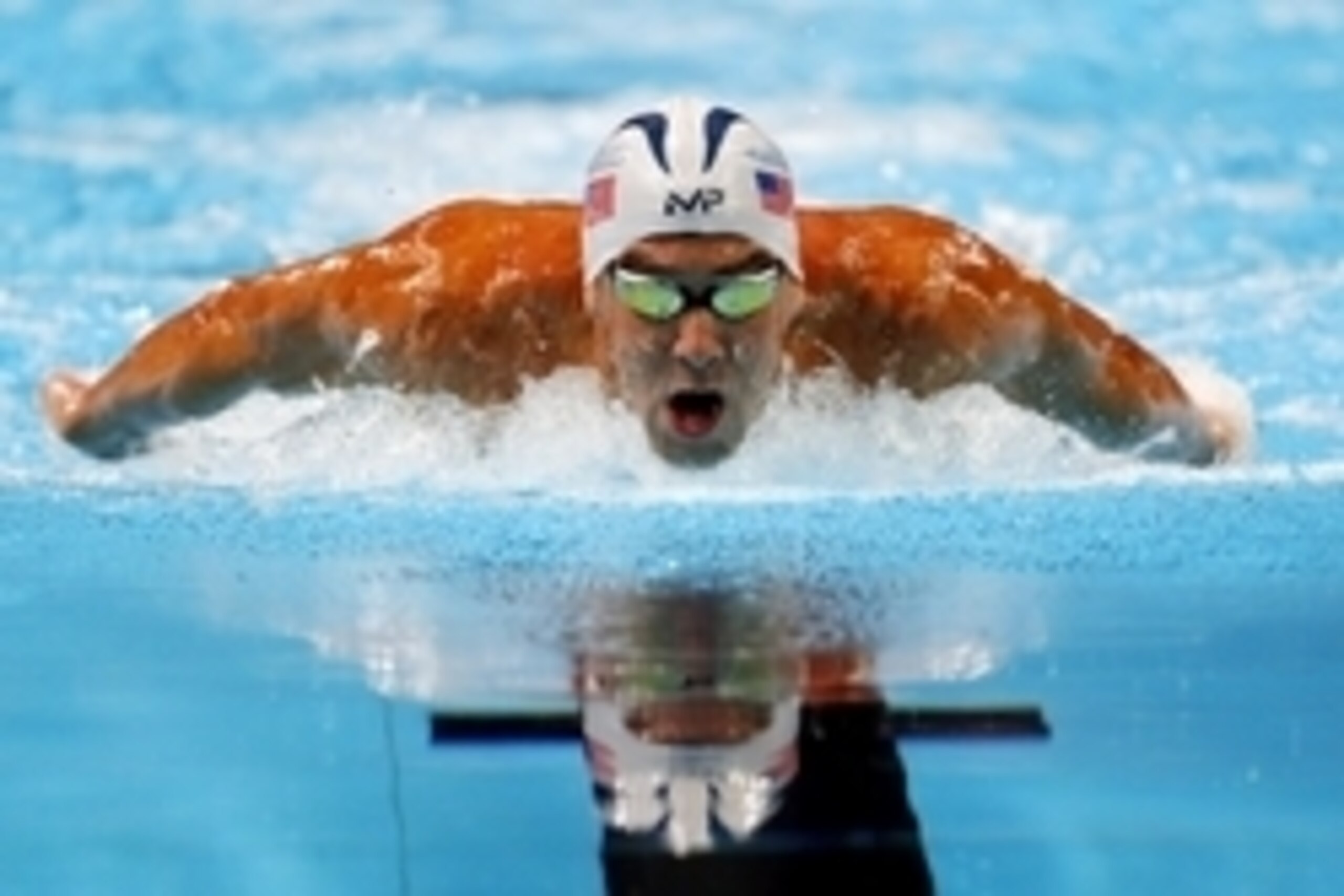
The female Michael Phelps was also dominant in her semifinal. Katie Ledecky swam the 200-meter freestyle in 1:55.10—1.63 seconds faster than the next-closest qualifier for Wednesday night's final (Leah Smith).
But Phelps and Ledecky are the exceptions to the rule, routinely gliding through the water at a nearly inhuman pace. For the other 1,800 or so swimmers trying to qualify for Rio this week, these trials will continue to be equal parts heartbreaking and breathtaking.
Those who advance, though, will be a part of the world's most dominant swim team. The U.S. won gold in 16 of the 34 swimming events at the 2012 Olympics and earned at least one medal in 27 of them. Americans also nabbed nine silver and six bronze medals to get to 31 in all—matching the total of the next three countries combined (11 for Japan and 10 each for China and Australia).
Thus, in many cases, finishing in the top two in a final at the U.S. Swimming Trials is just as difficult as bringing home an Olympic medal.
Grevers, Franklin and Lochte weren't the first to be struck with that cruel reality, and they won't be the last.
.jpg?w=2560 "Colts Football")





