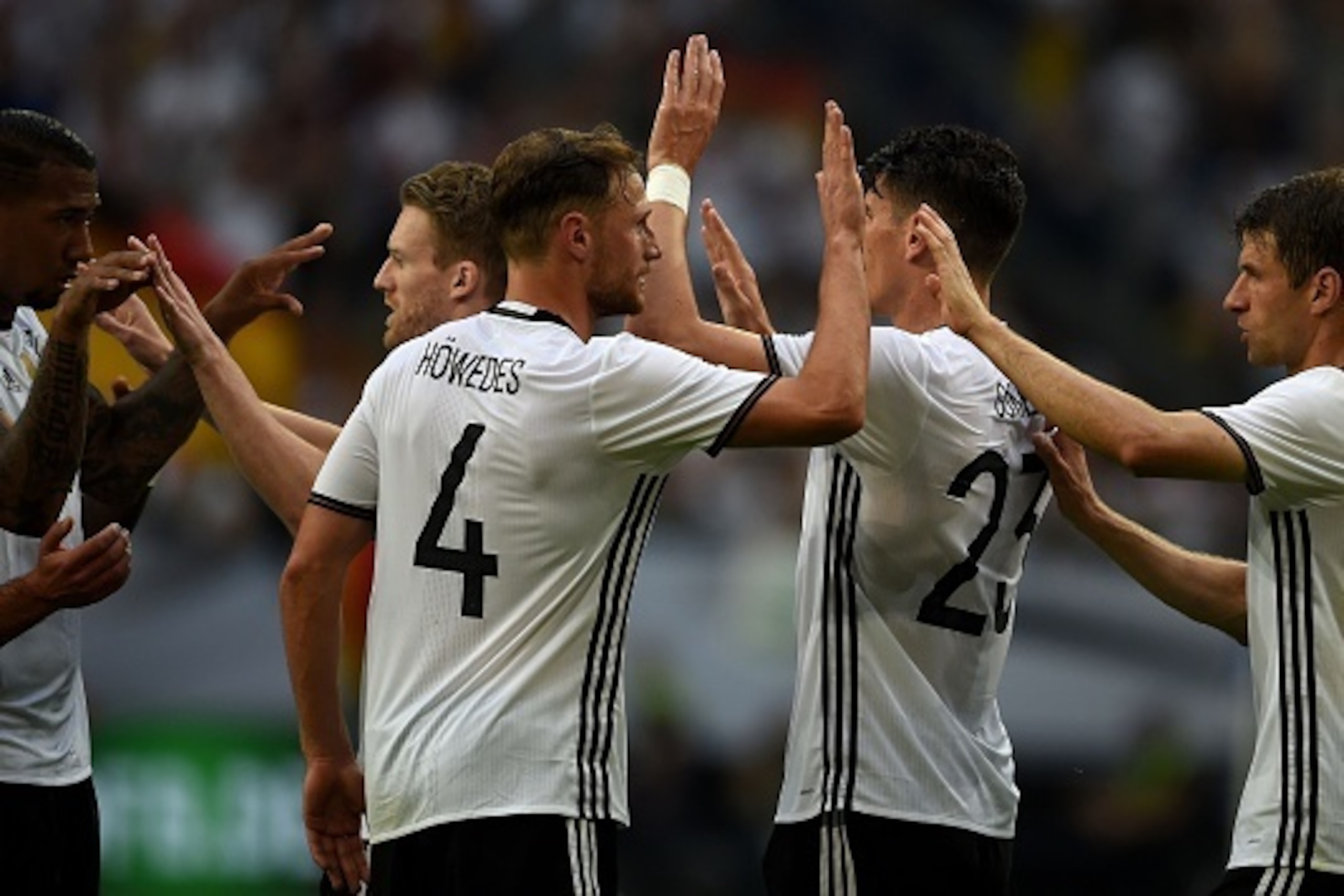

A 5-Point Plan to Take Germany to Euro 2016 Glory
Germany's Euro 2016 campaign kicks off with a meeting with Ukraine in Lille, France, on Sunday.
Having won the FIFA World Cup in Brazil two years ago, Joachim Low's men are among the favourites to win the tournament in France, but there's a surprising lack of buzz around the Euros in the country so far.
That might well be due to Germany suffering a veritable World Cup hangover, with the qualification campaign a more bumpy ride than in recent years. Their run to the tournament included defeats away to Poland and the Republic of Ireland, as well as a draw in the home match against the Boys in Green.
A comfortable 2-0 win over Hungary in the final warm-up match before travelling to France was a promising sign, especially after the team lost an astounding four games in six, but questions remain about the world champions.
Losing veterans Miroslav Klose, Philipp Lahm and Per Mertesacker to retirement from international football in 2014 and Borussia Dortmund stars Ilkay Gundogan and Marco Reus, two players who were big parts of Low's plans, to injury before the Euros, Germany's squad doesn't look quite as strong as it did before the World Cup.
Getting out of a group that also contains Poland and Northern Ireland won't be a big problem, but it remains to be seen whether the team is good enough to beat big European rivals like France in the knockout stages.
With Germany unlikely to be able to rely on the superiority of their squad as much as they did in Brazil, Low will have to make some important decisions over the course of the next four weeks.
Here, Bleacher Report lays out a five-point plan for glory in France.
Settle on a Back Line
1 of 5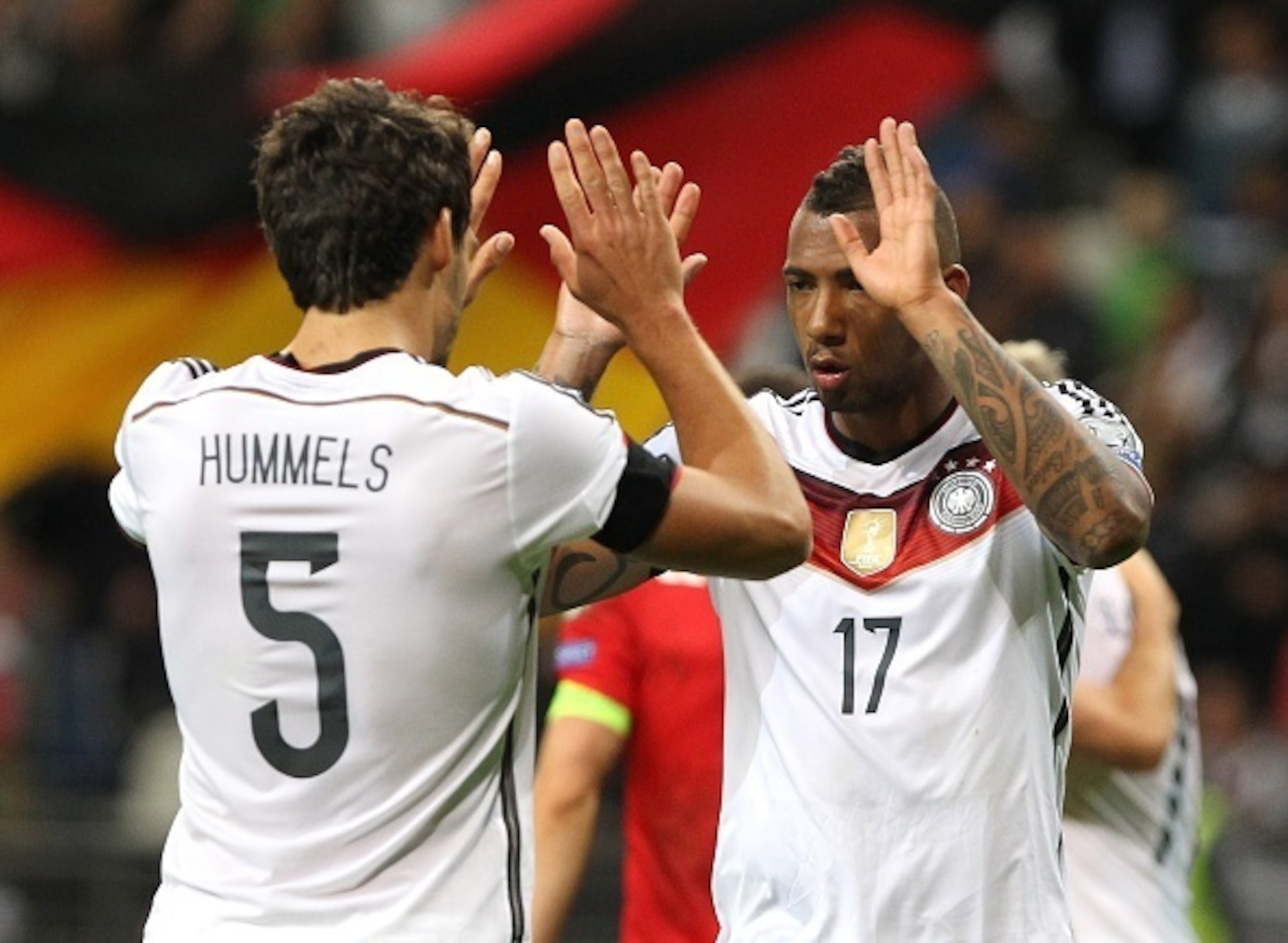
Most of Germany's problems following the World Cup were located in defence.
The 2-0 win over Hungary at the weekend was the first clean sheet for the team since a 7-0 win over Gibraltar on June 13, 2015—and Manuel Neuer's first since a 2-0 win over Georgia in March 2015.
With Mats Hummels suffering a lengthy dip in form after the tournament in Brazil, Jerome Boateng missing a number of international matches through various injuries and Germany unable to replace Philipp Lahm to this point, the back line has gone through seemingly never-ending changes.
Tactics blogger Constantin Eckner noted, "If there is any real weakness other teams could capitalise on, it is Germany’s defence—more specifically the defensive transition after turning the ball over. In particular, both full-backs do not enjoy much help on the flanks and the central defenders are vulnerable to long balls over the top."
Hummels has yet to train with the team and seems unlikely to be able to play before the final match in the group stage against Northern Ireland on June 21. His likely replacement—going by the two warm-up matches—Antonio Rudiger tore his anterior cruciate ligament in training on Tuesday, as the German football association (DFB) announced on Twitter.
While Joachim Low has called up 20-year-old Bayer Leverkusen defender Jonathan Tah as a replacement for Roma's Rudiger, Hummels' spot in the starting XI will go to either Shkodran Mustafi or Benedikt Howedes.
The latter is the first option to start at right-back, however, and Low should stick to that plan. When Hummels returns, he can slide into his usual spot at left-centre-back with the other three positions settled. Seeing as Germany had little time for fine-tuning their defence, it's not advisable to tinker with the back line too much during the tournament.
Stop Giving Away Cheap Goals
2 of 5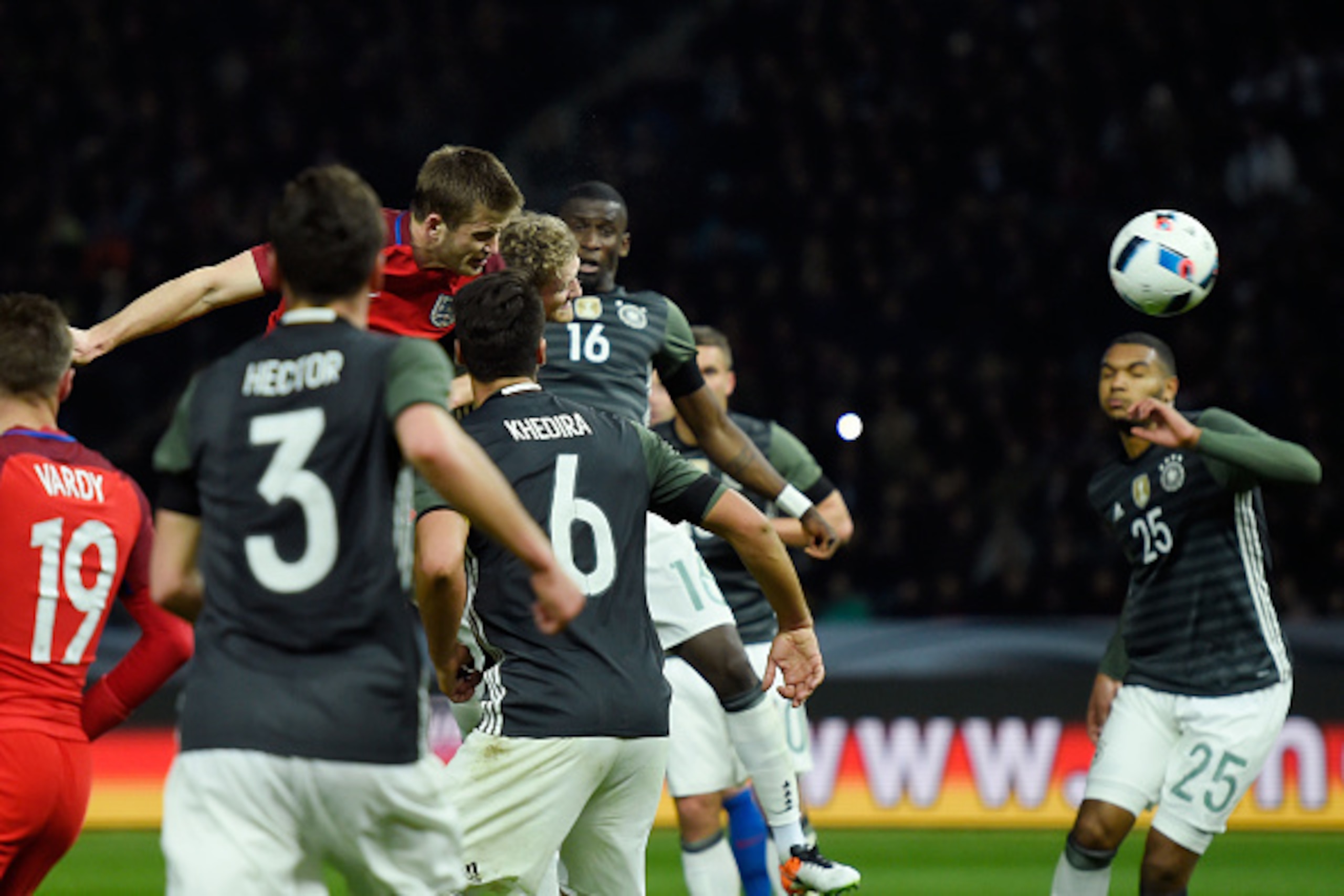
One common theme since the World Cup has been Germany giving away an astounding amount of cheap goals.
As stat provider Opta pointed out after the disappointing 3-1 loss to Slovakia in May, Germany have conceded six of their last 12 goals following corners. Perhaps most notably, that includes Eric Dier's winner for England in Berlin in March.
The team also allowed crucial goals after not properly defending throw-ins, such as in the 2-0 defeat in Poland and the 1-1 draw against Republic of Ireland, both in October 2014. Shane Long's winner in the reverse fixture followed a simple long ball that caught Mats Hummels and Jonas Hector by surprise.
It's no coincidence that Germany lost all these games in recent months, even though, to be fair, they rarely played a full-strength lineup.
Be that as it may, one goal can be enough for a tournament to go wrong very quickly once the knockout stage starts.
Germany, of all teams, must know that.
Unlike the general public, who've forgotten all about it thanks to the 7-1 win over host nation Brazil in the semi-finals of the World Cup, Joachim Low's side must remember the quarter-final in which they just edged France thanks to a Hummels goal following a simple free-kick into the box.
They've been on the receiving end in big moments, too, having lost their chance to win the 2010 World Cup in South Africa because of a goal from Carles Puyol after a corner for Spain.
Trust the Depth
3 of 5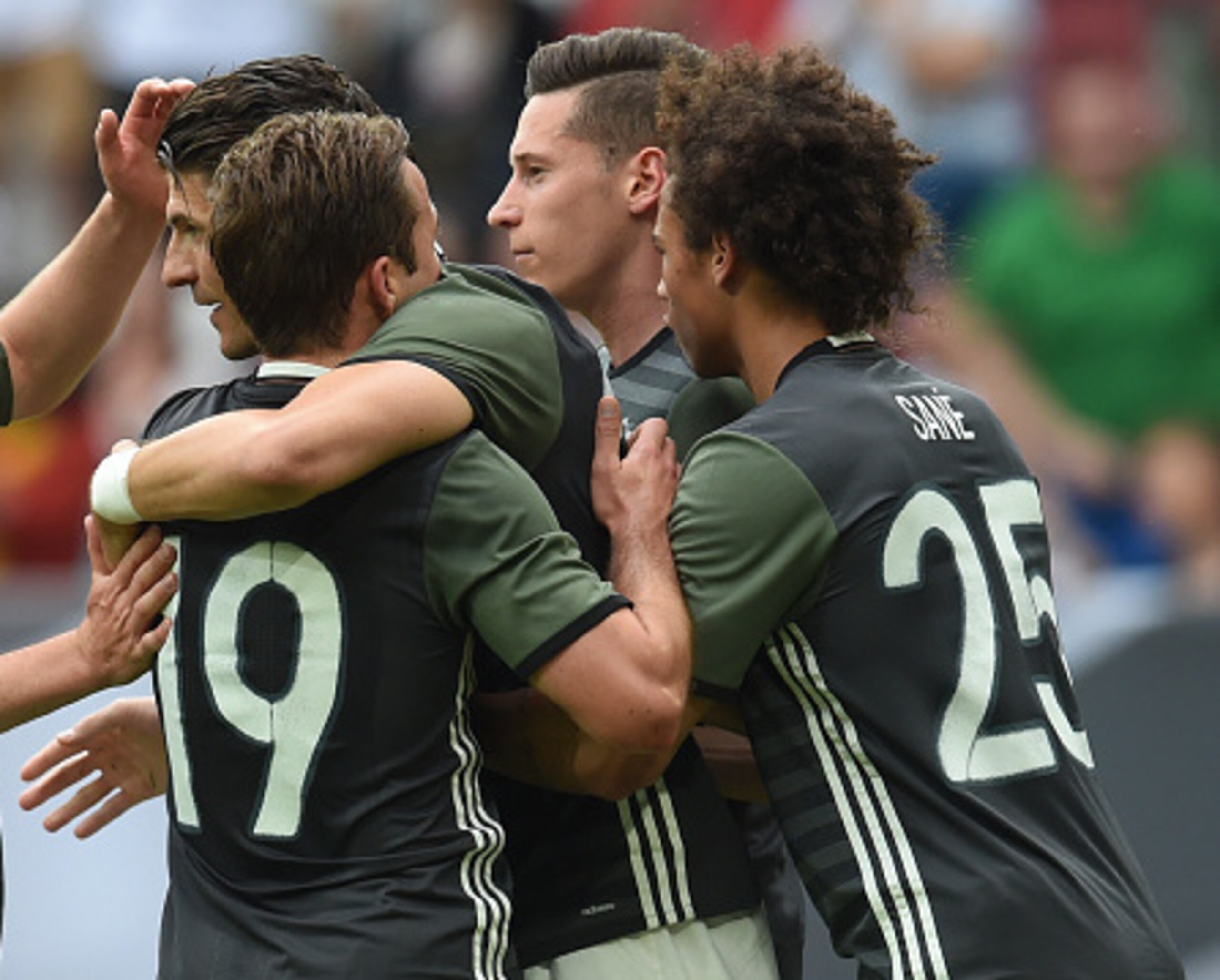
Though options are limited in defence—especially at the full-back spots—Germany have an impressive selection of midfielders and attackers. Mario Gomez may be the only classic No. 9 in the team, but other than that, Joachim Low's options are almost unlimited.
The 56-year-old would do well to tap into those resources in France.
Toni Kroos, Thomas Muller and Mesut Ozil are automatic starters, but beyond those three, Low can mix and match with regard to specific opponents or any tactical wrinkles he wants to use.
In one game, Julian Draxler and Mario Gotze could start on the left wing and at the top of the formation; in the next, it could be Gotze on the wing and Gomez up front; and in another, it might be Andre Schurrle playing next to Muller.
This also stretches to the bench, from where Schurrle was prolific in Brazil, while 20-year-old Leroy Sane could offer ingenuity and someone like Emre Can could provide power and athleticism.
Low should look to foster healthy competition in his squad, rewarding players who do well on the training ground and in the matches.

_0.png?w=2560 "CFB Top 25")

Build Around the Stars
4 of 5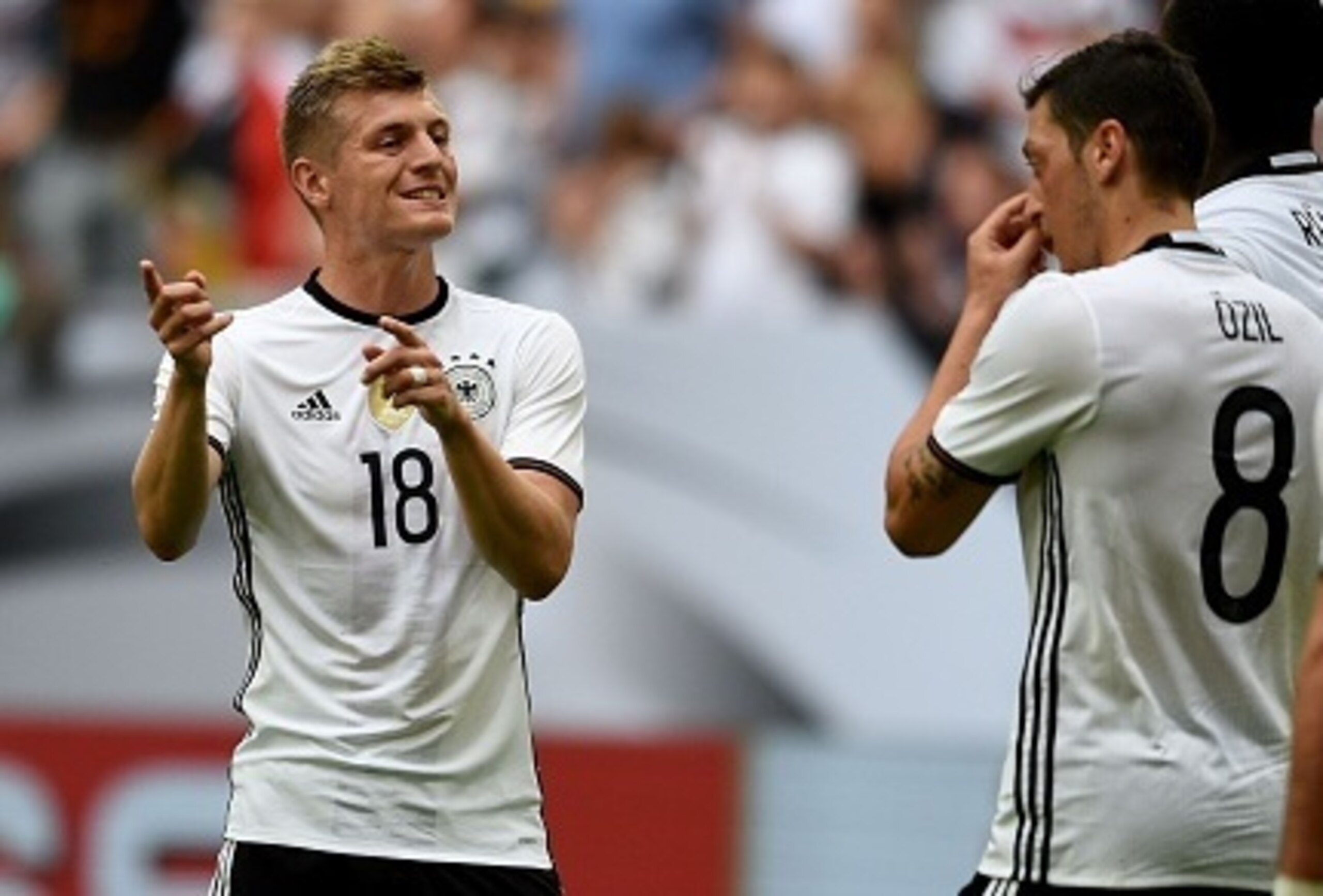
While there are still some questions at a few spots, the core of this team is as strong as ever.
Manuel Neuer is the best goalkeeper in the world. Jerome Boateng might well be the best central defender in the world, profiling as "the ideal centre-back for an elite, possession-based attacking team with his combination of range and passing," as Ryan O'Hanlon wrote for The Ringer.
Toni Kroos has developed into Germany's boss on the pitch. Mesut Ozil is coming off his best season as a professional footballer. Thomas Muller is Thomas Muller.
Those five players—if Hummels returns to form quickly, he should be added to the list—build arguably the strongest axis of all 24 teams in the Euros.
Joachim Low needs to use them correctly, however. Kroos should not have to play in an advanced role as he did in Brazil, where Germany opted for stability in midfield and played in a 4-3-3 alignment. Ozil should not play on the wings as he had to as a result of that formation two years ago.
If they're allowed to flourish in their best roles, Germany's star players are strong enough to carry the team all the way.
Remind Everyone Germany Are World Cup Holders
5 of 5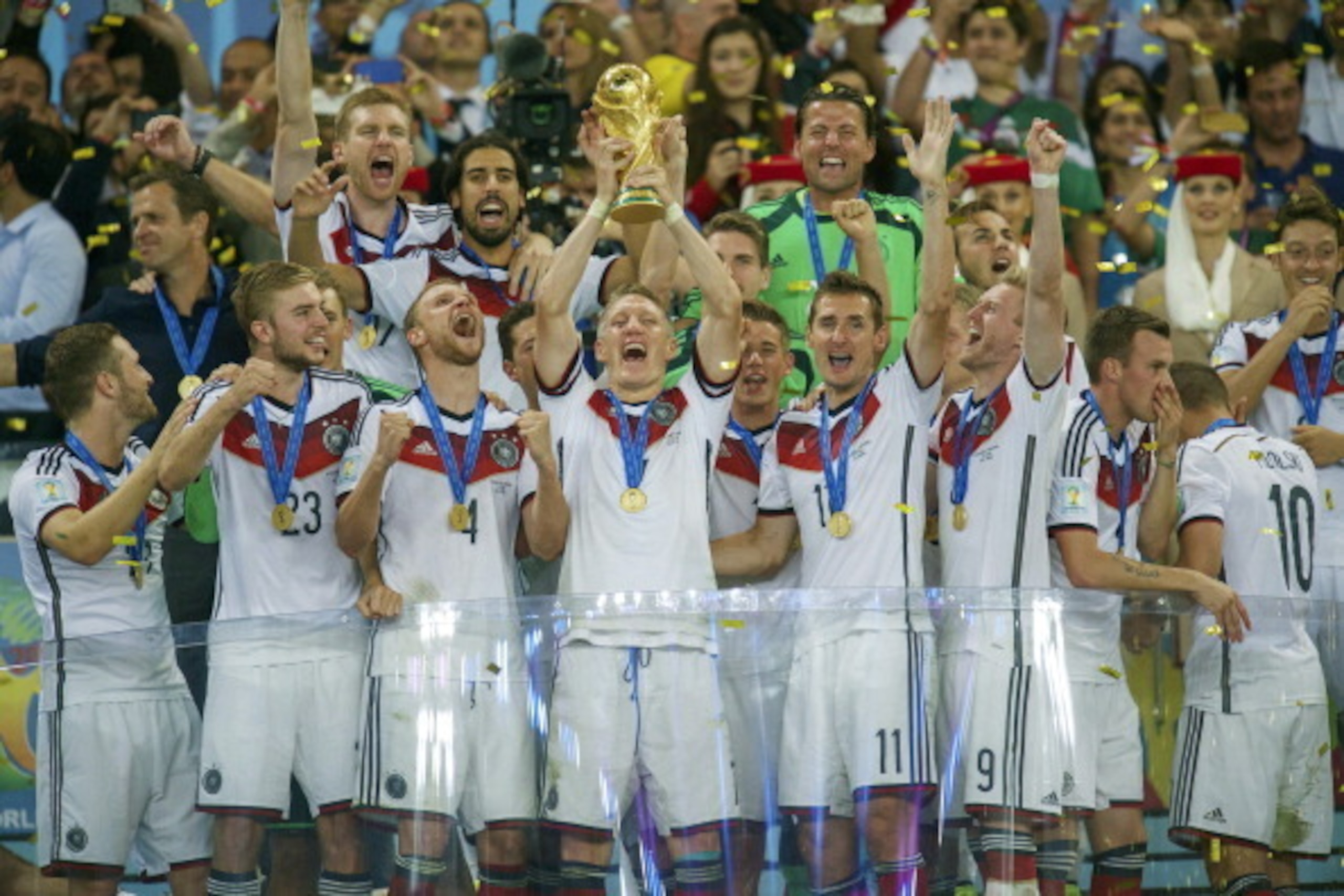
Germany have always had an excellent mentality in the biggest games. The team needs to develop that same mentality again if they are to beat France or Spain in the knockout stages of the Euros.
To do that, Joachim Low's side need to start off well and remind everyone these are world champions we're talking about.
The bumpy qualification period and some bad results in friendlies may have some opponents thinking Germany are weak and more beatable than before. A strong start in the group stage will strike fear into those opponents in no time.
Germany have a perhaps once-in-a-lifetime opportunity to become only the third nation to win back-to-back World Cups and Euros after France and Spain, and they need to show they're up for it right from the first kick-off.
Lars Pollmann is a featured columnist who also writes for YellowWallPod.com. You can follow him on Twitter.
.png?w=2560)
.jpg?w=2560 "Colts Football")





