

Game 1 of the 2016 NBA Finals was as puzzling as they come.
The Golden State Warriors saw their top two scorers "combine for their lowest point total of the season," per NBA.com—Stephen Curry and Klay Thompson scored 20 points between them—and still secured a 104-89 victory over the visiting Cleveland Cavaliers. Does an anomalous contest like that contain any useful information with which to forecast?
Yes and no.
Key battlegrounds surfaced on both sides; they just weren't decided in ways likely to become a pattern. Of course, that might be fitting for a series in which we can expect the unexpected.
First up in the "Something's Gotta Give" department: The Warriors have now won six straight over the Cavs dating back to last year's Finals, but LeBron James has won the last nine times immediately after his team lost a series opener, according to Fox Sports Ohio.
Who holds the edge for Sunday's Game 2? Even the historical trends don't seem to have the answer. But we have enough information to pinpoint five specific areas where the contest will be decided.
5. Interior Offense
1 of 5
The Cavs are smaller than they were last time these teams met on the championship stage, having long ago dropped bruising 7-footer Timofey Mozgov from their rotation. But they should still have an interior offensive advantage with the two most skilled post scorers in this series: Kevin Love and LeBron James.
That strength never materialized during the opener. The Cavs were outscored (54-42) and outshot (57.4 percent to 42.9 percent) in the paint. Despite being plus-six on the offensive glass (15-9), they finished with two fewer second-chance points (15-13).
James had more post-ups (13) than the entire Warriors team (nine), per B/R Insights, and the non-LeBron Cavs did, too (10). But Cleveland shot a woeful 21-of-49 inside the paint, and James was just 6-of-13 on layups—either testaments to Golden State's defensive anchors or evidence of flukes.
"We didn't finish around the basket, so we've just got to keep playing the same way we were playing," Cavs head coach Tyronn Lue said, per Cleveland.com's Joe Vardon. "I thought we were fine. ... The outcome wasn't great for us, the score, but to get to the basket missing 28 shots in the paint, that's not us."
The Cavs can't afford to blow any more bunnies. If they're going to live with Love's defensive limitations, they need to maximize his offensive impact. Plus, their 10th-ranked defense (during the regular season) is more likely to surrender quality looks than the Dubs' fourth-ranked unit, so Cleveland must capitalize on the ones it finds.
4. Bench Battle
2 of 5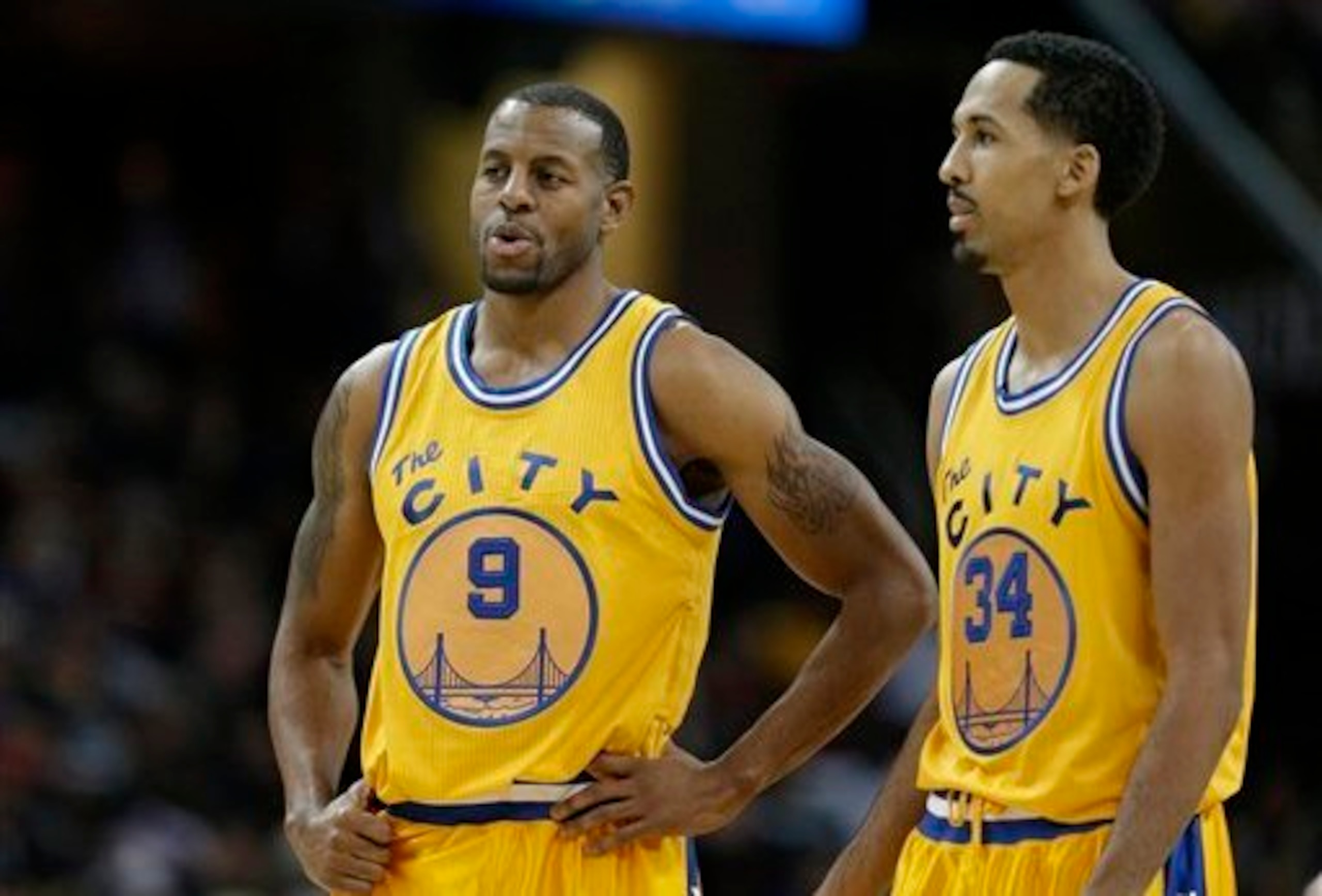
"Strength in Numbers" is more than a clever catchphrase for the Warriors. When players like Andre Iguodala and Shaun Livingston—would-be starters on any number of teams—are coming off the bench, it's clear this group has a special kind of depth.
Just don't expect it to look as special as it did during Game 1. History says it can't happen again.
The Warriors second-teamers crushed their counterparts by a 45-10 advantage—the largest bench scoring differential during a Finals game in the past 50 years, according to the Elias Sports Bureau, via ESPN Stats & Info.
"They really changed the game, and it allowed us to win," Curry said of the backups, per Stefan Bondy of the New York Daily News.
The Cavs don't have an Iguodala in reserve, but their bench has a lot more punch than it showed. During the regular season, Golden State's subs only averaged 5.6 more points than Cleveland's (33.7 to 28.1, per HoopsStats.com). But Lue didn't display much faith in his understudies and wound up playing four of his starters 36-plus minutes—a mark only cleared by one Warrior.
Cleveland needs to spread the wealth, finding more minutes and shots for the likes of Channing Frye, Iman Shumpert and Richard Jefferson, a trio sporting a staggering 51.7 postseason three-point percentage. Regression to the mean should bring the Warriors subs back to their normal combined output, but the Cavs need a concerted game plan to get their backups going.
3. Quality of Ball Movement
3 of 5
The Warriors should dominate the assist category in this series by virtue of their offensive system. They set up a league-best 68.0 percent of their shots during the regular season, nearly 10 percentage points higher than the more iso-heavy Cavaliers (58.7).
But that doesn't excuse Cleveland's lack of offensive flow in Game 1. The Cavs only had 17 assists—nearly six below their season average of 22.7—and nine of those came from James, their most efficient scoring option. They had too many ball-stoppers, none more egregious than point guard Kyrie Irving, who played nearly 38 minutes, led regular rotation players with a 35.6 usage percentage and still had only four assists.
"We've got to be much better moving the ball, moving bodies," James said, per Bleacher Report's Kevin Ding. "They're a great team when you just hold the ball and pound the ball."
The Cavs carved up Eastern Conference playoff foes by working the ball from side to side and routinely trading good shots for great shots. That movement came sporadically (at best) in the opener, which is criminal with quality passers like James and Love surrounded by spot-up shooters. Not to mention, the Cavs' predictability led to 17 turnovers, which the Warriors turned into 25 points.
Golden State must maintain its commitment to creating as a team. The Cavs seemingly tipped their hand that they'll sell out on stopping the Splash Brothers, so the others must pass the ball to compensate for their lack of individual shot creation. Golden State's supporting cast has a much easier time feasting when the table is set for them.



2. Long-Range Sniping
4 of 5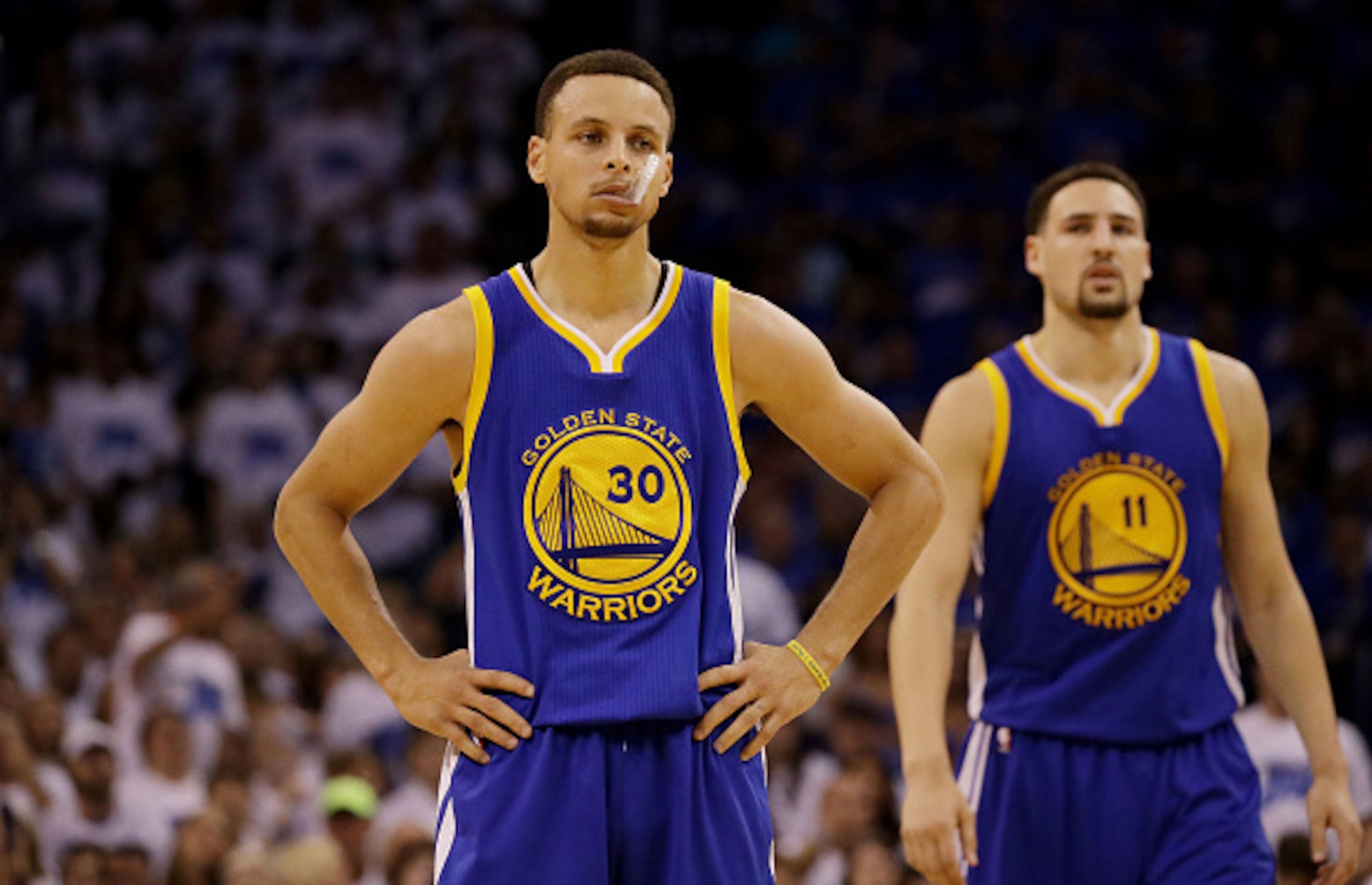
This doesn't need to be a long series to set Finals three-point records. That's how much firepower exists on both sides.
During the playoffs, the Cavs are averaging a league-best 13.9 triples a night, and the Dubs are a close second at 12.3. For context, the all-time mark for made threes in a single season is 13.1 per game—set by these same Warriors.
But someone threw a lid on the Oracle Arena rims before the opener, and no one could shoot it off. The Splash Brothers were unseasonably dry—4-of-13 combined from three—and they weren't alone. The two teams had just 16 triples between them, each hitting at only a 33.3 percent clip (which would have ranked 28th in the league during the regular season). Neither club shot above 42.1 percent on uncontested looks.
Limiting perimeter looks is clearly a defensive focus for both sides, but there are too many knock-down shooters for those numbers not to change. And considering how quickly each team can pile up points from long distance, the first to find its range could be celebrating a Game 2 victory.
Stephen Curry and Klay Thompson are the obvious agents of change for Golden State, but Harrison Barnes is the sleeper. He's hit at least 38 percent from deep the past two seasons and had three-plus triples in 10 games this year.
For the Cavs, letting Channing Frye and his Human Torch-esque 56.5 playoff three-point percentage loose could be a major step toward reigniting their outside attack. And—I never thought I'd write this—Cleveland must encourage J.R. Smith to aggressively seek out field-goal attempts. He played 36 minutes in Game 1 and only launched three shots—his fewest ever when logging at least 30 minutes.
1. How Bright the Stars Shine
5 of 5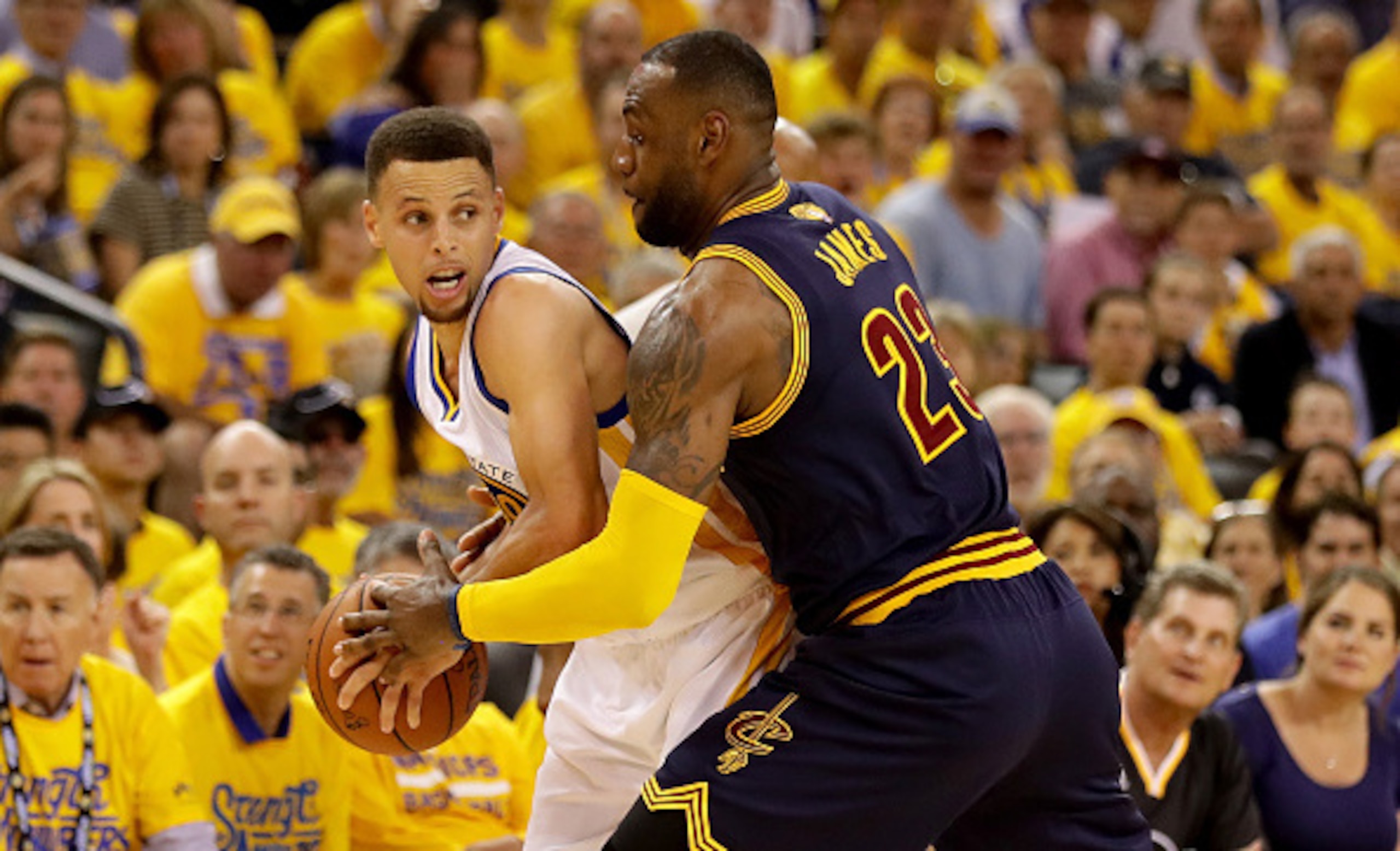
Unlike last year, each side has a healthy Big Three for this championship tussle. But so far, only one of those six players has looked like his normal self—Draymond Green, who stuffed his stat line with 16 points, 11 rebounds, seven assists and four steals.
The other five were productive but not up to their usual standards.
Klay Thompson was a defensive pest, but he had his first single-digit scoring effort since February. Curry had six assists and five boards, but he also had five of Golden State's nine turnovers. The Warriors' All-Star guards went just 2-of-11 on uncontested shots. Love needed 17 attempts to tally 17 points, and Irving used 12 free-throw tries to offset 7-of-22 shooting.
James finished one assist shy of a triple-double and grabbed more rebounds than any Warrior (12). But his 4-of-5 shooting start eroded into a 9-of-21 finish and a head-scratching 6-of-14 inside five feet. He tied for the team lead with four turnovers, and he couldn't figure out the Warriors' top defenders, going just 2-of-9 against Iguodala and Green, per ESPN Stats & Info.
Overall, it was a good game by James, but Cleveland needed him to be great—on a night when Golden State's top guns were uncharacteristically erratic.
"Game 1 showed that the Warriors can win games when Curry and Thompson don't go nova, and that the Cavaliers cannot without a superhero version of James," wrote CBSSports.com's Matt Moore.
Golden State's supporting cast may never have another outing like that. Cleveland's can't afford a repeat performance. But that's all a backdrop to the marquee matchup here. A decisive victory in the superstar battle—in both quantity and quality—could easily determine this series' next victor.
Unless otherwise noted, statistics used courtesy of Basketball-Reference.com and NBA.com.
_0.png?w=2560 "Unranked Teams Cause Chaos in Rankings 📊")
.png?w=2560 "Week 8 Winners & Losers 📊")
.jpg?w=2560 "Jonathan Taylor Landing Spots 📍")



