

Defending Champ Stan Wawrinka Under the Radar at 2016 French Open and That's OK
Stan Wawrinka avoided a historic upset at the 2016 French Open. Had he lost, Wawrinka would have been the first defending champion to go out in the first round. He also would have garnered more attention in a loss than he's gotten in the days leading up to the French Open.
The forgotten champion, Wawrinka is flying under the radar at Roland Garros. For someone who plays better as the underdog, that's a good thing.
Wawrinka came back from two sets down to defeat Lukas Rosol, 4-6, 6-1, 3-6, 6-3, 6-4.


Although a Rosol win would have been an upset, a Wawrinka loss wouldn't have been so unexpected.
Of the 11 experts polled by ESPN, none picked Wawrinka to defend his title.
In a Sports Illustrated pre-tournament round table, reporter Jamie Lisanti predicted that "weighed down by the pressure of a title defense, Stan Wawrinka will crash out early and his push into the Big Four conversation will have to wait, even with Federer's absence."
Sports Illustrated senior editor Richard Deitsch predicted Wawrinka would be out by the second round.
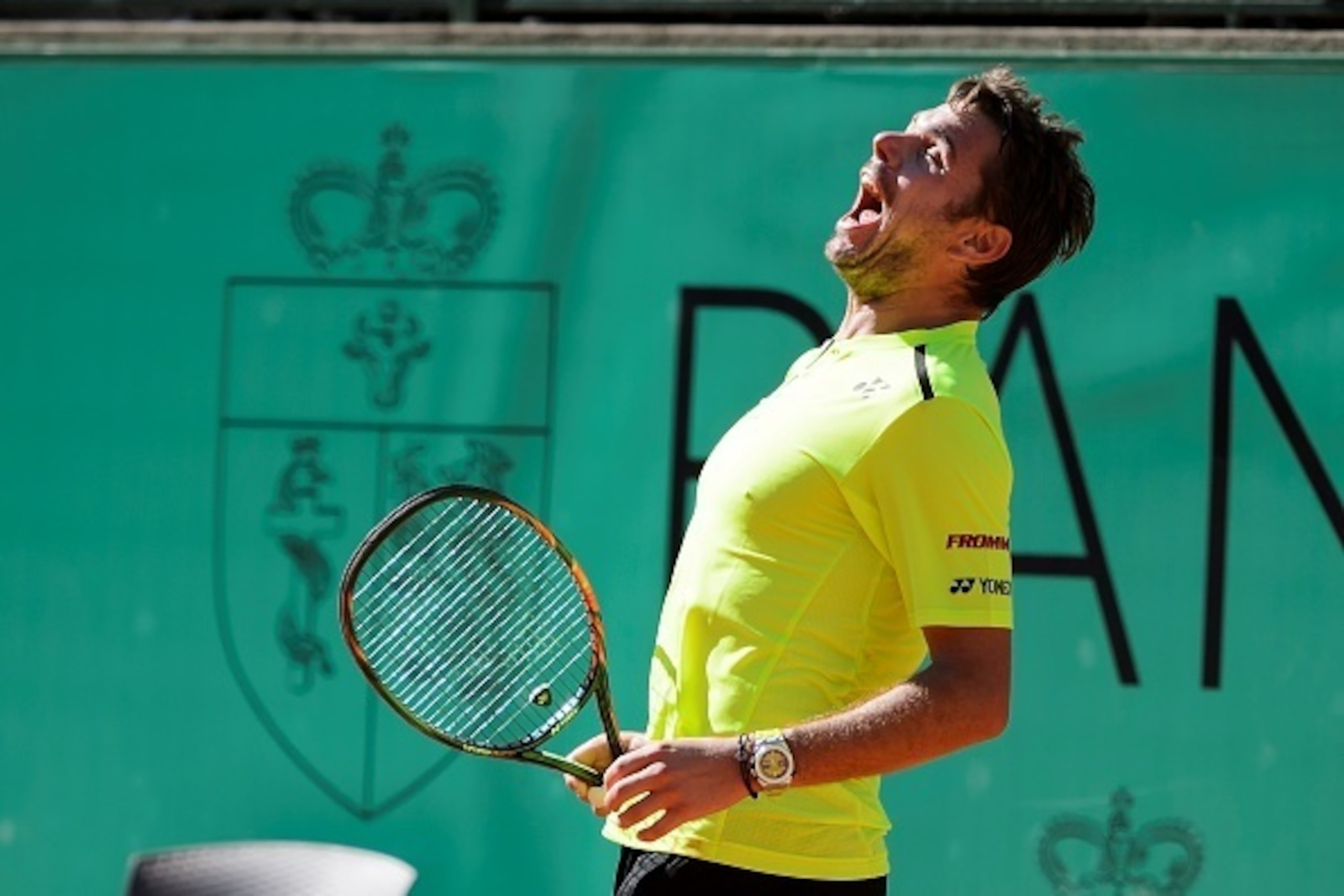
According to Odds Shark, Novak Djokovic is the favorite to win the French Open with -125 betting odds. Wawrinka received +1600 odds. That's fourth behind Djokovic, Rafael Nadal (+350) and Andy Murray (+400).
Murray's never won the French Open. He's never even reached the final. Yet oddsmakers consider him four times more likely to win the French Open than Wawrinka.
No respect for Stan the Man.
Heck, even Wawrinka seemed iffy about his chances at Roland Garros. Before the start of the tournament, Wawrinka told RolandGarros.com's Ian Chadband: "At present, I'd say that Novak is the main favorite. It was the case last year, as well. I think to beat him, it's going to be very difficult, and then there is (Andy) Murray and (Rafael) Nadal on an equal footing, and then I'm just after them."
But former player and tennis analyst Tim Henman believes Wawrinka can defend his title. Henman points out that Wawrinka may not be as consistent as Murray or Djokovic. However, Wawrinka's best is better than what either of them can produce on clay.
Henman told the Independent's Paul Newman: "In terms of the highest level of tennis that anyone can produce on a clay court I think that Wawrinka's might be the highest. When he's on strong I imagine it must be nigh on impossible to play against him given the firepower that he has and the speed he can generate from the back of the court and on serve."
Djokovic can attest to that. Wawrinka hit Djokovic off the court at last year's French Open. It was stunning. After vanquishing Nadal in the quarterfinals and Murray in the semifinals, Djokovic appeared on his way to winning that elusive first French Open title.
But Wawrinka unleashed his wicked backhand and produced a near-flawless performance.
Wawrinka was seeded eighth then. He's seeded No. 3 now. So why is he getting so little love this year? One the reasons so few experts pick Wawrinka to win anything is his unpredictability. He can go from winning a Slam to falling into a minislump as he did in 2014 after winning the Australian Open.
He has two of the biggest weapons—his big serve and one-handed backhand—in tennis. But sometimes those weapons vanish.
Prior to winning the Geneva Open last week, Wawrinka's clay-court season had been subpar. He lost to Nadal in the quarterfinals in Monte Carlo. He fell to Nick Kyrgios in his opening match in Madrid and lost to Juan Monaco in the third round in Rome. He also lost his opening-round match at the Miami Open.
After his loss to Monaco in Rome, Wawrinka told reporters that "the results are poor. Not great, that's for sure. That's a fact. The level what I do outside the matches are still good, still strong. So I know it can quickly change."
That's the puzzling part of Wawrinka's game. As Henman stated, when Wawrinka is on, few can match his firepower. But unlike Djokovic, who seems to possess a fifth gear he can shift into, Wawrinka keeps a turbo booster hidden. Every now and then, Wawrinka brings the booster out for special occasions, such as last year's French Open and the 2014 Australian Open.
So when a player is as unpredictable as Wawrinka, it's understandable why some might lower their expectations.
Before the final last year, Wawrinka's plaid shorts made more headlines than his play. Having never advanced beyond the quarterfinals at Roland Garros, Wawrinka seemed happy just to make the finals.

He told reporters: "That I have reached the finals now here is something exceptional after winning a Grand Slam in Australia a year ago now. And to think that this is yet another final in yet another Grand Slam, it's something amazing."
Meanwhile, having dispatched Nadal and Murray, Djokovic carried the burden of high expectations. The buzz was about Djokovic pulling off the calendar-year Slam.
Wawrinka dismantled him.
Similarly, in the final of the 2014 Australian Open, Wawrinka hit Nadal off the court. In both cases, hardly anybody saw it coming.
Playing well, yet under the radar, works for Wawrinka.
Perhaps that why, despite having two Grand Slam titles and more in the past two years than Roger Federer, Nadal or Murray, Wawrinka ranks himself "just after" the Big Four.
Before this year's Australian Open, Wawrinka spoke with reporters about his legacy and where he falls among the Big Four. "I want to continue to do well, win tournaments and go deep at the Slams. Where I'll be in a few years, which ranking, what level? I really don't know. I will always push myself to be at my top, and we'll see where it will be."
That's Wawrinka: understated, underestimated, yet still dangerous and flying under the radar.
.jpg?w=2560 "LA Premiere of \"Chad Powers\"")



.jpg?w=2560 "Ugly Jets Scoring Stat 😳")
.jpg?w=2560 "Landing Spots for Trade Candidates 📍")