
NFL Rookies Who Are Poor Scheme Fits with Their Drafted Team
There's a lot of positivity in the NFL world right now, as 32 franchises added shiny new toys to play with via the draft. If you search through the news cycle, you'll hear about how rookies are looking great in shorts. If you go to websites, you'll read about how just about every team had an A- or B-grade draft. Let's ruin that.
The truth is, NFL teams make mistakes. It's why more than a dozen first-round picks from the 2013 draft class didn't have their fifth-year options picked up this offseason. Bjoern Werner was cut altogether by the Indianapolis Colts and Dion Jordan's judgment day was extended for a season due to his year-long suspension. If Jordan doesn't take a massive jump in 2016, surpassing both Cameron Wake and Mario Williams, who have both signed new contracts this offseason, nearly half of the first-round picks from 2013 wouldn't be considered as "hits."
We need to stop pretending like these franchises are flawless. Often, their mistakes come from trying to move a player to a foreign position or scheme, having too much confidence in their coaching staffs. It's understandable how those issues may cause tension in a war room. It's easy to say a player is a stretch to develop in a specific scheme, but telling one of your positional coaches or coordinators to their face that you don't have faith in them developing an athlete is a different animal.
Be it pressure to keep everyone happy in-house or just plain misjudgment, there are eight players who were drafted in the top 50 who should be highlighted as potential "busts," not because of their talent, but because of where they're locked up for four to five years.
Jared Goff, QB, Los Angeles Rams
1 of 6
While it's always going to be an unpopular opinion that the first overall pick is a square peg, and there will be plenty of backlash whenever anyone even comes close to saying something along those lines, it really is true for Jared Goff and the Los Angeles Rams.
When you look at how their offense worked last year, built around a run-first offensive line with first-round running back Todd Gurley, they probably could have used an under-center passer with run-heavy scheme experience. That's especially true when their best counter punch to Gurley zone runs is a fly option with receiver Tavon Austin.
Which quarterback in this draft class follows that description? Carson Wentz of North Dakota State, who was considered the top quarterback of this talent pool for the better part of the offseason, played under center at times for the Bison and led a national championship team that dictated their offense around the ground game. The other option was Goff, who played in a "Bear Raid" system which had offensive linemen backpedaling into his lap.
Goff should be a better player than Wentz out of the gate, but with Wentz's arm strength and mobility, it's safe to claim that the former Bison passer has a higher upside. He's also a better scheme fit, which might have made him as good of a short-term option for Los Angeles when taken into consideration. At some point, you have to wonder if the Rams made the trade up for Goff because of the fact that he played at California and they have recently relocated to the state.
Leonard Floyd, EDGE, Chicago Bears
2 of 6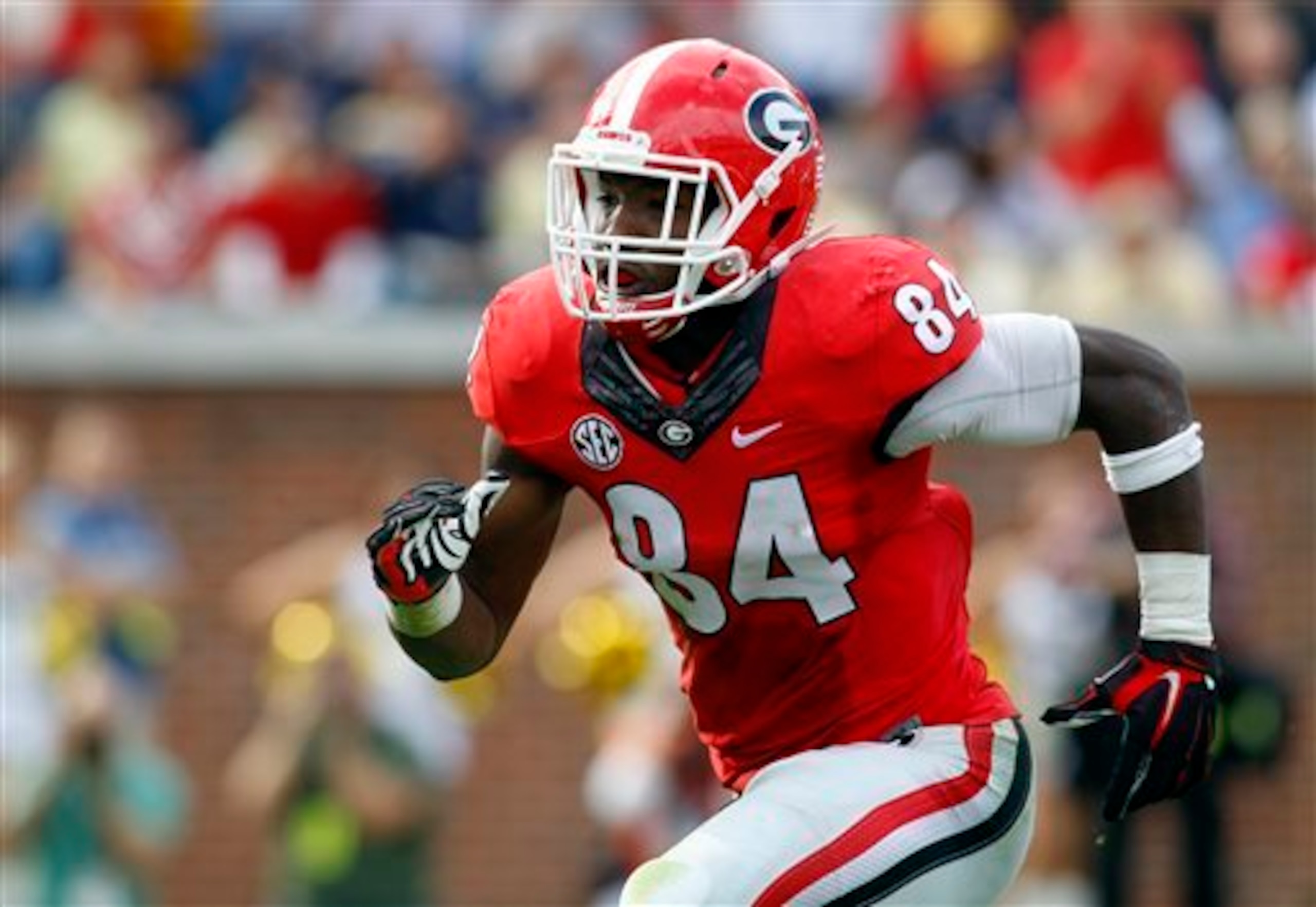
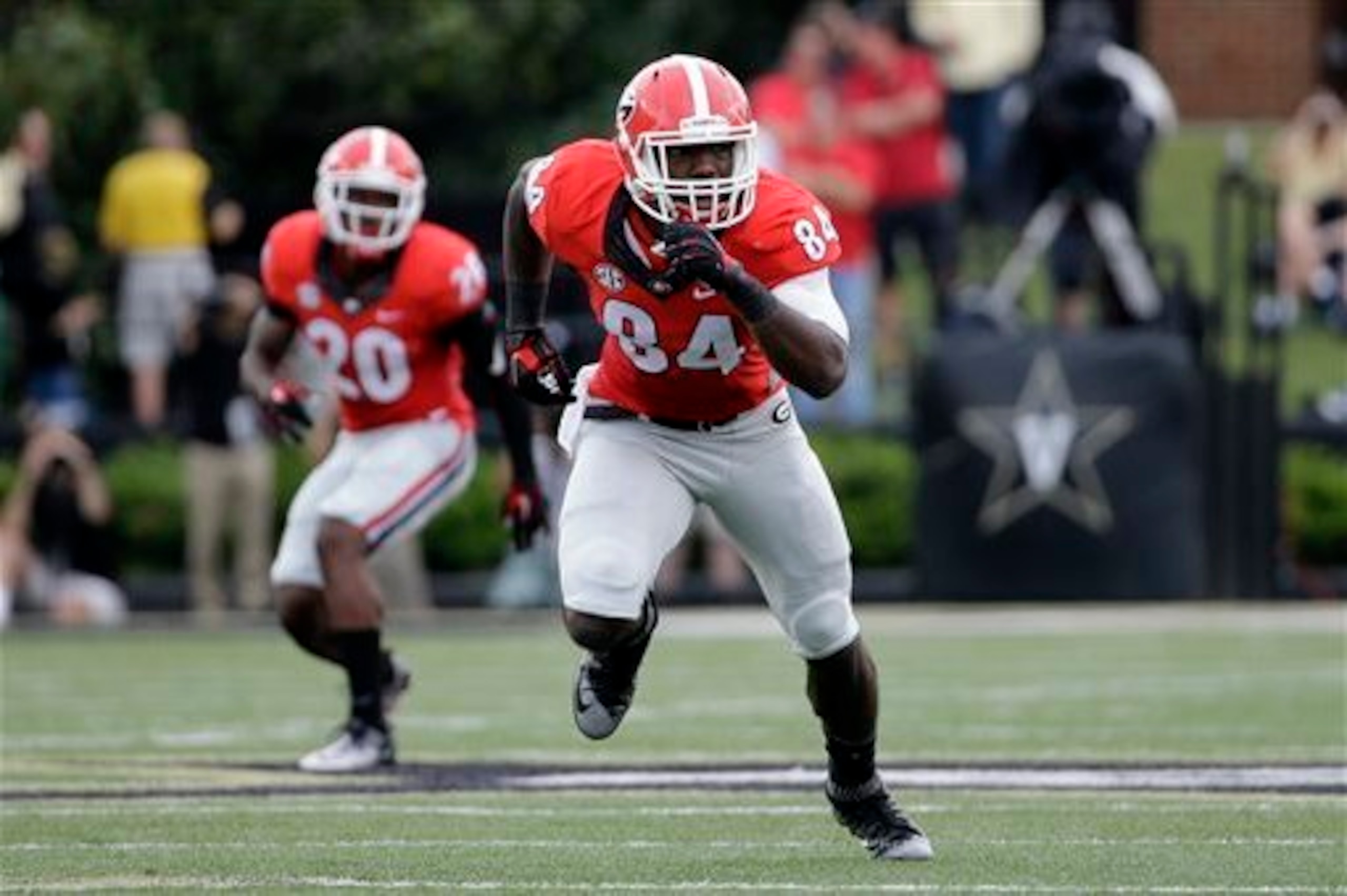
Going to a 3-4 scheme might be the worst thing for Leonard Floyd's career. The only worse option would have been if he was a full-time 4-3 defensive end. His ideal role was as a 4-3 linebacker who could have dropped down to the defensive line in passing situations, where his change of pace as a pass-rusher would have been more efficient.
Even at the University of Georgia last year, he was moved from a full-time pass-rusher to an off-the-ball linebacker role. At the combine, he shocked everyone by weighing 244 pounds, but that was overlooked by the fact that he measured in at 6'6", taller than he was ever listed at Georgia.
When he ran his drills, he looked like a freak athlete. The problem is, when you look at the 6'6", 244-pounder, he looks more like a receiver than a defensive end. A player that long and skinny is more of an optical illusion than anything. If you adjust for density, which then turns combine drills from movement in space to a measurement of force and measurements of body control, he's similar to Dion Jordan.
Jordan hasn't had a complete NFL career, as he was suspended all of 2015, but it's pretty clear that he failed to meet expectations as an on-the-ball defender. Unfortunately, it's easy to see exactly how Floyd can follow the same on-field path as Jordan early on. Chicago Bears defensive coordinator Vic Fangio may hope that Floyd can be the next Aldon Smith, but Smith's ferocity was his best trait, and Floyd's ferocity led to his college coaches moving him off of the line of scrimmage.
Laremy Tunsil, IOL, Miami Dolphins
3 of 6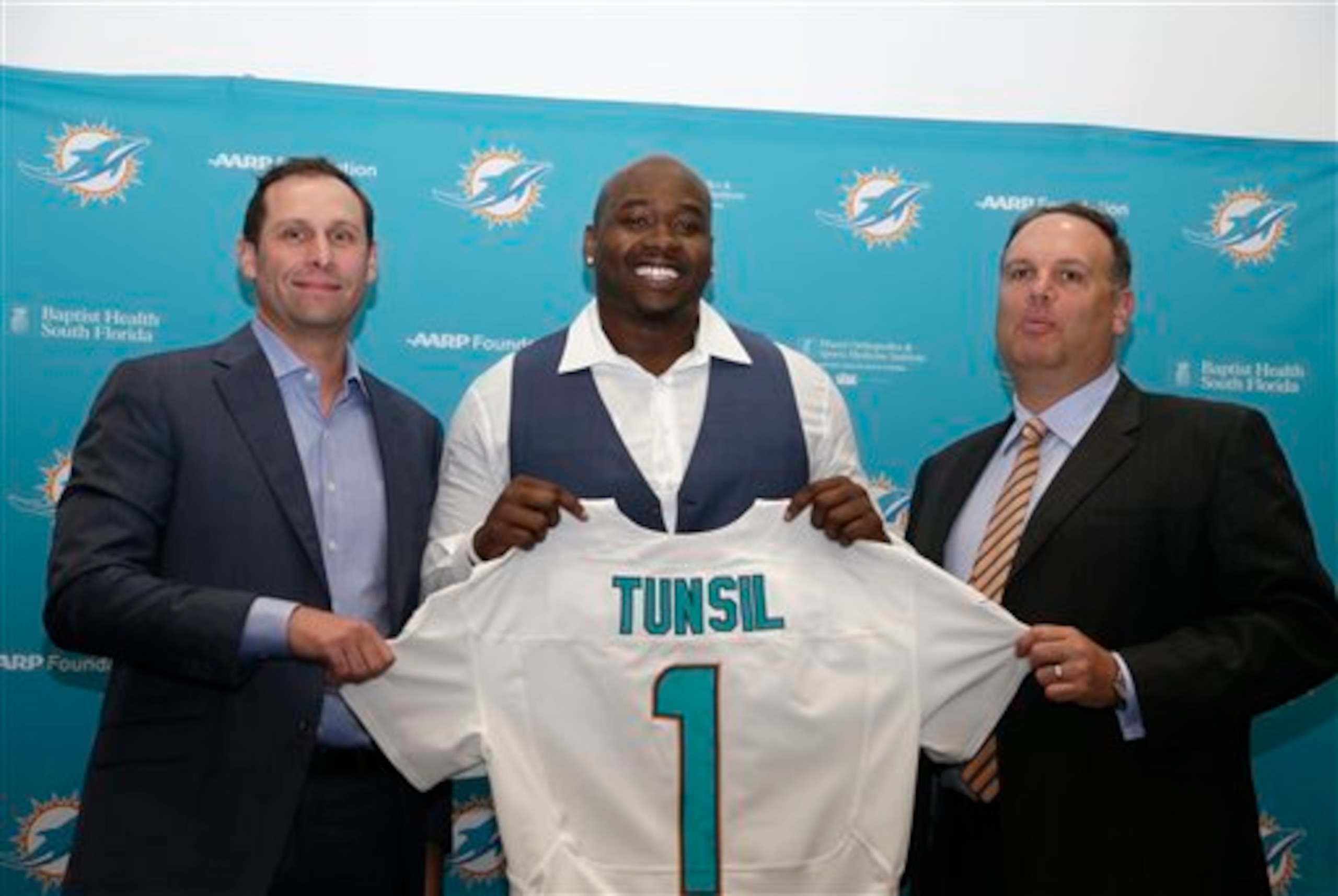
Throughout the draft process, Laremy Tunsil of Mississippi was considered to be a generational talent at offensive tackle. It wasn't uncommon to find an analyst who claimed he'd be the best young offensive tackle since Joe Thomas. Still, because of the needs of franchises at the top of the draft, many considered him to be a right tackle in the short-term rather than a blindside bookend.
This was because the Tennessee Titans and Cleveland Browns, who owned the top two picks in the draft, had Taylor Lewan and Thomas already protecting their blindsides. Once they traded out of their selections with the Los Angeles Rams and Philadelphia Eagles, though, Tunsil's draft projections were all over the place. When his Twitter account was hacked on draft weekend with a video that appeared to show him smoking through a gas mask, his draft stock was absolutely volatile.
He eventually landed with the Miami Dolphins, in the middle of the first round, where he will be playing guard, not tackle. The thought of him kicking inside, when his best attribute was his movement skills as a dancing bear, was never brought up this offseason. There, his upside will be limited, as his biggest positive was the fact that he could neutralize pass-rushers like Texas A&M's Myles Garrett and Auburn's Carl Lawson in college, not his quick set or ground game potential.
It's a good bet that he ends back up at offensive tackle down the line, but this was one of the worst personal fits for Tunsil early on in his career. After his tumultuous draft day, he's likely just looking forward to starting his rookie season at any position.


Joshua Garnett, IOL, San Francisco 49ers
4 of 6
A Chip Kelly NFL team drafting a Pac-12 player has almost become a meme at this point, but the selection of Joshua Garnett of Stanford was one of the more surprising picks of this past draft class, based on scheme fit.
Let's break this down:
- In Kelly's last season with the Philadelphia Eagles, he ignored the guard position as he let Evan Mathis and Todd Herrmans walk. The result was one of the worst guard combos in recent memory, which assisted in the 6-9 record that led to Kelly's firing.
- Kelly's offenses typically run a zone system in the run game, which put a premium on players who are more athletic than physical, as he tries to take advantage of every inch of the field instead of attacking the shrinking front-sevens and -sixes of the modern NFL.
- Garnett played in a gap-power system at Stanford, where his best blocks were down blocks or pulls on G-power plays, not outside zone stretches. On paper, he's a decent, not great athlete.
This is all while the 49ers drafted a former Kelly Duck in DeForest Buckner, a perfect fit for their projected true 3-4 defense. This couldn't have been a retaliation move from the front office to let Kelly know who's in charge of the team, as they already linked him with one of his former collegiate athletes.
At the end of the day, San Francisco packaged up picks to draft a player who doesn't fit their head coach's offensive system, and he plays a position which the head coach has not valued much in the past. All around, it was a head-scratcher, unless Kelly changes his schematic mentality. Even if he does, then why didn't the 49ers just hire a gap-power offensive mind rather than a spread coach?
Jihad Ward, EDGE, Oakland Raiders
5 of 6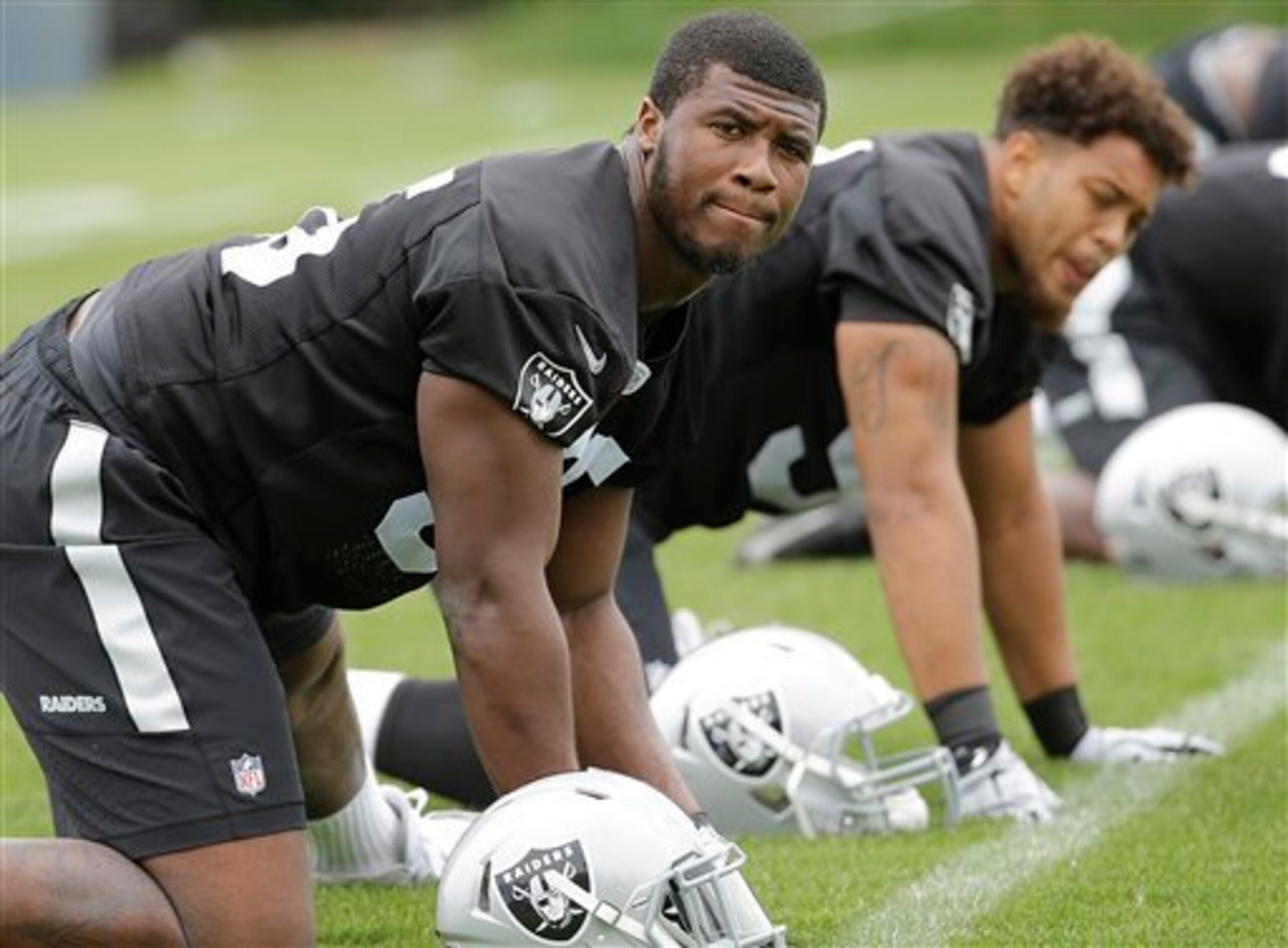
Jihad Ward was a Senior Bowl riser who very few talked about as a top-100 prospect before Dallas defensive coordinator Rod Marinelli rubbed elbows with him during practices in Mobile, Alabama. There, I was a first-hand witness of the physicality that Ward had to offer.
The question is, why didn't he display that more consistently at the University of Illinois? Well, he was a 4-3 defensive end who kicked inside to under tackle for stretches. As an edge defender, he isn't athletic enough to make a consistent impact in the passing game, a premium for the position.
At 6'5" and 297 pounds, he has an ideal frame of a 5-technique defensive end in a 3-4 defense, his top interior defensive line position. As a 3-technique defensive tackle, he was a liability in the ground game, where double-teams would open up his 6'5" frame and drive him seven yards off of the line of scrimmage.
In many ways, he has the same positives and negatives as DeForest Buckner, the San Francisco 49ers' first-round pick, just with lower peaks. Buckner went to a true 3-4 team, though, and Ward landed with the Oakland Raiders, who run a 4-3 defense under Jack Del Rio.
Is Ward going to be a run-first defensive end in a passing league? Is the team going to try to sink and swim with him as an interior penetrator? He has length to play over offensive linemen, but not the legs to burst between them in a one-gap system. Unfortunately, it appears that is how Ward is going to be used during his rookie contract, unless Oakland decides to change their mentality that led them to their best record in four seasons in Del Rio's first year as their head coach.
A'Shawn Robinson, DL, Detroit Lions
6 of 6
While the Detroit Lions have lost two major defensive tackles in Ndamukong Suh and Nick Fairley in recent years, A'Shawn Robinson isn't the type of interior defensive lineman who usually fits well in a 4-3 defense. At Alabama, Robinson was a base 5-technique defensive end on their line. Teryl Austin, who has been the Lions defensive coordinator since 2014, typically runs a one-gap defense.
In one-gap 4-3 defenses, there is a stout run-defending nose tackle and an attacking under tackle. The issue is, Robinson doesn't display explosive tendencies as an under tackle. According to Mock Draftable, he ranks as a below-average athlete in the 40-yard dash, the 10-yard split, the three-cone drill and the short shuttle, even on the relative scale of interior defensive linemen.
At 6'4" and 302 pounds, he's not a player you'd call "stout" by any means. In fact, because of leverage issues, he may be viewed as a liability as a gap player. After playing over an offensive tackle in college, he's going to be asked to either take on double-teams or penetrate in the NFL, completely changing his game. On the surface, he's a square peg being shoved into a round hole.
.jpg?w=2560 "LA Premiere of \"Chad Powers\"")



.jpg?w=2560 "Ugly Jets Scoring Stat 😳")
.jpg?w=2560 "Landing Spots for Trade Candidates 📍")