

2016 NFL Draft: Most Head-Scratching Decisions After 3 Rounds
The 2016 NFL draft has just one day remaining until the final clock expires, but it’s what happened in the first three rounds that will keep fans buzzing for months. While there’s hope for each draft pick to become an impact player, numerous head-scratching decisions were made with premium selections. We’ve found eight questionable picks through the first three rounds already.
Ultimately, time will tell whether these teams made a mistake or not. Some decisions are head-scratching due to the poor scheme fit or seemingly bad projection of where talent belongs. The best general managers properly identify what range a prospect will be selected and capitalize on their knowledge.
What picks were head-scratching to you? Make sure you leave a comment below with thoughts and predictions on the draft class.
Eli Apple to the New York Giants
1 of 8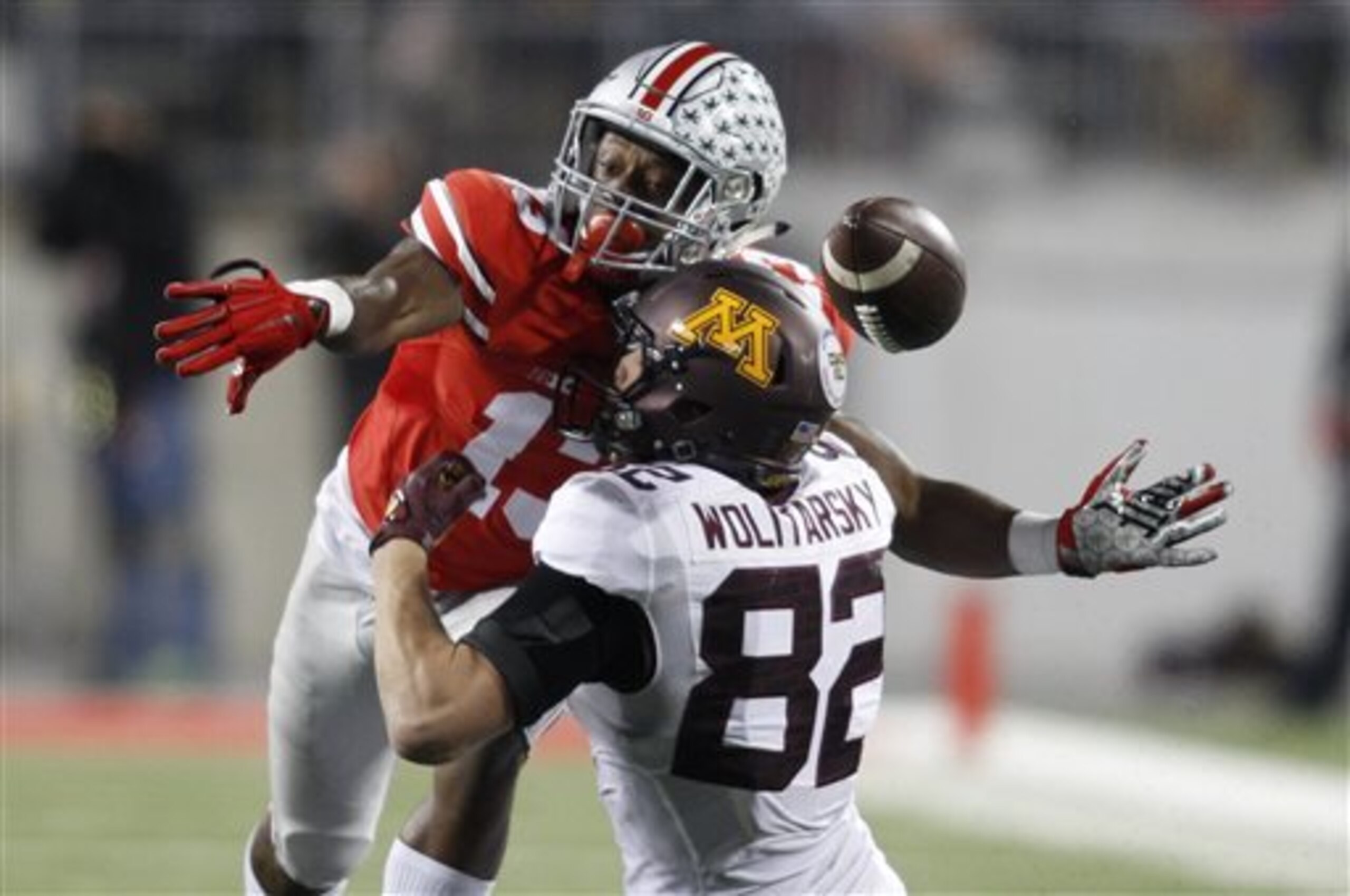
It’s not a surprise that the New York Giants continue to invest in defensive talent as general manager Jerry Reese fights to save his job past 2016. This roster was as weak as any prior to this offseason, when Reese has utilized available cap space and draft resources to plug starters in. Regardless of cost, he has acquired upgrades and is executing his mission.
With the 10th overall pick in the 2016 NFL draft, the Giants oddly drafted another cornerback in Ohio State Buckeyes' Eli Apple. The redshirt sophomore was the first cornerback off the board, and it’s unclear where he’ll play for the Giants. Reese invested over $60 million into free-agent corner Janoris Jenkins, and incumbent Dominique Rodgers-Cromartie is strictly a boundary cornerback.
Apple didn’t play slot corner for Ohio State either, leaving the Giants with three outside cornerbacks. Although Apple could develop into a plus starter in the future, the Giants could have filled a bigger hole at offensive tackle, linebacker or another wide receiver. Thankfully for Giants fans, Reese made more level-headed decisions in the second and third rounds.
Cody Kessler to the Cleveland Browns in Third Round
2 of 8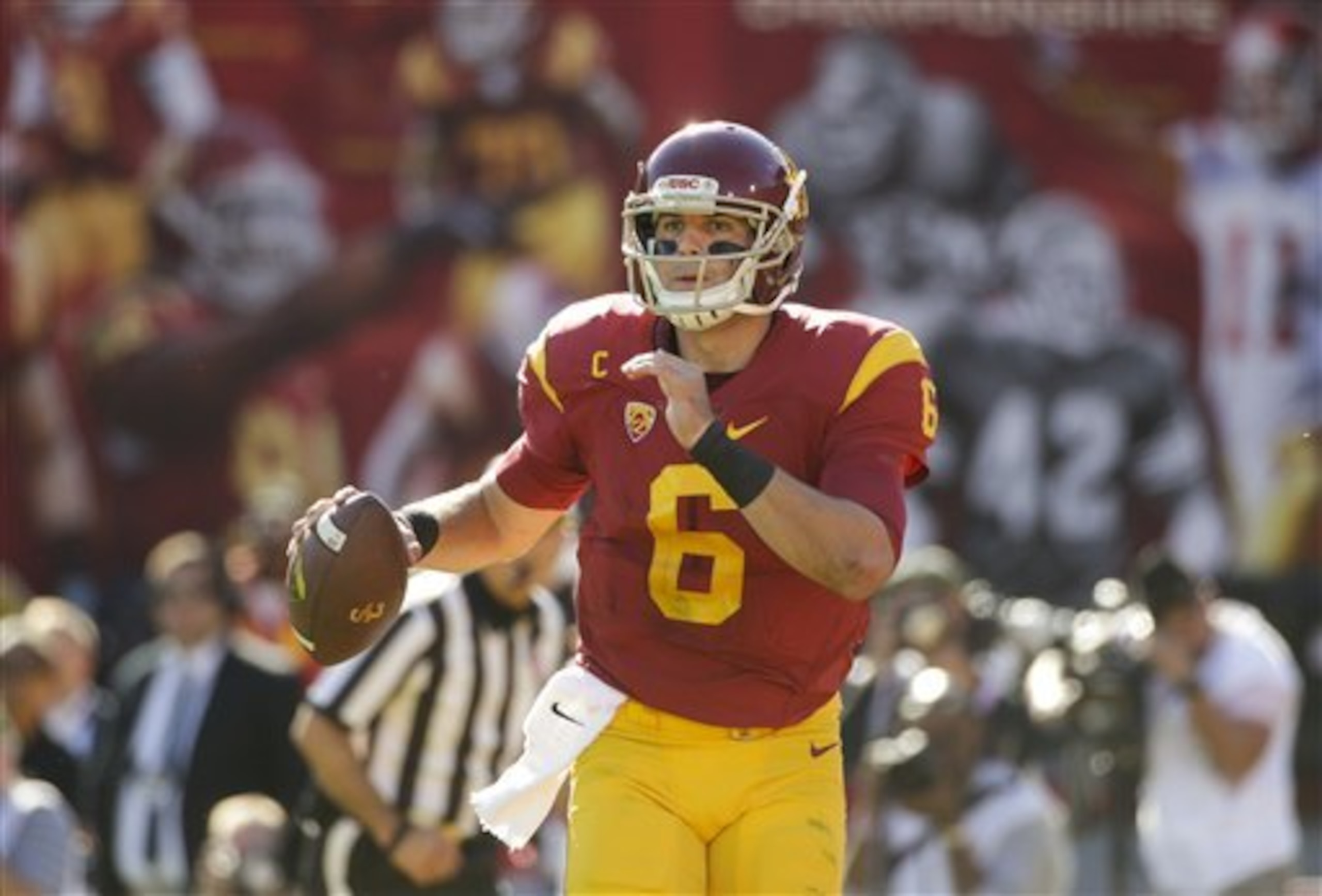
The Cleveland Browns finally took a quarterback, but it sure wasn’t one of the popular names that was linked to the team. USC Trojans quarterback Cody Kessler, all 6’1”, 220 pounds of him, was head coach Hue Jackson’s first draft investment at the position. This is a major head-scratcher, as Kessler was ranked as the 258th-best prospect in the draft and the No. 13 quarterback by CBS Sports.
Kessler was productive at USC operating as a “game manager.” He finished with 10,339 yards, 88 touchdowns to just 19 interceptions. But it’s his physical limitations and struggles working outside of the offensive design that make this an odd pick.
The best NFL quarterbacks are able to improvise to create time for big plays. This comes in many different forms depending on the quarterback. Kessler possesses no such skill, instead relying on five-star talent at receiver to create big plays after the catch. Many of his throws in college were simple, as the spacing in the PAC-12 gives massive passing windows to work with.
Nonetheless, the Browns used the 93rd overall pick on Kessler. While there is value in a quality backup, the team has Connor Shaw as a backup. Kessler is in the same vein as Shaw as a player, yet the Browns essentially wasted a pick on someone who will not be a long-term starter.
Jihad Ward to the Oakland Raiders in Second Round
3 of 8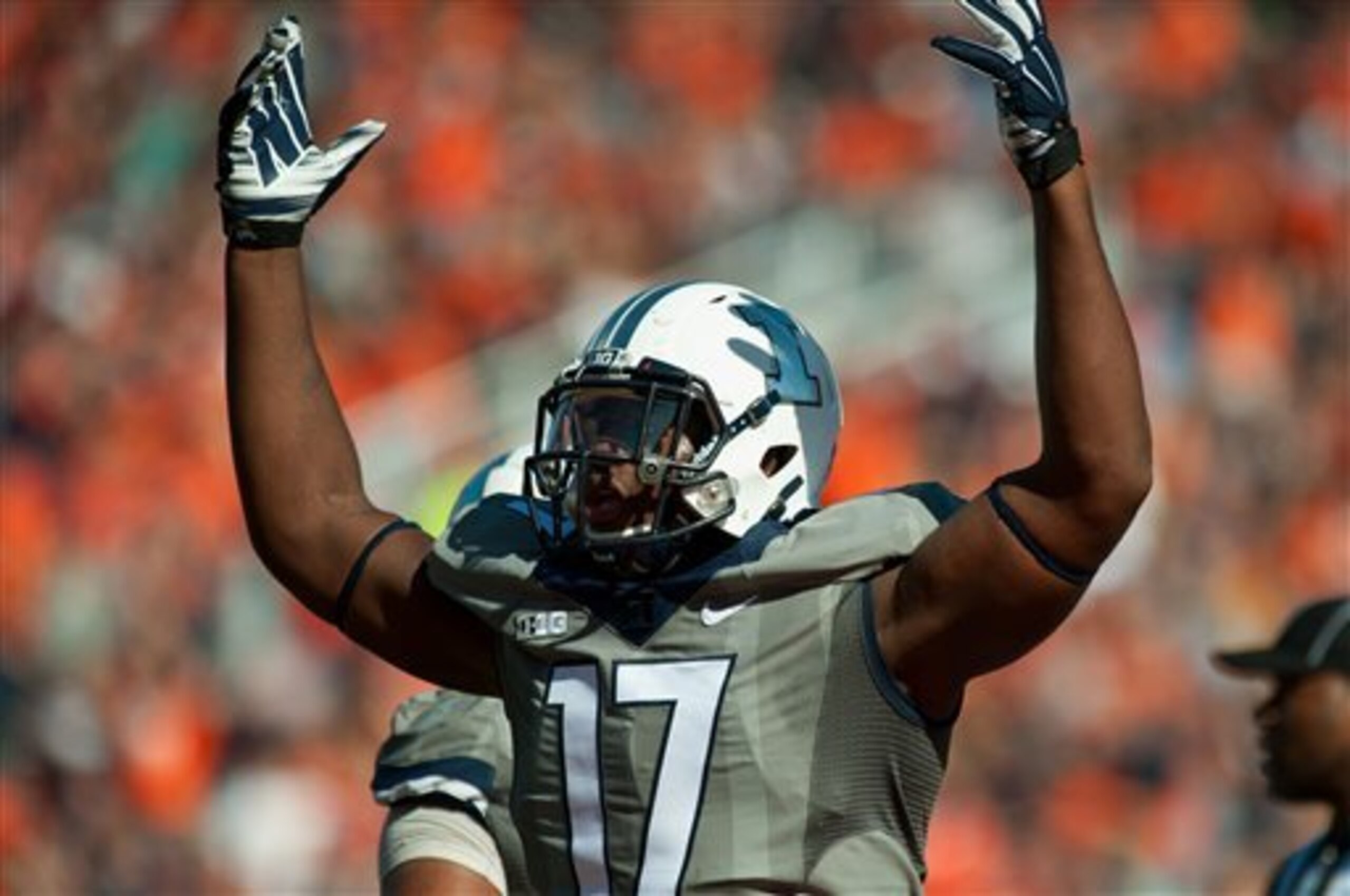
One of the biggest risers throughout the all-star game circuit was Jihad Ward of the Illinois Fighting Illini. The 6’5”, 297-pound defensive lineman was a junior college transfer who has versatility to play as a tackle or end. He’s huge, but he’s not a good football player at this time.
Ward produced just 104 tackles and 5.5 sacks in his two years at Illinois, yet somehow was the Oakland Raiders second-round pick. Some may point to Mario Edwards Jr., who was a massive home run by general manager Reggie McKenzie before injury struck, but Edwards Jr. was a prep star who had senioritis in his final year at Florida State. Ward has never proven to be more than big.
Usually when this happens, it’s because the player is a tremendous athlete with huge upside. This is far from the case with Ward, who tested terribly at the NFL Scouting Combine. According to Mock Draftable, all of Ward’s athletic testing results rank in the bottom 28 percent of all defensive ends since 1999. As a defensive tackle, he compares a little better, but the only successful athletic comparisons are Jared Odrick and Red Bryant.
There’s also a potential injury issue for Ward as well. According to Adam Schefter, via Paul Gutierrez of ESPN, Ward could need arthroscopic surgery on his knee. It’s awfully early to start draining knees, especially for an unproductive defensive lineman.


Miami Dolphins Drafting Kenyan Drake in Third Round
4 of 8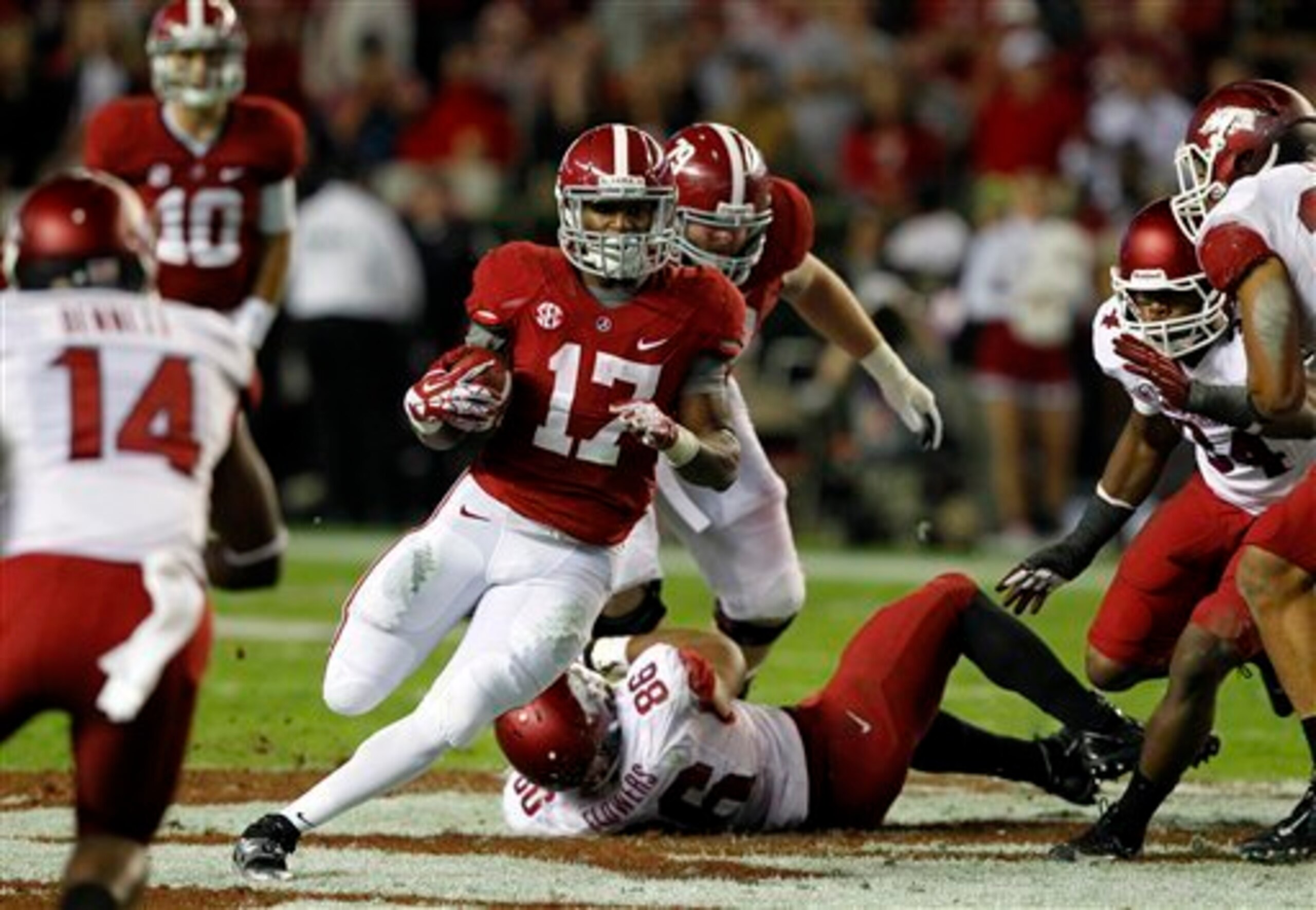
With the 73rd overall pick, the Miami Dolphins selected Alabama Crimson Tide running back Kenyan Drake. Drake was the third back off the board behind Ohio State’s Ezekiel Elliott and former teammate Derrick Henry. Not only did the Dolphins pass up more talented and natural running backs to select Drake, but his fit doesn’t make much sense.
Drake finished his career at Alabama with just 279 total offensive touches, 2,065 yards from scrimmage and 22 touchdowns. Injuries and inability to beat out Henry and T.J. Yeldon limited him. Alabama never fully trusted Drake as a regular rotation back, leading to Henry’s massive workload in 2015.
New Dolphins head coach Adam Gase has given his running backs entire series to play instead of rotating backs based on plays or formations like the New Orleans Saints do. He told ESPN.com writer Jeff Dickerson that he prefers dependable backs who can find a rhythm. That doesn’t describe Drake, who is a situational back.
Despite better running backs on the board, Miami paid a premium cost for a runner who plays more like a receiver. The better decision would have been to wait until Day 3 and add a player like Josh Ferguson of Illinois. Miami simply wasted too many assets with this pick and its other deals on Friday night.
Pittsburgh Steelers Overhaul Secondary from 2015
5 of 8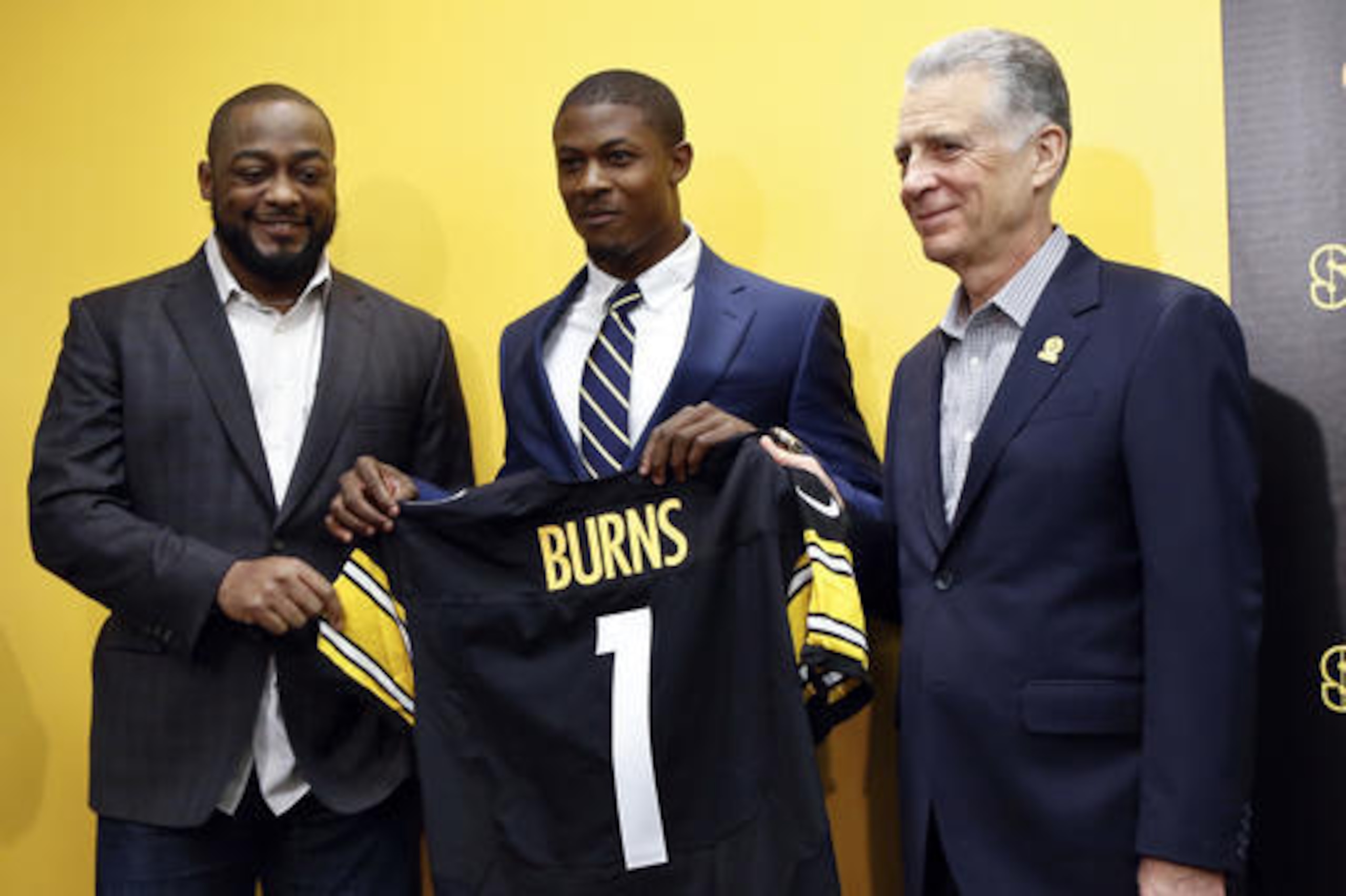
The Pittsburgh Steelers have committed significant draft capital to overhauling their secondary over the last two seasons. This makes sense, as the unit was old, expensive and below average. Surprisingly, the Steelers suddenly changed the style of defensive back that they had in the last year despite no turnover on the defensive staff.
In the 2015 NFL draft, the team invested a second- and fourth-round pick in small cornerbacks Senquez Golson and Doran Grant, respectively. Neither made an impact in 2015, but it’s early to give up on those cornerbacks. Instead of continuing their trend of adding off-ball cornerbacks, they instead got bigger players.
First-round pick Artie Burns is 6’0” and 193 pounds but very raw in his development. He’ll need time to refine his footwork and improve his timing when attacking the ball. He and Ross Cockrell are the biggest corners on the team, although neither is overly physical despite their size.
Second-round pick Sean Davis will likely play strong safety next to Mike Mitchell, but Davis is more physical than Burns. He’s not a pure cornerback despite his athleticism, showing stiffness and limited top-end speed. A rangy safety who could help maximize Burns, as a ballhawking presence would have made more sense than Davis.
It’s head-scratching what led to the Steelers sudden change of strategy. Normally, this would only occur if a coordinator changed teams.
Atlanta Falcons Take Similar Defensive Players
6 of 8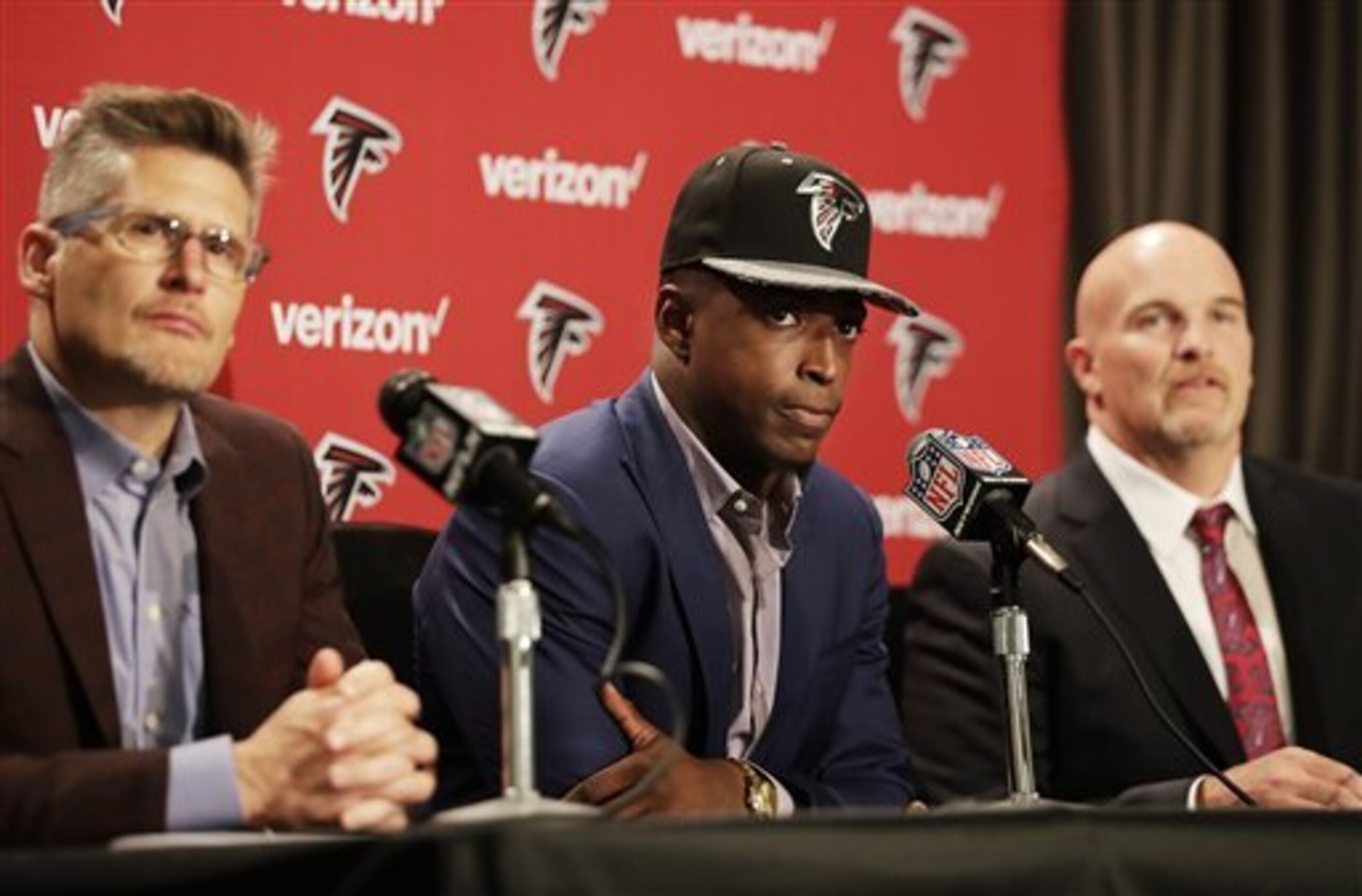
The Atlanta Falcons needed defensive help badly. With holes at linebacker and at safety, it was safe to assume that the team would eventually find a prospect at one or both positions. Atlanta walked away from Day 2 with Florida Gators safety Keanu Neal and LSU Tigers linebacker Deion Jones on defense.
Both Neal and Jones are quality players who will bring speed and versatility to the unit. The head-scratching aspect is clear, though. The Falcons essentially drafted two players who will have similar responsibilities and major limitations.
Neal is a hard-hitting box safety who can either play weak-side linebacker or strong safety. He is a poor coverage player, so expect head coach Dan Quinn to use him much like Mark Barron is utilized for the Los Angeles Rams. He’s really a linebacker who can be hidden as a safety.
Jones is a small weak-side linebacker who struggles in the run game. He needs to be kept clean off blocks, and he’s at his best in space. The 6’1”, 222-pounder injects speed but also limited potential in the tackle box.
It’s hard to find clear roles for these individuals if both share the field on a majority of plays. The Falcons risk being too predictable because of their weaknesses and would have been better off only selecting one of these defenders. They simply do not complement each other’s skill set.
Brandon Williams to the Arizona Cardinals
7 of 8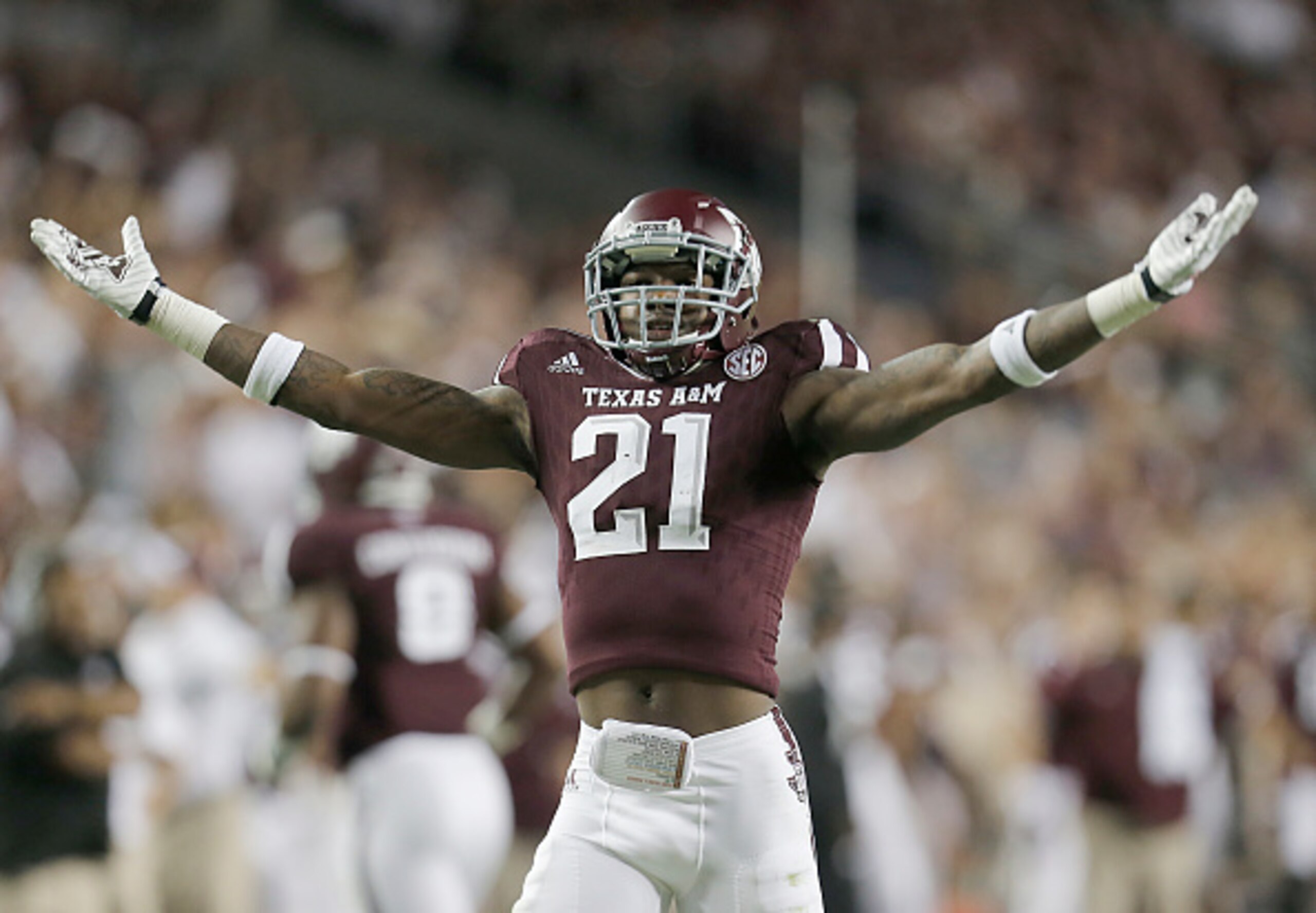
The most surprising and head-scratching pick of the first two days belongs to the Arizona Cardinals. As well as general manager Steve Keim has drafted over the past few years, his selection of Texas A&M Aggies cornerback Brandon Williams with the 92nd overall pick seems like a massive reach. Instead of adding a more pro-ready player in the third round, the Cardinals took a considerable project.
Williams moved from running back to cornerback prior to his senior season. He registered 37 tackles, seven pass breakups but zero interceptions in 13 games. He was considered an undrafted free agent by CBS Sports.
Maybe Williams will prove to be a star one day, but he was an unknown until he blazed a 4.37 40-yard dash at his pro day. That shouldn’t have been enough to get him drafted over much more talented cornerbacks, though. Even though the Cardinals need long-term help at cornerback, he has an uphill battle to even make the final 53-man roster.
Christian Westerman Is Still on the Board
8 of 8
We didn’t see many interior offensive linemen come off the board in the first two days of the 2016 draft, but one of the very best is still available. Arizona State Sun Devils guard Christian Westerman is a highly regarded prospect, as he was projected to be a second-round value by CBS Sports. That sets the expectation he should start as a rookie.
Westerman is a 6’3”, 298-pound guard who would be ideal for a zone-blocking scheme. Barring any unknown injury that is causing him to drop, it’s a head-scratching decision by every guard-needy team to pass on Westerman to this point. As poor as the offensive line play is throughout the league, it’s baffling why a quality prospect would be passed on for this long.
According to NFL.com Draft Expert Lance Zierlein, who specialized in offensive line evaluation, he compares favorably to Atlanta Falcons center Alex Mack. His versatility and plus athleticism are seen as major positives to his game. He looks to be a massive steal on Day 3 now.
All stats used are from sports-reference.com.
Ian Wharton is an NFL Featured Columnist for Bleacher Report.
.jpg?w=2560 "LA Premiere of \"Chad Powers\"")


.jpg?w=2560 "Landing Spots for Trade Candidates 📍")
.jpg?w=2560 "Ugly Jets Scoring Stat 😳")