

It's a safe assumption that every pitcher in the minors dreams of being the next Clayton Kershaw or Jake Arrieta. And since there's nothing wrong with dreaming big, that's totally cool.
It's also a safe assumption, however, that only a select few will have that dream come true.
Let's predict which pitching prospects are going to be among that select few. In addition to still qualifying as prospects—New York Mets left-hander Steven Matz's 50.2 major league innings officially bar him from that designation—the idea is to look for young pitchers whose statistics and scouting reports point to a future as an elite ace in Major League Baseball. And the term "elite" must be stressed, as this is a search meant to find pitchers who could provide over 200 dominant innings on a yearly basis.
The list ahead contains only six names and a handful of honorable mentions who at least belong in the conversation. Step into the box when you're ready.
In the Conversation
1 of 7
There's no shortage of pitching prospects who might become elite-ace material, but here are six names in particular to keep an eye on.
- Jose De Leon, RHP, Los Angeles Dodgers: Good stuff and a deceptive delivery have allowed De Leon to strike out over 12 batters per nine innings in the minors, and he has good control too. But for now, his red flag is the trouble with home runs he developed upon reaching Double-A last year.
- Anderson Espinoza, RHP, Boston Red Sox: Espinoza put himself on the map by striking out 65 batters in his first 58.1 professional innings as a mere 17-year-old last season. But before anyone gets too excited, he's only advanced as far as Single-A.
- Francis Martes, RHP, Houston Astros: Following a 2015 season in which Martes posted a 2.04 ERA across three levels, Baseball America likes him enough to rate him as baseball's No. 20 prospect. Trouble is, the move up to Double-A has so far been a reality check.
- Sean Newcomb, LHP, Atlanta Braves: Newcomb is a hard-throwing lefty who's racked up nearly 11 strikeouts per nine innings in the minors. But since he's also walked over five batters per nine innings, he needs to improve his control.
- Robert Stephenson, RHP, Cincinnati Reds: Stephenson has excellent stuff across the board, and he's used it to strike out about 10 batters per nine innings in the minors. But after starting off strong in the lower levels, his control has regressed at Double-A and Triple-A.
- Dillon Tate, RHP, Texas Rangers: Tate has dominated the competition since being taken fourth overall in last year's draft and is an exciting prospect. The catch is that his domination has occurred in only eight minor league starts.
Now then, let's get to the real stars of this conversation.
Jose Berrios, RHP, Minnesota Twins
2 of 7
The Minnesota Twins drafted Jose Berrios 30 picks after they took Byron Buxton at No. 2 in 2012. Given the way things are going now, Berrios arguably has the brighter future of the two.
After posting a 2.87 ERA across two levels in 2015, Berrios has begun 2016 by allowing two earned runs in 17 innings with Triple-A Rochester. He's struck out 20 batters, and his run at a no-hitter in his last outing contributed to the .143 average opponents have against him.
"When I go out there, I'm thinking about being in the majors," he said afterward, per Sam Dykstra and Chris Tripodi of MiLB.com. "I know I need to throw every one of my pitches for strikes if I'm going to do that, so that becomes my focus first and hopefully the majors comes after."
Berrios is certainly good enough to pitch in the majors now, but how good he'll be in the long run varies depending on who you ask. Whereas he's a top-20 prospect at MLB.com and Baseball Prospectus, he doesn't crack the top 25 at Baseball America and ESPN.com.
However, the 21-year-old from Puerto Rico makes it easy to side with the optimistic projections for his future. His fastball, curveball and changeup are all above-average pitches that have allowed him to strike out more than a batter per inning. As reflected by a career 2.5 BB/9, he also has good control.
One thing Berrios will never have is size, as Baseball-Reference.com lists him at only 6'0" and 185 pounds. But with skills like his, he could very well join a fraternity of smallish aces that includes more members than you might think.
It's been a while since the Twins last produced a homegrown ace. But the sooner they give Berrios the call, the sooner they'll be on the road to fixing that.
Alex Reyes, RHP, St. Louis Cardinals
3 of 7The St. Louis Cardinals need to start looking for an heir apparent to Adam Wainwright atop their rotation, and Alex Reyes might be the best candidate in the organization.
The Cardinals signed the 6'3", 175-pound Reyes in 2012 after he moved from New Jersey to the Dominican Republic to circumvent the draft, and his rise through the minors in the years since has been marked by eye-popping strikeout numbers. He's struck out 11.9 batters per nine innings for his career and peaked with a 13.4 K/9 in action at High-A and Double-A last year.
The 21-year-old's progression has been halted by a 50-game suspension for using marijuana, but the prospect community still loves him anyway. He rates as MLB.com's No. 11 prospect, and he entered 2016 as a top-10 prospect for Baseball America, Baseball Prospectus and ESPN.com.
The main draw is an arsenal that revolves around a plus-plus fastball that sits in the mid-90s and can touch triple digits. Reyes also throws a curveball that Christopher Crawford of Baseball Prospectus describes as a 12-6 breaker that has "moments where it looks like a double-plus pitch," as well as a changeup that could at least be above average.
With a career rate of 4.6 walks per nine innings, Reyes' big flaw is poor control that results from inconsistent mechanics. But this isn't necessarily a deal-breaker. Crawford notes the Cardinals are good at working with pitchers like Reyes, and Carlos Martinez looks like a fine example. His control is at a point now where it's good enough despite a funky delivery, allowing him to get the most out of his electric stuff.
Reyes is going to be a similar kind of pitcher, except with possibly even better stuff and, due to his size advantage, more durability. That's not a pitcher National League hitters will like facing.


Tyler Glasnow, RHP, Pittsburgh Pirates
4 of 7
The Pittsburgh Pirates own one of the league's five best ERAs since 2013. Among other things, that's owed to how pitching coach Ray Searage is baseball's answer to Mr. Fix It.
On that note, let's talk about Tyler Glasnow.
Glasnow was only a fifth-round draft pick in 2011, but he's since developed into a prospect who has the experts drooling. At MLB.com, Baseball America, Baseball Prospectus and ESPN.com, the 22-year-old rates as no worse than a top-14 prospect.
Glasnow is a 6'8", 225-pound beast, and he throws like one. He has a fastball that touches the high 90s, which ESPN.com's Keith Law wrote "really comes downhill at hitters." He also throws an above-average curveball, and the general consensus appears to be that his changeup has potential.
The good news is that all this has allowed Glasnow to strike out 11.7 batters per nine innings in the minors, helping him to post a 2.12 career ERA. The bad news, though, is that Glasnow has struggled with his control in walking over four batters per nine innings.
But this bad news could be worse. Glasnow walked only 3.5 batters per nine innings last year and has picked up where he left off at Triple-A Indianapolis at the start of 2016. In the hands of the right major league pitching coach, his control could go from "better" to "legitimately good."
For that, Searage is probably just the guy for the job. After helping the likes of Francisco Liriano, A.J. Burnett and Juan Nicasio find their footing, he gets the benefit of the doubt as a coach who could take Glasnow's control to the proverbial next level.
If Searage can do that, Glasnow's size and stuff will do the rest.
Blake Snell, LHP, Tampa Bay Rays
5 of 7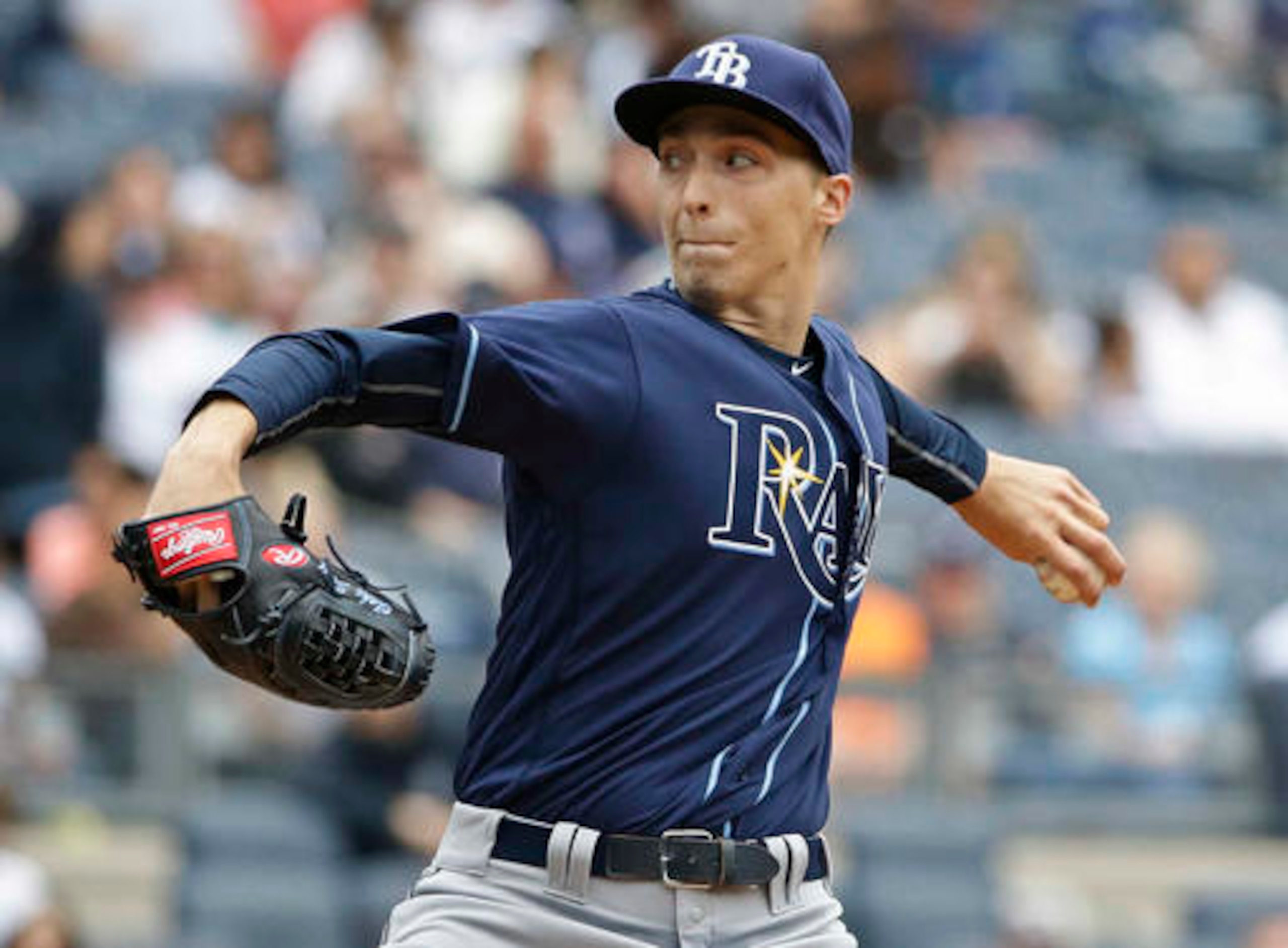
Here's a guy your humble narrator has had trouble believing in. The scouting reports said Blake Snell was good, but sometimes there are things you just need to see for yourself.
This brings us to Snell's major league debut with the Tampa Bay Rays.
It was a good one. The 23-year-old lefty limited to the New York Yankees to a run in five innings on two hits and a walk at Yankee Stadium on Saturday. In doing so, he made it much easier to see why MLB.com, Baseball America and ESPN.com all consider him a top-15 prospect.
It's one thing that Snell, who the Rays drafted with the No. 52 pick in 2011, worked in the mid-90s with his fastball. But just as important is the late life it showed. According to Brooks Baseball, his fastball was getting 13.6 inches of vertical rise. Baseball Prospectus can show that's kind of like Chris Young's rising fastball, except with even more rise and a lot more velocity.
Snell also showed a curveball that turned Brian McCann into jelly, as well as a changeup with solid action. Suffice it to say that after using it to strike out over 10 batters per nine innings in the minors, Snell succeeded in showing his stuff can baffle major league hitters too.
The long-term concern is how much Snell will improve iffy control that's led to a walk rate of 4.5 per nine innings in the minors. But there's room for optimism there. As he adds more weight to his 6'4", 180-pound frame, his delivery should become less of a high-effort affair.
It also doesn't hurt that Snell is with an organization that has a good reputation for developing pitchers. The Rays should have no trouble turning a pitcher with Snell's talent into an ace.
Julio Urias, LHP, Los Angeles Dodgers
6 of 7
The Los Angeles Dodgers already have one left-hander who's a franchise cornerstone. But as the existence of Julio Urias suggests, they're believers in the idea that two is always better than one.
The Dodgers spent almost $2 million to purchase Urias and three other prospects from the Mexican League in 2012, according to ESPN.com's Mark Saxon, and that already looks like money well spent. He owns a 2.92 ERA in the minors, striking out 10.8 batters and walking only 2.9 batters per nine innings. And he now looks better than ever three starts into 2016 with Triple-A Oklahoma City, striking out 20 and allowing just two walks and 11 hits in 15 innings.
This makes it easy to forget Urias is still only 19 years old, which is also the scary part. He should only get better as he gains more experience, which helps explain why MLB.com, Baseball America, Baseball Prospectus and ESPN.com agree he's baseball's top left-handed prospect.
In Urias' toolbox is a fastball, curveball and changeup that are all above-average. And that's arguably underselling his fastball, as Crawford rated it as a plus-plus pitch because of its velocity (it sits 90-94 mph and touches 97) and "how much life the pitch has and how much command Urias has with it."
Urias also has command of all three of his pitches as well as a feel for pitching not typically observed among teenagers. Add it all up, and the Baseball Prospectus scouting report says the total package draws comparisons to a young Felix Hernandez.
The one caveat is a big one: Urias' career workload consists of 237.1 innings in four seasons. He's being handled with kid gloves, which raises the question of exactly when he'll be "ready" for the big leagues.
But then again, nobody's saying Urias needs to become an ace right away. Maybe it will happen later rather than sooner, but his talent should allow him to flourish.
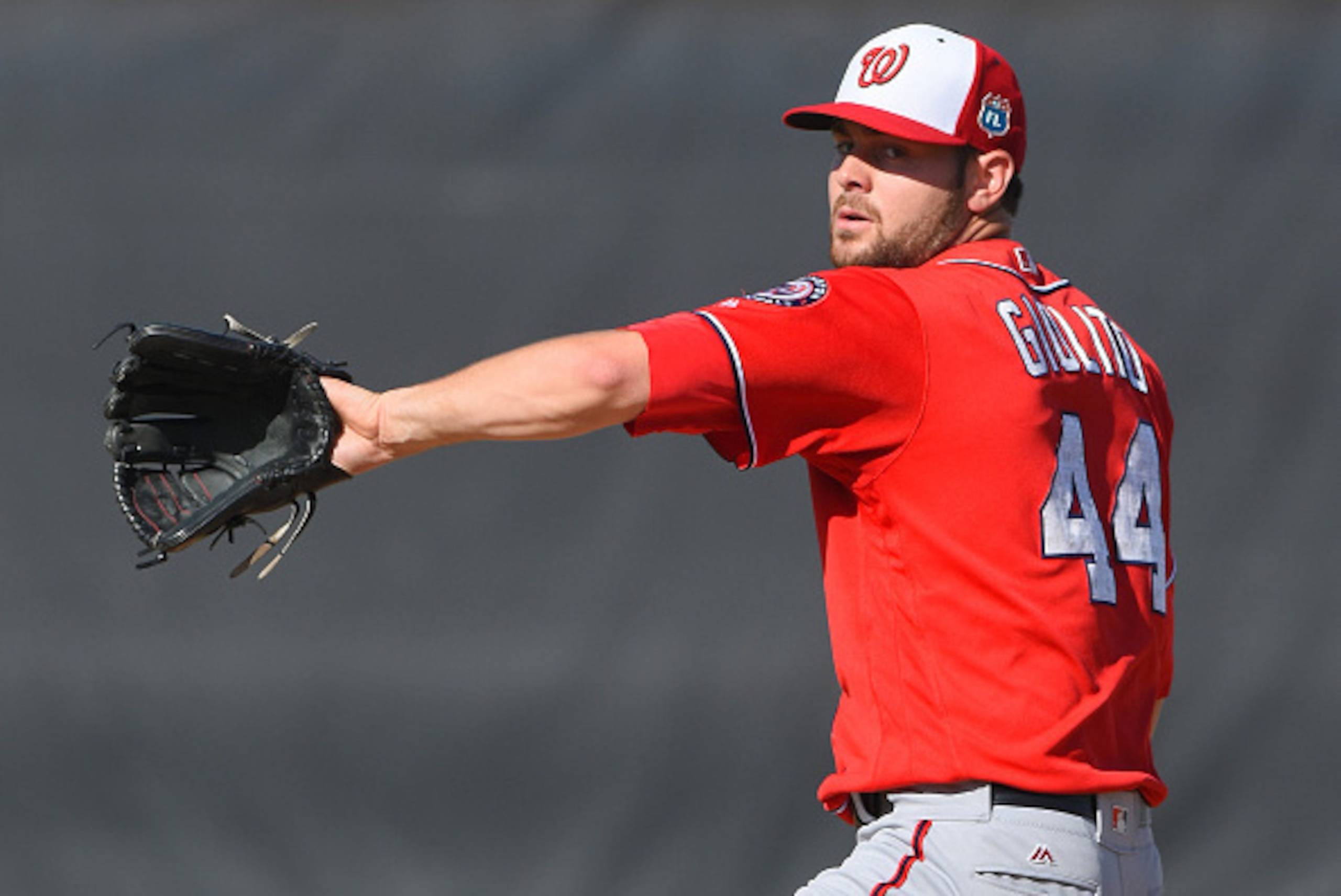
Lucas Giolito, RHP, Washington Nationals
7 of 7
The Washington Nationals took a chance on Lucas Giolito's elbow when they drafted him at No. 16 in 2012. And when he went in for Tommy John surgery a couple of months later, it seemed to backfire.
But things are looking a little different now. Once considered damaged goods, Giolito is now widely considered the best pitching prospect in baseball.
Baseball America ranked Urias as the best at the start of the year, but MLB.com, Baseball Prospectus and ESPN.com all prefer Giolito. Law wrote that the 21-year-old is basically the "perfect pitching prospect, as he has ace size (6'6" and 255 lbs) to go with a plus-plus fastball and a hammer curveball. He also has a changeup that Ezra Wise of Baseball Prospectus believes could be a plus pitch.
This might make Giolito sound like a clone of formerly elite prospect Archie Bradley, which doesn't allow for the most optimistic projection for his future. The difference is that Giolito has already figured out the one thing Bradley is still searching for: control. He walked under three batters per nine innings in 2014 and 2015 and is generally seen as a strike-thrower.
"You've got to be ready to go when you're up there facing him," Cleveland Indians prospect Bradley Zimmer told Jeff Passan of Yahoo Sports last summer. "He's got good velo and a good feel for the strike zone, so he can mix it up."
Giolito isn't off to a fast start with Double-A Harrisburg, allowing 13 hits and eight walks with only nine strikeouts in 11.2 innings. Even still, he may be first in line for a call-up if the Nationals find themselves in need of a starting pitcher.
And once Giolito is in the majors, he could come into an ace standing relatively quickly. Power pitchers with good control tend to do well for themselves, you know.
Stats courtesy of Baseball-Reference.com and FanGraphs unless otherwise noted/linked.





.jpg?w=2560 "Latest Peyton-Colts Rumors")