
End-of-April Report Card Grades for All 30 MLB Teams to Start 2016
The first semester of the 2016 regular season has come to an end, and report cards are heading home to each of baseball's 30 teams. Some managers and front office executives will try to get into work early to intercept the mail, while others will simply lean back and wait for a pat on the back from ownership.
While it's far too early to make declarative statements about the ultimate fate of most teams after only a month of action, it's enough of a sample size for us to look at areas that are strengths for each club and, conversely, areas that are in need of improvement.
A team's record certainly plays a part in our evaluation, but we'll look specifically at four areas: hitting, defense, starting pitching and relief pitching. Spoiler alert: We're notoriously tough graders.
Before we get into things, here's a brief explanation of a few advanced statistics that you'll see either directly or indirectly referenced on the pages that follow. Click on the link for a more detailed explanation, courtesy of FanGraphs:
- Defensive Runs Saved (DRS): Tells us how many runs, better or worse, a player has been compared to the average player at his position.
- Ultimate Zone Rating/150 (UZR/150): Calculated differently than DRS but similar in that it tells us how many runs, better or worse, a player has been compared to the average player at his position over 150 games.
- Weighted Runs Created Plus (wRC+): Aims to present a more accurate representation of offensive value than batting average and OPS.
Traditionalists need not worry, however, as there will be plenty of references to batting average, errors and all the old-school statistics that have been a part of the game for more than a century.
With that out of the way, let's take a look at which teams made the grade and which clubs need to stay after class for a bit of extra help.
Arizona Diamondbacks (11-12)
1 of 30
Losing All-Star center fielder A.J. Pollock to a broken elbow before the regular season began was a major setback for Arizona, one from which the team really hasn't yet recovered. Neither prospect Socrates Brito nor converted infielder Chris Owings has come close to adequately replacing Pollock's bat or glove.
But the rest of the lineup has been up to the challenge, with Arizona among the league leaders in multiple offensive categories, including runs scored and OPS. Offseason addition Jean Segura has been particularly outstanding, hitting .350 with a .925 OPS and reaching base safely in all but three games.
We can't say the same about the team's more ballyhooed winter acquisitions, starters Zack Greinke (6.16 ERA, 1.47 WHIP) and Shelby Miller (8.69 ERA, 1.93 WHIP). Their ineffectiveness is a reason why the Diamondbacks rotation sits with an ERA above 5.50.
It's also why Diamondbacks relievers have thrown more innings than anyone else, though they've done a terrific job of keeping the ball on the ground and limiting damage, pitching to a respectable 3.36 ERA. That ability to induce ground balls plays into one of the team's strengths, its infield defense.
Grade: C-
Atlanta Braves (4-17)
2 of 30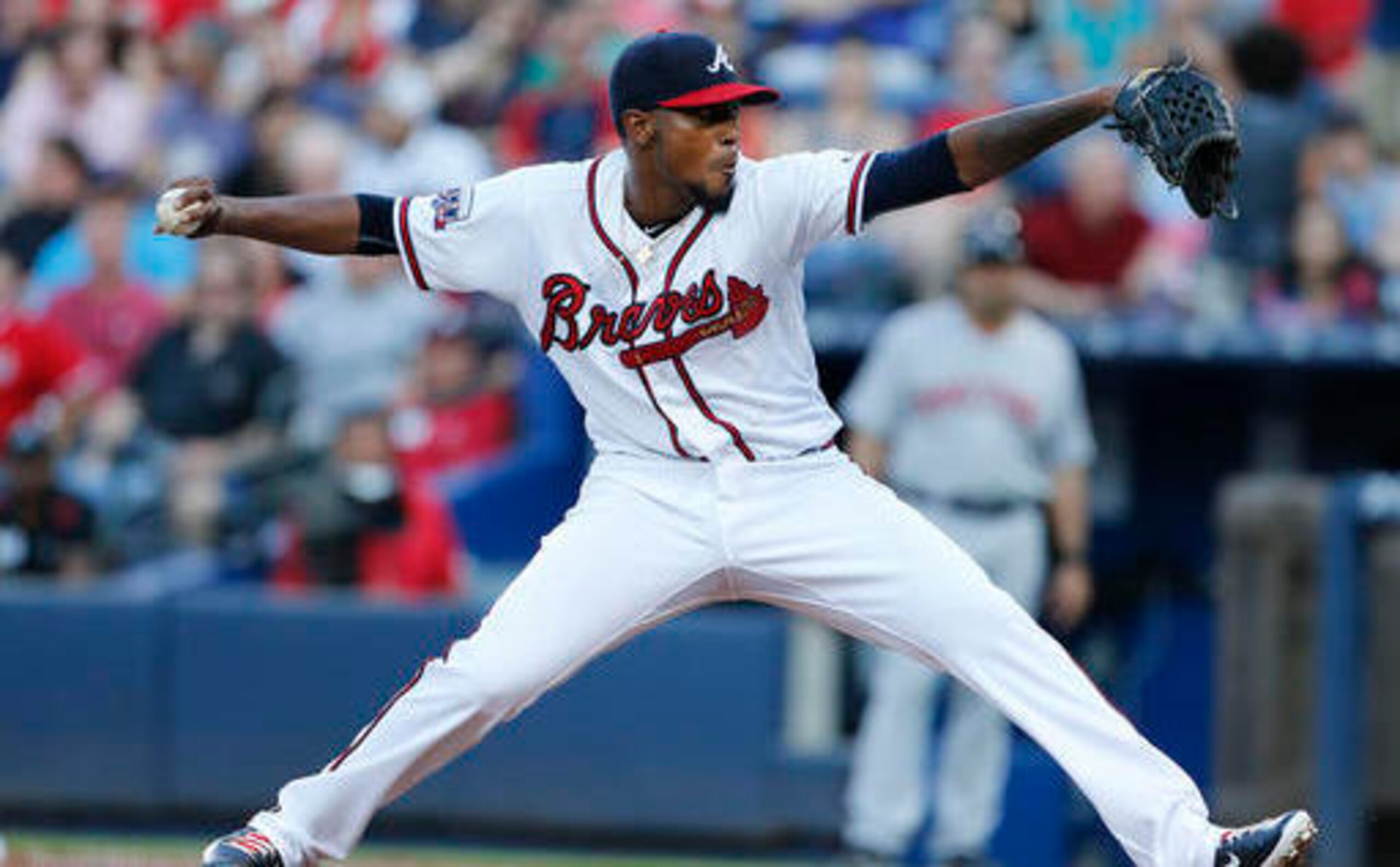
Just before Thanksgiving, Atlanta general manager John Coppolella made it clear to USA Today's Bob Nightengale that his team would exceed its 67-win total from a season ago.
"We want to win," Coppolella said. "And we will win. I’m not under any delusions that we’ll win 110 games, but we’re not going to lose 95 games again. We will win more games than we did last year." With the way the Braves played in April, they'll be lucky to reach the 67-win mark in 2016.
Atlanta sits at or near the bottom of the majors in nearly every offensive category, including home runs, of which the Braves have hit four. Four home runs. That's a total 85 different players have already equaled—or surpassed—on their own.
Things don't get better on the mound, where both the rotation and bullpen are among the game's least effective units. The pitching isn't entirely to blame for their poor performance, however, as they've got one of baseball's worst defenses playing behind them.
It was no secret heading into the season that the Braves were in a rebuilding phase, but nobody expected things to be this bad.
Grade: F
Baltimore Orioles (12-8)
3 of 30
After adding Mark Trumbo and Pedro Alvarez to a lineup full of sluggers, it's no surprise to find Baltimore's offense among the most productive in the land. It certainly doesn't hurt to have one of the game's brightest young stars, Manny Machado, hitting in the middle of it all.
Machado and J.J. Hardy head into May as the team's only above-average defenders.
But that lack of defense hasn't stopped Baltimore's bullpen from pitching to a sub-2.00 ERA while posting one of the best strand rates around. Again, this isn't a huge surprise, considering how good the group was a year ago.
What is surprising, however, is that the Orioles find themselves atop the American League East standings, despite a starting rotation that's been mediocre at best and downright awful at worst. Per ESPN, Orioles starters have delivered only five quality starts, tied with Milwaukee for last in the majors.
That's hardly a recipe for success. While the Orioles might not be a perfect team, they are a first-place team. And you can't argue with that.
Grade: B


Boston Red Sox (12-9)
4 of 30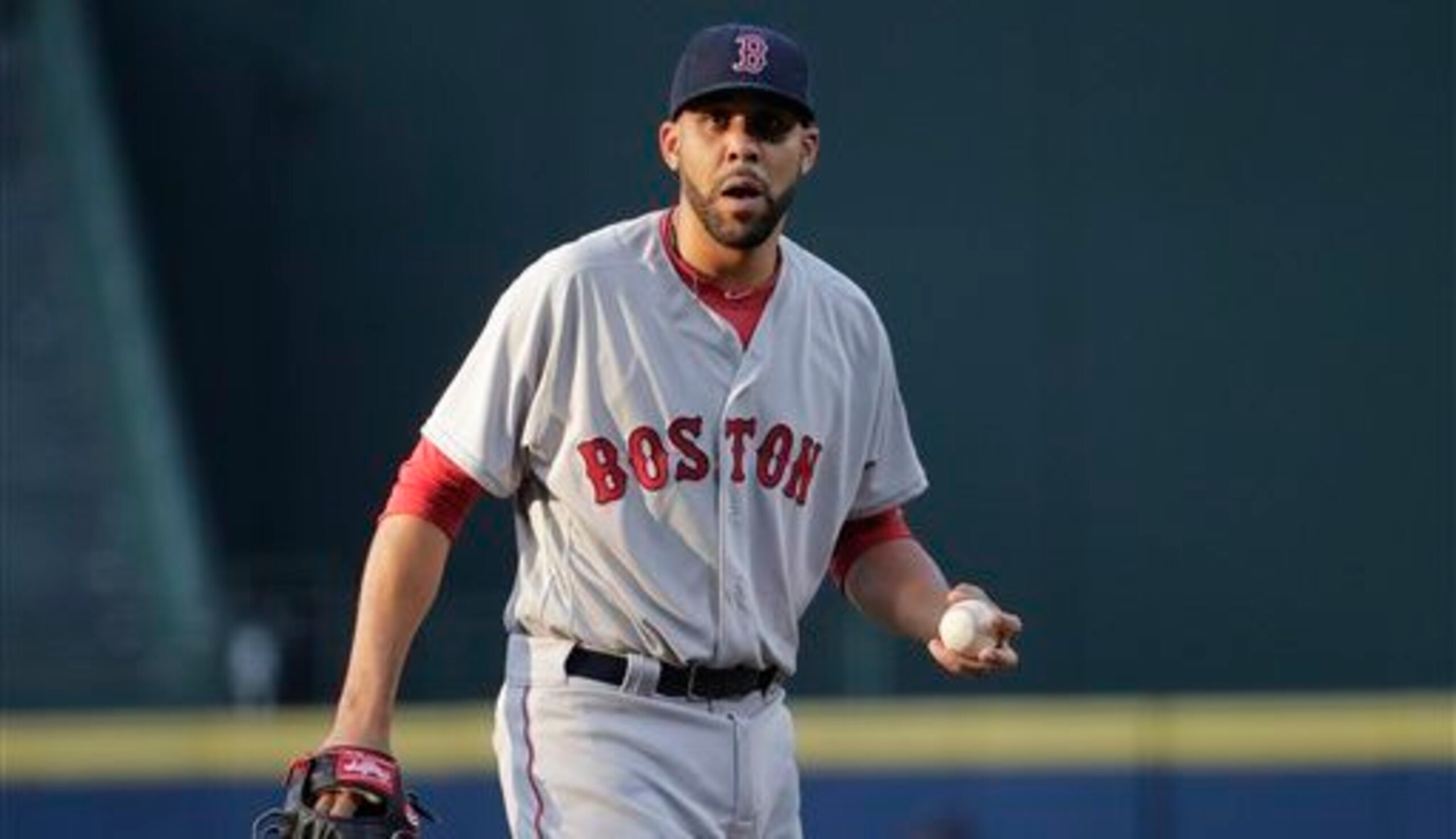
If you told someone before the season that Boston would be near the top of the AL East standings with Pablo Sandoval on the disabled list, they'd have believed you. Had you told them that Sandoval was on the DL and that David Price had an ERA approaching 6.00, they'd have looked at you funny.
But that's life in Boston, where the rotation has been a glaring weak spot for an otherwise solid, if unspectacular, bunch.
Despite strong showings from Steven Wright and Rick Porcello, Boston's rotation has been among the worst in baseball thanks to Price alternating good starts with bad and both Clay Buchholz and the injured Joe Kelly struggling.
Offensively, the Red Sox have one of baseball's highest-scoring and most productive lineups, with Travis Shaw, Brock Holt and David Ortiz, in his final season, among the team's biggest contributors.
Shaw hasn't been quite as productive defensively, where he and typically sure-handed center fielder Jackie Bradley Jr. are having a rough time. Overall, Boston's defense has been adequate, but nothing special.
That's a good way to describe the team's bullpen as well—adequate, but nothing special. While the group has one of the game's highest strikeout rates, it's basically average when it comes to ERA and WHIP.
While the pitching remains a concern, the Red Sox have done enough to keep pace with Baltimore atop the AL East.
Grade: C+
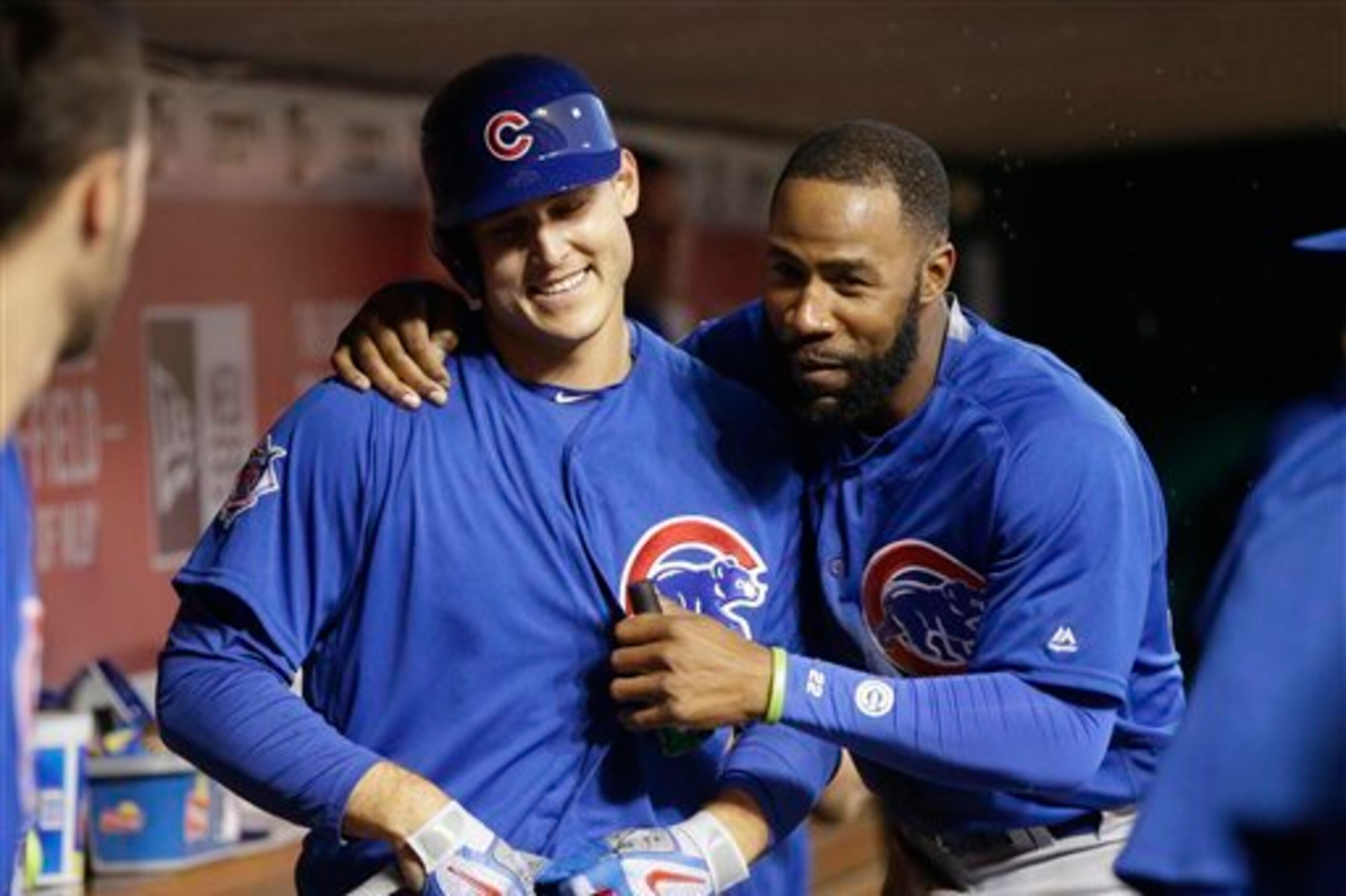
Chicago Cubs (15-5)
5 of 30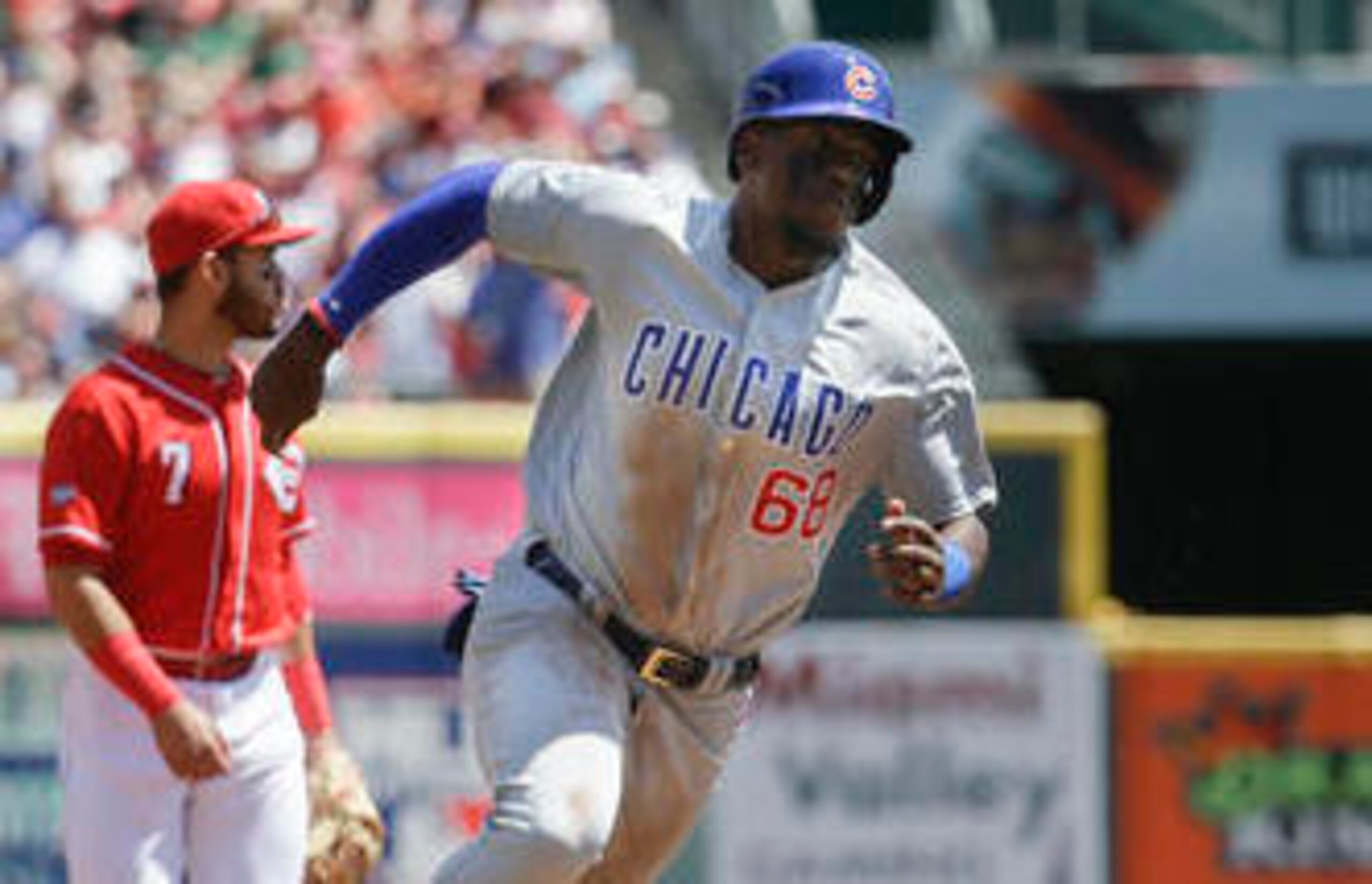
Not many teams can lose an offensive talent like Kyle Schwarber and not blink. Then again, most teams don't have the kind of depth the Chicago Cubs do, where big-time emerging talents like Jorge Soler are relegated to the bench at the start of the season.
The Cubs are among the game's best at, well, pretty much everything. Go ahead, try to find a weak spot. You won't find one.
They've got an offense that has no issues putting runs on the board and a defense that, aside from the aforementioned Soler and the catching tandem of Miguel Montero and David Ross, boasts an above-average defender at every position.
Things look just as good on the mound, with a starting rotation that's been as good as you'll find and a bullpen that knows how to make the opposition swing and miss.
Such a complete effort finds the Cubs sitting with baseball's best record and largest run differential (plus-69).
Grade: A+
Chicago White Sox (16-6)
6 of 30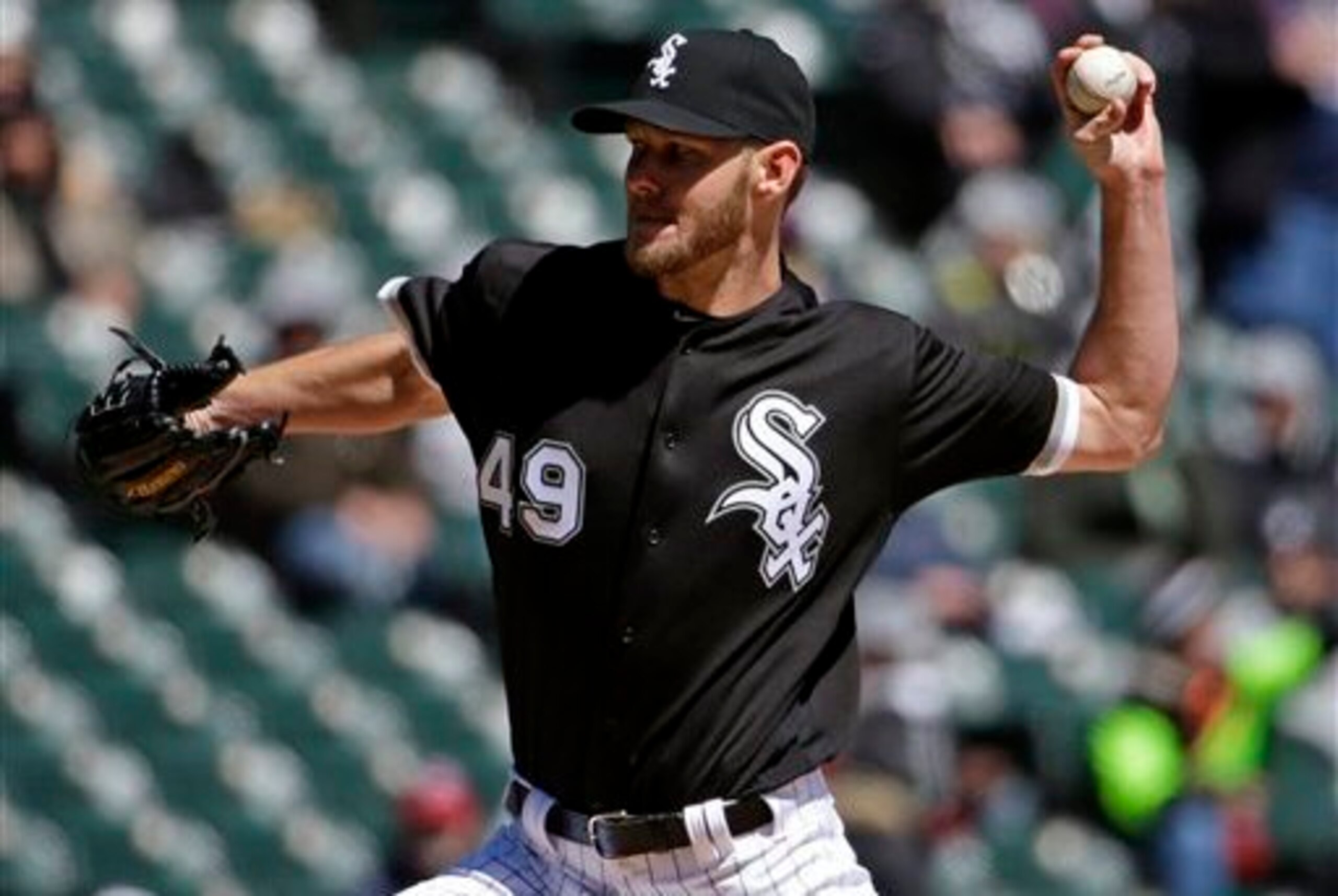
While nobody wins a World Series in April, the Chicago White Sox have followed the tried-and-tested formula of pitching and defense to post the American League's best record—and biggest run differential (plus-29)—in the season's opening month.
Staff ace Chris Sale, Jose Quintana and a resurgent Mat Latos have all pitched to a sub-2.00 ERA, delivering a combined 13 quality starts in their 14 appearances thus far. Their play more than makes up for slow starts from Carlos Rodon and John Danks.
For as good as the rotation has been, the bullpen has been even better, pitching to an MLB-low 1.32 ERA and home run-to-fly-ball rate, allowing only one round-tripper on the season, while posting baseball's second-best strand rate.
All that pitching is backed up by one of the game's best defenses, with Melky Cabrera and Adam Eaton among the best at their respective positions.
Cabrera and Eaton also lead the way offensively for the White Sox, who have struggled at times to put runs on the board. Third baseman Todd Frazier and second baseman Brett Lawrie, added during the offseason to bolster the team's defense and offense, have been solid but unspectacular at the plate.
They might not be quite as complete a team as their crosstown rivals, the Cubs, but the White Sox have been just as successful.
Grade: A
Cincinnati Reds (9-13)
7 of 30
Rebuilding is never fun—or pretty—so the fact that Cincinnati is still within striking distance of a .500 record is something for the Reds to be proud of. But there's little else to get excited about at Great American Ball Park.
While the Reds have scored more runs than a slew of teams that have better records, they've been anything but an offensive juggernaut. Shortstop Zack Cozart and third baseman Eugenio Suarez have been the team's most consistent sources of offense, while perennial All-Star first baseman Joey Votto and speedy center fielder Billy Hamilton have struggled to contribute.
Cozart and Hamilton, along with left fielder Adam Duvall, have been defensive standouts for the club, but they can only cover so much ground. Overall, the Reds are not what you'd call a solid defensive ballclub.
That's a problem when you've got one of baseball's worst pitching staffs, one that issues more free passes and serves up more home runs than anyone else. While the rotation has been bad, pitching to a combined ERA approaching 5.00, the bullpen, with an ERA over 6.00, has been even worse.
It's going to be a long season in Cincinnati.
Grade: C-
Cleveland Indians (10-9)
8 of 30
You know things haven't gone quite right offensively when 35-year-old Rajai Davis is the only everyday players on the roster to post an OPS above .800.
That's been life in Cleveland, which played most of the season's first month without its best player, right fielder Michael Brantley, who only recently returned to action after undergoing offseason shoulder surgery. That the team has been about average, in terms of runs scored and wRC+, is impressive.
We can't use impressive to describe the team's rotation—not when it's failed to live up to the preseason hype that surrounded it.
That's not to say the group has been bad, but Danny Salazar's control problems and Corey Kluber's inconsistency aren't helping the Indians in the win column. Losing Carlos Carrasco, arguably the team's most reliable arm, for at least a month with a strained hamstring is bad news.
So too is the performance of the team's bullpen, with setup man Bryan Shaw and closer Cody Allen the group's biggest disappointments thus far. Among AL teams, only Houston and Texas have posted a higher bullpen ERA than the Indians.
The biggest problem in Cleveland over the past few years has been that, as a whole, the team is average. It's a group that's good enough to stay in contention but never quite good enough to come out ahead of its competition.
After the season's opening month, it doesn't look like anything's changed.
Grade: C
Colorado Rockies (9-12)
9 of 30
To borrow a line from Motley Cree, "It's the same ol', same ol' situation" when it comes to the Colorado Rockies.
Colorado boasts one of baseball's highest-scoring lineups, powered by All-Star third baseman Nolan Arenado, two-time All-Star right fielder Carlos Gonzalez and shortstop Trevor Story, the early favorite in the National League Rookie of the Year race.
But the Rockies also boast baseball's highest ERA, with the rotation and bullpen sharing equal blame. Those awful numbers overshadow solid contributions from starters Chad Bettis and Tyler Chatwood, as well as relievers Miguel Castro, Boone Logan and Chris Rusin.
That the Rockies have managed to hang around the .500 mark despite such poor pitching is a testament to how potent the lineup is.
Given the team's solid defense, especially at the hot corner where Arenado is well on his way to a fourth consecutive Gold Glove Award, even passable pitching would find the Rockies in far better shape than they're currently in.
Grade: D
Detroit Tigers (10-10)
10 of 30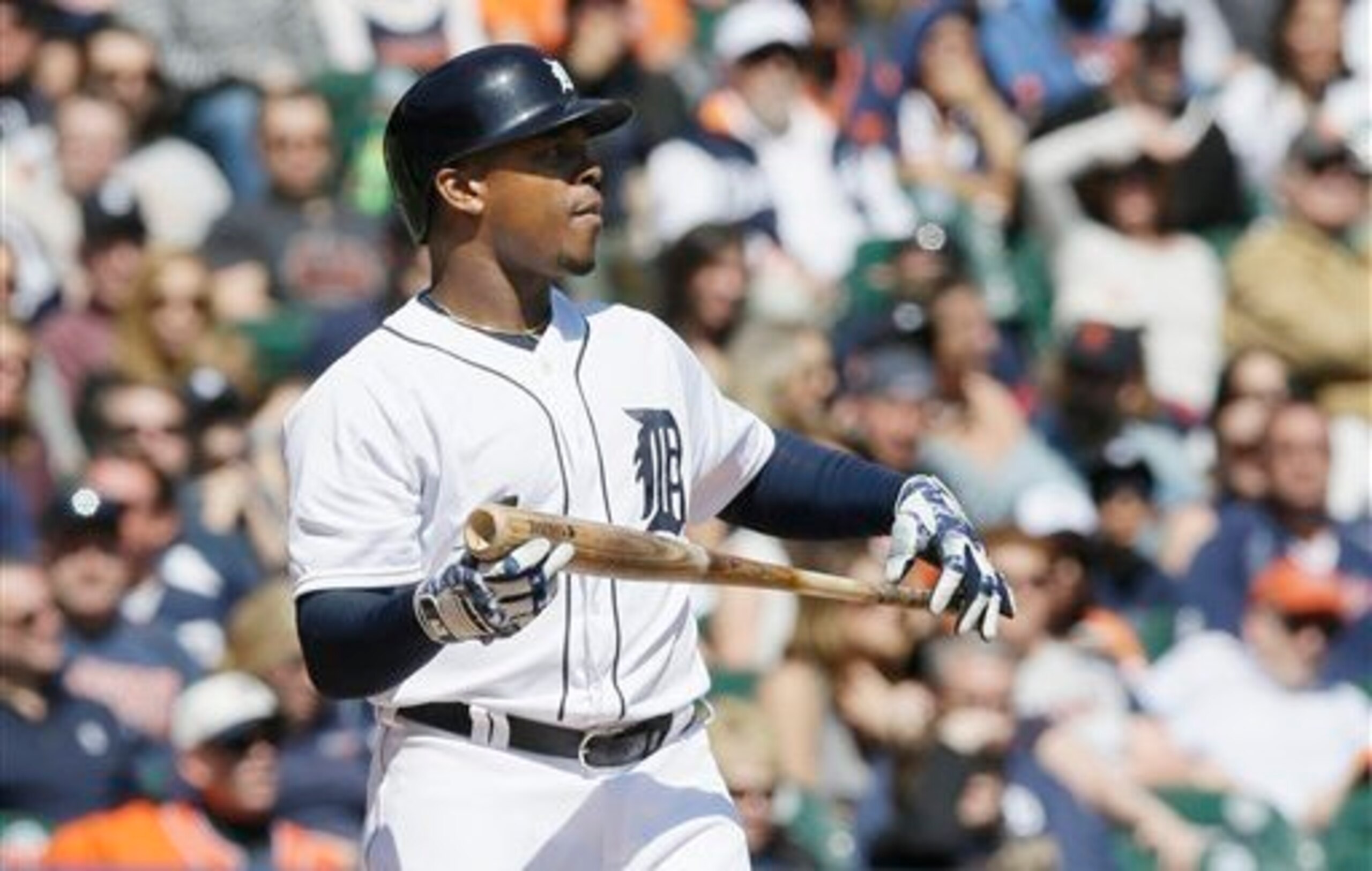
After adding slugger Justin Upton, starter Jordan Zimmermann and closer Francisco Rodriguez over the winter, it looked as if Detroit was primed to once again give Kansas City a run for its money atop the AL Central.
But that hasn't been the case.
Jarrod Saltalamacchia, another offseason addition, leads the team in home runs (6) and is tied with Victor Martinez for the lead in RBI (15). In a lineup that features Miguel Cabrera, Ian Kinsler, J.D. Martinez and Upton, who has essentially been a non-factor at the plate, that shouldn't be the case.
With that kind of talent, Detroit should be far better than 11th in batting average, 19th in on-base percentage, 12th in slugging percentage and 13th in wRC+. That's something that wasn't lost on V-Mart.
"We haven't been putting the whole act together," he told ESPN's Katie Strang. "We keep fighting. That's something you're going to have for sure. We're gonna show up every day fighting and fighting. Someday, sooner or later, we're gonna turn this thing around."
A lack of offense hasn't helped a rotation that isn't nearly as competent as its mediocre 4.49 ERA suggests. If you remove Zimmermann (0.35 ERA, 1.12 WHIP) from the equation, Tigers starters have pitched to a 5.79 ERA and 1.63 WHIP.
The good news is that for the first time in a long time, Detroit's bullpen looks like an actual strength, despite a poor showing from Rodriguez, who has converted four of five save chances but pitched to a 6.14 ERA and 1.50 WHIP.
A .500 record might be good enough for some teams, but not the Tigers, who have failed to meet even the most modest of expectations.
Grade: D
Houston Astros (7-15)
11 of 30
After nearly winning the American League West, settling for a wild-card berth and taking eventual champions Kansas City to five games in the division series, Houston headed into 2016 back in the national spotlight and with big expectations to meet.
So far, the Astros haven't been up to the task, especially on the mound.
One of six rotations to boast a collective ERA above 5.00, Houston's starters simply don't have anything on their fastballs. Per FanGraphs, Astros starters rank last in the majors with an average fastball velocity of 88.9 mph.
Dallas Keuchel, the reigning AL Cy Young Award winner, has mounted a weak defense of his crown, pitching to a 4.41 ERA and 1.41 WHIP while working with significantly reduced velocity, per Brooks Baseball.
Closer Luke Gregerson has converted all four of his save opportunities, but the bullpen as a whole has been mediocre at best, allowing 13 home runs and pitching to an ERA approaching 4.50.
Ken Giles, the team's big offseason acquisition who many expected to take Gregerson's job upon his arrival, has pitched to a 7.45 ERA and 1.86 WHIP as a setup man, allowing as many home runs (three) as he did in more than 100 innings of work over parts of two years with Philadelphia.
Offensively, the Astros simply don't hit with runners in scoring position. Only Colby Rasmus, the team's one true defensive standout, and Jose Altuve are hitting above .300 in those situations.
Maybe the Astros have bought into the hype surrounding the team, or maybe they're tuning manager A.J. Hinch out. Whatever the issue, things have gone far worse in Houston than anyone could have predicted.
Grade: F
Kansas City Royals (12-9)
12 of 30
The reigning, defending, undisputed champions of the world, Kansas City's defense of its title has gotten off to a solid, albeit unspectacular, start.
Scoring runs has been an issue for the Royals, the only team with an OPS below .600 with runners in scoring position. That they're in the bottom third of baseball in runs scored isn't at all surprising.
Lorenzo Cain has been one of the few productive members of the lineup in those situations, but his .203/.289/.284 triple-slash line on the year is nowhere near what we've come to expect—or what the Royals need—from the perennial MVP candidate.
One thing that hasn't changed for Cain and the Royals is their above-average defense, which helps when you've got a floundering offense and a serviceable rotation.
Royals starters have developed a penchant for walking batters, with Yordano Ventura, Kris Medlen, Chris Young and Edinson Volquez all cracking double digits in free passes in only a handful of starts. That takes away from the group's otherwise decent 8.2 K/9 rate.
Thankfully, the bullpen remains an area of strength, with the All-Star duo of Wade Davis and Kelvin Herrera yet to allow an earned run and Luke Hochevar once again flashing his 2013 form, when he pitched to a 1.92 ERA and 0.83 WHIP.
Former All-Star Joakim Soria, bought in to replace Greg Holland and serve as the third piece of the team's late-inning core, has struggled in his return to Kansas City, pitching to a 6.30 ERA and 2.00 WHIP.
Grade: C
Los Angeles Angels (11-11)
13 of 30
What passes for offense in Los Angeles has been, well, offensive, with the Angels consistently showing up in the bottom third of the league in nearly every offensive category.
Four members of the everyday lineup—C.J. Cron, Johnny Giavotella, Carlos Perez and Albert Pujols—are hitting below .200. Cron, Giavotella, Perez and Andrelton Simmons all have an OPS below .600.
The good news, at least in Simmons' case, is that his elite defense at a premium position remains. Along with the efforts of Mike Trout in center field, Cron at first base and a slew of others, the Angels have been one of the more defensively sound teams in baseball.
What was supposed to be a weakness for the Angels has actually been something of a strength, made all the more surprising by the fact that the team has been without Andrew Heaney and C.J. Wilson for nearly the entire season.
Garrett Richards and Hector Santiago have been terrific, while Nick Tropeano, who began the year at Triple-A, has filled in admirably. But Matt Shoemaker's continued mediocrity and Jered Weaver's complete lack of velocity are legitimate concerns.
So too is the lack of whiffability that Angels relievers are showing. While the group has pitched to a respectable 3.41 ERA and 1.04 WHIP, the inability to make batters swing and miss makes those numbers unsustainable, even with such a quality defense behind it.
While the Angels sit with a .500 record, they've got a negative run differential (minus-6) and look, at best, like a fringe contender in a weak division.
Grade: C-
Los Angeles Dodgers (12-10)
14 of 30
Expectations are always high in Los Angeles when it comes to the Dodgers, so while there's nothing wrong with a winning record, a solid run differential (plus-17) and sitting atop the NL West standings, it's sure to not be enough for some.
Somewhat surprisingly, the Dodgers have had enough starting pitching, no small feat when you consider that Brett Anderson, Mike Bolsinger, Brandon McCarthy and Hyun-jin Ryu have been on the disabled list all season.
But Clayton Kershaw remains the best pitcher on the planet, Japanese import Kenta Maeda has been better than anyone could have hoped and rookie Ross Stripling has more than held his own. Concerns about Scott Kazmir and Alex Wood are valid, but their struggles haven't kept the Dodgers rotation from sitting among the league leaders in ERA and WHIP.
The bullpen, always an area of contention, remains largely mediocre. Case in point: five relievers sit with an ERA under 3.25 and a WHIP under 1.25, while four come in well above those marks.
But the defense is sound and the offense productive, with the Dodgers among the 10 highest-scoring teams in the land. Five regulars—Adrian Gonzalez, Kike Hernandez, Joc Pederson, Corey Seager and Justin Turner are all coming up big with runners in scoring position, which always helps the cause.
The Dodgers haven't run away with the NL West, but they've stayed a step ahead of Arizona and San Francisco. That makes for a successful opening month to the regular season.
Grade: B
Miami Marlins (9-11)
15 of 30
Whether it's average, "blah" or mediocre, there's no shortage of ways to describe the 2016 Miami Marlins, starting with their offense.
After the formidable trio of Martin Prado, Christian Yelich and Giancarlo Stanton, there's not much to get excited about. Dee Gordon can't get on base consistently, Marcell Ozuna can't make consistent contact and, as a result, Miami sits near the bottom of the league in multiple categories, including runs scored.
Things don't get much better on the hill, where Jose Fernandez hasn't been nearly as sharp as expected; Wei-Yin Chen has been good, not great, and the rest of the rotation a mess. Only four teams have gotten fewer innings from their starters than the Marlins.
There are two bright spots: The bullpen has been solid, posting one of the game's highest strand rates, and the infield defense has been excellent, with first baseman Justin Bour, Gordon, shortstop Adeiny Hechavarria and Prado all flashing quality leather.
But that doesn't make up for a lack of offense or pitching.
Grade: C-
Milwaukee Brewers (8-12)
16 of 30
Don't be fooled by Milwaukee's record, which indicates that perhaps the rebuilding Brewers aren't as far away from contending as many thought. With a minus-38 run differential, it's clear that there's a lot of work to be done before the Brew Crew is back among the playoff hopeful.
There seems to be a daily battle between the rotations in Milwaukee and Colorado for the highest ERA in baseball, which overshadows what has been a solid start to the season by Jimmy Nelson, the one bright spot in an otherwise ineffective group.
Jeremy Jeffress and Tyler Thornburg have delivered strong relief outings for the Brewers, but the bullpen as a whole also grades out as one of baseball's least effective, with a combined ERA on the wrong side of 5.00 and the second-highest WHIP in the land.
Offensively, the Brewers aren't much better. Ryan Braun is tearing the cover off the ball, and both Chris Carter and Scooter Gennett have raised the level of their games. But the Brewers lineup still rates as well below average in nearly every regard.
Milwaukee gets a slight bump on our grading scale due to its better than expected record, but there's really not a whole lot to get excited about at Miller Park these days.
Grade: C-
Minnesota Twins (7-15)
17 of 30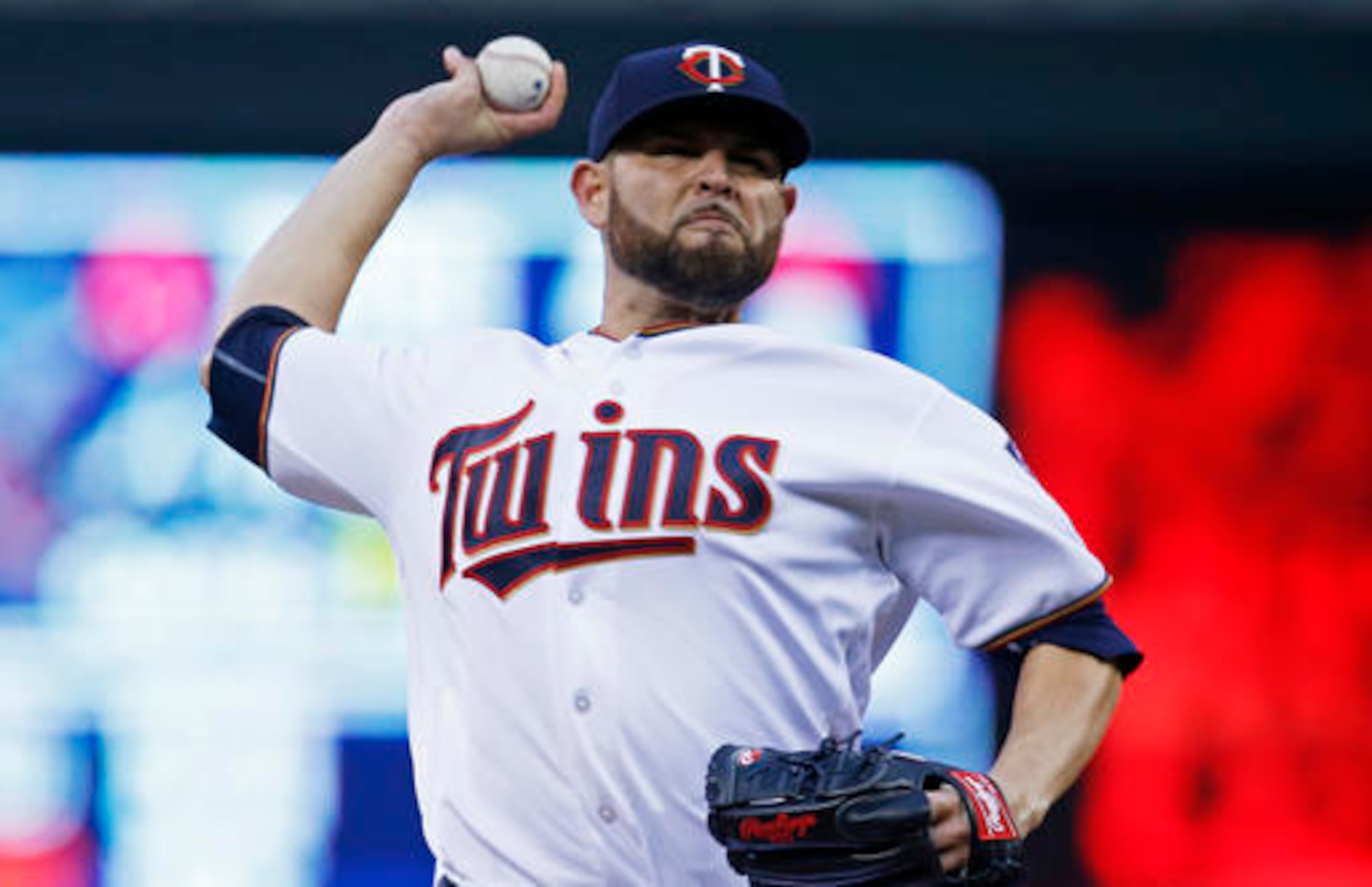
It's easy to forget that Minnesota began the year 0-9 and has been digging itself out of that hole ever since, so things aren't quite as bad as the team's record would indicate. That said, things aren't exactly great at Target Field, either.
Phil Hughes, Ervin Santana and Ricky Nolasco—yes, that Ricky Nolasco, have been generally solid, if unspectacular, at the front of Minnesota's rotation. But poor showings from Tommy Milone and Kyle Gibson, and an overall lack of strikeout ability, make this nothing more than a passable group.
Newly promoted prospect Jose Berrios should help, but if any team knows about highly touted prospects failing to live up to expectations, it's the Twins, who recently sent Byron Buxton back to Triple-A after he looked lost at the plate against big league pitching.
Offensively, the Twins struggle to put runs on the board despite strong performances by Eduardo Nunez, Joe Mauer, Miguel Sano and the currently injured Trevor Plouffe with runners in scoring position. But the club ranks near the bottom of the league in both batting average and OPS in those situations.
When it comes to stranding runners on base, Minnesota's bullpen is among the better groups in the game. But the problem they face is twofold: Not only are they apt to have been responsible for that baserunner by way of a free pass, they've become prone to the long ball.
Grade: D
New York Mets (13-7)
18 of 30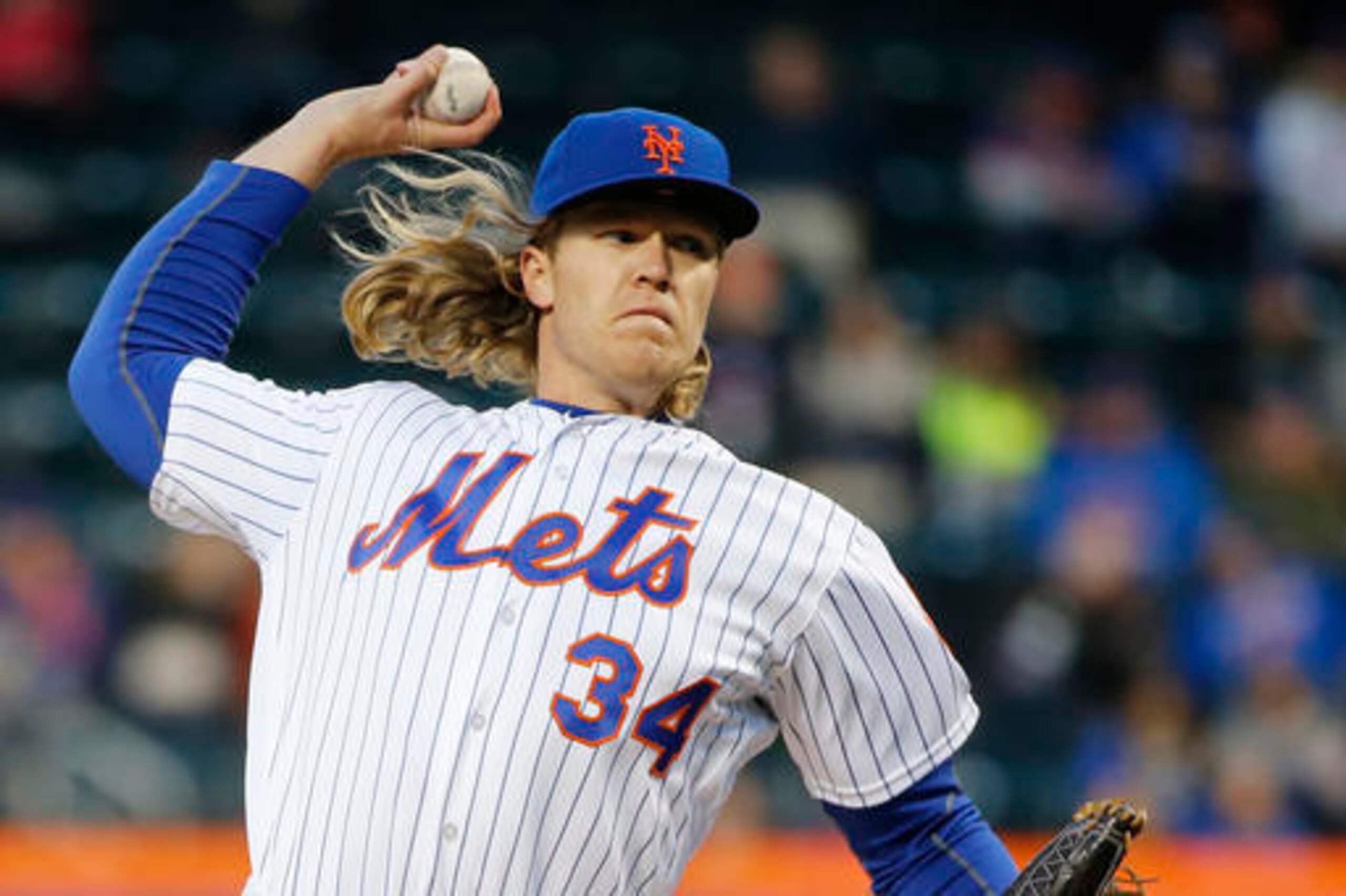
The defending National League champs have gotten off to a strong start despite fielding a defense that advanced metrics have no respect for, grading the New York Mets as one of the weakest teams in the field.
As expected, they boast one of baseball's best rotations, led by Noah Syndergaard, who has quickly become one of the game's most dominant starters. No rotation walks fewer batters or allows fewer home runs than New York's, and only a select few strike batters out at a higher rate.
The bullpen is equally strong when it comes to whiffability and limiting the long ball, giving the Mets one of the most well-rounded and outright dominant pitching staffs.
Offensively, the Mets boast one of baseball's premier power-hitting lineups, ranking near the top of the league in both home runs and slugging percentage. Yoenis Cespedes, Lucas Duda, Michael Conforto, Curtis Granderson and Neil Walker (9) have all gone deep at least three times and boast a slugging percentage over .500.
Grade: B
New York Yankees (8-12)
19 of 30
Things aren't quite as peachy in the Bronx as they are in Flushing, with the New York Yankees getting out-pitched, out-hit and out-shined by their crosstown rivals, the New York Mets.
The Yankees can't hit with runners in scoring position and, as a result, boast one of the lowest-scoring offenses. While they make more contact than almost any team, very little of it would be classified as hard contact, making things far easier for defenders to deal with.
Speaking of defenders, the Yankees don't make the grade with advanced metrics when they're in the field, as they're near the bottom of the league in both UZR/150 and DRS. Such mediocre defense only partly explains the inconsistency in the rotation, which comes in with one of the highest ERAs.
The bright spot in the Bronx, as it was last year, is the bullpen's ability to miss bats. Dellin Betances and Andrew Miller remain one of the most dominant late-inning combinations and will only get stronger with the eventual return of Aroldis Chapman, but that does little to solve the team's other issues.
Grade: D
Oakland Athletics (11-11)
20 of 30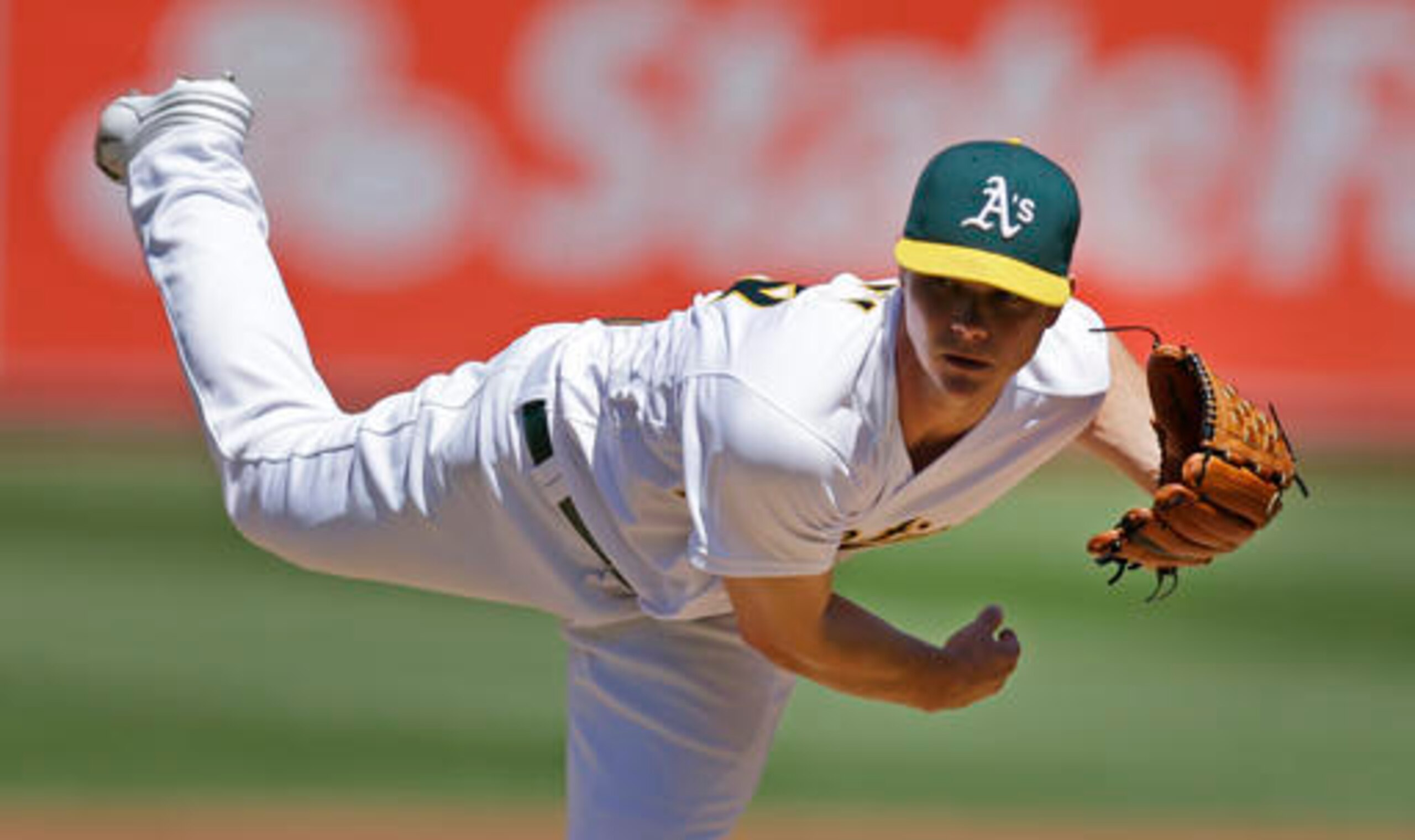
Thanks to a division full of mediocrity and a strong pitching staff, Oakland finds itself near the top of the AL West standings despite having a negative run differential (minus-9) and a losing record at home.
Both Oakland's rotation and bullpen are among the league leaders in ERA and WHIP, with ace Sonny Gray delivering his usual dose of excellence, Rich Hill befuddling batters with his ridiculous curveball and a trio of veteran relievers—John Axford, Fernando Rodriguez and Ryan Madson—locking down the late innings.
The problem has been putting enough runs on the board for the bullpen to have a lead to protect. Only two regulars in the lineup—Josh Reddick and Stephen Vogt—have posted an OPS above .700. Defensively, only one player—Marcus Semien—rates as a plus defender.
While the A's get a solid grade for exceeding expectations (nobody thought they'd be very good), it's not an endorsement of the team as a legitimate contender.
Grade: B
Philadelphia Phillies (11-10)
21 of 30
Despite their record, the Philadelphia Phillies are not a .500 team. Far from it, actually. But unlike their rebuilding counterparts in Atlanta, Cincinnati and Milwaukee, the Phillies are beginning to see signs of a bright future.
Those signs largely reside in the rotation, where youngsters Jerad Eickhoff, Aaron Nola and Vincent Velasquez all look like legitimate building blocks of a potentially terrific starting staff. Thanks to their combined efforts, the Phillies are among the league leaders in strikeout rate and WHIP.
Despite solid performances from Hector Neris and Dalier Hinojosa, Philadelphia's bullpen has been one of baseball's least effective, hanging out near the bottom of the leaderboards in both home runs and walks, two things relievers can ill afford to give up to the opposition.
Maikel Franco, Cesar Hernandez and Odubel Herrera offer hope in the lineup, but the rest of Philadelphia's offense is largely unproductive, leaving the club as one of the lowest-scoring offenses in the league. When you can't outscore the opposition, you can't win, and that's a problem that's not going away anytime soon.
A winning record and solid trio of young starters has the Phillies receiving a higher grade than most would have expected them to get at the start of the regular season.
Grade: C+
Pittsburgh Pirates (13-9)
22 of 30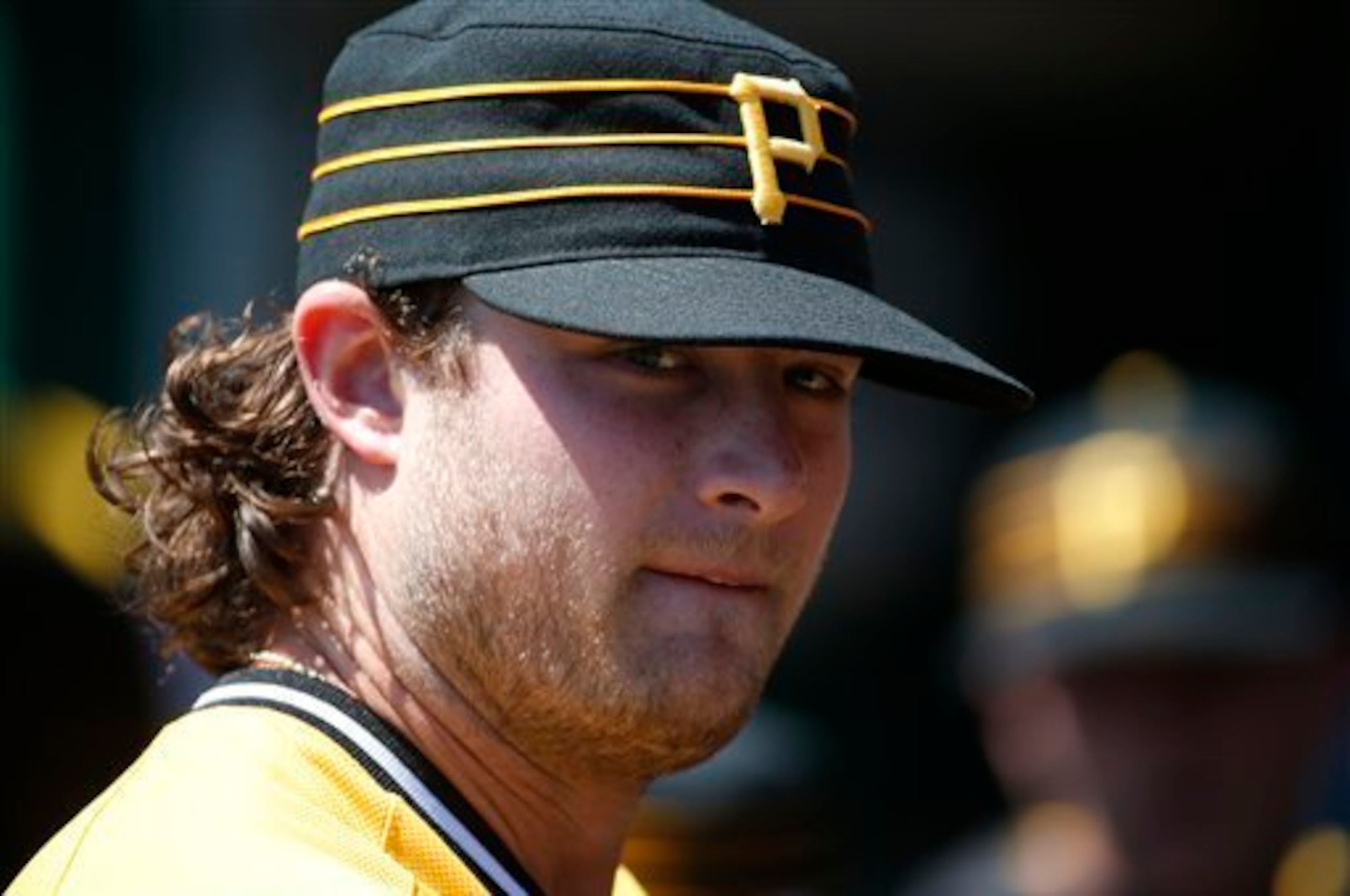
A month into the season, it appears as if Pittsburgh manager Clint Hurdle and pitching coach Ray Searage are still waiting for their delivery of pixie dust, for they've lost their magic touch with the pitching staff.
Gerrit Cole remains a tremendous talent atop the rotation, but the rest of Pittsburgh's starters have been ineffective. At some point during their travels, they lost all semblance of command and became one of the most walk-prone and home run-prone rotations.
But a potent lineup and outstanding defense have saved the Pirates from their pitching woes.
One of the highest-scoring offenses in baseball, the Pirates have become adept at taking a walk and producing with runners in scoring position. No team in baseball has hit for a higher batting average or gets on base as frequently as Pittsburgh does.
The pitching issues are a concern, but the Pirates have kept pace with division rivals Chicago and St. Louis in spite of them.
Grade: B-
San Diego Padres (7-15)
23 of 30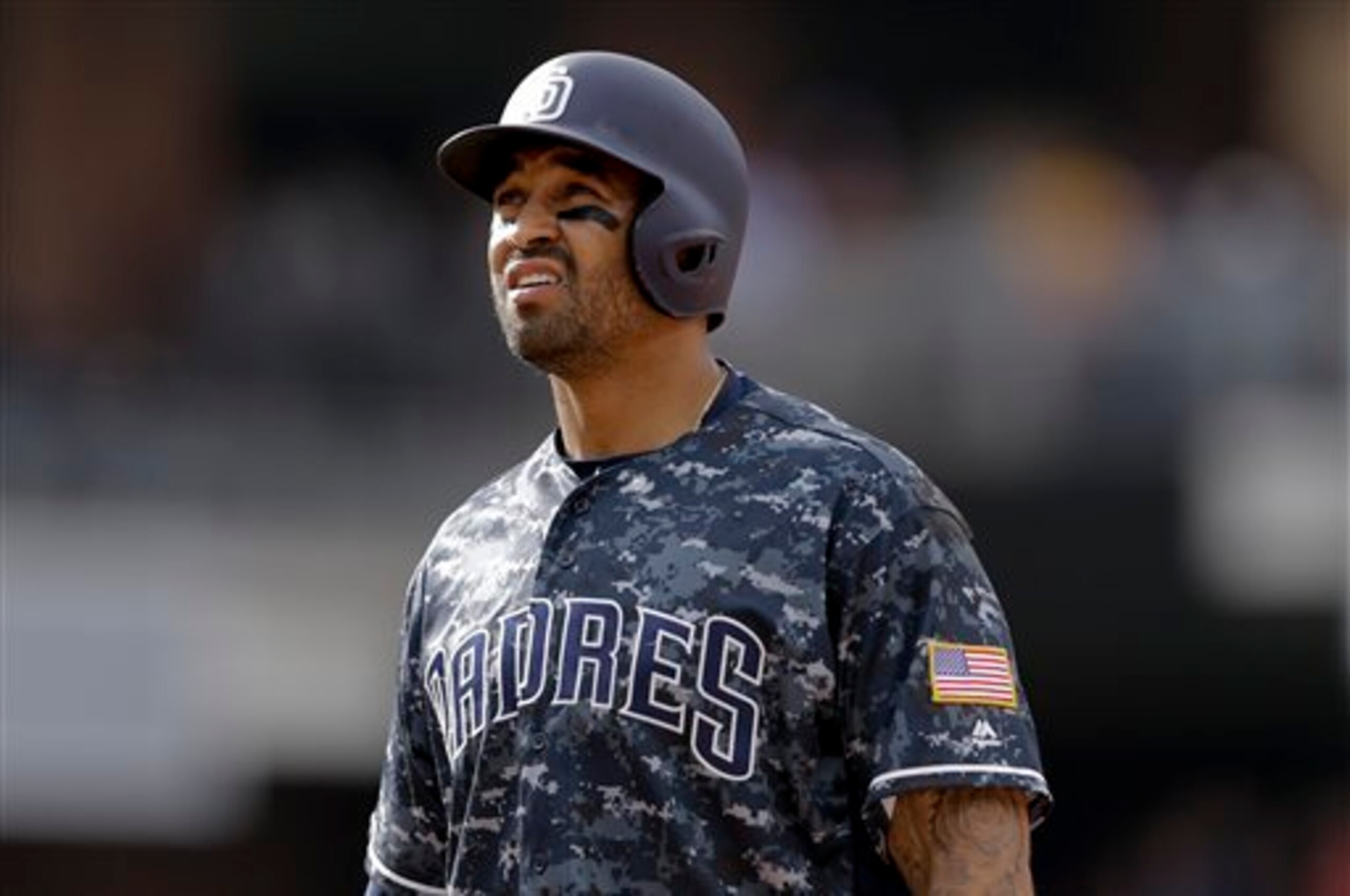
First the good news in San Diego: The rotation hasn't completely fallen apart without its injured ace, Tyson Ross, Matt Kemp and Wil Myers are off to decent starts at the plate and the team's defense, while nowhere near the best in baseball, is far from the worst.
But aside from Kemp and Myers, the offense has been scuffling and offers little in the way of power, hitting below .250 and sitting near the bottom of the league in slugging percentage. Derek Norris, an All-Star two years ago in Oakland, is hitting under the Mendoza line and has an OPS below .500.
Outside of Fernando Rodney and Ryan Buchter, the bullpen has been massively ineffective, sitting near the bottom of the league in ERA, WHIP and opponent batting average.
While San Diego has recovered from being outscored 25-0 by the Los Angeles Dodgers in its first three games of the season, the Padres have a long way to go before they're back to respectability.
Grade: D
San Francisco Giants (12-11)
24 of 30
So far, the whole even-year narrative surrounding San Francisco hasn't come to fruition, with the Giants looking a whole lot like the kind of club their record indicates—a .500 team.
The starting rotation, which was supposed to be a strength with the offseason additions of Johnny Cueto and Jeff Samardzija, has looked extraordinarily average, with an ERA and WHIP that blends in with the slew of unexciting rotations in baseball.
With George Kontos and Sergio Romo on the disabled list, the Giants have been forced to lean more heavily on young relievers than in the past, getting mixed results in the process. That's led to a bullpen that, like the rotation, has delivered solid, but certainly not spectacular numbers.
Despite slow starts by Brandon Crawford, Matt Duffy, Hunter Pence and Buster Posey, the Giants have been trotting out one of the more productive lineups in baseball. Only a few teams have put more runs on the board, with a pair of unlikely candidates—Angel Pagan and Denard Span—proving to be the most productive with runners in scoring position.
Despite doing little to differentiate themselves from the pack, the Giants remain near the top of the NL West standings, which is good enough to pull a decent April grade.
Grade: C
Seattle Mariners (11-10)
25 of 30
It's all about pitching in Seattle, where the Mariners have only one pitcher—Wade Miley—with an ERA above 4.00 or a WHIP above 1.40. That's pretty darn impressive, especially when you factor in the mediocre defense the club is trotting out behind its pitching staff.
Taijuan Walker is finally living up to the Dwight Gooden comparisons he drew a few years ago, while Felix Hernandez refuses to abdicate his throne without a fight—and despite uncharacteristically shaky control through the first month of the regular season.
Seattle's bullpen has been even better, sitting among the league leaders in ERA, inducing ground balls and limiting hard contact. Newcomers Steve Cishek, Joel Peralta and Nick Vincent have become reliable, trustworthy arms that first-year manager Scott Servais can lean on—exactly what the team needed.
Offensively, the Mariners aren't hitting for average but still manage to produce runs, with Robinson Cano, Nelson Cruz, Chris Iannetta and Seth Smith among the team's most productive bats.
In a wide-open AL West, this could finally be the year that those who consistently pick the Mariners as a dark-horse contender are finally rewarded for their faith in the team.
Grade: B
St. Louis Cardinals (12-9)
26 of 30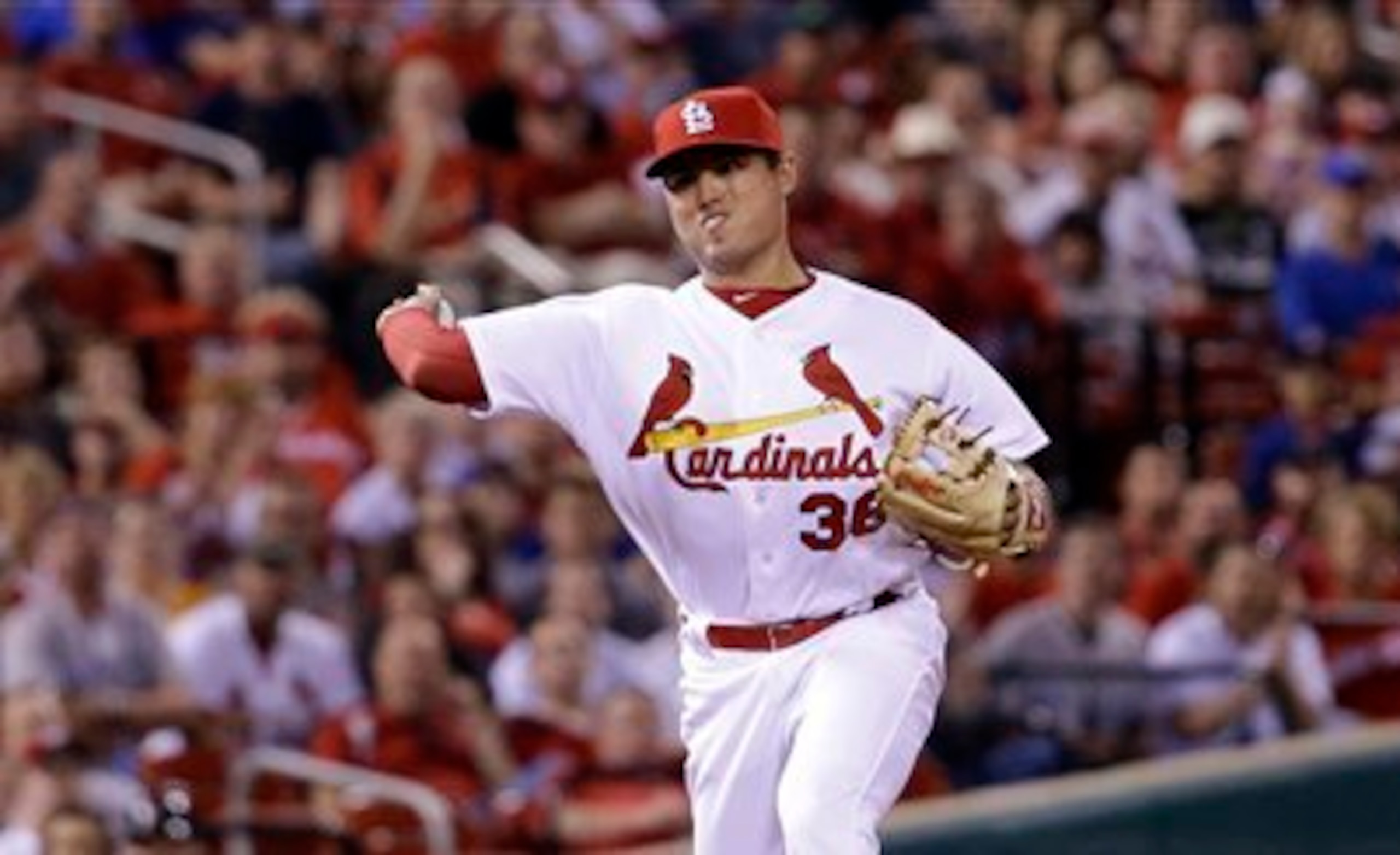
Last year, St. Louis struggled to put runs on the board despite having Jason Heyward and a healthy Jhonny Peralta in the lineup. This year, with Heyward in Chicago and Peralta on the disabled list, the Cardinals have suddenly become one of baseball's most dangerous offenses.
It makes no sense, but then again, neither does the Cardinals' seemingly innate ability to produce productive players that nobody's ever heard of out of thin air. This year, Jeremy Hazelbaker has filled that role.
St. Louis sits at or near the top of baseball in nearly every offensive category, including runs scored, home runs, on-base percentage and slugging percentage. It's easier to list the players whose bats haven't woken up yet—Matt Adams, Randal Grichuk and Kolten Wong—than it is to list those swinging a hot stick.
That offensive onslaught has helped to make up for some horrid defense, with Aledmys Diaz, Wong, Matt Carpenter and Jedd Gyorko combining to commit 14 of the team's MLB-leading 21 errors.
The bats also help to overcome a solid, but generally unspectacular, showing from the team's pitching staff, with neither the rotation nor the bullpen looking like one of the game's elite units as they have in the past. Mike Leake and Adam Wainwright, specifically, have struggled out of the gate for the Cardinals.
Still, the Cardinals have done enough to stay within shouting distance of Chicago and Pittsburgh in what's shaping up to be yet another three-way battle for NL Central supremacy.
Grade: C+
Tampa Bay Rays (10-11)
27 of 30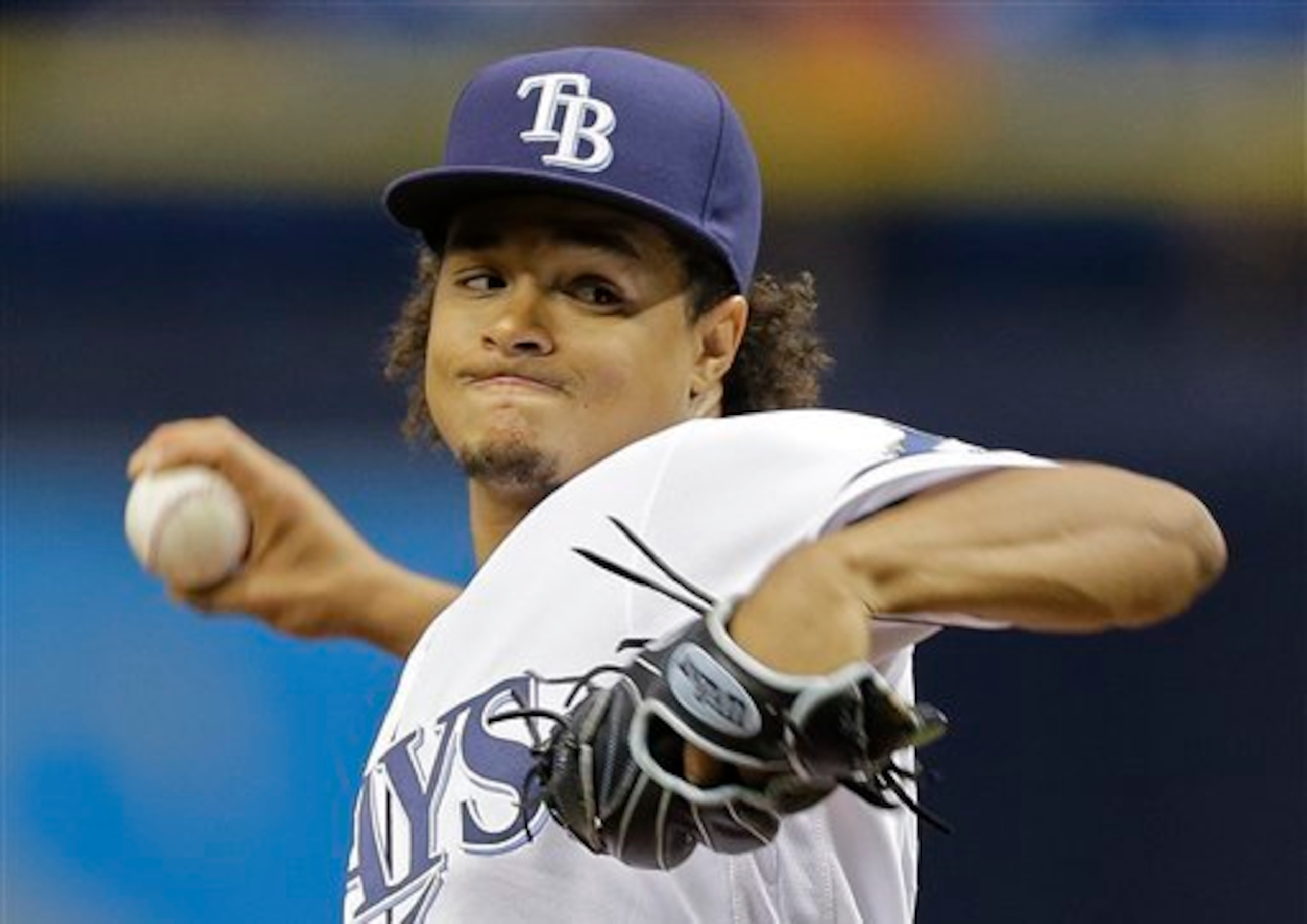
If Tampa Bay could hit the way it pitches, there wouldn't be much of a battle in the AL East.
Even with staff ace Chris Archer struggling badly, the Rays rotation finds itself among the best in the league thanks to strong starts from Drew Smyly, Jake Odorizzi and Matt Moore. Few rotations issue fewer walks or strikeout batters at a higher rate than Tampa Bay's.
The bullpen hasn't been quite as adept at making batters swing and miss and allows more home runs than you'd like, but they do a terrific job of stranding runners on base and limiting hard contact, making things somewhat easier on a below-average defense.
Offensively, the Rays struggle to put enough runs on the board to support their pitchers, sitting in the bottom third of baseball in pretty much every offensive category. Only two of the team's everyday players—Logan Forsythe and Steven Souza Jr.—are hitting above .250 and have an OPS above .700.
Yet with such parity in the AL East, hanging around .500 may be enough for the Rays to get back into the postseason for the first time since 2013.
Grade: C-
Texas Rangers (12-10)
28 of 30
Strong defense, a quality rotation and solid offense find Texas exactly where we thought they'd be heading into the season—in the thick of the AL West race.
An unfortunate injury to veteran outfielder Shin-Soo Choo opened the door for top prospect Nomar Mazara to make his big league debut, and the 21-year-old has made the most of his opportunity, looking like an early favorite for the American League Rookie of the Year.
Mazara, along with the ageless Adrian Beltre and a resurgent Elvis Andrus have paced Texas' offense, which hasn't struggled to score runs despite getting little in the way of production from the likes of Ian Desmond, Prince Fielder and Rougned Odor—and none from Josh Hamilton, who has yet to play in 2016.
On the mound, the Rangers rotation has been terrific, among the league leaders in ERA and WHIP despite a general lack of strikeout ability. The bullpen has had better luck when it comes to whiffability but been far less effective and incredibly home run-prone.
Texas hasn't been great, but they've been good enough.
Grade: B-
Toronto Blue Jays (10-13)
29 of 30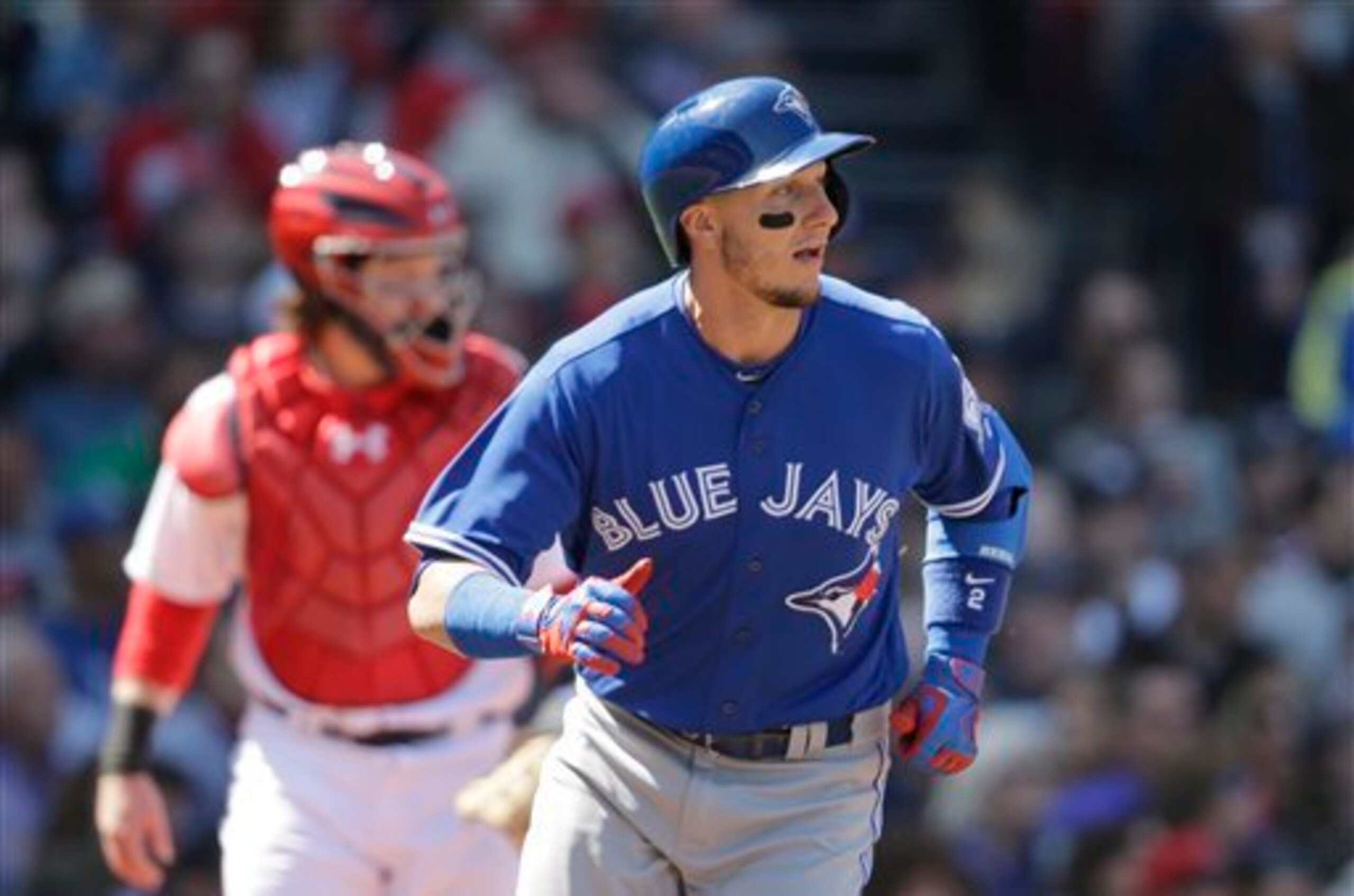
Last year, Toronto demolished the competition when it came to scoring runs, crossing home plate an MLB-high 891 times, nearly 130 times more than the second-place New York Yankees, who finished with 764 runs.
The Blue Jays offense hasn't been nearly as potent in 2016, and that finds the team chasing the leaders atop the AL East. Russell Martin, Justin Smoak and Troy Tulowitzki has scuffled at the plate, and losing Chris Colabello to an 80-game performance-enhancing drug suspension certainly doesn't help.
Neither does having a bullpen that's lost an MLB-high seven games and finds two veteran relievers expected to be key pieces of the relief corps, Brett Cecil and Drew Storen, sitting with an ERA on the wrong side of 5.00 and a WHIP above 1.60.
But their defense has been solid and their rotation effective, with Aaron Sanchez and Marcus Stroman looking like they're going to be a formidable duo atop the pitching staff for years to come.
It hasn't been a great start to the year for the Blue Jays, but things could be far worse than they are. The team remains well within earshot of its second consecutive division crown.
Grade: C-
Washington Nationals (14-6)
30 of 30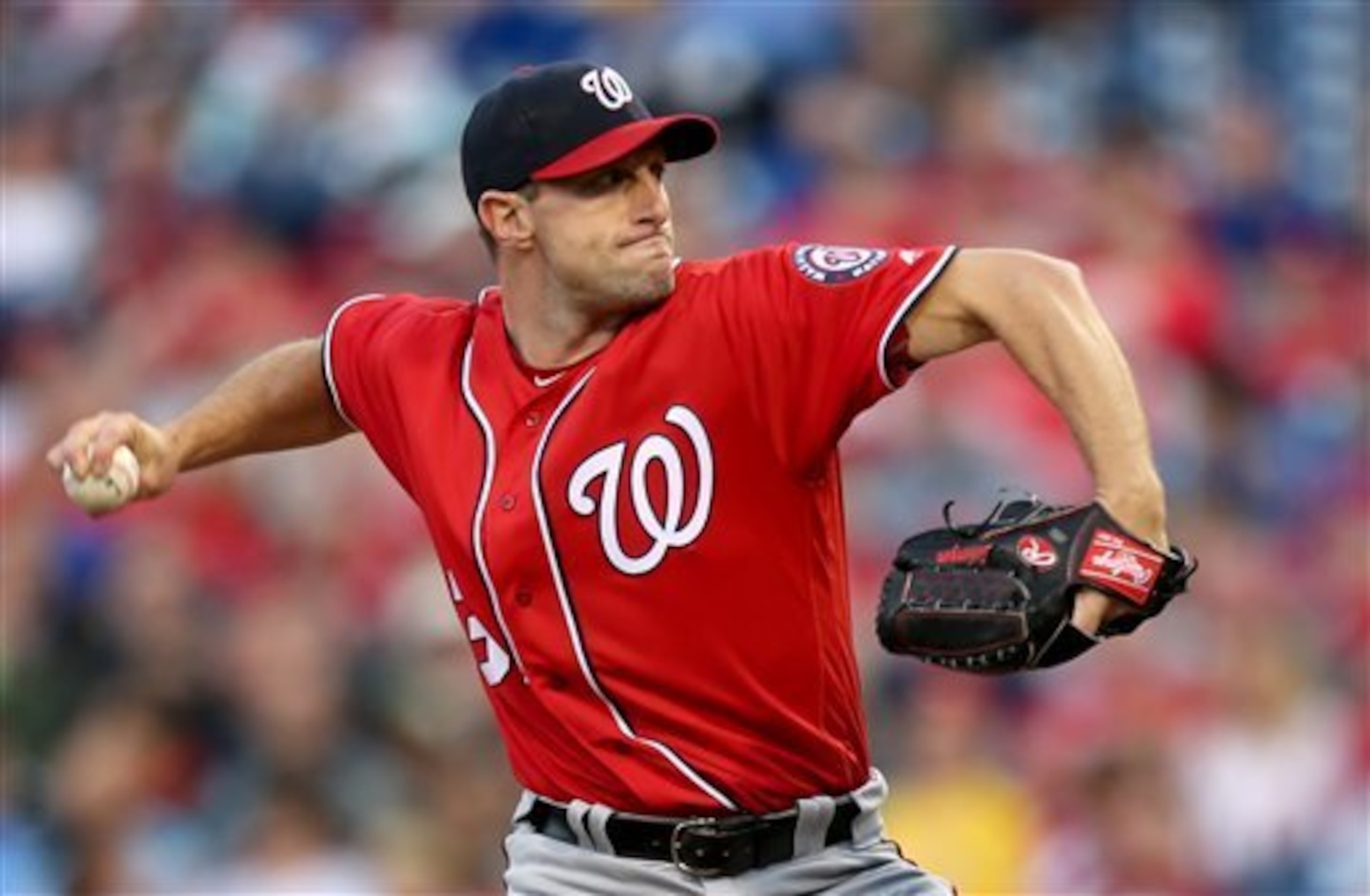
Here's a great way to tell when a team has an outstanding pitching staff: when Max Scherzer is statistically the weakest link. Think about how ridiculous that is.
That's the situation Washington finds itself in, with Scherzer "holding back" the rest of the staff as the only pitcher with an ERA above 4.00 and one of two with a WHIP above 1.30. Whether you're looking at rotations or bullpens, you'll find Washington's at or near the top of the league in every statistical category.
With pitching like that, it's easy to overlook a defense that's been adequate but not outstanding, which is how we can describe Washington's offense. The Nationals have leaned heavily on Daniel Murphy and Bryce Harper to carry the load while the rest of the lineup rounds into form.
That said, you can't complain when the team has one of the best records in baseball.
Grade: A-
Unless otherwise noted, all statistics courtesy of Baseball-Reference.com and FanGraphs and are current through April 27.
Hit me up on Twitter to talk all things baseball: @RickWeinerBR.
.jpg?w=2560 "Chiefs, Steelers Eye WR Trades")