Playing Fact or Fiction with MLB's Most Shocking 2016 Early-Season Records
Normally, we play "Fact or Fiction" with the latest rumblings and speculation floating around Major League Baseball. But with the rumor mill still emerging from a short (but well-deserved) post-spring training nap and teams still trying to figure out exactly who they are, that's not an option this week.
Instead, we'll take a closer look at some of the most shocking starts a handful of teams have gotten off to. While most clubs appear to be who we thought they were, a few have us scratching our heads. Are they truly as good—or as bad—as their early-season records indicate?
Let's take a look.
Fact: Atlanta Braves (0-9)
1 of 5
Rest easy, Atlanta Braves fans, for your team is not going to lose 162 games this season. But after dropping three games to the St. Louis Cardinals and six to the Washington Nationals, things don't get significantly easier for Atlanta anytime soon.
The Miami Marlins, Los Angeles Dodgers, New York Mets, Boston Red Sox, Chicago Cubs, the Mets again and then the Arizona Diamondbacks fill out the team's schedule into mid-May. The Braves are likely to lose each of those series.
Why? Because as presently constructed, the Braves simply aren't good.
Opposing teams have no reason to pitch to Freddie Freeman, the team's one star-caliber position player, and the currently injured Ender Inciarte is a solid complementary piece, not a driving force in a team's lineup. His return will do little to change the team's offensive woes.
The thought of facing the likes of Jeff Francoeur, Nick Markakis, A.J. Pierzynski and Drew Stubbs isn't keeping other teams up at night.
Things don't get any better on the mound, where staff ace Julio Teheran continues to struggle with command and, per Brooks Baseball, significantly reduced velocity, while the rest of the rotation is filled out with past-their-prime veterans (Bud Norris) and back-of-the-rotation arms.
All that makes it impossible to buy into what Atlanta general manager John Coppolella told USA Today's Bob Nightengale during the offseason—that his team would exceed its 65-win total from a season ago.
"We want to win," Coppolella said. "And we will win. I’m not under any delusions that we’ll win 110 games, but we’re not going to lose 95 games again. We will win more games than we did last year."
It's hard to do that when your best talent is still working its way through the minor leagues.
Fiction: Baltimore Orioles (7-2)
2 of 5
ESPN.com's Dan Szymborski isn't wrong when he says that the Baltimore Orioles' early surge cements their place as legitimate contenders in what will prove to be a hotly contested American League East. In a division that will be decided by only a game or two, having four combined wins against Boston and the Tampa Bay Rays helps.
But the Orioles aren't the second coming of Murderer's Row.
With a lineup featuring Pedro Alvarez, Chris Davis, Adam Jones, Manny Machado, Jonathan Schoop and Mark Trumbo, the Orioles will rely heavily on their ability to hit home runs to pummel the opposition into submission. But they're also going to strike out a ton.
Alvarez, Schoop and Trumbo, all posting whiff rates more than 10 percent below their career marks, haven't become more patient, selective hitters. Those strikeout rates are going to normalize over time, and their production will drop as a result.
That improved plate discipline is an illusion, just like the team's 3.42 ERA, baseball's ninth-lowest mark.
The Orioles have received just one quality start through the first nine games of the regular season. One, courtesy of Ubaldo Jimenez. As a result, manager Buck Showalter has had to lean heavily on his bullpen, which has logged the third-highest number of innings thus far.
That's a recipe for disaster—and it has the Orioles looking a whole lot like the Colorado Rockies of the American League. They'll wind up better off than their National League counterparts and remain in contention, but this is a .500 club—not one that will win 70 or 80 percent of its games from here on out.
Fact: Chicago White Sox (7-2)
3 of 5
The Chicago White Sox are off to the franchise's best start since 1982, when they sat with an 8-1 record through nine games, and this year's version isn't finding success due to poor competition or dumb luck.
Chicago's starting rotation has been even better than expected, pitching to an American League-best 2.75 ERA. Both Jose Quintana and Carlos Rodon appear to have taken another step forward in their development, while Mat Latos has found new life under the tutelage of pitching coach Don Cooper.
Oh, and the White Sox still have Chris Sale, one of the game's five best pitchers and someone who has yet to find his midseason form, allowing three earned runs in each of his first two starts.
They've not been an offensive juggernaut, averaging less than four runs per game and sitting with a below-average 84 wRC+, but have been able to do the little things necessary to win games.
"Do we want more runs? Of course," third baseman Todd Frazier, one of the underachievers, told the Chicago Tribune's Colleen Kane after the team's fourth consecutive victory, a 3-1 win over the Minnesota Twins.
"But if we have to make some plays, some fundamental things, bunt and get the guy over and we hit a sac fly, those are huge runs. When the pitchers are doing the job they are doing, it makes it a lot easier for us hitters."
Eventually, Frazier and the rest of the team's underachieving bats—a list that includes Austin Jackson, Brett Lawrie and Dioner Navarro—are going to start producing. With a solid rotation and bullpen already in place, that's only going to make Chicago a bigger threat in the AL Central than they've been so far.


Fiction: Minnesota Twins (0-9)
4 of 5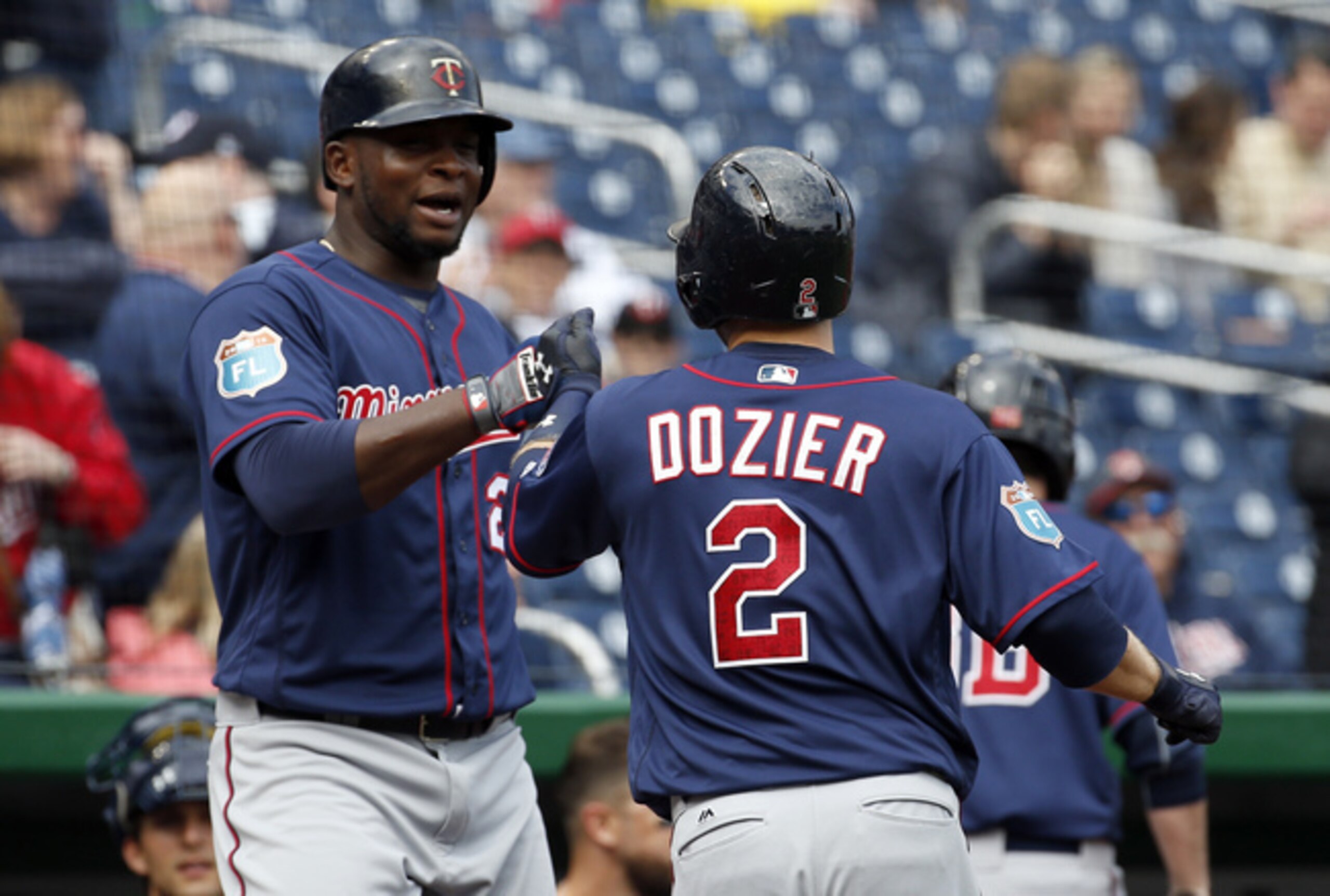
When you've got two everyday players hitting over .300—and the rest of your lineup sitting below the Mendoza Line—it doesn't matter how good your pitching staff is. A team simply can't win without scoring runs.
That's the situation Minnesota finds itself in, with only first baseman Joe Mauer (.387) and shortstop Eduardo Escobar (.324) contributing anything offensively. It's left Minnesota manager Paul Molitor nearly speechless.
“It’s getting harder, I tell ya, to come up with words,” he told the Star Tribune's LaVelle E. Neal III after the team's latest loss. “I’m sure those guys are frustrated. We’re trying to find a way each day." To put things in proper perspective, consider these notes from Neal's article:
"At 0-9, the Twins have lost as many games in 11 days as the Golden State Warriors lost over an entire NBA season.
The Padres (16), Yankees (16) and Dodgers (15) have scored more runs in one game than the Twins have overall (14).
The Twins went 0-for-5 with runners in scoring position on Thursday and are now 5-for-66 (.076) on the season. The Cubs’ Anthony Rizzo and Giants’ Hunter Pence each has six hits with runners in scoring position.
"
That lack of offense has wasted some solid outings from the team's pitching staff, which lacks a true ace but has enough talent to keep the team in games most nights. But the players who aren't producing—Brian Dozier, Trevor Plouffe, Eddie Rosario and Miguel Sano among them—are going to hit.
When they do, the Twins will look far more like the fringe contender they were a year ago than they do two weeks into the season. There's simply too much talent on this team for them not to.
Fiction: Houston Astros (3-7)
5 of 5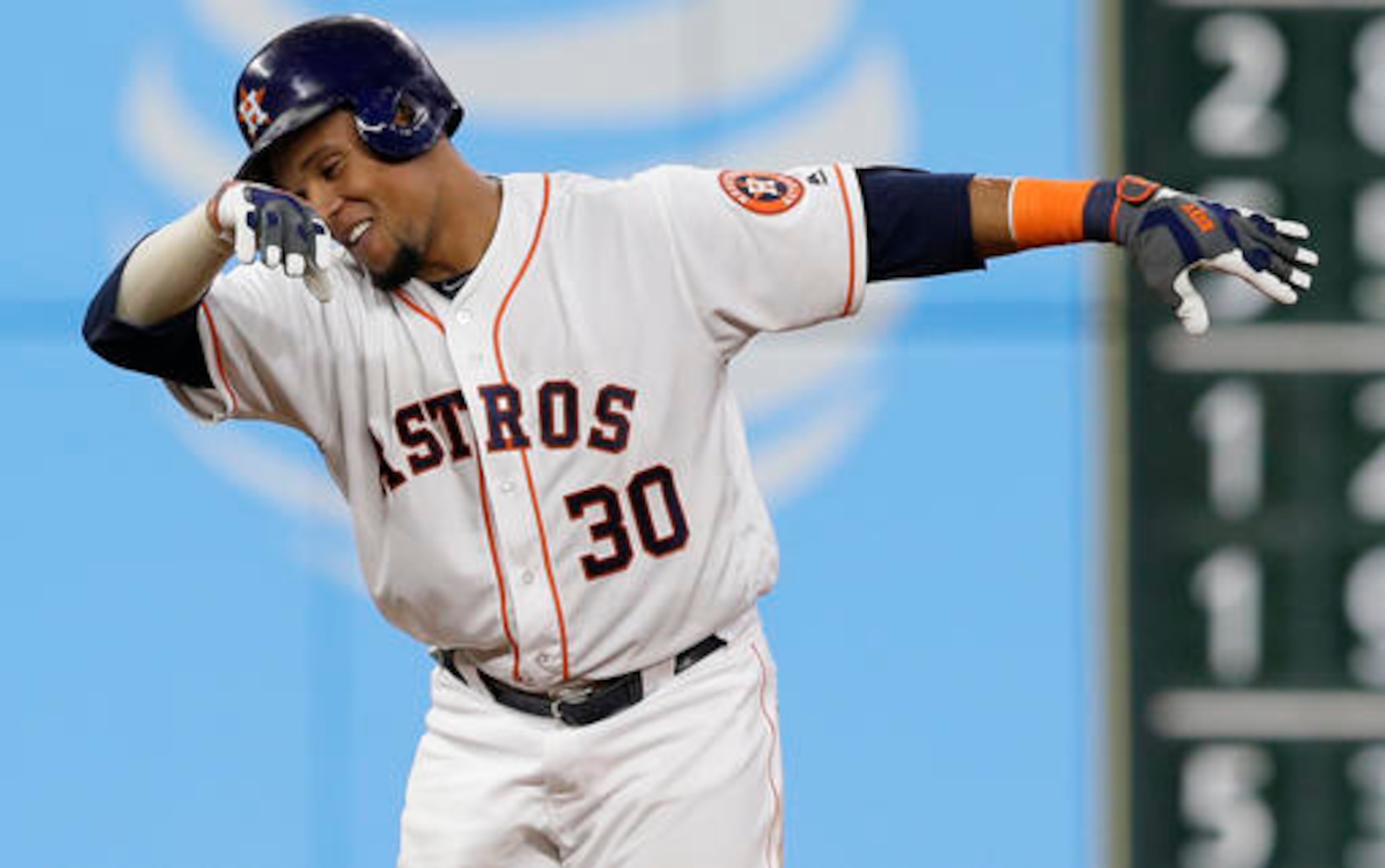
The narrative surrounding Houston last season was that the Astros had arrived a year earlier than expected, and their 2015 success would serve them well in 2016 and beyond. That hasn't been the case so far, with the club sitting four games under .500 and in the basement of the AL West.
But four of the team's seven losses have come by two runs or less, and with a number of key bats still trying to find their way—Carlos Gomez, George Springer and the recently activated Evan Gattis—those missing runs will come along soon enough.
Houston's rotation has also struggled badly out of the gate, with all five starters sitting with a WHIP of 1.45 or above. Reigning AL Cy Young Award winner Dallas Keuchel has been especially erratic, walking 10 batters in only 12.2 innings of work.
They've also struggled to pitch deep into games, forcing manager A.J. Hinch to call on his bullpen more often than he'd like. A year ago, that same group routinely pitched deep into games, trailing only the White Sox and Mets in innings pitched by their rotations.
Given the team's recent track record of success and the mediocrity that fills the AL West, there's plenty of reasons to believe that the Astros will soon emerge from their funk and look to finish what they started last season—winning the team's first division title since 2001, when they called the NL Central home.
Unless otherwise noted, all statistics courtesy of Baseball-Reference.com and FanGraphs and are current through April 14.
Hit me up on Twitter to talk all things baseball: @RickWeinerBR.


.jpg?w=2560 "Chiefs, Steelers Eye WR Trades")



.jpg?w=2560 "Latest Peyton-Colts Rumors")