2015 vs. 2016 Position-by-Position NFL Draft Class Comparison
Evaluating an NFL draft class without context is a difficult task.
One of the best ways to analyze a class as a whole is to put it up against a previous class in order to gain a better understanding of the value in each position group.
To further break down the 2016 NFL draft class, let's take a look at each position in a side-by-side comparison to the 2015 class.
With each position, we'll provide a quick breakdown of the top prospects in the class and declare an overall winner for each unit.
Quarterbacks
1 of 11
2015 Prospects
- Jameis Winston, Florida State
- Marcus Mariota, Oregon
- Garrett Grayson, Colorado State
- Sean Mannion, Oregon State
The 2015 quarterback class was loaded at the top, as Winston and Mariota went first and second overall to the Tampa Bay Buccaneers and Tennessee Titans, respectively. But there was a steep drop-off in talent after them.
Rams third-round pick Sean Mannion was the only other rookie quarterback to attempt a pass last season, but he doesn't even appear to be in the team's long-term plans. In fact, the Rams might turn around and replace him with one of the 2016 quarterbacks as early as the first round.
While Winston and Mariota may go on to do great things in the league, 2015 was an otherwise forgettable year for quarterbacks.
2016 Prospects
- Jared Goff, California
- Carson Wentz, North Dakota State
- Connor Cook, Michigan State
- Paxton Lynch, Memphis
If the two classes were combined, Winston and Mariota would likely still be the first quarterbacks off the board. But what 2016 lacks in elite talent, it makes up for in depth.
All four prospects listed above could land in the first round and potentially start as rookies. And this list doesn't even include other mid-round prospects with significant upside such as Penn State's Christian Hackenberg and Ohio State's Cardale Jones.
Edge: 2016
This debate depends on your perspective.
The teams at the top of the 2016 draft, such as the Cleveland Browns, would much rather draft the options from 2015. But everyone who missed out on Winston and Mariota is far more excited by the depth and potential the 2016 class brings to the table.
Five years from now, the 2016 draft class will likely have a handful of starters in the league, while the future of the 2015 class rests on the shoulders of Winston and Mariota.
Running Backs
2 of 11
2015 Prospects
- Todd Gurley, Georgia
- Melvin Gordon, Wisconsin
- Tevin Coleman, Indiana
- T.J. Yeldon, Alabama
- Duke Johnson, Miami (Fla.)
Melvin Gordon was such a disappointment in his rookie year that it's almost difficult to remember the optimism surrounding the top of this class from a season ago.
After multiple years of not having any running backs selected in the first round, both Gurley and Gordon landed among the first 15 players off the board.
Not only was there elite talent at the top, but the production of this class ran deep. Even Day 3 selections such as Karlos Williams (Buffalo Bills) and Jeremy Langford (Chicago Bears) turned in productive rookie years in backup roles.
2016 Prospects
- Ezekiel Elliott, Ohio State
- Derrick Henry, Alabama
- Paul Perkins, UCLA
- Devontae Booker, Utah
- Kenneth Dixon, Louisiana Tech
The 2016 class has the potential to match the production of 2015, and the talent is spread out in a similar manner too.
Ezekiel Elliott is the premier prospect at the top—perhaps the most highly touted running back to enter the draft in a decade. And Derrick Henry could join him in the first round.
The second and third days of the draft offer plenty of talent as well. UCLA's Paul Perkins is among the most complete running backs in this class and could land a starting gig in 2015. Others such as Devontae Booker and Kenneth Dixon could also be in line for significant roles if they land in the right spot.
Even later in the draft, others such as Alabama's Kenyan Drake and Notre Dame's C.J. Prosise offer a versatile skill set and should see the field in complementary roles early in their career.
Edge: 2015
This is a close call, but 2015 has a slight edge in terms of the depth of the draft class.
The later rounds of the 2016 class will be filled with more complementary players, while 2015 continued producing potential workhorse running backs well into Day 3.
Wide Receivers
3 of 11
2015 Prospects
- Amari Cooper, Alabama
- Kevin White, West Virginia
- DeVante Parker, Louisville
- Breshad Perriman, Central Florida
- Phillip Dorsett, Miami (Fla.)
- Nelson Agholor, USC
- Devin Smith, Ohio State
The 2015 draft class was a step down from the truly special 2014 class that produced Mike Evans, Sammy Watkins and Odell Beckham Jr. But this was still an elite group.
Amari Cooper was as close to a can't-miss prospect as you can find at the wide receiver position and immediately produced for the Oakland Raiders.
Unfortunately, the immediate production of the rest of this group wasn't great because of injuries (Kevin White, Breshad Perriman) and being stuck behind more polished starters (Phillip Dorsett, DeVante Parker). But the long-term potential for this group remains promising.
2016 Prospects
- Corey Coleman, Baylor
- Josh Doctson, TCU
- Laquon Treadwell, Ole Miss
- Michael Thomas, Ohio State
- Will Fuller, Notre Dame
There isn't a superstar at the top of this group, which hurts the 2016 class slightly.
Any of the five names on this list could potentially be the first receiver off the board, but any of the five could also slide into the second round.
However, it's possible this class actually makes a more immediate impact.
Many of the receivers in this group, including Josh Doctson and Michael Thomas, have the hands and route-running technique to make a smooth transition to the league.
Edge: 2015
The 2015 class has a slight advantage in this comparison due to the elite upside of so many of the prospects.
While 2016 may end up producing a strong group of No. 2 receivers, this class lacks the game-changing potential of the likes of Cooper and White.
If the two classes were combined, Cooper and White would almost certainly still be the first two receivers off the board, potentially followed by Parker.


Tight Ends
4 of 11
2015 Prospects
- Maxx Williams, Minnesota
- Clive Walford, Miami (Fla.)
- Tyler Kroft, Rutgers
- Jeff Heuerman, Ohio State
This group was basically Maxx Williams and a bunch of developmental prospects.
While Williams was slow to develop during his rookie year with the Ravens, his ceiling remains high as a strong receiver and blocker.
Others such as Clive Walford and Tyler Kroft have the potential to become weapons in the passing game, but they both appear to be complementary players more than true difference-makers.
2016 Prospects
- Hunter Henry, Arkansas
- Nick Vannett, Ohio State
- Austin Hooper, Stanford
- Jerell Adams, South Carolina
Just like last year, this group is basically Hunter Henry and a bunch of developmental prospects.
Nick Vannett and Austin Hooper both have potential, but Vannett was underutilized as a receiver at Ohio State, and Hooper is just a redshirt sophomore. So there's still a lot we don't know about their long-term potential.
Edge: Push
Five years from now, we may look back at these classes and only have Henry and Williams left standing as starters in the league. It's a rough time to be looking for a tight end.
Offensive Tackles
5 of 11
2015 Prospects
- Andrus Peat, Stanford
- Ereck Flowers, Miami (Fla.)
- Cedric Ogbuehi, Texas A&M
- D.J. Humphries, Florida
- Donovan Smith, Penn State
As is typically the case with offensive tackles, the selection of these prospects was mostly about long-term potential. In fact, Cedric Ogbuehi and D.J. Humphries, partially due to injuries, didn't even start a single game in their rookie years.
Maybe we'll look back on this class in five years and see a few quality starters on this list, but it felt as though teams were reaching to fill needs with their early-round offensive tackle selections in 2015.
Most the players listed above were put into bad situations as rookies and shouldn't have been expected to play right away. Hopefully, their early struggles don't prohibit them from reaching their potential.
2016 Prospects
- Laremy Tunsil, Ole Miss
- Ronnie Stanley, Notre Dame
- Taylor Decker, Ohio State
- Jack Conklin, Michigan State
- Jason Spriggs, Indiana
The debate between the two classes starts and stops with Laremy Tunsil. He's arguably the top all-around prospect in this draft class and should be able to start immediately at left tackle.
Even the next tier of prospects holds up compared to last year's class, as Ronnie Stanley, Taylor Decker and Jack Conklin all look like first-round prospects with instant-starter potential.
The 2016 class drops off considerably after the top five or six names, but the strength of the top is enough to make this a strong class.
Edge: 2016
There's some fascinating upside in the 2015 class, most notably in Andrus Peat and Ereck Flowers, but there just aren't enough sure things.
The 2016 group is more likely to provide teams with immediate value and long-term quality starters.
Interior Offensive Linemen
6 of 11
2015 Prospects
- Brandon Scherff, Iowa
- Cameron Erving, Florida State
- Laken Tomlinson, Duke
- Ali Marpet, Hobart
- Mitch Morse, Missouri
- La'el Collins, LSU
The 2015 draft class produced three first-round interior linemen, led by Brandon Scherff, who went fifth overall to the Washington Redskins.
Both Scherff and Laken Tomlinson (28th overall to the Detroit Lions) were inserted into the starting lineup immediately, as were second-round picks Mitch Morse and Ali Marpet.
It's rare to see that many interior linemen make such an immediate impact, and this was a special class all the way through.
Even Day 3 produced some quality rookies such as Shaq Mason (fourth round, New England Patriots) and Max Garcia (fourth round, Denver Broncos). And of course there's La'el Collins, arguably the best of the group, who went undrafted due to pending legal issues but was an immediate contributor for the Dallas Cowboys.
2016 Prospects
- Cody Whitehair, Kansas State
- Ryan Kelly, Alabama
- Nick Martin, Notre Dame
- Vadal Alexander, LSU
There are no surefire first-round picks in this year's draft class, but there are a few in the mix.
The top of the class starts with Kansas State's Cody Whitehair, who played left tackle in college but will likely shift to guard in the pros. Others such as Alabama's Ryan Kelly and Notre Dame's Nick Martin will likely fall to Day 2 but could earn starting jobs with teams in need of immediate help at center.
A small handful of prospects from this group could develop into starters, but the depth in the later rounds is lacking.
Edge: 2015
There are some nice prospects in the 2016 class, but the depth just can't compare with the 2015 class.
Scherff and Tomlinson were built for immediate success and could be joined by a long list of others who hold starting jobs for years to come.
Edge Defenders
7 of 11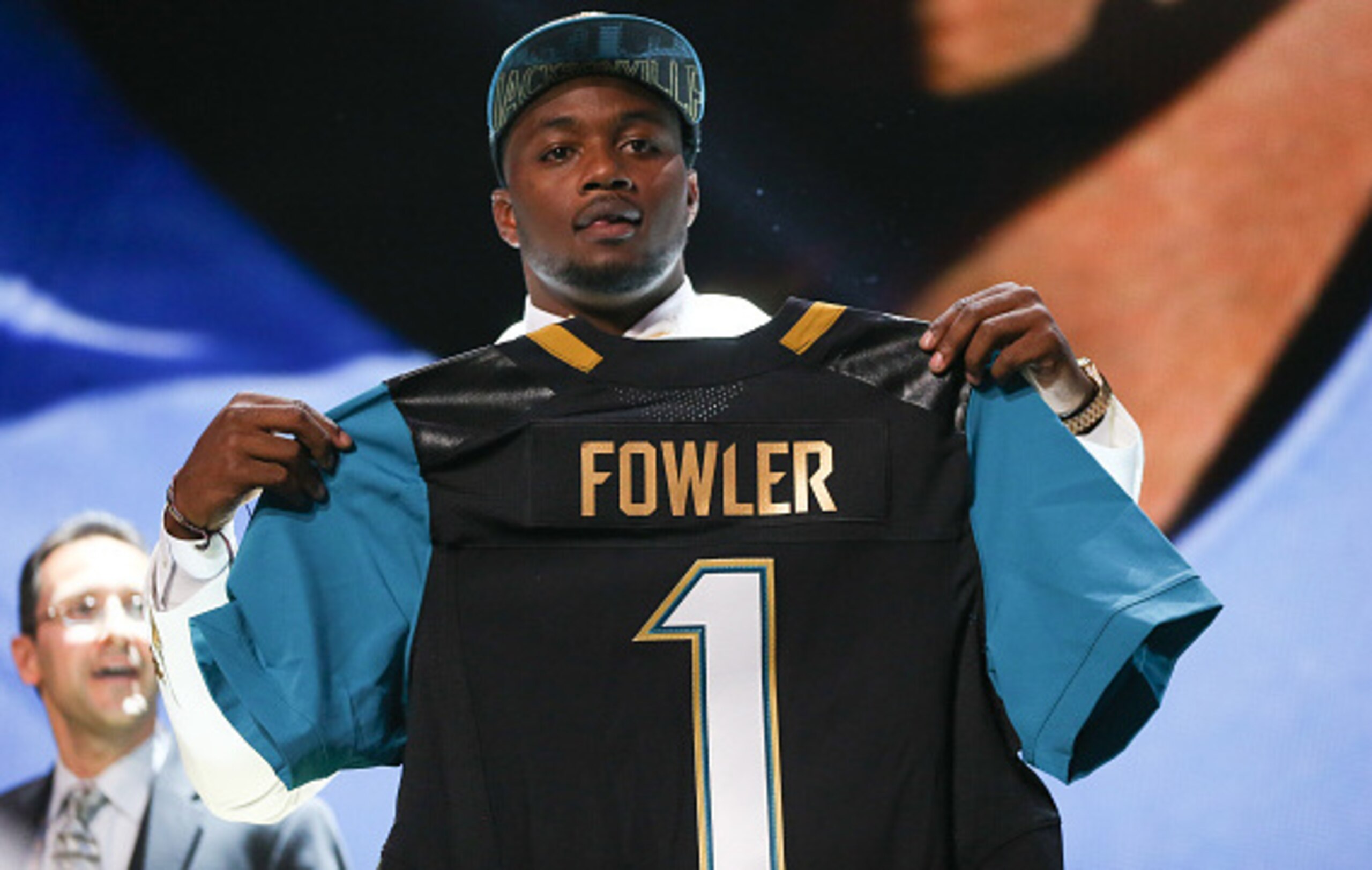
2015 Prospects
- Dante Fowler Jr., Florida
- Vic Beasley, Clemson
- Shane Ray, Missouri
- Randy Gregory, Nebraska
- Bud Dupree, Kentucky
- Hau'oli Kikaha, Washington
There was very little production from this group as rookies, but not for lack of talent.
Dante Fowler Jr., the first edge-rusher off the board to the Jaguars, missed the entire season with a torn ACL. Others such as Shane Ray (Broncos) and Bud Dupree (Steelers) landed on deep rosters and will be groomed for starting roles in the future.
Despite the limited immediate success, this was a strong class, and many prospects still have a bright future in the league.
2016 Prospects
- Joey Bosa, Ohio State
- Shaq Lawson, Clemson
- Noah Spence, Eastern Kentucky
- Kevin Dodd, Clemson
- Shilique Calhoun, Michigan State
- Bronson Kaufusi, BYU
Speaking strictly in terms of pass-rush ability, there's a steep drop-off in talent from 2015 to 2016. But this year's group features a few more well-rounded prospects, such as Clemson's duo of Shaq Lawson and Kevin Dodd.
Noah Spence and Shilique Calhoun are among the few speed-rushers, which means this group probably won't generate a lot of sacks. But there's a strong group of future starters who should come off the board within the first three rounds.
Edge: 2015
Both classes are strong, but the 2015 group has the potential to generate more impact players.
Each of 2015's top prospects listed above has the talent to generate double-digit sacks. 2016's class, however, appears to be filled with more role players who won't produce as many splash plays.
Interior Defensive Linemen
8 of 11
2015 Prospects
- Leonard Williams, USC
- Arik Armstead, Oregon
- Danny Shelton, Washington
- Malcom Brown, Texas
- Eddie Goldman, Florida State
Leonard Williams is arguably the best prospect from either class, but there was a significant drop-off after he came off the board.
The rest of this class was filled with developmental prospects. Even Arik Armstead, who the 49ers selected 17th overall, was a developmental prospect who didn't start a single game his rookie year.
2015 had a strong group of nose tackles, highlighted by Danny Shelton and Malcom Brown, but there was limited pass-rush potential in this group.
2016 Prospects
- DeForest Buckner, Oregon
- Sheldon Rankins, Louisville
- A'Shawn Robinson, Alabama
- Andrew Billings, Baylor
- Vernon Butler, Louisiana Tech
- Kenny Clark, UCLA
- Robert Nkemdiche, Ole Miss
- Jarran Reed, Alabama
2016's class has it all, producing high-quality prospects for every defensive scheme.
This is arguably the strongest individual unit in the 2016 draft class and should easily surpass last year's total of three first-rounders.
DeForest Buckner is the cream of the crop, offering elite potential as a 3-technique tackle in a 4-3 scheme or a defensive end in the 3-4.
There's also a strong group of nose tackles in this class, headlined by Alabama's A'Shawn Robinson and Louisiana Tech's Vernon Butler.
Edge: 2016
This is one of the most lopsided comparisons between the past two draft classes. The top player belongs to 2015, but at every other level, the edge goes to this year's group.
Linebackers
9 of 11
2015 Prospects
- Shaq Thompson, Washington
- Stephone Anthony, Clemson
- Eric Kendricks, UCLA
- Benardrick McKinney, Mississippi State
This was one of the weaker units in the 2015 class.
Shaq Thompson is a fascinating prospect due to his limited size but elite range, but the rest of the class offers limited upside.
This class has already produced a few starters—Eric Kendricks did an excellent job for the Vikings down the stretch last season—but there's only a short list of others who could join him.
2016 Prospects
- Myles Jack, UCLA
- Darron Lee, Ohio State
- Leonard Floyd, Georgia
- Jaylon Smith, Notre Dame
- Reggie Ragland, Alabama
- Joshua Perry, Ohio State
- Kentrell Brothers, Missouri
This is an elite group that should produce multiple immediate starters from the first round and well into Day 2.
If not for Jaylon Smith's knee injury, he and Myles Jack could potentially have both landed within the top five picks.
With the depth of the talent in this group, it would come as a shock if this class didn't produce multiple perennial Pro Bowlers.
Edge: 2016
This is another unfair comparison. Five years from now, it would not come as a surprise if the 2016 group contained more Pro Bowlers than the 2015 class had starters.
Cornerbacks
10 of 11
2015 Prospects
- Trae Waynes, Michigan State
- Kevin Johnson, Wake Forest
- Marcus Peters, Washington
- Damarious Randall, Arizona State
- Byron Jones, Connecticut
- Jalen Collins, LSU
- Ronald Darby, Florida State
There really wasn't a star in the 2015 class, but the depth more than made up for it.
Phenomenal rookie performances from Marcus Peters with the Chiefs and Ronald Darby with the Bills have this class on track to be a special group. In terms of comparisons, though, it's only fair to look at this group as they were viewed as prospects.
At this time last year, this looked like a solid group, but no one could have predicted the immediate impact of Peters and Darby.
2016 Prospects
- Jalen Ramsey, Florida State
- Vernon Hargreaves III, Florida
- Eli Apple, Ohio State
- William Jackson III, Houston
- Kendall Fuller, Virginia Tech
The 2016 class is the reverse of the 2015 group. There's more talent at the very top of the board but not quite as much depth.
Jalen Ramsey and Vernon Hargreaves III could potentially both land in the top 10, and Eli Apple might not be far behind.
Among the Day 2 prospects, however, there's a drop-off. It's tough to guess who, if anyone, from the next tier of cornerbacks will land a starting job at the next level.
Edge: 2015
It's a tough call between these two groups, but it's best to side with the class with the most depth.
The 2015 cornerback group has a chance to develop into one of the deepest classes we've seen from the position in a long time.
Safeties
11 of 11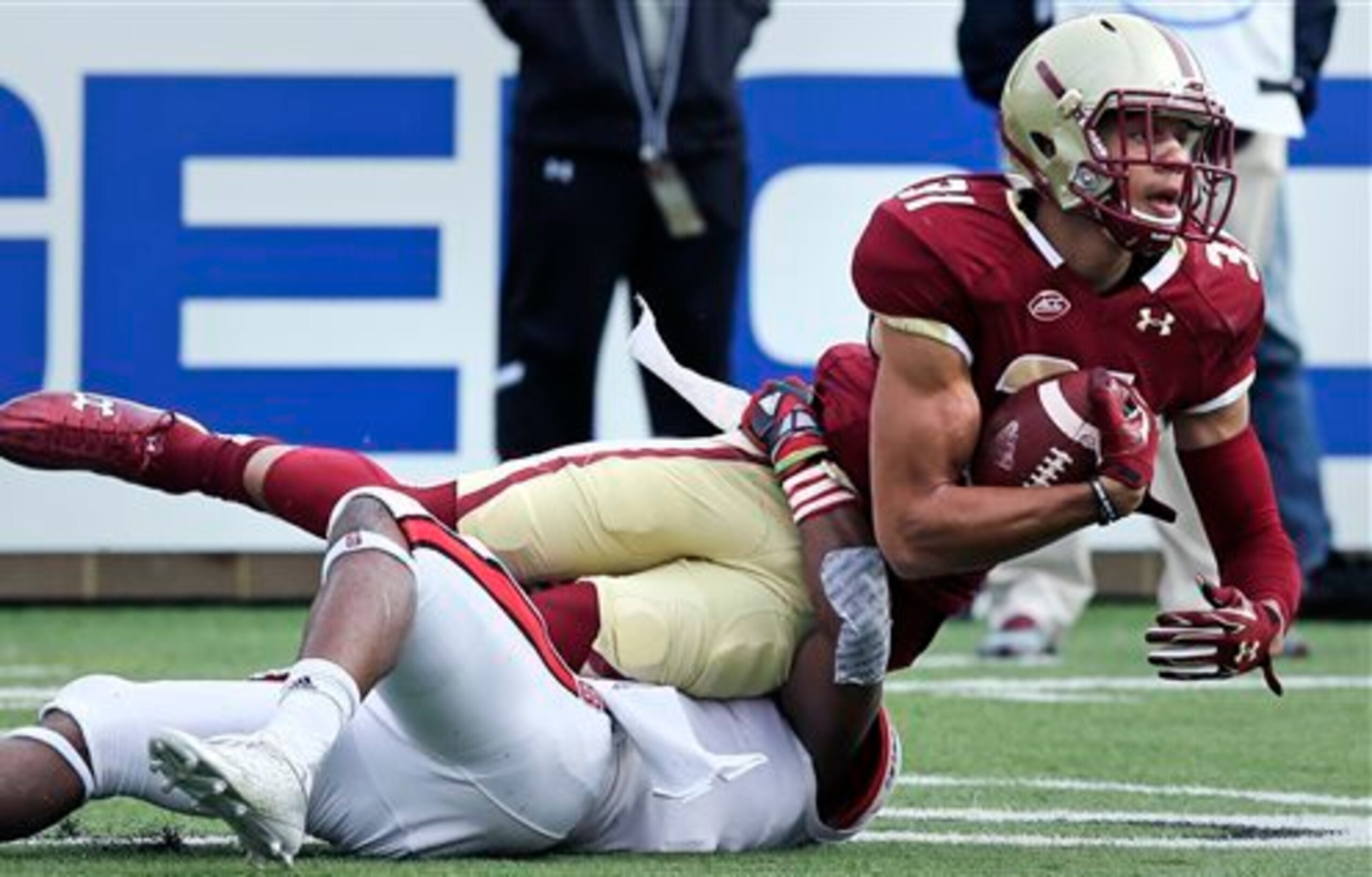
2015 Prospects
- Landon Collins, Alabama
- Jaquiski Tartt, Samford
Safety was easily the weakest unit of the 2015 draft class.
The top of the draft board was barren, as only three prospects landed among the top 100 picks. Although there was some decent depth in the draft class, with Day 3 prospects such as Adrian Amos (fourth round, Bears) and Kyshoen Jarrett (sixth round, Redskins) earning playing time as rookies.
2016 Prospects
- Justin Simmons, Boston College
- Vonn Bell, Ohio State
- Jeremy Cash, Duke
- Karl Joseph, West Virginia
- Keanu Neal, Florida
- T.J. Green, Clemson
There may not be a first-round prospect in this group, but the depth is impressive.
This year's class of safeties should produce multiple starters from Day 2 and potentially a few on Day 3 as well.
The class could potentially be weakened, however, by some of the strong safeties being labeled as linebackers. Jeremy Cash and T.J. Green are among the candidates to play the new safety/linebacker hybrid role that some NFL teams have been experimenting with in the league.
Edge: 2016
This isn't an elite class for 2016, but the lack of talent in the previous class makes this a lopsided comparison.
Even if 2016 doesn't produce any Pro Bowlers, it will win this comparison simply based on the number of prospects it's sending to the league.

.jpg?w=2560 "LA Premiere of \"Chad Powers\"")