The Humble Journey of Pierre-Emerick Aubameyang to Europe's Most Wanted Striker
Modesty reaps a rich harvest, and football stadiums don't come much more humble than the Stade Gaston Gerard in Dijon, France. A neat venue holding just more than 16,000 at capacity, it plays host to plucky tenants Dijon FCO, who toil away in the unassuming reaches of France's second tier.
The Gaston Gerard has spent little time under the glare of the world's spotlight. It is a world away from the football amphitheatres in Paris to the north-west and Lyon to the south. This is a modest place, but it is where our story begins.
In 2008, AC Milan were looking for a discrete environment to dispatch on loan a young forward who had shown promise in their Primavera youth setup.
TOP NEWS

Soccer Stock Check 📈📉

New NFL contenders starting to emerge after Week 4
.jpg?w=2560 "Cardinals Giants Football")
NFL investigating 2 referees for separate viral exchanges
Pierre-Emerick Aubameyang, born to a former Gabon international in Laval in the west of France, had arrived energetic and raw at Milan's football academy in January 2007. That energy stayed coiled—briefly. Then, in August of his debut year in Milan, something snapped.
The G-14's Champions Youth Cup was being held in Malaysia, and one man took all the headlines. Aubameyang hit all seven of Milan's goals—in just six games—as his side finished fourth in the 16-team tournament, which featured under-19 sides from Barcelona, Juventus and Manchester United.
His third goal—a delicious, dipping 12-yard volley over Arsenal's Wojciech Szczesny in Milan's final group game at Kedah's sprawling Darul Aman Stadium—was of such audacious self-assurance as to cast the die there and then.
It was not a false dawn. But despite such early promise, Aubameyang took an indirect route to the finish line. He had new circumstances to master, lest they become the master of him and his precocious talent should splutter out.
His award-winning performance (Aubameyang won the Roberto Bettega Trophy as top scorer) in Malaysia wasn't an arrival; rather, it was a flash of potential before the start of a long, character-building journey.
Laval is a peaceable, old-world place in the Mayenne department of France, less than 200 miles south-west of Paris.
The medieval Chateau de Laval watches over the town as it stretches out down the Mayenne River toward Tours, the city whose Ligue 2 side were the visitors to Dijon the day Aubameyang scored his first goal in professional football.
Quaint, quiet Laval has no more prolific sporting export, but this is a story of diffident beginnings.
Eight minutes into his first game in professional football—for Dijon at RC Lens—there were signs of what was to come. A devastating drop of the shoulder and spin away from his marker in the season's opening game had Aubameyang bearing down on goal, only for the impetuousness of youth to defeat him as he hurried his finish and squandered the chance.

It was part of a miserable beginning to the 2008/09 season for Dijon, which brought successive defeats against Lens and Strasbourg.
Against Ajaccio a week later, the frustration mounted. Dijon continued to struggle for goals as their new man from Milan was booked and then quickly hooked off in a prosaic 1-1 draw which left them mired in no-man's land.
That decision was the call of ex-Yugoslavia defender Faruk Hadzibegic, a Bosnian with connections to Milan via his former international team-mates Zvonimir Boban and Dejan Savicevic, and who had recently been installed as manager at Dijon.
"He was only 19 when he arrived in Dijon" Hadzibegic told African magazine Jeune Afrique, "but already at that age his speed and sense of purpose were interesting. Some of my team-mates from Yugoslavia were at Milan at the time so I had good information on him."
Hadzibegic retained faith in his young acquisition, keeping him in the lineup for the Ligue 2 visit of Tours on August 22. Just over 3,000 fans spread among 12,000 or so empty seats at the Gaston Gerard were restlessly watching a sleepy match drift towards a goalless draw when, on 65 minutes, Aubameyang pounced to flash Dijon into the lead.
The hosts dug in to steal a 2-1 win, their first of the season. Three weeks later, when he thrashed home an 89th-minute winner at home to Montpellier, the town of Dijon had a new hero.
The loan system, and the building of short-term homes to provide young players with technical and emotional support, demands delicate handling.
Guarantees of security and stability among transient circumstances—especially when young boys are being asked to relocate internationally, away from familiar cultures and warm memories—don't come without careful planning.
In Dijon and in Hadzibegic, Aubameyang found the right man in the right place to blood his talent.
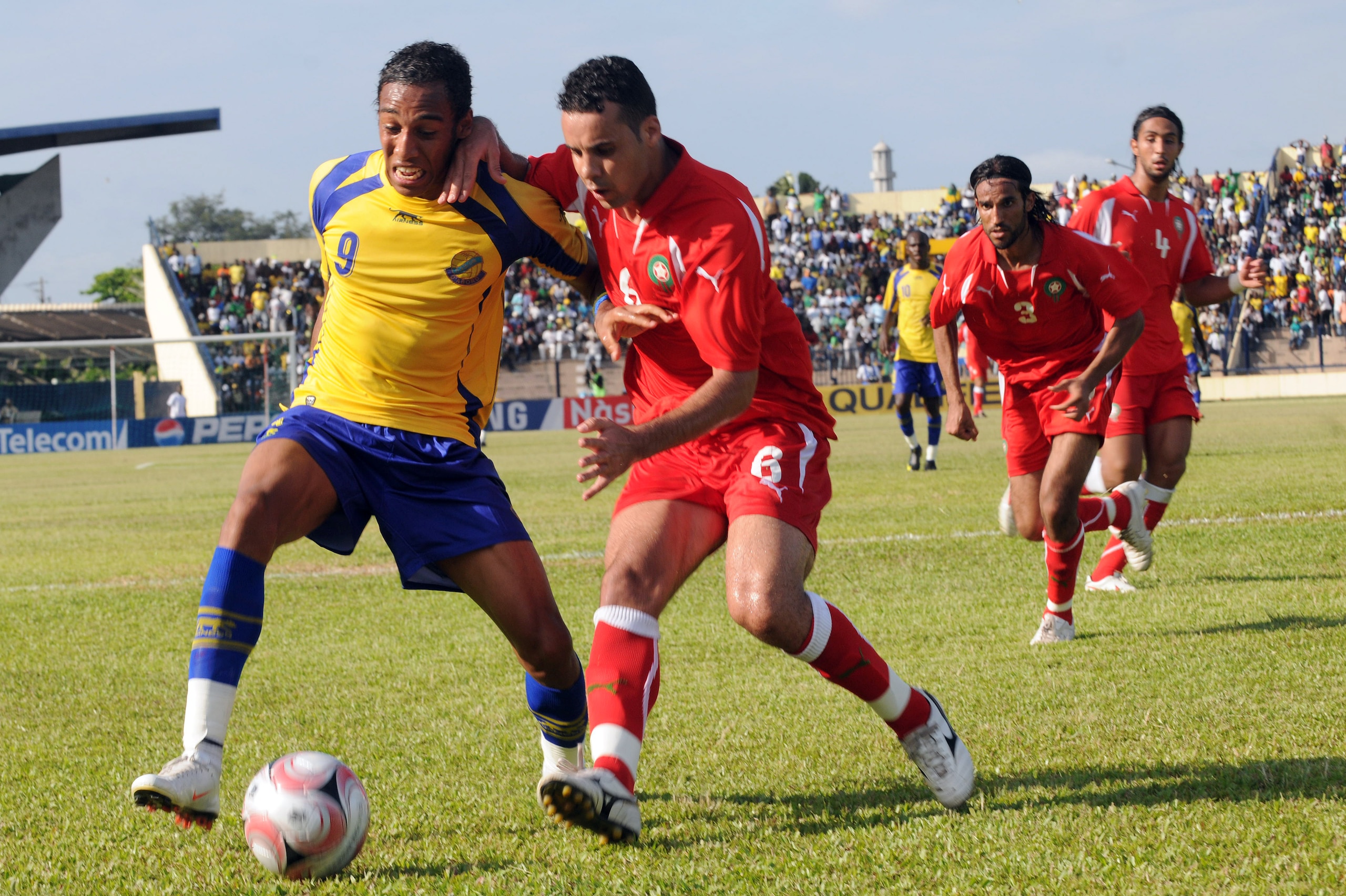
Not only was the Bosnian a fine ex-professional, a member of the great Yugoslavia team that had reached the quarter-finals of the 1990 World Cup, he was also a hardened journeyman, a veteran of a 30-year playing and coaching career who had taken in spells in Spain, France and Turkey since leaving his homeland in the 1980s. He knew the French Ligues 1 and 2 intimately and what was necessary to assimilate. Thanks to his colleagues at Milan, he knew the player he brought in.
"I knew his father, Pierre, well," Hadzibegic told Bleacher Report. "We were together at Toulouse, where I watched him develop. He's someone who advises his son very carefully."
In Dijon, Hadzibegic took on that role as a surrogate, mentoring and nurturing the younger Aubameyang on behalf of the man with whom he had shared a season in Ligue 2 in the mid-1990s.
This kind of networking doesn't come together by chance; Aubameyang's first tentative steps in the professional game had been meticulously engineered. Not every leg on the journey was so steady.
In the summer of 2009, Lille OSC were a club on the up. Another side to have spent time outside of the top flight, they were promoted in 2000 and qualified for the UEFA Champions League. Within six years, they had enjoyed victories over Manchester United and at the San Siro, home of Aubameyang's parent club.
In 2007, a lush new €19 million (approximately £13 million) training complex was opened at Pevele. Around that time, plans were drawn up for a new 50,000-seat arena to replace the crumbling and diminutive Metropolitan Stadium. Lille were a modest club once—now, their horizons stretched away into the distance. It was an exciting time to be a young player there.
Aubameyang pitched up in Lille in the summer of 2009 on another loan deal, but this time it was without the connections and contacts that had eased him into life at Dijon. This was an ambitious Ligue 1 side, and the Milan man's first taste of top-flight football came with a club with its sights set on returning to Europe after several seasons away.
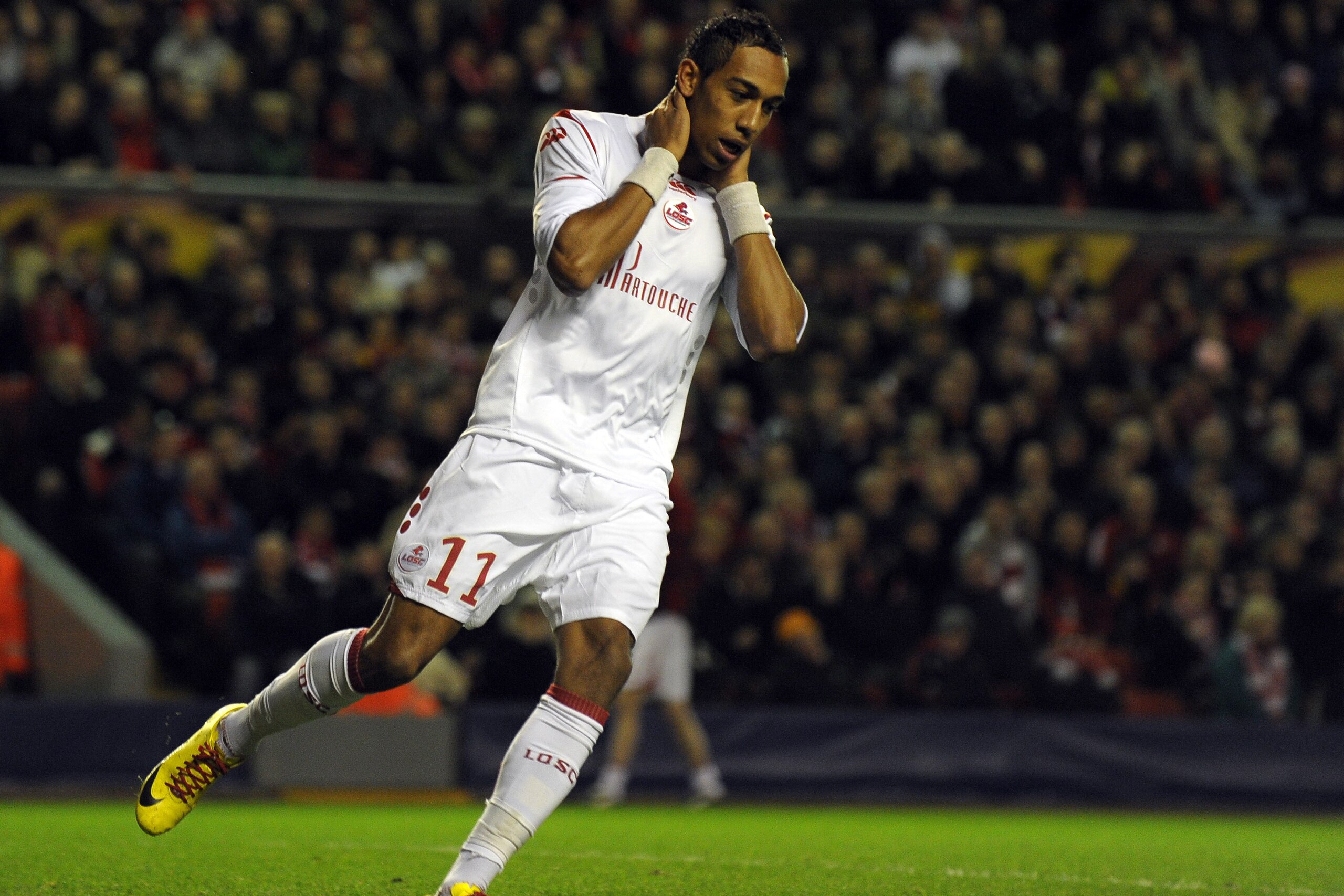
When Aubameyang replaced Franck Beria during a home match with FC Lorient for his Ligue 1 debut, he took the field alongside Eden Hazard, Yohan Cabaye and future Slovakian World Cup hero Robert Vittek.
It was part of a tactical reshuffle by Lille boss Rudi Garcia, another former Dijon man, who sacrificed full-back Beria and thrust Aubameyang into the front line in the hope he might overturn his side's 2-0 deficit.
In short, the weight of expectation had changed. A first win came, belatedly, in September against FC Sochaux. This time, Aubameyang replaced Hazard and lined up alongside Gervinho in attack. Full-back Mathieu Debuchy helped start the move that led to the winning goal.
All around the team, there were young faces whose potential was being marshalled to help a small club swim in open waters, as Lille became a farm for precocious youngsters to blood themselves and hone their talents.
The months Aubameyang spent at Lille again demonstrated the importance of a calibrated environment, even if the statistics suggest the move was unfruitful.
He failed to match even the modest goal return he'd notched at Dijon (eight in all competitions), scoring only twice in 24 appearances, of which just 10 were starts. The company of proteges of similar talent and expectation, however, was a necessary stimulant for a young player who had exploded onto the scene at the youth level in Milan but was awaiting a first crack at the top level of the senior game.
When Milan moved him on again the following season, this time to AS Monaco, something was different. Aubameyang was used only sparingly, notching two goals in a frustrating six-month spell in 2010/11, Monaco's relegation season. Goals weren't coming, and game time was becoming increasingly scarce. It wasn't what Milan had in mind when they sent their starlet back to Ligue 1.
The Rossoneri, 18 times Italian champions and winners of seven European Cups, have heady expectations of the members of their Primavera. Like most of Europe's top clubs, players are signed at a young age with a view to having a future in the first team. There is a quality of spiritual as well as footballing education offered to young boys as they cross the threshold into adulthood.
Pierre Francois Aubameyang had a modest (that word again) career despite earning 80 caps for Gabon and appearing in a 1996 Africa Cup of Nations quarter-final. After retiring from playing in 2002, he took a job as a scout at the San Siro. Shortly afterwards, he persuaded the club to take a chance on the eldest of his three sons.
Catilina made five appearances in the Rossoneri first team. The next to arrive, Willy, played only once. Pierre-Emerick joined in 2007.
At Milan, they were a family within a family—two generations of footballing lineage bound up in the fabric of one of the world's great clubs. They are also proud representatives of the culture they left behind in Central Africa.

All three sons followed in their father's footsteps for Gabon, and Pierre-Emerick is about halfway to matching his father's number of 80 international appearances. The roots that tie the Borussia Dortmund forward to his ancestral heritage are strong—never a guarantee when a player from one of the world's more obscure football outposts cracks one of the major European leagues.
Gabon's fellow African nation, Togo, have never had an easy time taming the ego of Emmanuel Adebayor, and it's easy to forget Ryan Giggs ever had an international career with Wales. Pierre-Emerick, who chose his father's country over France despite representing Les Blues at under-21 level, has never wavered in his commitment to Gabon.
"As we were born in France, it brings us closer to our roots," he said of his and his brothers' international allegiance in an interview with FIFA.com not long after making his bow for the national team in 2009. "Naturally there's the pressure of following our dad, but I hope we'll show that we're worthy of having the same name.
"He gives us a lot and serves as a kind a psychologist for us. He's always there to give us a jolt when he feels we need it. Thanks to him, we wake up with a smile every day."
Much has changed in a short space of time. You feel those aspirations to live up to the Aubameyang family name probably don't weigh so heavily on the 2015 African Footballer of the Year these days.
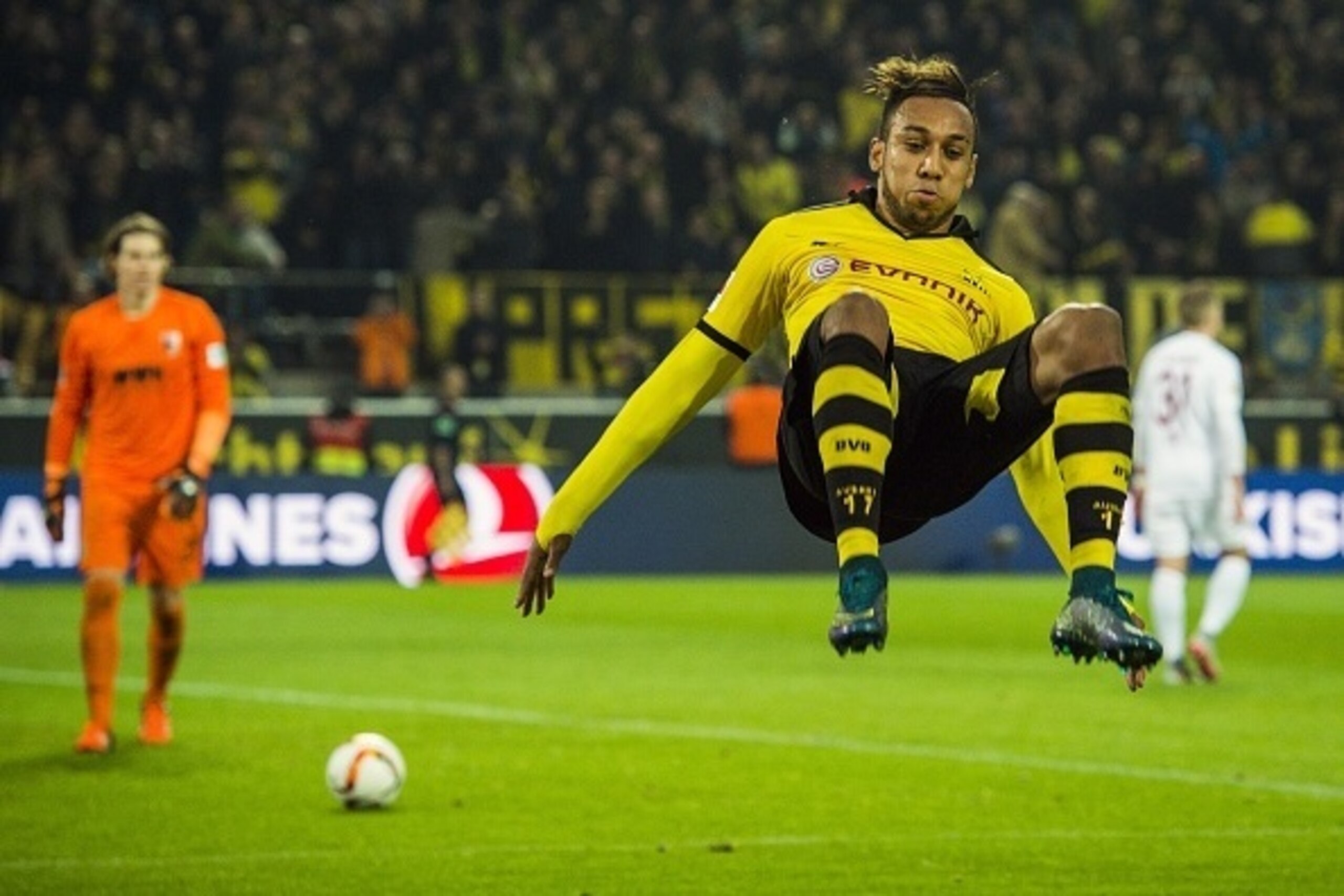
Even his failure to make the cut at Milan—the four-year affiliation came to an end in 2011, when a successful loan move to Ligue 1 side AS Saint-Etienne was made permanent—no longer elicits disappointment.
Saint-Etienne was Aubameyang's last stop in France before Dortmund came calling in 2013, and a return of 21 goals as a permanent member of Les Verts was a sure sign that the boy wanderer was coming of age.
Since joining Dortmund, Aubameyang has scored 56 goals in 82 Bundesliga appearances and firmly established himself as one of Europe's most prolific strikers.
The 2016-17 season looks set to be a defining year for Aubameyang—no longer a precocious youngster, but one of world football's most complete players. And all the signs are that a crossroads is approaching. There was no big summer transfer deal for the striker, but few of Europe's big-hitters have yet to declare an interest, formally or otherwise.
As a new Champions League season dawns (Dortmund face Legia Warsaw, Real Madrid and Sporting Lisbon in the group stage), Aubameyang's talent will again be on view on the biggest club stage of all.
It's surely only a matter of time before he leaves Dortmund for one of Europe's true behemoths and begins perhaps the defining chapter of an already-remarkable rise.
All quotes were gathered firsthand unless otherwise stated.

.jpg?w=2560 "Hill Injury Update Football")
.jpg?w=2560 "OBJ Calls Out Giants 😳")
.jpg?w=2560 "Tyreek makes another cryptic post amid Chiefs rumors")