
The Best Big-Play Tight Ends in the 2016 NFL Draft
Starting in the early 2000s, the value of the tight end position skyrocketed. While pass-catching tight ends have been prevalent in offenses throughout the NFL's history, today's NFL sees teams jostling for the top basketball-type athletes to win at a position that still has its roots as a blocking position.
These tight ends aren't ranked by where they'll be drafted or by their total draft grades, but rather by their ability to be pass-catching difference-makers and produce big plays. NFL teams still covet do-it-all tight ends who can be on the field in all types of situations without being a liability, but having a tight end who can be a mismatch for linebackers and defensive backs can offer ample offensive creativity.
These six prospects, though they can help in other areas as well, will hopefully grow into pass-catching difference-makers.
6. Hunter Henry, Arkansas
1 of 6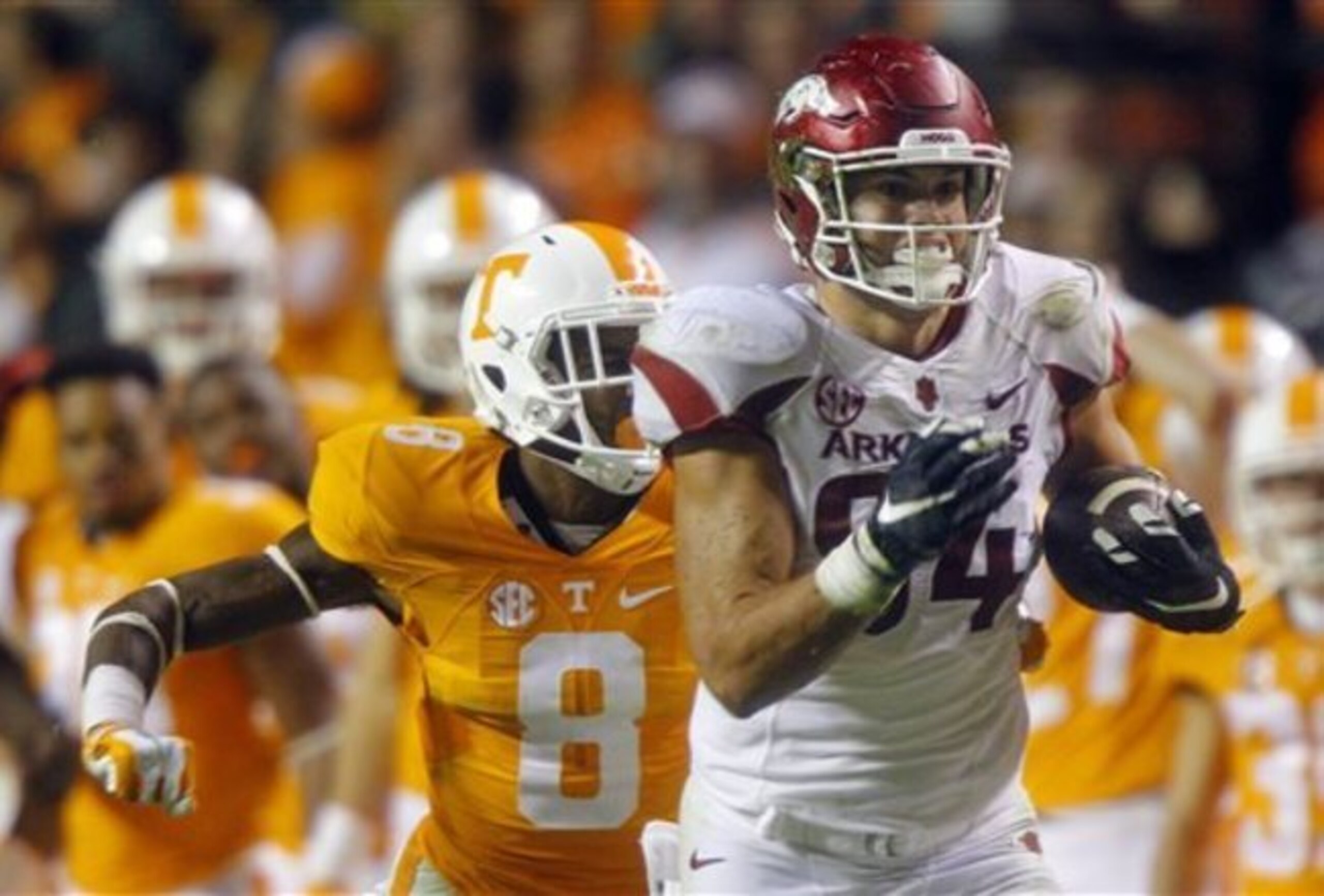
Hunter Henry isn't a dynamic offensive weapon like most of the tight end prospects on this list, but I'd be remiss to ignore the class's top tight end prospect on a list of the biggest impact players at his position. His value lies in his refinement as a short-area route runner, effectiveness as a blocker and reliable hands as a turn-and-run receiving option from the position.
But it's Henry's do-it-all capability that gives him an added versatility aspect. Defenses aren't tipped off by his presence on the field, and he grew to become a dangerous play-action threat in the Arkansas offense. Getting work in the slot and in-line, Henry's development as a route-runner in both areas keeps linebackers and defensive backs off balance and unsure what he will do on each play.
Couple that added versatility with his highly effective timing as a pass-catcher and smooth transition as a turn-and-run runner, and Henry can turn simple routes and play designs into big plays. He posted four receptions of 30-plus yards in 2015, including a 51-yard run against Tennessee (shown above). He's not going to be relied upon as a big-play threat in the NFL, but Henry is capable of turning in big plays in his future NFL offense.
5. Ben Braunecker, Harvard
2 of 6
Despite hailing from an FCS program, Ben Braunecker may be one of the 2016 draft's most exciting tight end prospects. The small-schooler was Harvard's featured weapon in 2015 and dominated the middle of the field and after the catch on the perimeter at the FCS level, earning draftable consideration on film.
But Braunecker solidified himself as one of the draft's most intriguing tight end prospects with a remarkable NFL Scouting Combine performance. According to the SPARQ formula, the most prominent athleticism analytic score in the football world, Braunecker is the 2016 class's top tight end athlete. Those standout numbers include a 4.73 40 time, 4.20 short shuttle, 35.5-inch vertical jump and a 10'8" broad jump, all in the top five at his position for each drill.
Transitioning from the FCS to the NFL level won't be easy, but Braunecker is an athlete worth developing and has the college film to back up the high expectations. While he's still likely a Day 3 pick, it shouldn't come as a surprise if Braunecker emerges as one of this class' best tight ends in a few years.
4. Darion Griswold, Arkansas State
3 of 6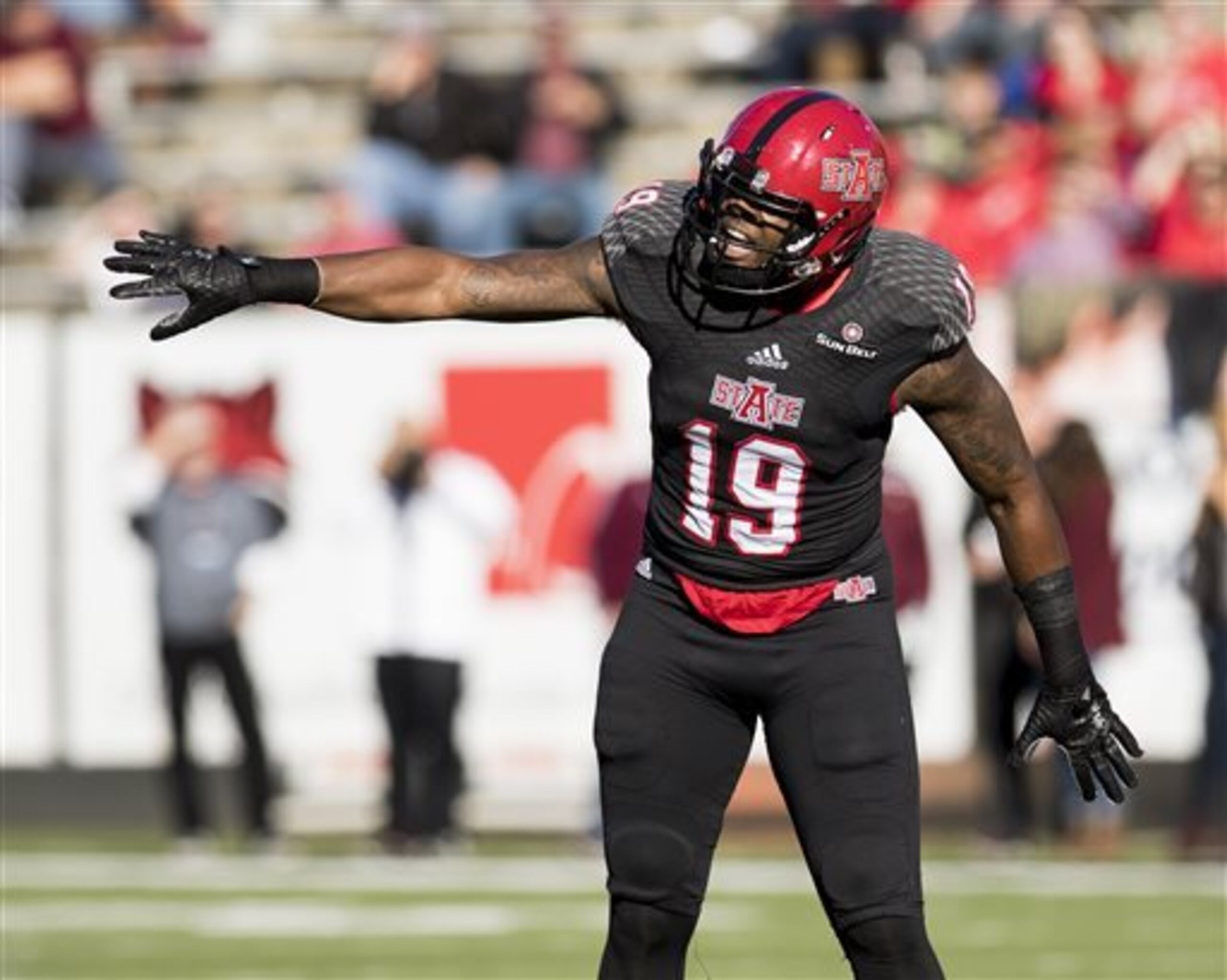
Darion Griswold entered the 2016 NFL draft process without much fanfare after posting just 13 catches in 2016 thanks to a college offense that struggled to feature arguably its most talented offensive weapon. The athletic and route-versatile tight end struggled to emerge as a feature weapon in the offense despite flashing separation upside and downfield route refinement better than many of his college peers.
Luckily for Griswold, he was invited and performed well during the East-West Shrine Game practices, according to Chris Kouffman of OptimumScouting.com. The week's top tight end showed plus-jump-ball ability, high-pointed in the seam well and kept his stride after the catch as an upfield runner.
On film, Griswold displayed a quick burst upfield to get to and past the second level of linebackers smoothly and adjust at his route apex with fluidity and balance. In an NFL offense that can further groom his upfield adeptness, Griswold could better utilize his open-field and change-of-direction effectiveness to turn in receptions and big plays. Though NFL teams will be gambling his lack of production won't persist at the pro level, he's shown enough on film and during the all-star game process to merit consideration as a potential diamond-in-the-rough big-play tight end option.


3. Thomas Duarte, UCLA
4 of 6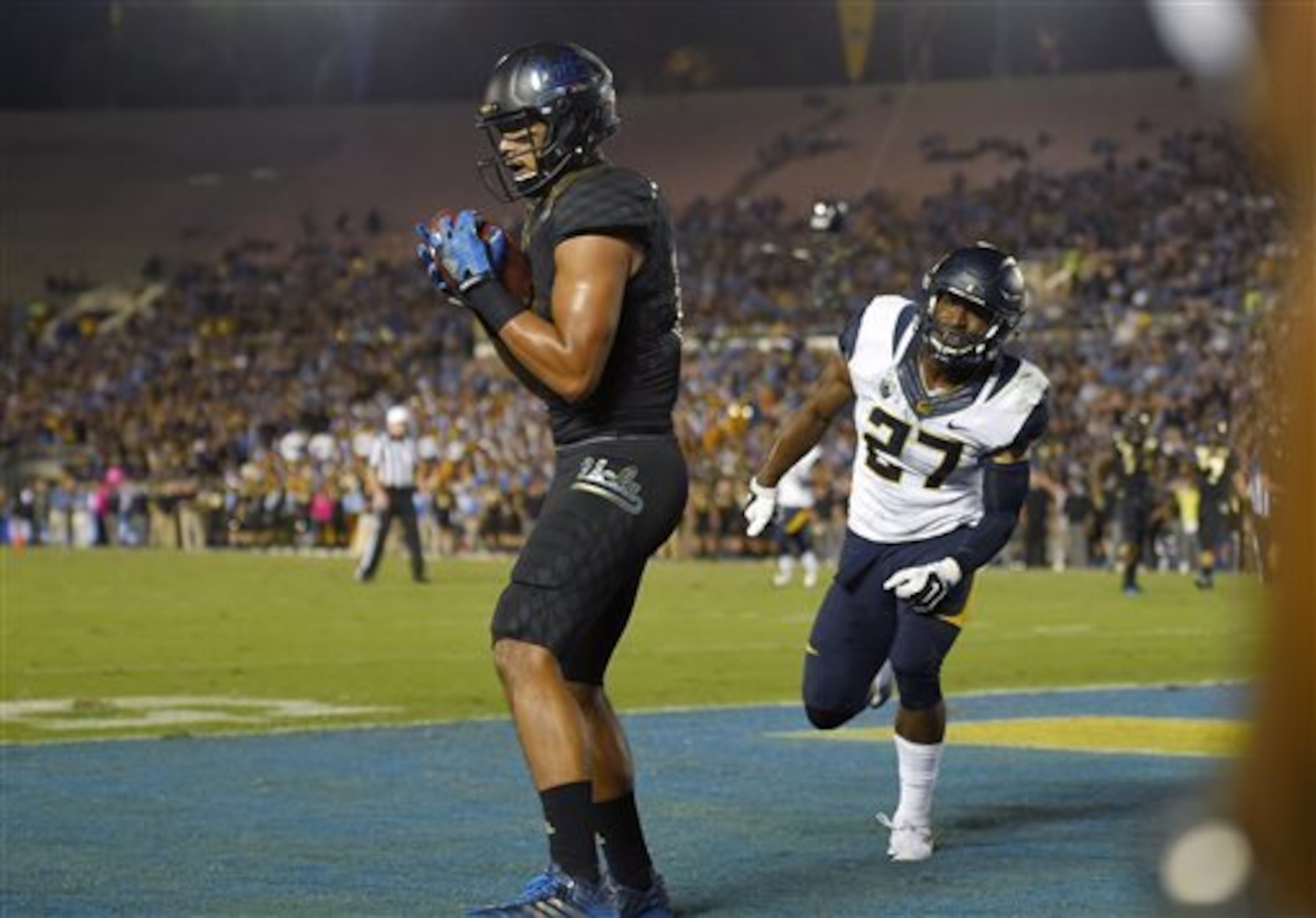
A college receiver who has already begun the transition to tight end, Thomas Duarte will attempt to be this year's primary receiver convert aiming to be a "move" tight end in the NFL. He was never much of a blocker at the college level despite plus size for a receiver, and there's no reason to expect he'll grow all that much as a blocker at the tight end position.
However, Duarte's seam-stretching capabilities as a tight end/receiver hybrid could allow him immediate situational NFL success as a threatening and difficult-to-cover interior presence. The transition to being a tight end pass-catcher will rely less on his speed and change in acceleration and more on his quickness at the top of his route and positioning of his body for interior catches, something he'll need to continue to improve at the NFL level.
He'll need patience and situational work at the position before he'll be adept as a routine player in an offense. But his upside as a receiving threat who is too big for most defensive backs and too sudden and fluid for linebackers fits exactly into the mold that NFL teams covet in "move" tight ends. His big-play upside may need time before it blossoms, but he may be worth the wait.
2. Tyler Higbee, Western Kentucky
5 of 6
Off the field, Western Kentucky's Tyler Higbee may not be draftable. In addition to a season-ending knee injury that already should have had NFL teams worried, Higbee's most recent off-field incident may have completely taken him off draft boards. He was charged with second-degree assault, alcohol intoxication in a public place and second-degree fleeing or evading police, according to the Bowling Green Daily News. Alleged violent crimes like that may not only push Higbee out of the NFL for the time being, but he potentially faces serious fines and jail time for his actions.
However, if Higbee can get his injury and, more importantly, violent tendency concerns under control, he could be one of the NFL's top tight end talents. Offering much of the same versatility and physicality after the catch as Kansas City's Travis Kelce, Higbee can smoothly transition after the catch and has a great feel for the seam and how to adjust before and after the catch as a runner. He separates well in the middle of the field with his upper-half movements and offers a plus understanding of zone coverages and how to navigate in the opening.
His experience as a tight end, H-back and receiver (where he played at WKU before switching to tight end) only further enhances his immediate versatility. If Higbee had been healthy during the draft process, he likely would have tested as one of the best athletes at the position in a relatively weak 2016 class. But, injuries and his recent assault charge may turn him into a wasted talent and a missed opportunity for an NFL team to harness his awesome upside.
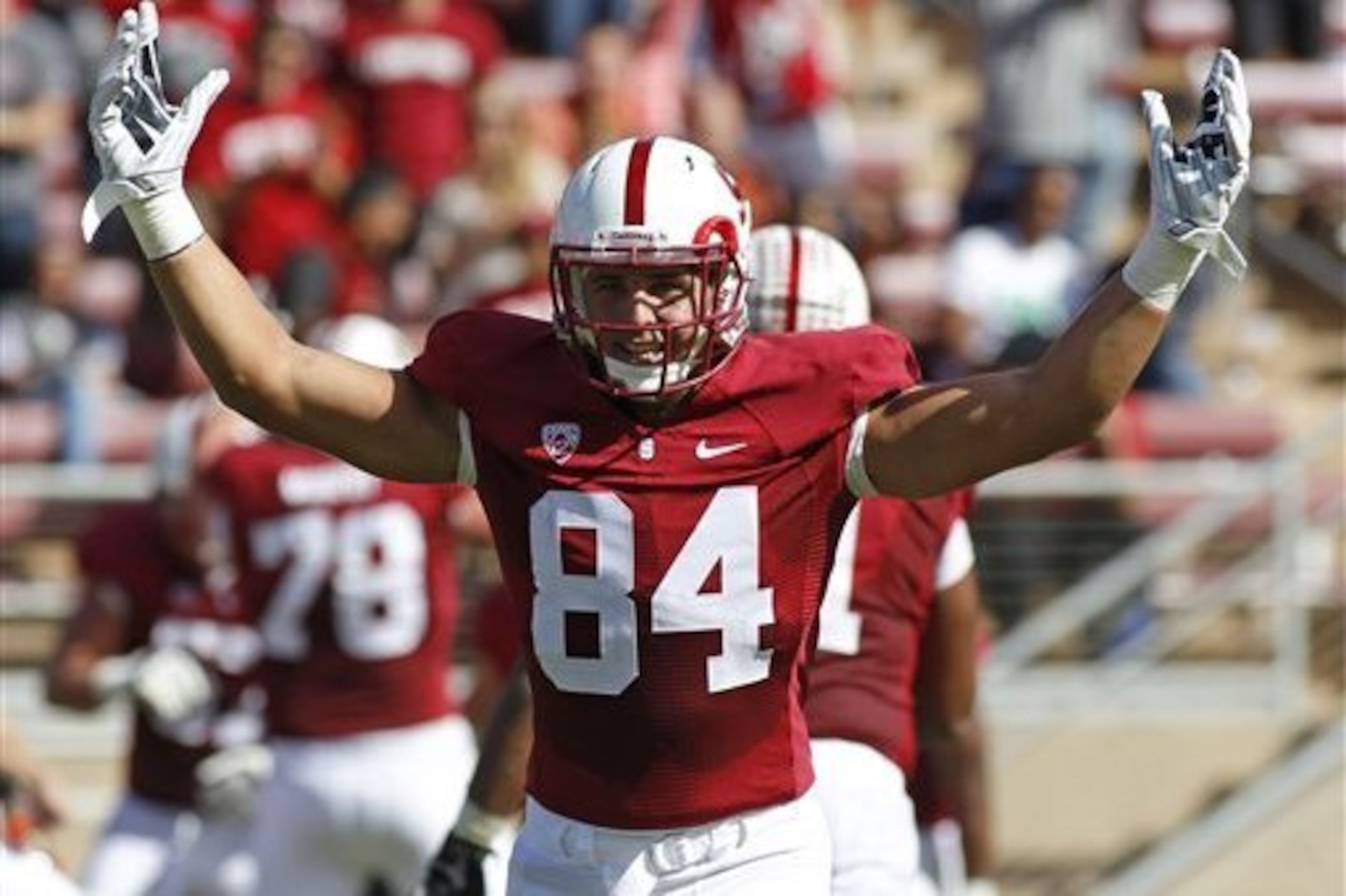
1. Austin Hooper, Stanford
6 of 6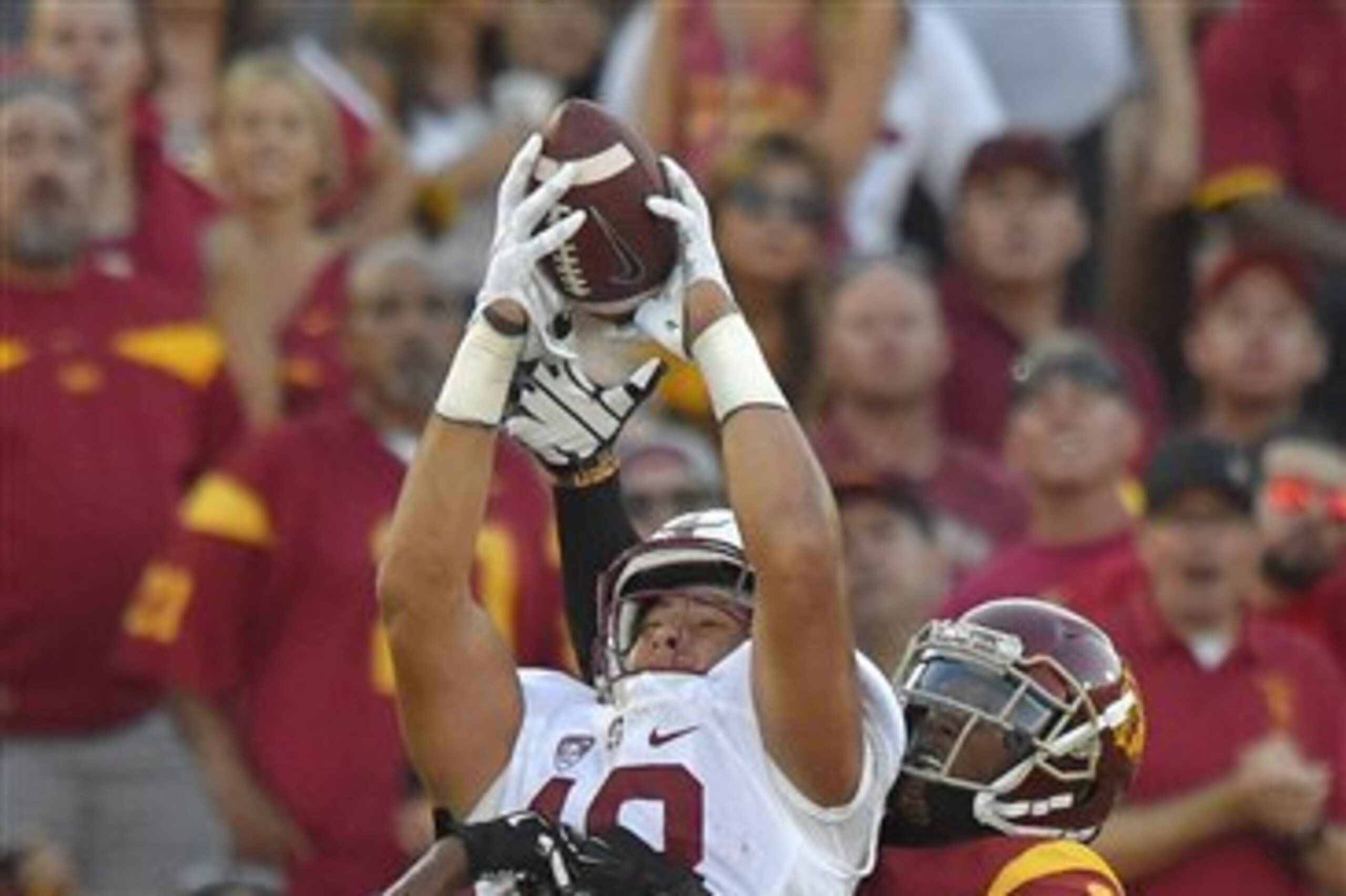
Following in the footsteps of past Stanford tight ends such as Coby Fleener, Levine Toilolo and Zach Ertz, Austin Hooper may be the most receiver-like of them all. Earning Mackey Award consideration (the award given to the nation's top tight end) in both of his two college seasons, Hooper has been the ideal safety valve and matchup nightmare for quarterback Kevin Hogan.
Hooper has seen work as an inline tight-end, slot/seam presence and split-wide receiver, utilizing efficient upper-half movement to separate at the catch point and box out every type of defender effectively. He primarily was used on quick hitches, short slants and quick perimeter throws, and he has flashed the type of edge and vertically working routes that gets teams excited about his potential NFL versatility. An effective high-pointing receiver, Hooper routinely wins in-air balls with plus-jump typing and strong hands at the catch point.
While his interior footwork as a route-runner and mistimed routes or hand movements will need NFL refinement, it's to be expected for the two-year college performer. Hooper won't be an every-down tight end immediately in his NFL career, but he could grow into a feared versatile presence and grow into one of the NFL's top pass-catching tight ends.

.jpg?w=2560 "LA Premiere of \"Chad Powers\"")