

Comparing 10 Hyped 2016 Rookies to a Current MLB Star
It's always dangerous to compare a hyped-up rookie or a prospect who has yet to make his major league debut to a current MLB star, if for no other reason than those comparisons can be highly misconstrued.
These comparisons aren't meant to be read as "player X is going to be the next (insert star's name here)." Doing so places unrealistic and unfair expectations on those rising stars, and it inevitably leads to fans and pundits bashing the youngster for not immediately delivering All-Star-caliber results.
For example, comparing a pitcher to Clayton Kershaw doesn't mean you should expect him to win three Cy Young Awards before his 27th birthday. It does mean that there are similarities between the two. Perhaps the prospect has a filthy curveball. You won't find a filthier bender in the majors than Kershaw's.
There are any number of reasons a youngster might compare favorably to an MLB star, whether it's the tools he possesses or his makeup as a player—the baseball IQ and mental aspect of the game that can't be quantified by statistics.
But the one thing we can be sure of is that everyone on this list has a bright future ahead. So forget what Public Enemy taught us years ago—believe the hype when it comes to these 10 players.
Byron Buxton, OF, Minnesota Twins
1 of 10
MLB Comparison: Andrew McCutchen
"Mike Trout Two" was how Torii Hunter described teammate Byron Buxton to Bleacher Report's Scott Miller in spring training last year, and it was not the first time Minnesota's starting center fielder has been compared to baseball's best player.
But it's an unfair comparison to make. While Buxton could develop into a generational talent like Trout, putting up insane, video game-like numbers over the course of a regular season, it's far from a lock that he will. Few players, much less a 22-year-old, can meet such lofty expectations.
A more reasonable comparison would be to Pittsburgh's Andrew McCutchen.
Take a look at this 2007 scouting report from Baseball Prospectus' Kevin Goldstein on the Pirates' center fielder:
"Dynamic power/speed combination with one of the quickest bats in the minor leagues and strength in wrists to hit 20-30 home runs annually in the big leagues. Has ability to take a walk, and plus-plus speed makes him dangerous on the basepaths as well. Outstanding defender in center field with a far-reaching range from gap to gap.
"
Up until this year, you could have dropped that into any scouting report on Buxton and hardly anyone would have noticed the change. Things don't sound quite as good heading into 2016 thanks to his injury history and a poor MLB debut after being rushed to the majors last year, but the talent remains.
While McCutchen's bat and pitch recognition may have been more advanced than Buxton's currently are, he doesn't have Buxton's Billy Hamilton-like wheels—the kind that lead MLB in steals and cover more ground in center than McCutchen can.
"Buxton has the physical gifts to be a star even if he hits .240," writes ESPN.com's Keith Law, "as that would probably come with 50 steals, 10-12 homers and big defensive contributions." That's Buxton's floor. He's capable of greater things.
Over 108 games as a rookie in 2009, McCutchen hit .286/.365/.471 with 47 extra-base hits (12 home runs), 54 RBI, 74 runs scored and 22 stolen bases in 25 attempts. You'd be hard-pressed to find anyone who doesn't believe Buxton—if he can stay healthy in 2016—could produce similar, if not superior, numbers.
Jose Berrios, SP, Minnesota Twins
2 of 10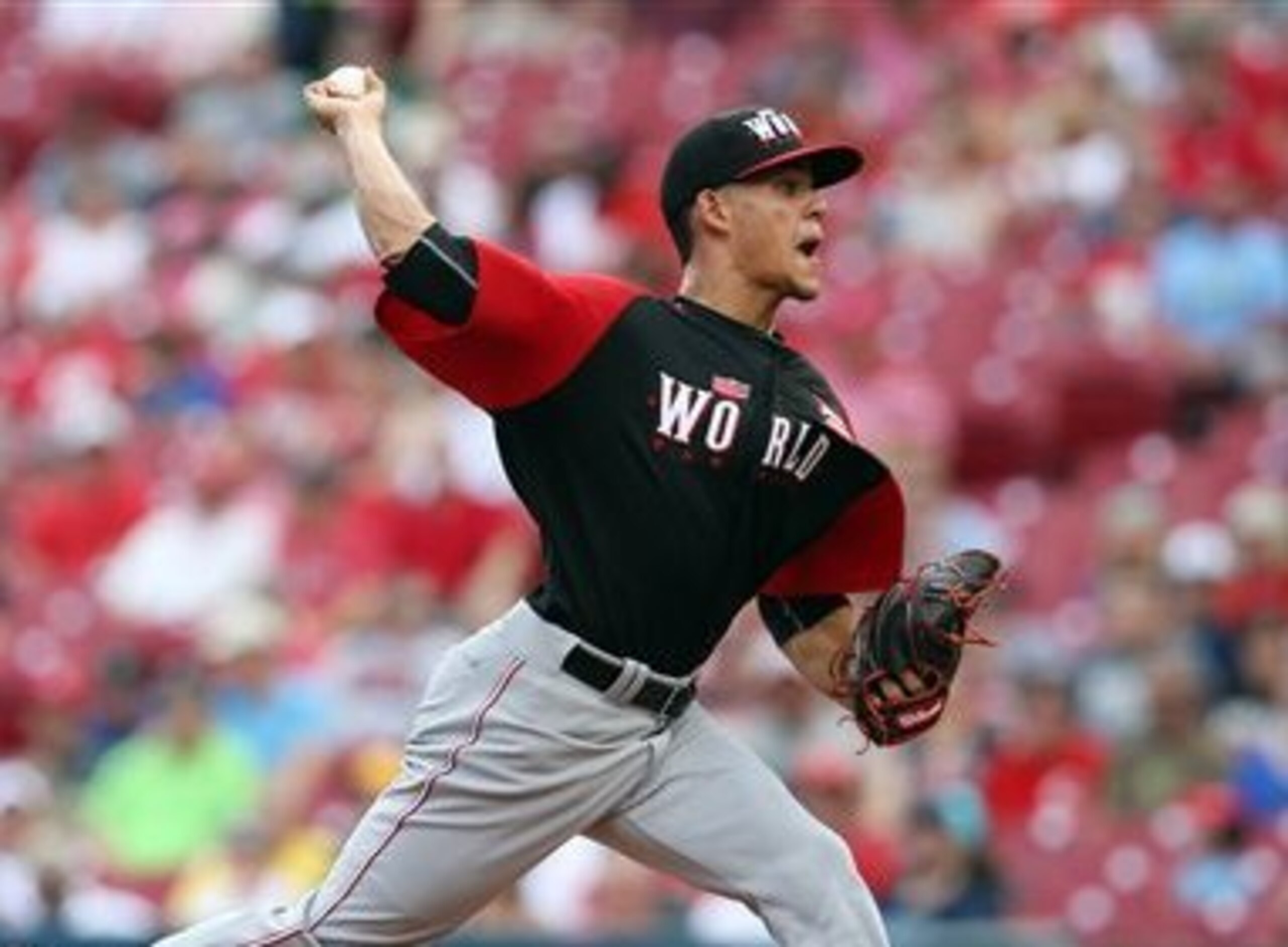
MLB Comparison: Carlos Martinez
Carlos Martinez might not be on the same level of MLB stardom as some of the other comparisons, but the 24-year-old is coming off his first All-Star season (14-7, 3.01 ERA, 1.29 WHIP, 9.2 K/9) and has cemented himself as one of baseball's most impressive young arms.
Like Martinez, Jose Berrios has front-of-the-rotation upside despite being considered undersized at 6'0". The height issue is less about downward plane on pitches and more about durability—whether or not they could handle a heavy workload. Late-inning relief was thought to be an option for both men.
Both players pound the strike zone with mid-90s heat (Martinez is a tick or two faster), but Berrios uses his heat to set up a filthy curveball. Martinez, who doesn't throw a curve, went to his mid-to-high-80s changeup as his out pitch in 2015, per Brooks Baseball.
Berrios isn't yet a finished product. The 21-year-old needs to continue working on keeping his emotions in check, as he loses command over his impressive arsenal when he's too fired up on the mound. While he'll start the season in Triple-A, Berrios figures to be the first starter the Twins call up when a need arises.
In a Twins rotation full of mid-rotation starters, it may not take long for Berrios to establish himself as the group's undisputed ace once he does arrive.
Joey Gallo, 3B/OF, Texas Rangers
3 of 10
MLB Comparison: Chris Davis
Chris Davis' "mammoth, gargantuan power," as Baseball Prospectus' Kevin Goldstein wrote in a 2007 scouting report, certainly matches up with the "stupid" power that the site's Christopher Crawford points to in his breakdown of Joey Gallo heading into 2016.
Like Gallo, Davis began his career at third base, and both were praised for strong throwing arms when they came up through the minors. But a move to a corner outfield spot or first base wasn't ruled out for Davis, who ultimately slid across the diamond for the Orioles.
Blocked at third base by future Hall of Fame inductee Adrian Beltre, and with the Rangers seemingly content to keep Mitch Moreland at first, Gallo seems destined for a move to an outfield corner should he stay in Texas.
Strikeouts are—and always will be—a major part of their games, as tends to be the case with most sluggers. But Davis has figured out how to make enough consistent contact so that he remains a productive member of Baltimore's lineup, even if he only hits .250.
Whether Gallo can make the necessary adjustments to follow Davis' lead is the biggest question facing the 22-year-old, but he's young enough to figure things out. If he can, the comparison to Davis will become even more accurate.



Lucas Giolito, SP, Washington Nationals
4 of 10
MLB Comparison: Adam Wainwright
When you think of baseball's best curveball, the first name that comes to mind is Los Angeles' Clayton Kershaw. And it was tempting to compare Lucas Giolito to the three-time National League Cy Young Award winner, as he has a chance to develop into one of the game's best starting pitchers.
But physically, the 6'6", 250-pound Giolito more closely resembles St. Louis' ace, the 6'7", 235-pound Adam Wainwright, who also happens to own one of the game's best knee-buckling curves. But knee-buckling has nothing on Giolito's bender.
"He's got great angles with his fastball, it's explosive out of his hand, and he's just got a bowel-locking breaking ball that just locked guys up yesterday," remarked former New York Mets general manager Steve Phillips on SiriusXM's MLB Network Radio last March (via the Washington Post's Scott Allen).
You read that correctly. Phillips called Giolito's curveball "bowel-locking." If that wasn't enough, the 21-year-old also has a mid-90s fastball and dramatically improved changeup, and he's able to throw all three for strikes routinely.
Giolito projects to be a strikeout artist along the lines of Kershaw or his future teammate Max Scherzer, who both own career rates of 9.8 strikeouts per nine innings—two whiffs per nine more than Wainwright (career 7.6 K/9).
If you could morph Kershaw and Wainwright into one pitcher, you'd get Giolito.
Aaron Judge, OF, New York Yankees
5 of 10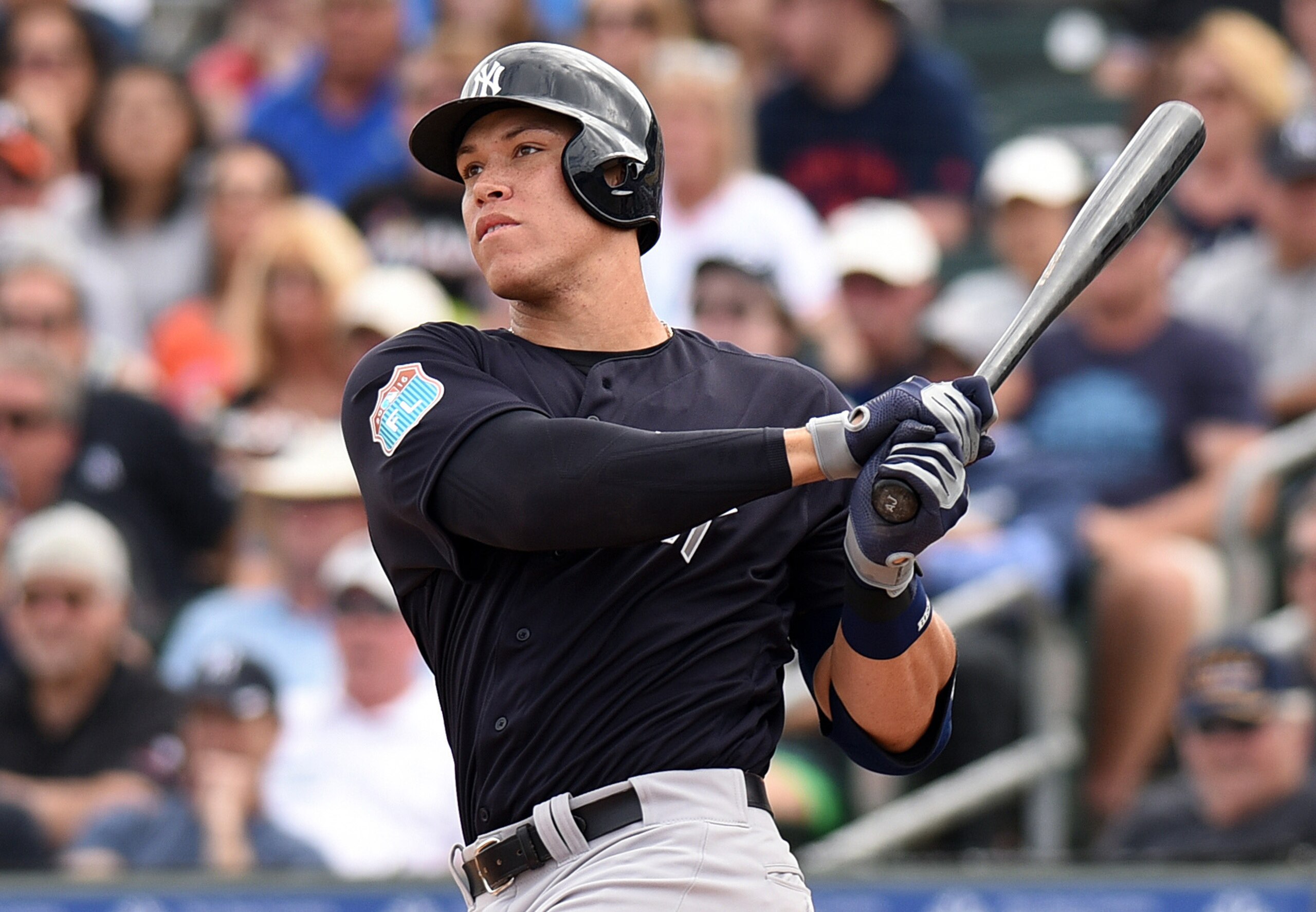
MLB Comparison: Giancarlo Stanton
One was recruited in high school to play wide receiver or cornerback; the other, wide receiver or defensive end. But both Giancarlo Stanton and Aaron Judge decided that the diamond, not the gridiron, was where they wanted to flash their athletic talents.
Imposing physical specimens, the 6'6", 245-pound Stanton and 6'7", 275-pound Judge both move better than you'd expect for men their size, with strong, accurate throwing arms that baserunners would be wise not to test.
Oh, and there's the power. "I mean…if you could grade something off the scale, Aaron Judge has 9 raw power," remarked CJ Wittmann, then of Baseball Prospectus, on a June 2015 podcast. He's not alone in that assessment.
"He (Judge) has 70 raw power that hasn't shown up in games because his swing is relatively short and he hits more line drives than big flies," wrote ESPN.com's Keith Law while naming the 23-year-old the game's 36th best prospect heading into 2016. "He has 30-homer power and should make enough hard contact to keep his average up even if he still punches out 150 times a year."
That sounds a whole lot like Stanton, a career .270 hitter who has averaged 30 home runs and 140 strikeouts per year over his first six major league seasons, doesn't it?
Steven Matz, SP, New York Mets
6 of 10
MLB Comparison: Madison Bumgarner
When a three-time Cy Young Award winner and Hall of Famer compares a prospect to one of the game's premier aces, well, maybe there's something to it.
"My big 'donkey' for the Mets it's Steve Matz," began a September tweet from Pedro Martinez. "He has the tools and the presence to become a Madison Bumgarner type of guy." Five months later, Frank Viola picked up where Pedro left off.
“He's definitely a kid who wants the ball in the big game," Viola told John Harper of the New York Daily News. "I'm not saying he's going to be Bumgarner, but I will say that if you give him the chance in those types of situations, he's going to shine."
Sure, there are some similarities when it comes to their stuff. They're both lefties, and per Brooks Baseball, both are adept at inducing ground balls with their changeups, a pitch they both keep in the low-to-mid 80s.
But as Martinez and Viola both note, it's their makeup—that need to have the ball with the game on the line— that makes Matz so much like Bumgarner...and Matt Harvey...and Clayton Kershaw.
It's a trait all aces share.
Corey Seager, SS, Los Angeles Dodgers
7 of 10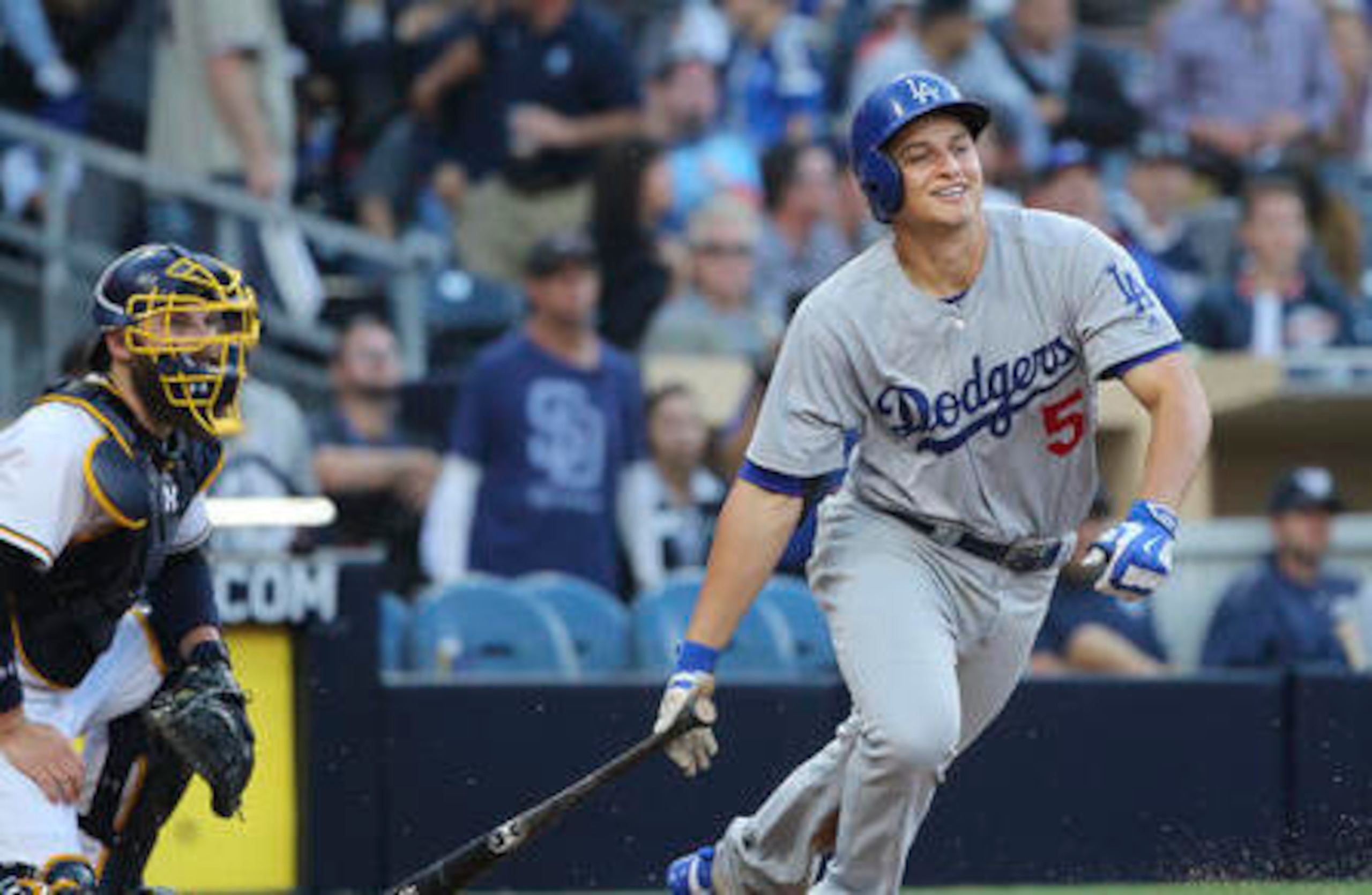
MLB Comparison: Troy Tulowitzki
Aside from having strong throwing arms and good hands, there's no real comparison to be made defensively between Corey Seager and Troy Tulowitzki. Seager lacks the lateral speed and agility to stick at shortstop, and the 6'4", 215-pound 21-year-old is going to outgrow the position anyway.
But whether he's playing shortstop or third base (his likely destination) is irrelevant. Offensively, Seager is very much Tulowitzki 2.0.
Both have long swings that can look out of control at times, but thanks to their elite bat speed, they're able to drive the ball with conviction. Among shortstops who made at least 100 plate appearances in 2015, nobody made more consistent hard contact than the two of them.
That bat speed helps them both generate plus power.
While Tulo had an advantage by playing half his games at Coors Field for nearly a decade and may ultimately wind up with more home runs, Seager's developing power could deliver a handful of seasons in which he goes deep more than 30 times while producing runs at an elite level.
Blake Snell, LHP, Tampa Bay Rays
8 of 10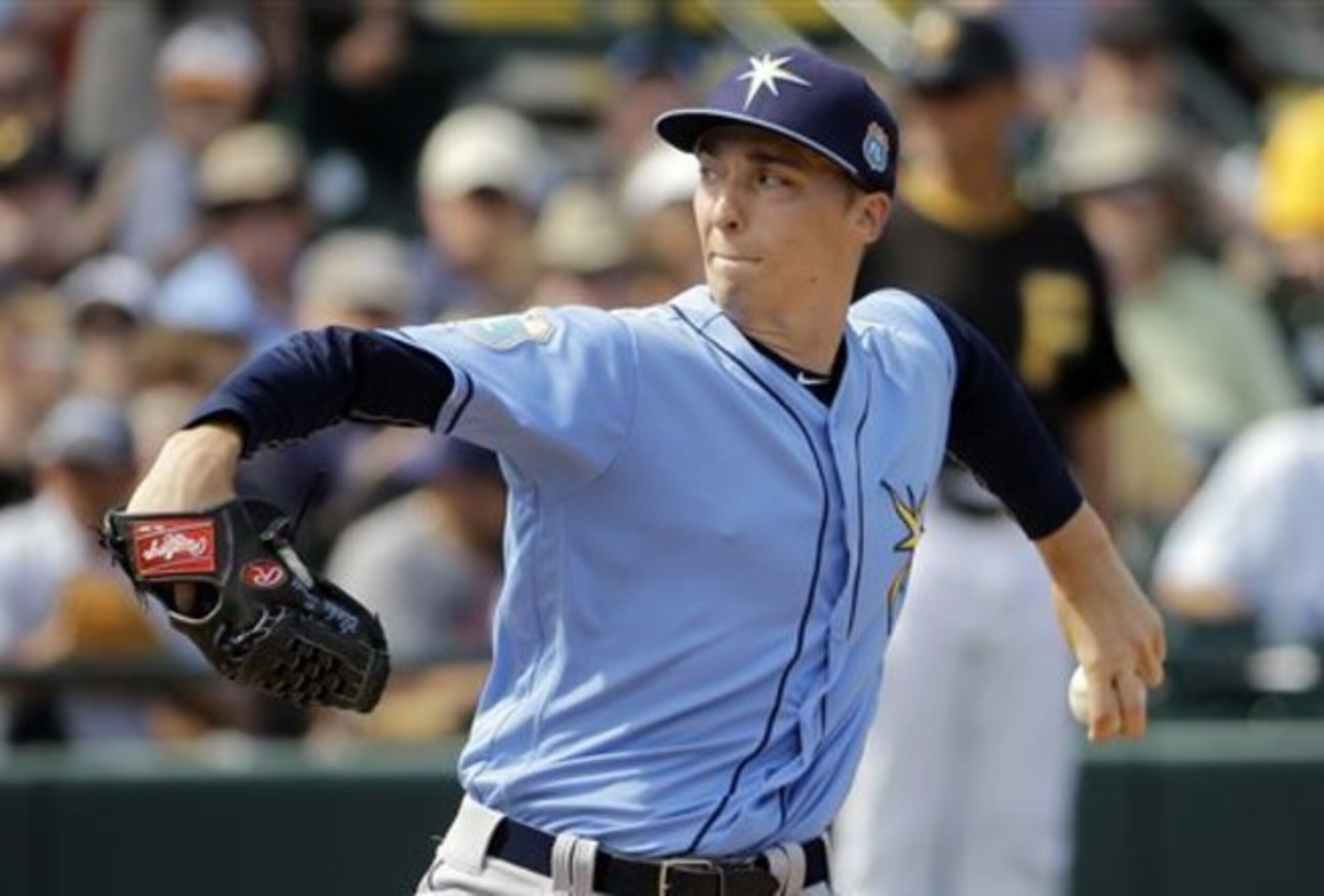
MLB Comparison: CC Sabathia
We're talking about CC Sabathia in his prime, not the current shell of a pitcher whose hold on a spot in a mediocre New York Yankees rotation is tenuous at best. And sure, Sabathia has two inches and more than 100 pounds on 6'4", 180-pound Blake Snell.
But Tampa Bay's top prospect has similar stuff to an in-his-prime Sabathia.
His fastball may have more late life than Sabathia's did, but both sat in the low-to-mid 90s with the heater, with the ability to reach back and add a little extra on occasion. Sabathia effectively used his heat to set up his best strikeout pitches, a mid-80s changeup and low-80s slider, the latter perhaps his best offering.
While both pitches are still works in progress, Snell's off-speed and breaking pitches both project as plus offerings. He throws his slider with the same arm action as his fastball before it drops out of the zone, making it difficult for batters to differentiate between the two.
Having never thrown more than 134 innings in a season, Snell has a ways to go before becoming the kind of innings-eating workhorse that Sabathia used to be. But as he continues to build up his arm strength and stamina, it's not hard to envision him filling such a role atop Tampa Bay's rotation.
Trea Turner, SS, Washington Nationals
9 of 10
MLB Comparison: Dee Gordon
Trea Turner has the arm strength, hands and range to stick at shortstop, something that can't be said about Dee Gordon, who was a below-average defender until last season, when he found his defensive chops at the keystone in Miami.
Both are aggressive at the plate and have more swing-and-miss in their games than you'd like or expect from contact-oriented hitters, and neither offers much in the way of home run power. But Turner has Gordon's game-changing speed and makes enough contact to hit for a high average, like Gordon.
But it's speed that really links the two. A ball hit down the line or into the outfield gaps by either one is going to find him standing on second or third base, and 50-plus steals a year isn't out of the question for Turner, who has all the tools to become a dynamic, top-of-the-order bat in Washington.
Julio Urias, SP, Los Angeles Dodgers
10 of 10
MLB Comparison: Clayton Kershaw
The thought of facing Clayton Kershaw in a game is enough to keep opposing batters awake at night, sweating profusely as they try to figure out how they're going to avoid being embarrassed by the game's premier ace.
Merely watching Julio Urias pitch was enough to get former Los Angeles Dodgers farm director De Jon Watson to perspire.
"When I went to watch him pitch in the Midwest League, my hands started sweating," Watson told MLB.com's Jim Callis in 2014. "We had Clayton Kershaw in the Midwest League during my first year with the Dodgers, and my hands didn't sweat with him. I've never seen a kid this talented, this young. It's crazy."
Urias, 19, has three plus offerings, including a Kershaw-esque, knee-buckling curveball that makes batters look downright foolish when they try to make contact. Like Kershaw, Urias' baseball IQ is nearly as impressive as his arsenal of pitches.
"Ask somebody with the Dodgers about Urias," wrote MLB.com's Jesse Sanchez, "and the first thing mentioned is his arm. The second? His intelligence. Then they talk about his arm and bright future again."
Perhaps the most impressive thing about Urias is how utterly dominant he is at his age. Like Kershaw, he figures to arrive in the majors before his 21st birthday, years ahead of his prime. He's only going to get better. That's terrible news for the rest of baseball.
Unless otherwise noted, all statistics courtesy of Baseball-Reference.com and FanGraphs.
Hit me up on Twitter to talk all things baseball: @RickWeinerBR.


.jpg?w=2560 "Latest Peyton-Colts Rumors")


.jpg?w=2560 "Landing Spots for Trade Candidates 📍")
.jpg?w=2560 "Ugly Jets Scoring Stat 😳")