
NFL Draft 2016: Debunking Myths About This Year's Draft
As the entirety of football fans turn to the draft in late April, preconceived notions and draft-process storylines begin to add fuel to the fire on a handful of narratives. While some prove to be indicative of what NFL teams feel on draft day or are backed up by film, more than a few grow into draft myths that lead to unrealistic expectations or incorrect perceptions of prospects.
These five myths stem from the general and persistent discussion on their respective topics. While some are due to the overarching media push to raise up top prospects before pushing them back down, others arise from optimistic or pessimistic draft expectations.
From irrational quarterback praise to unfair pass-rusher distrust to running back class discussion, here are five draft myths that are in need of debunking.
1. Jared Goff and Carson Wentz Are in Winston, Mariota’s Class
1 of 5
Last year at this point, Marcus Mariota and Jameis Winston began to emerge as not only the clear top two quarterbacks, but also the likely top two prospects in the entire draft. Both offered NFL-ready talent with top-flight upside to grow into two of the NFL’s best passers.
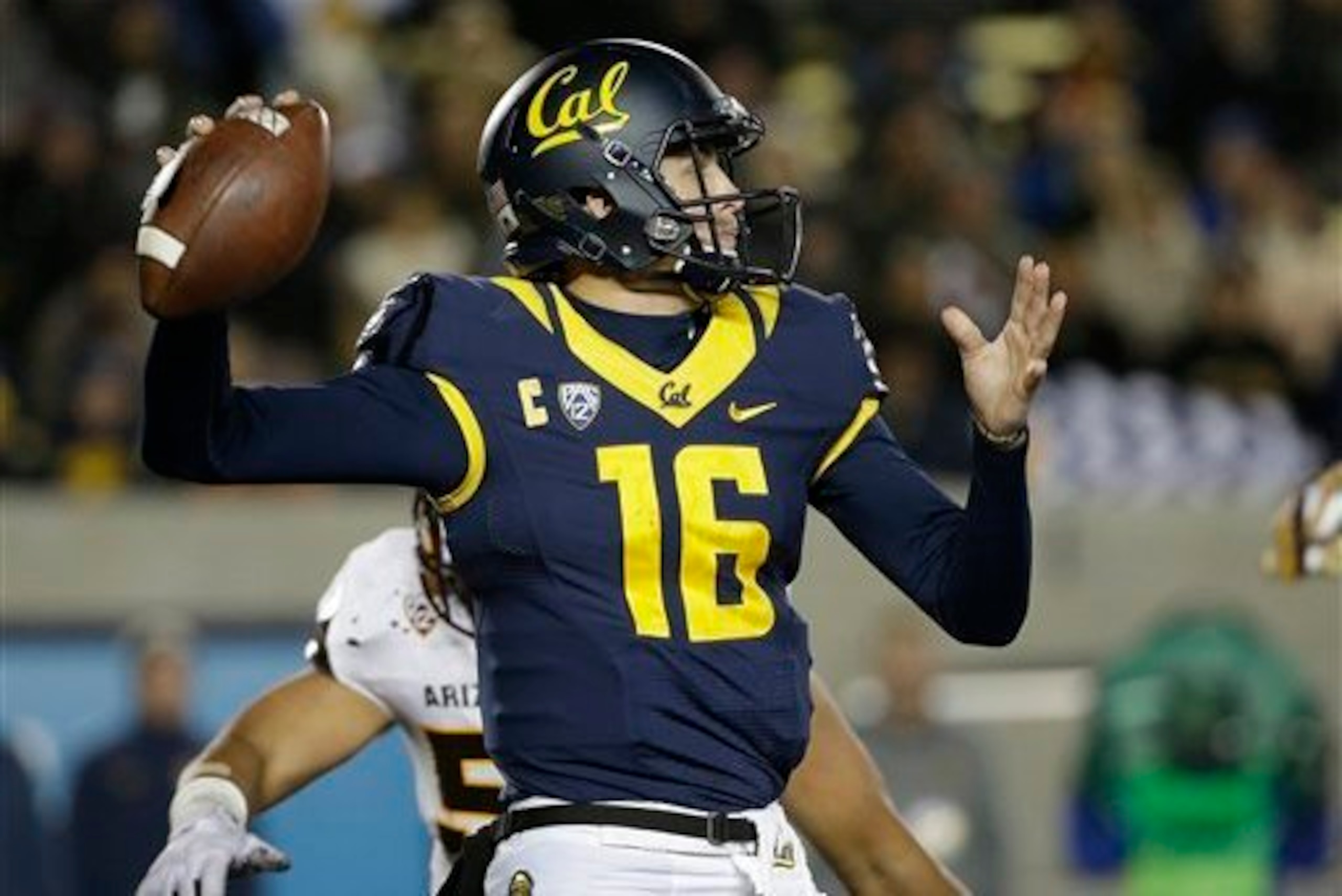
A year later, it seems those in the media and potentially in the NFL want to anoint Jared Goff and Carson Wentz in the same fashion.
Unfortunately for the Cleveland Browns and any teams considering moving up to the top five for a quarterback, neither of these two are in Winston or Mariota’s class. Winston offered elite anticipation from a pro-style Florida State Seminoles offense, while Mariota’s composure, ball placement and athletic upside made his transition smooth.
Goff comes from an Air Raid offense disciple that isn’t conducive to NFL progression development, and his slight frame, small hands and limited arm strength should give pause to teams early in Round 1.
As for Wentz, his FCS-to-NFL jump shouldn’t be unappreciated. Not only is the speed of the game and complexity of coverages going to require a substantial adjustment, but he’s also already shown some struggles with interior zone coverages and finishing with plus timing and anticipation.
Both Goff and Wentz could grow into highly capable NFL quarterbacks and potentially even start as rookies. But Winston and Mariota were two of the most special quarterbacks in recent draft history, and expectations should be tempered for Goff and Wentz’s early career development.
2. The 2016 Running Back Class Is Deep
2 of 5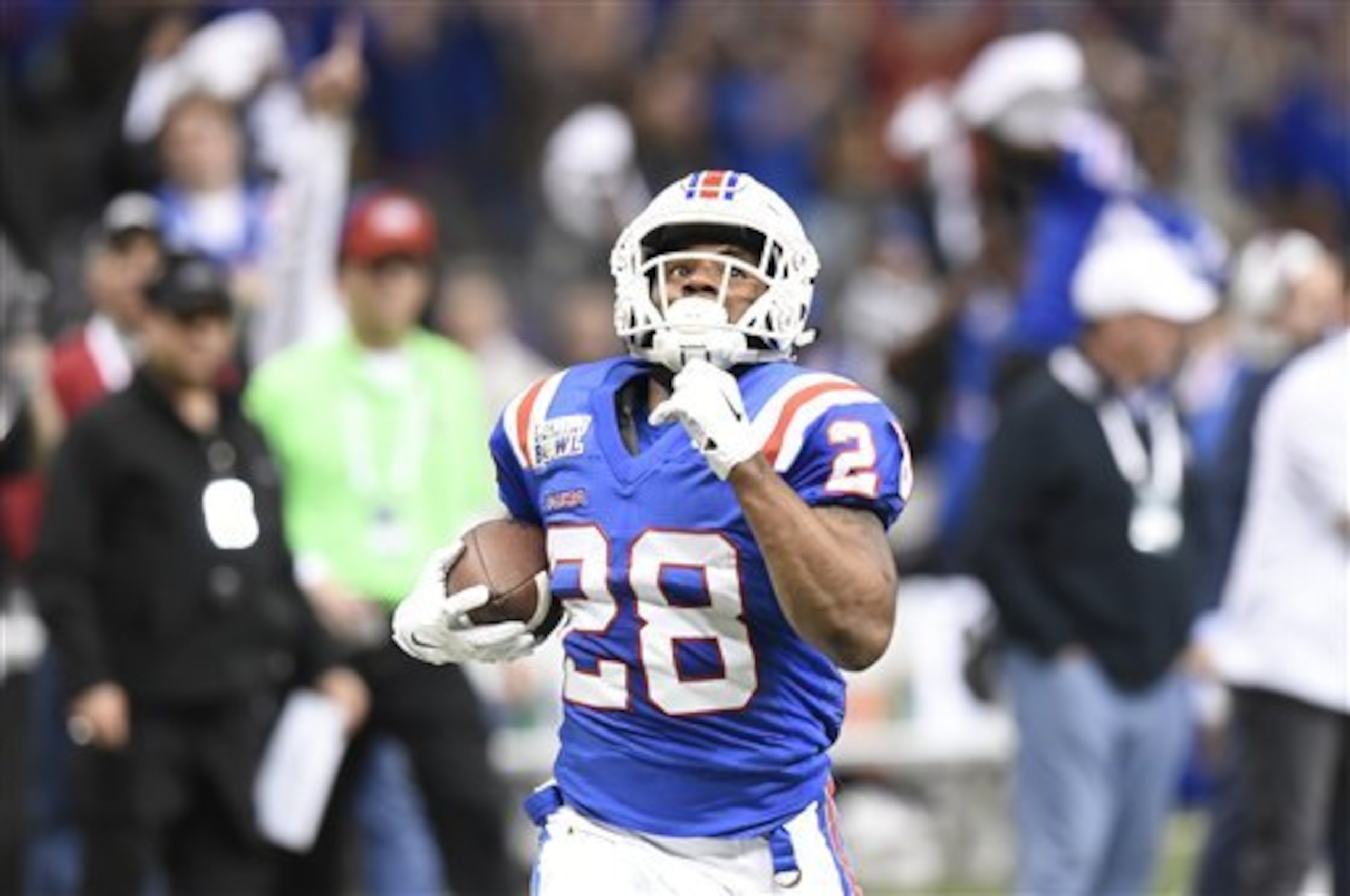
As we annually search for a draft class’s mid-round running back sleeper, undeserved attention grows for the running back class. The combination of the devaluation of running backs at the NFL level, fewer pro-ready running backs hailing from college offenses and the constant stream of underclassmen running backs entering year after year have stifled the 2016 draft class, despite CBS Sports giving 10 running backs third-round grades or higher.
This year's class offers three near-consensus top running back prospects: Ezekiel Elliott of Ohio State, Derrick Henry of Alabama and Kenneth Dixon of Louisiana Tech. After those three, all of which should be taken somewhere in the top 50 picks, it’s difficult to find a running back to trust as a potential every-down back.
Alex Collins of Arkansas is a favorite of mine, but he requires strong offensive line play to thrive thanks to his buildup speed. Paul Perkins of UCLA is remarkably shifty, but he may be limited to a change-of-pace role rather than being a steady contributor. C.J. Prosise of Notre Dame is still adjusting to the position after converting from receiver. Also, Devontae Booker of Utah and Jonathan Williams of Arkansas have their fair share of injury question marks.
In total, teams can’t trust this running back class to produce a lot of quality NFL running backs. It’s a tough time for running backs to stick in the NFL thanks to the depth at the position across the league, so it wouldn’t surprise if only five or six are in the league after three years.
3. Joey Bosa and DeForest Buckner Aren’t Good Pass-Rushers
3 of 5
As the draft nears, top prospects Joey Bosa and DeForest Buckner have begun to be torn down as prospects. Playing defensive line spots in a passing league, their perceived lack of pass-rush ability has forced them down draft boards in the eyes of fans and media, most notably when Bleacher Report's Jason Cole reported that many teams feel Joey Bosa can't be an elite pass-rusher.
Neither Bosa nor Buckner produced top-flight pass-rushing statistics in their college careers. Bosa finished 2015 with just five sacks, certainly not a testament to his edge-rushing upside. Buckner finished with 10.5 sacks in 2015, but his on-film inconsistent punch and finishing ability has put his next-level pass-rushing upside in question.
For Bosa, while his primary value is as an edge-setting run defender, his pass-rush talent stems from capitalizing on one-on-one opportunities. When he’s allowed to work in isolation on the perimeter—which, at Ohio State, generally had to be designed by pre-snap alignment from the coaching staff—he’s able to use his tremendous lower-half power and strong hands to work through blockers.
Similarly for Buckner, just because he wasn’t asked to rush the passer based on alignment or play design doesn’t mean he won’t be able to in the NFL. Like Bosa, Buckner’s role was to hold down the C- and/or B-gaps in the run game and, no matter what, absorb blockers to allow linebackers to rush or run defend with added ease.
Both Bosa and Buckner may be asked to be more reliable edge-setters and pseudo setup defenders at the next level. Neither will likely be among the leaders in sacks throughout their careers, but it’s the threat they carry as one-on-one pass-rush dominators that should demand respect early and throughout their NFL careers.

.jpg?w=2560 "Cowboys Texans Football")
4. Running Backs Shouldn’t Go in the Top 10
4 of 5
The persistent discussion about the devaluation of running backs has begun to become a near consensus, almost irrelevant of the running back talent itself. Its true: NFL teams have grown averse to consistently spending high draft picks on the position. The 2005 NFL draft likely works as the breaking point, as Ronnie Brown, Cedric Benson and Cadillac Williams all went in the top five, and all three failed to deliver on their draft position.
But that doesn’t make it a steadfast rule forever. Just last year, we saw Todd Gurley go 10th overall to the St. Louis Rams, only to be one of the steals of the 2015 draft class. Gurley nearly won NFL Rookie of the Year honors after starting the season on the injured list.
This year’s top-10 running back prospect, Ezekiel Elliott, can potentially benefit from Gurley’s success. While he’s not on the same talent level as an ideally built, freak athlete Gurley was, he does offer similar immediate NFL impact and top-end acceleration when he plants. The running skill set is there to quickly become one of the most explosive and balanced running backs in the NFL.
But the biggest strength Elliott can offer to an NFL team is his ability to contribute in the three other areas a running back would ever have to. He has unusual experience as a run-blocker, offers remarkably balanced and technically developed pass-blocking ability and is a smooth pass-catcher with run-after-catch upside.
It’s that pro-readiness that vaults Elliott from a strong running back prospect into one worthy of a top-10 pick. The 2016 class’s best offensive skill position prospect by a strong margin, the Cowboys, Ravens, 49ers and Giants should (and likely will) consider the special running back in the draft’s top 10 overall picks.
5. Robert Nkemdiche Is Too Talented to Fall out of the First Round
5 of 5
In the NFL draft, talent can trump a lack of production, inconsistency or even character concerns. In Robert Nkemdiche's case, his immediate athletic upside needs to overcome all three concerns on his scouting report.
Arriving at Ole Miss with ample fanfare after being touted as one of the best high school prospects in recent history, Nkemdiche never was able to provide a constant stream of pressures, sacks or tackles during his tenure at the school. His inconsistent pass-rush development and desire inhibited his ability to produce, and he disappeared in more than handful of games during his college career.
To make matters worse, he hasn't been able to stay quiet off the field. Between his hotel room fall incident or concerns about his brother's impact on his NFL future, it's easy to see why teams could find Nkemdiche difficult to trust.
That all said, some believe Nkemdiche may still find a home in Round 1. For one, his inconsistency on film likely hasn't garnered much support from scouts and general managers. Two, his size and play style indicates he's more of a tweener than set at any NFL position, thereby frustrating NFL defensive coaches. And finally, his character issues and lack of development may end up being the final straw for team personnel, especially defensive line coaches, whose jobs would be on the line to develop him should he land on their roster.
The talent level is there, and after Dorial Green-Beckham was drafted atop Round 2 despite his massive off-field concerns, Nkemdiche's early draft pick has some precedence. But it would be a major shock if he still landed in the first round, and it seems far more likely he's a third- or fourth-round pick.
.jpg?w=2560 "Browns Jaguars Football")