

Maria Sharapova's Failed Drug Test Spin Won't Help Save Tarnished Image
Maria Sharapova admitted she's been using a performance-enhancing drug for the past 10 years. Yet her fans and many in the tennis community believe this will have no lasting impact on her career.
They're wrong. Regardless of whether you buy her explanation for why she failed a drug test, there are too many questions surrounding her long-time use of this now-banned PED.
Today, Sharapova announced that she failed a drug test for the use of meldonium, a substance that was added to the World Anti-Doping Agency's banned list earlier this year.
TOP NEWS

Broadcaster sorry for false LeBron rumor

Stephen A. Apologizes After Lane Johnson Comments
Ravens Trade for Eagles Pro Bowl OL 🚨
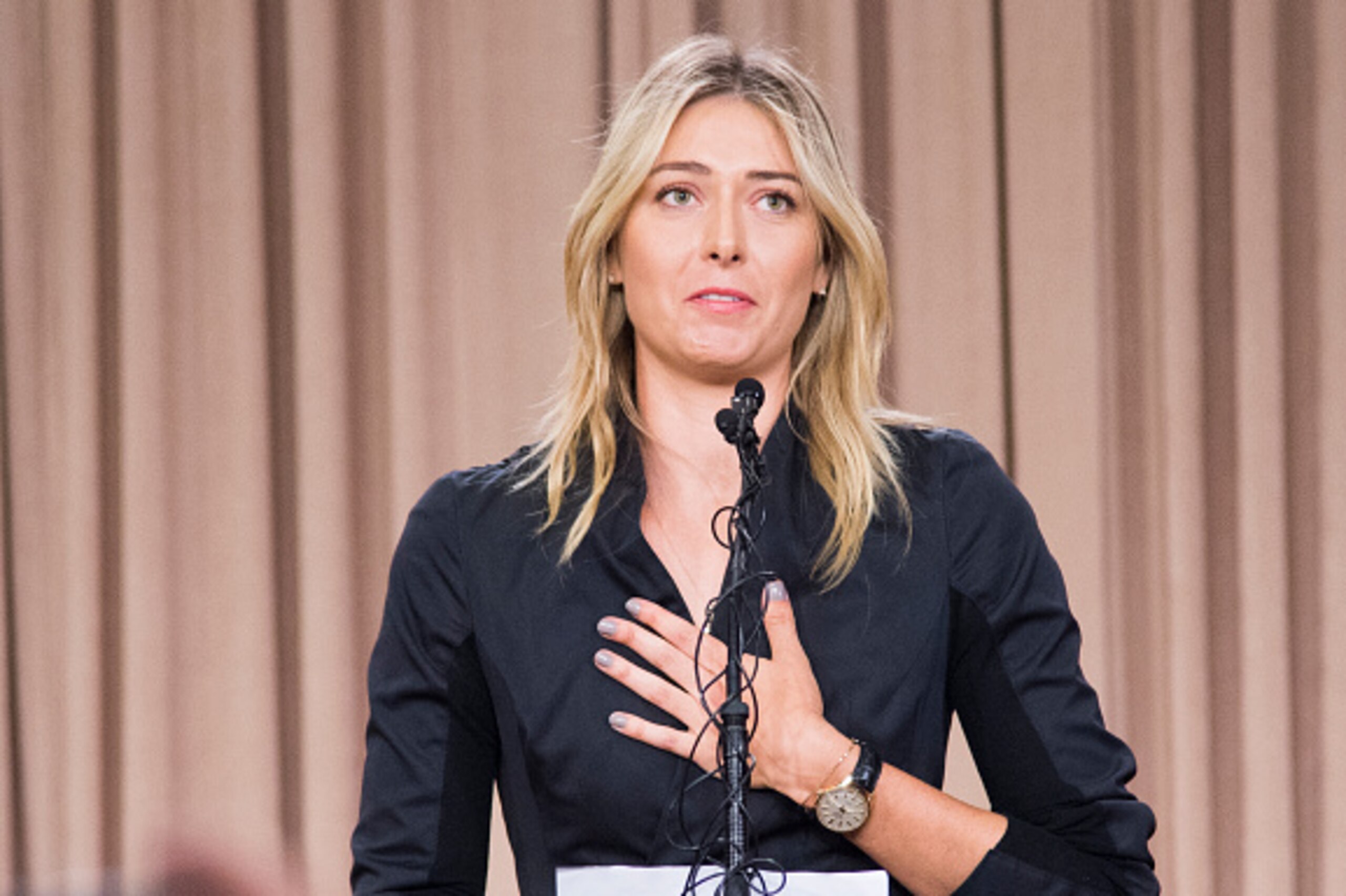
During the press conference, streamed live via MariaSharapova.com, she told a room full of reporters that she took "full responsibility" for the failed test.
"It's very important for you to understand for 10 years this medicine was not on WADA's banned list and I had been legally taking the medicine for the past 10 years. But on January 1, the rules had changed and meldonium became a prohibited substance, which I had not known."
Defenders and sympathizers took to Twitter immediately.
Martina Navratilova and Ryan Harrison called it an "honest mistake." James Blake tweeted how "classy" Sharapova was in her handling of the press conference.
Hold up. Wait a minute. In this post-Lance Armstrong era, people are still willing to give a top athlete the benefit of the doubt?
A Russian athlete?
Russian athletes flunking drug tests is nothing new. The entire Russian track and field team has been suspended from international competition and could be banned from the 2016 Olympics if it doesn't clean up its act.
If Sharapova were a Russian sprinter instead of a media darling and marketing icon, would people be so quick to accept her explanation? Especially considering the surrounding circumstances?
Sharapova claimed she began taking the drug under the care of a family doctor to treat a magnesium deficiency and other health problems, including a family history of diabetes.
Keep in mind, this drug is not approved by the FDA. Although Russian, Sharapova has lived in the U.S. since she was a child. Surely there are FDA-approved medicines that treat magnesium deficiency? Is her family doctor based outside of the U.S.?
Sharapova chalked it up to an oversight. She said she ignored a link to a list of newly banned substances in an email sent to athletes.
Hey, she had been taking this stuff for years, she claimed. Why worry?
Although the drug wasn't placed on the banned substance list until this year, it's been under scrutiny for some time. In fact, on Jan. 1, 2015, WADA placed it on a short list of substances being monitored for abuse by athletes. The U.S. Anti-Doping Agency (USADA) alerted athletes by releasing the list early last year.
The comprehensive list of all banned substances is in alphabetical order. So unless a player is ingesting hundreds of medications, it's pretty simple to check to see if what they are putting in their body is on that list.
It's also easy to see if what you're taking is being monitored. According to the Australian Anti-Doping Agency, WADA's monitoring program tracks substances which are suspected of being misused by athletes. It should have been a red alert to Sharapova that this drug was under scrutiny as a PED.
About 2 percent of tested athletes had meldonium in their systems, according to tennis television analyst Pam Shriver in an interview that aired on ESPN's SportsCenter. Shriver said that high number raised red flags.
On the USADA site, there is a searchable database of banned substances. Athletes are also asked to contact anti-doping agencies about "therapeutic use" of banned substances. Sharapova never informed WADA about treatment for these conditions she named, despite the drug making the monitoring list a year ago.
As WTA Tour president Steven Simon said, per BBC.com, "As Maria acknowledged, it is every player's responsibility to know what they put in their body and to know if it is permissible."
Indeed, this falls on Sharapova. A player who can arrange a mega press conference within 24 hours somehow let all this meldonium stuff just slip by?
One of sports' most business- and media-savvy players and her many handlers just missed this?
Sharapova rarely leaves things to chance. Even the link to the pending press conference had her logo and background music.

She received word that she failed the test on March 2. Somehow she got time to plan this press conference and put her spin on it before it leaked to the press.
"Obviously her team took it all into account and figured she needed to be the one to make this announcement publicly," Shriver said.
Since the announcement, the ITF released a statement that said Sharapova would be suspended effective March 12, pending an investigation.
A five-time Grand Slam champion and future Hall of Famer, Sharapova could face as much as a four-year ban. If that happens, this could mark the close of her career.
"I don't want to end my career this way," she said. "And I really hope that I will be given another chance to play this game."
Before her announcement, her legacy was already complicated. She has 35 career titles and is second on the all-time prize money list. She's been one of the most consistent winners on the WTA Tour over the past 13 years.
However, her fame and fortune have eclipsed her on-court accomplishments. Now her legacy and record-setting endorsement haul are threatened by what could leave a lasting stain on her career.
She's worked hard to build her prestigious brand. Porsche and Tag Heuer are among a few companies that chose Sharapova to pitch their luxury goods.
Ever since she burst onto the scene at age 17 when she upset Serena Williams at Wimbledon in 2004, she's promoted the posh.
Now Sharapova's fighting a label that ruined the reputations of Cy Young winners, home run leaders and Tour de France champions: cheat.
Tennis Hall of Famer and three-time Grand Slam champion Jennifer Capriati went on a Twitter rant about what she perceived as Sharapova's unfair advantage.
"i didn't have the high priced team of drs that found a way for me to cheat and get around the system and wait for science to catch up
— Jennifer Capriati (@JenCapriati) March 7, 2016"
"Im extremely angry and disappointed. I had to lose my career and never opted to cheat no matter what.i had to throw in the towel and suffer
— Jennifer Capriati (@JenCapriati) March 7, 2016"
People will watch to see how the ITF treats Sharapova. There are already questions as to why she was allowed to stage her own press conference ahead of the news.
One fan asked Blake (via Twitter) why we learned of the failed test via scheduled press conference instead of through the ITF or WTA? Blake responded, "Good question."
In the days, weeks and months to come, there will be answers to that question and some that have yet to be asked. Sharapova won't be able to spin herself out of this one. That fact that the questions are being asked already taints her once ultra-polished image.
Part of her brand is that she's a fighter, someone who is focused and mentally tough. She earned that reputation by battling back to win matches. Now, Shriver believes even Sharapova's hallmark comebacks will come into question.
An April 2015 article in Drug Testing and Analysis states that meldonium "demonstrates an increase in endurance performance of athletes, improved rehabilitation after exercise, protection against stress, and enhanced activations of central nervous system (CNS) functions."
Enhanced stamina, focus and nerve are qualities often assigned to Sharapova.
Whether you chose to view Sharapova's actions as an honest mistake or a calculated attempt to beat the system, one thing is clear: The damage has been done.
.jpg?w=2560 "Cowboys Texans Football")
.jpg?w=2560 "Browns Jaguars Football")




.jpg?w=2560 "NFL Won't Fine 'Beverage' Celebrations 🍻")