Champions League Tactical Talking Points: Pep Guardiola Error Shapes Comeback
The UEFA Champions League knockout stages have commenced and, as usual, the tournament has served up a number of exciting talking points.
Be it Arsenal’s capitulation against Barcelona, Real Madrid’s taking apart of AS Roma or Benfica’s dreary performance against a blunted Zenit St. Petersburg side, chins have been set wagging over what it all means, who has impressed the most and who, quite frankly, hasn’t.
Here, B/R examines the two major tactical talking points to emerge from this week’s action, centring on Juventus’ unlikely comeback against Bayern Munich and Atletico Madrid’s bluntness in the final third.
TOP NEWS

New NFL contenders starting to emerge after Week 4

Deion Playbook Found at Hotel
.jpg?w=2560 "Cardinals Giants Football")
NFL investigating 2 referees for separate viral exchanges
Juventus strike back...but only because Bayern Munich let them
Juventus’ remarkable two-goal recovery against Bayern Munich on Tuesday will rightly be lauded. It will be seen as a platform for a momentum swing, and it rejuvenates the Old Lady’s chances of progressing to the quarter-finals—even if the percentage chance of them beating Bayern in Munich remains slim.
There are two strands to the story as to why the comeback was allowed to happen: First, Pep Guardiola made a horrible tactical mistake at 2-0, then Massimiliano Allegri capitalised on it in true predatory fashion.

Bayern’s formation is always fluid, but they played out of a discernible 4-2-3-1 base to begin with in Turin. They dominated play, racking up possession figures in the 77 percent region at times, and spurned two glorious chances before finally taking the lead via Thomas Muller.
Juventus’ exceptionally deep, flattened 4-4-2 featured Juan Cuadrado and Paul Pogba playing virtually as second full-backs, tracking all the way back to help with the dynamism of Arjen Robben and Douglas Costa. It was an overtly defensive approach built to contain and scrape clear, but something had to change once Bayern took the lead.
Robben’s cut-in-and-shoot goal—where have we seen that before?—made it two, and it was a strike that, in real time, signalled the definitive end of Juve’s chances in the tie. But then Guardiola changed formation and exposed an area of the pitch not previously open to the hosts, paving the way for a dramatic comeback.
Bayern moved from a back four to a back three that included no centre-backs. Arturo Vidal dropped in alongside David Alaba and Joshua Kimmich, while Philipp Lahm moved into holding midfield. Muller was, nominally, the right midfielder/wing-back in his place.
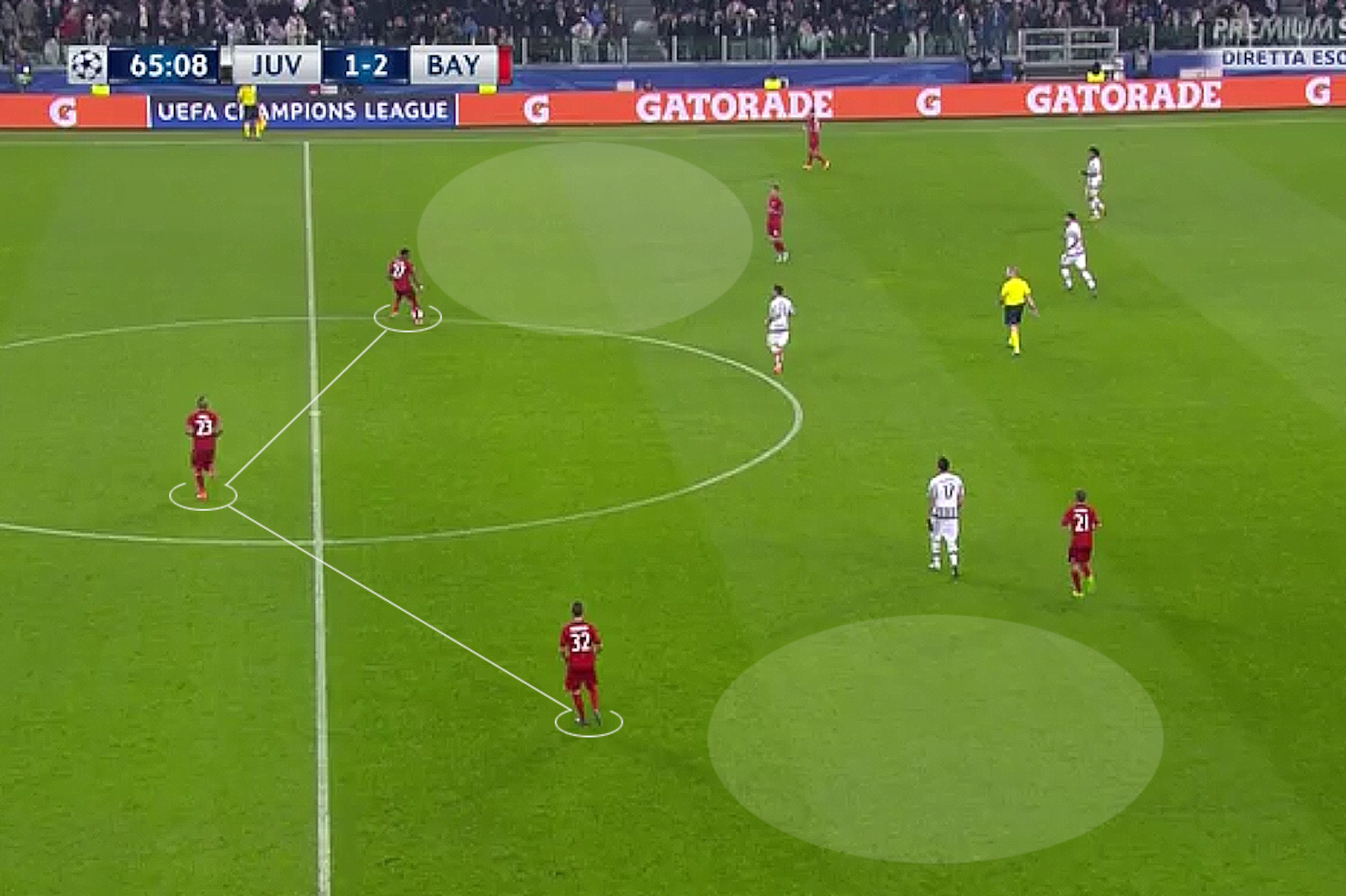
The higgledy-piggledy nature of the line wasn’t an issue—the original back four was comprised of a CB and an LB in the centre—but the spaces opened up due to the switch were. The channels were suddenly wide open, with Kimmich (RCB) in particular exposed by a lack of protection ahead.
Mario Mandzukic began barrelling in his direction and, thanks to a misplaced Kimmich pass, set up Paulo Dybala’s strike to make it 2-1. Sensing blood, Allegri made the astute move of sending Alvaro Morata on—a player whose biggest strength is channel-running—and his run and cross set up the second, which Stefano Sturaro converted.
Make no mistake: Bayern are still heavy favourites to progress, but Guardiola’s unnecessary tactical tweak in the second half allowed Juve to draw level, and now, a slip-up on home turf would see them knocked out, unthinkably, at the round-of-16 stage.
The reason for Atletico Madrid’s attacking struggles
Atletico Madrid’s 0-0 draw with PSV Eindhoven on Wednesday was one for the purists; across 90 yawn-inducing minutes, it cobbled together three real chances on goal and a lot of flat, unambitious possession.
For PSV, this is fine: They’re not expected to beat Atleti over two legs and, in light of the fact they saw Gaston Pereiro sent off in the second half, a clean-sheet draw is a damn good result. For the visitors, though, this was another questionable attacking performance—the latest in a sequence of underwhelming showings.
When searching for answers as to why Los Colchoneros’ goals and attacking vigour have dried up, it’s easy to point the finger at Antoine Griezmann. It’s been close to a month since he scored, and the other parts to his game—the dynamic running, the link play, the positional astuteness—have been found worryingly lacking, too.
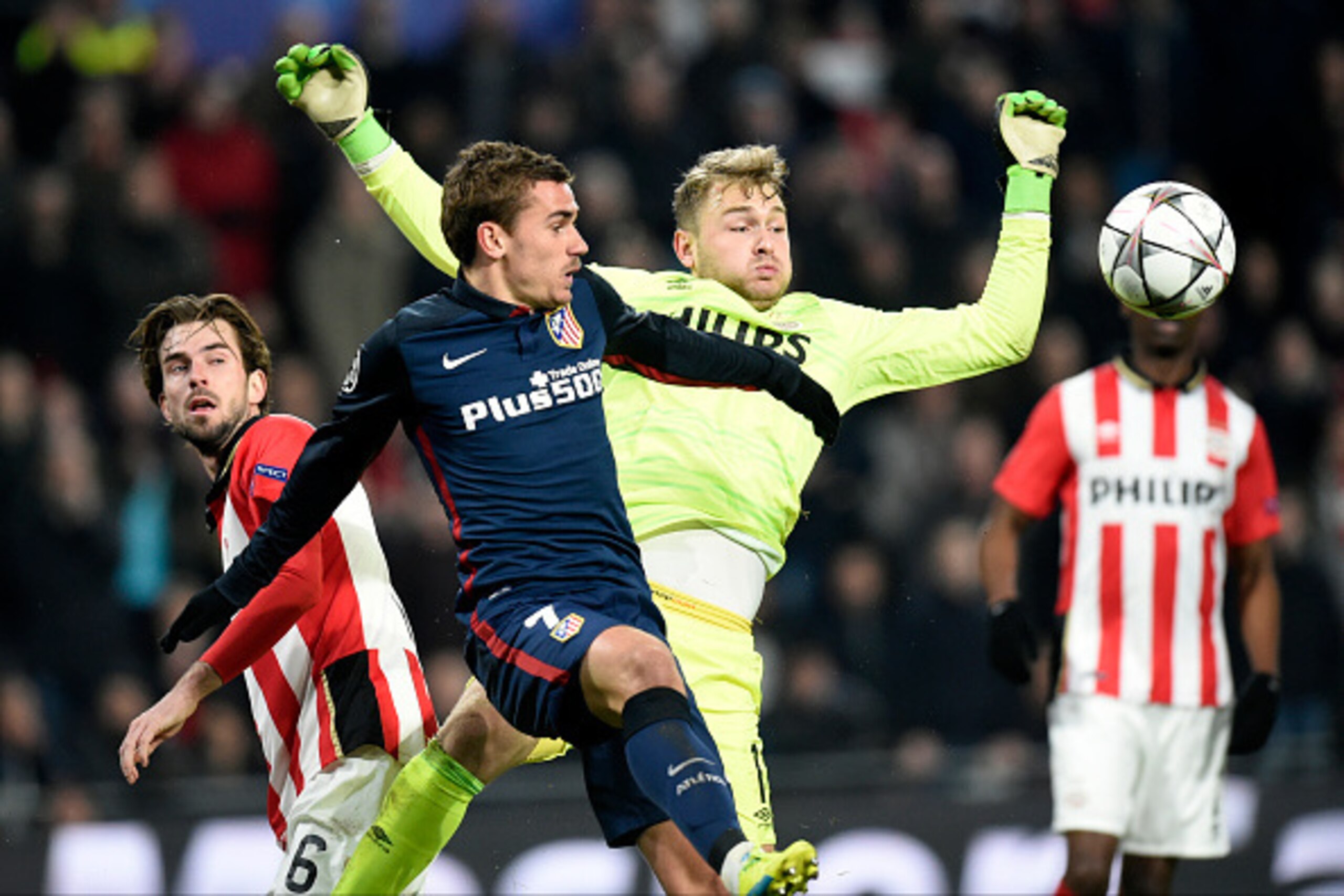
Griezmann missed a big one-on-one chance in the first half after Koke sent him through on goal, seeing his effort saved by the excellent Jeroen Zoet. Aside from that, he did very little, hardly threatened to score and failed to find space in which to play.
But it’s not just Griezmann; he isn’t the sole reason for Atleti’s offensive struggles. They’ve hardly been stellar all season—everyone knows their success is primarily founded on defensive solidity, not attacking prowess—but lately they’ve looked downright anaemic at times. Why?
The lack of movement deeper on the pitch, the lack of midfielders penetrating and breaking between the lines, is arguably the chief reason why. Ever since Yannick Carrasco—Atleti’s best ball-carrier this season—was stretchered off injured earlier this month, they’ve found carving out chances tough going.

Koke played a few nice passes at the Philips Stadion on Wednesday, but from an attacking perspective he was absent, as was Saul Niguez—a player who very much can shuttle forward and impact in the final third. Juanfran emerged as the only player who was able to work space to run into, pushing forward from right-back, but all of his crosses were well blocked by the excellent Jeffrey Bruma.
Griezmann has been off colour, but there’s no dynamism in this Atleti side right now; they’re playing flatter, safer and less vertically than in a long time, and without Carrasco—the only one willing to break in between the lines and drag the team forward—they can’t make ground.
Quick hits
- Vincent Kompany and Nicolas Otamendi bring the best from each other. Manchester City's defensive line looked far more resilient than usual in Kiev, with both players complementing each other and performing well—though the latter's iffy clearance did lead to the goal.
- Phillip Cocu must have been wishing he hadn't been so proactive on Wednesday night. He substituted Luciano Narsingh mere minutes before his striker Gaston Pereiro was sent off, leaving PSV direly needing the speed Narsingh would have provided on the break.
.jpg?w=2560 "Hill Injury Update Football")
.jpg?w=2560 "Titans Giants Football")

.jpg?w=2560 "Tyreek makes another cryptic post amid Chiefs rumors")