
2016 NFL Draft: Projecting the Best Quarterbacks Available
The 2016 NFL offseason is fully underway as the NFL Scouting Combine and free-agency period rapidly approach. All 32 teams should have their shopping lists ready to be filled with potential targets. Franchises looking to upgrade their quarterback depth charts will have a great opportunity to do so in the 2016 NFL draft.
While there is no Andrew Luck-type prospect available, that is a rarity anyway. And it doesn’t mean quarterbacks like Cam Newton, Jameis Winston, Marcus Mariota and other high-profile picks in recent years should have been docked for carrying more risk than Luck.
The same applies to the 2016 class. Admittedly, it not appear to be as impactful as the 2014 crop that injected Blake Bortles, Teddy Bridgewater and Derek Carr into the NFL. But this is a deep class that could produce several stars and numerous backups.
Drafting a developmental or backup signal-caller won’t sell many headlines right now, but at least a dozen franchises could use more talented backups or long-term projects to work on. Taking a flier on Day 3 of the NFL draft could end up changing the franchise with the right mixture of luck, patience and talent.
We’ve identified six standout quarterbacks in the class who have starter potential in the next three to four years. After the top crop, several players should be viewed as premium developmental options who could be high-impact talents. Then, we have a handful of backup-type quarterbacks who should compete for roster spots.
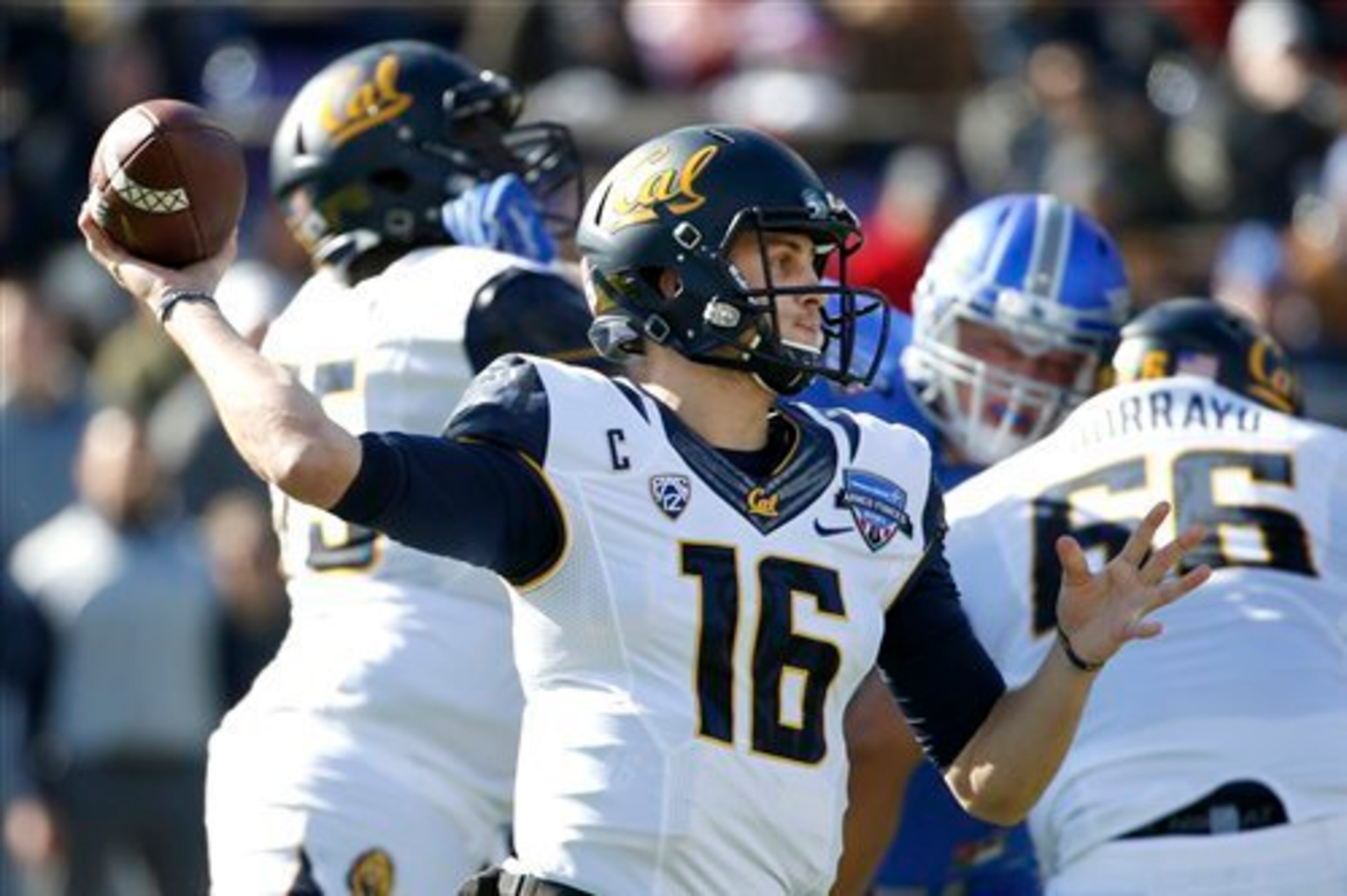
Future Star: Jared Goff, QB, California
1 of 8
Quarterback-needy teams at the top of the draft should focus on California’s Jared Goff first and foremost. The 6’4”, 215-pound gunslinger is the best quarterback prospect in this class, and it isn’t particularly close. He has every trait a franchise quarterback should have and can continue to improve.
Goff has a unique pocket presence that allowed him to operate behind a horrendous offensive line throughout his collegiate career. While some quarterbacks have to adjust to clogged passing lanes and constant pressure in the NFL, Goff may actually benefit from moving to the next level. His protection was that consistently bad.
Goff is accurate to all levels of the field. His 2015 completion percentage of 64.5 was significantly affected by an inordinate amount of drops. I counted 49 total. He was still able to produce 4,714 yards and 43 touchdowns to just 13 interceptions.
He has an average arm, but he compensates by showing pinpoint accuracy. Goff maximizes yards after the catch and protects his receivers from devastating hits. His pocket poise also complements his accuracy, as he stays calm even in the face of a chaotic pocket around him.
Goff is not the next Andrew Luck, as his slight frame will turn some teams off like Teddy Bridgewater’s did. But he is an excellent pocket passer who improved every year in college and showed advanced mental leaps. He has the ability to become a top-10 quarterback in the league and is deserving of a top-five selection.
Potential Star: Paxton Lynch, QB, Memphis
2 of 8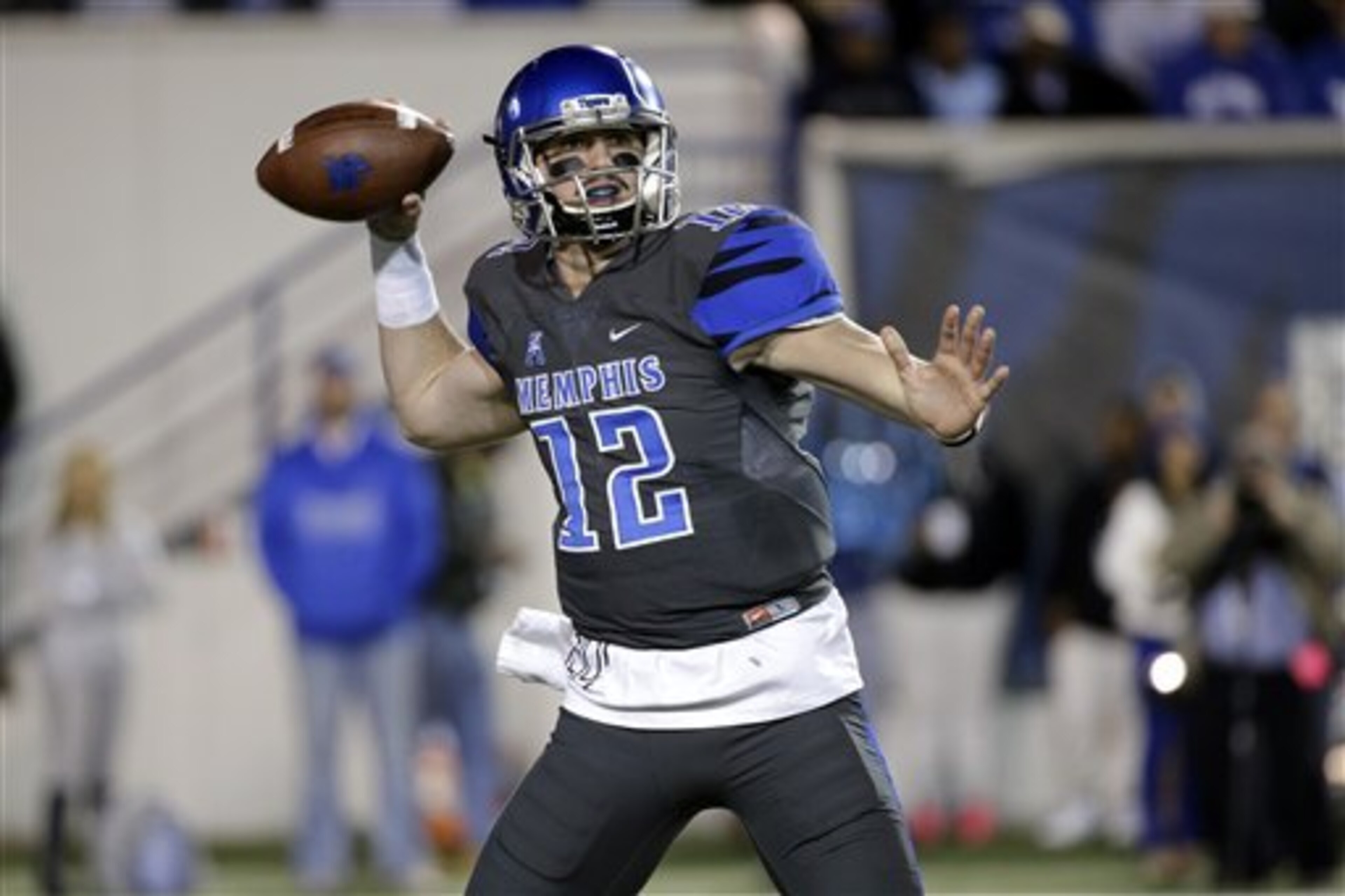
Memphis quarterback Paxton Lynch was a hot name during the 2015 college football season because of his rapid improvement from his sophomore to junior season. At 6’7” and 245 pounds, Lynch has elite size and surprising mobility for his frame. There’s a lot to like about Lynch past his mammoth physical presence and athleticism, though.
Lynch is the latest iteration of the mobile yet accurate quarterback to come from a spread system—a trend Alex Smith started. Ryan Tannehill, Tyrod Taylor and Marcus Mariota are others who have been successful in recent years. Lynch compares favorably with this group.
As Lynch evolved from a rushing quarterback with 13 touchdowns in 2014 to an improved pocket passer in 2015, his stock elevated to a potential first-round pick. He is accurate on short and intermediate throws and took calculated risks when going downfield. Coaches who are willing to continue polishing Lynch’s throwing motion may develop a franchise quarterback.
The learning curve Lynch will face in the NFL is going to be moderately challenging. Memphis ran a simple spread offense that made his reads easy. It’s not a coincidence defenses had more success against Memphis toward the end of the season. The level of competition ramped up, and Lynch struggled more often than he had early in the season.
With patience and a slow-cook approach, Lynch can succeed in the NFL. He needs more experience to fine-tune aspects of his game. The team that invests the time into Lynch may end up with a top-15 quarterback in the next few years.
Potential Star: Carson Wentz, QB, North Dakota State
3 of 8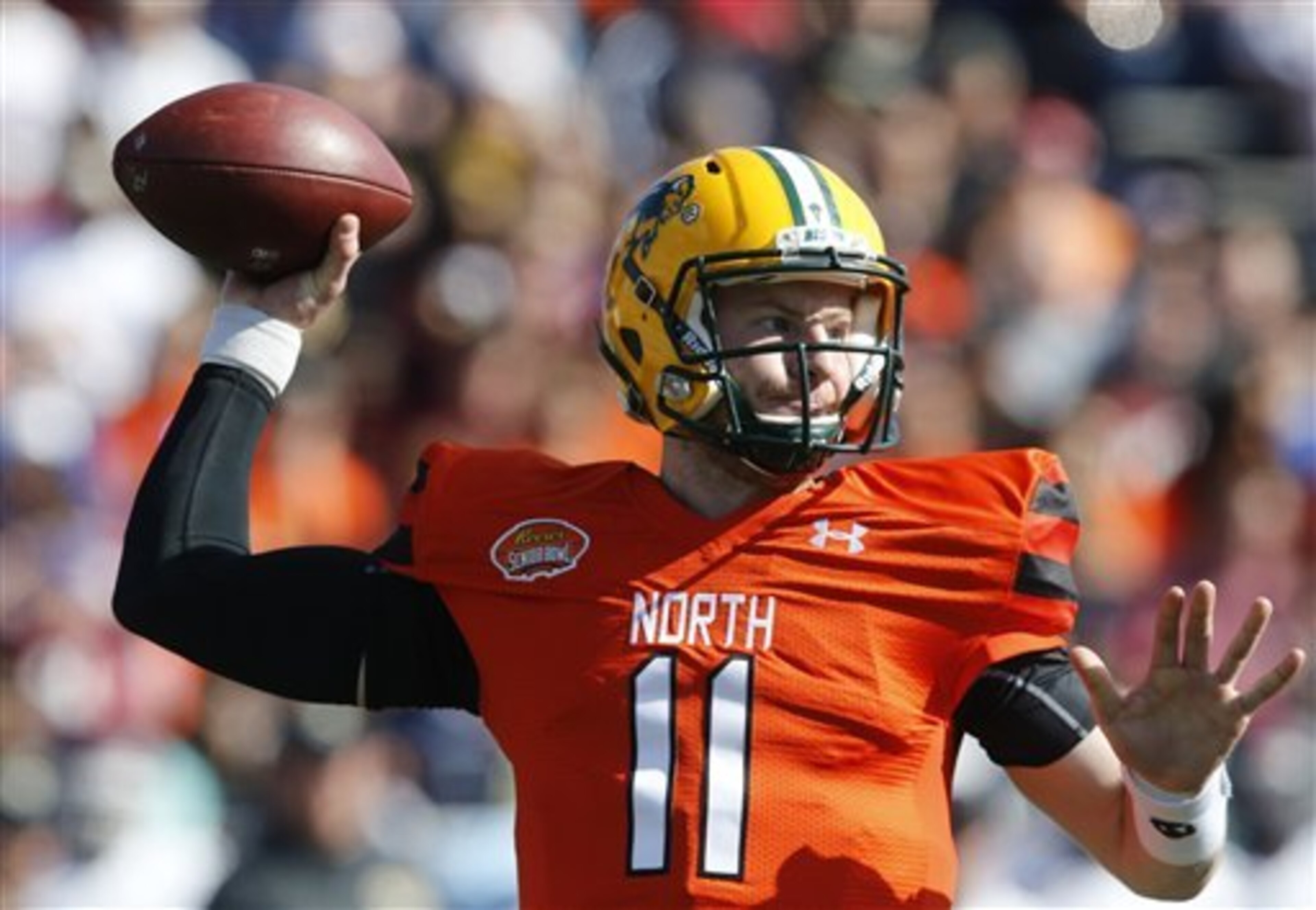
The hot name this offseason has been North Dakota State quarterback Carson Wentz. Wentz is a big, mobile quarterback with a strong arm. At 6’6” and 235 pounds, he fits the mold for a franchise building block.
The former Bison star helped his team win back-to-back FCS championships despite suffering a broken right wrist midway through 2015. He’s an intelligent student of the game who often displayed the ability to learn from mistakes and improve as games progressed. His physical upside and mental aptitude are his major positives.
Wentz has a number of concerns to address before he should be considered a lock to be a franchise quarterback, though. He came from a run-heavy offense that limited him to simplified reads and just 612 passing attempts in 43 games. His lack of exposure to elite FBS competition could give him a larger learning curve than his peers at the top of this class.
Wentz has good accuracy on short and intermediate passes. He has enough zip on his throws to complete any pass, although he needs to work on his deep ball, specifically 20+ yards down field where he completed 12/31 passes all season. While charting Wentz and three other quarterbacks, I noted on my own that he had the worst percentage of catchable deep passes, with just 38 percent.
Wentz needs work on his lower-body mechanics and must gain game-time experience to maximize his potential. In the right situation, he could be a top-15 quarterback in due time.
.jpg?w=3840 "Pro Bowl Football")
.jpg?w=3840 "Giants Cowboys Football")
Decent Starter: Connor Cook, QB, Michigan State
4 of 8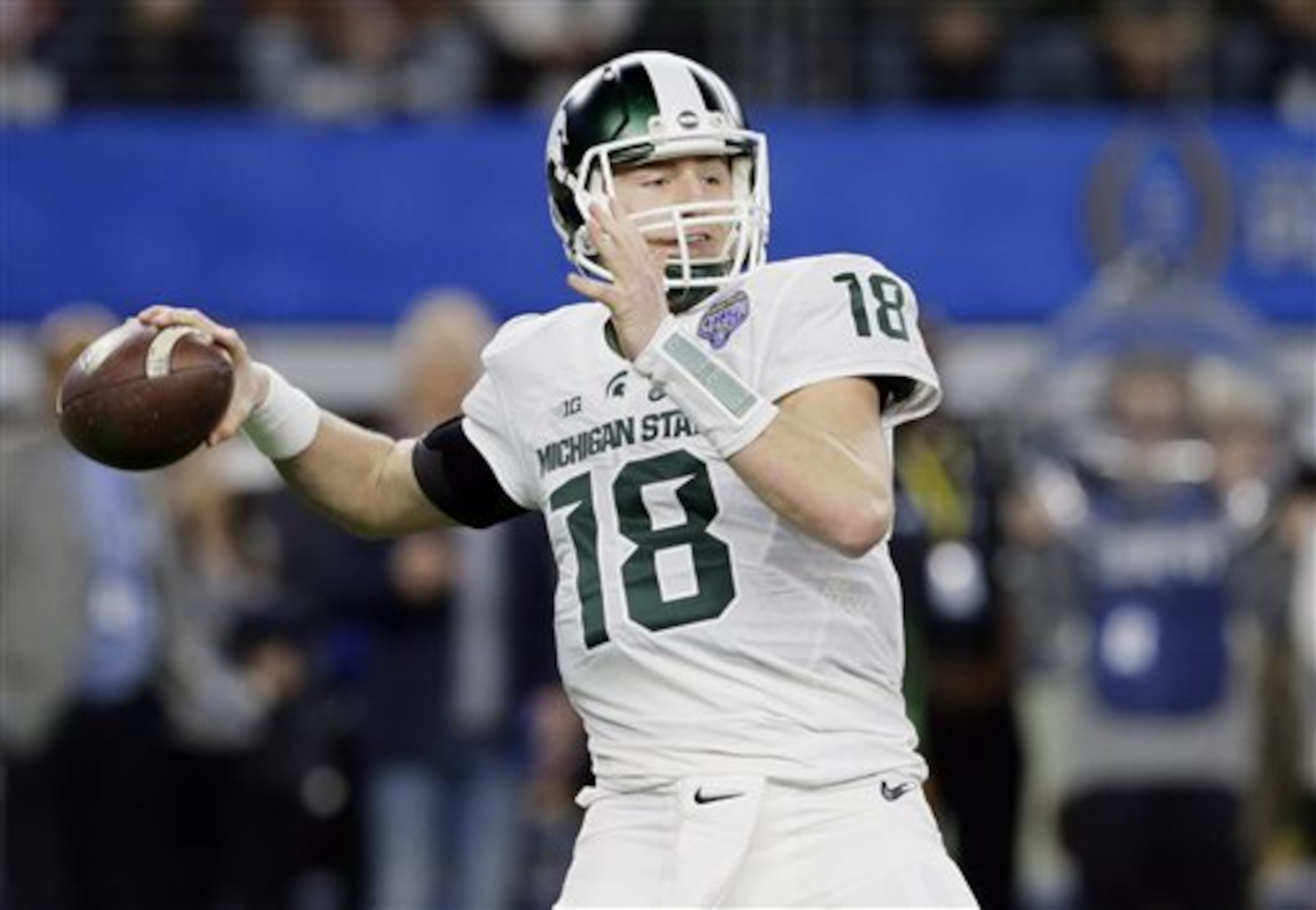
Teams that have strong supporting casts and are looking for quarterbacks who can run decent offenses should take a look at Connor Cook. The Michigan State starter helped the Spartans win 34 games throughout his career. He operates best in a structured role that asks him to make several impact throws a game, but not necessarily carry a team to victory.
There’s nothing wrong with a quarterback like Cook. He’s similar to Andy Dalton in terms of physical build and skill set. He flashes great accuracy at times, but is not nearly as consistent as he must be to be considered a standout prospect.
If Cook lands in a situation with a strong running game and above-average receivers, he is fully capable of maximizing his playmakers. He always had a strong supporting cast at Michigan State, and NFL teams should treat him similarly. He’s not an elite improviser and will put the ball in dangerous spots, so he needs his receivers to do some heavy lifting.
Cook can be a good Day 2 value for the right team. He fits vertical passing offenses that rely on balanced game plans to eat up clock and loosen up defenses.
Possible Starter: Brandon Allen, QB, Arkansas
5 of 8
Prior to 2015, Arkansas quarterback Brandon Allen was another solid collegiate player with little NFL hope. He was coming off a decent junior campaign in which he threw for 20 touchdowns and five interceptions, but completed just 56 percent of his passes. Considering his slight 6’2”, 210-pound frame, relatively weak arm and subpar statistics, the NFL seemed like a long shot.
But Allen returned to the Razorbacks with a much stronger arm and more efficient nature in 2015. He looked completely different physically and even mentally. His aggressiveness improved, and his body was more capable of executing a vertical passing attack to complement a dangerous rushing game.
Allen has potential as a high-end backup or an average starter based on his senior season. His completion percentage jumped almost 10 points to 65.9 percent, and he raised his average yards per attempt from 6.7 to 9.3. More importantly, he looked like an NFL quarterback while tallying an impressive 30 touchdowns and eight interceptions.
There are concerns about whether Allen, coming from a run-centric offense, can ever be more than an efficient game manager. For a mid-round to late-round pick, that’s a solid upside, even if he’s not a future star.
Allen’s size and hand measurement will be factors in his draft stock. His hands didn’t meet the nine-inch minimum many teams use as a baseline. Nevertheless, Allen has the arm strength and experience to translate into a quality NFL spot starter.
Possible Starter: Dak Prescott, QB, Mississippi State
6 of 8
Another SEC stud quarterback who drastically changed his NFL stock as a senior was Dak Prescott. The Mississippi State Bulldogs great became more than just an athlete playing quarterback in 2015, as he refined his throwing mechanics and pocket passing. He improved his accuracy in terms of precision and maximizing yards after the catch.
Prescott’s completion percentage jumped to 66.2 as the Bulldogs offense evolved into a more pro-style attack. Instead of relying on dump-off passes and screens for easy completions, Mississippi State challenged Prescott to read defenses and make the right decisions.
Even with more responsibility, Prescott improved his impact and statistics. He developed into an NFL-caliber quarterback. Like Brandon Allen, Prescott should be viewed as a spot starter who can become an average starter in the right situation.
The trump card Prescott will continue to have in the NFL is his rushing ability. While he is no longer a run-first quarterback, he is a threat to scramble for a first down or more. He totaled 2,521 rushing yards in four seasons.
Top Developmental Quarterbacks
7 of 8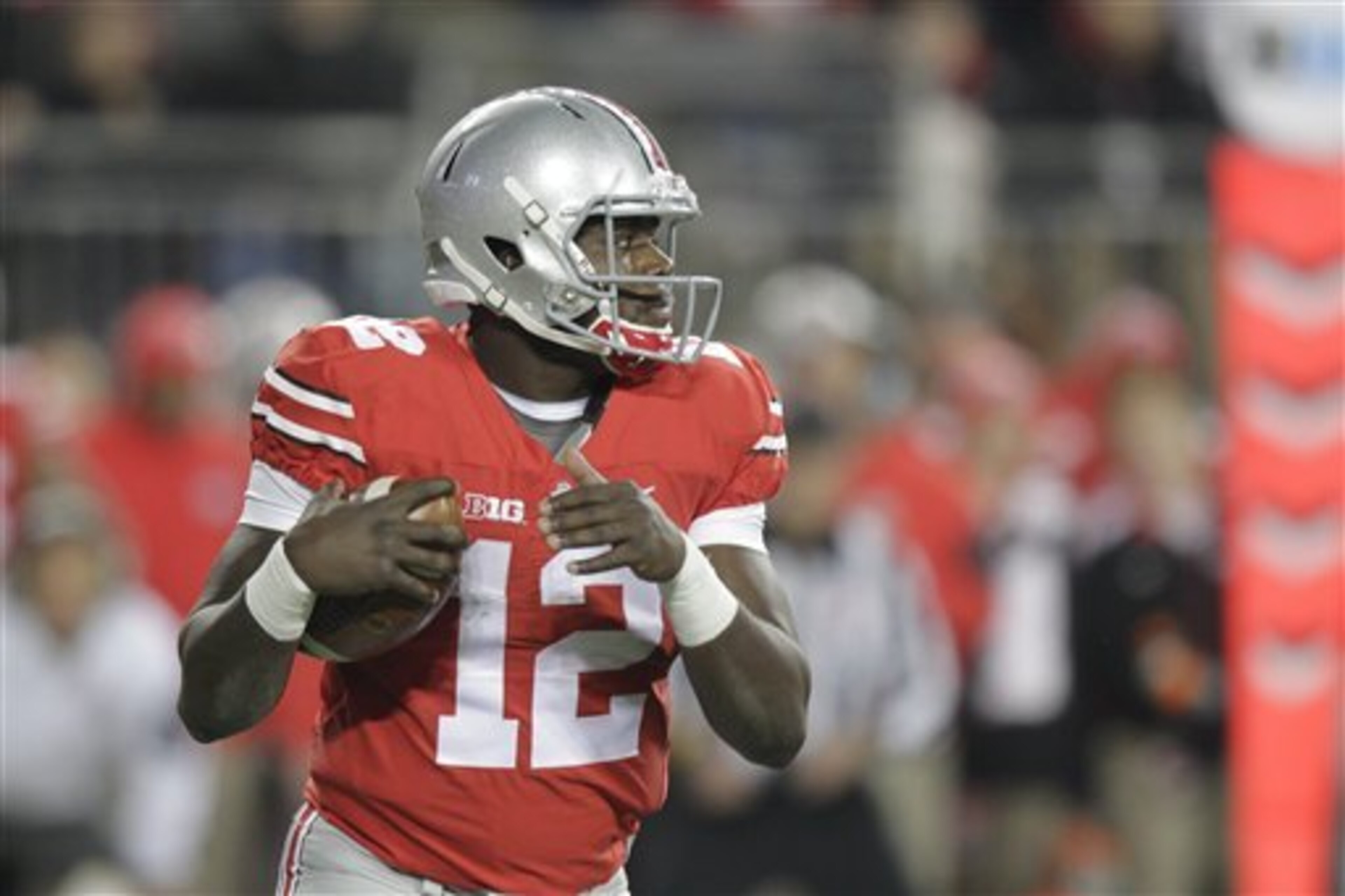
Cardale Jones, Ohio State
At 6’5” and 250 pounds, Cardale Jones is one of the most physically gifted quarterbacks in the 2016 draft. The 2014 national champion led the Ohio State Buckeyes on a magical title run that illustrated a potentially special skill set. He struggled to replicate that success in 2015, and head coach Urban Meyer eventually benched him.
Jones is naturally talented, even if he lacks experience. With just 23 games played and 11 career starts, Jones needs significant polishing before he’s ready for the NFL. But a team with an established starter should roll the dice on Jones’ tremendous talent and character on Day 3.
Jones has one of the strongest arms in recent memory and has advanced movement skills within the pocket. He doesn’t yet trust his eyes, and his footwork leads to poor accuracy, but he has the on-field intangibles that cannot be taught. He is the best high-upside risk in the draft.
Christian Hackenberg, Penn State
Once considered a surefire top overall pick, Penn State quarterback Christian Hackenberg has become a fallen star. Losing former head coach Bill O’Brien to the NFL proved to be disastrous for Hackenberg’s development. The last two seasons have nearly erased the promising start of his career.
In fairness to Hackenberg, current head coach James Franklin ran an offense that was as basic as your local high school's. Pairing him with a quality offensive mind at the next level could rejuvenate Hackenberg’s play and yield at least a good starter. It’ll just take some time to rebuild what was broken under Franklin.
Much of Hackenberg’s passing process became slower and sloppier in the last two years. He is generally inaccurate and must start to read defenses more quickly. A vertical passing attack that utilizes his strong arm and thick frame could give life to this once-promising prospect again.
Quality Backups
8 of 8
Jacoby Brissett, North Carolina State
At 6’4” and 235 pounds, North Carolina State quarterback Jacoby Brissett has an NFL body. He is a good athlete with a terrific arm who led a limited Wolfpack offense to be a viable threat in the ACC. Teams looking for a potential starter in five years should first look at Brissett, as he comes from a pro-style offense and has the best physical tools to refine.
Kevin Hogan, Stanford
It seemed like Kevin Hogan played at Stanford for the last decade, but the four-year starter was an excellent leader for the Cardinal offense. He improved every season en route to a surprising senior campaign in which he threw for 27 touchdowns and eight interceptions. His passing motion has always had a noticeable hitch, but he cleaned that up in 2015. While he is not consistently accurate enough to be a long-term starter, Hogan is a high-character quarterback with plenty of big-game experience.
Jeff Driskel, Louisiana Tech
Another quarterback who was a disaster before 2015, Jeff Driskel found more success at Louisiana Tech than Florida. His transfer saved his NFL dreams, as he fit the Bulldogs’ vertical passing game well. He had more passing yards and touchdowns in one season with Louisiana Tech than he did in four years combined with Florida. Teams will love his 6’4”, 231-pound frame and ability to throw deep.
Vernon Adams, Oregon
Despite being 5’11” and 201 pounds, Oregon quarterback Vernon Adams is among the best playmakers at the position in this class. His electricity carried through his only season at Oregon and the East-West Shrine Game. He completed 64.9 percent of his passes for 2,643 yards, 26 touchdowns and six interceptions. Unfortunately, his size will serve as a major negative for teams, but he has the talent to make the NFL as a backup.
Trevone Boykin, TCU
The former wide receiver entered TCU as a versatile athlete, but developed into a quality spread quarterback as an upperclassman. Trevone Boykin lacks ideal size for the position at 6’2” and just 205 pounds. His blend of arm strength and running ability makes him an attractive developmental quarterback, despite his size. He made massive leaps as a passer in 2014 and 2015, totaling 64 touchdowns and just 20 interceptions in those two seasons.
Jake Rudock, Michigan
It’s amazing what a high-quality coach can do for a team and player. Former Iowa quarterback Jake Rudock was borderline awful with the Hawkeyes at times, but he became a solid game manager with Michigan as a graduate transfer in 2015. His experience in a pro-style system and improvement with his footwork and accuracy make him attractive for teams needing a low-risk, safe backup. His value as a late-round pick or priority free agent would provide a cheap backup for needy teams.
Matt Johnson, Bowling Green
One of the most exciting and unique quarterbacks in the country is Bowling Green’s Matt Johnson. The 6’0”, 221-pound gunslinger throws a terrific deep ball, and his statistics were as gaudy as his highlight reel. He completed 67.3 percent of his passes for 4,946 yards, 46 touchdowns and eight interceptions. The quarterback-friendly system he comes from makes his transition a difficult one to project, but he has one strength that could lead to a Case Keenum-like career.
All stats used are from Sports-Reference.com.
Ian Wharton is an NFL Featured Columnist for Bleacher Report.
.jpg?w=3840 "Commanders Football")
.jpg?w=3840 "SEMANA 10-PANORAMA")
.png?w=3840 "Every City's 2000s Mt. Rushmore 🤩")

.png?w=3840 "LeBron's Text to Hali 💀")
.png?w=3840 "Kuz Calls Out Athlete Spending")