What We'll Learn About Rafael Nadal in His Early Return to Clay Courts
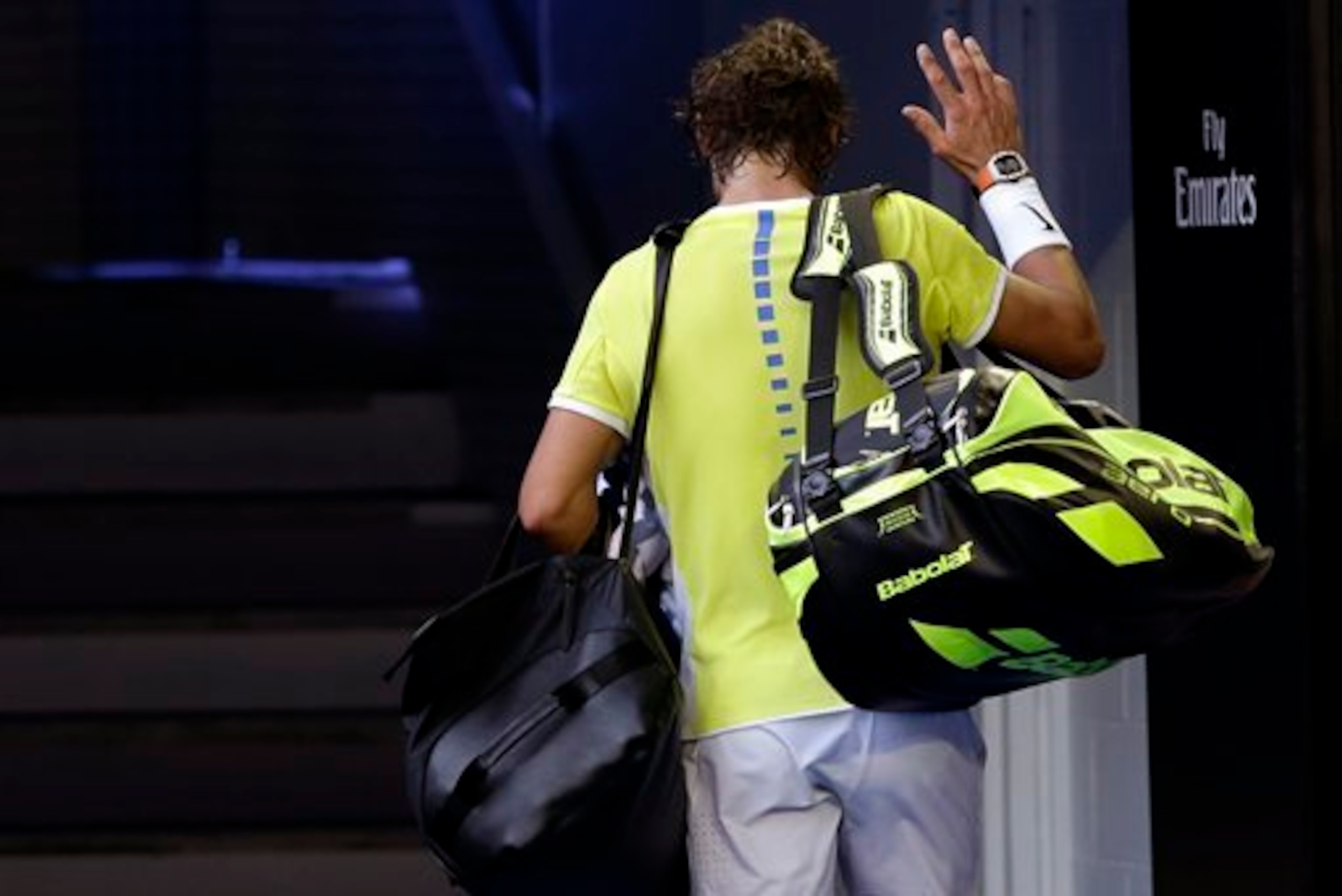
In many ways, it’s the same Rafael Nadal, as he picks up his garish Babolat bag and walks inside the spectators’ applause. His dark eyes bear down to the battle ahead, that warrior’s stoicism just as ready and opportunistic as if this were the 2008 French Open. Always direct, which underscores many of his practical mannerisms, he marches onto the South American clay to play a small, level-250 tournament in February.
He’s aged, of course, his body more filled out, his hair thinning and unkempt, especially as the match wears on, and each crucial point seems to have a direct correlation to prolonging his fabled career. He’s far from Paris glory in early June, but the road starts here, halfway around and toward the bottom of the world.
TOP NEWS

New NFL contenders starting to emerge after Week 4

Deion Playbook Found at Hotel
.jpg?w=2560 "Cardinals Giants Football")
NFL investigating 2 referees for separate viral exchanges
While most of the tennis world looks on, thinking of his legacy in the past tense, he can only change what is to come. So long as he believes in his game and fights to the finish, there has to be a chance to win that next match. That’s all that matters when he steps out on a tennis court, even if he insists losing big matches is “not a tragedy.”
He might not care that many writers and fans pen his obituary as if settling this over a mournful ceremony would just be easier for everyone to move on.
Even the Rafaholics might grimly look at spring 2016 as Nadal’s last great stand on clay. One way or another, there will be more answers in the weeks ahead.
2013 or 2016: Decades Apart
Three years ago, there was a lot of fanfare when Nadal returned to tennis after a knee injury had kept him from the ATP tour since Wimbledon 2012. He answered the bell, cashed in with a final and two titles in the New World’s southern continent and streaked to one of his three greatest seasons. Two majors, 10 titles and a return to the No. 1 ranking was one of history’s great comeback returns to stardom.
Nobody’s expecting a 2013 rerun. After all, 21 tennis years is a long time. (Long ago, superstar Boris Becker insisted tennis years are dog years or seven times the grind of normal human life. These days, people listen more seriously to Professor Becker.)
Yet, patterns can be set in motion for another mini-surge. If Nadal is able to polish all of the following skill sets. If there is substantial progress. If Novak Djokovic leaves planet Earth for four months. If. If. If.
- Can Nadal still defend and retrieve with youthful ruggedness?
- Will he have the footwork, timing, depth and vicious topspin to augment a powerful forehand that can be flatter and more aggressive when needed?
- Will his serve locate well enough to set up his offense time and again?
- Can his backhand be a secondary asset?
- Does he have the killer instinct late in matches?
Legacy Shifting and Convenient Perception
The following digression does tie into Nadal’s upcoming play, because it illustrates a lot of the perception surrounding Nadal. Somehow, his near-future play could continue to revise how many tennis people think about his past legacy.
Consider the following: When Nadal got ready to step into the 2014 Australian Open final, it seemed very reasonable if not likely he would turn 13 majors into a record-breaking 18 majors sometime in 2016. Understand that he had just obliterated Roger Federer in the semifinals, and many thought he was a shoo-in for the Aussie and French titles as he continued his No. 1 momentum.
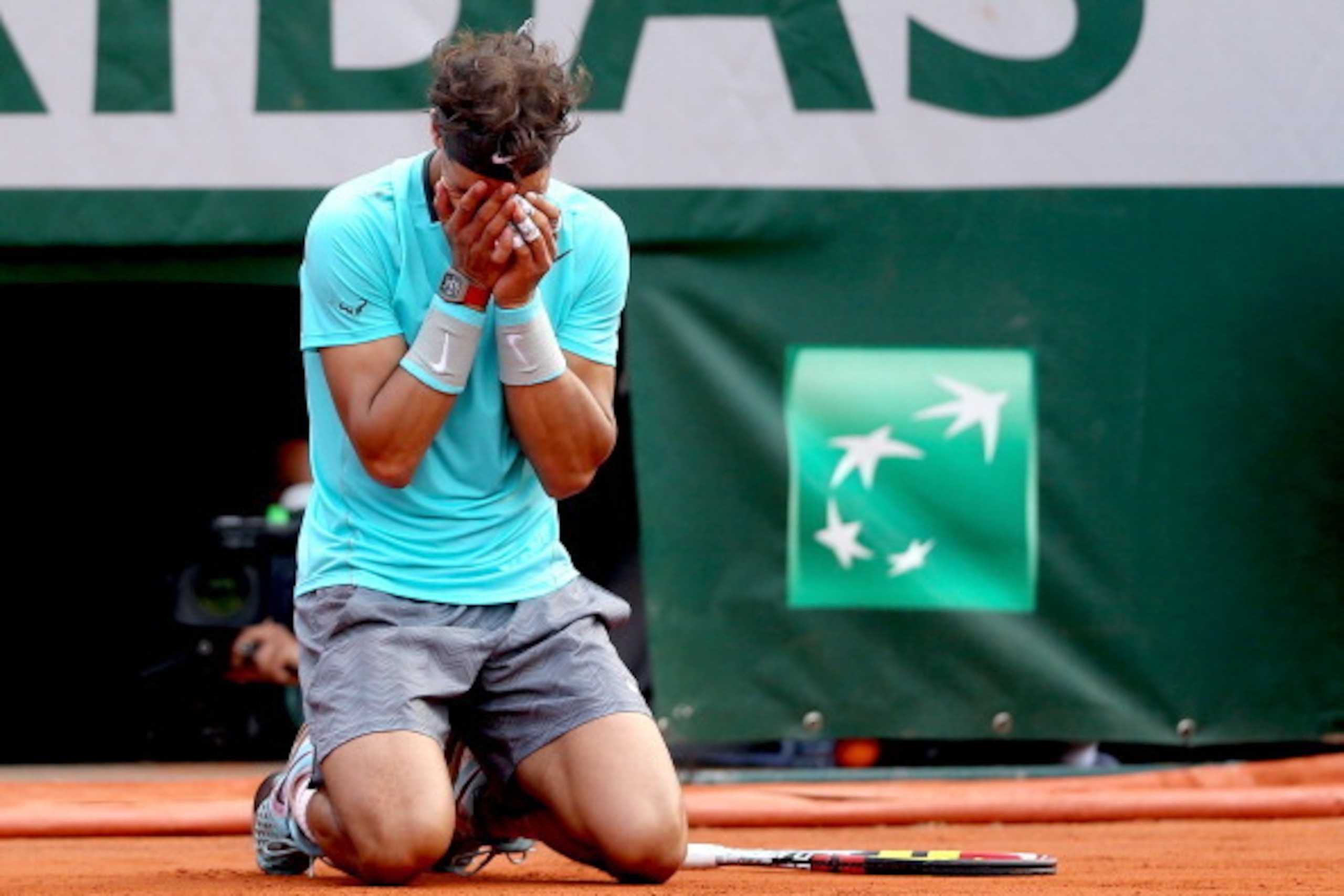
Of course, Nadal’s back buckled in the Australian Open final, and he was stranded at 13 majors for a few months. Still, there were many who already insisted Nadal was the greatest player of all time, including a vote from Andre Agassi, who cited Nadal’s body of competition as superior than his Swiss rival.
Nadal would recover and put together his last great stretch of tennis for a fortnight in Paris, assisted by a flu-weakened Djokovic in the final.
Fourteen majors followed by abrupt decline.
Soon after, Federer grabbed back many of the legacy fence sitters by appearing in three major finals, although Wimbledon 2012 is the only major championship he has won in over six years.
Federer’s consistency as the No. 2 or No. 3 player means a lot to many who feel the Swiss superstar has pushed Nadal back from the so-called "greatest player" discussions.
How quickly they move on. Current tennis king Novak Djokovic is streaking along with 11 majors and a healthy outlook on the next few years (21 tennis years?), and he is rapidly picking up more support as the best player, or at least the most flawless player to have ever played tennis. Imagine if he somehow wins another seven or eight majors.
However, Djokovic’s task is absolutely enormous—it would be like adding on the entire major totals from either Agassi, Jimmy Connors and Ivan Lendl. It’s going to take a lot of excellence and good breaks, to say nothing about supreme aging beyond what Federer has shown in the last six years.
Now suppose Nadal had suddenly retired because of a freak injury in mid-June 2014. Would his legacy somehow stand as greater with the tantalizing dream of those who wanted to believe he would have won more given a longer career?
Many tennis fans place a premium on secondary measurements like semifinals, No. 2 or No. 3 ranking, longevity and whatever criteria would support their favorite player. It’s interesting that players like Pete Sampras and Bjorn Borg can often find extra support because the former left with the perfect ending by winning the 2002 U.S. Open, and the latter quit in his mid-20s, allowing his legend to be more open-ended.
Had Nadal stepped away in June 2014, he would have always been viewed as at least reasonably untouchable, certainly on clay where only a “fluke” Robin Soderling kept him from sweeping one decade of Musketeers Cups at Roland Garros. It doesn’t seem quite rational that a superstar slipping into his final years should somehow undo some of that prior legendary perception, but in the Spaniard’s case, the shift has occurred negatively.
This is a prove-it-to-me-now world, and there are few longitudinal comparisons that are not conveniently selected for one argument or another.
So we will learn even more about Nadal’s legacy this spring, because somehow the results will matter one way or another. Will he enhance or hurt his legacy? It doesn’t seem logical, and perhaps it’s unfair, but that’s the way it goes. (Likewise, if Federer rapidly declines after his minor meniscus surgery, will many kick him to the curb as well?)
To Be Continued
It’s not an easy time for Nadal, no matter his stone face, his refusal to throw a racket or tongue-lash officials with profanity-laced tirades. These are not his ways. He’s sacrificed to be the best, and looking back, there has to be satisfaction. Maybe one day he will look back, but not now.
It’s a different time, a more difficult one with losses hanging around his neck like Coleridge’s albatross. No matter. There’s another match just ahead, and maybe that one will be just as special for other reasons.
He’s endured more than his share of injuries and adversity, but there’s always that glacial calm reflecting from his countenance. He seems to understand and appreciate his gift, however the results unfold.
He’s still checking his racket strings, lining up his bottles of replenishing liquid and bouncing at the coin toss. There’s no use looking for magic, but there’s every reason to hope he can play with bursts of dominance that once seemed so fantastical. They can still happen, something Federer fans understand well enough, and it can be a gift for Nadal fans as well to look forward more often than behind.
True sports fans appreciate that the legendary Spaniard’s career continues on. It’s far more than enough that he plays for as long as he wishes.
.jpg?w=2560 "Hill Injury Update Football")
.jpg?w=2560 "Titans Giants Football")

.jpg?w=2560 "Tyreek makes another cryptic post amid Chiefs rumors")