

Simeone's Atletico Madrid Tactics Perfect, but Barcelona Are Still Too Good
Barcelona opened up the first significant gap at the top of La Liga on Saturday, beating second-place Atletico Madrid 2-1 at Camp Nou in an entertaining fixture full of incident.
The result moves Barca three points clear at the top with a game in hand, putting them in a fine position to retain their title over the second half of the season, thanks to goals from Lionel Messi and Luis Suarez after Koke had opened the scoring—then Filipe Luis and Diego Godin were sent off for Atleti.
While defeat for Atleti underlines Barcelona's superiority in points tally and goalscoring, Atletico manager Diego Simeone can only be disappointed with the outcome of the match and the individual moments of stupidity from the sent-off pair, not with the overall display from his side or the tactics they implemented.
TOP NEWS

Final Men's Ballon d'Or Rankings 📊
Highlights and Viral Moments 🍿

J-Dub Suffers Gruesome Injury
His choices and preparation for the game were absolutely on point—and the early lead was merited—but everything has to be perfect to take points off the world's best side, and they couldn't quite manage that on the day.
Early setup
Atletico started the match in their customary 4-4-2 shape, but there was still a surprise in the selection: Yannick Carrasco started as a centre-forward for the first time, getting the nod ahead of Luciano Vietto and justifying the choice with an excellent display.
The Belgian, alongside the equally pacy Antoine Griezmann, enabled Atleti to press Barcelona extremely high upfield, sprinting in to close down the defence even when inside Barca's own penalty box. That forced Barca to either play long or risk trying to dribble past them.
It worked to gain possession back quickly at times, but when Barca did inevitably get past a few times, both forwards dropped back quickly to present a third line of defence inside their own half of the pitch.
Carrasco acted as an outball for the counter-attack throughout the match, pulled wide into the channels to take up a more "natural" starting point and give Atleti an overload out wide. When he drifted back infield, more than once he dragged a full-back with him to leave space in behind.
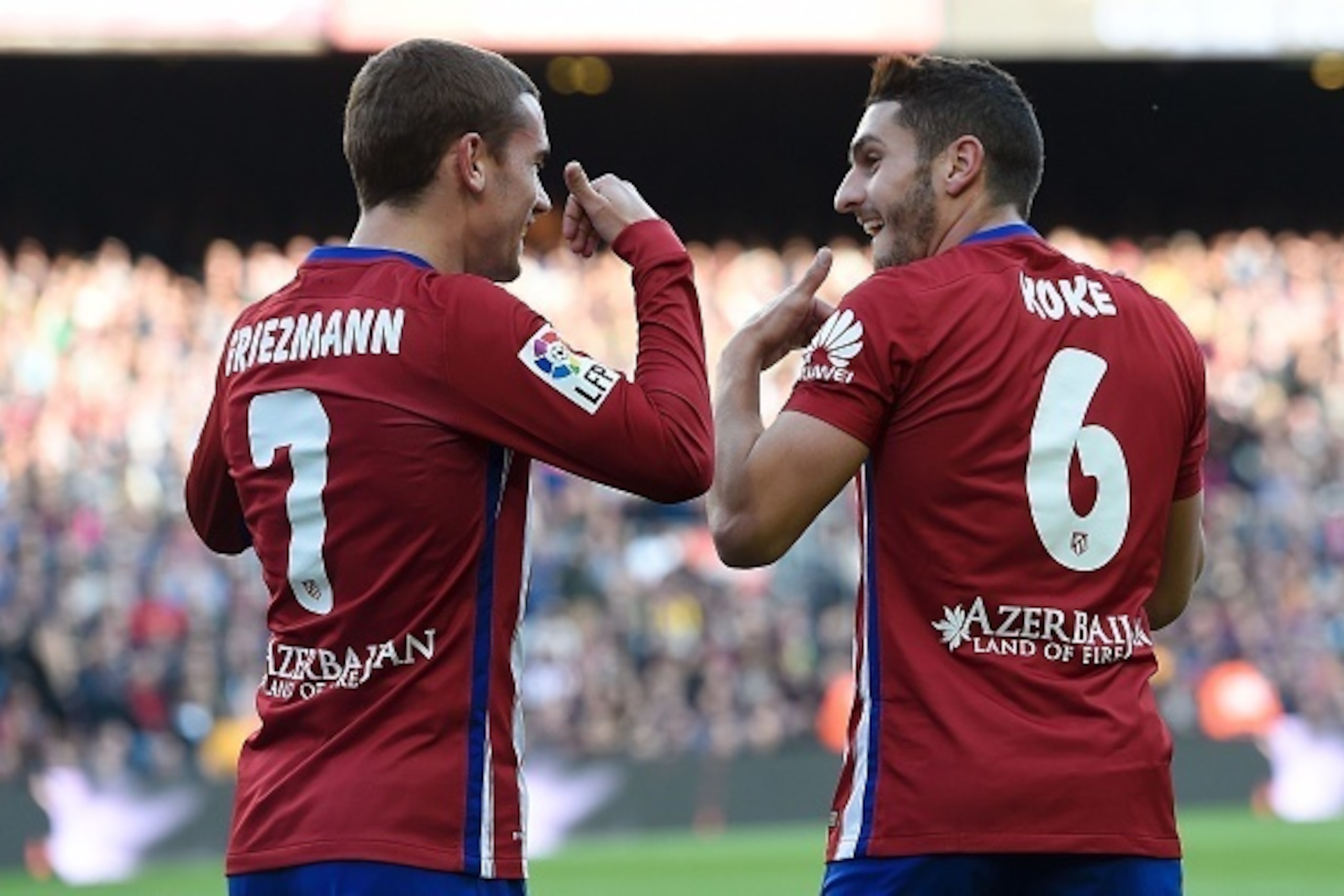
That was exploited by Koke for the game's opening goal, but as the game went on, it was Carrasco's pace and dribbling that became more important as Atletico had to counter from deep rather than start by pressing high.
Reorganising with 10
Down at the break by a 2-1 scoreline and by a man after Luis' red card, it would have been easy for Simeone to tell his team to bed in, stay tight at the back and await their chance late in the game.
Instead, Atletico came out as the better team in the second half for the first 20 minutes, again trying to force the issue in midfield and break and constantly attack, looking for an equaliser. Simeone clearly wanted his side to risk going for an equaliser early on while the energy levels of Los Rojiblancos were still high, rather than let Barcelona dominate play, shift the ball about and make Atletico chase endlessly.
Again, it worked to an extent—Griezmann almost equalised and one or two other half-chances came Atleti's way—but Godin's red put an end to that strategy too.
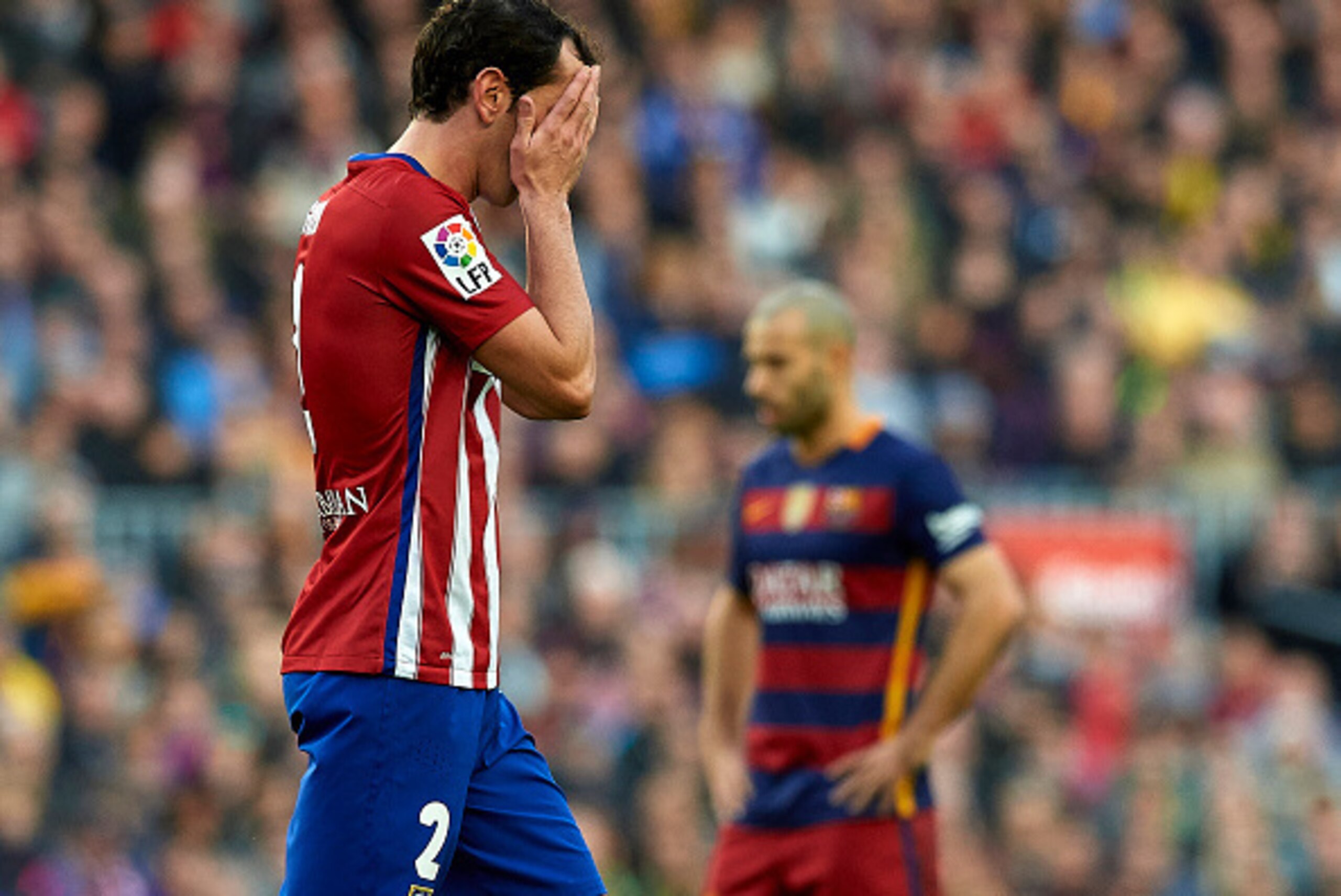
Credit goes to Barcelona for their game management and not gifting much in the way of chances on goal or encouragement to the away side to win the ball. But the second half was a long way from the Catalan side's best football. It was safety first for a long stretch, making sure they didn't commit errors and then winding down the game later on.
It was sensible, not sensational, as the first half had been.
Bringing out the best in each other
In the buildup to the game, Michael Cox highlighted for ESPNFC how the two teams have learned from each others' styles of play, to an extent, in recent seasons. To go another step beyond that after the event itself, it's reasonable to suggest that both Barcelona and Atletico bring out the best in each others' strengths.
Atletico are at their finest when being aggressive with the spaces on the pitch, closing teams down, winning back possession and then striking high upfield—exactly their tactics for the first half to narrow the gap between the two teams in terms of confidence on the ball and the ability to fashion clear chances.
Barcelona, on the other hand, take that closing down as a signal to ramp up the tempo of their own game—and some of their passing in the final third, most notably in the first half, was lightning quick and unstoppable in its ability to penetrate.
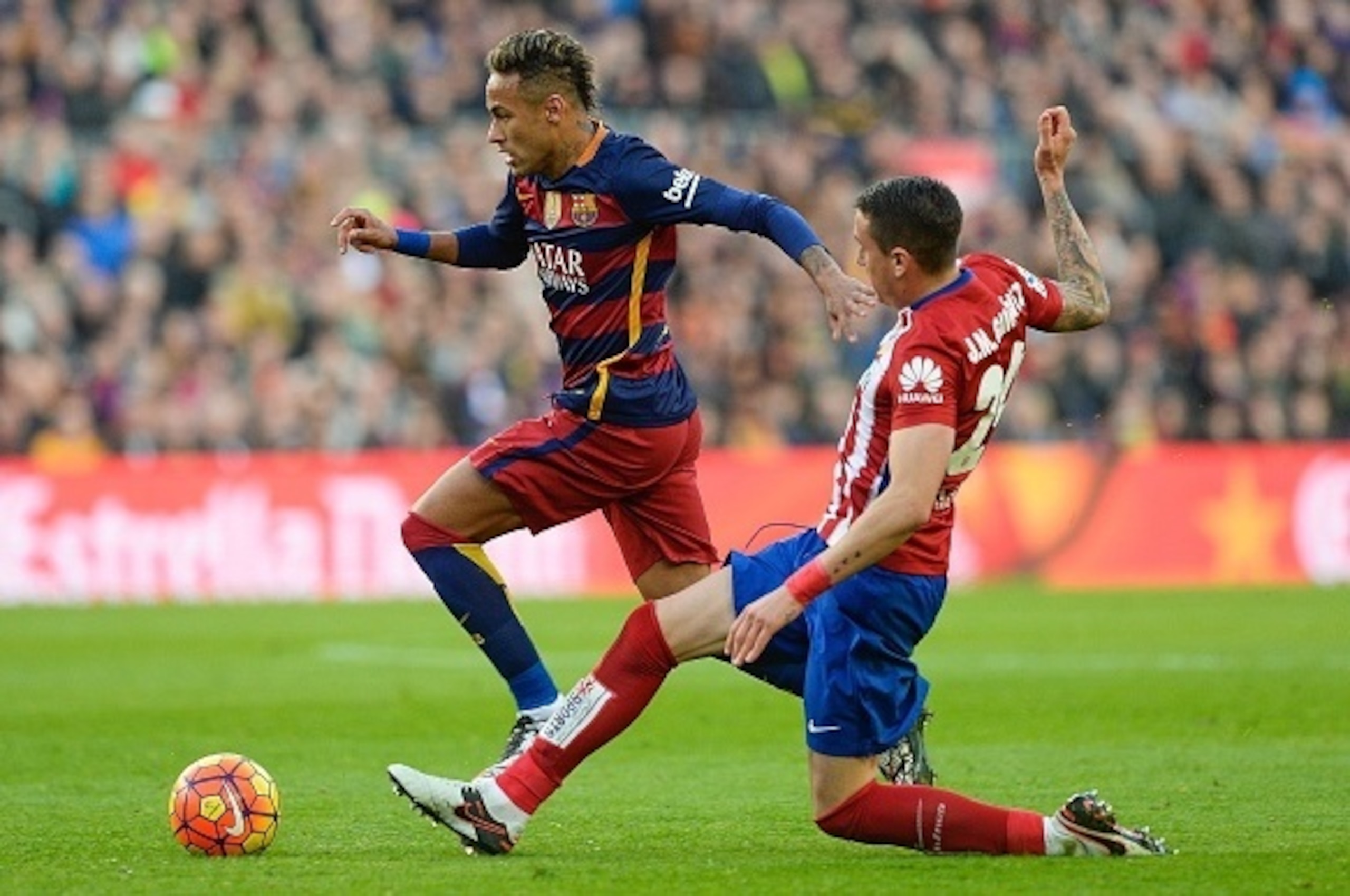
Messi's equaliser was a case in point: Javier Mascherano, Neymar and Jordi Alba combined with fast movement off the ball, a good first touch and a pass the way they were facing. Atleti couldn't get enough bodies in the way, and the goal duly arrived.
When both teams play at full throttle, there's little to separate them: one adept at retaining possession at high speed and with intensity and purpose, the other, better than any at hounding opponents until the ball is one and gaps are exploited.
Atletico set themselves up perfectly to have the best chance of winning at the Camp Nou in La Liga since the late 1990s, and their start to the match gave credence to Simeone's choices.
Even the pursuit of perfection is not always enough for success, though, and that Barcelona were able to rise and turn the match around—before the red cards—is proof enough of their enduring dominance in La Liga.
.jpg?w=2560 "Rams Raiders Football")


.jpg?w=2560 "Rodgers Iced Out on Plane 💎")

.jpg?w=2560 "🚨 Week 8 AP Top 25 Poll")
.jpg?w=2560 "Packers Safety Slams Refs 🤬")

.jpg?w=2560 "Fantasy Waiver Wire Stars 🤩")