Rafa Benitez Already Forgotten at Real Madrid; Can He Recover Elsewhere?
It was the decision everyone knew was coming.
"The board has taken a very difficult decision," said Real Madrid president Florentino Perez, "to end our contractual agreement with Rafa Benitez—a great professional and a magnificent person. I would like to thank him for his dedication during these past few months."
Little more than six months earlier, Perez had uttered almost the identical words at an almost identical occasion to announce the sacking of Carlo Ancelotti. But that rendition of this familiar show had differed in one respect: The president had taken questions, and it hadn't gone well.

When asked what Ancelotti had specifically done wrong, Perez let go of three words that on their own said much about the club and about him. "I don't know," he replied, his words stirring a savage reaction. AS called it "Florentino's latest wheeze." Marca labelled Perez "the Real king of musical chairs."
Unsurprisingly, then, Perez wasn't taking questions this time. This time, it was Benitez out and Zinedine Zidane in, and that's all that would be said—Benitez reduced to a distant memory with all of two lines.
Just like that. Gone.
Just 24 days and three games have passed since, but already Benitez is essentially forgotten at Real Madrid. Amid the euphoria of Zidane's appointment, the shift in mood at the club has been so immense that pre-January 4—the day of the decision—now feels like a bygone era.
"We identify more with Zidane," said Cristiano Ronaldo. "Maybe we understand better what Zidane wants from us," said Isco. "We are all aware that a breather was needed," said Keylor Navas. "Ya, it's true that we're happy," said Marcelo. "The change of coach has done us the world of good," concluded Sergio Ramos. Luka Modric agreed.
Of course, Benitez is hardly the first manager to depart the Santiago Bernabeu in such fashion; numerous men before him have been chased out, too, the ill-feelings between parties very real. And yet, on the surface, Benitez's exit looks particularly damaging on a personal level.
Presiding over the team for just 25 games, the Madrileno has become the club's shortest-serving boss for a decade. At a club like Real Madrid, it's not as though he's without competition in that respect, and the universal relief in his departure has been striking—so extreme as to be damning.
So, where does this leave him? What's next?
Can he and his career recover from here?
The answer is yes, but there are complications, too.

For Benitez, this had been his dream job at his dream club, the position he'd craved for decades since joining Madrid's coaching staff in the 1980s. His appointment back in June also represented his arrival at the game's pinnacle. The effect of falling away from that so quickly shouldn't be underestimated; the sapping of conviction and belief is very possible, the psychological impact potentially huge.
And yet, precedents here are encouraging.
Since moving on from Madrid, Manuel Pellegrini and Jose Mourinho have both lifted league titles elsewhere. As for Ancelotti, he's set to take over at Bayern Munich next season, his reputation completely untouched by his sacking at the Bernabeu.
Admittedly, all three men left in very different circumstances to Benitez, but they do serve as proof that careers don't have to spiral after leaving Chamartin. That there is life after Real Madrid.
Getting out might even be a positive.
When the dust settles and Benitez begins looking for his next job, it's very possible that part of his reputation will be unaffected by his ill-fated stint in the Spanish capital. Around Europe, there will be a certain recognition that his fit at the Bernabeu was awful from the beginning and that he was never the man for Madrid for countless reasons, primarily because Madrid didn't want him in the first place.
For Perez, options had been scarce last summer. He'd just discarded Ancelotti. Mourinho had left before him. Pep Guardiola would never come. Jurgen Klopp had his eyes on England. The idea of Arsene Wenger had long passed. Zidane was deemed not yet ready.
The choice was Benitez or a gamble. Potential suitors will know that, and they'll also know Benitez was fighting an unwinnable war.

When the former Napoli boss arrived at Madrid, he encountered a dressing room that remained fiercely loyal to his predecessor. To the players, Ancelotti had been a cool dad; Benitez was the disciplinarian they didn't want.
Thus, he was immediately without support, and like most other managers at the Bernabeu, his authority was undermined, too. He, like Ancelotti before him, faced the political pressure to do it the Perez way—all-out attack, no thought for balance, the BBC, Danilo over Dani Carvajal, the shirt-sellers—completely stripping Benitez of his strengths and making his management reliant on his obvious weakness: player and media relations.
He was never going to win. The problems he encountered were not so much created by him as they were for him, the major mistake in the whole saga being Madrid's when they appointed the wrong man and effectively asked a prison warden to be a babysitter.
When Benitez is ready to return to management, that much will be acknowledged and understood. His Madrid stint won't be viewed as proof that he can't manage but rather a case in which he was given unmanageable circumstances. In more favourable ones, he can still work.
As such, recovery is entirely possible for the 55-year-old. New positions will almost certainly present themselves to him.
Perhaps the biggest question is where, then, but this is where it gets a little tricky.
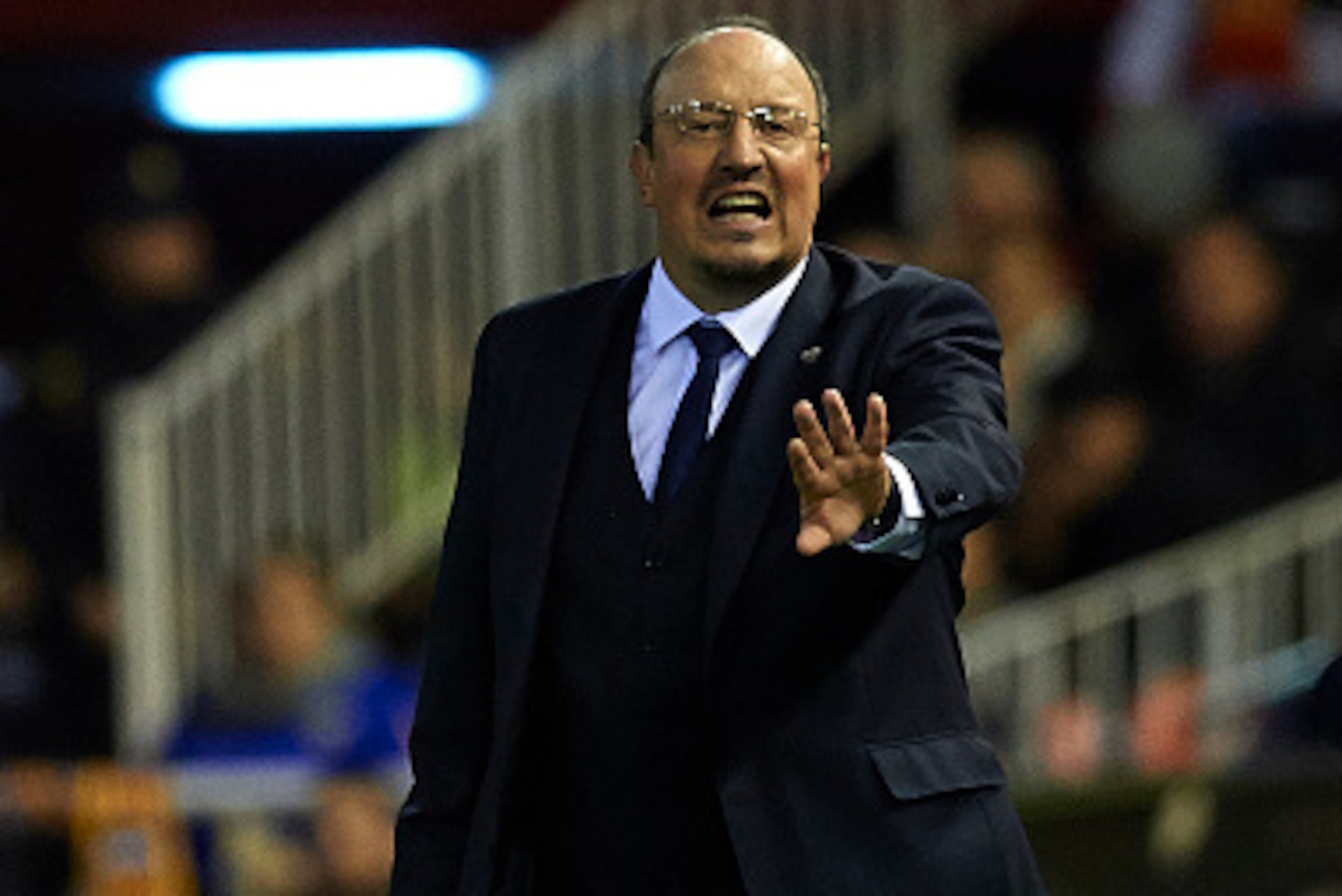
Having stopped in at Valencia, Liverpool, Inter Milan, Chelsea, Napoli and Real Madrid, Benitez isn't likely to want to pitch up at West Bromwich Albion or Granada from here. High-profile positions will still be the priority for the Spaniard, but might his options be running short?
Despite the aforementioned possibility for Benitez's reputation to avoid severe damage in the wake of his Real Madrid turmoil, other challenges facing him and other doubts hanging over him may hamper his ability to land another desirable position.
Almost a decade on from Benitez's peak years to date, football has raced into a new era centred on two things that are problematic for the Madrileno: player power and style.
Now, more than ever before, star players hold significant influence in the decision-making processes of clubs. With their immense wages and marketability, coupled with their ease of mobility and the help of influential agents, players now dominate the landscape. It's they who steer the game; managers and directors react.
Consequently, it's possible that it's never been more difficult than it is now for managers like Benitez to thrive. As an authoritarian, as a man who values discipline and organisation above all else, Benitez and his disposition don't neatly align with a player-dominated environment. You could argue that to navigate such a world at top clubs, the increasingly necessary traits are now charisma, diplomacy and a knack for appealing to both the competitor and ego within stars.
That's not Benitez.
And then there's style.

At the Bernabeu, Rafa's Real Madrid were nowhere near as defensive as many liked to suggest, but a conflict in ideology did exist.
Under Ancelotti, Madrid had been instinctive and only vaguely tactical. To that, Benitez attempted to add a degree of control, wanting his side to carefully manage games and not just play them. The intention was understandable, but at a club reluctant to embrace it, the result was a side that took on a muddled identity, caught at an awkward halfway point between instinct and instruction.
The thing is, though, such a challenge isn't limited to Real Madrid. The move away from philosophies built on organisation and defensive principles has been evident all over Europe, as explained neatly by Miguel Delaney for Eurosport:
"When Benitez was at the absolute peak of his career, and regularly reaching the [UEFA] Champions League semi-finals between 2004 and 2008, the average number of goals per game was 2.59. The average number of goals scored by semi-finalists was 19.31. This lower-scoring, more minimalist era better suited the ‘controlled’ football of Benitez and Mourinho. Since then, things have changed.
In the last three seasons, the average number of goals per game in the Champions League has been 2.91 - a huge leap. The average number of goals scored by semi-finalists, meanwhile, has been 26.
"
A huge driver in that shift has been Guardiola's Barcelona. In a post-2009 world, there's been a greater fascination with style, with the game's follow-the-leader nature heightening the demand to attack. Players want it. Fans want it. Owners want it. Sponsors want it.
Being secure now doesn't cut it. The game is stylistically trending away from Benitez's strengths, limiting his options among the elite.
In England, a reunion with Liverpool or Chelsea is unlikely, while both Manchester clubs and Arsenal wouldn't entertain the idea. In Italy, Inter Milan would never have Benitez back, while his former club Napoli currently sit atop Serie A under Maurizio Sarri. In Spain, Barcelona or Atletico Madrid won't make the call.
Perhaps Valencia is an option. Or maybe his next opportunity will come in the Premier League's suddenly rich middle class. But the highest-profile jobs may be elusive for Benitez, who's now in a curious and awkward position.
A month ago, he held the biggest job of all. Now, despite his reputation being largely unchanged, getting back to anything approaching that level looks rather challenging.


.jpg?w=2560 "Vikings HC Called OBJ Before Release ☎️")
.jpg?w=2560 "Dak to Stroud: Get Some Wins 💯")
.jpg?w=2560 "5 NFL Players Getting Trade Buzz")