

Diego Costa, Cesc Fabregas Torment Arsenal; Chelsea Win Midfield Tactical Battle
Chelsea picked up a merited and impressive 1-0 win over Arsenal in the Premier League at the Emirates Stadium on Sunday afternoon, denying the Gunners a chance to move back to the top of the table in the process.
Per Mertesacker's red card and Diego Costa's match-winning goal came within four minutes of each other, midway through the first half, but even at that point, the pattern of the majority of the game was set. It was the blue side of London that had dominated chances and offensive play thanks to Guus Hiddink's alignment of the midfield.
Costa's work in attack was pivotal, but the support and service he received from those behind him were crucial.


.jpg?w=2560 "Rams Eagles Football")
Mikel in Midfield Frees Matic and Cesc
The first point to note from the pre-match team sheets was the inclusion of Cesc Fabregas as a more advanced option, with John Obi Mikel and Nemanja Matic as the pairing behind him.
It was Mikel, naturally, who sat deepest—but it wasn't a static midfield pairing for Chelsea, with Cesc able to roam freely to find space and Matic ensuring that Chelsea had plenty of vertical movement in the midfield area. The Serbian was quick to surge forward, in and out of possession, to give a slightly longer or more direct pass between the lines, and he helped the momentum of his team a number of times by picking up the ball behind the Arsenal double pivot.
While Matic's athleticism and relative freedom of movement meant Chelsea could push forward quickly through the middle, Cesc simply burst into action wherever he saw best—popping up in both channels, running beyond the Arsenal defenders or coming deeper to receive possession in space.

Arsenal were unable to pin down their former captain, and it was no surprise to see after full time that he had touched the ball more than anyone else on the field—102 occasions, all told, per WhoScored.com.
Matic and Fabregas taking up the ball behind Mathieu Flamini and Aaron Ramsey, especially in the first half, meant Arsenal were always turned around to run back toward their own goal, stunting their counter-attacking chances and forcing Laurent Koscielny or Per Mertesacker to step out of the defensive line on several occasions.
In turn, that formed spaces for the Chelsea forwards to run into, and it created a number of efforts on goal and through-ball opportunities in the early stages, as the away team looked the more threatening.
Changing Channels
Cesc and Matic made the initial runs centrally, but even more impressive and important was Chelsea's relentless use of the channels to get Arsenal turned around.
Diego Costa, inconsistent this season, had one of his finest and most effective halves of the campaign, as he terrorised the Gunners, sprinting down the inside left channel so often that it was reminiscent of his best days at Atletico Madrid. His play forced Hector Bellerin to track back toward his own goal and pulled Mertesacker out of position.
The latter was of course best demonstrated by the German defender scything down Chelsea's front man, seeing a red card in the process, but Costa kept up that work rate and provided an out-ball throughout his time on the pitch. Had an errant offside flag or two not gone up, he could well have seen further reward for his endeavours.
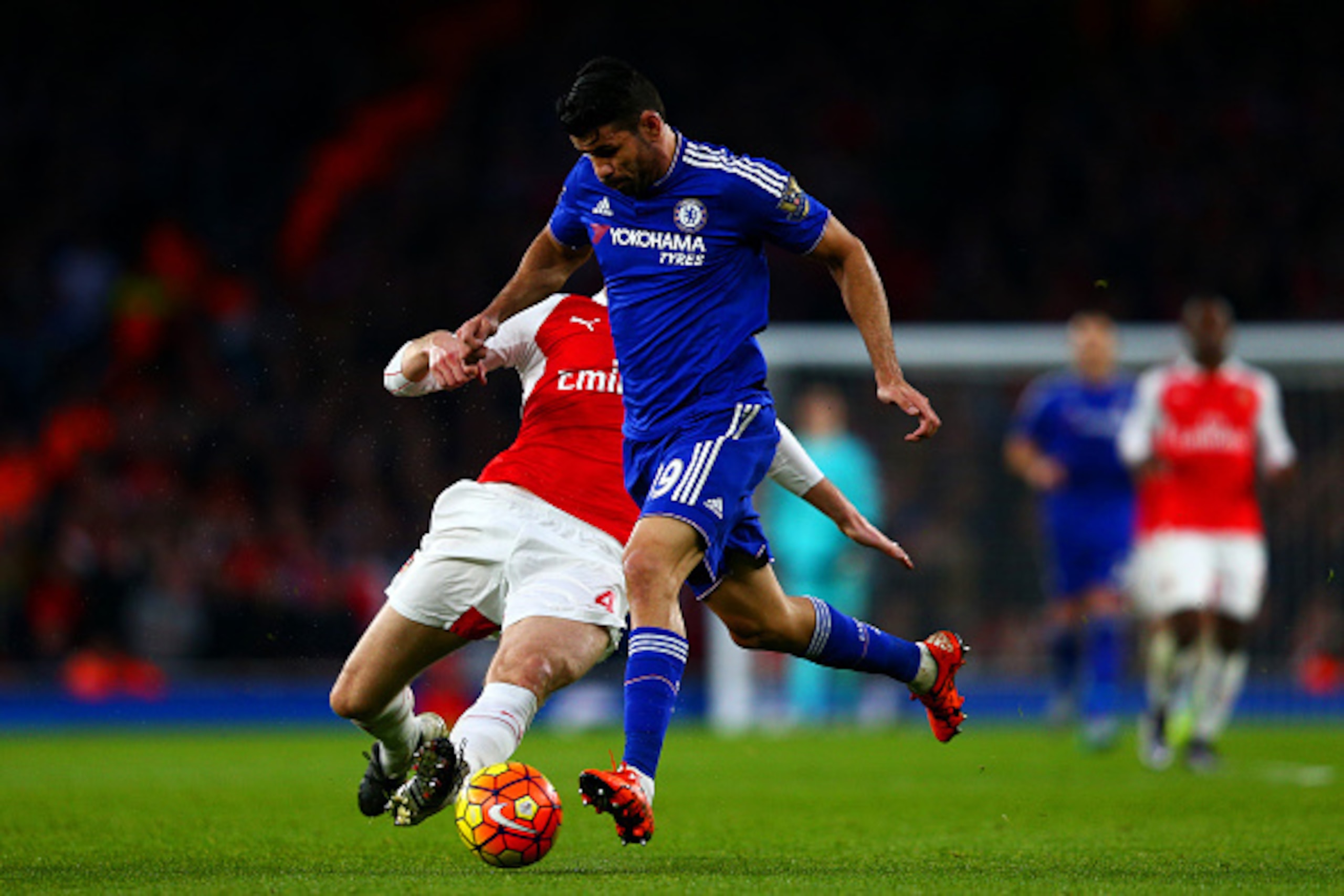
On the far side, Willian was the attacking midfielder who kept the width—Oscar dipped infield from the left with frequency, leaving the channel for Costa—and was impressive both on and off the ball. His ability to suddenly dribble past a couple of defenders, either from a high starting position or from deep to relieve pressure, was a great outlet for the team. His combination play in the channels was also a feature of the match early on, as Chelsea created a number of scoring chances through his ingenuity.
Arsenal's setup was predictable and has worked well for them at times this term, but they were not aggressive enough against Chelsea and couldn't cope with the greater movement and work rate in midfield.
Hiddink won the tactical battle and the scoreline, and despite a late flurry of possession and half-chances for Arsenal, this game would have been more fairly reflected had Chelsea found a way to a second goal during their stronger spells of the game.
.jpg?w=2560 "Texans-Mixon Released Football")
.jpg?w=2560 "Commanders Eagles Football")


.jpg?w=2560 "Mahomes' Wife Trolls Kubiak 💀")

.jpg?w=2560 "Grading WWE Raw 🔠")