
Power Ranking the Last 10 Men's Championship Performances at the Australian Open
Winning the men's Australian Open championship requires a two-week display of outstanding tennis. However, some runs through the draw in Melbourne are more impressive than others.
Seldom does an outsider win this Grand Slam event. In fact, no male ranked outside the current top five has won an Australian Open title in the past 10 years. Novak Djokovic has won the title five times since 2006. Rogers Federer has won three, and Stan Wawrinka and Rafael Nadal have won one apiece. The fifth member of the current top five, Andy Murray, has been a runnerup four times since 2006.
The power rankings for the last 10 championship performances are based primarily on two factors: the dominance the player demonstrated throughout the tournament, especially in the latter rounds, and the caliber of opponent he beat along the way.
Because the article's headline includes the word "performance," the entertainment value of the player's matches and the degree to which he exceeded expectations were also taken into consideration, albeit to a lesser degree.
The rankings are presented in ascending order, with the No. 1 performance listed last.
10. Roger Federer, 2006
1 of 10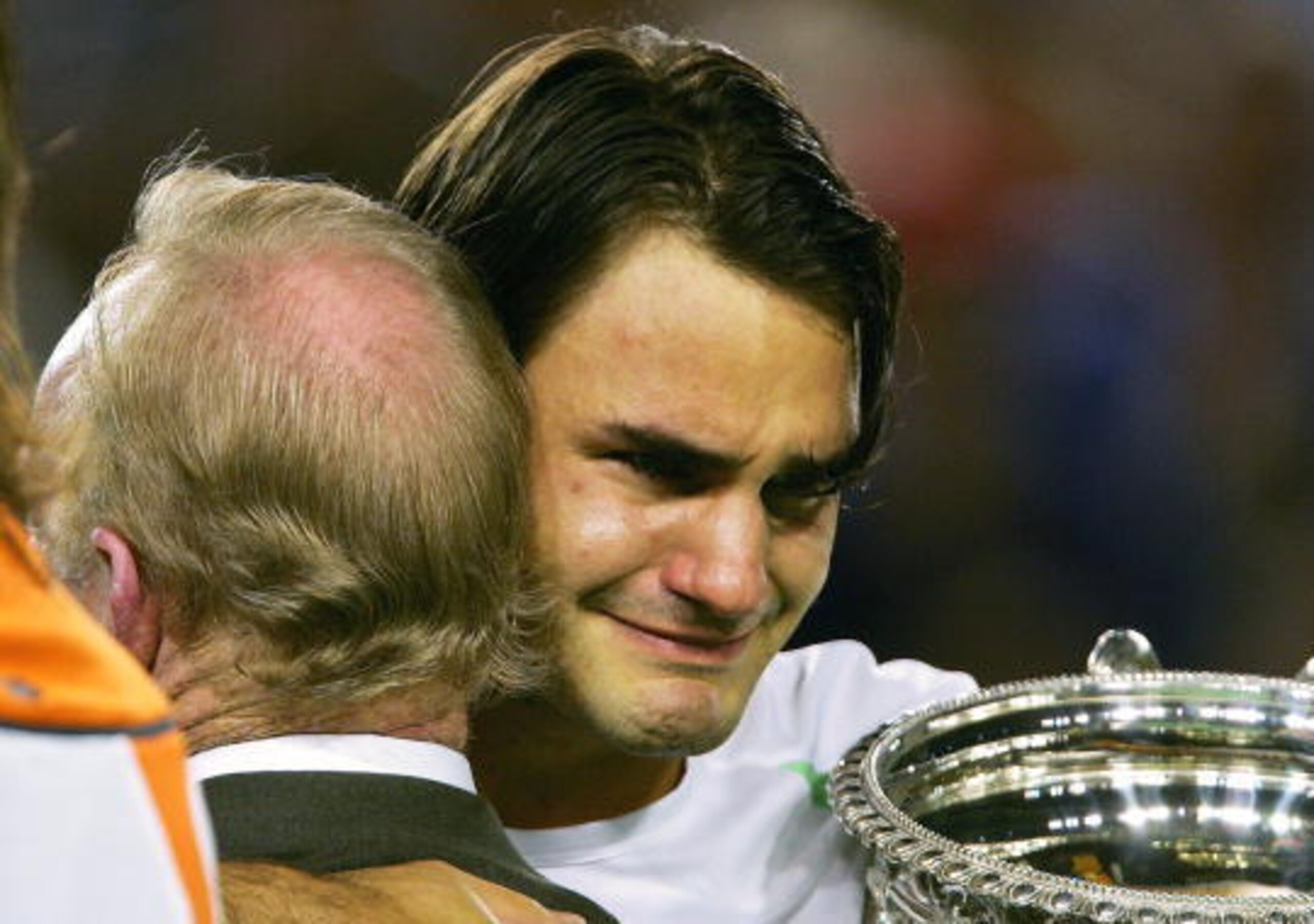
Roger Federer won his second Australian Open title in 2006, and the lasting impression from that tournament came during the trophy presentation, when Federer broke down in tears while hugging Rod Laver.
That moment could be considered part of Federer's "performance" during that Australian Open, but his victories en route to the title were less memorable.
Novak Djokovic, Rafael Nadal, Andy Murray and Stan Wawrinka had not yet made an impression on the world stage, and Andy Roddick and Lleyton Hewitt were the only other genuine stars in tennis at the time. Federer did not have to face either in the 2006 Aussie Open and faced no one seeded in the top four.
Nonetheless he was taken to five sets in the fourth round by unseeded Tommy Haas and won his quarterfinal match over his toughest opponent in the tournament, fifth-seeded Nicolay Davydenko, in four sets.
Federer finished off the tournament with victories over No. 21-seeded Nicolas Kiefer in the semifinals and unseeded Marcos Baghdatis in the finals, losing a set in each.
It was the 24-year-old Federer's seventh Grand Slam title in the last 11 majors. At that point, Federer was considered almost unbeatable, with no one on the immediate horizon to challenge him.
9. Rafael Nadal, 2009
2 of 10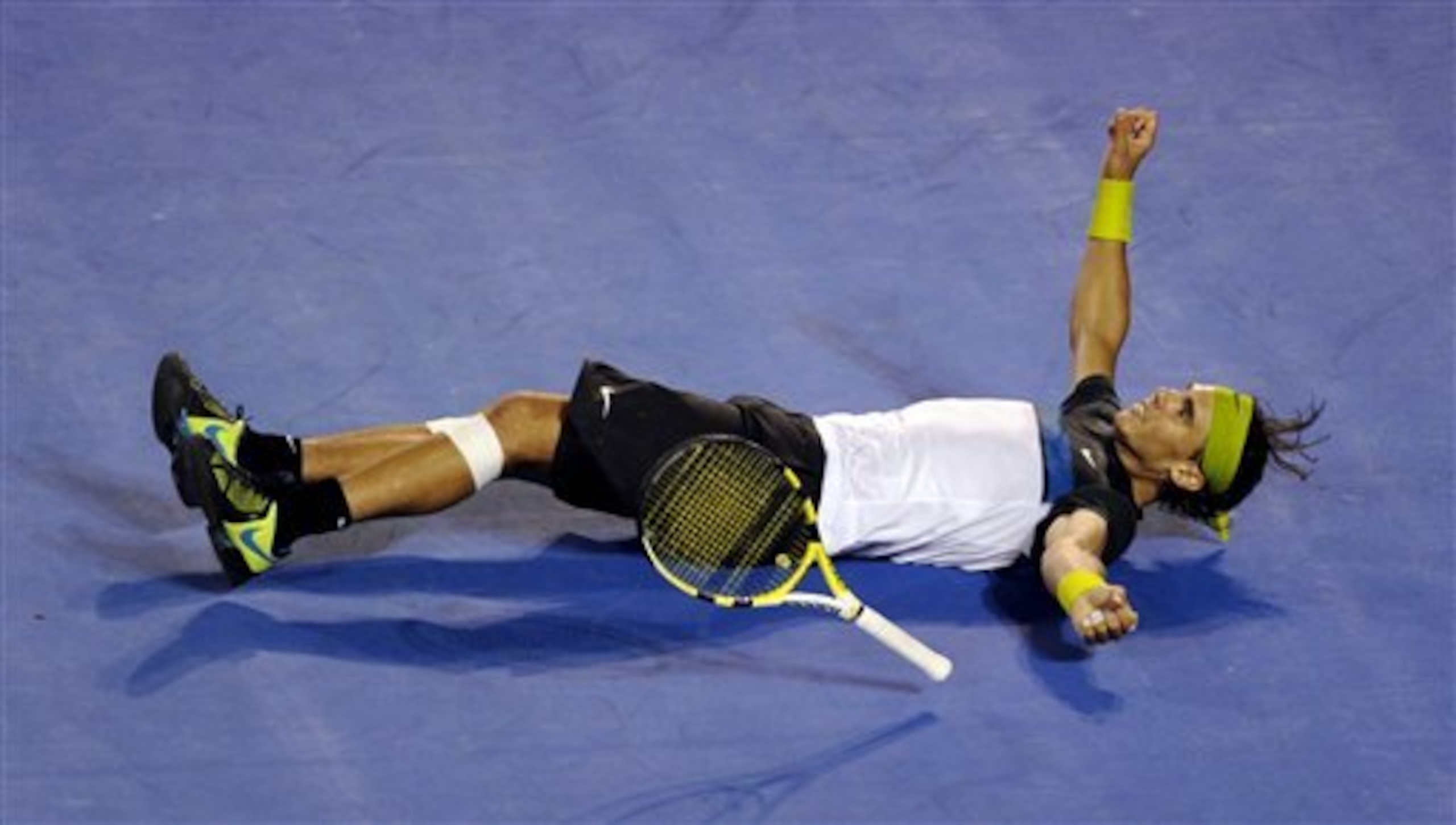
Rafael Nadal proved he could win a Grand Slam event on hard courts when he captured his first and only Australian Open title in 2009.
Nadal had already won four French Open crowns and had captured the 2008 Wimbledon title, but he had never even reached the finals at the U.S. Open or the Australian Open before doing so at the 2009 Aussie Open.
In that finals, Nadal faced Roger Federer, and their growing rivalry had become the talk of tennis. Nadal's 7-5, 3-6, 7-6, 3-6, 6-2 victory over Federer provided drama if not the highest quality of tennis.
"It was not quite another tennis masterpiece," the New York Times reported. "The much-anticipated rematch between Rafael Nadal and Roger Federer lacked the consistent quality and, above all, the crescendo to the finish of their five-act drama in fading light at Wimbledon last year. But the Australian Open final on Sunday night was certainly epic entertainment. "
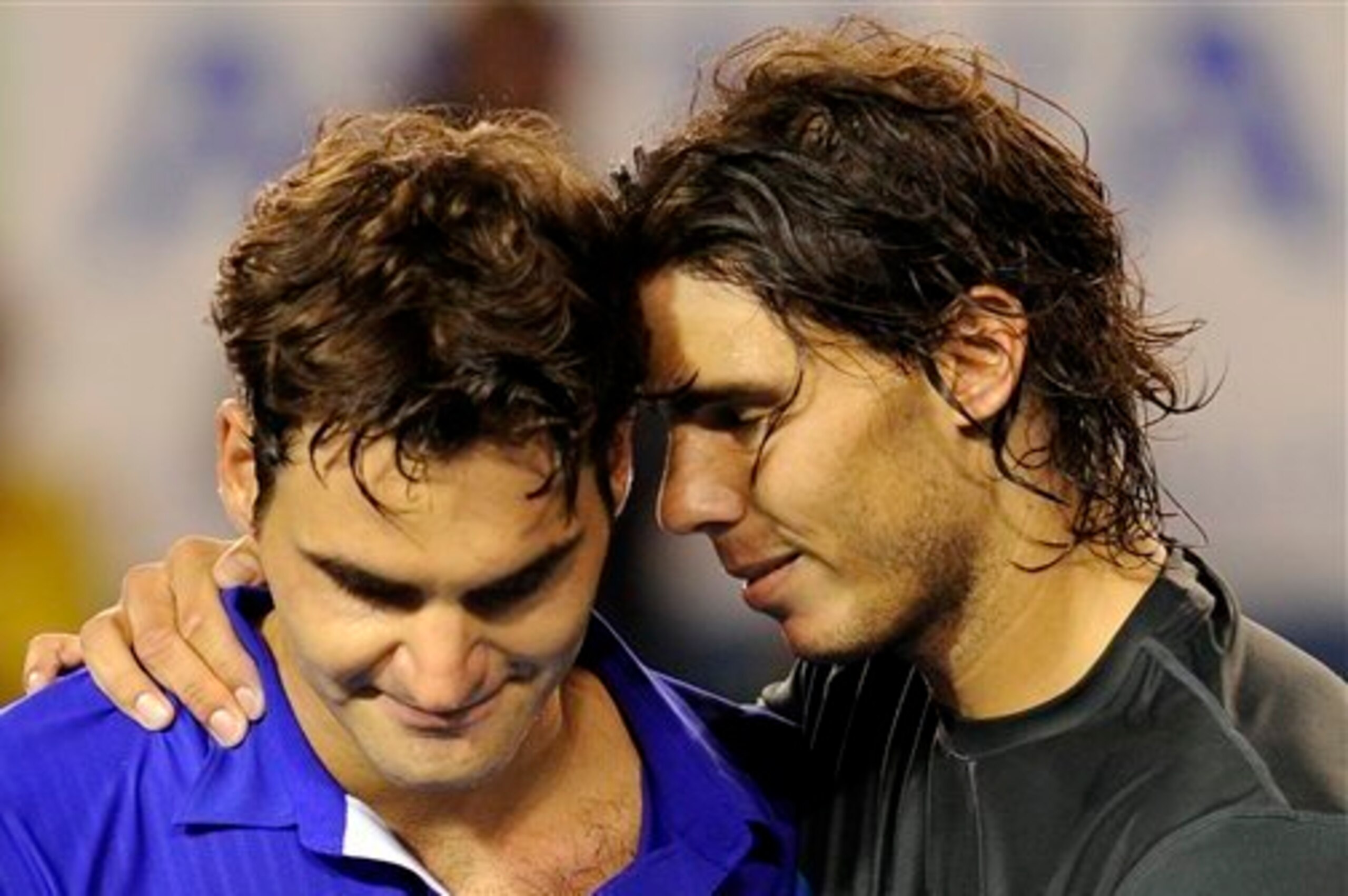
A disappointed Federer wept during the trophy presentation, leading to the classic photos of Nadal putting his arm around the neck of his distraught victim.
Perhaps the most impressive part of Nadal's four-hour, 23-minute victory over Federer was that he had enough energy to finish off that five-setter. Nadal had played the longest match in tournament history in the semifinals, a five-hour, 14-minute five-set victory against Fernando Verdasco that began Friday night and was not completed until early Saturday morning.
Nadal had to fight off two match points against him to get past the 14th-seeded Verdasco to earn the berth in the finals.
It was an impressive two-week display by Nadal, and his performance in the finals was inspirational stuff. However, he was forced to five sets in his final two matches and beat only one player seeded among the top five.
Verdasco had taken out the fourth-seeded Murray in the fourth round, and No. 3 Novak Djokovic retired from his quarterfinal match because of heat stress.
8. Novak Djokovic, 2013
3 of 10
Novak Djokovic won his third straight Australian Open title and fourth overall by getting through the draw in workmanlike fashion. He beat three players seeded among the top five, although his four-set victory over Andy Murray in the finals was his only win against one of the so-called "Big Four."
Djokovic had re-established himself as the world's No. 1 player seven months earlier, and he had reached at least the semifinals in 10 straight Grand Slam events entering the 2013 Aussie Open.
As usual he began the tournament by blowing by his first three opponents, but then came a serious challenge from Stan Wawrinka in the round of 16.
Wawrinka had not yet established himself as an elite player at that time. He was ranked 17th in the world, had never reached the semifinals of a major and had failed to reach the quarterfinals in any of his previous seven Grand Slam events. However, Wawrinka first indicated he was someone to be taken seriously when he nearly knocked off Djokovic in Melbourne.
Wawrinka whisked Djokovic away 6-1 in a 25-minute first set and led 5-2 in the second before Djokovic came alive. Ultimately Djokovic won 1-6, 7-5, 6-4, 6-7, 12-10, hitting the winning shot at 1:41 a.m.
"One of the longest, most interesting, and most exciting matches I have played in my career," Djokovic said afterward, according to the BBC.
That was the signature win of the tournament for Djokovic, who went on to beat No. 5-seeded Tomas Berdych in four sets in the quarterfinals, No. 4-seeded David Ferrer in straight sets in the semifinals and No. 3 Murray in the finals.
Murray put up a challenge in the first two sets, but Djokovic dominated the latter two in a 6-7, 7-6, 6-3, 6-2 victory that relegated Murray to runnerup status for the third time in four years at the Australian Open.


7. Novak Djokovic, 2015
4 of 10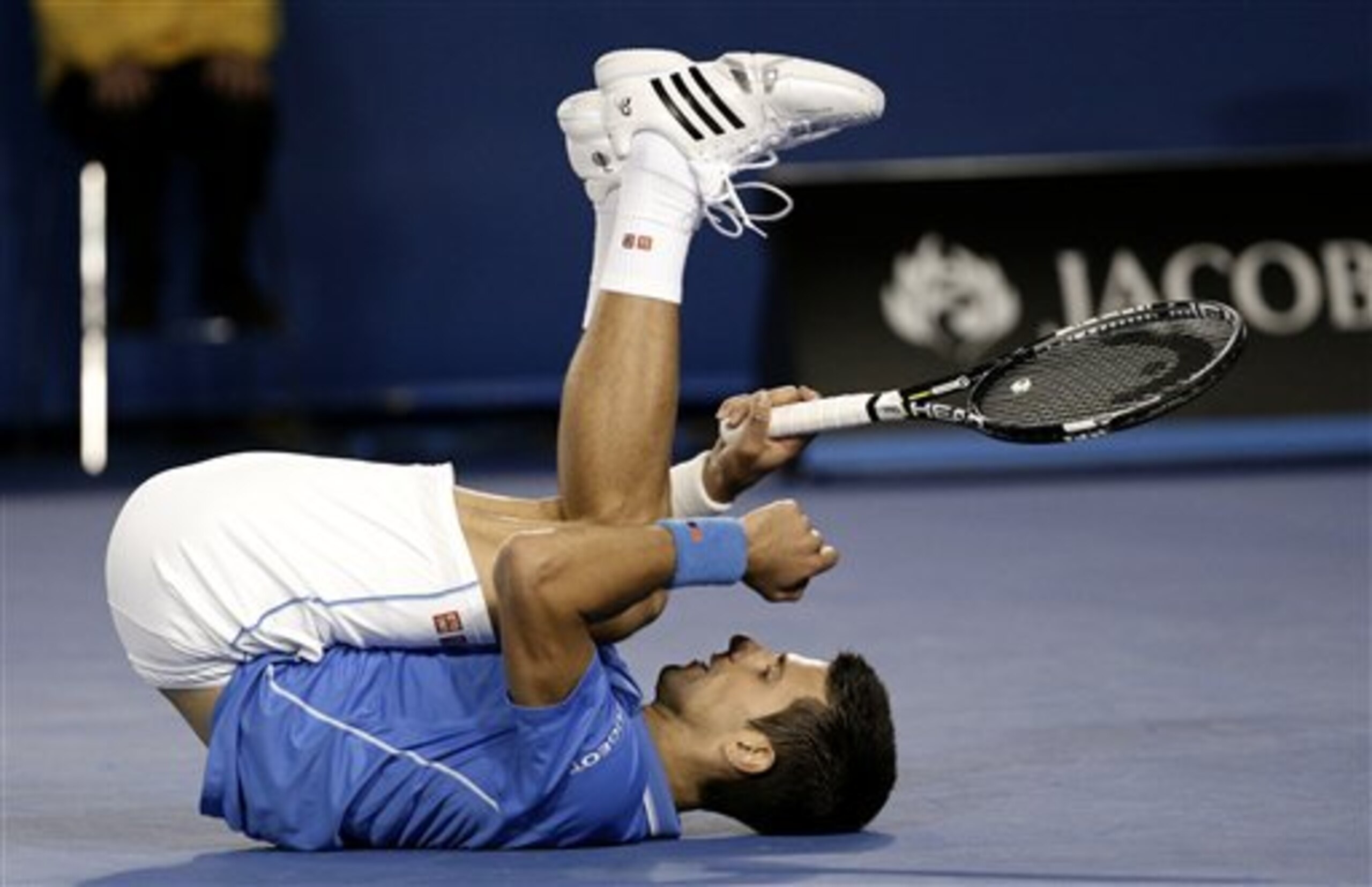
Novak Djokovic did not have to face either Rafael Nadal or Roger Federer to win the 2015 Australian Open, but he did beat three players ranked in the top eight, including Stan Wawrinka and Andy Murray.
Djokovic did not lose a set in his first five matches of the tournament, including a one-sided 7-6, 6-4, 6-2 quarterfinal victory over No. 8 Milos Raonic.
Then came the semifinal match against Wawrinka, who was an established star by then, holding a No. 4 world ranking and having won the 2014 Australian Open. They had met three times in the previous five Grand Slam events, and all three went to five sets, with Djokovic winning two of them.
The two played another five-setter in the 2015 Aussie Open, but Djokovic punctuated this one with a decisive shutout in the fifth set. Djokovic's 7-6, 3-6, 6-4, 4-6, 6-0 victory did not feature the tennis excellence or drama of their earlier encounters.
"Describe the match? Strange. Not the best, for sure," said Wawrinka, according to the Associated Press account.
Djokovic's final challenge was Murray, whose ranking had slipped to No. 6 and who was playing in his first Grand Slam final since winning the 2013 Wimbledon.
Djokovic finished off Murray with another shutout in the final set, winning 7-6, 6-7, 6-3, 6-0. Djokovic seemed to have thumb and ankle problems in the third set, and Murray said he was distracted by Djokovic's injuries, per the BBC.
6. Roger Federer, 2010
5 of 10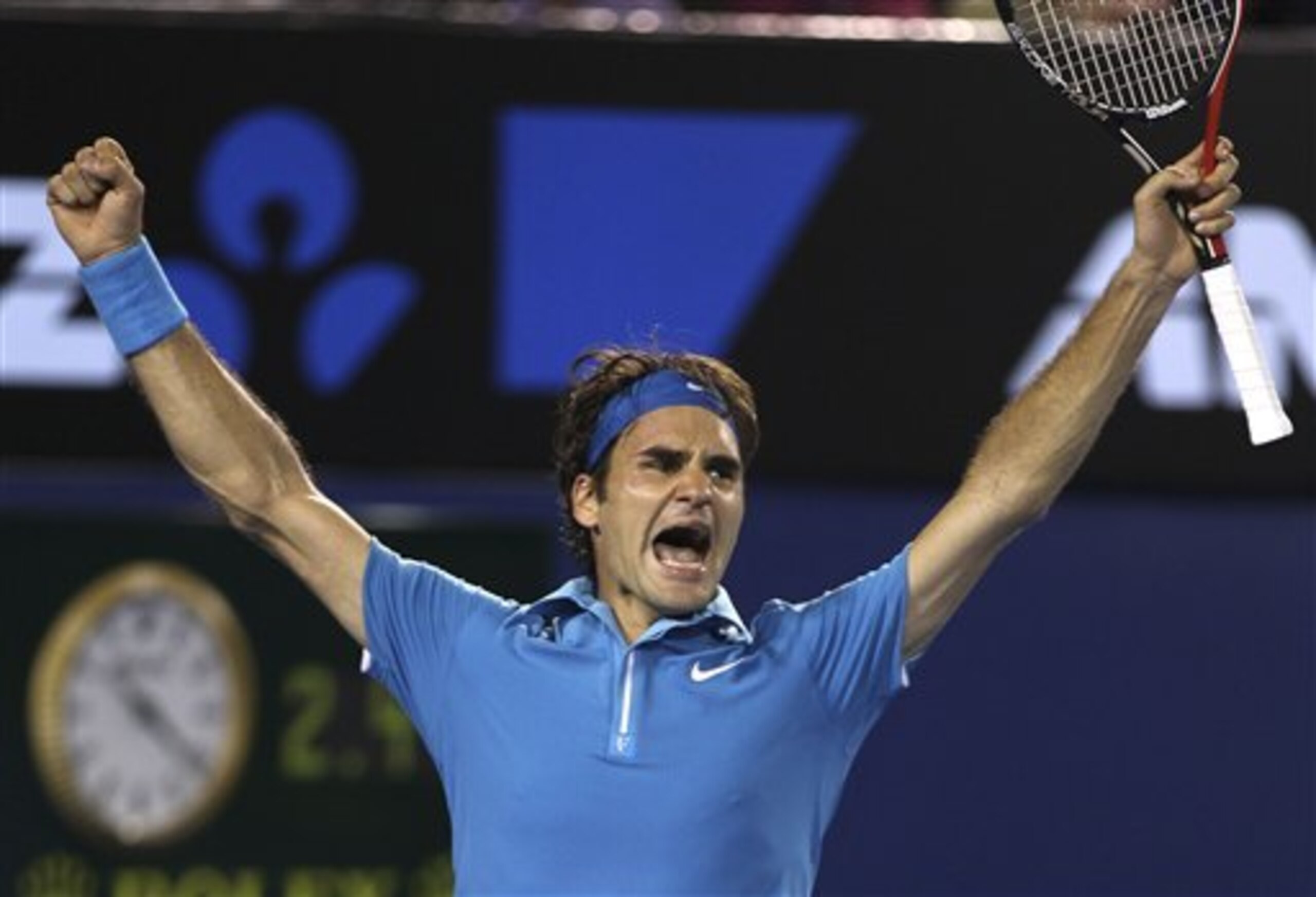
Roger Federer's fourth and, so far, final Australian Open championship came in 2010, and he did it in dominating fashion.
Federer lost only two sets in the event, dropping his first set of the tournament in the first round against Igor Andreev and losing the opening set to No. 6-seeded Nikolay Davydenko in the quarterfinals. In both cases, Federer dominated the remaining three sets.
Federer got by his final two opponents with relative easy, breezing by 10th-seeded Jo-Wilfried Tsonga 6-2, 6-3, 6-2 in the semifinals and knocking off fifth-seeded Andy Murray 6-3, 6-4, 7-6 in the finals. Murray held a 5-2 lead in the third set and had five set points in the tiebreaker, but he could not break through.
Murray was not quite the established star he is today. He had not won any Grand Slam singles titles to that point and had gone past the quarterfinals at only two of his 16 previous majors.
Nonetheless, as the No. 5 seed, Murray represented the highest-ranked player Federer faced in the 2010 Australian Open. Rafael Nadal and Novak Djokovic had lost in the quarterfinals, with Nadal forced to retire against Murray.
Federer's rally to win the final set against Murray gave his dominating 2010 championship some flourish, but his run lacked a victory over a proven elite player.
5. Novak Djokovic, 2008
6 of 10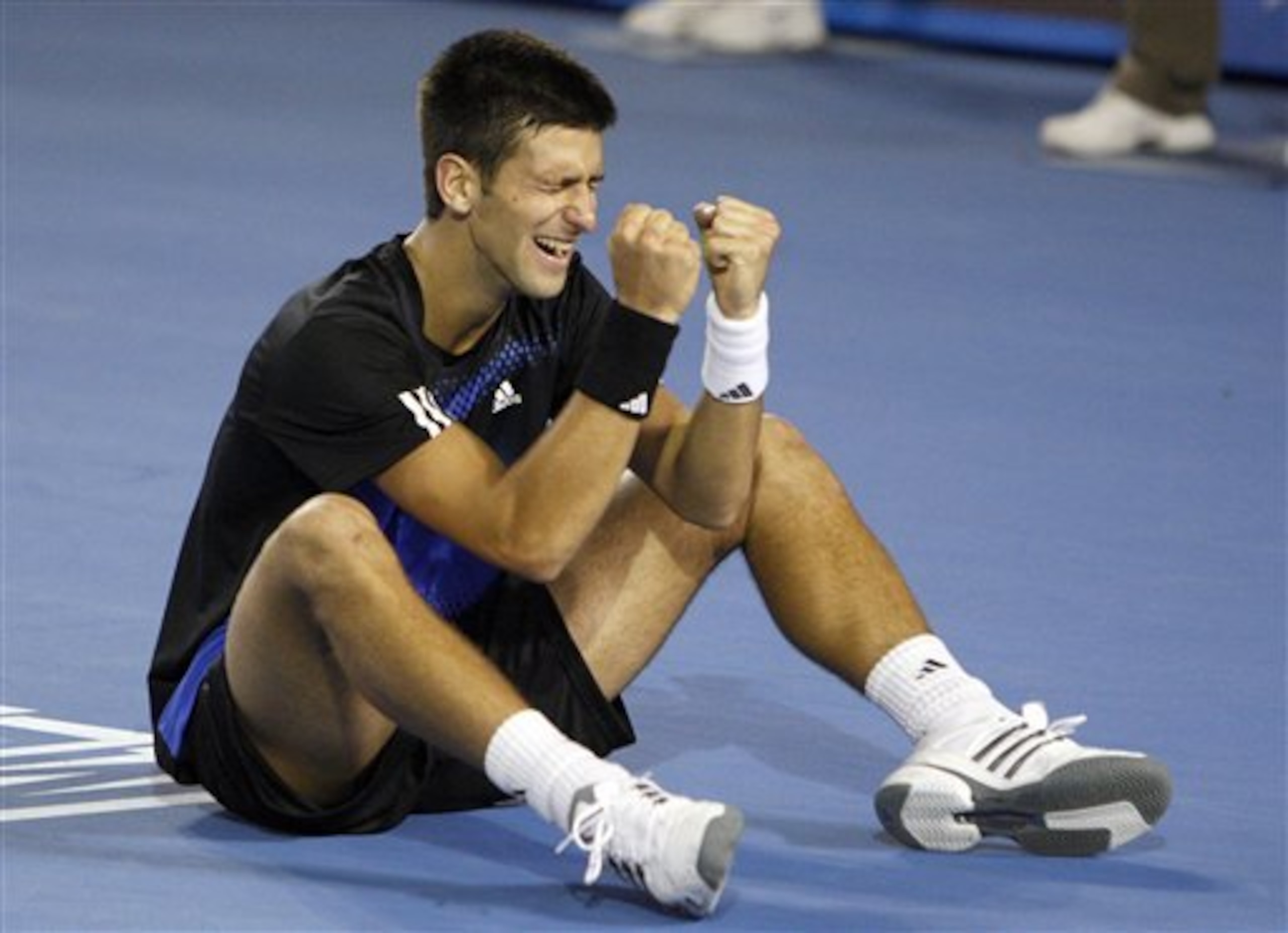
One year after losing to Roger Federer in the Australian Open fourth round, 20-year-old Novak Djokovic won his first Grand Slam singles title at the the 2008 Aussie Open. It would be Djokovic's only major title until 2011, but he showed his immense potential in Melbourne in 2008.
Djokovic lost only one set in his seven matches that year, and his semifinal victory over Roger Federer instantly stamped him as a potential star.
Djokovic lost just 20 games in his first three matches combined, and he blew by No. 5-seeded David Ferrer 6-0, 6-3, 7-5 in the quarterfinals to earn a spot in semifinals against Federer.
Federer came into that match having won 12 of the previous 18 Grand Slam events, and he had reached the finals of 10 straight majors. More significant perhaps was that Federer had won each of the past five majors played on hard courts. Djokovic not only beat the seemingly invincible Federer, he did it in straight sets 7-5, 6-3, 7-6.
"It’s just amazing, indescribable, to beat the No. 1 player of the world, one of the best players this sport has ever had, in straight sets,” Djokovic said, according to World Tennis.
The No. 3-seeded Djokovic then dropped a set for the first time in the tournament against unseeded Jo-Wilfried Tsonga in the finals before recovering for a 4-6, 6-4, 6-3, 7-6 victory.
Djokovic's dominance in the 2008 Australian Open is unquestioned, but it might have been more impressive if he had beaten more than one elite player.
4. Novak Djokovic, 2012
7 of 10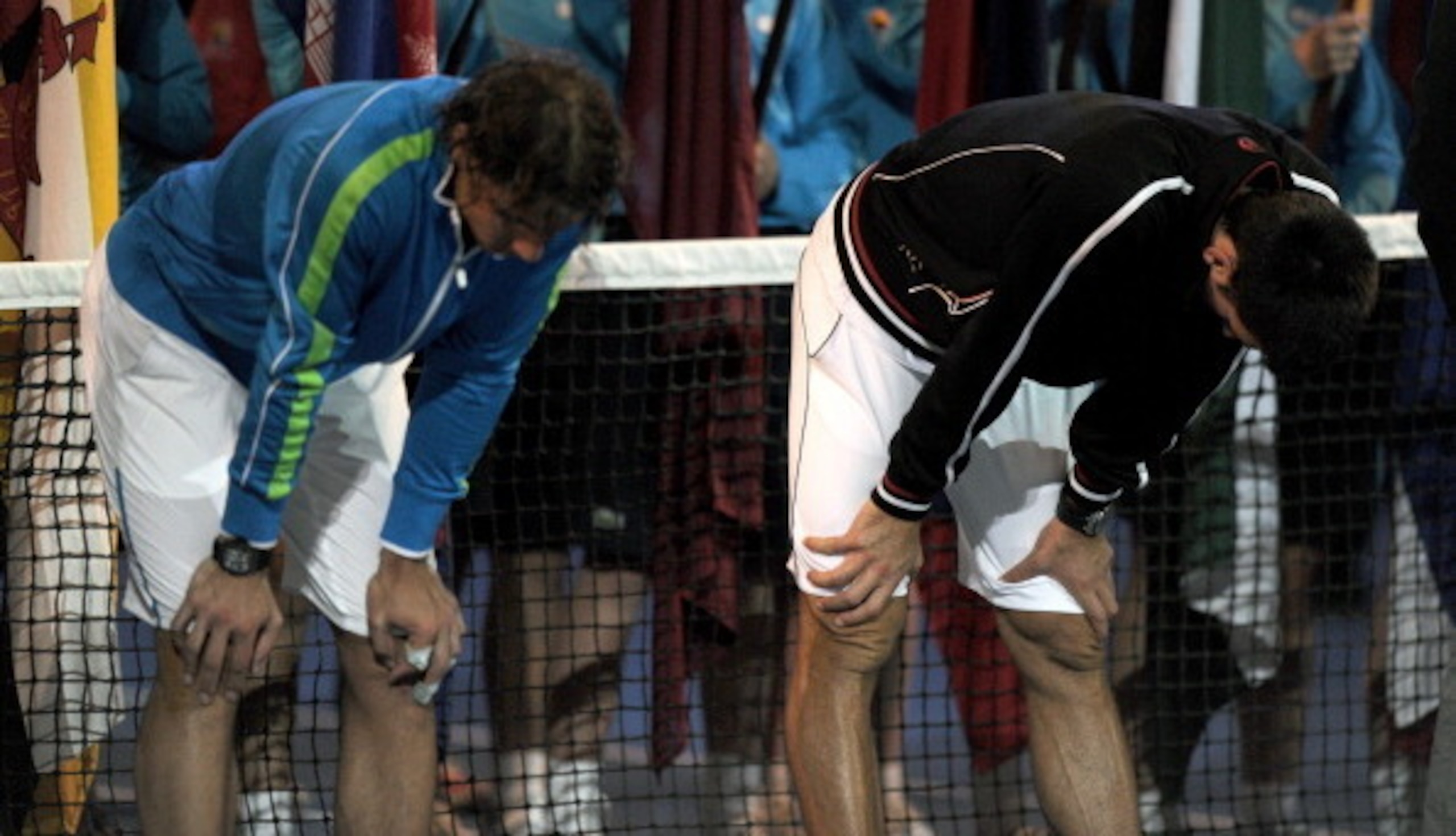
Novak Djokovic was pushed to five sets in both the semifinals and finals of the 2012 Australian Open, so he certainly did not dominate the field the way he did the previous year.
However, beating Andy Murray and Rafael Nadal in consecutive marathon matches, when both were at the top of their games, amounts to a pretty impressive performance regardless of the scores.
Djokovic began the 2012 Aussie Open as if he would crush everybody in sight. He yielded just 10 games in his first three matches combined, an unprecedented run of dominance through three rounds. Djokovic dropped the third set to Lleyton Hewitt in the round of 16 but was never in serious danger of losing, and he breezed by David Ferrer in straight sets in the quarterfinals.
Next up was Murray, who had improved incrementally each year. He had reached the Australian Open finals each of the previous two years and was in the semifinals of a Grand Slam event for the fifth straight time.
Djokovic trailed two sets to one against Murray but won the fourth set decisively and led 5-2 in the fifth. Djokovic failed to serve out the match at 5-3 but finished off Murray 6-3, 3-6, 6-7, 6-1, 7-5. Djokovic did it despite fatigue and some breathing problems caused by allergies, according to the Associated Press report of the match.
After beating Murray in that marathon on Friday, he faced a Sunday finals against Nadal, who had an extra day of rest after beating Roger Federer in four sets on the Thursday.
The final turned out to be a battle of mental and physical strength as the two battled for five hours and 53 minutes, the longest finals of a Grand Slam event in history, according to the Associated Press account. The match did not end until 1:37 a.m. Monday.
Djokovic survived with a 5-7, 6-4, 6-2, 6-7, 7-5 victory to give him his third straight Grand Slam title and fifth overall.
"It was obvious on the court for everybody who has watched the match that both of us, physically, we took the last drop of energy that we had from our bodies," Djokovic said, per the New York Times report.
So the question remains: Was Djokovic's dominant run in 2011 a better performance than his inspiring dig-deep effort in getting past Murray and Nadal in 2012? It's a matter of personal preference. Jump ahead for analysis of Djokovic's 2011 Australian Open.
3. Roger Federer, 2007
8 of 10
Roger Federer's run to his third Australian Open title in 2007 may have been the most dominant performances of his career.
Federer did not lose a set in his seven matches and lost no more than 14 games in any of his matches.
Andy Roddick was Federer's toughest opponent in that tournament, and Federer dismissed him with alarming ease in the semifinals 6-4, 6-0, 6-2. It may have been the most impressive single-match performance of Federer's career.
As the New York Times noted, "this hotly anticipated semifinal turned into an 83-minute ode to the brilliance of Federer, and only Federer... By the end of the second set, it felt much less like a match and much more like a demonstration."
Though Roddick was just 26 years old, his career may have been on the decline by then. Roddick's only Grand Slam title had come four years earlier, and he would get past the quarterfinals only twice in his 21 Grand Slam events after the 2007 Australian Open.
Federer then defeated 10th-seeded Fernando Gonzalez 7-6, 6-4, 6-4 in the finals.
In retrospect, Federer's toughest foe that year may have been an up-and-coming player named Novak Djokovic, who lost to Federer 6-2, 7-5, 6-3 in the fourth round. But Djokovic was only 19 years old and seeded No. 14 at the time.
In fact, Federer did not have to beat any player seeded among the top five. Rafael Nadal, the No. 2 seed and a four-set loser to Federer at the 2006 Wimbledon, was eliminated by Gonzalez in the quarterfinals.
Though Federer's demonstration of superiority over the field was impressive, he did not have to beat any truly great players to do it.
2. Stan Wawrinka, 2014
9 of 10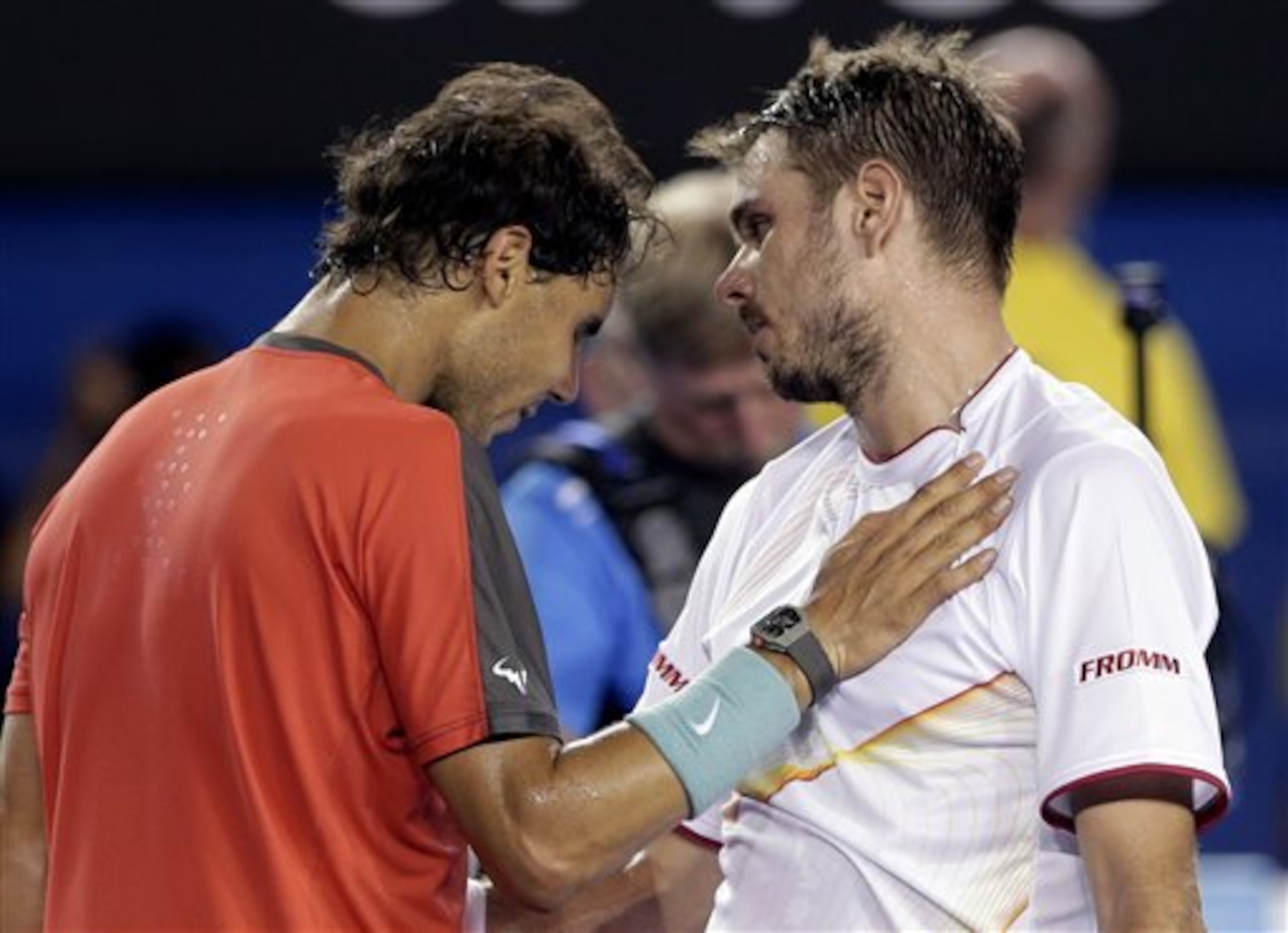
Stan Wawrinka captured his first Grand Slam singles title by winning the 2014 Australian Open, and he had to beat the top two ranked players in the world to do it.
Wawrinka, ranked eighth in the world at the time, benefited from having Andrey Golubev retire in the second set in his opening match and having Vesek Pospisil default in the third round. Wawrinka did not crush every opponent in sight while advancing to the quarterfinals, but Wawrinka put himself in position to make his mark.
After losing to Novak Djokovic in an epic five-setter in 2013, Wawrinka turned the tables on the world's No. 2 player this time in the quarterfinals. Wawrinka's 2-6, 6-4, 6-2, 3-6, 9-7 victory ended Djokovic's 28-match winning streak overall and his 25-match run at the Australian Open.
Wawrinka got past No. 7 Tomas Berdych in a tight semifinal 6-3, 6-7, 7-6, 7-6 to reach the finals against No. 1-ranked Rafael Nadal, who had lost just one set in the tournament and had easily swept away Roger Federer in straight sets in the semifinals.
Wawrinka dominated the finals, winning 6-3, 6-2, 3-6, 6-3. The only mitigating factor was that Nadal injured his back in the second set and was not at full strength the rest of the way.
Even though Wawrinka did not steamroll the field as Roger Federer had in 2007, consider what Wawrinka accomplished: He beat Djokovic, the world's No. 2 player who had owned the Australian Open and had defeated Wawrinka in their past 14 meetings dating back to 2006. Wawrinka also beat Nadal, the world's No. 1 player who had won both the French and U.S. Open titles in 2013 and had a 12-0 record against Wawrinka, who had won just one set from Nadal before their meeting in the 2014 Aussie Open.
That is pretty much the definition of an impressive performance.
1. Novak Djokovic, 2011
10 of 10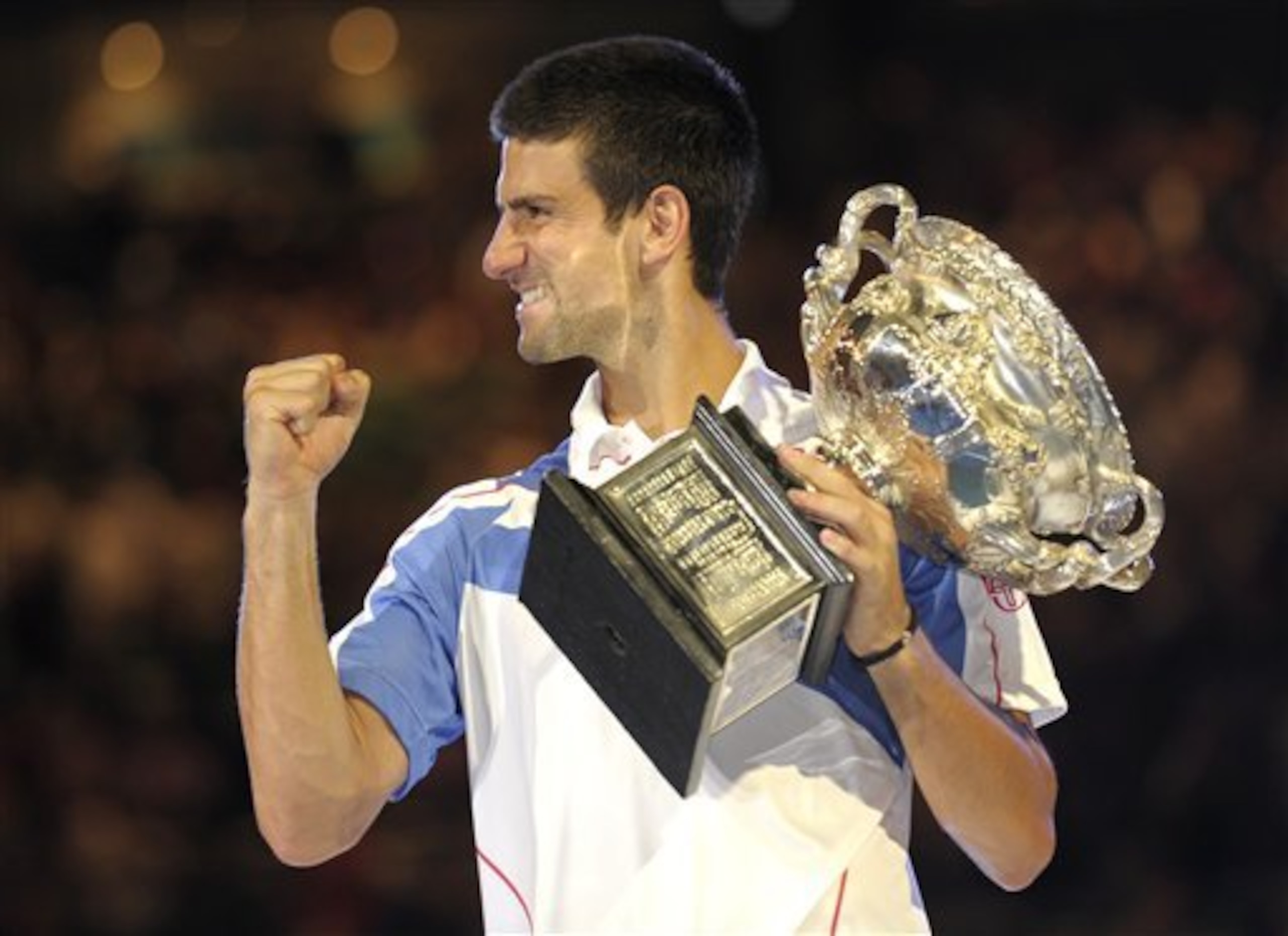
Novak Djokovic's 2011 season was one of the best in men's singles history, and it started with his victory at the Australian Open.
Djokovic won 70 of his 76 matches in 2011, when he won three of the four majors, and his seven match victories at the Australian Open were part of a 43-match winning streak that did not end until the French Open semifinals.
Djokovic, seeded No. 3, lost only one set in Melbourne in 2011, and after he dropped the second set in a tiebreaker to unseeded Ivan Dodig in the second round, Djokovic won the final two sets 6-0, 6-2.
Djokovic did not have an easy draw, having to get through five players ranked among the top 30, including three in the top six. But he eliminated all of them with relative ease. Djokovic ousted 14th-seeded Nicolas Almagro 6-3, 6-4, 6-0 in the fourth round. He beat sixth-seeded Tomas Berdych 6-1, 7-6, 6-1 in the quarterfinals. He knocked off second-seeded Roger Federer 7-6, 7-5, 6-4 in the semifinals.
"I thought he played a great match," Federer said, per the BBC. "I didn't think I played bad myself."
Djokovic then blew by fifth-seeded Andy Murray 6-4, 6-2, 6-3 in the finals.
"He had an unbelievable tournament and deserved to win," said Murray, according to the BBC.
The New York Times suggested that Djokovic's 2011 victory indicated that men's tennis was no longer the "Big Two" of Federer and Rafael Nadal but had become the "Big Three." That proved to be the case.
.jpg?w=2560 "Rams Eagles Football")
.jpg?w=2560 "Texans-Mixon Released Football")
.jpg?w=2560 "2 NFL Officials Suspended")


.jpg?w=2560 "Mahomes' Wife Trolls Kubiak 💀")

.jpg?w=2560 "Grading WWE Raw 🔠")