7 Key Takeaways from the Peak Months of MLB's 2015-16 Offseason Frenzy
The 2015-2016 Major League Baseball offseason has kicked up quite a storm, but it's just about settled. With spring training on the horizon, the peak months of the Hot Stove season are nearly over.
So let's take a minute or two to talk about what we've learned.
It's obviously a lot, but we're going to file the really important stuff into seven key takeaways. These range from interesting new wrinkles that the winter brought to how the free-agent and trade markets behaved to how much money was spent. On that last point, prepare for some big numbers.
We'll go in order from least interesting to most interesting. Step into the box whenever you're ready.
7. The Qualifying Offer Experiment Reaches a New Stage
1 of 7
If you need a refresher on what the qualifying offer is all about, it's a one-year contract deal that teams can make to their free agents. If they accept it, they get paid an average of the top 125 player salaries for one year. If not, they enter the open market tied to draft pick compensation.
In the first three years of the system, being tied to draft pick compensation proved to be a burden for some players. Some saw their value suffer. Others, such as Stephen Drew and Kendrys Morales, saw their value dry up altogether. So heading into this winter, the risk of rejecting the qualifying offer was well-known.
Cue the inevitable finally happening.
Houston Astros outfielder Colby Rasmus, Baltimore Orioles catcher Matt Wieters and Los Angeles Dodgers left-hander Brett Anderson became the first three players to accept the qualifying offer, which was worth $15.8 million this year.
This sent a message to teams that they can no longer make qualifying offers under the assumption that they're going to be rejected, which is an important enough development in its own right. What happens next will determine if these three players will go into the books as cautionary tales or guiding stars.
They'll become the former if they underperform and/or get hurt in 2016, in which case they may have wasted their chance at getting an even better payday than $15.8 million. But there's a chance that their gambles will pay off. As Ken Rosenthal of Fox Sports explained in the case of Rasmus:
"Rasmus, at the high end, might have commanded a three-year, $42 million deal if he had remained a free agent. Now that he will earn $15.8 million, he will need only to strike a two-year, $26 million contract next offseason to match that contract -- and he could do considerably better.
"
Wieters and Anderson could also benefit in a similar fashion, in which case they'll have shown that accepting the qualifying offer can actually be good for a player's business in the long run.
6. Opt-out Clauses for Everyone!
2 of 7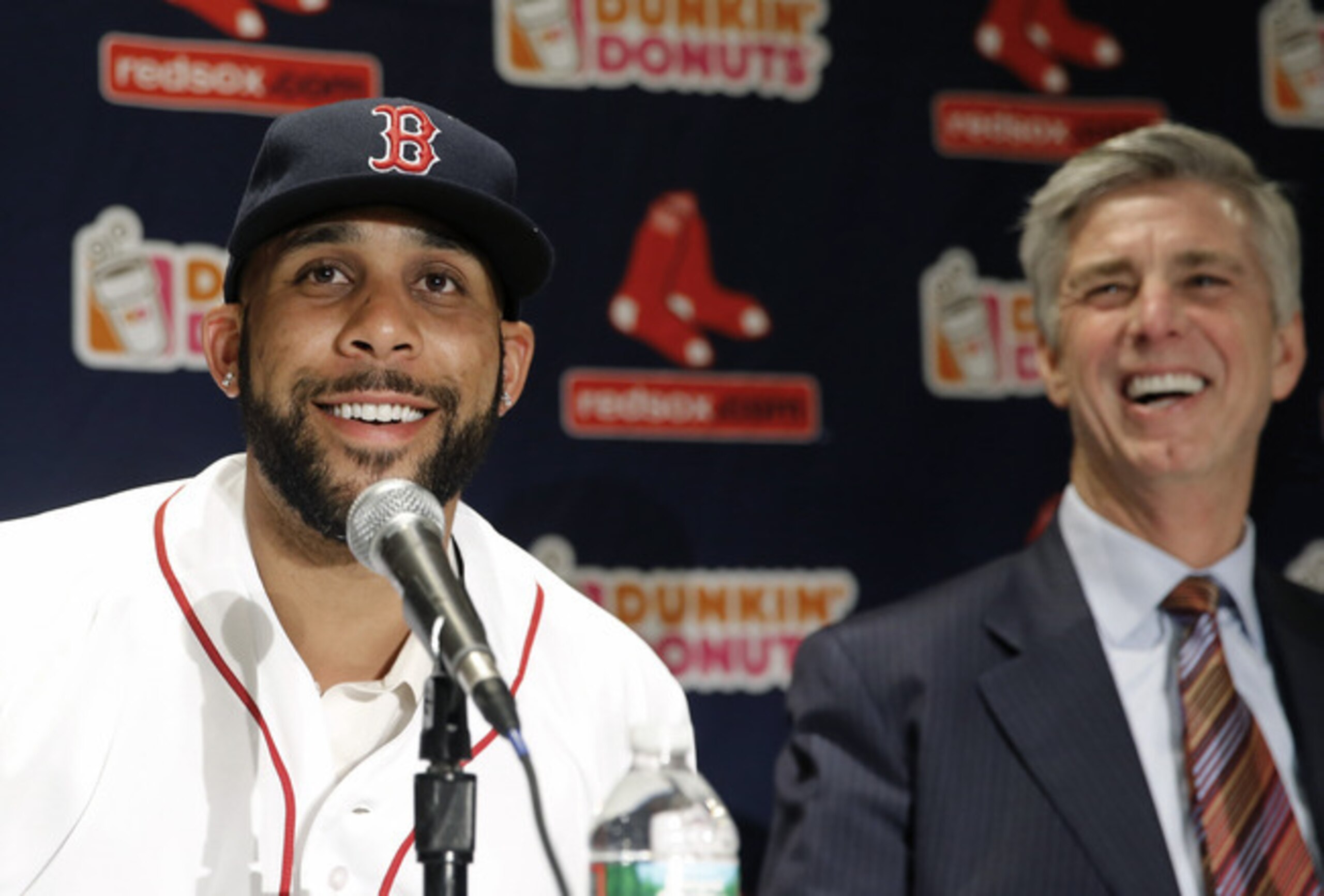
The money that has gone into free-agent contracts this winter is worth talking about. And don't worry. We'll get to that.
But for now, let's focus on the other noteworthy aspect of this winter's free-agent market: the rise of the opt-out clause.
Of course, opt-outs are nothing new. But this winter they are becoming more prevalent. So far, David Price, Jason Heyward, Johnny Cueto, Scott Kazmir, Justin Upton and Yoenis Cespedes have signed deals with opt-outs.
This is another development that was probably inevitable. Players know from examples like Alex Rodriguez, CC Sabathia and Zack Greinke that getting and using an opt-out can be good for business, as it's essentially a way to take advantage of updated market values while the getting's good.
Of course, not everyone is sold. Opt-outs may make sense for players, but Commissioner Rob Manfred told Rosenthal in December that he doesn't understand the appeal for teams.
"You make an eight-year agreement with a player. He plays well, and he opts out after three. You either pay the player again or you lose him," Manfred said. "Conversely, if the player performs poorly, he doesn't opt out and gets the benefit of the eight-year agreement. That doesn't strike me as a very good deal."
Perhaps Dave Cameron of FanGraphs explained it better, writing that "the players will only opt-out if they have below-market contracts ... and are positive-value assets for the club at that point."
But while these are good points, it may be too late for things to change.
Opt-outs have always made sense for players, and this could prove to be the winter that they became part of the cost of doing business in free agency. And even if teams prefer not to give them out, one strong justification is that opt-outs offer the potential to get out of an albatross contract before it actually becomes an albatross contract.
5. The Strange State of the National League
3 of 7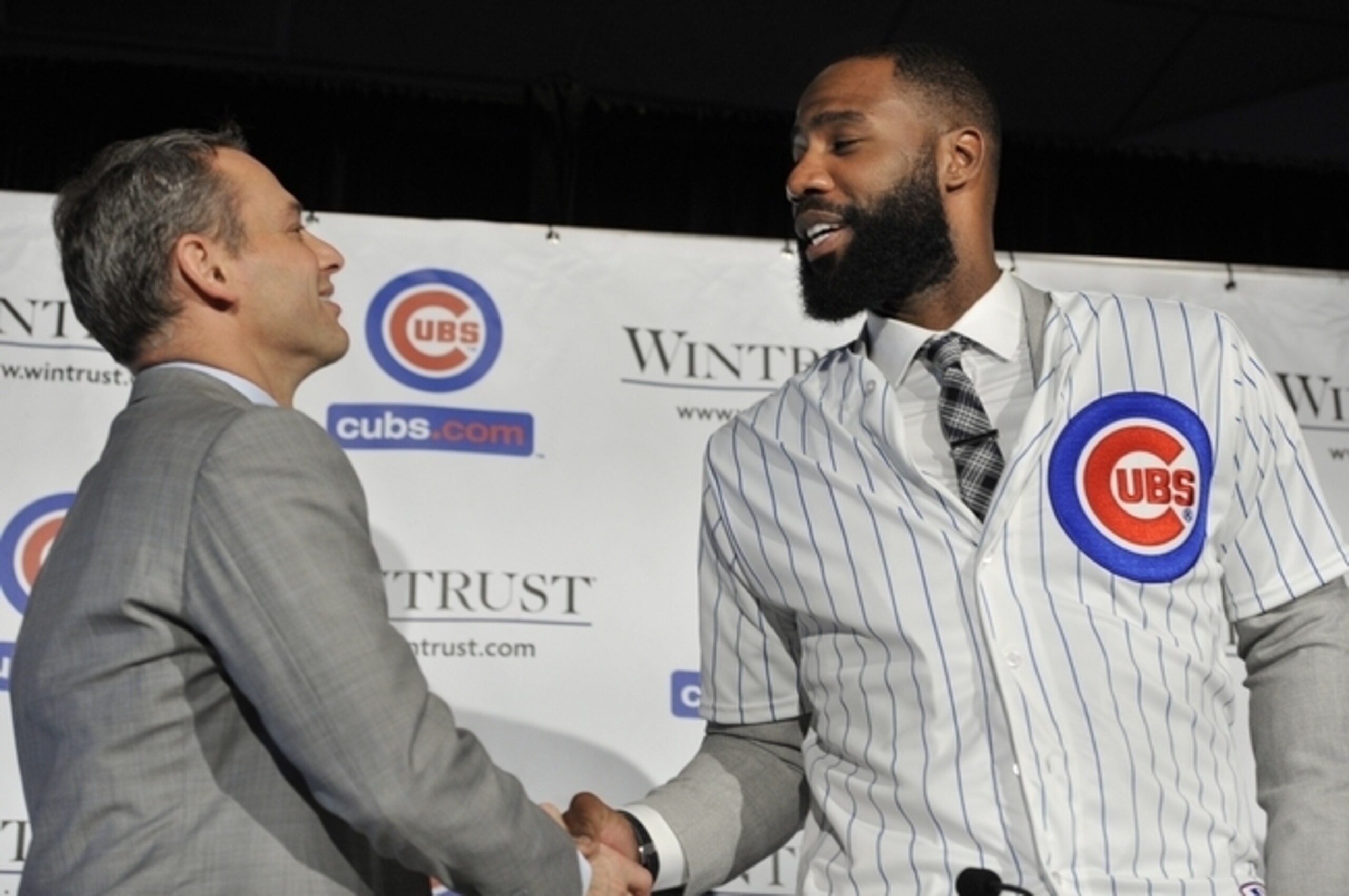
Let's take a break from business for a second and talk about how the offseason has actually changed the MLB landscape, in particular in the National League, which has split in two.
As Matt Snyder of CBS Sports noted, basically half of the league is in rebuilding mode. And of that half, the only team on a fast track to success is the Atlanta Braves. And even they likely won't be ready to compete until 2017 at the earliest.
The other half of the National League, meanwhile, is full of teams that fancy themselves as powerhouses who are now locked into quite the power struggle.
In 2015, the divisional forces in the National League were the Los Angeles Dodgers, St. Louis Cardinals and New York Mets, and all three have felt the heat this winter. The Dodgers watched the Arizona Diamondbacks remake their pitching staff with Greinke and Shelby Miller and the San Francisco Giants do the same with Jeff Samardzija and Johnny Cueto. The Cardinals saw the Chicago Cubs steal away Jason Heyward and John Lackey and also sign Ben Zobrist. The Mets watched the Washington Nationals grab Daniel Murphy and remake their iffy bullpen.
Despite all this, though, it's possible not much will change in the end. According to FanGraphs' WAR projections, the Dodgers, Cardinals and Mets—especially after reportedly re-signing Cespedes, per Rosenthal—are still elite teams. And after winning 98 games in 2015, the Pittsburgh Pirates are another National League team that has a chance to be in that category.
Amazingly, this means the National League could be even more top-heavy in 2016 than it was in 2015.
Last year, the league balanced six 90-loss teams with five 90-win teams. Currently, FanGraphs' projections see three teams that could flirt with 90 losses, and three more that could hover around 100 losses. On the flip side are seven teams that project to finish comfortably over .500.


4. Good Luck Predicting the 2016 American League Race
4 of 7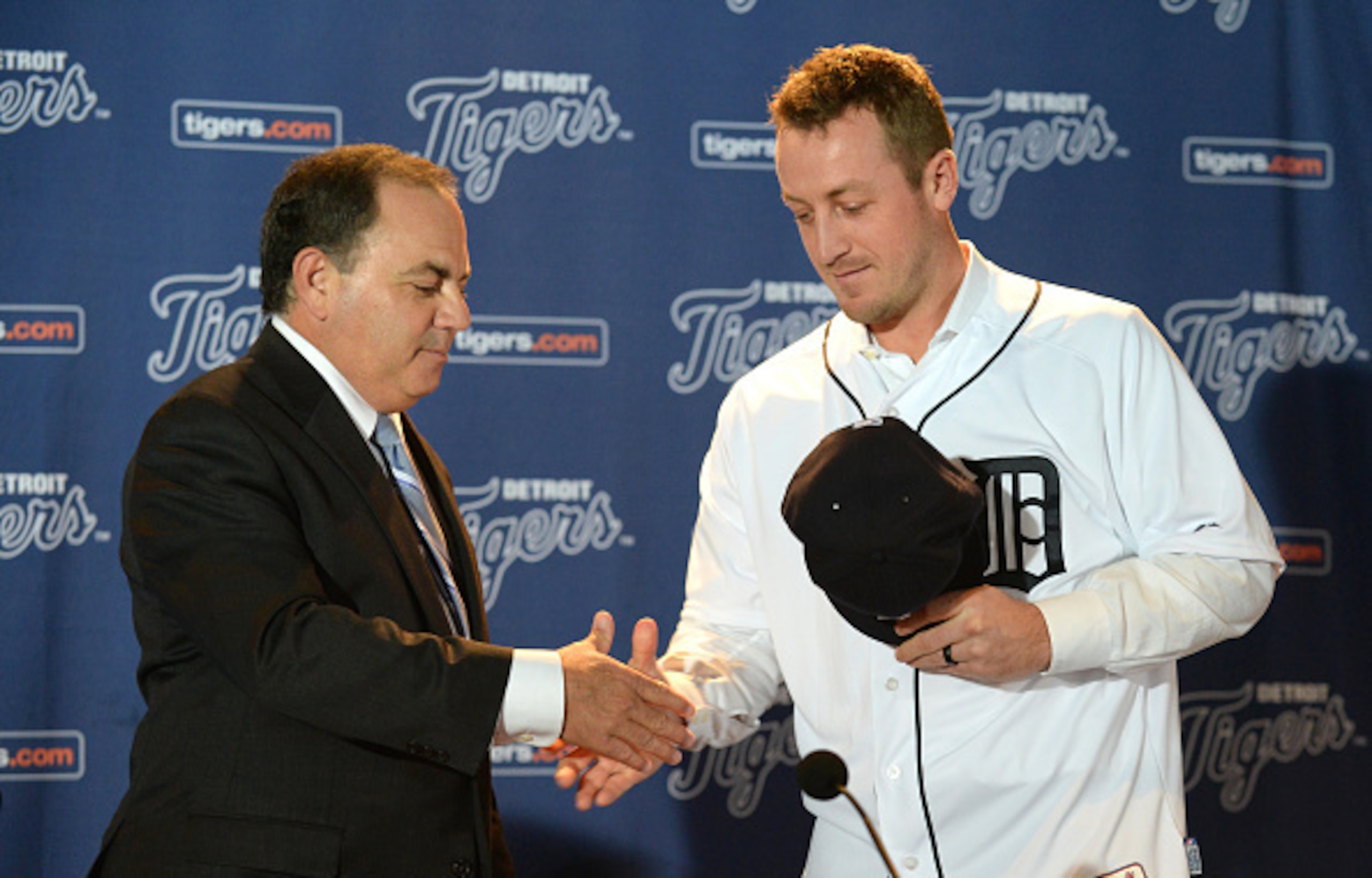
Want to know what the opposite of the National League looks like? All you have to do is look at the American League.
This also is a case of a pre-existing condition becoming even more pronounced. During the 2015 season, nine teams got in on the American League playoff race. This winter, a couple that were left out have fought back.
The Boston Red Sox responded to finishing in last place by landing a huge missing puzzle piece when they signed Price, and they also upgraded their bullpen with Craig Kimbrel and Carson Smith.
The Detroit Tigers also had a strong reaction to finishing in the cellar. They signed Jordan Zimmermann and Justin Upton to $100 million deals and also upgraded their depth in a few key areas.
The Seattle Mariners had a busy offseason in response to an 86-loss campaign. They didn't make any huge moves, but new general manager Jerry Dipoto made a whole bunch of small ones that largely eradicated the club's glaring weaknesses.
Although these three clubs should be better in 2016, complicating matters is that none of the top teams from the 2015 AL race got worse. Baltimore was the only team even so much as threatening to do so, but it saved quite a bit of face by re-signing Chris Davis.
Depending on your point of view, the grand result should either be a parity dream or a parity nightmare.
FanGraphs' projections for 2016 project that only five AL teams will finish below .500, and even the worst of them won't be that bad. Whereas there's almost a 30-game gap between the best and worst team in the NL projections, there's only a 14-game gap between the best and worst team in the AL projections.
3. The Trade Market Is Sort of a Second Free-Agent Market
5 of 7
Before we can discuss this, we must first go back to a point that was made last winter.
There was a bit of a trading frenzy then, with Heyward, Upton, Josh Donaldson, Matt Kemp, Jeff Samardzija and Ben Zobrist all changing addresses via trades. That prompted Jim Duquette of MLB.com to muse that trades had become the new free agency, as they were the best way to find the impact talent the open market lacked.
Coming into this winter, it was fair to wonder if that trend would take a break. The free-agent market was not only better than it had been in years but maybe better than it had ever been. Given that, there was less need for teams to look for impact talent on the trade market.
But, nope.
The trade market didn't slow down one bit. CBS Sports' trade tracker features a few dozen entries, and they're not short on big names. Among those are three shutdown closers in Kimbrel, Aroldis Chapman and Ken Giles, as well as Andrelton Simmons, Todd Frazier, Shelby Miller, Starlin Castro and Wade Miley.
Why did the trade market keep going strong even despite the plethora of talent on the free-agent market? It's at least partly because the trade market is often a better place to find good talent regardless of what's readily available on the open market.
As the trades of Kimbrel, Giles, Simmons, Miller and Castro, in particular, show, it's easier to find the youthful talent that teams crave in trades than in free agency. And even though the best players don't come cheap, it tends to be a better idea to pay a heavy trade price for a player in his prime than a heavy free-agent price for a player at or nearing his declining years.
Beyond that, there's the fact that only a small handful of teams in the league aren't trying to win. That creates quite a demand for the trade market to remain active.
2. Pitching Is Still All the Rage
6 of 7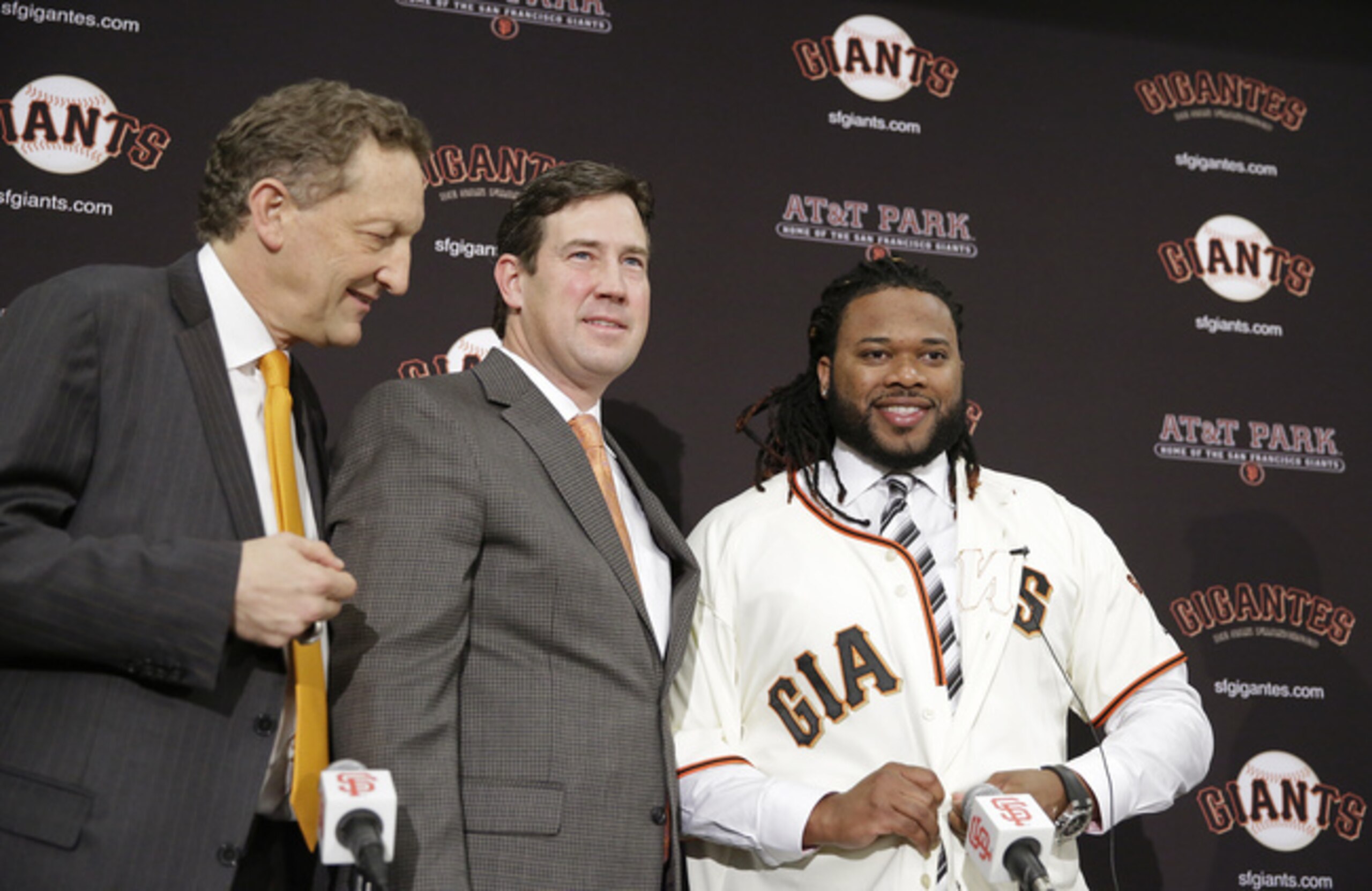
Now then. Let's talk money—more specifically, the unholy heaps of it that have been rained on pitchers.
Per ESPN.com's free-agent tracker, more than $2 billion has been spent on free agents this winter. And after reading the above subheadline, you won't be surprised to hear that most of it has gone to pitchers.
About $1.4 billion of all the money dished out to free agents has been spent on arms. This includes record-breaking deals for Price ($217 million over seven years) and Greinke ($206.5 million over six years) as well as $100 million deals for Zimmermann and Cueto.
Most shocking, though, is how much money has been spent on pitchers that aren't that good.
You get nearly $300 million in guaranteed money when you add up the contracts of Mike Leake, Ian Kennedy, J.A. Happ, Marco Estrada and Wei-Yin Chen, starters who dabble in the realm of league average. Likewise, you get almost $100 million in guaranteed money if you total the contracts of five good-not-great relievers: Joakim Soria, Ryan Madson, Tony Sipp, Shawn Kelley and Antonio Bastardo.
In a sense, this is almost (if not entirely) counterintuitive. Baseball is in an era dominated by pitching, which should place a greater emphasis on teams collecting as many bats as they can. Also, pitchers certainly aren't getting any more durable. Knowing this, it seems as though teams are rushing to pay huge sums to players who are both plentiful and fragile.
There is a logical explanation, though.
With pitching being dominant, any team that doesn't have enough of it simply isn't going to be able to match up. What we're seeing is teams that are more afraid of being left behind than they are interested in pinching pennies. Competition is trumping finance, which isn't a bad thing.
1. There's Always Enough Money for Everyone
7 of 7
Though pitchers have hogged the market, we can say this for the 2015-2016 free agent class: So far, everyone has done well.
This is the first time more than $2 billion has been sunk into free agency. Also, the seven $100 million contracts handed out this winter is four more than in any prior offseason.
Then there's the reality that, contrary to everyone's recent fears, the free-agent market is still going strong.
Coming into January, Upton, Davis, Kennedy, Cespedes, Alex Gordon and Denard Span remained unsigned. This had some of us (myself included) wondering whether the league had simply run out of spending money. If it had, clearly the only option for the remaining stars was to target short-term deals that would allow them to hit the open market again next year.
Well, so much for that. All six of the players mentioned above have come off the board this month—and for well over $500 million in guaranteed money.
Call it a sign of the times. Though teams often seem more wary today of spending big bucks in free agency, it was never believed that they were not going to invest a ton of money into it this winter. Beyond it being, as Craig Edwards of FanGraphs highlighted, an absurdly talented class of free agents, Maury Browne of Forbes reported MLB's ever-escalating revenue stream hit a record $9.5 billion in 2015.
Take the supply and the funds and combine them with the demand created by the general parity of the league, and you get a perfect storm for spending.
Stats courtesy of Baseball-Reference.com and FanGraphs unless otherwise noted/linked.

.jpg?w=2560 "Injury-stricken Seahawks signing veteran RB")
.jpg?w=2560 "2 NFL Officials Suspended")
.jpg?w=2560 "Viral Rams Coach Vid 🖕")



.jpg?w=2560 "Mahomes' Wife Trolls Kubiak 💀")