

What Role Should Arjen Robben Play for Bayern Munich as the Season Progresses?
There's been a changing of the guard at Bayern Munich this season, as longstanding stars of the club have made way for the next generation to come forward.
Bastian Schweinsteiger left for Manchester United last summer, and injuries have stifled any chance of Franck Ribery being the key figure he once was. Even Philipp Lahm, always a rather quiet player in any case, has played a rather muted role since turning 32 years old in November.
In place of the veteran stars, new ones have stepped forward. Douglas Costa has been outstanding in Ribery's position and functions as the fleet-footed livewire in attack—a creator who can use pace and skill to slip past opponents one-on-one and set up scoring opportunities.
TOP NEWS

Final Men's Ballon d'Or Rankings 📊
Highlights and Viral Moments 🍿

Carrick Replacement Options 📝
Thiago Alcantara has stepped into the Schweinsteiger role at times, although Bayern have often used a more aggressive formation to accommodate their contingent of illustrious attacking options.
In terms of leadership and image, the "old guard" has given way to newcomers like Costa and academy graduates David Alaba and Thomas Muller. The latter was given a new contract last month, ending speculation over his future and making him the best-paid player in club history with (according to Bild's Kai Psotta and Jorg Althoff) a €15 million annual wage.
Jerome Boateng also extended his contract with (according to the same report) a €12 million salary, the new wages being a clear showing of how the board of directors views the club's leadership for the upcoming years.
Amid all the changes in Munich, there are questions of where the old guard stands. Ribery's ability to contribute at this point is in serious question due to his continued lack of fitness and Schweinsteiger is already gone, but what of captain Lahm and fellow veteran Arjen Robben?
The situation for the Dutchman is particularly critical, given the role he's played at Bayern over the last six-and-a-half years.
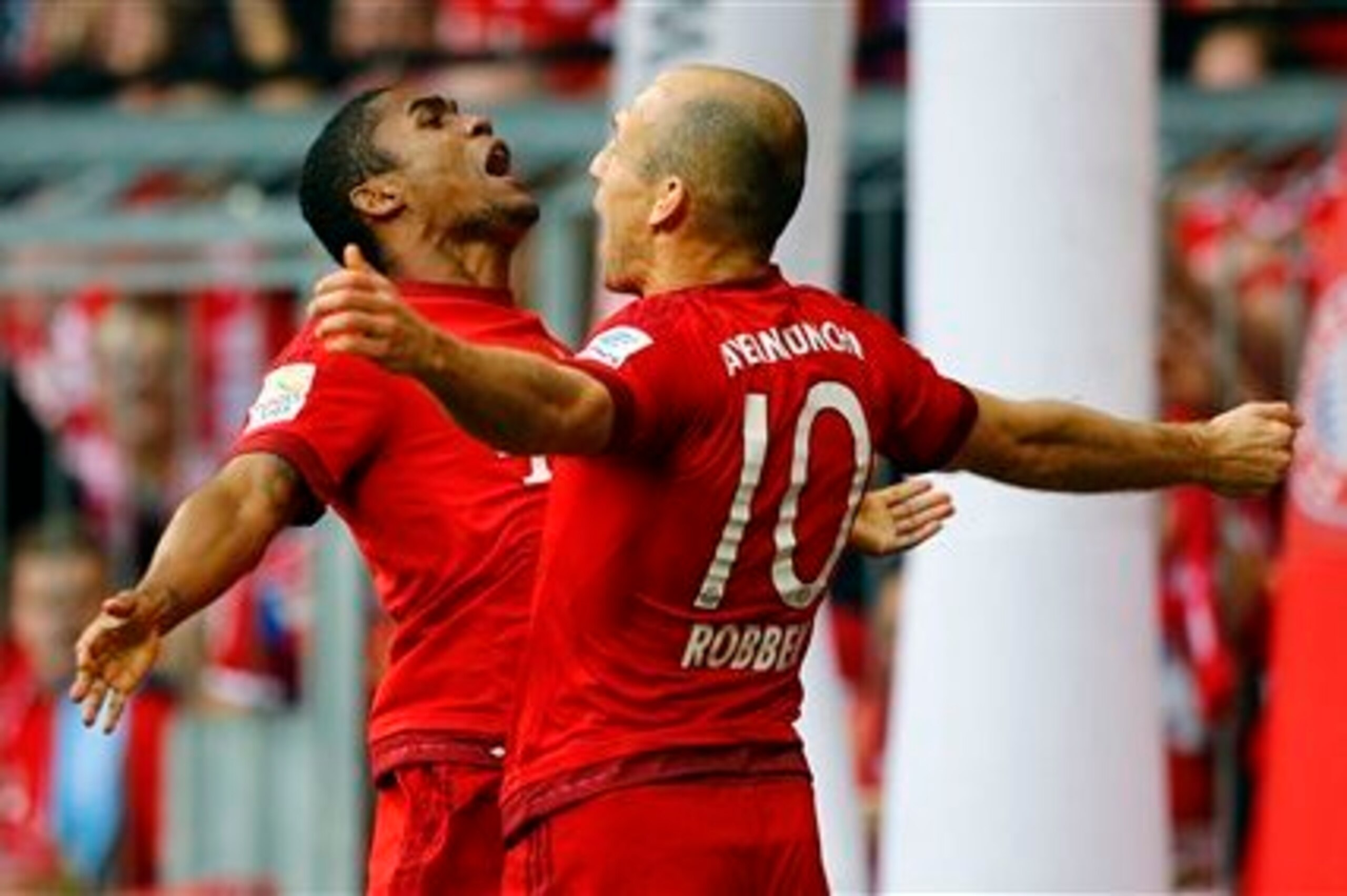
Robben missed much of the first half of the season due to a pair of muscular injuries, and Bayern did quite well in his absence as Costa, Muller and Robert Lewandowski picked up the slack to form a devastating attacking trio. Even 19-year-old Kingsley Coman proved a reliable performer on the wing.
Therefore, it might at first seem that Robben isn't needed as he once was. And although there might be a grain of truth in this, it would be a mistake to think the Dutchman's influence isn't key to the club's success in the business end of the season.
The undeniable truth is that as great as he's been, Costa isn't experienced at the very highest level in the way Robben is.
At 25, Costa might no longer be a kid, but the Brazilian never made it to the latter stages of the Champions League knockout rounds with Shakhtar Donetsk. For his country, he was a substitute at the Copa America and only became a full international 14 months ago. He's had a great season thus far, but when it comes to the matches that decide titles, no-one knows how he'll react.
Robben fully understands how difficult it can be to be the difference-maker in a big game. He was outstanding for Bayern from his debut game, in which he scored a brace against then-defending champions Wolfsburg.
Yet for a long time, he was just a "nearly-man," who always fell short at the final hurdle.
It happened in the 2010 Champions League final. It happened shortly thereafter in the World Cup final, when he spurned a couple gilt-edged opportunities to put the Netherlands ahead. It happened in 2012, when he missed two huge penalties for Bayern, including one in extra time of the Champions League final. It was only in 2013, when at the age of 29 and after falling short so many times, he changed his destiny by assisting and scoring in the 2013 Champions League final.
Aside from the big games, there's still every reason to believe Robben will be able to produce on a week-in, week-out basis provided he stays fit.
Despite being just a few days before his 32nd birthday, his injury-riddled past means that he actually has clocked less mileage than many players of his age. And it also has given him a good understanding of his limits and the importance of fitness.
In an interview with Donald McRae of the Guardian last February, Robben explained his dedication to fitness and understanding of his body: "I started working with an osteopath in my last year at Real Madrid [in 2009] and I continued when I came here. We have a great medical team and with the special training we do, the extra work I put in, it’s getting control over your body. You know when you are in the danger zone as you get a better understanding of your body. Now, touch wood, it’s going really well."
He also added that he "put in many extra hours in the gym and with the physios."
Despite missing much of the first half of the season, there's plenty of reason to believe Robben will be a key figure once more after the winter break. After all, he missed the entire first half of the 2010-11 season and still managed to score and assist 13 goals apiece in just 18 matches during the spring of 2011.
The extra time in the gym and freshness from missing the opening months of the season seemed to have a positive effect on him, and he stayed healthy, focused and motivated throughout the spring campaign.

Just a year after, arguably, the best individual season of his career, in which his 17 Bundesliga goals nearly won him the league's top scorer award, it's hard to see why Robben shouldn't be the main man in the Bayern attack. That is, at least in the type of role he has traditionally played.
Costa is Ribery's heir-apparent, and he'll certainly be the primary playmaking force in the attacking third. But Robben has long been the main provider of goals from midfield and the creative complement to Ribery. He should be able to function similarly opposite Costa; whoever gets the headlines is of little importance.
On a personal level, Robben will be keen to prove himself. The team, its leaders and dynamic are all changing. Carlo Ancelotti will bring a new kind of football next year, and Robben's role may be compromised.
As such, the second half of this season will be Robben's appeal to be a key part of Ancelotti's plans. It could also be remembered in history as his swan song. In either case, especially with the Netherlands having failed to reach UEFA Euro 2016, Robben will want to take advantage of what little time he has left at the very highest level.
As tempting as it may be to rely on younger, new stars, Pep Guardiola would be wise to take advantage of Robben's freshness and extra motivation to deliver once again at the highest level. Relying on the Dutchman as a consistent starter, especially in the big games, is a good start.
However, Guardiola will be wise to show his belief in the player during training and in team meetings, and to generally do what he can to bring the best out of his aging star.
Robben may no longer be young, but he's still a class player. And Bayern ought to lean on him for at least another half-season. He's their best ticket for success.

.jpg?w=2560 "Raiders Could Start Mendoza")



.jpg?w=2560 "Rodgers Iced Out on Plane 💎")
.jpg?w=2560 "🚨 Week 8 AP Top 25 Poll")
