

Why Lionel Messi and Neymar Must Finish Above Cristiano Ronaldo in Ballon d'Or
As overblown and narcissistic as FIFA's Ballon d'Or might be, what cannot be denied is that a peculiar affinity toward individual awards exists.
Despite football being a team game, with collective concepts and ambitions, ultimately a club's desires (however grand or negligible) cannot be fulfilled without individual brilliance. Honours like the Ballon d'Or are meant to judge the best among that lot.
Finalists for the 2015 rendition of FIFA's seminal individual trophy are Real Madrid's Cristiano Ronaldo, alongside him the Barcelona duo of Neymar and Lionel Messi. Scheduled for January 11, one of the trio shall receive a golden ball, make a speech, and Earth will hopefully continue revolving after an inevitable social media barrage.

.jpg?w=2560)

In a fair world, taking the last calendar year into account, Messi is the favourite. Ronaldo has won the last couple, but considering Barca's 2014/15 treble-winning season and the Argentine's mesmerising role therein, no other choice than the 28-year-old seems appropriate.
The distinction would be Messi's fifth Ballon d'Or and his first since 2012.
Scoring 44 goals and assisting 25 times from January 1 to present day, Messi's direct goalscoring contribution of 69 beats Neymar by 12 and the current holder by eight—despite missing 11 matches through various injuries, one keeping him sidelined for nearly two months.
The argument is not so much who will finish first, as the stats and trophies bear out a would-be formality. It appears the most intriguing question is who will finish second, the "Ballon d'Argent."

Neymar and Ronaldo will have front-row seats at the ceremony. They will likely have chances to speak (as FIFA tend to labour proceedings), and once the other awards are issued, and the Ballon d'Or announcement arrives, their respective days will likely conclude without lifting the golden ball. Messi had a fantastic calendar year (barring the 2015 Copa America), so there is no shame in second, but third place might sting.
It is actually ridiculous to have perceived losers in this scenario, but the nature of individual awards leaves little room for nuance. To be a finalist, one must have a solid season of work behind them (provided you believe FIFA nominate players for performance rather than ratings), thus declaring two of them "losers" is patently insane, but those are the inherent consequences of such awards.
Ronaldo, directly responsible for 61 Real Madrid goals in 2015, should never be considered a loser. Some might justifiably consider him overrated, possibly arrogant and more model than footballer. It is well within their right, but one cannot deny his impact when on top of his game.
Yet, when compared to Messi and Neymar—who has progressed by miles in the latter portion of the year—the Portuguese forward feels the third wheel this time around.
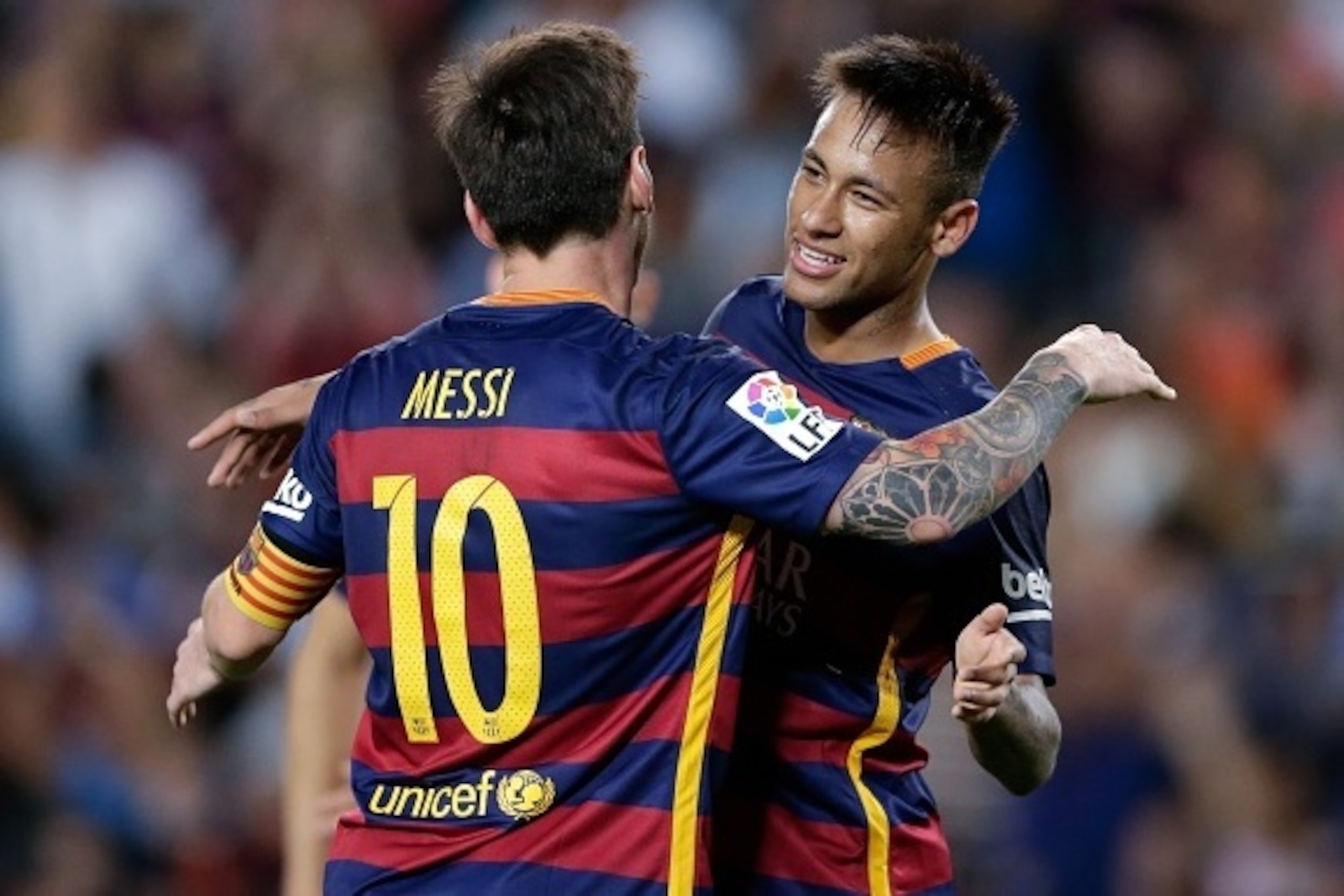
Neymar was an integral component of Barcelona's treble, and playing with the statistical vacuums of Messi and Luis Suarez, the Brazilian's ability to fend for himself is a resounding testament to his burgeoning superstardom.
When Barca's talisman aggravated ligaments in his knee, Neymar took Messi's mantle (even if only for two months) and was possibly football's best attacking player—certainly Spain's best.
It is challenging to argue Ronaldo sustained being the world's best footballer longer than a weekend in 2015. Messi and Neymar each had extended runs of prolonged greatness, which shows in each's statistical accumulations but, more importantly, in their respective trophy cabinets—a place where Ronaldo and Real Madrid failed to capture anything.
Simply based on lack of silverware, Ronaldo should place behind his fellow finalists, but with FIFA, anything is possible—which is not necessarily meant in a positive way.

One might be able to read a certain disenchantment with FIFA's Ballon d'Or throughout this article, and you would be correct. The trophy is a sideshow, a popularity contest and a ploy to create trending topics and spark debate.
In various aspects, FIFA cannot be blamed for wanting to focus on the game's stars because it makes the product easier to market (although the game virtually sells itself); but that should not be their aim. If FIFA's mission is promoting Pele's "beautiful game" properly, no finer aesthetic quality can be found than team.
Millions will tune their televisions to watch Messi, Neymar and Ronaldo vie for global supremacy next month, but to whoever wins (and to whoever cheers/berates the winner and/or losers), a serious question must be asked: Of what consequence is the Ballon d'Or really?
*Stats via WhoScored.com; transfer fees via Soccerbase where not noted.



.jpg?w=2560 "2 NFL Officials Suspended")

.jpg?w=2560 "Viral Rams Coach Vid 🖕")