

Early Trends That Will Shape the Rest of the 2015-16 MLB Offseason
There's still an awful lot of winter between now and spring training. So, suffice it to say we don't know all there is to know about the 2015-16 Major League Baseball offseason just yet.
But after a month or so of trade and free-agent activity, we do know a bit. A few trends have surfaced, and they give us a sense for how the rest of the offseason will play out.
On the eve of the winter meetings, we took a moment to dive into five trends in particular. They range from areas in which teams don't even seem interested to areas in which teams are hesitant to, naturally, areas in which teams are very interested.
Step into the box whenever you're ready.
Nobody Wants Free-Agent Position Players...Yet
1 of 5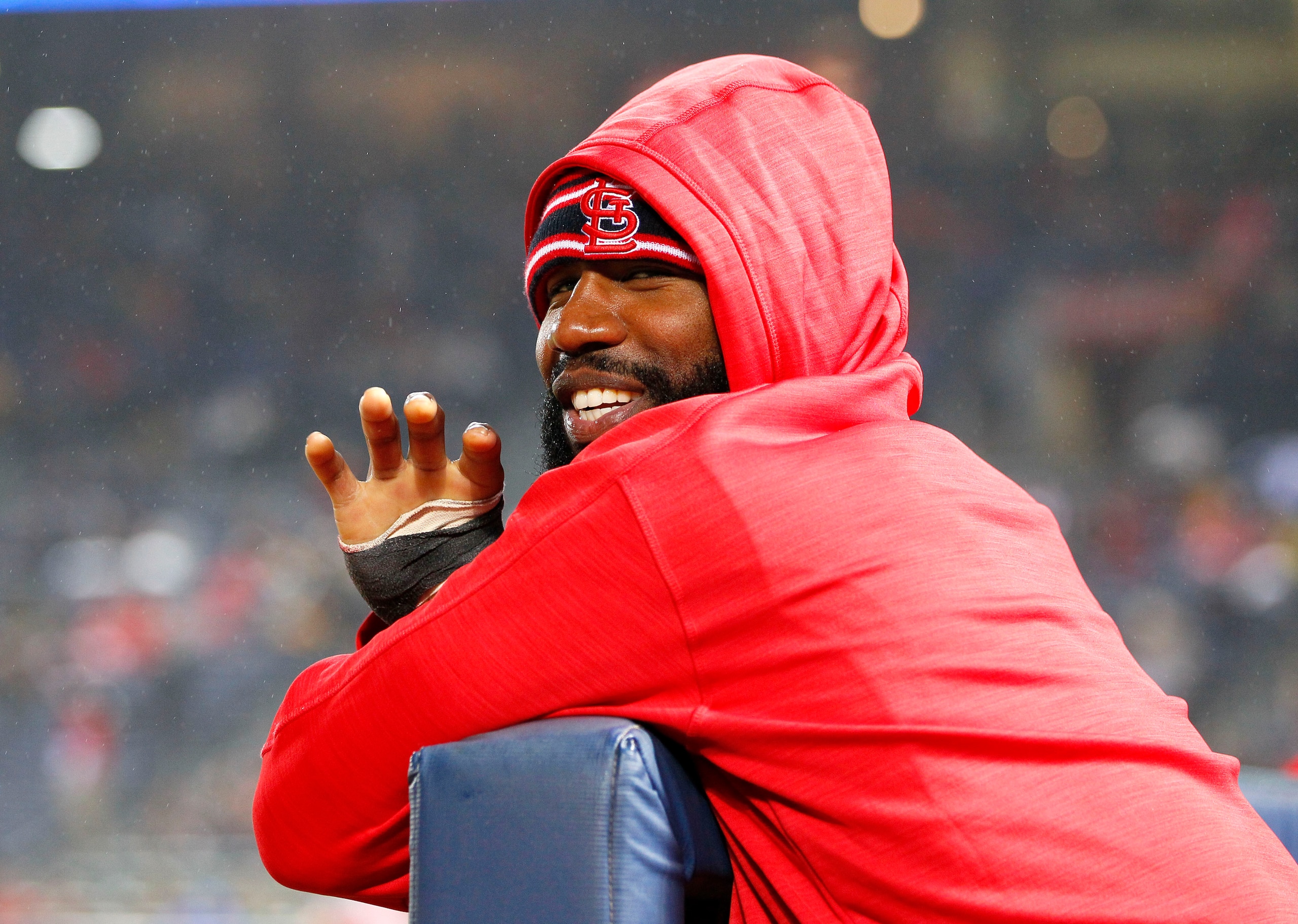
Regarding this winter's free-agent market, there's clearly plenty of starting pitching depth. There's an arm for everyone, and the demand for said arms is clearly there.
But we'll get to that later. For now, we're going to take a moment to pour one out for the bats.
The open market may be especially deep in arms, but it's definitely not shallow in bats. Out there for the taking are four terrific outfielders in Jason Heyward, Justin Upton, Yoenis Cespedes and Alex Gordon. Chris Davis' humongous power bat is still available. Ditto Human Swiss army knife Ben Zobrist and three pretty good middle infielders in Ian Desmond, Howie Kendrick and Daniel Murphy.
That none of them has signed after a month of activity is...odd, to say the least. And while that could be because none of them is in a rush, it could also be a form of payback for what happened last winter.
As noted by Joel Sherman of the New York Post, Pablo Sandoval, Hanley Ramirez, Russell Martin, Victor Martinez, Michael Cuddyer and Adam LaRoche all quickly signed multiyear contracts last winter. Alas, the only one that wasn't a disaster in 2015 was Martin.
To use Sherman's words, that's a reminder that there isn't a "worse bang-for-the-buck system than free agency." And though that notion applies to pitchers as well, they at least have the advantage of playing in today's pitcher-friendly environment. For position players, that's a disadvantage, so it makes sense that teams would hesitate to pay them the big bucks.
The good news for the bats is that teams can't turn their noses up at them forever. Chances are the demand will pick up in a significant way during the winter meetings, resulting in what could be a long-lasting run on free-agent hitters.
There is, however, one corner of the position-player market where demand may not pick up...
Power Hitters Are in Demand, but Not Power-Only Hitters
2 of 5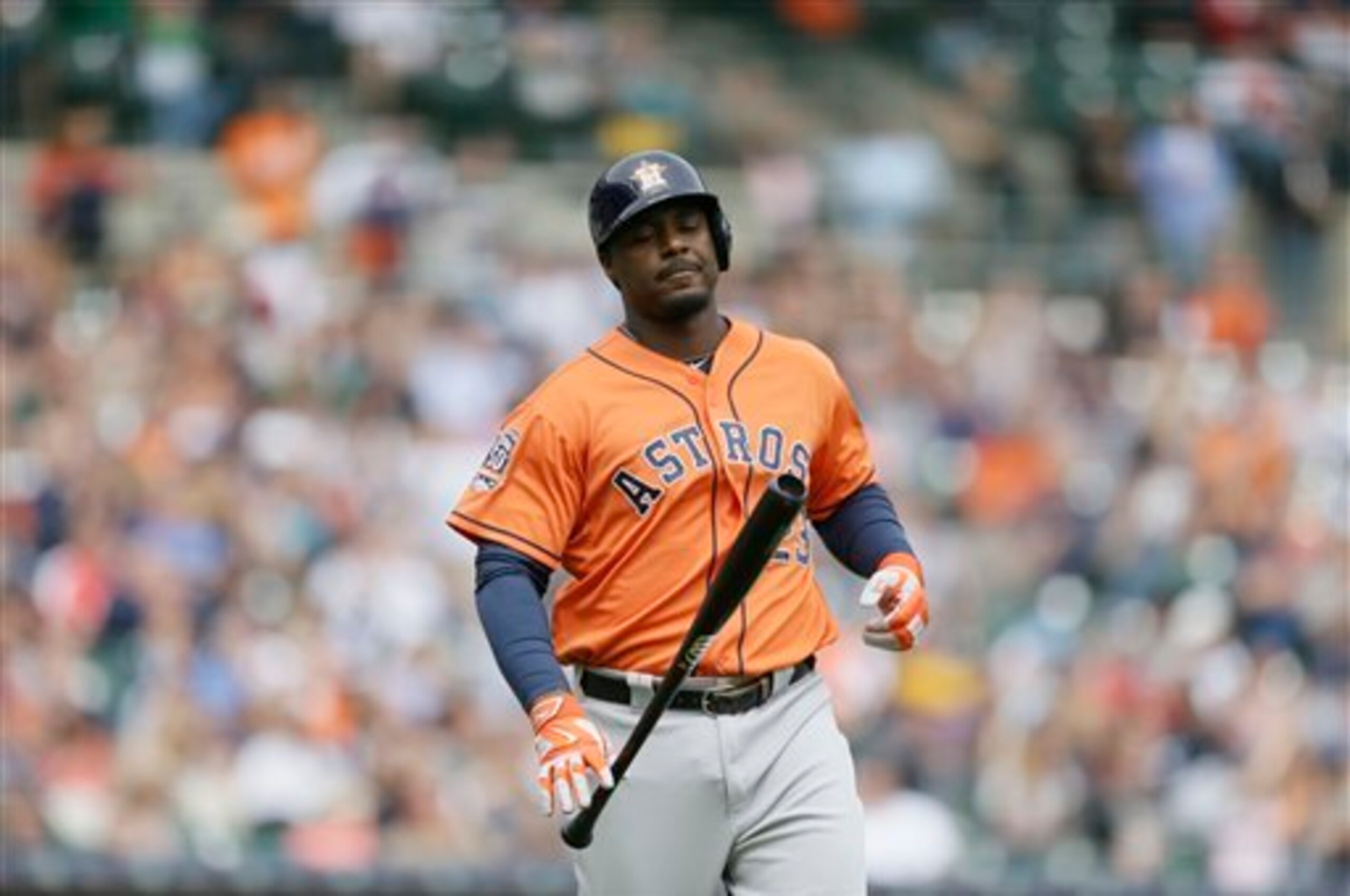
A big part of the reason today's environment so heavily favors pitchers is because nobody can hit for power anymore. Sure, the league has its Chris Davises, Bryce Harpers and Giancarlo Stantons, but home runs aren't nearly as ubiquitous as they were in the late 1990s and early 2000s.
Because of that, power hitters are in demand. But if there's an asterisk there, it's that the demand doesn't apply to power-only hitters.
We just watched three of those get tossed lightly aside this week. The Seattle Mariners traded Mark Trumbo for spare parts rather than pay him a projected $9.1 million salary after arbitration, per MLB Trade Rumors. Elsewhere, the Houston Astros escaped a $5.6 million salary when they non-tendered Chris Carter. The Pittsburgh Pirates did the same with Pedro Alvarez, saving $8.1 million.
"As we looked at the considerable dollars that it would have taken to go through the arbitration process," Pirates general manager Neal Huntington said of cutting Alvarez, per Adam Berry of MLB.com, "we felt again that we were better served to reallocate the resources elsewhere on the club."
Because these guys are three of baseball's top 20 home run hitters since 2012, maybe it seems odd that they weren't wanted. But there's also no denying that they're one-trick ponies. In 2015, Trumbo, Carter and Alvarez were replacement-level players due to their subpar OBPs, baserunning and defense.
Though teams value power, these moves reflect that they value versatility more. Power is good, but teams are more aware than ever that it's not good enough without other skills to go with it.
Now, the fact that this is an apparent reality likely won't change too much on the offseason market. But it's far from ideal for power-oriented free agents such as Marlon Byrd, Mike Napoli and, to an extent, even Davis. That's because the availability of Carter and Alvarez means more power bats for them to compete with. That, and the lack of interest in power-only bats could drive down their sticker prices.
The effect could also be felt on the trade market, where power-only bats belonging to Jay Bruce, Matt Kemp and Carlos Gonzalez might be available. If their teams are expecting the world in return, they may be disappointed.
But enough about where things aren't so good. Let's brighten the mood by looking at...
Prices for Quality Relievers Seem Pretty Steep
3 of 5
Fair warning: We may be going out on a limb with this one. This isn't so much a trend as it is a hint of a trend.
But it's a strong hint.
The big trade of the winter to this point was the one that sent flame-throwing relief ace Craig Kimbrel from the San Diego Padres to the Boston Red Sox. And while there's no denying that the Red Sox's bullpen needed Kimbrel, there's also no denying that they paid a king's ransom to get him.
The Red Sox sent four prospects to San Diego in exchange for Kimbrel, including two top-100 MLB.com guys in Manuel Margot and Javier Guerra. That's a lot of talent for a guy who's going to throw around 60 innings per year.
But rather than way too much, the Red Sox might have paid the going rate for Kimbrel.
Indications are that prices for relievers are going to be high on this winter's market. The Padres also got two prospects for Joaquin Benoit, after all, and the Cincinnati Reds will probably get the MLB-ready players they desire for Aroldis Chapman.
Meanwhile on the open market, ESPN.com's Jerry Crasnick reported that Darren O'Day is expected to command four years and upwards of $30 million. If he does, that will only make it easier for Joakim Soria to land his preferred contract, which ESPN.com's Jayson Stark says is three years and $27 million.
This seems like quite the turnaround from last winter, when nobody wanted to touch Rafael Soriano with a 10-foot pole. But after the Kansas City Royals showed what a deep bullpen can do, talented relievers have become like Pokemon. Gotta catch 'em all.
This is not to say teams are no longer interested in starting pitching, though. In fact...


Confirmed: Good Starting Pitching Isn't Cheap
4 of 5
Earlier, we said the demand for free-agent starting pitchers appears to be there. This is that boomerang coming back to us, and all we can say now is...
Yeah, it's clearly a good time to be a free-agent starter.
Not counting the two-year, $26 million contract signed by Marco Estrada before the free-agent market really opened up, five starting pitchers have signed key contracts this winter.
There's J.A. Happ's three-year, $36 million deal with the Toronto Blue Jays. Then there's Jordan Zimmermann's five-year, $110 million deal with the Detroit Tigers and John Lackey's two-year, $32 million deal with the Chicago Cubs. Then there are the big ones: David Price's seven-year, $217 million contract with the Boston Red Sox and Zack Greinke's six-year, $206.5 million deal with the Arizona Diamondbacks, per MLB.com.
Going off these deals...uh, yeah, starting pitching isn't cheap. Happ set the market for mediocrity at around $12 million per year. Zimmerman and Lackey set the market for almost-aces on either side of $20 million per year. Price and Greinke set the market for true aces at over $30 million per year.
These figures must sound good to the quality pitchers who are looking for work, which is a long list. Still out there are Johnny Cueto, Jeff Samardzija, Mike Leake, Scott Kazmir, Yovani Gallardo and Wei-Yin Chen. Chances are they're all going to get paid very well.
Mind you, this isn't really anything new. The four big contracts signed so far actually adhere to what's been the going rate for starting pitchers in recent years.
But this doesn't mean that what's going on isn't at least a slight shade of unexpected. When we knew that the offseason market was going to be this loaded with starting pitching, we couldn't help but wonder if the excess supply would lead to smaller payouts. From what we're seeing, this won't be the case.
Of course, this doesn't mean that teams won't pursue alternative solutions...
The Trade Market May Be Stuck in 'Ludicrous Speed'
5 of 5
While the free-agent market was busy sputtering out of the gate, the trade market was making like Spaceball One and going into "ludicrous speed." Besides Craig Kimbrel and Joaquin Benoit, Andrelton Simmons, Francisco Rodriguez, Cameron Maybin and Yonder Alonso also moved in trades.
Going forward, don't expect the trade market to pick up any more speed. But this doesn't mean it has to slow down.
Some clear sellers out there still have some selling to do. These include the Cincinnati Reds, Milwaukee Brewers, Atlanta Braves and potentially the San Diego Padres as well. Because each has attractive hitting and pitching targets to offer, there is hardly a shortage of talent.
Also, the prices on the open market should ensure that the trade market's shelves remain well-stocked. This may be especially true of the starting pitching aisle. Ken Rosenthal of Fox Sports reported that the demand for starting pitchers could accelerate in the near future as teams look to swing deals for young, low-cost aces such as Chris Sale and Sonny Gray rather than pay for free agents.
And it may not just be young, low-cost aces whom teams are after. Young, low-cost position players are also attractive. The trade market has many more of those to offer than the open market, which really only has two (Jason Heyward and Justin Upton).
Long story short, don't expect this offseason to get boring any time soon. Unlike most years, it seems to have gotten that part out of the way already.
Stats courtesy of Baseball-Reference.com and FanGraphs unless otherwise noted/linked.

.jpg?w=2560 "Grading WWE Raw 🔠")


.jpg?w=2560 "Viral Rams Coach Vid 🖕")

.jpg?w=2560 "2 NFL Officials Suspended")