
Ranking Bryce Harper Among the 10 Most Dominant MVP Seasons of Past 25 Years
The AL and NL Most Valuable Player awards will be announced on Thursday night, capping off award season around Major League Baseball.
While there is some debate as to who deserves the AL honor between Toronto Blue Jays third baseman Josh Donaldson and Los Angeles Angels center fielder Mike Trout, there is little question who should be taking home the trophy on the NL side of things.
Despite a disappointing overall season from the Washington Nationals, right fielder Bryce Harper was an absolute beast, taking his offensive game to another level in his age-22 season.
The other two finalists in the NL are Arizona Diamondbacks first baseman Paul Goldschmidt and Cincinnati Reds first baseman Joey Votto.
Both of those players had terrific seasons, but it would be a shock to see either of them steal a first-place vote from Harper, let alone upset him to win the award.
So where does Harper's performance this past season rank among the most dominant MVP performances of the past 25 years?
The following article will attempt to answer that question.
To clarify, these rankings will not be comparing one MVP season to another but instead comparing how dominant each MVP season was relative to the other candidates around the league that year.
For example, Barry Bonds had better overall numbers in 2003 and 2004 than he did in 1990, but his 1990 season ranks higher on this list because of there being a wider gap between him and the rest of the National League in 1990.
Hopefully that clarifies exactly what we're looking for in putting together these rankings. Now, let's get on with the show.
Note: The section "vote pts" on the following charts represents how many total ballot points each player received on a 14-9-8-7-6-5-4-3-2-1 point scale for the 10-player ballot. The number in parenthesis indicates total number of first-place votes.
10. 2003 NL MVP: Barry Bonds, San Francisco Giants
1 of 10
Top 5 in Voting
| Barry Bonds, SF | .341/.529/.749, 45 HR, 90 RBI, 111 R, 9.2 WAR | 426 (28) |
| Albert Pujols, STL | .359/.439/.667, 43 HR, 124 RBI, 137 R, 8.6 WAR | 303 (3) |
| Gary Sheffield, ATL | .330/.419/.604, 39 HR, 132 RBI, 126 R, 6.8 WAR | 247 (1) |
| Jim Thome, PHI | .266/.385/.573, 47 HR, 131 RBI, 111 R, 4.7 WAR | 203 |
| Javy Lopez, ATL | .328/.378/.687, 43 HR, 109 RBI, 89 R, 6.8 WAR | 159 |
Overview
The third of four consecutive MVP awards that Barry Bonds would win during his peak with the San Francisco Giants saw him post a ridiculous OBP (.529) and OPS (1.278) once again.
However, there's a good chance Albert Pujols would have walked away with MVP honors if the St. Louis Cardinals had finished better than 85-77 and third in the NL Central.
After a stellar first two seasons in the league, Pujols took his game to another level in 2003 as he topped 40 home runs for the first time in his career while leading the NL in batting average (.359), hits (212), runs (137) and doubles (51).
Teammates Gary Sheffield and Javy Lopez both had strong seasons for the Atlanta Braves, while Jim Thome led the NL with 47 home runs in his first season with the Philadelphia Phillies.
Pujols would finally win his first MVP award in 2005, and he has three total in his career, but the 2003 season once again belonged to Bonds.
9. 2004 NL MVP: Barry Bonds, San Francisco Giants
2 of 10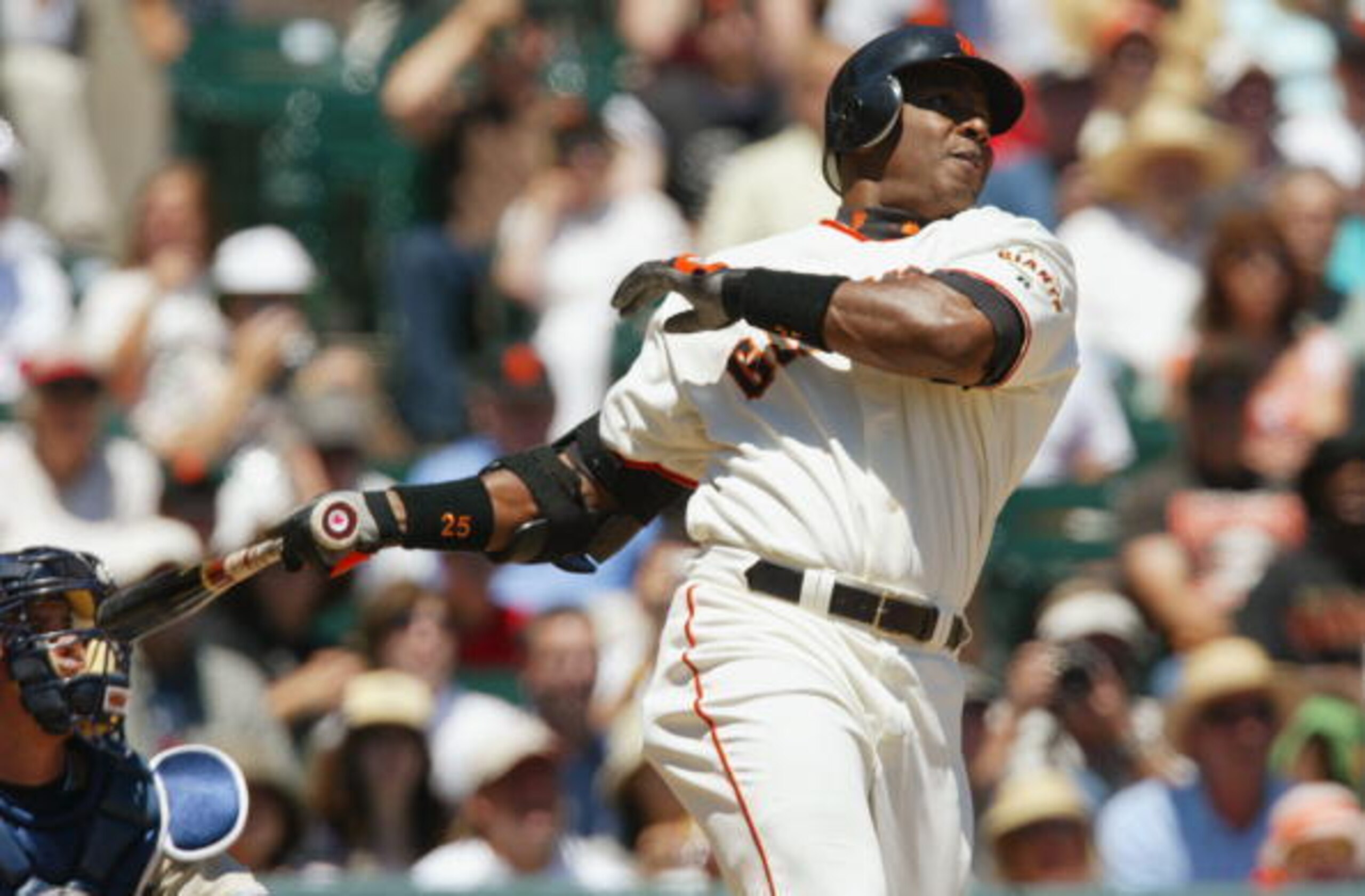
Top 5 in Voting
| Barry Bonds, SF | .362/.609/.812, 45 HR, 101 RBI, 129 R, 10.6 WAR | 407 (24) |
| Adrian Beltre, LAD | .334/.388/.629, 48 HR, 121 RBI, 104 R, 9.5 WAR | 311 (6) |
| Albert Pujols, STL | .331/.415/.657, 46 HR, 123 RBI, 133 R, 8.5 WAR | 247 (1) |
| Scott Rolen, STL | .314/.409/.598, 34 HR, 124 RBI, 109 R, 9.1 WAR | 226 (1) |
| Jim Edmonds, STL | .301/.418/.643, 42 HR, 111 RBI, 102 R, 7.2 WAR | 160 |
Overview
The 2004 season marked the seventh and final MVP award won by Barry Bonds during his illustrious career, and at that point in his career, opposing pitchers simply weren't pitching to him.
The 39-year-old set single-season records for walks (232), intentional walks (120), on-base percentage (.609) and OPS (1.422), yet he wound up netting just 24 of 32 first-place votes.
Six of the other first-place votes went to Los Angeles Dodgers third baseman Adrian Beltre, who exploded in a contract year to lead the NL with 48 home runs.
He managed to turn that into a five-year, $64 million contract with the Seattle Mariners, and those 48 home runs and 121 RBI still stand as career highs.
The St. Louis Cardinals trio of Albert Pujols, Scott Rolen and Jim Edmonds all had huge seasons at the plate. In the process, they essentially cancelled each other out as serious NL MVP candidates.
It was a record-setting year for Bonds, but the Giants finished second to Beltre and the Dodgers in the NL West standings, so as far as the rest of the field is concerned, it was far from his most dominant MVP win.
8. 2009 NL MVP: Albert Pujols, St. Louis Cardinals
3 of 10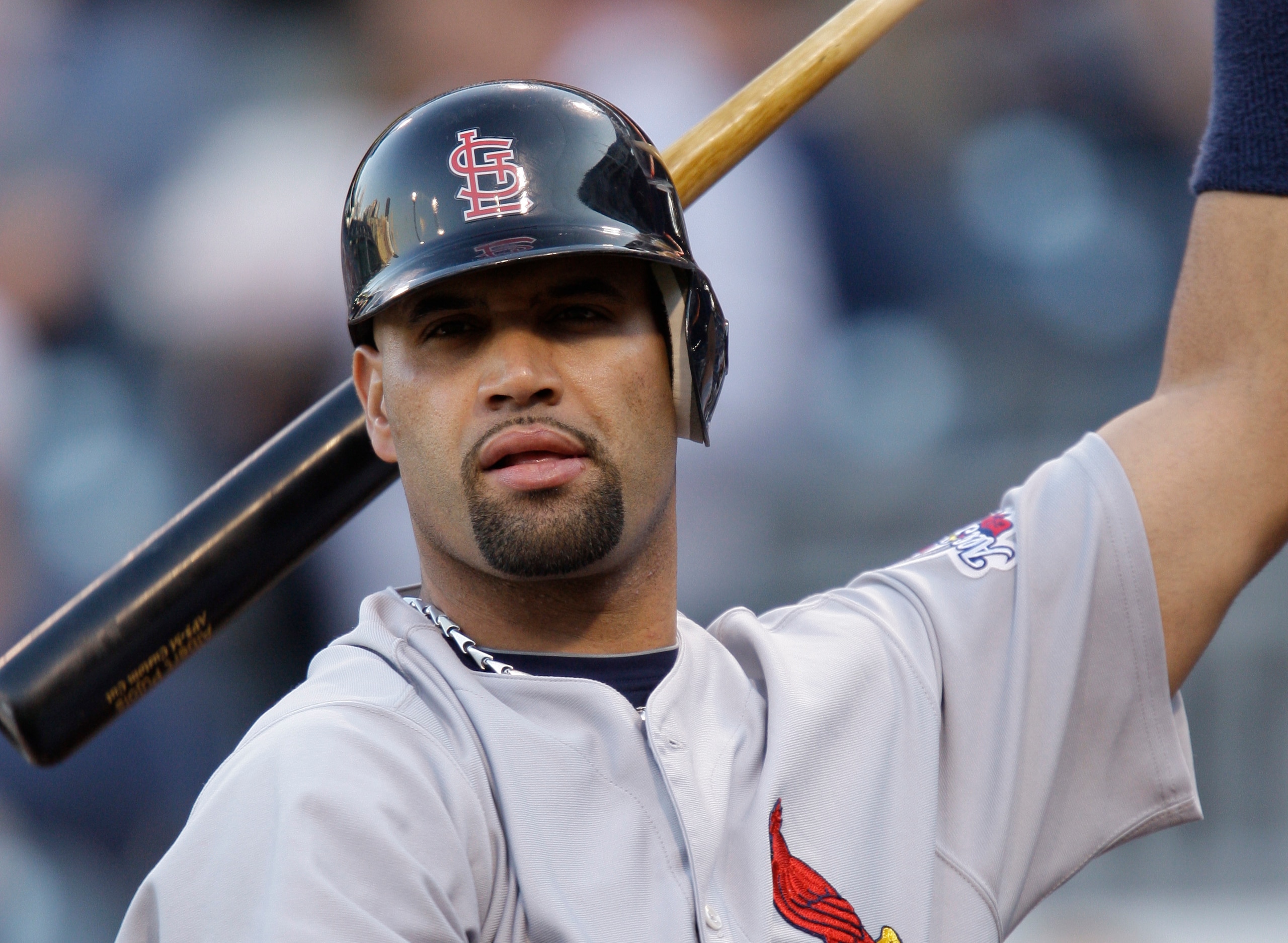
Top 5 in Voting
| Albert Pujols, STL | .327/.443/.658, 47 HR, 135 RBI, 124 R, 9.7 WAR | 448 (32) |
| Hanley Ramirez, FLA | .342/.410/.543, 24 HR, 106 RBI, 101 R, 7.3 WAR | 233 |
| Ryan Howard, PHI | .279/.360/.571, 45 HR, 141 RBI, 105 R, 3.8 WAR | 217 |
| Prince Fielder, MIL | .299/.412/.602, 46 HR, 141 RBI, 103 R, 6.3 WAR | 203 |
| Troy Tulowitzki, COL | .297/.377/.552, 32 HR, 92 RBI, 101 R, 6.5 WAR | 172 |
Overview
Remember when Albert Pujols, Ryan Howard and Prince Fielder were arguably the three most dangerous power hitters in baseball?
The 2009 season was the peak of that, as all three sluggers topped 45 home runs and 135 RBI on the year, but it was Pujols who walked away with unanimous NL MVP honors thanks to a far superior batting average and an NL Central title for the St. Louis Cardinals.
Slotted between the three sluggers as the MVP runner-up was Florida Marlins shortstop Hanley Ramirez, who won the batting title with a .342 average and showed a terrific mix of power (24 HR) and speed (27 SB) while driving in a career-high 106 runs.
Shortstop Troy Tulowitzki rounded out the top five in voting thanks to a huge second half where he hit .344/.421/.622 to help the Colorado Rockies secure a wild-card spot.
Pujols was more than deserving of winning the award unanimously, but the gap between Pujols and the other top vote-getters in terms of production was not as big as some other recent winners.


7. 1993 NL MVP: Barry Bonds, San Francisco Giants
4 of 10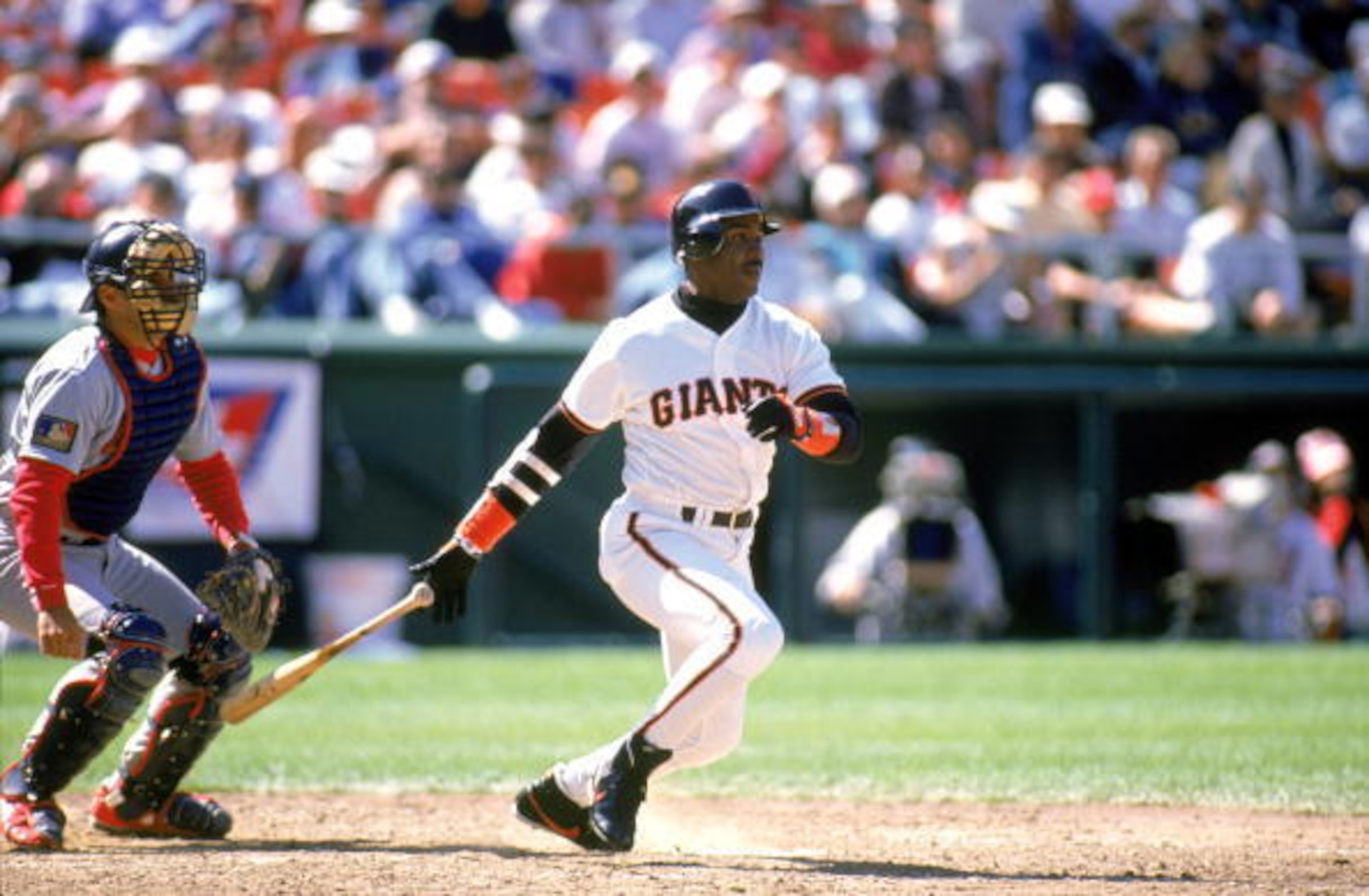
Top 5 in Voting
| Barry Bonds, SF | .336/.458/.677, 46 HR, 123 RBI, 129 R, 9.9 WAR | 372 (24) |
| Lenny Dykstra, PHI | .305/.420/.482, 19 HR, 66 RBI, 143 R, 6.5 WAR | 267 (4) |
| David Justice, ATL | .270/.357/.515, 40 HR, 120 RBI, 90 R, 5.1 WAR | 183 |
| Fred McGriff, SD/ATL | .291/.375/.549, 37 HR, 101 RBI, 111 R, 4.2 WAR | 177 |
| Ron Gant, ATL | .274/.345/.510, 36 HR, 117 RBI, 113 R, 6.5 WAR | 176 |
Overview
After seven terrific seasons with the Pittsburgh Pirates, Barry Bonds hit the free-agent market prior to the 1993 season and wound up signing a six-year, $43.75 million deal with the San Francisco Giants that made him the highest-paid player in baseball at the time.
Bonds had already won NL MVP honors in 1990 and 1992, sandwiched around a second-place finish in 1991, and he added a third trophy to his mantle in his first season with the Giants.
His 46 home runs and 123 RBI were both tops in the National League, and he added 29 steals and a .336 average that came in fourth in the NL batting title race.
Lenny Dykstra was the only other real threat to win the award, as he was a dynamic catalyst atop the lineup for the eventual NL pennant-winning Philadelphia Phillies.
Dykstra led the NL in hits (194) and runs (143) while putting together an impressive 129-64 walk-to-strikeout ratio in what was easily the best season of his career.
Atlanta Braves teammates David Justice and Ron Gant both had big seasons offensively, but it was Fred McGriff who made arguably the biggest impact on the team, as he hit .310/.392/.612 with 19 home runs and 55 RBI after coming over from the San Diego Padres in a mid-July trade.
In the final season prior to the adoption of the Wild Card, Bonds and the Giants won 103 games but missed the postseason, and that likely kept him from being a unanimous selection.
In terms of dominance over the competition, though, it was one of Bonds' best seasons.
6. 2009 AL MVP: Joe Mauer, Minnesota Twins
5 of 10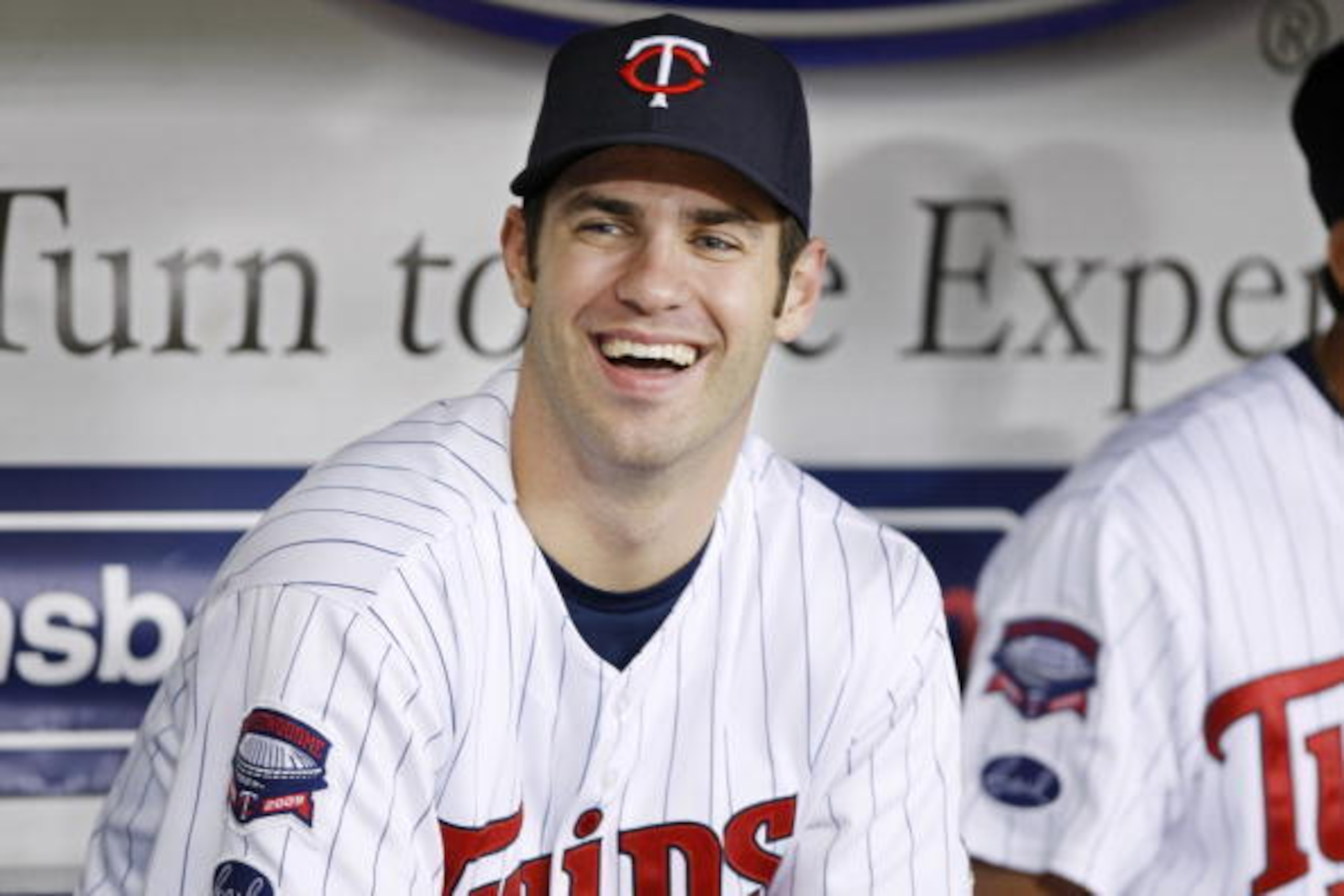
Top 5 in Voting
| Joe Mauer, MIN | .365/.444/.587, 28 HR, 96 RBI, 94 R, 7.8 WAR | 387 (27) |
| Mark Teixeira, NYY | .292/.383/.565, 38 HR, 122 RBI, 103 R, 5.3 WAR | 225 |
| Derek Jeter, NYY | .334/.406/.465. 18 HR, 66 RBI, 107 R, 6.5 WAR | 193 |
| Miguel Cabrera, DET | .324/.396/.547, 34 HR, 103 RBI, 96 R, 5.1 WAR | 171 (1) |
| Kendrys Morales, LAA | .306/.355/.569, 34 HR, 108 RBI, 86 R, 4.3 WAR | 170 |
Overview
Joe Mauer had already won two batting titles in the past three seasons heading into the 2009 season, but he took his overall offensive game to another level entirely to win AL MVP honors.
After averaging 10 home runs per season over his first four years in the league, he exploded for 28 home runs and a career-high 96 RBI.
He won a third batting title with a career-best .365 average, while also leading the AL in on-base (.444) and slugging (.587) to help lead the Minnesota Twins to an AL Central title.
The New York Yankees duo of Mark Teixeira and Derek Jeter were both strong candidates, but they wound up splitting votes as a result, and that made Mauer an easy choice to take home the award.
Miguel Cabrera received the one first-place vote that didn't go to Mauer, despite playing for a Detroit Tigers team that finished second in the standings and putting up average numbers relative to what he would do later on in his career.
Kendrys Morales rounded out the top five as a breakout star in his first full season in the majors. Injuries derailed his career after the 2009 season, and it was not until this past year that he even came close to duplicating that level of production.
Mauer signed an eight-year, $184 million extension that offseason, but he never again matched the fantastic overall offensive line he put together in 2009, as it goes down as one of the greatest offensive seasons by a catcher the game has ever seen.
5. 1990 NL MVP: Barry Bonds, Pittsburgh Pirates
6 of 10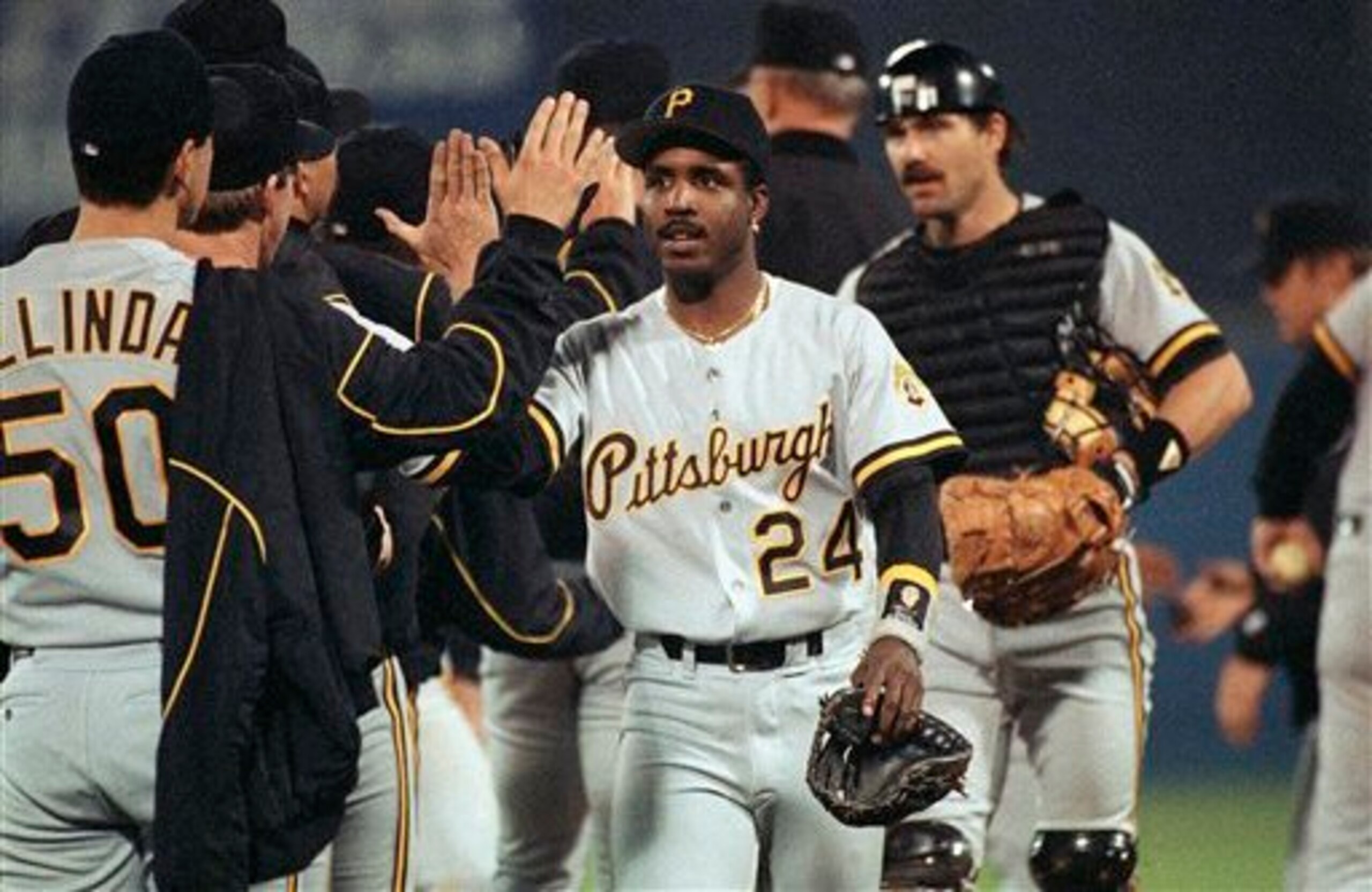
Top 5 in Voting
| Barry Bonds, PIT | .301/.406/.565, 33 HR, 114 RBI, 104 R, 9.7 WAR | 331 (23) |
| Bobby Bonilla, PIT | .280/.322/.518, 32 HR, 120 RBI, 112 R, 3.9 WAR | 212 (1) |
| D. Strawberry, NYM | .277/.361/.518, 37 HR, 108 RBI, 92 R, 6.3 WAR | 167 |
| Ryne Sandberg, CHC | .306/.354/.559, 40 HR, 100 RBI, 116 R, 7.1 WAR | 151 |
| Eddie Murray, LAD | .330/.414/.520, 26 HR, 95 RBI, 96 R, 5.1 WAR | 123 |
Overview
Barry Bonds led the National League in WAR a whopping 11 different times during his career, the first of which came in 1990 while he was still playing with the Pittsburgh Pirates.
That was the year everything finally clicked for Bonds.
After hitting .256/.345/.458 and averaging 21 home runs and 56 RBI over his first four seasons in the league, he reached the 30-homer and 100-RBI mark for the first time in 1990.
He also added 13 stolen bases while leading the NL in slugging (.570) and OPS (.970) on his way to a 9.7 WAR.
The one first-place vote he didn't receive went to teammate Bobby Bonilla, which is a joke when you look at the numbers, as Bonds was clearly the more deserving candidate. Bonilla had a solid season in his own right, though, and the Pirates won 95 games and a division title.
Darryl Strawberry, Ryne Sandberg and Eddie Murray all had strong seasons for non-playoff teams, with Sandberg launching an NL-high 40 home runs and Murray ranking second in the league with a .330 average.
On the surface, it may be strange to see the 1990 version of Bonds ranked ahead of some of his ridiculous seasons in the early 2000s. In terms of the gap between him and the rest of the MVP field, though, the 1990 season comes in second on the list of his most dominant performances.
4. Projected 2015 NL MVP: Bryce Harper, Washington Nationals
7 of 10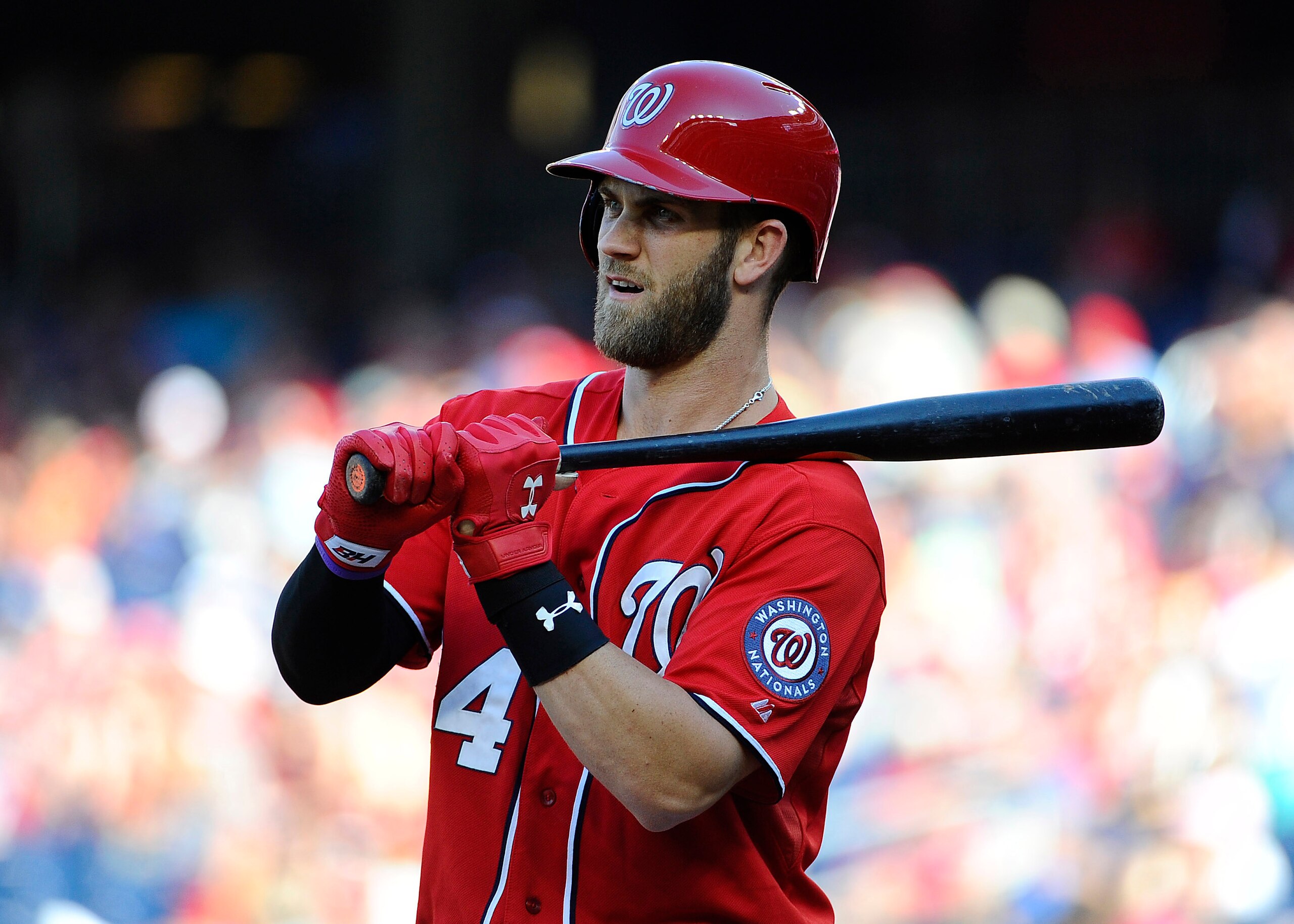
Projected Top 5 in Voting
| Bryce Harper, WAS | .330/.460/.649, 42 HR, 99 RBI, 118 R, 9.9 WAR |
| Paul Goldschmidt, ARI | .321/.435/.570, 33 HR, 110 RBI, 103 R, 8.8 WAR |
| Joey Votto, CIN | .314/.459/.541, 29 HR, 80 RBI, 95 R, 7.6 WAR |
| Anthony Rizzo, CHC | .278/.387/.512, 31 HR, 101 RBI, 94 R, 6.2 WAR |
| Andrew McCutchen, PIT | .292/.401/.488, 23 HR, 96 RBI, 91 R, 4.9 WAR |
Overview
The 2015 season will be remembered for a lot of different reasons, but 20 years from now, we may look back on it as the year that Bryce Harper became a superstar.
Still just 22 years old, Harper dealt with injuries and struggled to live up to lofty expectations in his first three seasons in the league, but he was an absolute force this past year.
He led the league in home runs (42), runs scored (118), on-base (.460), slugging (.649) and OPS (1.109), and his 195 OPS+ may be the best illustration of just how dominant he was compared to the rest of the league.
A more patient approach at the plate made all the difference, as his walk rate improved from 9.6 to 19.0 percent, and he simply didn't make mistakes when he finally did get a pitch to hit.
Paul Goldschmidt and Joey Votto are the other two finalists for the award, and Goldschmidt seems like the likely runner-up as he put together another huge all-around season for an Arizona Diamondbacks team on the rise.
All signs point to Harper being a unanimous selection, though, and the argument that his team didn't make the postseason doesn't carry much weight as the same can be said about the other two finalists.
3. 1994 NL MVP: Jeff Bagwell, Houston Astros
8 of 10
Top 5 in Voting
| Jeff Bagwell, HOU | .368/.451/.750, 39 HR, 116 RBI, 104 R, 8.2 WAR | 392 (28) |
| Matt Williams, SF | .267/.319/.607, 43 HR, 96 RBI, 74 R, 4.7 WAR | 281 |
| Moises Alou, MON | .339/.397/.592, 22 HR, 78 RBI, 81 R, 5.1 WAR | 183 |
| Barry Bonds, SF | .312/.426/.647, 37 HR, 81 RBI, 89 R, 6.2 WAR | 144 |
| Greg Maddux, ATL | 16-6, 1.56 ERA, 0.896 WHIP, 156 K, 8.7 WAR | 133 |
Overview
When the 1994 season ended abruptly on Aug. 11 because of the players' strike, the Houston Astros still had 47 more games to play on the season.
That makes the numbers that Jeff Bagwell managed to put up in the abridged season that much more impressive, as he was on pace for an absolutely huge season.
As it stands, he led the NL in RBI (116), runs (104), slugging (.750), total bases (300) and OPS+ (213) in what was the first year he truly established himself as a superstar.
Matt Williams didn't have the peripheral numbers to compare to Bagwell, but he did have an impressive 43 home runs in just 445 at-bats, as he may have made a run at the record with a strong finish.
Moises Alou was the offensive standout for a Montreal Expos team that goes down as one of the biggest "what ifs" in baseball history, while Barry Bonds and Greg Maddux were on top of their games as well.
We'll never know how the numbers would have looked over a full 162-game slate, but even with the season cut a month-and-a-half short, Bagwell had numbers that would have been MVP-caliber any other year.
2. 1997 AL MVP: Ken Griffey Jr, Seattle Mariners
9 of 10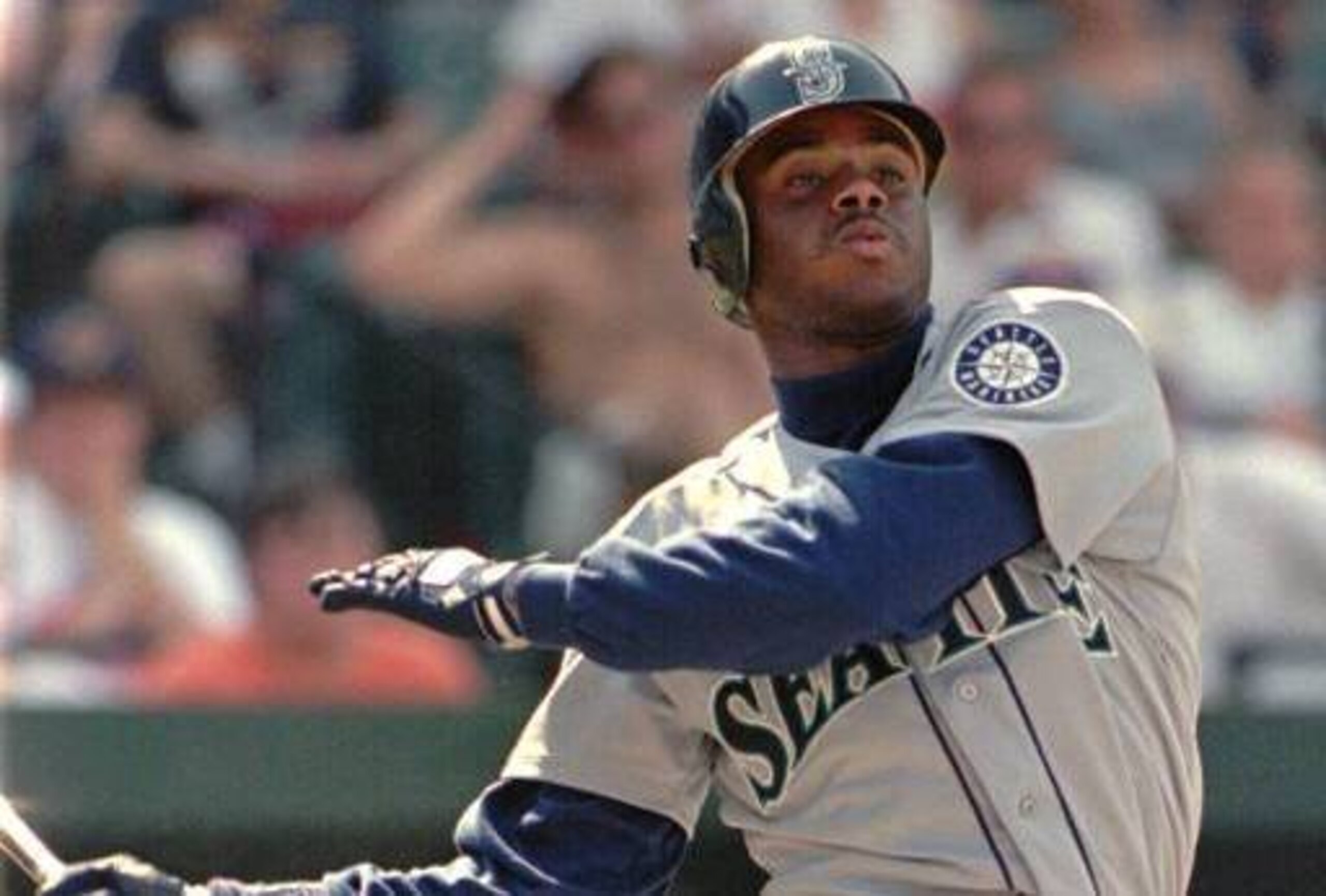
Top 5 in Voting
| Ken Griffey Jr., SEA | .304/.382/.646, 56 HR, 147 RBI, 125 R, 9.1 WAR | 392 (28) |
| Tino Martinez, NYY | .296/.371/.577, 44 HR, 141 RBI, 96 R, 5.1 WAR | 248 |
| Frank Thomas, CWS | .347/.456/.611, 35 HR, 125 RBI, 110 R, 7.3 WAR | 172 |
| Randy Myers, BAL | 45 SV, 1.51 ERA, 1.156 WHIP, 8.4 K/9, 3.1 WAR | 128 |
| David Justice, CLE | .329/.418/.596, 33 HR, 101 RBI, 84 R, 3.8 WAR | 90 |
Overview
Ken Griffey Jr. won three consecutive AL home run titles to close out the 1990s, and the first of those came in 1997, when he launched 56 home runs and and drove in a career-high 147 runs.
The Seattle Mariners won 90 games and reached the postseason for the second time in three years, and Griffey provided a preview for what would be the excitement of the 1998 home run race between Sammy Sosa and Mark McGwire.
Tino Martinez enjoyed the best season of his career as the runner-up in the voting, but a case could be made that Bernie Williams (.328/.408/.544, 21 HR, 100 RBI, 5.5 WAR) was actually the most valuable player on the New York Yankees.
Frank Thomas and David Justice were both deserving of their spots among the top five vote-getters, though Baltimore Orioles closer Randy Myers was something of a surprise coming in fourth in the balloting.
All thing considered, though, Griffey was the easiest MVP selection of 1990s during his huge 1997 season, and his dominance that year was good for the No. 2 spot in these rankings.
1. 2002 NL MVP: Barry Bonds, San Francisco Giants
10 of 10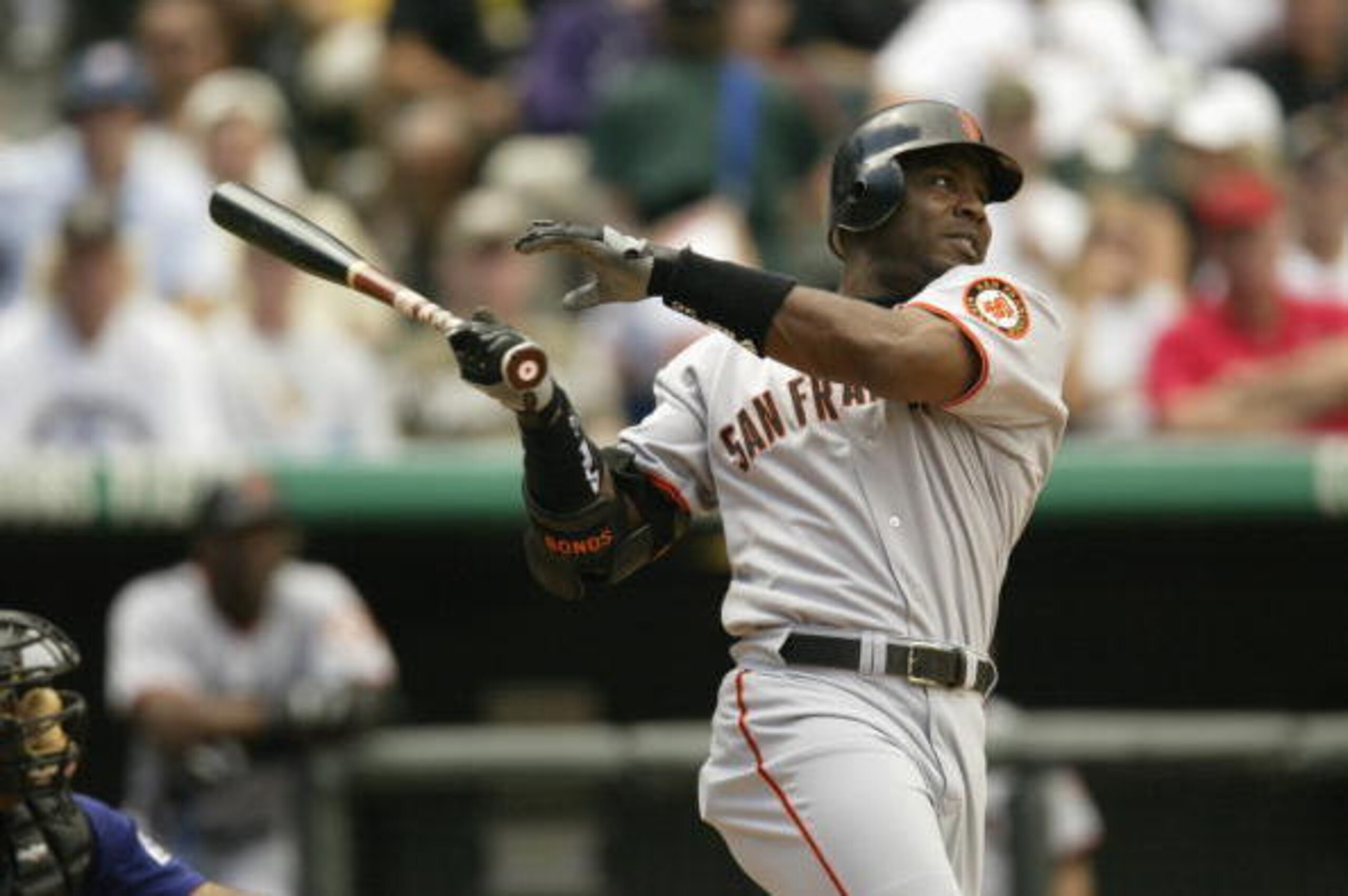
Top 5 in Voting
| Barry Bonds, SF | .370/.582/.799, 46 HR, 110 RBI, 117 R, 11.8 WAR | 448 (32) |
| Albert Pujols, STL | .314/.394/.561, 34 HR, 127 RBI, 118 R, 5.5 WAR | 276 |
| L. Berkman, HOU | .292/.405/.578, 42 HR, 128 RBI, 106 R, 4.8 WAR | 181 |
| V. Guerrero, MON | .336/.417/.593, 39 HR, 111 RBI, 106 R, 7.0 WAR | 168 |
| Shawn Green, LAD | .285/.385/.558, 42 HR, 114 RBI, 110 R, 6.9 WAR | 146 |
Overview
Some may be surprised that it's the 2002 MVP season of Barry Bonds that takes the top spot here, meaning his record-setting 73-home run season in 2001 was excluded from this list entirely.
Allow me to explain.
These rankings were about dominance compared to the rest of the field of candidates, and during that record-setting 2001 season, the gap between Bonds and Chicago Cubs slugger Sammy Sosa was not all that large.
- Bonds: .328/.515/.863, 73 HR, 137 RBI, 129 R, 11.9 WAR
- Sosa: .328/.437/.737, 64 HR, 160 RBI, 146 R, 10.3 WAR
That was enough for Bonds to receive just 30 of the 32 first-place votes and enough for that season to be excluded from these rankings.
However, the 2002 season was a different story entirely.
While the four outfielders who finished below Bonds in the voting all had huge offensive seasons in their own right, there was little question who the best all-around player in the league was.
Bonds won his first career batting title with a .370 average and still managed to hit 46 home runs despite being walked a then-record 198 times and seeing just 403 official at-bats.
The San Francisco Giants also won the NL West title, which helped further Bonds' case, as they would reach the World Series before losing to the Anaheim Angels.
The 2002 season won't go down as the best of his career, but in terms of dominance over the rest of the league, that year's performance by Bonds earns him the No. 1 spot in these rankings.
All standard stats and WAR totals courtesy of Baseball-Reference.com, unless otherwise noted.

.jpg?w=2560 "Grading WWE Raw 🔠")

.jpg?w=2560 "Bijan's INSANE 1st Half 🤩")
.jpg?w=2560 "Viral Rams Coach Vid 🖕")
.jpg?w=2560 "Injury-stricken Seahawks signing veteran RB")


.jpg?w=2560 "2 NFL Officials Suspended")
