

Dortmund Joy Underlines Widening Gap with Rivals Schalke
As Borussia Dortmund’s jubilant players bounced in front of Die Gelbe Wand—or the Yellow Wall, the common epithet for the vast, 25,000-capacity Sudtribune terrace set behind Signal Iduna Park’s south end goal—on Sunday, an unassuming, skinny figure gently jogged up to join the huddle. His tracksuit bottoms were at least an inch too short. After allowing himself a taste of the moment, this incongruous figure beat a retreat to allow the players to take their shared victory bow in peace.
Much has been made of their connection through Mainz, but clearly Thomas Tuchel is no Jurgen Klopp. There were no Pete Townsend-style scissor jumps on the touchline, roars or suffocating bear hugs. To borrow from Klopp’s own scale of musical metaphors, if the old Dortmund boss was the visceral rush of AC/DC, then the new one is nearer Squarepusher—smart, multi-faceted, but less of a natural media darling.

.jpg?w=2560)

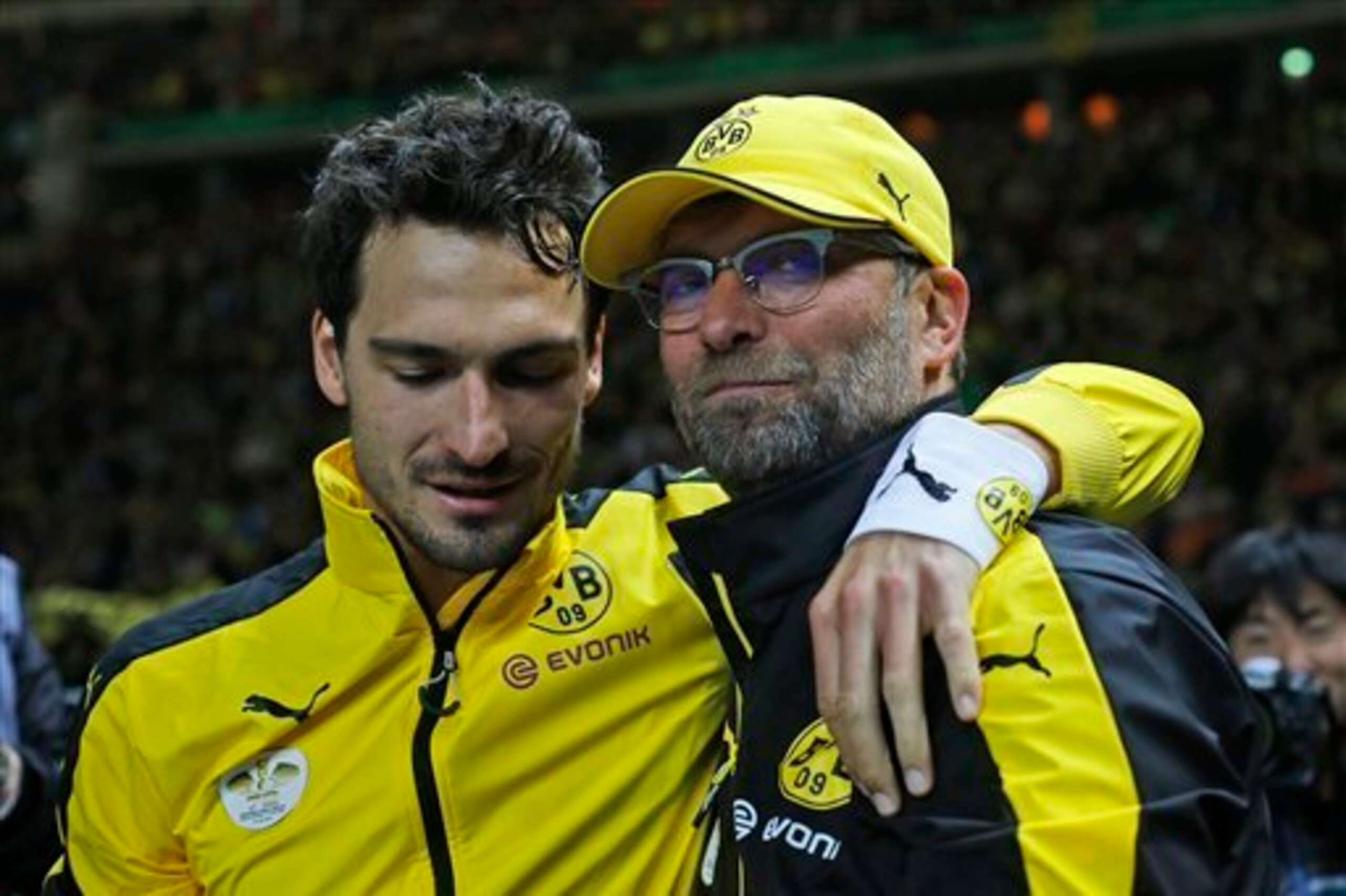
The rapid strides Dortmund are making under Tuchel have not gone unnoticed by local rivals Schalke, whom BVB rolled in Sunday’s derby (hence the celebration) to extend their excellent start to the season. Only once, in the Bundesliga-winning season of 2010/11, have Dortmund collected more points from their first 12 games than the 29 they have right now (as pointed out by the club’s own official website).
Die Schwarzgelben’s upturn in fortunes, after their tricky final campaign under Klopp, is especially interesting in the context of the derby—for Schalke held an interest in employing Tuchel long before their rivals.
It was something S04 sporting director Horst Heldt pointed out in the days leading up to the game (as reported here by Bild, in German), with the acknowledgement that Tuchel had first been a target as early as 2012, before Jens Keller was appointed.
Heldt did make clear, however, there were no regrets, with the clarification current incumbent Andre Breitenreiter—who arrived in summer to replace Roberto Di Matteo—is “perfect” for the role. How much the former Paderborn coach has brought to the table was evident at Dortmund’s home even if he, like Di Matteo in February, made the 32-kilometer journey back to the Veltins Arena empty-handed.
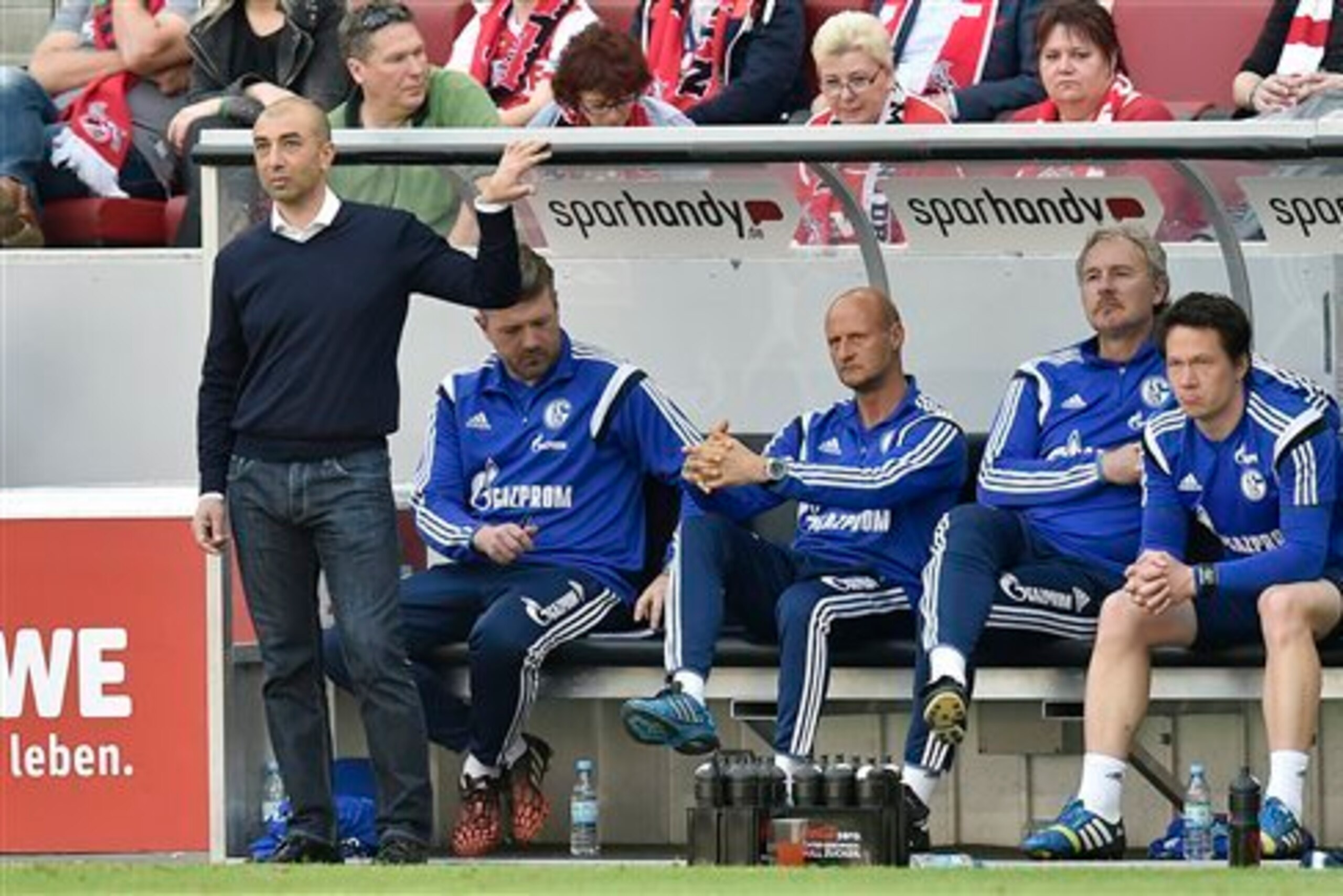
The last campaign’s corresponding fixture was an indisputable highlight of Klopp’s swansong season—and probably the final nail in the coffin of Di Matteo’s reign. It wasn’t that Schalke were beaten. It wasn’t even the 3-0 margin of defeat. It was that Die Konigsblauen were so passive.
Di Matteo’s team were worse than negative at Signal Iduna Park, sat in just waiting around for the inevitable—against a Dortmund team that had struggled throughout the season at breaking down massed defences.

For those who believe statistics can be misleading, the shot count wasn’t on that occasion. Dortmund had 31 to Schalke’s 3. None of the visitor's efforts were on target. It was as spineless a performance in a derby as you are ever likely to see. It took 77 minutes for Pierre-Emerick Aubameyang to open the scoring, but the floodgates quickly opened. Schalke’s bitter rivals ripped them apart in less than 10 minutes.
For the rematch, Breitenreiter had a number of absences to deal with, from World Cup-winner Benedikt Howedes’ wrist injury to midfielder Johannes Geis’ suspension, after he was give a six-game ban for a dreadful challenge on Borussia Monchengladbach’s André Hahn a few weeks back. Defender Joel Matip was only passed fit at the last moment after back trouble, and one sensed that had it been a less significant match or had there been a genuine choice, Breitenreiter might have left him out.
He didn’t have that luxury, and the team he fielded didn’t let him down. Dortmund had plenty of possession in the first half but never truly dominated, and Schalke’s organisation had plenty to do with that. The difference from last year—in other words, a defence performance versus a non-performance—was marked.
That Schalke cheaply allowed Dortmund to take the lead for a second time moments before the break, failing to pick up Matthias Ginter from a Henrikh Mkhitaryan corner, must have hurt Breitenreiter, but he couldn’t reproach his team for their efforts; whether they were closing down, moving in two banks of four or (occasionally) breaking up the play with fouls, they were true derby competitors.
The coach is already way more in credit than his predecessor ever was. His Mourinho-esque celebration after Max Meyer’s winner against Hertha Berlin last month further endeared him to the Gelsenkirchen faithful.
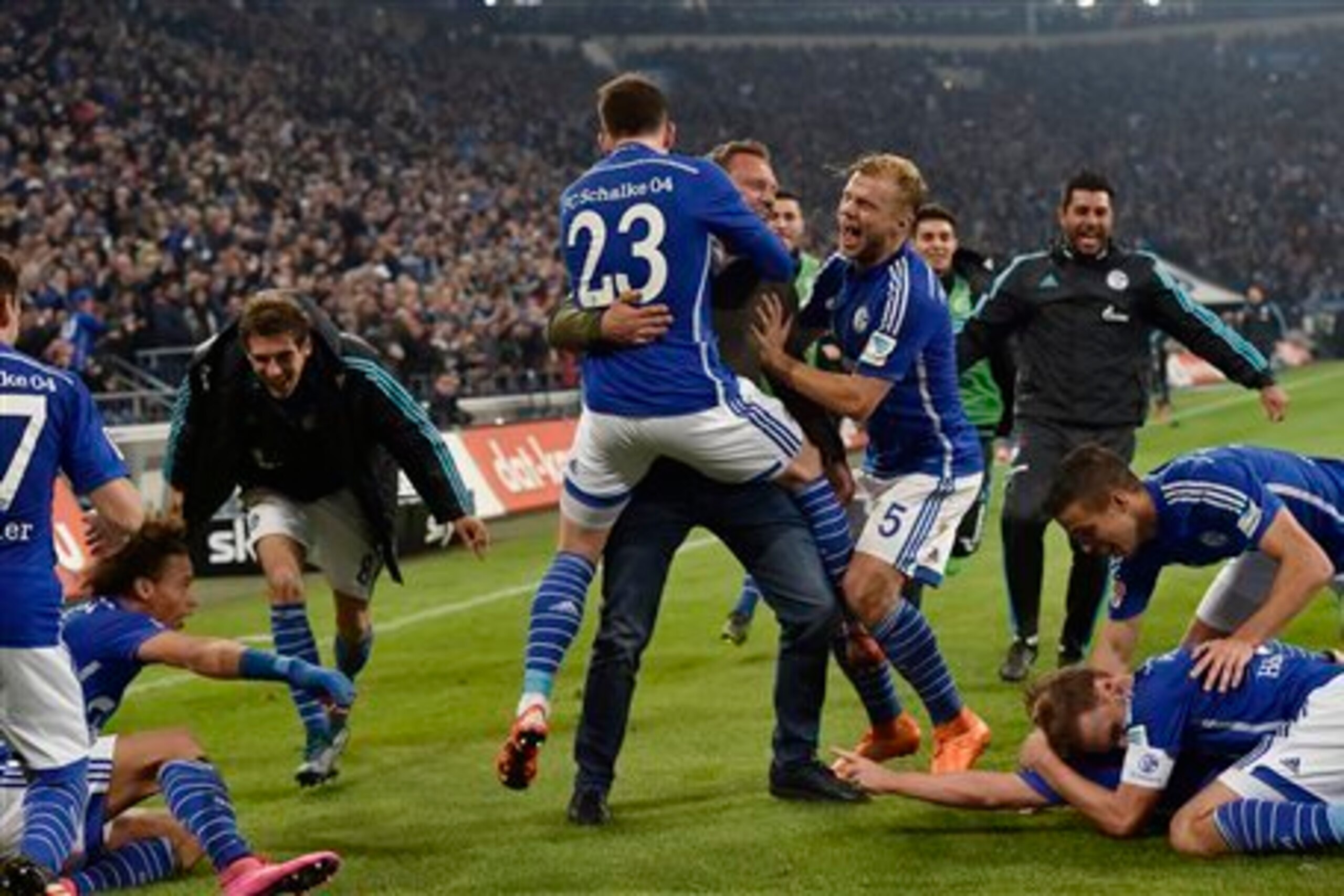
Tuchel may not have the same level of touchline effusiveness as Breitenreiter or Klopp, but his football does the talking for him. Some Dortmund fans may miss Klopp’s warmth and magnetism, but as far as on-pitch matters go, they all agree Tuchel has been transformative. Players such as Ginter, Mkhitaryan and Shinji Kagawa have been revitalised under new management after drifting in the last campaign.
Not all is rosy in the Dortmund garden. Those defensive gremlins of recent years have not totally disappeared. Both goals, stemming from Mats Hummels errors, were very avoidable and allowed the visitors back into a game in which Dortmund should have been home and hosed. They needed a smart Roman Burki save from Pierre-Emile Hojbjerg with 11 minutes to go to avoid conceding an equaliser that would have been scarcely credible not long before.
Yet in the moments when Dortmund stepped it up, the two sides were poles apart. The level of mutual understanding between Aubameyang, Ginter, Mkhitaryan and new boys like Julian Weigl and Gonzalo Castro is impressive.
It reminds Schalke that they had a chance to steam past BVB when they were struggling last season. With Heldt failing to provide the hoped-for leadership and stability, Die Konigsblauen couldn’t take advantage. Now Dortmund are back in business, the chance seemingly gone.
It’s immensely frustrating for Schalke fans. An aspect of the club sometimes internationally overlooked is just how big they are, something inadvertently pointed out by Dortmund’s official match programme on the day. Commemorating BVB reaching the mark of 130,000 club members, it produced a table of Germany’s most membered clubs. Bayern Munich lead with 258,000. Second? Schalke, with 136,205 as of June.
Yet again, Schalke have drifted in recent weeks after a sterling opening to the season—which couldn’t have had a better start than the one gifted to them by Werder Bremen’s Theodor Gebre Selassie, as seen in this video (via BT Sport). As Die Gelbe Wand’s noise filled the early evening on Sunday, Schalke were reminded the derby is as close as they are likely to get to Dortmund for the foreseeable future.
Again.
.jpg?w=2560 "Falcons Saints Football")
.jpg?w=2560 "Rams Eagles Football")
.jpg?w=2560 "Injury-stricken Seahawks signing veteran RB")


.jpg?w=2560 "2 NFL Officials Suspended")
