

Be Prepared for the Unexpected at the ATP Paris Masters
The Paris Masters is the last chance of 2015 for superstars Novak Djokovic, Roger Federer and Rafael Nadal to claim a Masters 1000 championship. Just don’t expect it to be easy for one or two of them to get into the final.
The tennis is performed at the Palais Omnisports-Bercy Arena, known for hosting all kinds of events as diverse as rock concerts, cycling and gymnastics. Indeed, the promise of quirky tennis is all too obvious when spectators file into the pyramidal structure that is a crossbreed between earthiness and art, as if the designers couldn’t make up their mind between blowing glass and planting grass.


Meanwhile, the Paris Masters has had a history of upsets and bizarre results. Just last year, Novak Djokovic became the first-ever player to defend this title since it began with the Open era in 1968, and if he seems the obvious choice to win it for the third consecutive year, history shows that it won’t be that easy.
Just what makes it so difficult for the top champions?
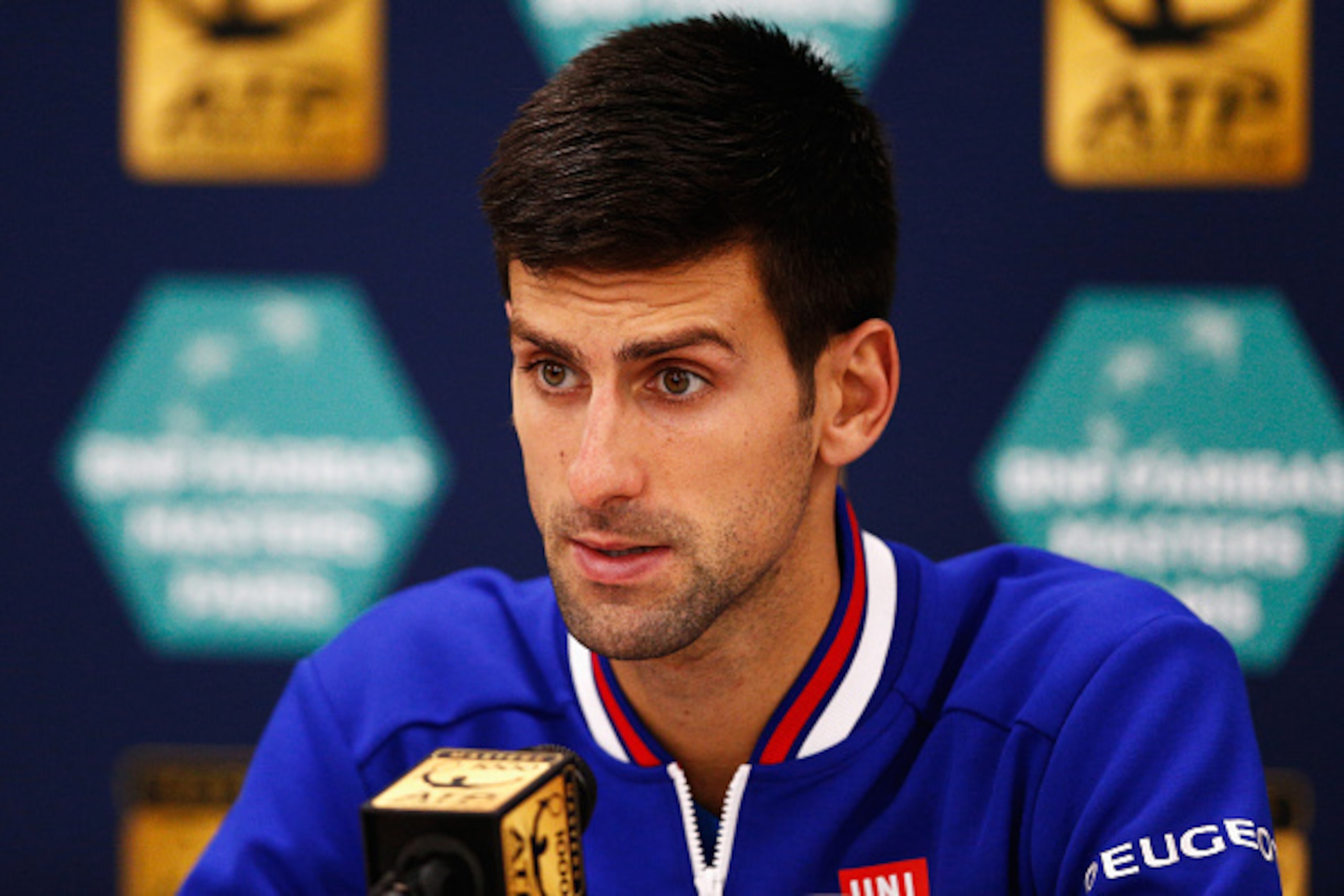
Unexpected Finalists
- Nadal has never won this title, but little Spanish brother David Ferrer was the 2012 winner. Ferrer battled unknown youngster Jerzy Janowicz in what may turn out to be Janowicz’s only Masters 1000 final.
- Federer won his only title in 2011 after his first year without a major since 2002. It’s his only finals appearance.
- British players Greg Rusedski (1998) and Tim Henman (2003) won titles here, but national icon Andy Murray has not even landed in the finals.
- Less renowned champions in the 21st century include Sebastien Grosjean (2001), Tomas Berdych (2005), Nikolay Davydenko (2006), David Nalbandian (2007) Jo-Wilfried Tsonga (2008) and Robin Soderling (2010). Those are all fine players, to be sure, but certainly more in the category of second-tier stars.
- Besides Janowicz, other surprising finalists were Andrei Pavel (2003), Radek Stepanek (2004), Ivan Ljubicic (2005), Dominik Hrbaty (2006), Gael Monfils (2009-10) and other recent appearances by Nalbandian (2008), Tsonga (2011), Ferrer (2013) and Milos Raonic (2014).
- Who can explain why a 1990s baseliner like the great Andre Agassi could win two titles, which was the same career output at Bercy that the superior Pete Sampras won? Sampras had the talent to win 10 titles here, had he prioritized it like Wimbledon, and maybe this is a hint as to why Bercy has frowned upon regal dominance.

Why so Difficult?
The tennis year is long and arduous, and the superstars come to Bercy with all varieties of injuries and motivations. For instance, Nadal has never starred on indoor courts, and he certainly does not value winning here the way he does on springtime clay. There are too many big servers and fast-court players that give him troubles.
Someone like Murray may have already burned out in trying to qualify for London’s WTF finals, which comes immediately after Paris. Last year, this was evident as Murray crashed after competing in mid-majors almost every week during the Asian tour and its post-stretch.
Other players already have an eye for London and would rather coast through Paris. It partly explained the chaos that was spawned in 2012, as the favorites checked out quickly (Nadal injured; Federer withdrew due to fatigue, Djokovic and Murray lost in the second and third rounds, respectively) while Ferrer and Janowicz battled for a rare shot at a Masters 1000 title.
Furthermore, Bercy’s indoor conditions are not always so predictable. In what is supposed to be a fast tennis surface, Tennis.com reported that many of the top players like Murray thought that the courts were slowed down drastically from 2010-11. Tsonga opined that the slower tennis balls were to blame, and Federer admitted that the surface could more quickly chew up a tennis ball with its gritty surface.
Now in 2015, the arena and courts have been updated, and a few rounds could indeed be a search for players to adjust to these new conditions. Upsets could happen even quicker.
All together, consider the unusual arena and playing surface, combined with a long, tiring season and all ranges of motivations from the stars who have at least one eye on London.
Combine that with the opportunity it gives to the next level of stars who are always starving for any opening to get a Masters 1000 title. If it has always seemed hopeless on clay the last decade where Nadal and Djokovic are titans, or near impossible to knock of Federer at Cincinnati, Paris might be the biggest equal-opportunity venue on the big stages.
All of this makes it interesting to see if Djokovic will dominate for an astounding third consecutive year while he gears up for the year-end championship in London. He’s always the man to beat, but don’t be surprised if someone else sneaks into Bercy and hauls off the trophy like some priceless robbery from the Louvre Museum.
.jpg?w=2560)
.jpg?w=2560 "Falcons Saints Football")
.jpg?w=2560 "Viral Rams Coach Vid 🖕")
.jpg?w=2560 "Injury-stricken Seahawks signing veteran RB")


.jpg?w=2560 "2 NFL Officials Suspended")
