Chris Ivory's Baggage Is Light, and He's Powering the Jets to Contender Status
There’s something strange about the NFL’s rushing leaderboard right now. Go ahead and look at the top five for the 2015 season, and you’ll notice an outlier who’s traveled down a meandering career path.
As you scroll, note which college football campus each running back called home.
First there’s Matt Forte of the Chicago Bears. He leads the league with 507 rushing yards and is in his eighth season after being a second-round pick out of Tulane. Nothing odd there: A dynamic running back went to a Division I school, posted 2,127 rushing yards during his final collegiate season and was then selected 44th overall.
TOP NEWS
.jpg?w=2560 "Titans Giants Football")
OBJ Calls Out Giants After Release

Live Live: Updates from every NFL game
Lamar Exits with Injury
Behind Forte is the Falcons’ Devonta Freeman. He’s incredibly scored 10 touchdowns already this season after shining at Florida State for three years. Freeman is followed by the 49ers' Carlos Hyde, who was a second-round pick because of his 3,198 rushing yards at Ohio State.
But after that the standard line in each player’s bio showing where they went to college makes it hard to resist a very 2015 instinct. You have to ask your friend Google a question about New York Jets running back Chris Ivory.
“Where is Tiffin University?”
You’ll type that and be told it’s in Ohio.
Then you’ll keep following basic Internet research protocol, and Wikipedia will tell you the Tiffin Dragons play Division II football in the Great Lakes Intercollegiate Athletic Conference. Abbreviated, that’s the GLIAC, which doesn’t quite roll off the tongue as easily as the SEC.
That was Ivory’s second-chance school for one season in 2009. Or more accurately, his last-chance school after he was kicked off Washington State’s football team for what was, at the time at least, an undisclosed violation of team rules.
Often after a player tumbles from his Division I pedestal, we don’t hear from him again. We don’t know his name, and we don’t care to know either. He fades away, because once a character flag is firmly planted deep, removing it requires a fierce battle against perception.
That’s why Ivory went undrafted. Yet here he is now with 460 rushing yards over only four games in 2015. Six years into his NFL career he’s averaging a league-leading 115 yards on the ground per game.
It’s also been six years since he volunteered to play defense for those winless Tiffin Dragons.
What baggage?
The NFL draft has its own language. Much of the league’s prospect-speak has been pioneered by NFL Network’s Mike Mayock, who pounds the table while talking about dancing bears and bubble butts.
One of the most damaging words? Baggage.
There was concern Ivory carried plenty of it, first when he left Washington State, and then in the months leading up to the NFL draft as the now-27-year-old was trying to impress NFL teams.
Just don’t mention baggage to Dave Walkosky, Ivory’s former head coach at Tiffin. He spent the spring of 2010 swatting that word away while speaking with any scout or team personnel executive who called asking about his standout running back.
“I screamed at them to stop saying it,” Walkosky told Bleacher Report. “To every one of them I was clear: There is no baggage with Chris Ivory.”
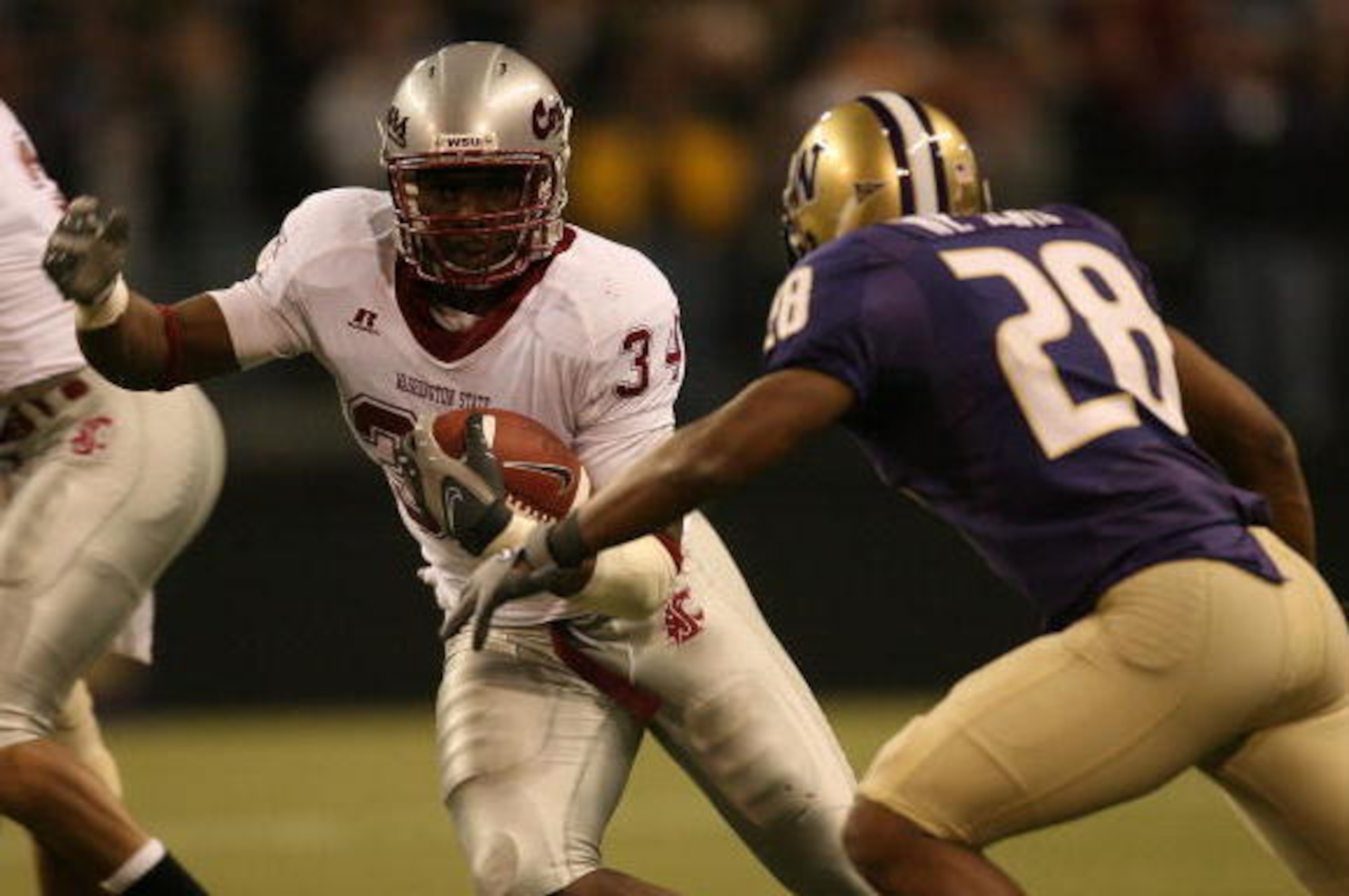
The stigma Ivory eventually shook stemmed from an incident that ended his time at Washington State. In July 2009 he was arrested and charged with assaulting another student at a party, allegedly hitting him with a bottle.
But that Class B felony charge didn’t come down until nine months later, and then in 2011 the case was dismissed without Ivory serving any jail time.
Previously Walkosky was the special teams coach for the Washington State Cougars. So he had a connection with Ivory, and he did his due diligence before bringing the Division I castoff to Tiffin. Walkosky called former Cougars head coach Bill Doba and defensive coordinator Leon Burtnett, who originally recruited Ivory.
“I said 'am I missing something here guys?' They just got rid of Chris Ivory, and the guy that I knew was a gem to be around. They both had the exact same feelings that I did.”
Ivory soldiered on to a much lower stage, running with the same downhill style and complete disregard for the piling physical abuse of his position.
Maybe that alone wasn’t enough to shed whatever character concerns followed him. Those on the outside could watch tape of Ivory either at Tiffin or in the Pac-10, where he averaged 5.9 yards per carry over three seasons. But that night in July 2009 still lingered, even though it's now a memory with no legal record attached.
Behind closed doors, though, Walkosky knew the real Ivory. Specifically, the closed door of his office, the same door a young, thunderous running back shut one day before sitting down.
It was early in the 2009 season, and the Dragons were 0-2. Ivory, who Walkosky described as a man of few words or “not any at all,” had an idea to run past his coach.
“We weren’t a very good team, and he’s not getting great yards,” Walkosky said. “So he came into my office and shut the door. In my mind at the time, there was no doubt Chris Ivory was about to say ‘Coach, I’m getting beat up, and I can’t do this anymore.’
“And it would have been very fair for him to say that. But he sat down and said ‘Coach, I’m not doing very good at running back. If you want me to play defense I’ll do that, or I’ll do whatever you need me to do to help this team win.’”
Let’s pause there for a second to really absorb what unfolded in that office.
Ivory has struggled heavily with injuries throughout his entire football career. At Washington State he battled ankle problems, and his one year at Tiffin ended early due to a knee issue. And after this talk with Walkosky, he missed 24 games over three seasons with the New Orleans Saints.
But there he was, still with NFL aspirations as a running back, sitting before Walkosky ready to sign up for more pounding. The coach's response was part automatic and part astonishment.
“I said ‘Chris, you just keep doing what you’re doing, my man. You’re a great running back, and you have a great future ahead.’”
“Then he said ‘Yes sir, Coach’ and walked out the door.”

Quietly running with violence
Walkosky has told that story a few times. He repeats it while speaking with a blend of passion about the player Ivory was then and has become now, and annoyance about having to defend his character.
Ivory’s first unannounced office sit down later served as the counter-punch after anyone doubted his commitment to football. And the second time he closed the door behind him provided more ammunition in that battle.
After Ivory injured his knee at Tiffin he had rehabbed to about 80 percent health late in the season, Walkosky estimated. Sure, he could play and had been cleared by the team’s medical staff. But with the draft and a pro day workout looming, playing for a still-winless 0-9 team came with no reward and significant reinjury risk.
He was in the middle of what could have become his football wasteland, a place where scouts wander by accident. And he wanted to play.
“He comes into the office again and said ‘Coach, I can help us win these last two games,’” Walkosky said.
“I told him ‘Chris, you’re not playing in these games. Thank you very much, but I’m not going to put your career in jeopardy. You keep rehabbing, and you’re going to have a great career.’
“Again, he showed what type of kid Chris Ivory was. We’re at Tiffin, Ohio, and he didn’t even know where it was on the map at first. And he wanted to switch to play defense, and then, after getting hurt, comes back to say he’s ready to go for two meaningless games.”
That quiet drive has endeared him to his new position coach.
“I wouldn’t trade him for any running back in the league,” Jets running backs coach Marcel Shipp told Seth Walder of the New York Daily News. “I’d go to war with Chris Ivory, any day of the week.”
Now he's the heartbeat of an offense
When Ivory’s mentality is combined with the violence he unleashes each week, the Texas native becomes the complete package. Ivory weighs 222 pounds, and at his pro day workout he ran the 40-yard dash in 4.47 seconds. To compare, the Seahawks’ Marshawn Lynch is also known for being a human car wreck, and at 215 pounds he posted a time of 4.46 in 2007.
Ivory is a constant one-man stampede and is second in average yards after contact per attempt this season among running backs who have played at least 50 percent of their team’s snaps, according to Pro Football Focus.
| Le'Veon Bell | 86 | 3.45 |
| Chris Ivory | 83 | 3.19 |
| Joseph Randle | 74 | 3.08 |
| Ronnie Hillman | 66 | 2.85 |
| Carlos Hyde | 104 | 2.84 |
Ivory is also sixth in missed tackles created on rushing plays, again according to PFF, and over his past two games he’s averaged 6.3 yards per attempt.
Also filed under numbers that make your eyes widen: Ivory rushed for a combined 757 yards at Washington State and Tiffin, and he's currently on pace for 1,725 in 2015.
His chunk yardage has powered the Jets to the top-ranked rushing attack heading into Week 7. Overall, he’s become the centerpiece of an offense that’s moving along merrily with 25.8 points each week, which is a massive leap up from 17.7 in 2014.
Health will always be a concern with Ivory, as the abuse he fights through as a power runner adds up over time. But his dedication and character? Any questions there were answered long ago.
.jpg?w=2560 "Saints Lions Football")
.jpg?w=2560 "Vikings Buccaneers Football")