2016 NFL Draft: Updated Prospect Radar Post-Week 5
Michigan is back, the Ducks are stumbling, and Baylor-TCU is looking like a pre-College Football Playoff matchup. With the letdown of Ohio State's projected dominance, there may not be an "elite" team in college football, but every Saturday of this season has been entertaining. With 12 major programs still undefeated, there is no reason that will change anytime soon.
If your NFL is team is struggling, there are plenty of prospects to watch on Saturdays. From the morning games to late-night West Coast matchups, you're sure to catch at least one future pro at any reasonable hour of the day.
On the flip side, the sport has been littered with suspensions and injuries this year. Maybe we're just becoming more aware of prospects and injuries in general with the instant speed of Twitter, but I can't remember a season which has seen so many stars on the shelf for a variety of reasons. Because of that, it's becoming easier to find prospects who are trending downward rather than upward, which is unfortunate for teams with heavy investments in this class.
Still, the show must go on. We'll break down seven college players who are rising or falling at this point in the season. Some are time-sensitive, having played an impactful game last Saturday, while others have been accumulating positive or negative momentum throughout the year. This week, every player featured has been involved in the first-round discussion at some point during his college career.
Stock Up: Leonard Fournette, RB, LSU
1 of 7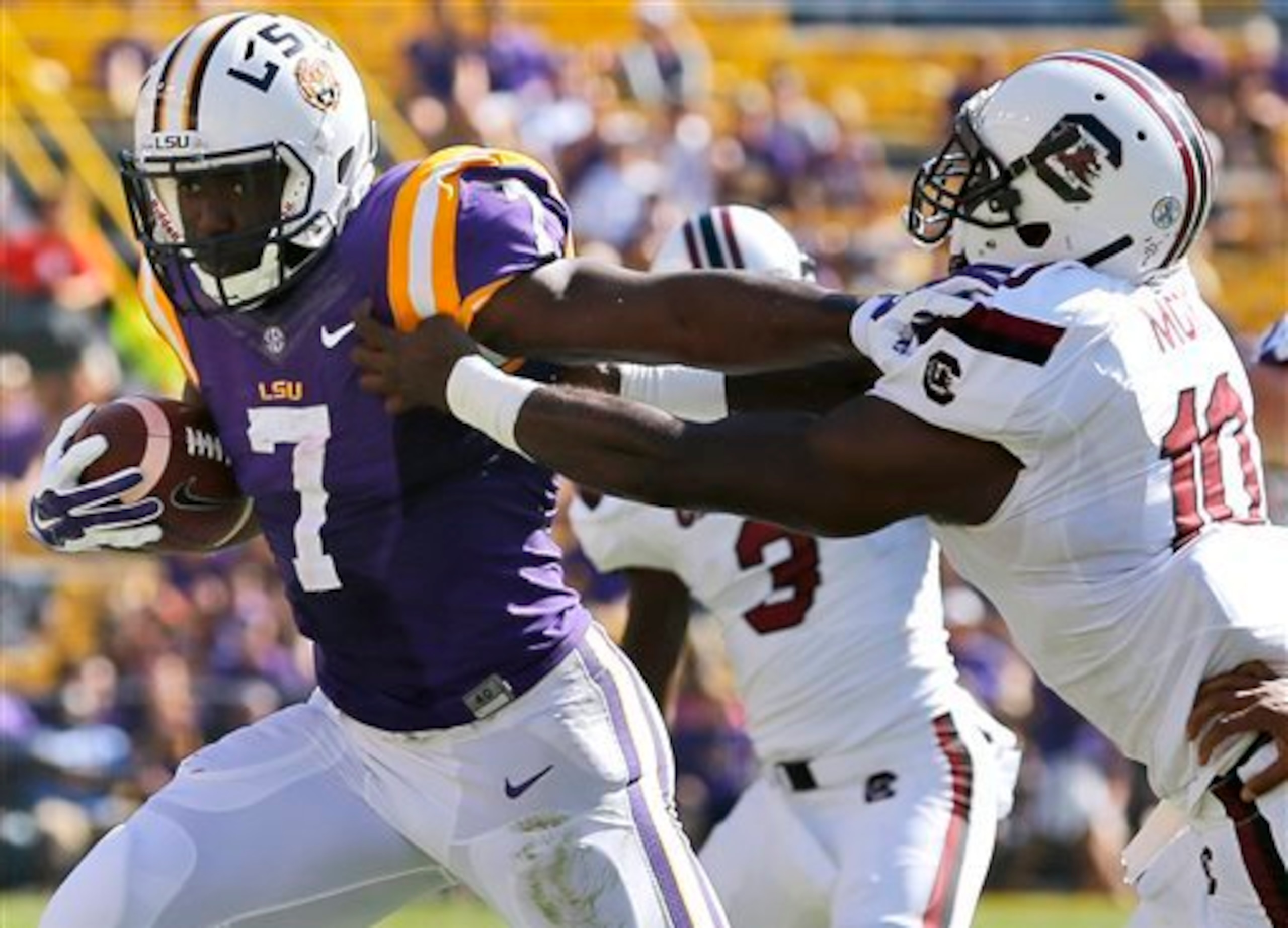
I know I'm not supposed to include non-eligible players in a 2016 NFL draft update, but there's a chance that Leonard Fournette, a running back from LSU, tries to push the NFL's rules. USC's Mike Williams and Ohio State's Maurice Clarett tried to do this in 2004 but failed.
With all of the aftermath of major injuries in college football, such as Marcus Lattimore's, it might be time for the NFL to change its rules on a player having to be three years removed from high school before declaring for the draft. Remember, Clarett initially won his case before it was overturned. Unfortunately, if this hypothetical case goes far enough, it would reach the Supreme Court, where Sonia Sotomayor, who overturned the Clarett ruling, presently sits.
Still, if players are talented enough, even if they have to miss a year, they will be drafted high. Williams became the 10th overall pick in the 2005 draft after missing the entire 2004 season. Cornerback Antonio Cromartie, who had limited tape due to youth and injury, was drafted 19th in 2006, despite missing the 2005 season because of an injury. We're only months removed from some preaching that Cardale Jones should have declared after a three-game stretch.
Even last year, Todd Gurley, who plays the "dying position" of running back, tore his ACL in season after coming back from a suspension earlier in the year. In 2015, he was a top-10 pick. How much of a risk is Fournette really taking by fighting for the cause?
Right now, he's the most dominant player in college football. Since he was a teenager, he was heralded as the future of the position. Currently, he looks the part.
In a free market, he's a top-five talent in this class. He's only 20 years old at a position which ages quickly. He's a 6'1", 230-pound hammer with breakaway speed. As Bleacher Report pointed out on Saturday, Fournette had a breakaway run against South Carolina where he cleared 40 yards in 3.9 seconds.
If I'm an agent, I try to bend his ear as quickly as possible and try to fight the system from the jump. It's unfair that he has the talent and value to make millions and is being forced to play another full year for the cartel that runs college football.
Since I couldn't imagine myself passing up this opportunity, I'm going to count Fournette as a 2016 prospect from this point forward. If he doesn't try to win in court, it's his loss.
Last year, he had a great freshman season, totaling 187 carries for 1,034 yards and 10 touchdowns. Just five games into 2015, he has 119 carries for 1,022 yards and 12 touchdowns. There's a good chance he becomes the 25th FBS 2,000-yard single-season rusher. If he does, he would join the likes of Barry Sanders, Marcus Allen, LaDainian Tomlinson, Matt Forte, Ricky Williams, Larry Johnson and Ray Rice.
Current draft projection: Top five
Stock Down: Jack Conklin, OT, Michigan State
2 of 7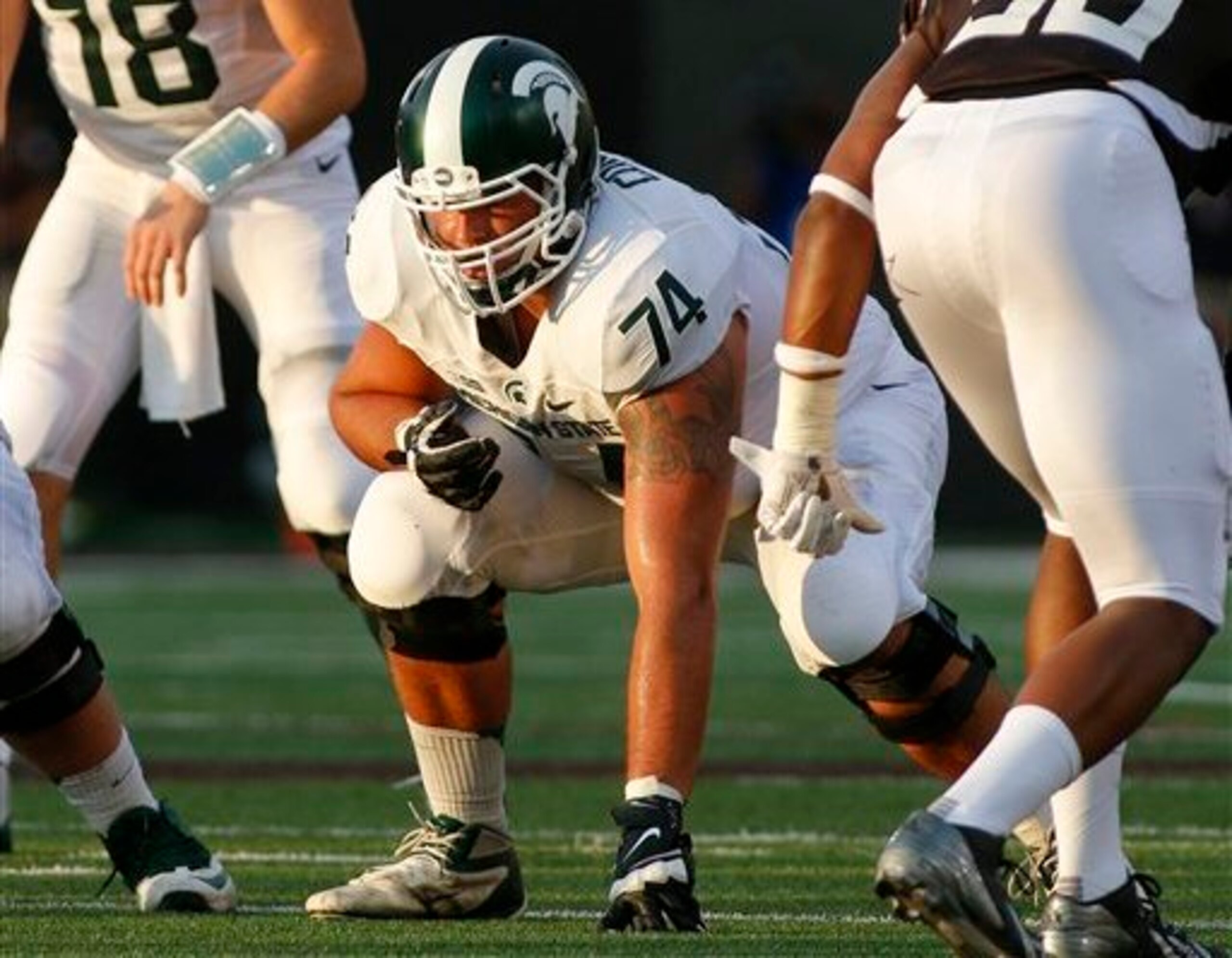
Last season, scouts got excited about a Michigan State prospect on the offensive side of the ball. It wasn't Connor Cook, who some might call a franchise quarterback and first-round pick, but rather Jack Conklin, who at the time was a sophomore left tackle.
He had just turned 20 years old before the 2014 season and was a former walk-on, hitting high grades in the Big Ten, a conference known for line play. I, like many, bought the hype down the stretch.
This year, he's been battling a leg injury that has kept him off the field for the Spartans. Michigan State's 6'2" center, Jack Allen, has even seen time at left tackle in Conklin's absence. This is all in the background of his falling stock, though.
Two of the draft analysts I respect the most are Jeff Risdon of Real GM and LeCharles Bentley, who is a former All-Pro center and now trains draft prospects and veterans. On Saturday, I noticed the two were having a conversation about Conklin on Twitter, who I previously thought was a first-round talent.
Bentley didn't believe Conklin was better than Taylor Decker, Ohio State's left tackle, and Risdon commented that NFL scouts at the Western Michigan-Michigan State game weren't impressed with his resume of work. This prompted me to look back at his 2014 campaign, just to make sure I wasn't seeing a mirage last season.
He has a great frame at 6'6" and 324 pounds—there's no question about that. His movement skills weren't as great as I had previously thought, though. He's not the dancing bear that Greg Robinson was in 2013 or that Ronnie Stanley has been this season.
Conklin is a fine prospect, but he's not going to considered an elite pass-protector. To put it simply, he's not going to be a great left tackle prospect for a pass-heavy team, but for a pro-style squad such as the Seattle Seahawks or San Francisco 49ers, he could play tackle on either side with ease.
I'm not sure he's the first-round lock I once believed he was. This injury may not impact Conklin's draft stock directly, as he should see the field in the coming weeks, but it might be the catalyst for the cautious, like myself, to go back and re-evaluate their preseason expectations of the tackle.
Current draft projection: Top 45
Stock Up: Emmanuel Ogbah, EDGE, Oklahoma State
3 of 7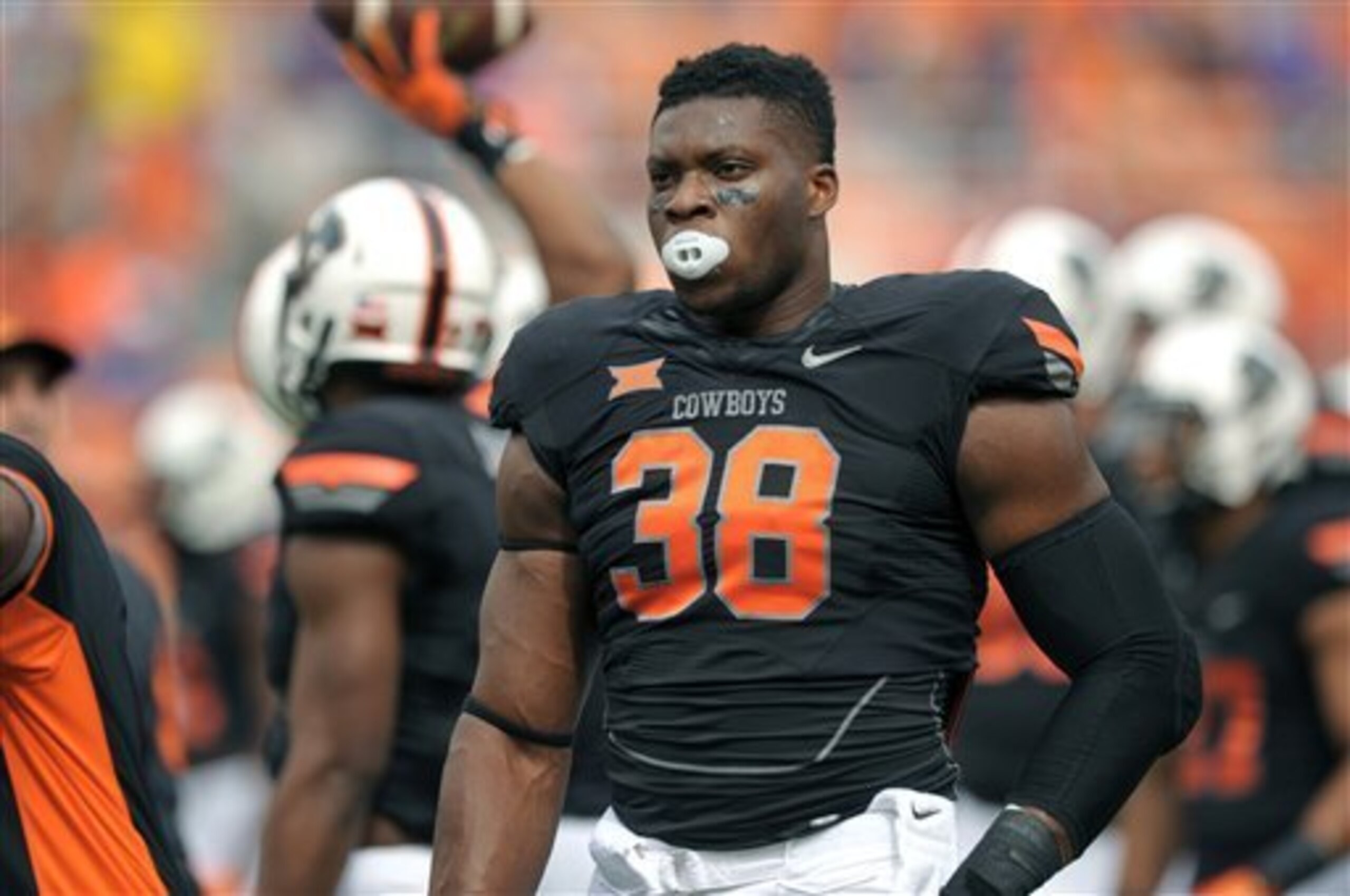
Emmanuel Ogbah is another player I've been building up a case on. Outside of his Florida State game last season, I wasn't impressed with him. Still, he's a height-weight-speed guy who might compare to several Pro Bowlers, such as Cameron Wake and Justin Houston, in that aspect. While he's not Wake or Houston, some experts are going to use hyperbole to link him to those two.
The 6'4", 275-pound junior has recorded at least a sack in all six of his games this season. Last week, he stood out against Kansas State. In the fourth quarter, he dominated both bookends, including Cody Whitehair, the Wildcats' draftable left tackle.
He wins with incredible speed and force generated off the line of scrimmage, using a rip to put pass protectors behind him. My biggest issue with Ogbah is that he doesn't have much of a counter move. He either beats a man off the snap, or he's going to be a bull-rusher.
After two tight battles with Texas and Kansas State, the cardiac Cowboys once again relied on Ogbah's talent to pull off the win. On Saturday, they beat West Virginia on the road in overtime by the tune of 33-26. Without Ogbah's eight tackles, sack and recovered fumble for a touchdown, the team probably wouldn't leave Morgantown with an undefeated record, which only TCU and Baylor can also say they have in the Big 12.
Ogbah is raw, but like Bud Dupree in the last class, I'm willing to bet that some team in the mid-to-late first round is going to take a swing at the athlete. Edge defenders are almost like quarterbacks in terms of value. The hit rate is almost exclusive to first-rounders, which inflates demand for the low supply at the position. In the NFL, you now need two quality pass-rushers instead of just one. Some teams, such as Cleveland, Indianapolis and Jacksonville, are still looking for one.
Current draft projection: First round
.jpg?w=2560 "Colts Football")
.jpg?w=2560 "NFL Paris Football")
.jpg?w=2560 "Seahawks Chiefs Football")
Stock Down: Hunter Henry, TE, Arkansas
4 of 7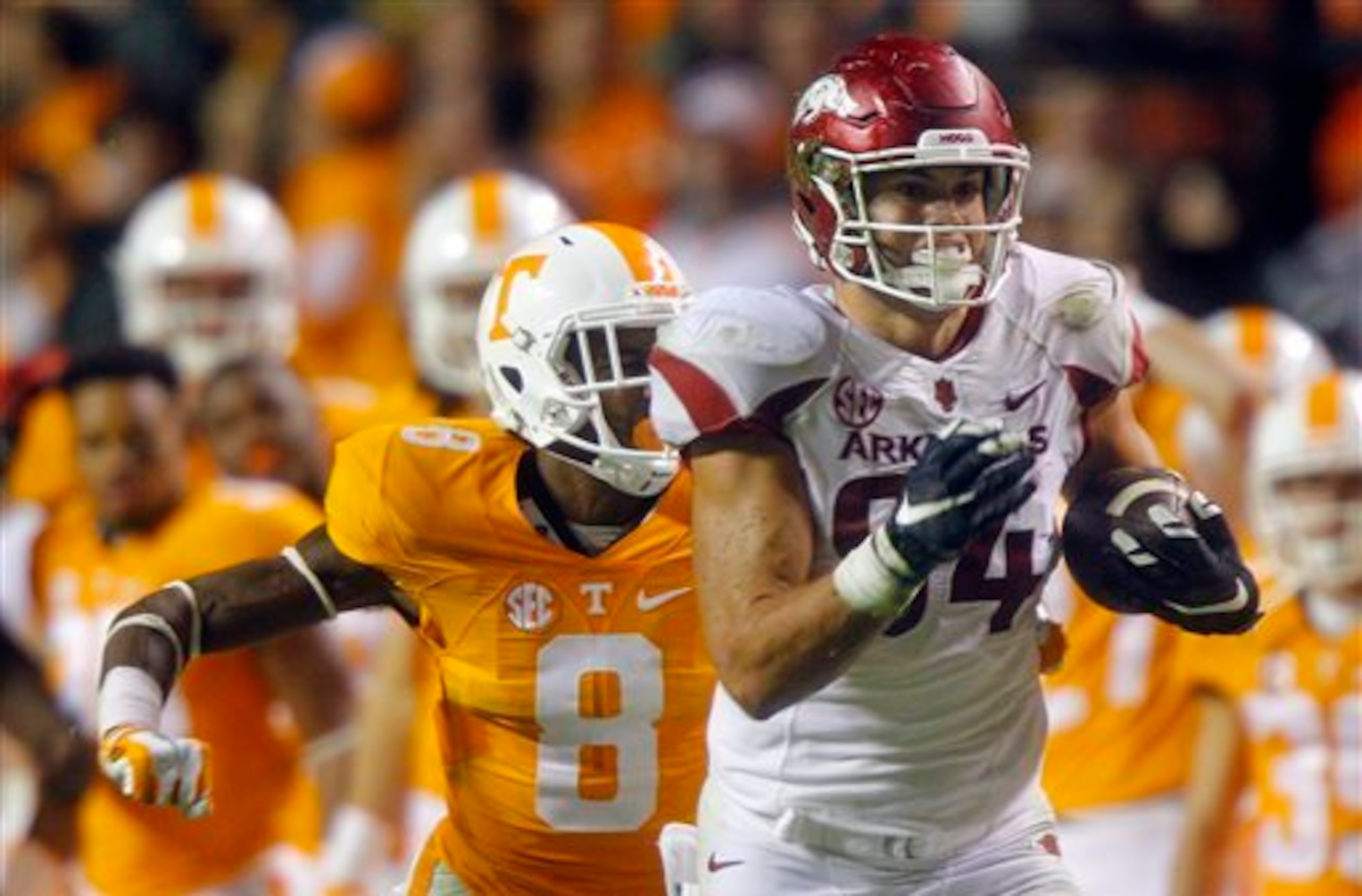
Hunter Henry may not be one of the most popular names in the mainstream draft world, but outside of O.J. Howard of Alabama and Bucky Hodges of Virginia Tech, Henry had the best shot at the tight end position to land in the first round as the next Tyler Eifert. Unfortunately, this year hasn't been the breakout season we expected.
In his four games against Power Five opponents, he's posted 11 receptions for 127 yards and one score, including just one catch against Alabama this past Saturday. He's been putting in work as a blocker, but you'd like to see more from Henry as a pass-catcher, even as a junior.
Mel Kiper Jr. of ESPN called him one of the best deep-threat tight ends in college football. Dane Brugler of NFL Draft Scout stated he was the best tight end in the class. Right now, I see the potential in Henry, and I get that he's "complete," but if you can't be a dynamic pass-catcher at the next level, it's going to be hard to convince a franchise you're worthy of a top-60 pick.
It's akin to taking a run-stopping 4-3 defensive end that early. You can find blocking tight ends and run-stopping defensive linemen as free agents. The rare talents, the ones who should be drafted early, are players who are orientated around the passing game, which dominates the professional game in today's era.
As it stands today, the 6'5" junior should be drafted on Day 3 for his 2015 campaign, but he would likely sneak up as an upside player at a weak position in the league. I wouldn't advise him to declare early, as some believed the potential All-American would do after this season.
Current draft projection: Third round
Stock Up: Corey Coleman, WR, Baylor
5 of 7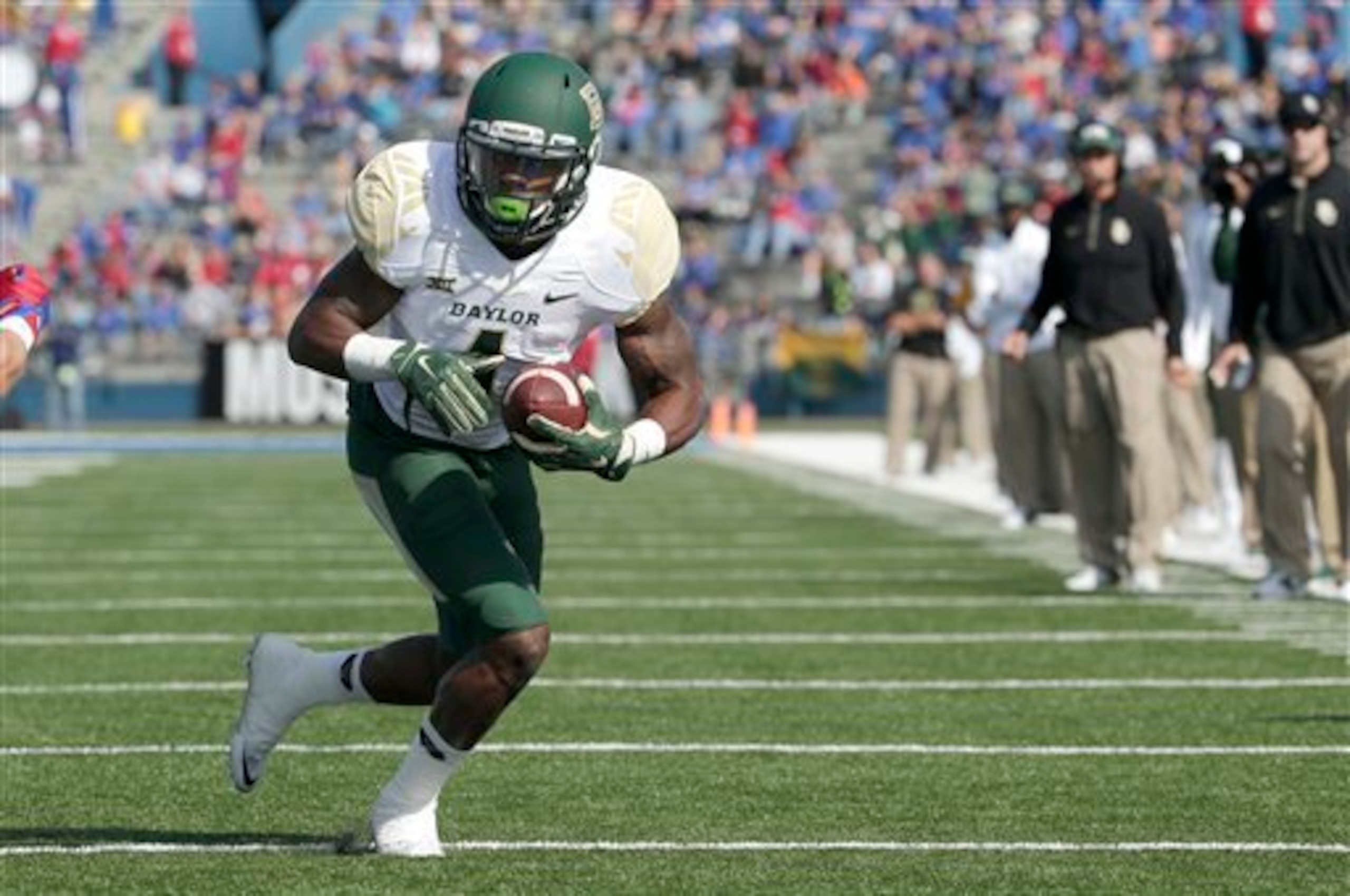
I have been broken. For months I have been echoing that Laquon Treadwell of Ole Miss is by far the most talented receiver in college football, but after a month-and-a-half of huge production, it's getting hard to put Corey Coleman of Baylor on the back burner.
Stats aren't everything, but Treadwell has had five 100-yard games in his three-year career since joining the Rebels as a super recruit. Coleman has matched that this season alone, and we're not even halfway through October. The Baylor Bears are undefeated, scoring over 56 points in every game this season and winning by margins of four touchdowns or more. This is all while quarterback Seth Russell, who had career 128 attempts heading into the season, is transitioning to a starting role after Bryce Petty was the fifth quarterback taken in the 2015 draft.
Coleman and his 21.9 yards-per-catch average are smoothing everything over in Waco, Texas, giving the appearance that the Bears are ready for a playoff run after they were snubbed last season. Despite the fact that he is in the 5'11" to 5'10" range, he's still a strong player at the point of attack and has leaping ability. Imagine if Dez Bryant lost three or four inches. That's who Coleman is currently.
If you're into advanced stats, Pro Football Focus' college section states that Coleman leads Power Five receivers in yards per route ran with a 6.64 average. Only two others average more than four.
In last week's article, I took a shot at the top of the class for lacking prospects who have risen into the tier since the season has started. It's time to admit that I'm wrong and welcome Coleman in with Treadwell, California quarterback Jared Goff and Ohio State running back Ezekiel Elliott as the top offensive skill players in this draft.
Current draft projection: Top 20
Stock Down: D'haquille Williams, WR, Auburn
6 of 7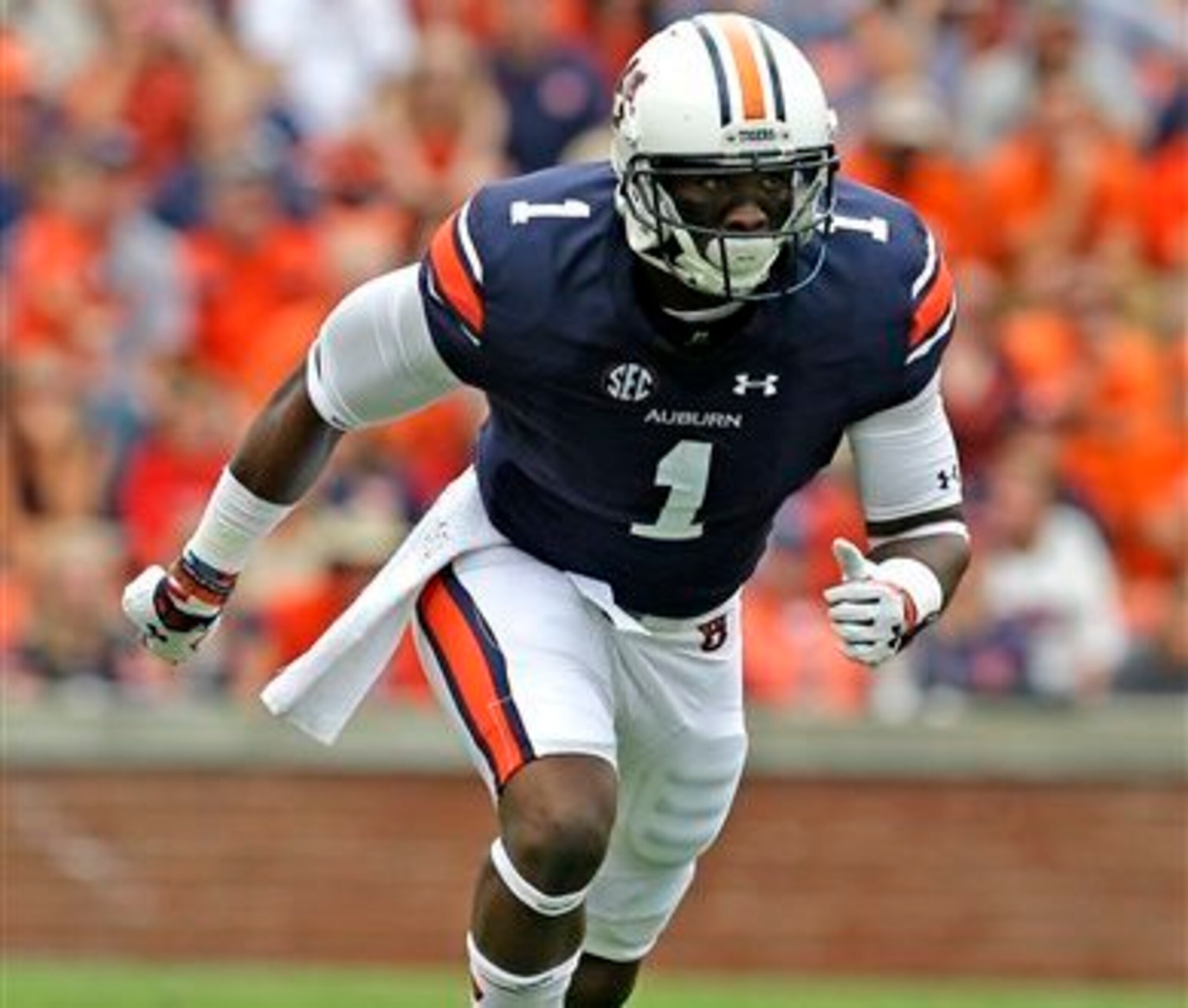
Two of the best junior college transfers of the 2014 season were Devontae Booker of Utah, a running back who might be leading the Utes to a playoff season this year, and D'haquille Williams of Auburn, who touched the ball 12 times in 2015 before being kicked off the team. To say the least, these two, who both could have declared last season but chose to return for a second year at the FBS level, are going in opposite directions.
At 6'2", 224 pounds, Williams fits the NFL's mold of a jumbo receiver. As we have seen with the Seattle Seahawks, there are some advantages to bigger cornerbacks facing smaller receivers at the professional level. The league's response? Receivers are getting bigger as well, which helps particularly in the red zone.
For example, Dorial Green-Beckham missed the entire 2014 season after transferring from Missouri to Oklahoma after being kicked off the Tigers roster after multiple incidents with the law. The 6'5", 237-pounder was drafted with the 40th overall pick and looks to be nothing more than a red-zone specialist for the Tennessee Titans.
That's how much big receivers matter to NFL teams. They will use high draft picks on them just to gain advantages in isolated situations. Kelvin Benjamin is another good example. Other than jump-ball potential because of his frame, the former Florida State receiver was just an over-aged one-year wonder. Still, that was enough for him to go in the first round.
Top-30 aspirations were alive for Williams, up until he was booted from the team this past week. According to Christina Chambers of the Alabama News Network, Williams punched his teammate, Xavier Dampeer, at a bar, sending him to the hospital.
Per Wesley Sinor of AL.com, Williams' party first started the confrontation when he was asked to take his sunglasses off to comply with the bar's dress code. Sinor also reported that Williams hit four people at the bar, including security.
If it isn't already obvious, going from a top returning receiver to essentially losing a season as a result of violence, let alone violence involving a teammate, won't go over well for Williams throughout the process. He's no Green-Beckham, so you have to assume he cost himself at least two or three rounds with his lackluster 2015.
Current draft projection: Fourth round
Stock Up: Jalen Ramsey, CB, Florida State
7 of 7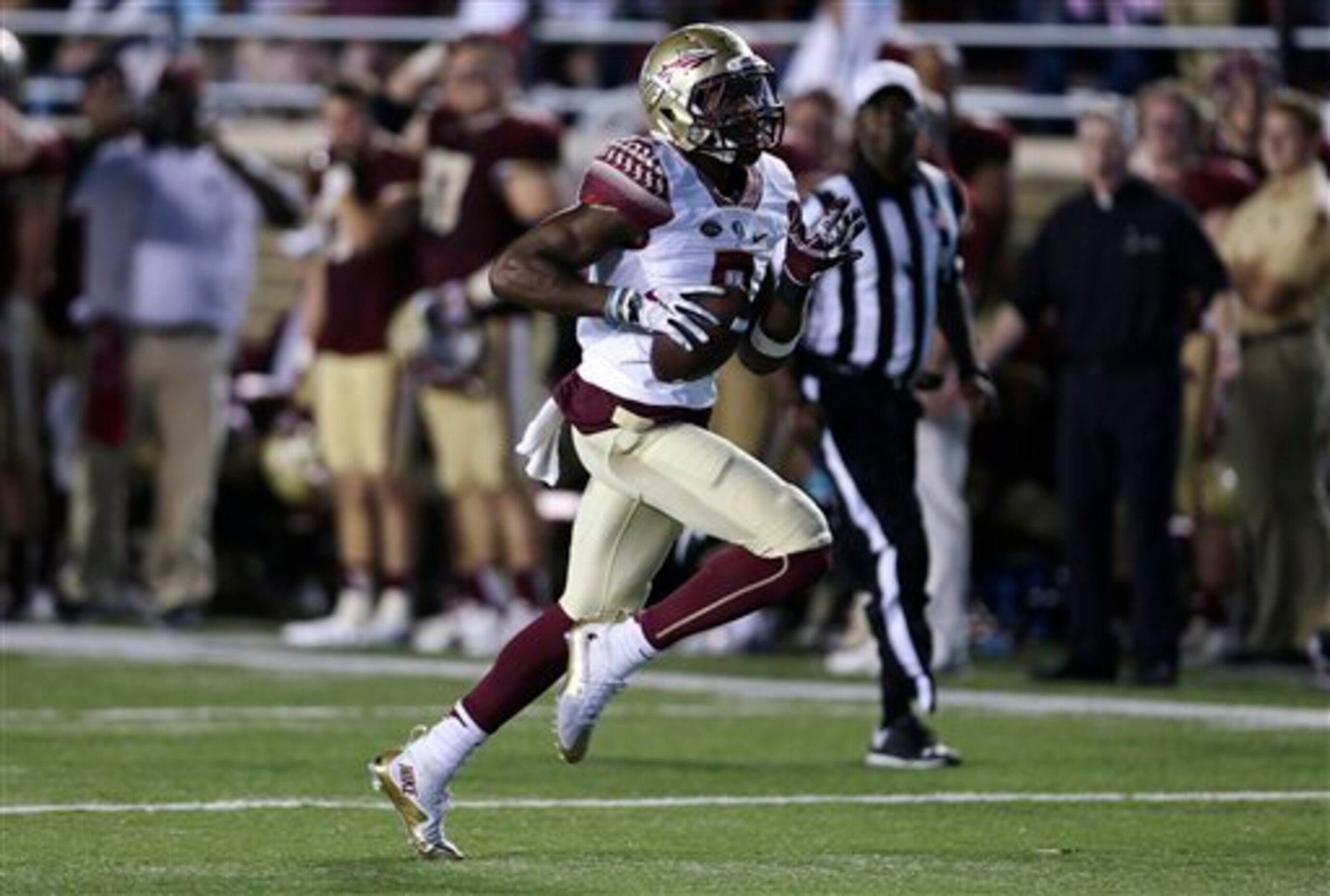
One of my favorite safeties in college football last season was Jalen Ramsey of Florida State. There are really two ways to think about the position, though. You think safety is so weak league-wide in the NFL that rare talents at the position should be valued more than they currently are, or you think that since the position is so weak it doesn't really have premium value and should be treated like off-the-ball linebackers or guards.
Judging by the actions of franchises over the past few drafts, I'm willing to wager that they spend little time, money and effort thinking about safety play. On top of that, any time a player has a chance to play cornerback over safety, he always gets that opportunity. The prospect who epitomizes this from last year's class is Damarious Randall, who was a safety at Arizona State, but the Green Bay Packers drafted him in the first round and converted him to cornerback after noticing his combine scores.
It's simple: If you're a defensive back, you get paid more to play cornerback. Sam Shields and Earl Thomas essentially have the same contract. Shields is a borderline top-15 corner, while Thomas is the top free safety in the sport. Another college safety who moved to corner in the NFL is Nnamdi Asomugha, who signed a five-year, $60 million contract in 2011.
In 2015, only four defensive backs are making an average of over $12 million per year throughout the lifetime of their current contracts: Darrelle Revis, Patrick Peterson, Richard Sherman and Joe Haden. All cornerbacks.
This is good for Ramsey, who converted from safety to cornerback this year, after P.J. Williams and Ronald Darby left Florida State in the 2015 draft class. The Seminoles have played a fairly soft schedule of Texas State, South Florida, Boston College and Wake Forest, but their first real test of the season came this Saturday against the Miami Hurricanes in a night game.
It was a perfect game to evaluate Ramsey, who is listed by the school at 6'1". He wasn't perfect, notably allowing a touchdown and dropping an interception on separate occasions, but his transition to boundary cornerback seems to be going smoothly. He has all the movement skills required of the position. If someone invests time into developing him during his rookie year and the following offseason, he has Pro Bowl potential.
As demonstrated by last season's tape, he's not just a good safety, he's just a good football player. I'm going to need to see more of him against top receivers before I make a final judgment, but in this class, top-10 value doesn't seem out of reach.
Current draft projection: Top 15
.jpg?w=2560)