Ranking the Top 10 German Fighters of All Time
On September 28, 1905, Maximillian Adolph Otto Siegfried Schmeling was born.
A national champion as an amateur, German Schmeling went on to become heavyweight champion of the world during a professional career that spanned more than 24 years.
He was named at 55 in Ring Magazine's list of 100 greatest punchers of all time in the publication's 2003 handbook (h/t BoxRec).
But where does the man nicknamed the Black Uhlan of the Rhine rank among Germany's greatest boxers of all time?
Bleacher Report has trawled back through the archives, as well as looking at the current German stars, to compile a top 10 to mark the anniversary of Schmeling's birth.
A note about the ranking process: World titles are important, but it is understood that modern fighters have the chance to win far more of them, due to the current number of governing bodies.
Honourable Mentions
1 of 11
Before the countdown begins, a word or two about some great German fighters who didn't make the cut.
Heavyweight Walter Neusel was a two-time national champion who became popular in both his homeland and the United Staes.
Der Blonde Tiger took on Max Schmeling twice in his career, losing their first meeting in 1934 before gaining revenge in the rematch 14 years later.
Light heavyweight Erich Schoppner won both the German and European titles in a 40-fight career that saw him only suffer one defeat.
Oktay Urkal had success in Europe but fell just short on the world stage. While current pro Robert Stieglitz has held a major title, he has also lost three times to Arthur Abraham.
Graciano Rocchigiani, however, was perhaps the boxer who can have the biggest gripe about missing out.
Rocky was a two-weight world champion whose career spanned 20 years. In the end, though, he just failed to squeeze into the top 10.
10. Felix Sturm
2 of 11
Professional record: 39-5-3 (18 KOs)
Felix Sturm was a long-time world champion at middleweight who came mightily close to recording an upset win over Oscar De La Hoya.
He represented Germany at the 2000 Olympics in Sydney, losing to American Jermain Taylor in his third fight at the Games.
His professional career saw him reel off 20 straight wins, only for him to lose both his unbeaten streak and the WBO title at the hands of De La Hoya, who was awarded a unanimous decision on the scorecards despite landing less punches, per BoxRec.
The Fighter—whose actual name is Adnan Catic—has also held the WBA and IBF strap at 160 pounds before moving up to super middleweight.
9. Karl Mildenberger
3 of 11Professional record: 53-6-3 (19 KOs)
Karl Mildenberger held the European heavyweight title between 1964 and 1968.
However, the man from Kaiserslautern, Germany, is perhaps best known for taking on Muhammad Ali in 1966.
Mildenberger was the first southpaw to fight for the world heavyweight belt, though he found the Greatest too much to handle. After being knocked down three times, the challenger was eventually stopped in the 12th round.
When Ali was later stripped of his crown, Mildenberger took part in an elimination tournament organised to find a new champion.
Yet his hopes of glory ended early with a loss to Oscar Bonavena in 1967, and the following year both his reign in Europe and his career came to a conclusion when he was disqualified against Henry Cooper.


8. Marco Huck
4 of 11Professional record: 38-3-1 (26 KOs)
Marco Huck made 13 consecutive defences of the WBO cruiserweight title before his reign was ended by Krzysztof Glowacki.
Born in Ugao, Serbia, Huck moved to Germany at a young age. He was an amateur kick boxer before choosing to stick to boxing—it seems he made the right career choice.
After losing to IBF champion Steve Cunningham in 2007, Kapt'n defeated Victor Emilio Ramirez two years later to claim the WBO belt.
Huck took the brave step to move up in weight to challenge Alexander Povetkin for the WBA heavyweight strap but was on the wrong end of a majority decision.
7. Gustav Eder
5 of 11Professional record: 121-17-24 (59 KOs)
Gustav Eder was a welterweight who became both German and European champion during a busy career that spanned 21 years.
Astonishingly, 24 of his bouts finished up as draws, including eight of his final 10 appearances in the ring.
Eder lost to compatriot Gustave Roth in his first attempt to win the European title, in 1931.
However, he finally got his hands on the belt three years later, knocking out Nestor Charlier to claim the vacant strap.
It remained in his possession until 1938, when he not only lost his title but also missed out on becoming IBU world champion at the hands of Belgian Felix Wouters.
With no pictures available of Eder, instead click on the video at the top to enjoy the fourth meeting between Germans Arthur Abraham and Robert Stieglitz, which took place in July of this year.
6. Sven Ottke
6 of 11
Professional record: 34-0 (6 KOs)
Sven Ottke achieved a rare feat in boxing—he retired as a world champion.
The Phantom held both the IBF and WBA super middleweight titles in the paid ranks after a highly successful amateur career.
Ottke competed at the 1988, 1992 and 1996 Olympics, while he picked up a bronze medal at the World Amateur Championships in 1989.
He finally turned pro in 1997 and, less than two years later, claimed the IBF crown with a split-decision win over Charles Brewer.
The WBA belt was then claimed from the possession of Byron Mitchell in 2003, with Ottke defending both titles four times before announcing his retirement.
Despite the unbeaten record, there are two reasons why Ottke is not ranked higher on the list. First, note his low number of knockouts in 34 career fights.
Second, and more importantly, he came out on the right side of several close decisions on the scorecards.
Robin Reid was certainly not impressed by the officiating in his 2003 loss to Ottke, per Stuart Brennan of the Manchester Evening News: "You don't expect any favours fighting in Germany but at least Dick Turpin wore a mask when he robbed people."
5. Arthur Abraham
7 of 11Professional record: 43-4 (29 KOs)
Although born in Yerevan, Armenia, Arthur Abraham moved to Germany in his teenage years and became a citizen of his adopted homeland in 2006.
King Arthur has gone on to become a two-weight world champion who is known for not only his heavy hitting but also his toughness.
He claimed the IBF middleweight title in 2005 before making the move up to the 168-pound limit to compete in the Super Six World Boxing Classic tournament.
His first career defeat came through a disqualification in the Super Six, with Abraham punished for hitting Andre Dirrell after the American had slipped.
In the same tournament, he was also beaten by Carl Froch and Andre Ward, though he opted to continue campaigning at super middleweight.
He has had four fights against fellow German Robert Stieglitz, winning three of them, and is currently the reigning WBO super middleweight champion.
4. Juergen Braehmer
8 of 11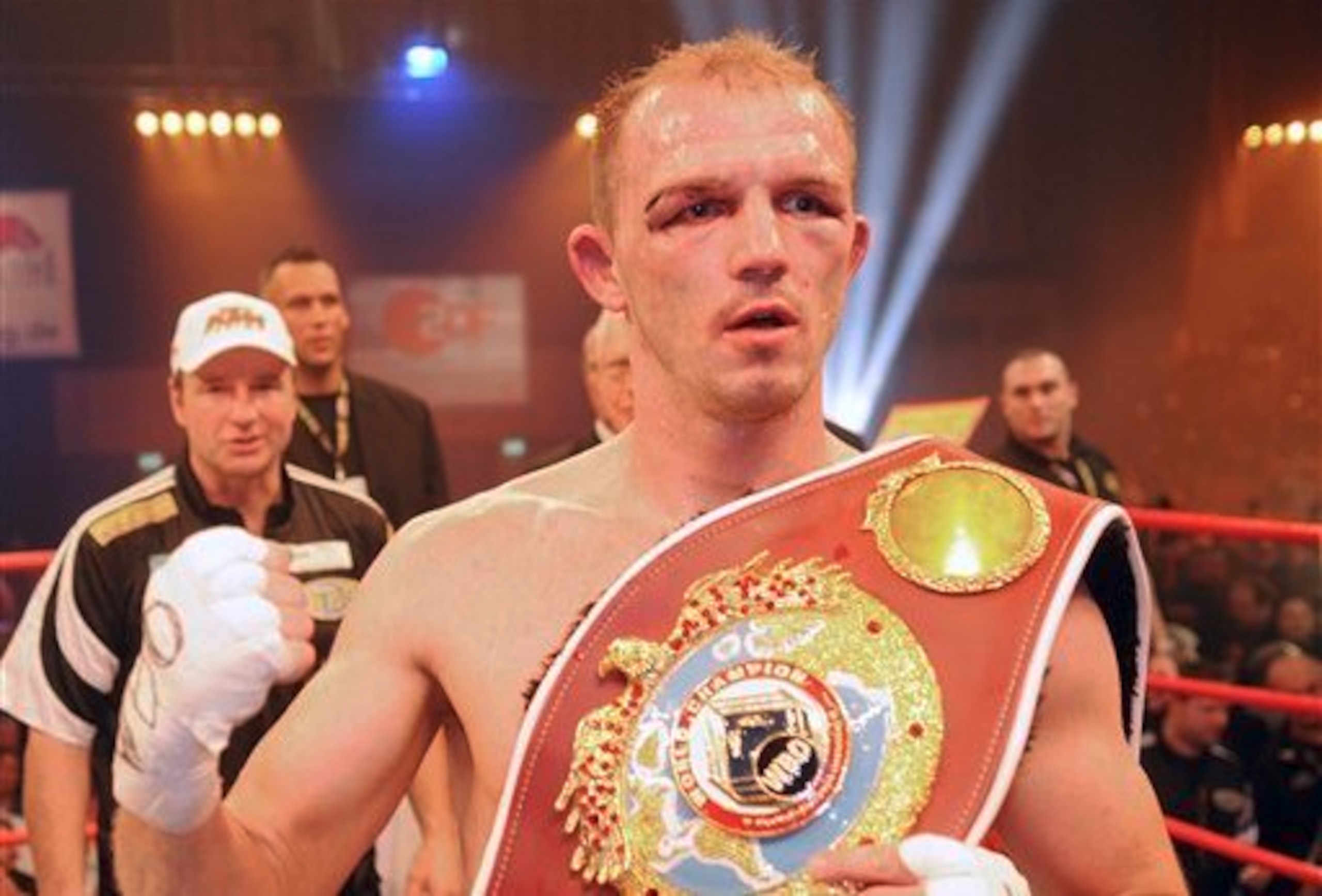
Professional record: 47-2 (35 KOs)
After an amateur career that saw him lose just five times in 100 bouts, Juergen Braehmer continued his habit of winning when he moved into the professional ranks.
The southpaw started out as a super middleweight, winning the WBO Inter-Continental and WBC International titles.
He won his first 27 fights before tasting defeat for the first time at the hands of compatriot Mario Veit, though he gained revenge for that result with a fourth-round knockout in the rematch.
Braehmer was beaten by Hugo Hernan Garay in 2008 but has since gone on a 16-fight winning streak.
His impressive run has seen him pick up the European and WBA light heavyweight belts, with the second of those straps still currently in his possession.
He is still going strong at 36, telling Anson Wainwright of Ring Magazine: "A unification would be great, but I am not a guy who chases such goals no matter what. When it happens—good. If not, I am still a happy man."
3. Gustav Scholz
9 of 11Professional record: 88-2-6 (46 KOs)
Gustav Scholz had his one and only shot at a world title towards the end of his career, losing to Harold Johnson at light heavyweight in 1962.
However, when he retired the following year, he had been national champion at welter, middle and light heavyweight.
The southpaw from Berlin claimed the European belt with a win over Giulio Rinaldi in 1964 in what proved to be his final fight.
He was a popular sporting figure in his homeland with his successes in the ring made even more impressive by the fact he had no amateur background in the fight game.
After hanging up his gloves, Scholz—who was nicknamed Bubi—became an actor, working both in film and television.
2. Henry Maske
10 of 11Professional record: 31-1 (11 KOs)
Henry Maske was a gold-medal winner at the 1988 Olympics who was unable to turn pro until the reunification of Germany in 1990.
His amateur career also included success at the 1989 World Amateur Championships, by which time he had moved up from middle to light heavyweight.
He became IBF light heavyweight champion in his 20th fight, dethroning Charles Williams thanks to a unanimous points triumph in Dusseldorf, Germany.
His reign lasted from 1993 until 1996, when American Virgil Hill triumphed via a split decision in Munich, Germany.
Maske—nicknamed Gentleman—retired after his only defeat in the paid ranks, though he was tempted to lace up the gloves one last time for a rematch with Hill in 2007.
The German had his revenge with a points triumph in the catchweight contest.
1. Max Schmeling
11 of 11Professional record: 56-10-4 (40 KOs)
Schmeling tops the list, and rightly so. The Black Uhlan of the Rhine was a classy operator in and out of the ring.
He created history when he became the first man to win the world heavyweight title via disqualification in 1930 after Jack Sharkey was thrown out for a low blow.
Schmeling lost the belt two years later in a rematch and then failed in an attempt to dethrone champion Joe Louis in 1938, despite having previously beaten the Brown Bomber.
A good technician with a dangerous right hand, Schmeling found himself caught up in politics through no fault of his own.
Per BoxRec's profile of the fighter: "In America, he was routinely cast by promoters as the cold-hearted, villainous invader, a puppet of Hitler and a hater of Jews. In Germany, Nazi propagandists portrayed him as a heroic symbol of German destiny and Aryan supremacy. In no way was Max Schmeling any of these things."
He was drafted to serve in World War Two but would get back in the ring in 1947, albeit with limited success.
Schmeling—who was inducted into the International Boxing Hall of Fame in 1992—died in 2005 at the age of 99.
Do you agree with the list? Should any of the honourable mentions have made it into the top 10? Have your say via the comments section.