US Open 2015 Men's Semifinals: Federer vs. Wawrinka Preview and Prediction
It will be an all-Swiss semifinal at the 2015 U.S. Open as Roger Federer and Stan Wawrinka bring their hot play to the final weekend of the year's final major. They are growing their own unique late-career rivalry behind some potent fireworks.
First there's Federer: the all-time Swiss champion, a tennis legend and one of greatest players of all time. He is in a fabulous zone of play that conjures up alternative images of the previous decade. How has he continued to raise his game to a seemingly unstoppable level?
Wawrinka is the Swiss counterpart: the rugged everyman who has stared tennis' biggest superstars in the face while brandishing his racket with uncompromising fierceness. Will he add another big win to his late-career evolution?
There is history and character beneath this match, a wealth of contrasting skills and potential to create a decisive thriller—if not an epic classic. But even the hype surrounding this championship-level match will pale next to the performance, however it turns out.
We've got a great match just ahead.
Who Has the Historical Edge?
1 of 7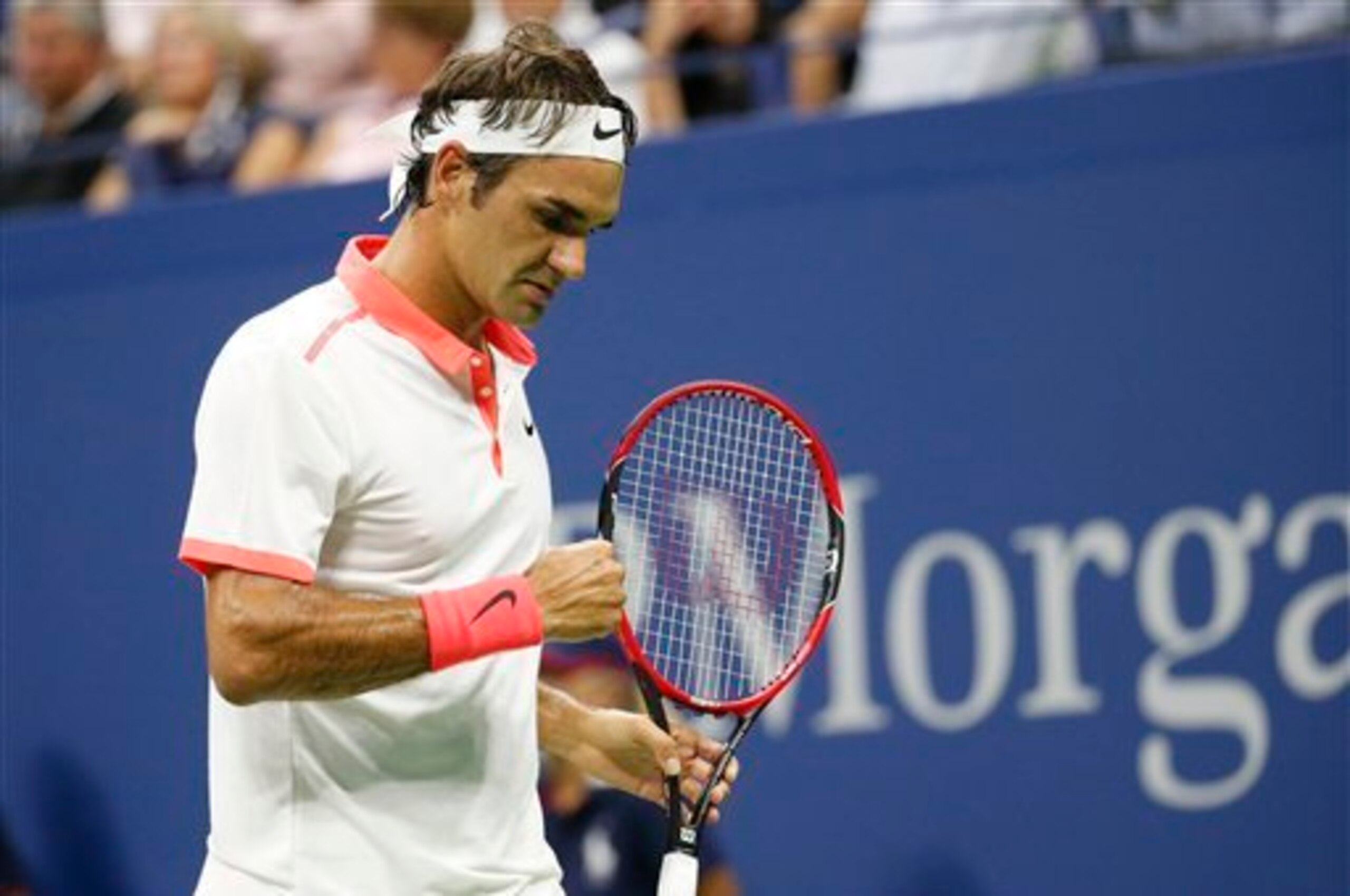
The first part of Federer's 16-3 career domination over Wawrinka was a 13-1 mark that began in 2005 and ended with an ill-fated 2013 match at Indian Wells. Then, Federer spent much of his time ruling the tennis world and treating Wawrinka's progress like a punching bag. It was a friendlier time, for sure.
Fortunes changed for both players early in 2013. For Wawrinka, it was his coming-out five-set thriller at the Australian Open when he nearly knocked off eventual champion Novak Djokovic in the fourth round.
He dueled Federer in a close loss at Indian Wells, but from there, he evolved into a 2013 U.S. Open semifinalist before winning the 2014 Australian Open and 2015 French Open titles. Along the way, he took a coveted 2014 Masters 1000 title from Federer at Monte Carlo. The rivalry was beginning.
Federer's misfortunes gave out with his back at the Indian Wells match, sending him to a miserable 2013. It may have also been the impetus in seeking out coach Stefan Edberg and his steady renaissance almost to the top of tennis—albeit without a major title or the No. 1 ranking to reward his rise.
He has maintained the upper hand on Wawrinka in winning three of five matches, with the two recent losses coming on clay.
The Swiss pair also had a bitter affair with Federer's close-shave victory over Wawrinka at the WTF in London last November.
There was allegedly bad blood in a triangle that featured Federer's wife shouting at the upstart Wawrinka. The two compatriots appeared to patch up their differences less than a week later to lead their nation to its Davis Cup championship.
They might be friends yet, but first and foremost, they are enormous competitors who know they must plow through the other to get to the U.S. Open final. It could be very tense.
Wawrinka at 2015 US Open
2 of 7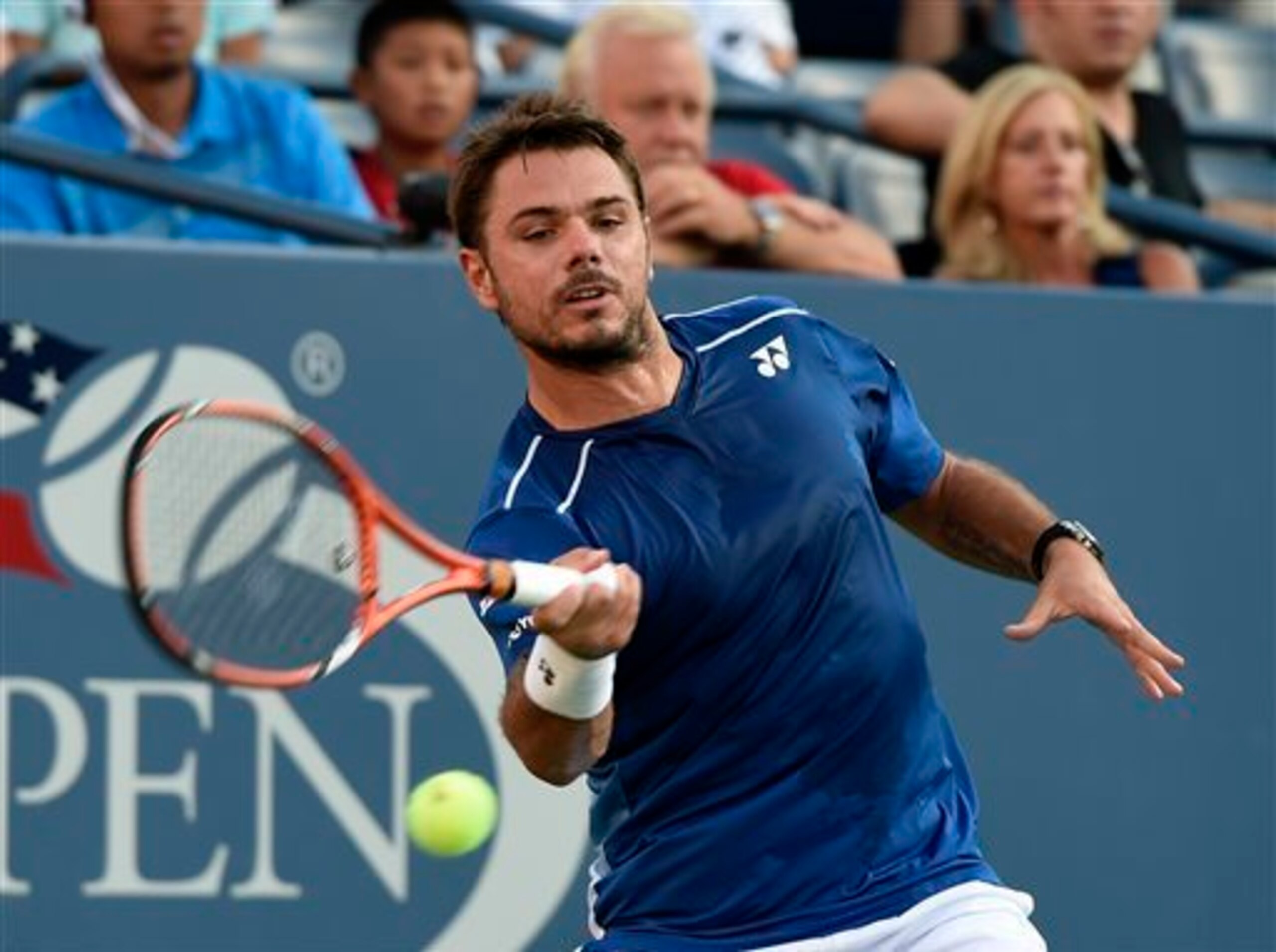
Wawrinka has often been a slow starter at majors, but he seems to get stronger when the second week looms—like he's the son of Jor-El heading for a yellow sun.
He managed to win five tiebreakers in his first three matches, and he is now in the semifinals with 15 of 16 sets won.
Most impressively, he whitewashed big-serving Kevin Anderson (who had just picked up one of his career's biggest wins over Andy Murray) who looked leg weary and drained—no match at all for Wawrinka's powerful groundstrokes.
As always, Wawrinka forces the action and the pace by hitting heavy balls. He's averaged nearly 47 winners per match, but he's also navigated some close sets with 41 unforced errors per match. He's going to have to do much better than that to keep Federer off the net.
Federer at 2015 US Open
3 of 7
It's silly to say that this is the best we've ever seen from Federer, because as great as he's played the past five matches (10 if you throw in Cincinnati), he's a different player than a decade ago—and, of course, he's not that dominant.
But it's fair to ask if this is the best he's played since the 2010 Australian Open, when he crushed Andy Murray in the final.
So far Federer has won every match in straight sets, and other than hints of moisture in his hair, it's as if he refuses to break a sweat.
Not only is he cruising into the semifinals with a perfect 15-0 sets conquest, but he's only given up 6.75 total games per match—if you throw out the tense John Isner match where the big American unleashed perhaps the biggest serve in the game. Even then, Federer shut out Isner in one of the tiebreakers.
Federer has also been more efficient than Wawrinka, with his 41-20 ratio of winners to unforced errors in the five matches.
One more thing to consider: Prime Federer never entered the U.S. Open semifinals without dropping a set, at least on his way to five consecutive titles from 2004-08. The only time he was spotless in getting to the semifinals was 2010, but he lost that match to Novak Djokovic.


The Biggest X-Factors
4 of 7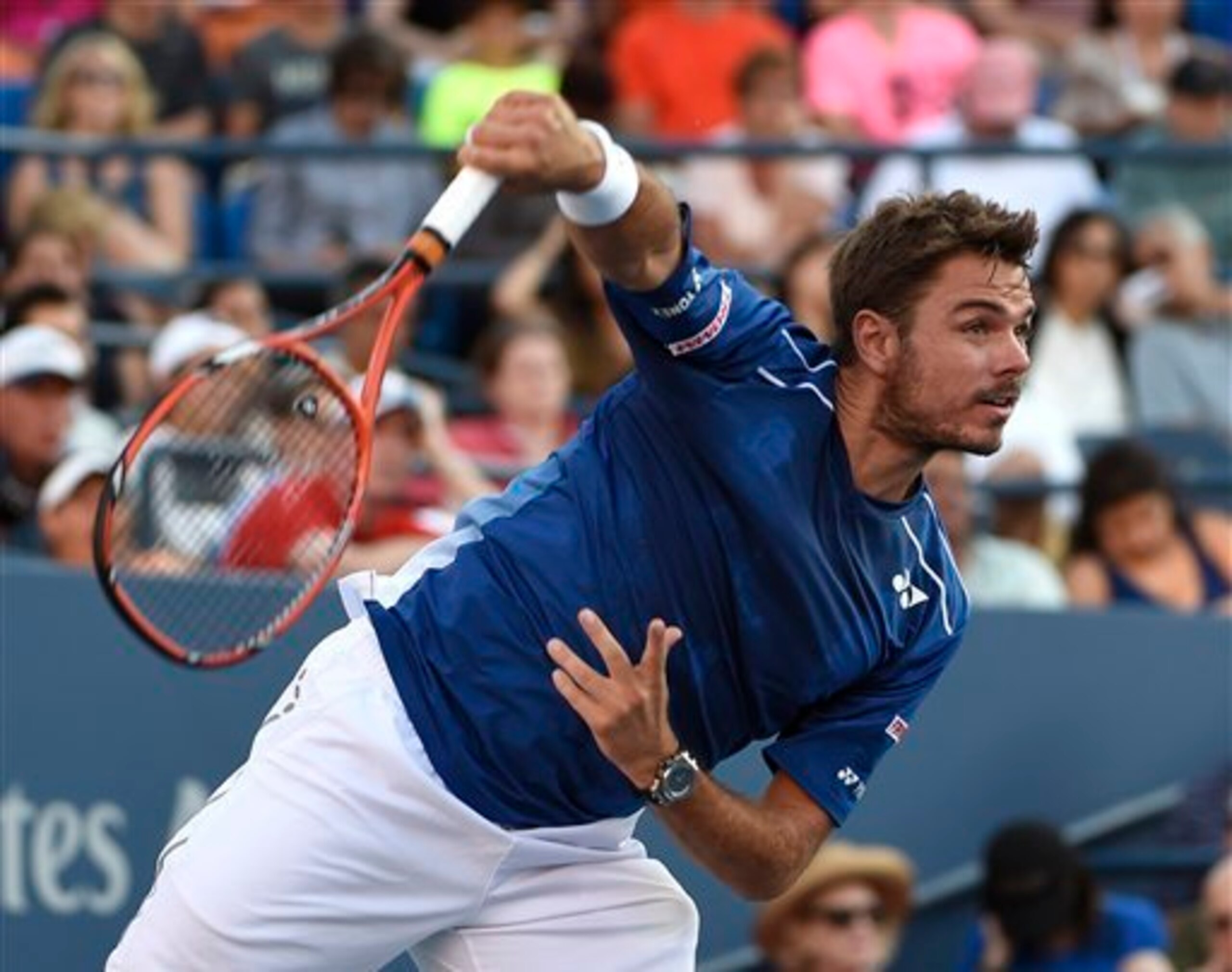
Composure After Errors
Wawrinka has learned to live and die with unforced errors as a byproduct of his more lethal baseline power package. He likes to point to his head to remind himself to play smart or to validate his sense of staying in the moment for a big shot.
Federer will be much trickier because he isn’t going to sit back and trade blows. He can disrupt and frustrate a baseliner’s momentum, and Wawrinka is going to have to keep resetting when he can’t find his rhythm.
Federer will need to be clean at the net, and he might find it more difficult to come in against Wawrinka’s more aggressive blows. It will be a challenge for him to stay with the same game plan if things are not starting out well. Wawrinka has much better toughness and strength than his previous five opponents.
Break Points
Federer has only given up 11 break-point opportunities in five matches. That’s stingy to say the least. John Isner was 0/5, Philipp Kohlschreiber 2/4 and Richard Gasquet did not force a single break point. Wawrinka will have to force at least 6-10 looks depending on how many sets are played, but he will need to capitalize on at least a couple of them. Furthermore, it could be crucial to win a tiebreaker.
Wawrinka has given up 11 breaks in 32 chances. Translation: He’s been three times more likely to give break-point chances and five times more likely to get broken than his more esteemed Swiss rival. That’s a massive difference that must at least be matched if he is to pull out the win.
Federer Will Win US Open Semifinal If...
5 of 7
Imagine if Roger Federer would have teamed up with coach Stefan Edberg sometime in the middle of 2010. Would he have a few more majors in the bag?
The key to his continued late-career rise (as if we thought that was possible with Federer) has been his improvement in attacking short balls with quick groundstrokes and excellent movement at the net.
He’s using great angles that give his opponent almost no openings. Richard Gasquet was often closer to the exit tunnel or clock than to the corners of the court. He was tired out late in the third set, completely resigned to the loss, and this is coming after some of the best tennis he’s ever played.
If Federer keeps moving his serve around, Wawrinka will find it hard to get back into the point. The quicker U.S. Open surface will make it tough for him to wind up his longer strokes.
Keep in mind that his three career wins against Federer have all been on clay, although he was mightily close to winning in London last November.
Federer will also need to hold his own with the longer rallies, and he should win plenty of them outright. If he wins most of them, and he could, it will be a blowout.
As long as Federer keeps bringing his A-game, it will be a lot of pressure for Wawrinka to play like he did at the French Open, but the different court surface and playing style give Federer more options to break things up.
Wawrinka Will Win US Open Semifinal If...
6 of 7
He needs to play as well as he did in the French Open final. For all of his big-match heroics, primarily against Novak Djokovic in the past two-and-a-half years, Wawrinka is facing a more versatile offensive attack from Federer. He's not going to have the clay-court luxury of going toe-to-toe with Federer from the baseline.
Can he cut down on his errors and hit passing shots like a young Rafael Nadal? Can he get on a roll with his serve? Can he turn Federer's crisp play into some sluggish frustration?
His best bet is to return well and pin Federer back as far as possible, not allowing him to take short balls and hoping to direct his attack at the Federer backhand.
If he does win this match, he could very well be joint-favorite to win this title and cement his own legend with a third different major.
It's hard to believe that he could be roaring past Andy Murray, but history is recognizing his success.
Prediction
7 of 7
It would be great to watch a classic five-set match with both players flexing their strengths and making mini-comebacks throughout the match. It’s easy to like their styles of play, and their commitment to getting in topnotch shape and playing world-class competitive tennis. Their talents are awesome.
Wawrinka could win this match, and if he does, his big-match reputation will be even more justified. However, it’s hard to see him playing clean tennis and taking more than one set, let alone three sets off of Federer this weekend.
If this were Australia, it might be a coin toss, but the speedier U.S. Open surface could be the solid edge Federer needs to have his way.
Federer has been through every triumph and disappointment imaginable. He is the better server and will be tougher to break. His return game still amazes, and his footwork is light and ready to direct his shots—with the classical approaches we saw from legends like John McEnroe and Edberg. He’s more than earned his labels of "genius" and "maestro."
Give Wawrinka one set, but call it Federer in four. It's difficult to see it going to five sets, and it’s more likely Federer carves out a straight-sets masterpiece than the match goes the distance.
He will rest and have plenty of energy to await Novak Djokovic or Marin Cilic.
.jpg?w=2560 "Eagles Titans Football")