

How Thomas Tuchel Has Put Borussia Dortmund Back on the Map
Heading into Gameweek 4 of the 2015-16 season, Borussia Dortmund are perched atop the Bundesliga table looking down upon the other 17 teams.
Played three, won three, scored 11 and conceded just one solitary goal—mix in Europa League progression via four play-off games and it’s one hell of a start considering how this club finished the 2014-15 campaign.
Indeed, nine months ago, BVB were flirting pretty seriously with relegation. It wasn’t just a passing fancy—they were on their fourth or fifth date with the drop zone. January 1, 2015, rolled around and Jurgen Klopp’s men had accrued just 15 points from 17 games, sitting 17th, level-bottom with Freiburg.

.jpg?w=2560)
This, from a side who in 2013 reached the Champions League final and narrowly lost to a historic Jupp Heynckes Bayern Munich side, shocked the world.
Regression post-Robert Lewandowski, Mario Gotze (both left for Die Bayern) and Ilkay Gundogan (spinal injury) was to be expected, but the rate at which they dropped off was beyond comprehension. Almost overnight, Dortmund went from established, feared tigers to friendly, fluffy kittens.
But Thomas Tuchel has awoken a sleeping giant, and although seven games is an exceptionally small sample size from which no sweeping conclusions should be drawn, it’s clear there’s something in the air in Dortmund again. The clouds have parted, the legendary (but regrettably stale) Klopp has gone and a fresh, up-and-coming tactician is in his place.
BVB are roaring, not purring. How has Tuchel done it?
Dortmund of old
BVB in their prime were a fantastic watch; they were one of the best sides on the planet, not just in terms of results and trophy-based success, but also aesthetically.
They picked up a legion of followers across the globe as a result, but once the philosophy started waning, Klopp clung onto it feebly for too long, allowing the club to stagnate. By the end of his tenure, all the discernible good parts of his “system” were distinctly absent.
The Dortmund who finished second in the Champions League final in 2013 were built around three keys: An all-Polish right side, a complete, world-class target man and a flexible understanding when it came to the point of attack.
The right side clicked because of the local language and near-telepathic understanding of movements and tendencies. Lewandowski, starting as the lone striker, would drift to the flank where compatriots Jakub Blaszczykowski and Lukasz Piszczek consistently interchanged, overlapped and covered each other. They held the width, played direct football and produced game in, game out.
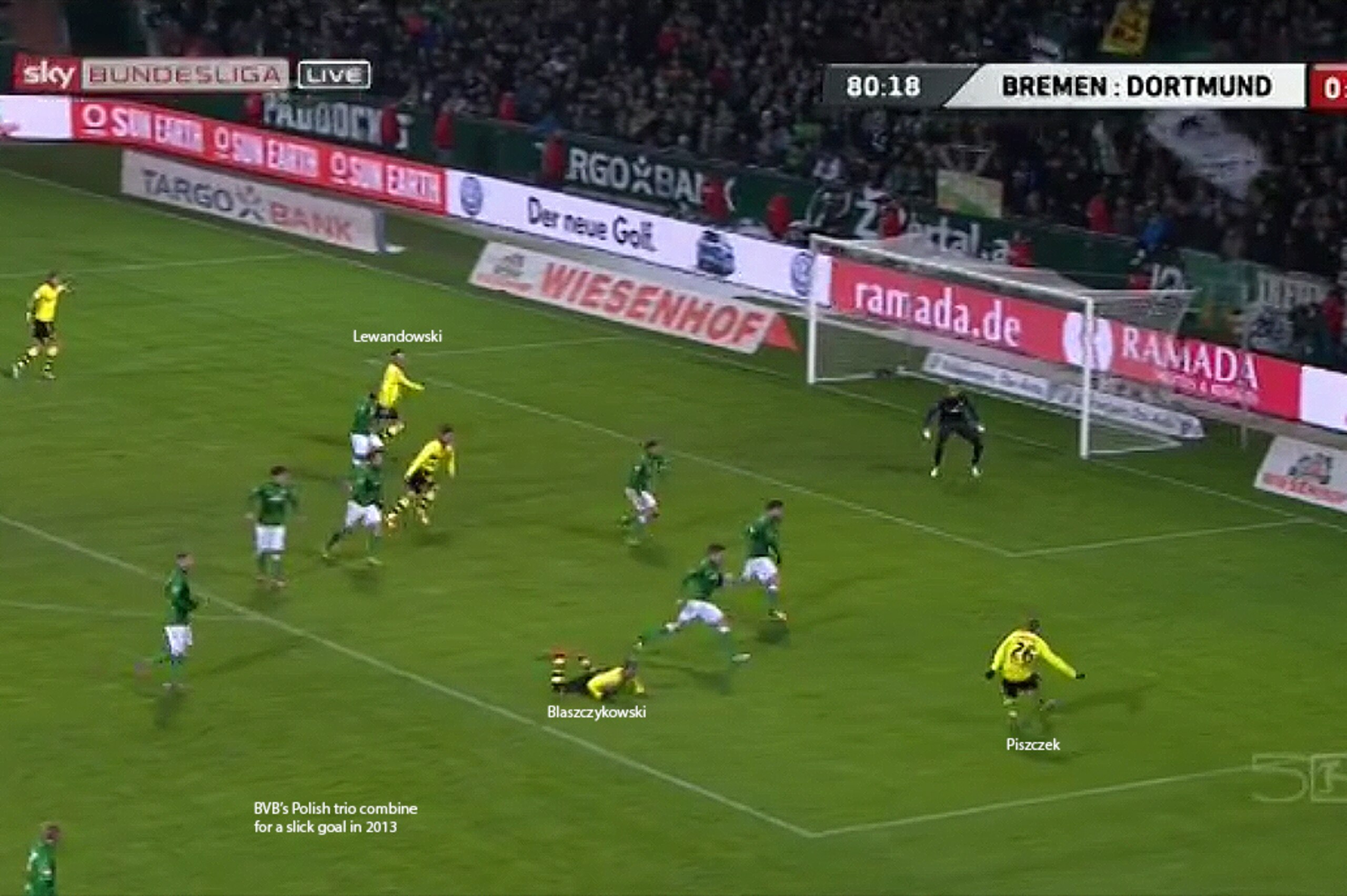
Lewandowski could carry the team on his shoulders if needed, dropping in to collect longer passes and spark attacks, with Gotze and Marco Reus dipping in and out of the pockets created.
Mats Hummels and Ilkay Gundogan were the prime creators—despite the former being a centre-back—and BVB boasted the ability to attack on the left, on the right, through the middle, on the ground or in the air. It became near-impossible to produce the resources or commit the manpower to shut every avenue down; they nearly always found a way.
Sadly, this side was ripped apart. Reus stayed, but Lewandowski and Gotze left, Gundogan, Blaszczykowski and Piszczek got injured and Hummels’ form dropped off a cliff. There were other issues afflicting other members of the squad, but every key player suffered or left—it killed the momentum stone dead.
Sporting director Michael Zorc attempted to rearm Klopp using the transfer market, but the transfers ranged from OK to disastrous.
Lewandowski could not be replaced; there were no strikers so complete and talented available for the funds they had. Adrian Ramos and Ciro Immobile were feeble, doomed attempts to replicate him. Henrikh Mkhitaryan, Gotze’s replacement, eschewed comparisons to Kaka in his prime by missing chances by the truckload, while more injuries took their toll on the defence.
BVB represented a sinking ship in the aftermath of battle, and while Klopp dashed from port to starboard and back again, plugging holes and repairing sails, the philosophy evaporated.
Dortmund played 2014-15 out sans identity and strategy; there was no adaption plan, and it became clear the manager’s position was untenable beyond May.
New era
Tuchel stayed clear of employment in 2014-15, sensing a big opportunity was headed his way. His work with Mainz was absolutely stellar, but he took them as far as they could go and then took a year on sabbatical in order to wait for the right job opening.
No one doubts his tactical pedigree, but it has come as a mild shock just how fluid and ferocious Dortmund look again after just a few months under his tutelage. He’s restored some of the old Klopp tendencies that worked so well, but he's also adjusted the passing style, direction and tempo to get the better of opponents consistently.
Tuchel has brought back the pressing—at least to some extent. Their off-the-ball pressure now looks reasonably similar in ferocity to the 2013 iteration of this side, and it’s clear the players are fitter and faster than they have been in 18 months.
The players are happy to do it and have bought into the philosophy—after all, it worked before—and BVB have shown the willingness to press and counter-press (to press immediately, as a unit, after losing the ball), making them awkward and irritating to play against once again.

The players are being rotated to ensure freshness, allowing the continuation of this high-pressure strategy. There have been few risks taken with the now-injury-prone Piszczek (Matthias Ginter has picked up the slack at right-back when needed), while Reus’ fitness is safeguarded with regular early withdrawals.
But on the ball is where they’ve sparked, and that’s what’s allowed them to rise to the top of the Bundesliga early on. In the final Klopp year, the passing was aimless, the direction of play unclear; now it’s focused and rehearsed. The difference is clear.
BVB’s passing follows a distinct pattern: It’s given to Gundogan in a deep position, who sprays it wide left or wide right into the feet of an extremely advanced full-back or all the way up the line to the winger. They push their wide players all the way up, touchline-wide, to hem the opposing team in and make the pitch as big as possible for themselves.
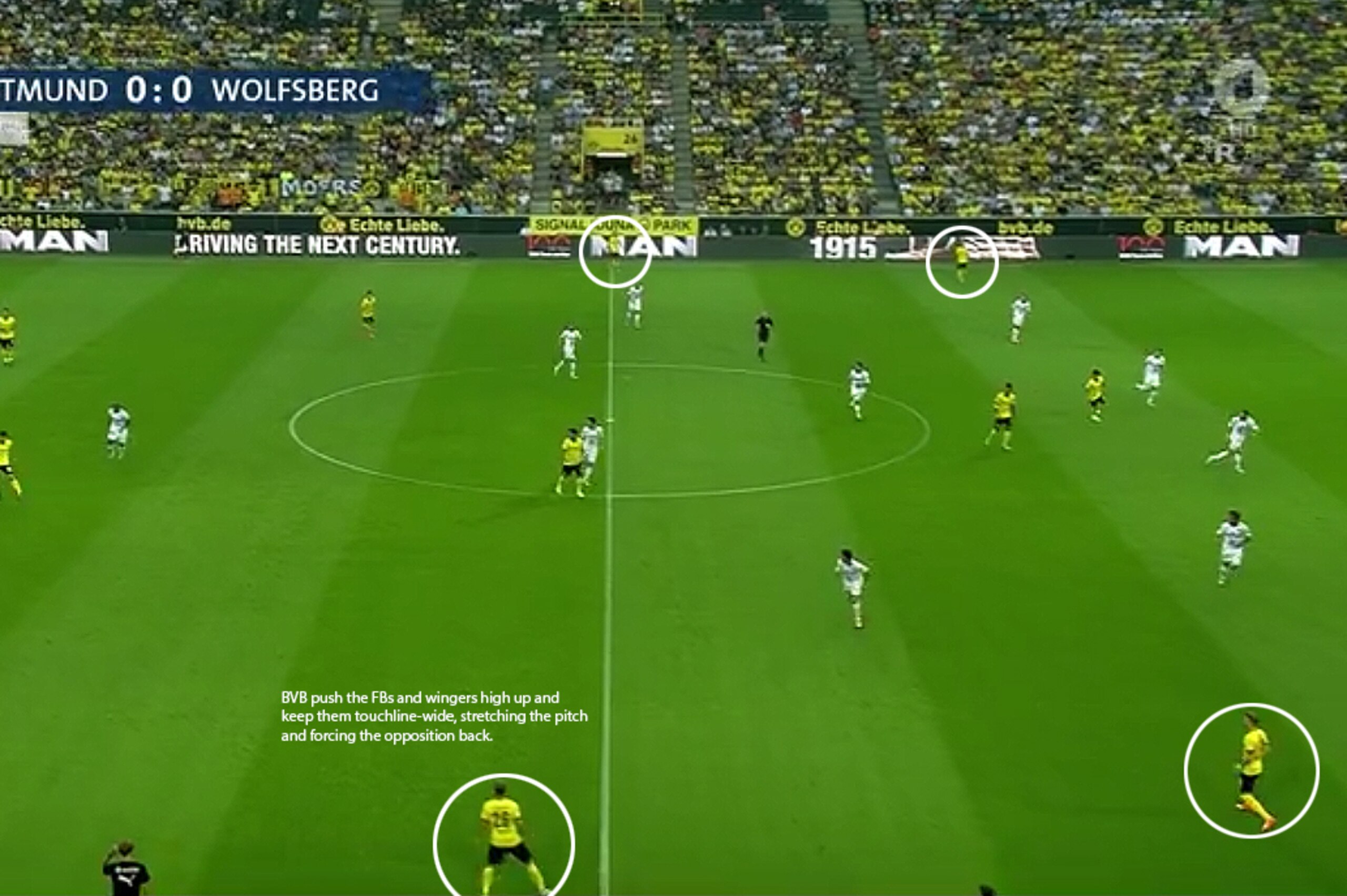
Switches of play from this position—either right to left, or left to right, in one diagonal pass—are very common, attempting to spring a winger on the opposite side one-on-one in space. The preferred move is to funnel the ball high right and switch it to Reus, who is lurking on the left, and allow him to break toward the box and create mayhem.
The formation is loosely a 4-3-3, with Julian Weigl the dedicated holder, but in truth the front four twist, interchange and morph as the game goes on. Pierre-Emerick Aubameyang, nominally a striker, often drops wide; Shinji Kagawa occupies the No. 10 space a lot; and Mkhitaryan pops up all over the show. In some ways it’s a 4-2-4.
In all, it’s overbearing, aggressive, in-your-face football from Dortmund, who are playing as if they know they’re one of the strongest sides in the Bundesliga rather than doubting every inch of their ability.
If one side doesn’t work, they switch it back—fast—and try that side, creating a swaying effect for the opposition as they shuffle left and right in reaction.
If given the opportunity to counter-attack, they come alive, too. Mkhitaryan, Reus and particularly Aubameyang are lightning fast and able to move laterally into pockets of space, and all it takes is one good pass out from the back to release them.
Offensively, they’ve improved across the board.
Tough (but necessary) decisions
Tuchel’s masterstroke here has been to actually remodel the team. Full in the knowledge the 2013 iteration is but a distant memory, the former Mainz tactician has produced a new blueprint that gets the best out of his exciting players. It’s something Klopp struggled to do; he tried and failed to make the tough, but necessary, decisions.
No move illustrates the “new dawn” feel to Signal Iduna Park than Tuchel’s attempt to move Kevin Grosskreutz—Klopp’s loyal soldier—on to Galatasaray this summer. Per Goal.com, FIFA have blocked the signing as the registration wasn’t finished in time, but the German won’t be re-entering the first-team picture even if the appeal fails.
Blaszczykowski, too, has gone to Fiorentina, and Sokratis Papastathopoulos has come in for a far bigger and well-deserved role at the heart of the defence alongside Hummels. There’s still a Roman in goal, but he goes by the name of Burki, not Weidenfeller—the latter is a stalwart and a hero, but his dipping performances did not escape Tuchel’s eye.
In the latter years under Klopp, Dortmund flashed glimpses of their old selves but never held it together for long. The late surge to the Europa League was good, and the victory over Arsenal in the Champions League an exemplar in pressing and punishing mistakes—led by the now-departed Immobile—but attempting to replicate the previous model without Lewandowski and Co. was a mistake.
Tuchel has moved away from it, utilising his speedsters and space interpreters by feeding them the ball quickly in good positions. The speed at which BVB move it from Gundogan to Reus is remarkable; they know the gaps they’re looking to hit close quickly and they ensure the opposition don’t have time to nullify them.
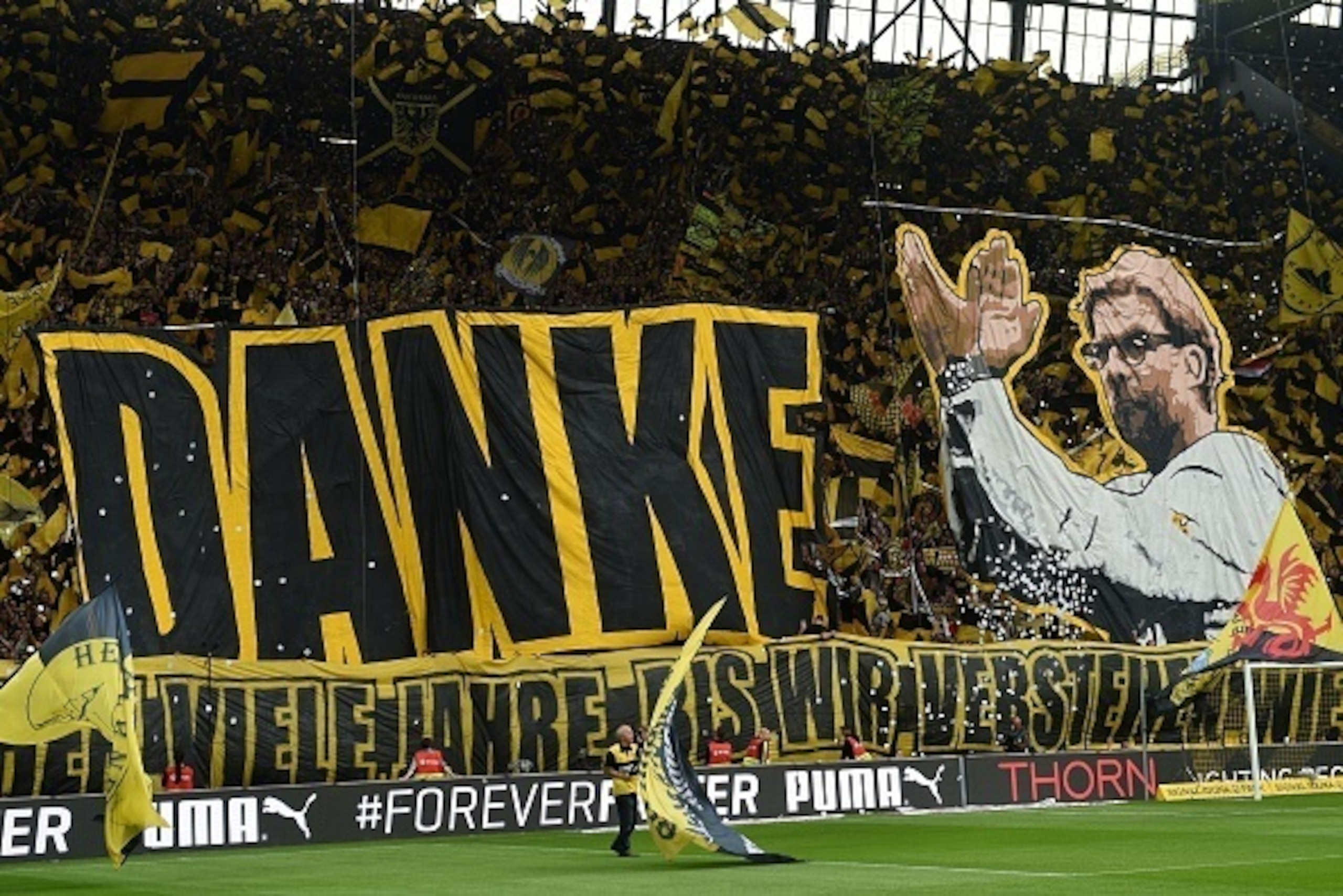
“Danke Jurgen”—the incredible tifo display Dortmund put on for Klopp in the final Signal Iduna Park game last season, thanking him for his incredible service, was symbolic in two ways. It was a celebration of what he’d achieved at the club—two Bundesliga titles, one Pokal and one UCL runners-up medal, among others—but also a statement as the club moved into a new era.
Credit to Tuchel for taking the necessary, and at times ruthless, steps to put BVB back on the map. They’re not eating at the same table as Bayern Munich again just yet, but they are firmly on the right track and very capable of requalifying for the Champions League this season.


.jpg?w=2560 "Viral Rams Coach Vid 🖕")


