

What Roger Federer's Loss to Novak Djokovic Means for Australian Open 2016
After he beat Novak Djokovic at the Western & Southern Open in August, Roger Federer looked like a serious threat to capture his sixth U.S. Open title.
Instead, the 34-year-old Swiss star couldn't get the better of Djokovic this time around, losing in four sets, 6-4, 5-7, 6-4, 6-4, on Sunday.
In front of a pro-Federer crowd, the Swiss legend attempted to thwart Djokovic's bid for his third Grand Slam title of the season but fell short. Federer, as usual, played like a star in his prime. However, Djokovic seemed to have an answer for everything Federer threw his way.

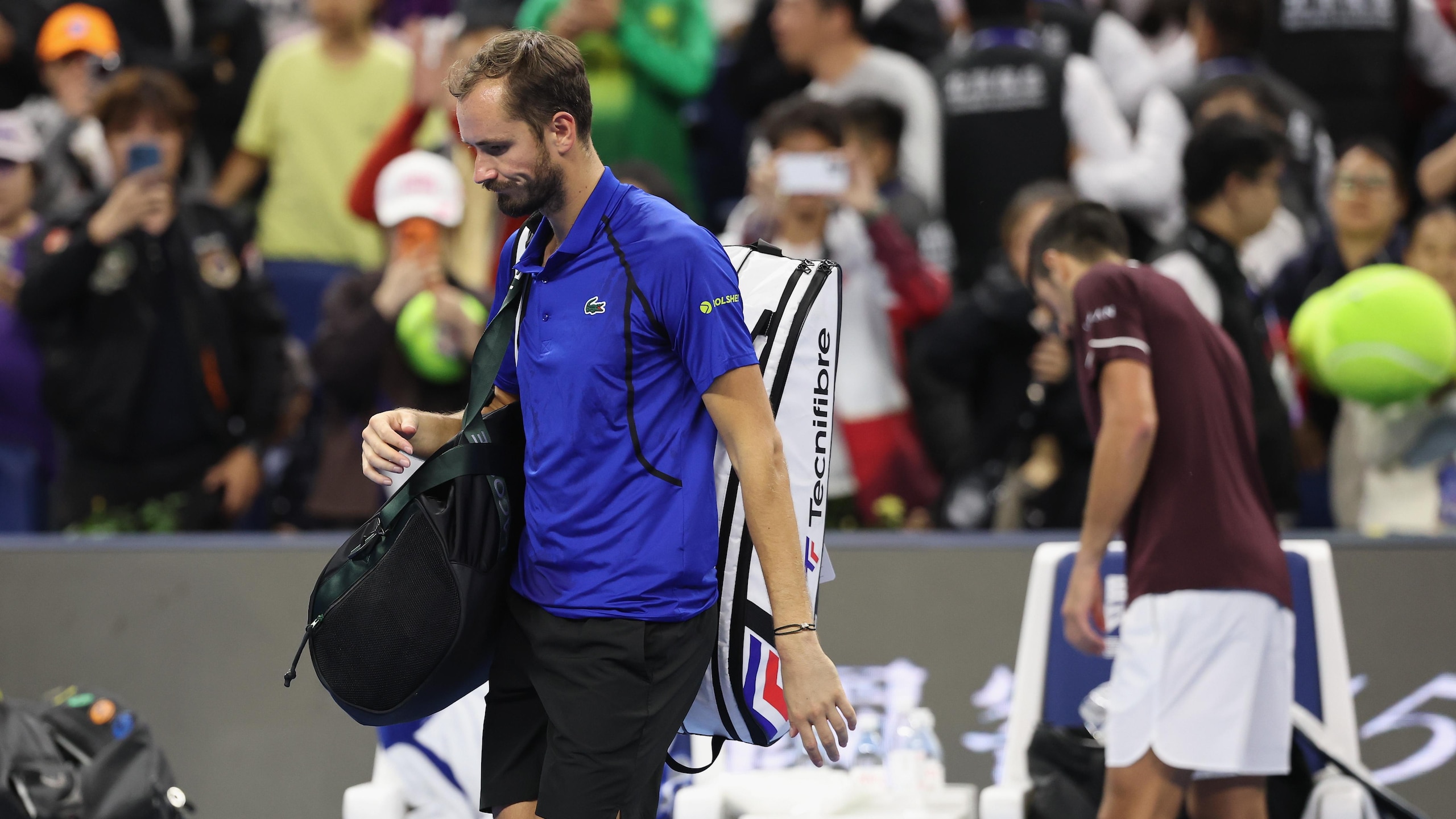

Momentum seemed to shift in the second set after Federer broke Djoker's serve to win the set 7-5, but the ever-steady Djokovic managed to stay calm to rally and win the next two sets to close the match out for his 10th career Grand Slam win.
As a result, Federer will have now gone three years without winning a major title—an eternity for somebody who collected 17 Grand Slam championships between 2003 and 2012.
But tennis is a particularly unforgiving game for those approaching 30 years old, let alone those well into their 30s like Federer. Fans have long expected the bottom to drop out for Federer. He can't keep hanging with Djokovic, Stan Wawrinka, Andy Murray and the emerging stars like Kei Nishikori, Marin Cilic and Milos Raonic forever.
Prior to the U.S. Open, he had reached at least the semifinals in four of his last seven majors. And that victory over Djokovic in Cincinnati seemed to confirm that Federer wasn't done playing elite-level tennis. ESPN's LZ Granderson spoke for most tennis fans with this tweet:
Even Djokovic was impressed by what he's seen from his opponent.
"He's playing some of the best tennis of his life," he said of Federer ahead of the U.S. Open, per ESPN.com's Peter Bodo. "Many people did talk about his career coming to an end after that season [2013] that was below his standard, but he came back stronger."
Writing for the New Yorker, Akash Kapur examined the factors that have helped Federer's longevity. He highlighted Federer's style, which relies more on finesse than power, and the fact that Federer has played a lighter schedule, thus keeping him fresher for the big events.
Kapur's most interesting point might have been about the gradual increase in the age at which the top stars are reaching their primes:
"The game has evolved in other ways, too. Over the years, as success has become more reliant on brute force, players have been peaking later; their bodies and muscles take more time to mature. In fact, while Federer, at thirty-four, is clearly an outlier, the over-all trend in the last decade or so has been away from the teen-age champions of the nineteen-eighties and nineties. Stanislas Wawrinka won his first Grand Slam, last year, at the age of twenty-eight; he followed it up with another title, at the French Open, this year.
"
It will be interesting to see if that trend holds true in 2016.
Many eyes will be on Federer in Melbourne for the 2016 Australian Open. Although he reached only the third round in 2015, he reeled off four straight semifinal appearances between 2011 and 2014 and won the title in 2010.
While you likely won't install Federer as the favorite in January, he should be expected to make a deep run. He has earned the benefit of the doubt until the day arrives when he's consistently a non-factor in the premier events on the ATP calendar.
If Pete Sampras could win the U.S. Open at 31 and Andre Agassi could win the Australian Open at 32, Federer can reign supreme in Melbourne at 34, especially in an age of tennis when the best players can play at a high level deeper into their careers.


.jpg?w=2560 "Weather Channel Trolls Texans-Titans 💀")

.jpg?w=2560 "Grading WWE Raw 🔠")