
2015 MLB Waiver Trade Deadline: Grades for Notable Trades and Claims
There haven't been any blockbuster deals via waiver trade over the last month, but there have still been a handful of notable deals worth analyzing. Over the next few slides, that's exactly what we'll do with our 2015 MLB waiver trade deadline grades.
Teams can only do so much after the July 31 trade deadline. It's much more difficult to get a deal done in August, which is a big reason why most of the trades made are smaller, need-based moves.
For contenders, August is a final opportunity to plug glaring holes before the season's final month. The Los Angeles Dodgers, San Francisco Giants, Texas Rangers and New York Mets have attempted to do that in the last few weeks with the likes of Chase Utley, Marlon Byrd, Will Venable, Mike Napoli and Addison Reed.
Of those moves, which ones were really worth making? Did the Dodgers really need Utley? How much of an impact can Napoli realistically have with his old team?
We'll take a look at each of those situations and assign an appropriate grade to each deal. Make sure to let us know how you feel about these trades in the comments section below.
Let's jump right into it!
Three-Player Trade Between the Atlanta Braves and Cleveland Indians
1 of 5
The Trade
The Cleveland Indians acquire Chris Johnson from the Atlanta Braves in exchange for Nick Swisher, Michael Bourn and cash considerations.
Breakdown
The Cleveland Indians and the Atlanta Braves won't be playing in the postseason, but both teams combined to make a deal that could help them get there in the near future earlier this month. Cleveland sent Nick Swisher and Michael Bourn to Atlanta in exchange for veteran corner infielder Chris Johnson.
It's pretty simple: The Indians wanted to shed payroll for 2016, while the Braves desired to do the same for 2017. Johnson's $7.5 million salary next season is substantially less than the combined $29 million owed to Swisher and Bourn. However, both Swisher and Bourn come off the books in 2017, while Johnson is pegged to make $9 million.
By shedding over $20 million in payroll, the Indians can add to a talented roster capable of contending for the postseason this winter. For Atlanta, president of baseball operations John Hart has rebuilt his team with his sights set on 2017, when the Braves' new stadium is set to open. This deal matches up with that thought process.
In terms of on-field production, Johnson was swinging the bat well before a finger injury sent him to the disabled list. Meanwhile, Bourn and Swisher have struggled in Atlanta.
But this trade is all about the contracts being flipped. The Braves and the Indians worked together to better their financial situations, which makes this move a successful one.
Grade: B+
Addison Reed to the New York Mets
2 of 5
The Trade
The New York Mets acquire Addison Reed from the Arizona Diamondbacks in exchange for Matt Koch and Miller Diaz.
Breakdown
Last week, I wrote about Addison Reed being a potential steal who was still available via waivers. The former Arizona Diamondback has over 100 career saves and has pitched well as of late.
The New York Mets noticed Reed's recent work and moved to acquire him after a deal for Marc Rzepczynski failed to materialize.
With Jeurys Familia and Tyler Clippard manning the final two innings, Reed won't be asked to step into a crucial role with his new team. Instead, he'll provide manager Terry Collins with another veteran arm in the earlier innings.
Reed's 4.20 ERA isn't indicative of how he's pitched this season. His 3.12 FIP and .344 average on balls in play suggest he's been a victim of poor luck. Reed's hard- and soft-contact percentages are also considerably better than they were a season ago.
As for his latest work, Reed has put together a phenomenal second half. In 16.1 innings, he's posted a 1.65 ERA and has lowered his walk rate to under 5 percent. There's nothing wrong with improving upon a strength. The Mets are hoping to take advantage of Reed's recent hot stretch.
Reed won't hit free agency until 2018, which improves his value. Although he's struggled over the past two seasons, the 26-year-old has the stuff to regain his confidence and be a dependable contributor for the Mets over the next two years.
But he still has to prove that he's capable of doing that on the field. Reed isn't a sure thing, but he has a chance to make an impact for the Mets in October.
Grade: B
Texas Rangers Aquire Mike Napoli, Will Venable
3 of 5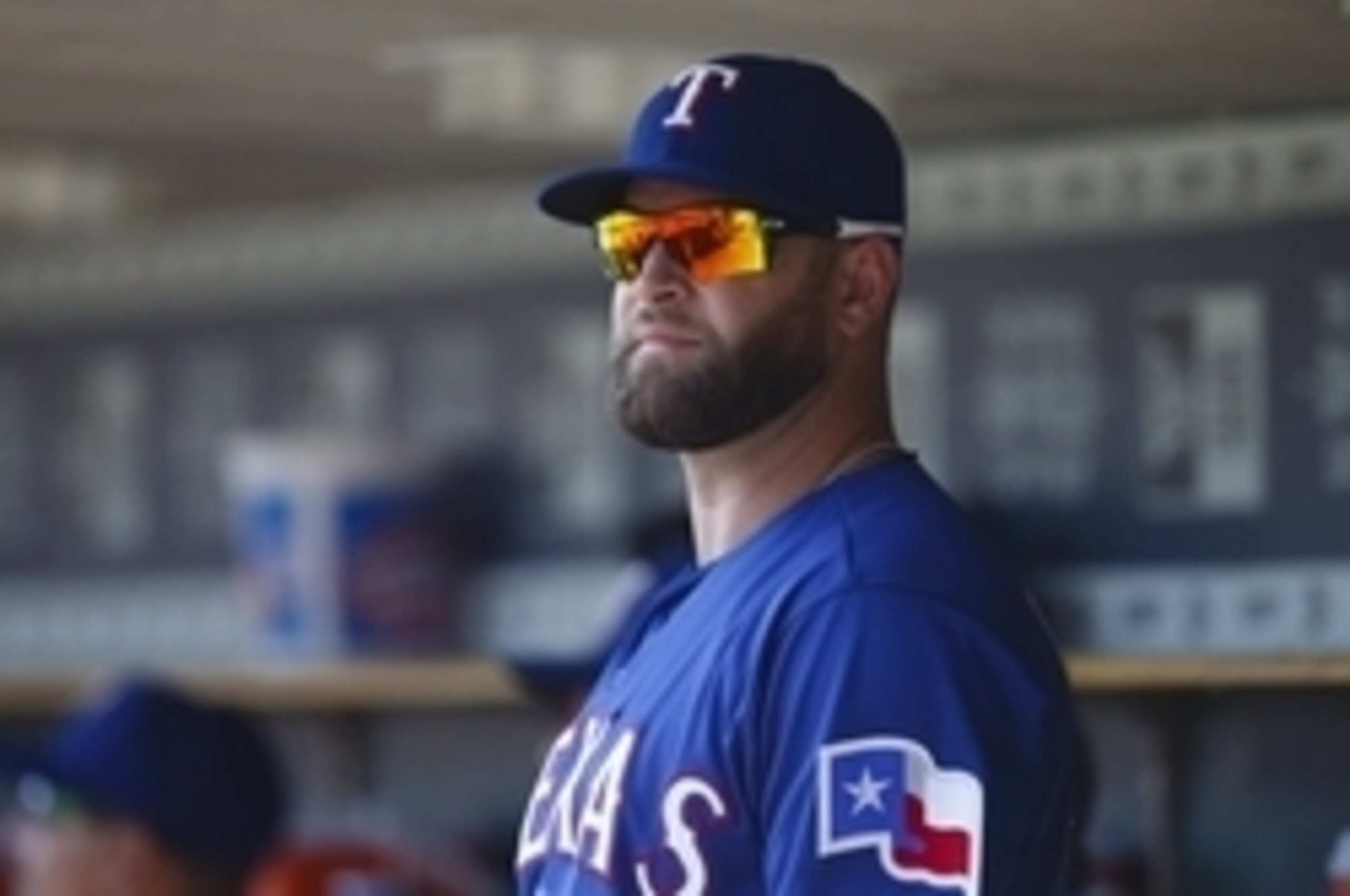
The Trade
The Texas Rangers acquire Mike Napoli from the Boston Red Sox in exchange for a player to be named later.
The Texas Rangers acquire Will Venable from the San Diego Padres in exchange for Marcus Greene Jr. and a player to be named later.
Breakdown
It hasn't been a walk in the park, but the Texas Rangers currently hold one of the two American League wild-card spots with a little over a month to go.
Texas bolstered its present and future starting rotation with the acquisition of Cole Hamels at the trade deadline, but general manager Jon Daniels didn't stop there. Over the last month, the Rangers have added Mike Napoli and Will Venable via waiver trades.
Of the two, Venable may have the biggest impact. Texas outfielders rank 24th in baseball in WAR. With Leonys Martin and Josh Hamilton hampered by injuries, the Rangers desperately needed to add an outfielder for the stretch run. So far, so good, as Venable is hitting .300 in eight games with Texas.
Napoli still has value, as well. He's mashed lefties throughout his career and still has a .917 OPS against southpaws in 2015. Napoli will give manager Jeff Banister options to pair with the left-handed Prince Fielder and Mitch Moreland, who have received most of the playing time at first base and designated hitter.
“I’ve been doing my routine, and when I get a chance to play, I feel good,” Napoli told Gerry Fraley of the Dallas Morning News. “I like facing lefties.”
Trading in August rarely leads to blockbusters. It's a time for contenders to address specific needs and improve upon them through low-cost solutions. With Venable and Napoli, the Rangers are better suited to qualify for the postseason and gave up little to do so.
Grade: A


Marlon Byrd to the San Francisco Giants
4 of 5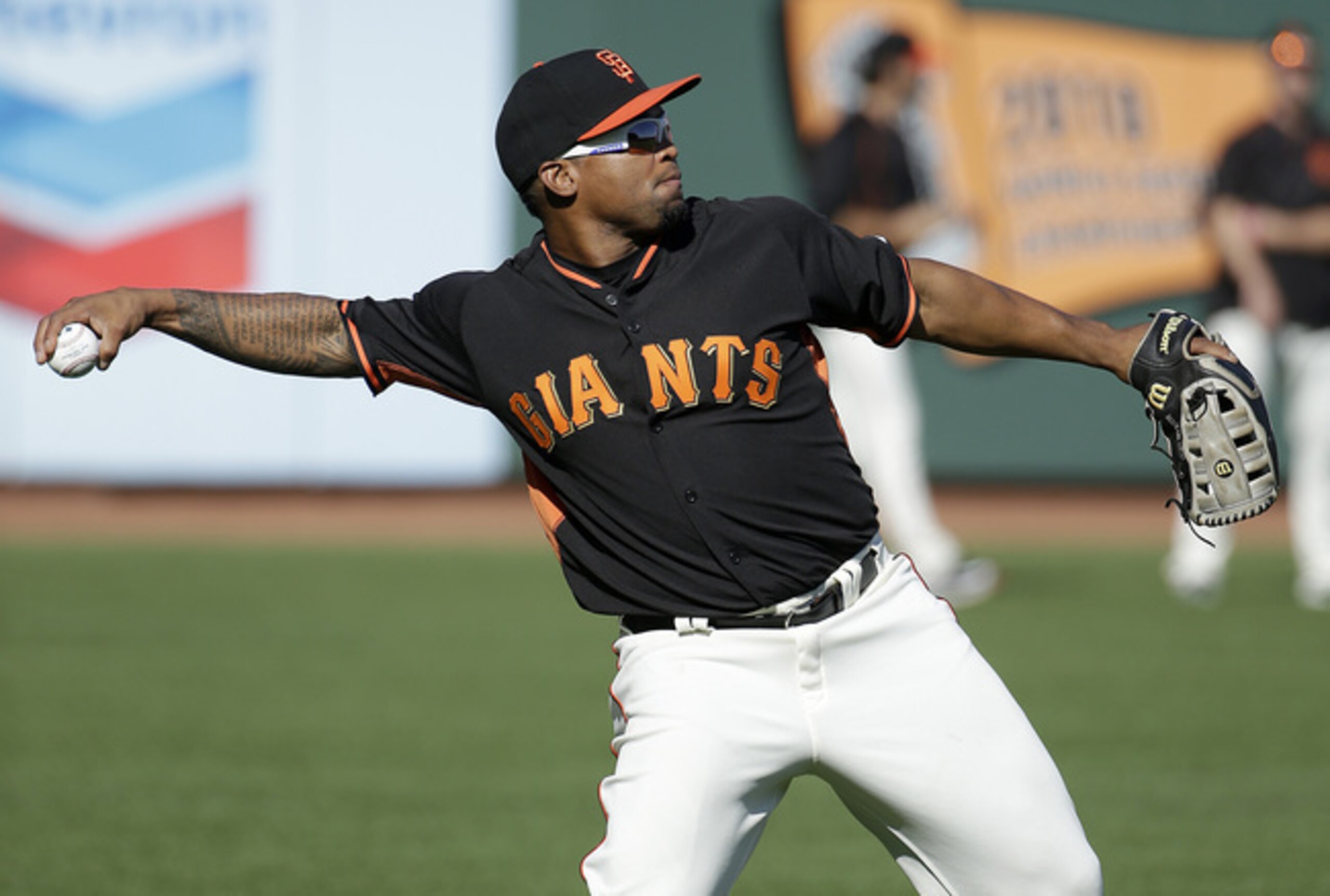
The Trade
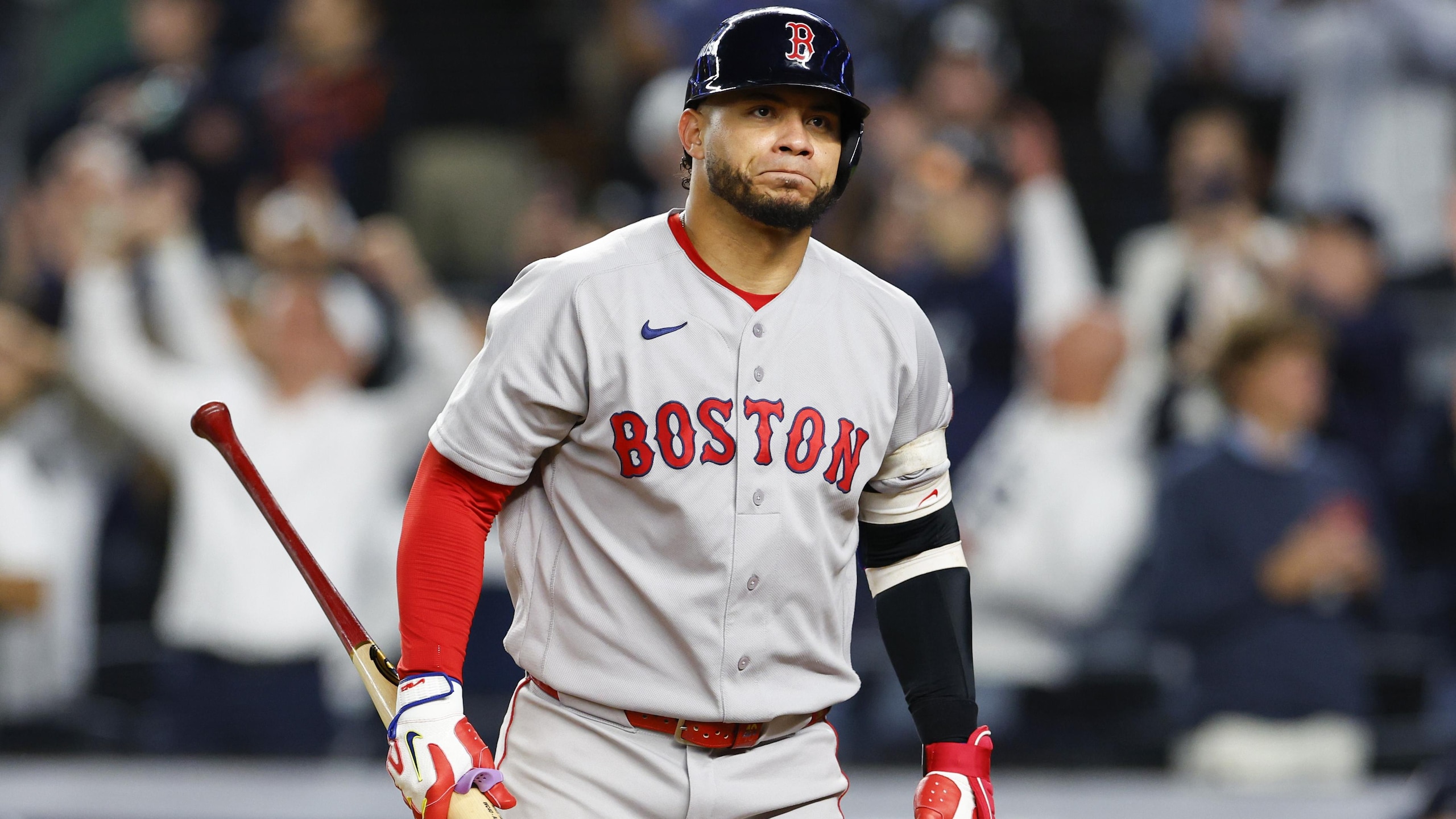
The San Francisco Giants acquire Marlon Byrd from the Cincinnati Reds in exchange for Stephen Johnson.
Breakdown
If the season ended today, the San Francisco Giants would not have an opportunity to defend their World Series title in the postseason.
But as the Giants still remain in the hunt, acquiring Marlon Byrd can't hurt their chances.
Byrd has seen a dip in batting average and on-base percentage this season, but he's still slugging over .460. The 38-year-old has hit 22 homers, driven in 56 runs and has a .280 isolated power score. Byrd's offensive skill set isn't as well rounded as it once was, but he can still alter the landscape of a game with one swing.
More importantly, Byrd provides San Francisco with insurance in case of another injury to a Giants outfielder. Hunter Pence (oblique), Gregor Blanco (hip) and Angel Pagan (knee) are battling various issues, while Nori Aoki also missed time with an injury earlier this season.
If all of those players return healthy for a September playoff push, Byrd is a quality bat to bring off the bench. He hasn't done it much, but Byrd is 3-for-9 in his career as a pinch hitter. He's also had a nice career against lefties, which gives manager Bruce Bochy plenty of lineup flexibility.
In exchange for Byrd, the Giants sent Double-A pitcher Stephen Johnson to the Reds. Johnson is a former sixth-round pick, but he's pitched well this season and could develop into a serviceable big leaguer due to impressive strikeout numbers in the minors.
Since Byrd is a short-term fix, losing Johnson isn't an ideal situation for San Fran. The Giants farm system lacks impact talent, so trading a player who's actually producing brings down the grade just a touch.
But this is the type of aggressive, need-based move that San Francisco needed to make. If Byrd can get hot in September and help the Giants reach the playoffs, nobody will be worried about what kind of player Johnson develops into.
Grade: B
Chase Utley to the Los Angeles Dodgers
5 of 5
The Trade
The Los Angeles Dodgers acquire Chase Utley from the Philadelphia Phillies in exchange for Darnell Sweeney, John Richy and $2 million.
Breakdown
On the surface, trading for Chase Utley seems like a positive move for the Los Angeles Dodgers. After all, Utley has a lifetime OPS of .847, and Howie Kendrick's injury had left the Dodgers with a hole at second base.
But did the Dodgers really need Utley? An argument can be made that they didn't.
It's not about money. Since Utley won't reach 500 plate appearances this season, his $15 million option won't vest in 2016. Plus, the Philadelphia Phillies included up to $3.7 million in the deal to help facilitate the move.
And come on, the Dodgers are one of the few teams in baseball that rarely worry about dollar figures.
The negativity comes from what L.A. gave up to get Utley and the fact that the Dodgers still have serious issues in the bullpen.
Darnell Sweeney may not develop into a superstar, but he's MLB.com's No. 8-ranked second baseman prospect and posted an .850 OPS at Double-A in 2014. Sure, the acquisition of Jose Peraza made Sweeney expendable, but losing him still isn't worth a handful of games from an aging Utley.
Instead of targeting Utley, wouldn't addressing the eighth-worst bullpen in baseball have been more prudent? With Kendrick coming back in early September and the Dodgers maintaining a solid lead in the NL West, the acquisition of Utley seems like that classic situation of making a move just for the sake of being active.
Utley may come up big for the Dodgers in October, but L.A. didn't need him. Years down the road, this could be one of those short-sighted deals that a team comes to regret.
Grade: D
Stats courtesy of FanGraphs and accurate as of Aug. 31.

.jpg?w=2560 "2 NFL Officials Suspended")


.jpg?w=2560 "Mahomes' Wife Trolls Kubiak 💀")

.jpg?w=2560 "Love's Body Already 'Tired'")