
End of the Road in Edmonton is Approaching for Connor McDavid After Oilers' Playoff Elimination
There's a moment in every great athlete's career when the math stops lying.
When the years left on the contract, the holes in the roster and the cold geometry of a conference standings page add up to something unavoidable—a number that lands somewhere between difficult and devastating.
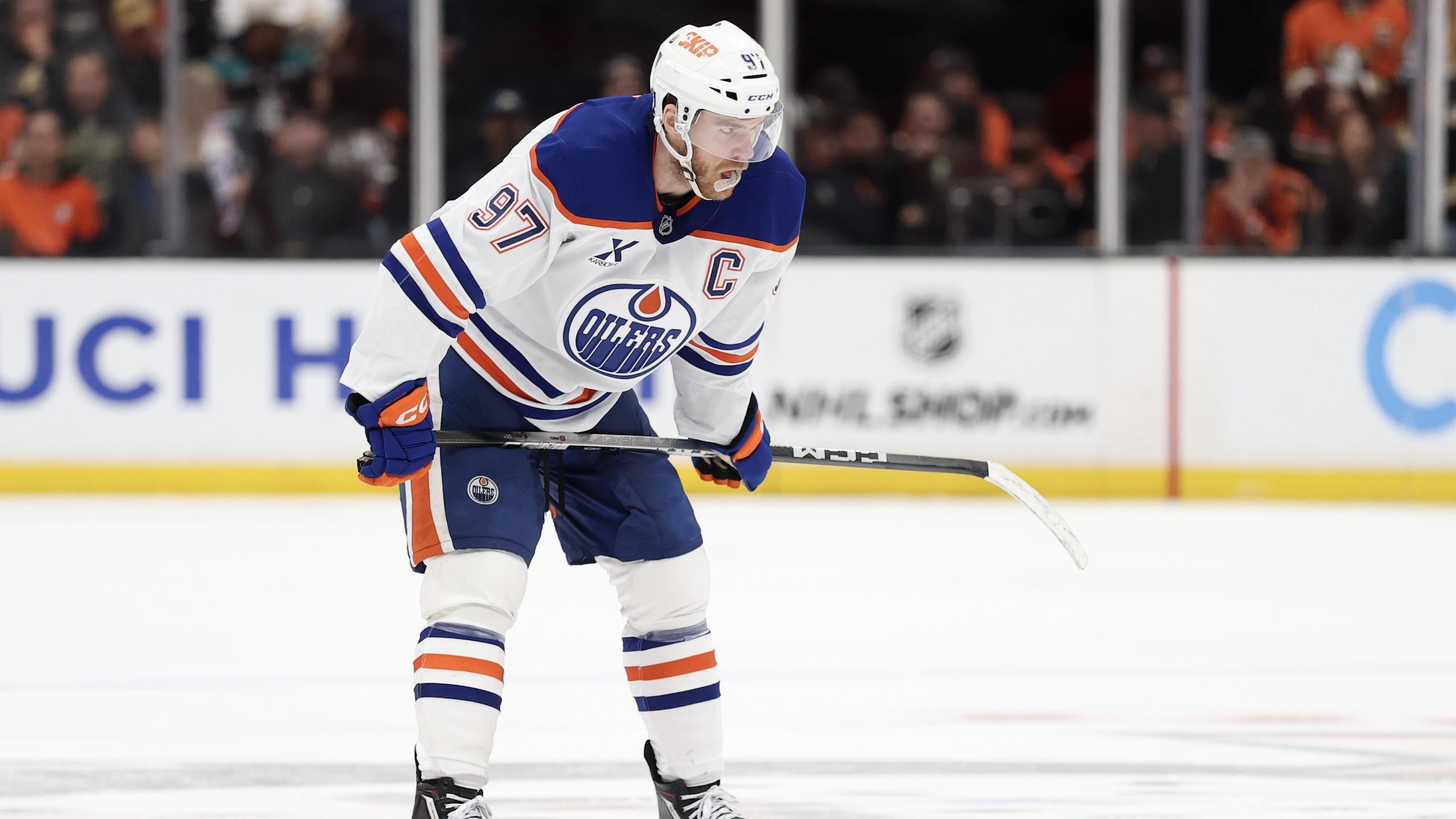
For Connor McDavid, that moment may have arrived on Thursday night.
TOP NEWS
Re-Ranking Top Free Agents 🛒
Grades For Every Team's Prospect Pool 🔠
Coach Replacements for Tocchet
Losing in the first round of the NHL playoffs to the Anaheim Ducks—a rising young team built for the next decade, not this one—wasn't just a bad result for the Edmonton Oilers. It was also a referendum. On a roster that played 82 regular-season games and won 41 of them. On a blue line that has been a chronic issue for the better part of McDavid's tenure. On goaltending, which the Tristan Jarry trade was supposed to fix, but didn't.
And on a GM in Stan Bowman who now faces a summer of miracle-level roster reconstruction with roughly $16.5 million to fill eight unrestricted free-agent spots while somehow also addressing the structural deficiencies that have made too many McDavid-era playoff runs feel like a man trying to bail out a boat with a coffee cup.
The very definition of a .500 team just lost in the first round.
Read that again.
McDavid will be 30 in January 2027 and has played 11 seasons in an Oilers uniform. He has won six scoring titles, three Hart trophies and every individual honor the sport has to offer, several times. By any reasonable measure, he is the best player on the planet and a generational talent whose highlight reel already belongs in conversations hockey people have when they talk about the all-timers.
He has never won a Stanley Cup.
And at this instant, staring at the Western Conference landscape from Edmonton's current vantage point, it's difficult to construct a realistic scenario in which that changes without a dramatic shift in geography.
The West is not getting easier.
Anaheim just proved it's ready to compete. The Utah Mammoth are ascending with the urgency of a franchise with something to prove. San Jose's rebuild has the look of an organization that has done it right. Colorado, Dallas, Minnesota, and Vegas remain legitimate contenders, the kind of teams that have addressed structural needs on the fly, while Edmonton has been cycling through scapegoats in the crease.
Slot the Oilers into that picture and you're looking at a team that projects, generously, as seventh or eighth in the conference. That is not where you want to be when the sport's most dangerous player is burning his prime years.
Bowman can work the phones. He can find bargains, make trades, and convince free agents that Edmonton in October is a destination rather than a sentence. It's possible. Roster miracles do happen. But the gap between possible and probable is where franchises go to break a superstar's spirit.
McDavid is signed for two more years at $12.5 million annually—a number that qualifies as a genuine bargain and a gesture of organizational loyalty that the Oilers have not fully deserved. He took a discount extension to give Bowman room to maneuver. He's watched that room get filled with Tristan Jarry.
At some point, loyalty must be a two-way street.
None of this means McDavid walks tomorrow. The two years remaining on his deal are real, and he's never been the kind of player who manufactures drama or uses the media as leverage. But the quiet reality of his situation—11 seasons, every individual award, two Cup Final appearances, zero rings—is the kind of legacy footnote that nags at a competitor who, by every account, burns for a championship with the same intensity he brings to every shift.
He's won everything there is to win alone. The one thing left requires help.
Whether Edmonton can provide it in two years, against a conference that is younger, faster and deeper than it was when McDavid arrived as an 18-year-old with the weight of a franchise on his shoulders, seems—to put it charitably—like a significant stretch.
The numbers, unfortunately, don't lie.
And after shaking hands with a team a decade younger and a postseason fresher, McDavid did the math.
The answer wasn't what he needed it to be.
.jpg?w=2560 "Buzz: MHJ Hired Agents for Trade")
.jpg?w=2560 "AD Trolls Bears WR on IG 😂")
.jpg?w=2560 "Report: Steelers WR to Miss 'Weeks'")
.jpg?w=2560 "49ers LB Suspended for Headbutt")
.jpg?w=2560 "Viral Dan Campbell Presser 💙")