

Four teams punched their ticket to the Elite Eight on Thursday night, and the other half of the field will be set by the end of Friday night's action.
Arizona, Illinois, Iowa and Purdue are still standing in the West Region and South Region, with Duke vs. St. John's, Michigan vs. Alabama, UConn vs. Michigan State and Iowa State vs. Tennessee on tap Friday.
As always, the winners won and the losers lost, but let's take a deeper dive into some of the notable storylines from Friday's Sweet 16 action to highlight our biggest winners and losers of the day.
Winner: Cameron Boozer (vs. Zuby Ejiofor)
1 of 8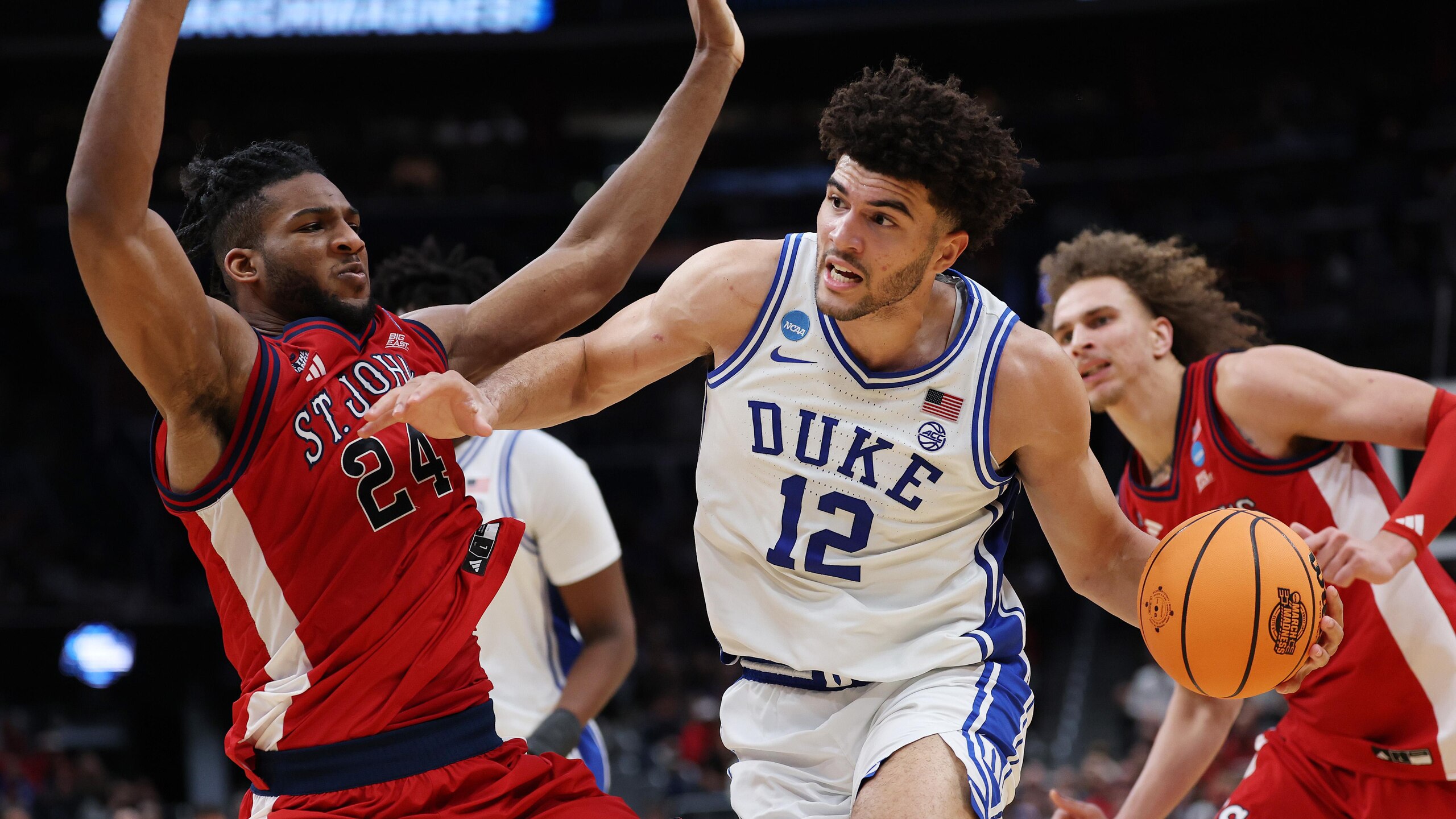
Cameron Boozer had a chance to prove himself against one of the best defenders in the country in Friday's matchup with St. John's, squaring off against Naismith Defensive Player of the Year finalist Zuby Ejiofor.
He didn't have his most efficient game, shooting 6-of-17 from the floor, but he still finished with 22 points, 10 rebounds and three assists, providing the elite level of production the Duke Blue Devils have leaned on all year.
There are a lot of weapons on the Duke roster, and it was Isaiah Evans who stepped forward in the Sweet 16 with 25 points on 10-of-15 shooting, but Boozer needs to play the lead role for this team to win it all.
Tip of the cap to Ejiofor, who finished with 17 points, eight rebounds, six assists, one steal and one block in 39 minutes of action. The Big East Player of the Year was one of the nation's most dynamic two-way contributors this season.
A great all-around matchup of two of the tournament's top stars.
Loser: St. John's Hot Shooting Night
2 of 8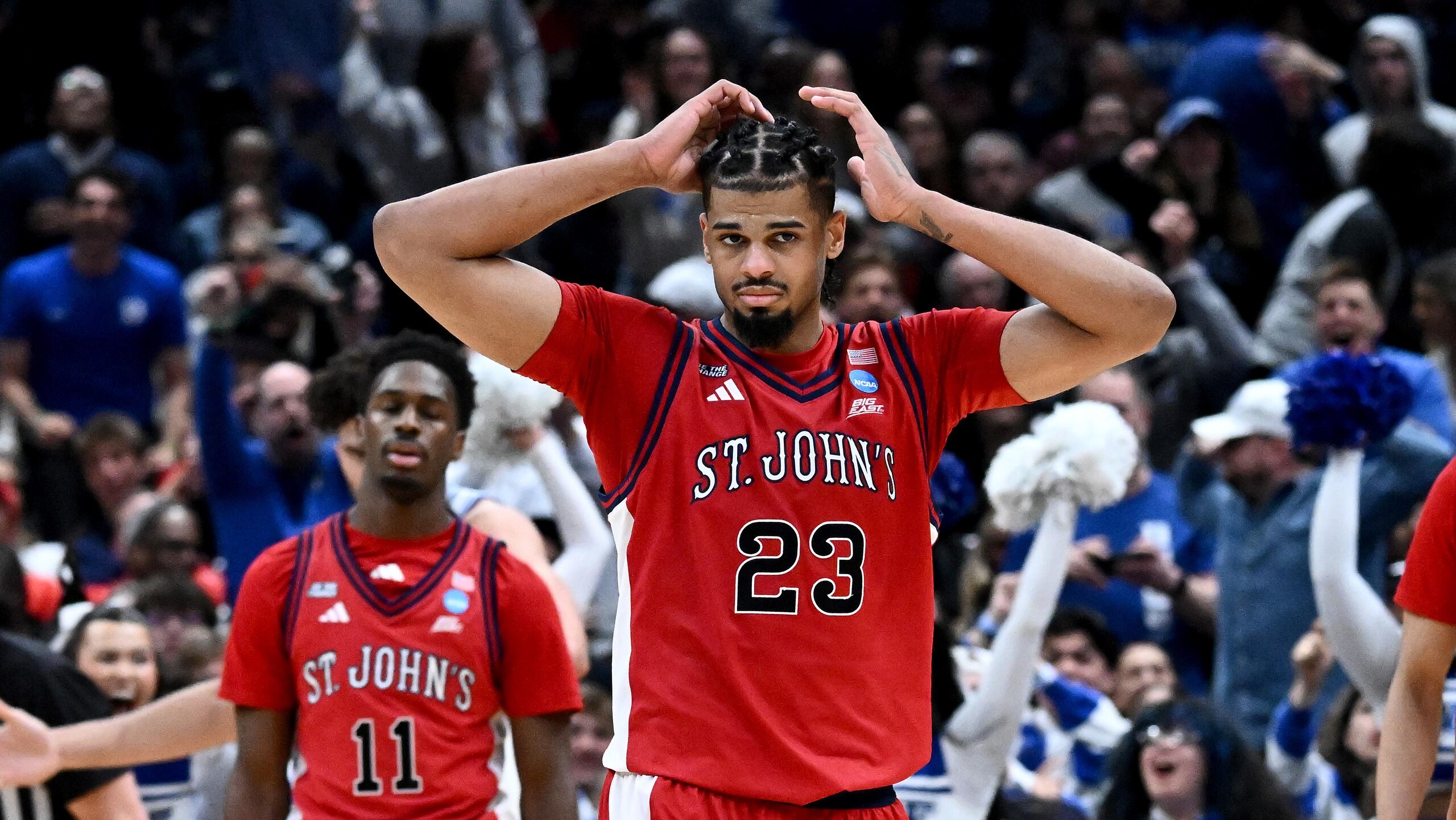
Three-point shooting has not been a pillar of success for St. John's this season, as they rank outside the top 200 nationally in made threes per game (7.1, 255th) and three-point percentage (.332, 225th).
Entering play on Friday, they were 13-0 in games where they made at least eight three-pointers, so it was shaping up to be an elite night from distance when they went 9-of-18 from beyond the arc during the first half en route to a 40-30 lead.
They ended up making 13 threes on the night, their second-highest total of the year, but it didn't lead to victory in the Sweet 16.
Along with those 13 makes, they also had 19 misses, and Duke's significant edge in rebounding meant a lot of quick, empty possessions for St. John's in what ended in an 80-75 victory for the Blue Devils.
Winner: Michigan's Guard Play
3 of 8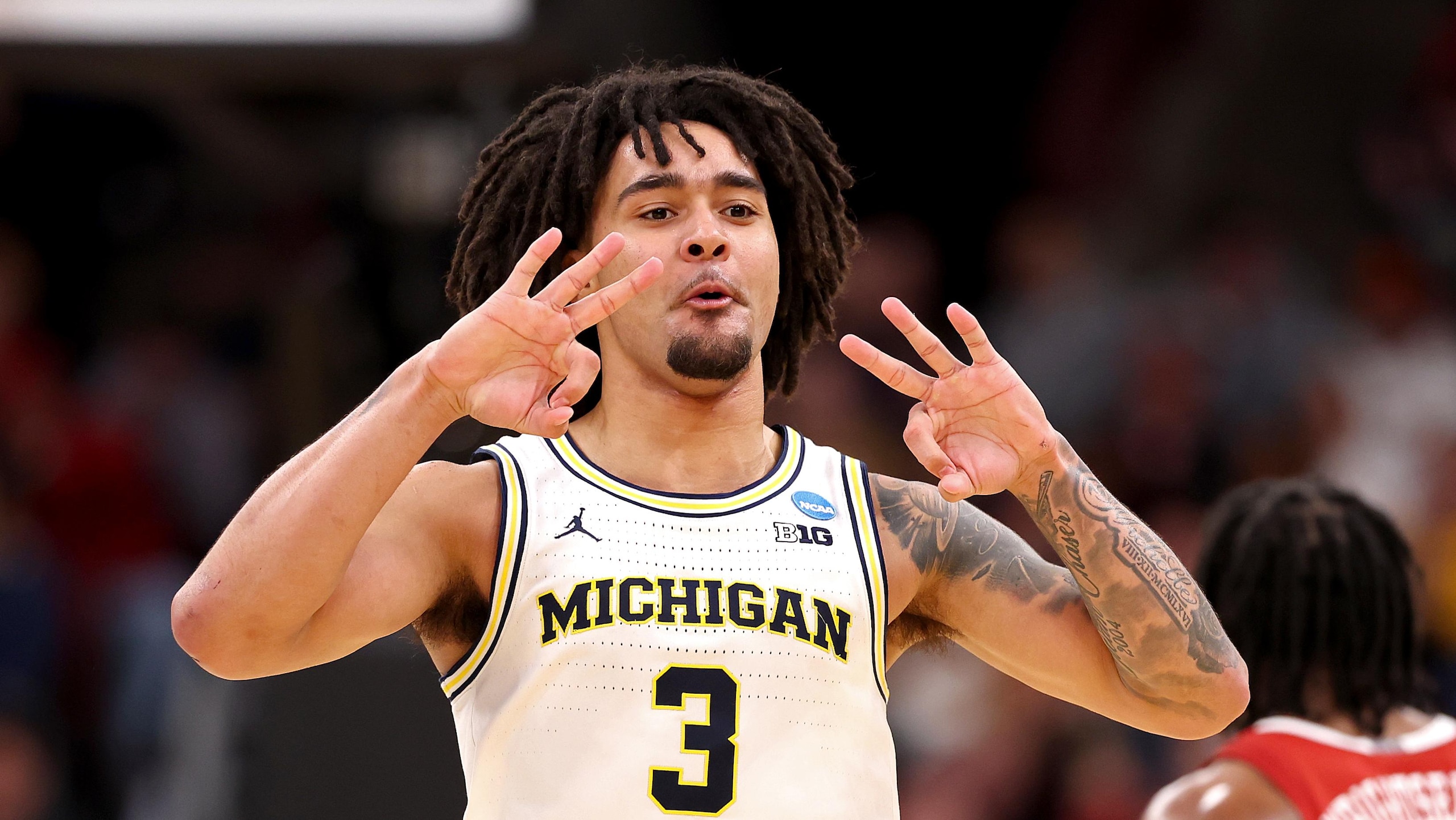
On paper, an up-and-down Alabama team that plays at the fastest tempo of any team in this year's NCAA tournament field was a less-than-ideal matchup for a Michigan squad built to overwhelm teams with its size.
All-American Yaxel Lendeborg (23 points, 11 rebounds, 6 assists) had his usual big game, but the Wolverines other big men were quiet. Morez Johnson Jr. (7 points, 3/10 FG) and Aday Mara (8 points, 4/8 FG) were largely contained as they struggled to get into the flow of a fast-paced game.
That might have read like the key to victory of Alabama if not for the job the Michigan guards did picking up the slack in the track meet.
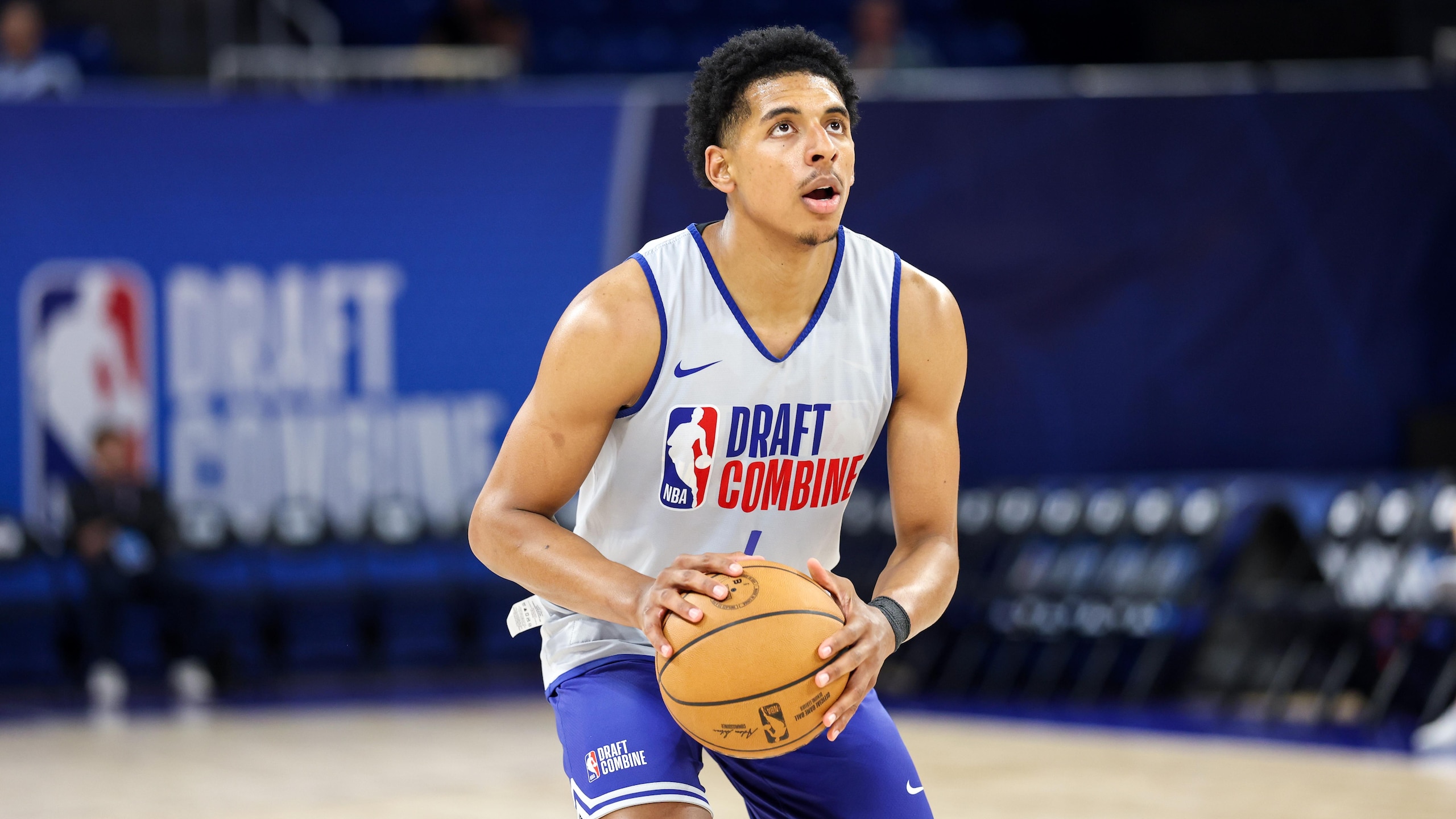
Elliot Cadeau, Trey McKenney and Roddy Gayle Jr. entered the game averaging 26.7 points per game on the year, and they combined for 50 points while knocking down 9-of-17 from three-point range.
Their performance effectively negated the Crimson Tide's biggest advantage.

Loser: Alabama's Offense Outside of Labaron Philon
4 of 8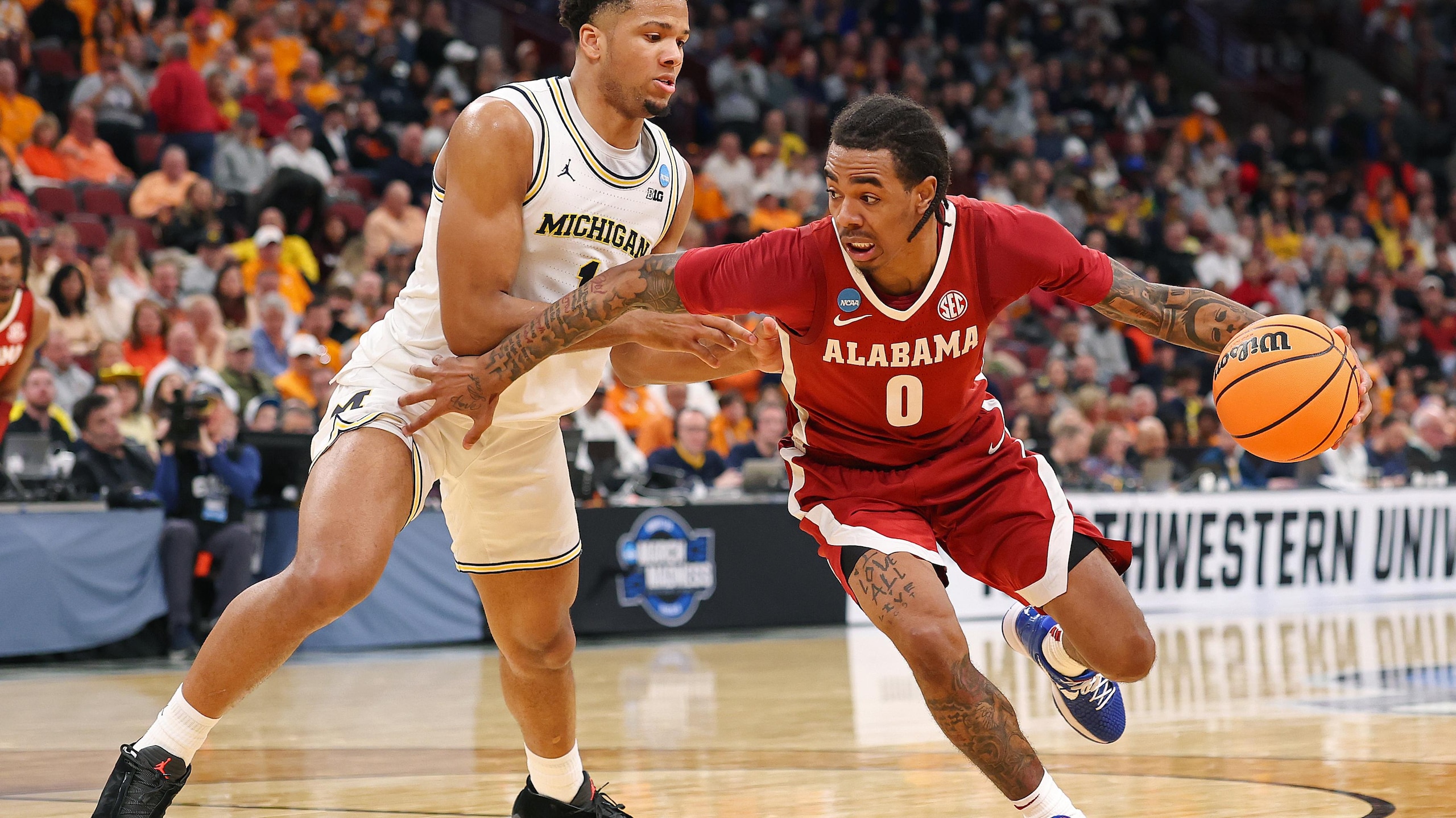
The high-powered Alabama Crimson Tide offense entered Friday's game leading the nation with 91.6 points per game, and they had gone 1-4 in games where they failed to score 80 points.
Make that 1-5.
All-American guard Labaron Philon finished with 35 points on 10-of-21 shooting and 6-of-14 from beyond the arc, but the rest of the Alabama offense failed to show up.
The rest of the team shot 15-of-48 (.313) from the floor and 8-of-33 (.242) from distance, and that was simply not enough supporting offense to keep up with an elite Michigan squad.
Winner: UConn's Frontcourt Production
5 of 8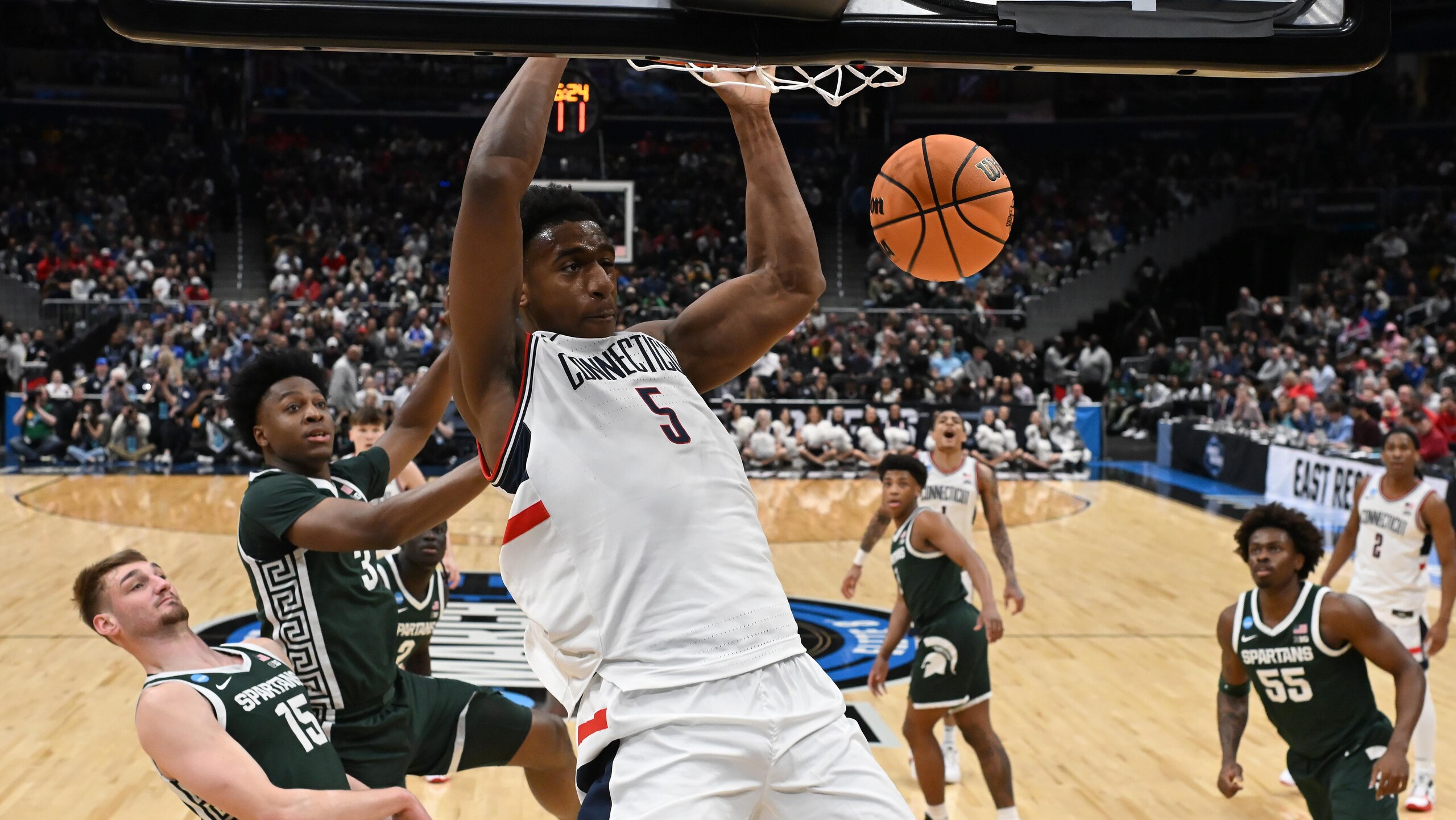
The size and physicality of Carson Cooper and Jaxon Kohler looked like an advantage for Michigan State as they looked to control the game on the boards and neutralize UConn's interior offense.
Both of those players had solid games individually, but the end result was a modest but not game-changing 39-30 advantage on the boards, and they ultimately slowed but didn't stop the Huskies frontcourt.
Tarris Reed Jr. finished with 20 points, five rebounds, four assists and two blocks, while Alex Karaban chipped in 17 points, seven rebounds, three assists and two blocks.
It wasn't a pretty victory, as a 19-point lead for the Huskies evaporated into a back-and-forth second half, but in the end their combination of inside production and a 9-of-21 performance from three-point range was simply too much for Michigan State to overcome.
Loser: Michigan State's Postseason 3PT Shooting Goes Cold
6 of 8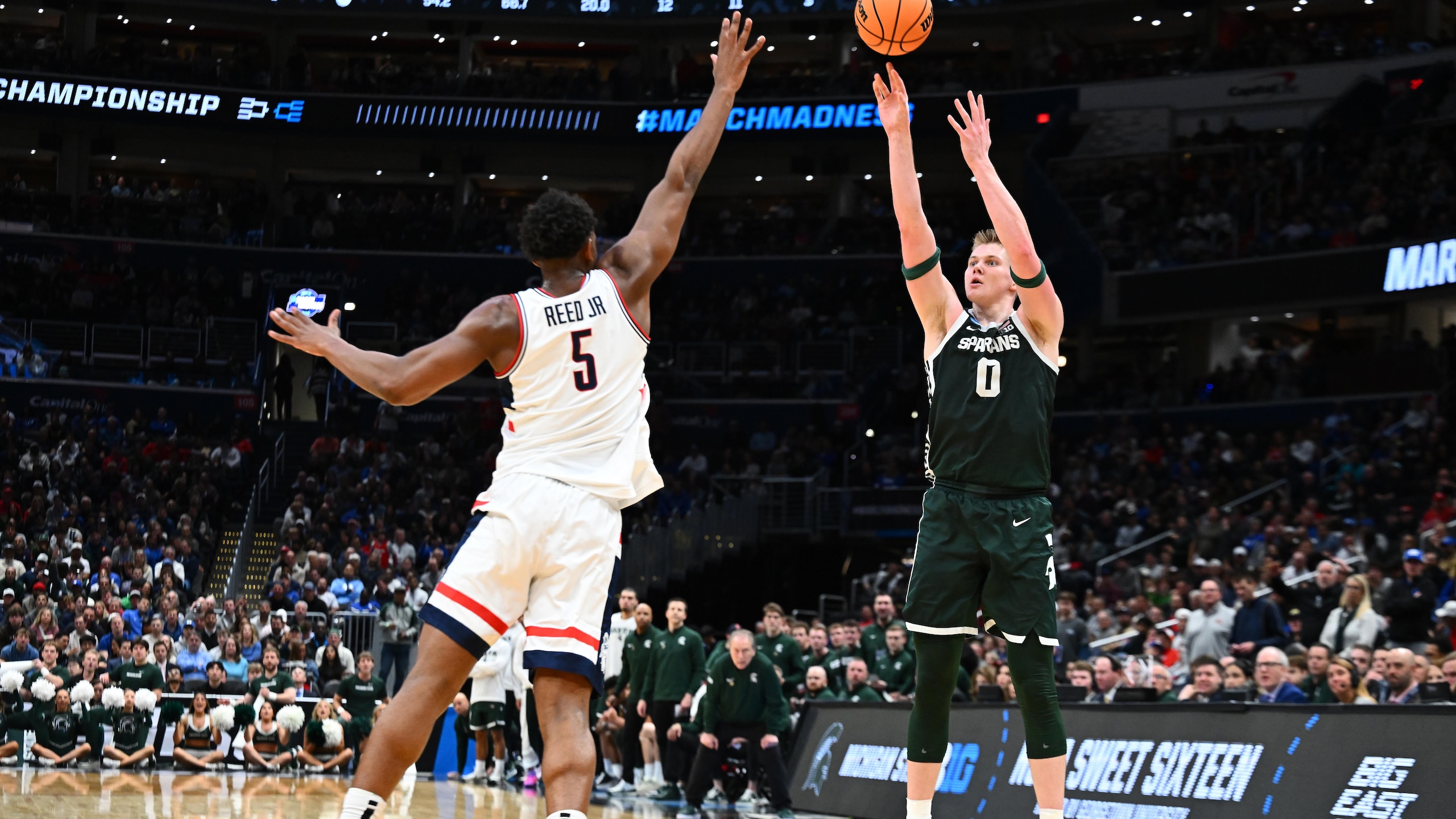
The three-point ball has not been a major strength for Michigan State this season, as they shoot a solid 36.5 percent from distance, but average just 7.8 made threes (176th in NCAA) per game.
However, they had strung together some hot shooting from the outside since the regular-season wrapped up, connecting on a combined 32-of-69 (.464) in their Big Ten tournament game against UCLA and their first two NCAA tournament games.
That looked like their potential ace in the hole against UConn, but the hot shooting went ice cold on Friday night as they finished 4-of-16 from beyond the arc and no one made multiple three-pointers.
If a few more of those outside looks fall, like they have been in recent games, a tight 67-63 final score might swing in the Spartans favor.
Winner: Tennessee's Game Plan for Milan Momcilovic
7 of 8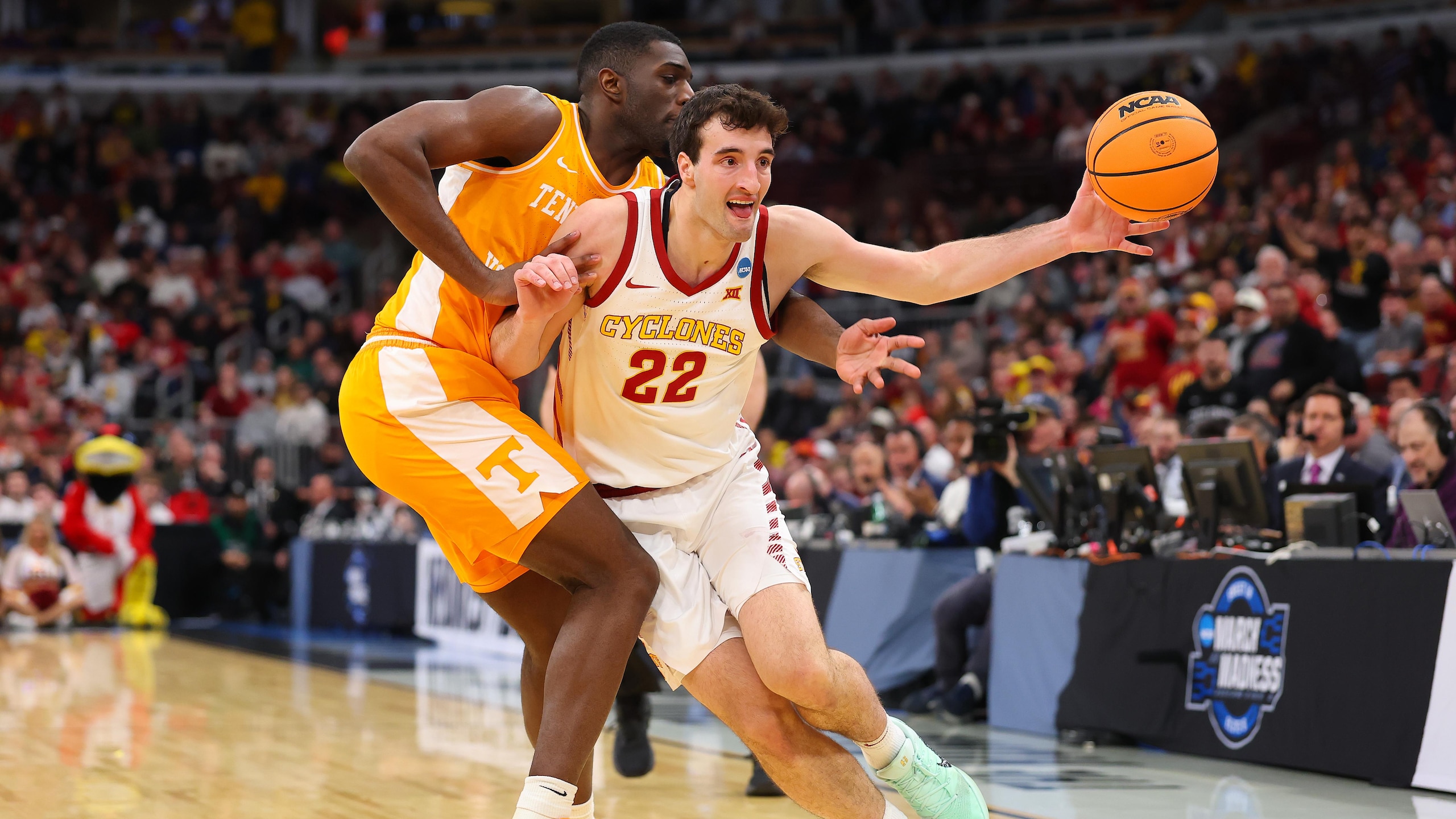
Few teams have been able to slow down Iowa State sharp-shooter Milan Momcilovic this season. He entered Friday's game leading the nation in made threes (134) and three-point percentage (.493) in one of the most impressive individual three-point shooting seasons in NCAA history.
With All-American Joshua Jefferson sidelined once again, his production was all the more important for the Cyclones, and he had answered the call with 17 points against Tennessee State in the first round and 20 points against Kentucky in the second round.
The Volunteers made a clear decision to remove him from the equation, face guarding him the entire game and keeping him from getting any clean looks at the basket.
After averaging 17.2 points and 3.7 made threes per game on the year, Momcilovic was limited to six points on 2-of-9 from the field and 2-of-8 from beyond the arc in 33 minutes of action. He finished with more turnovers (3) than made shots.
Loser: Iowa State's Fundamentals
8 of 8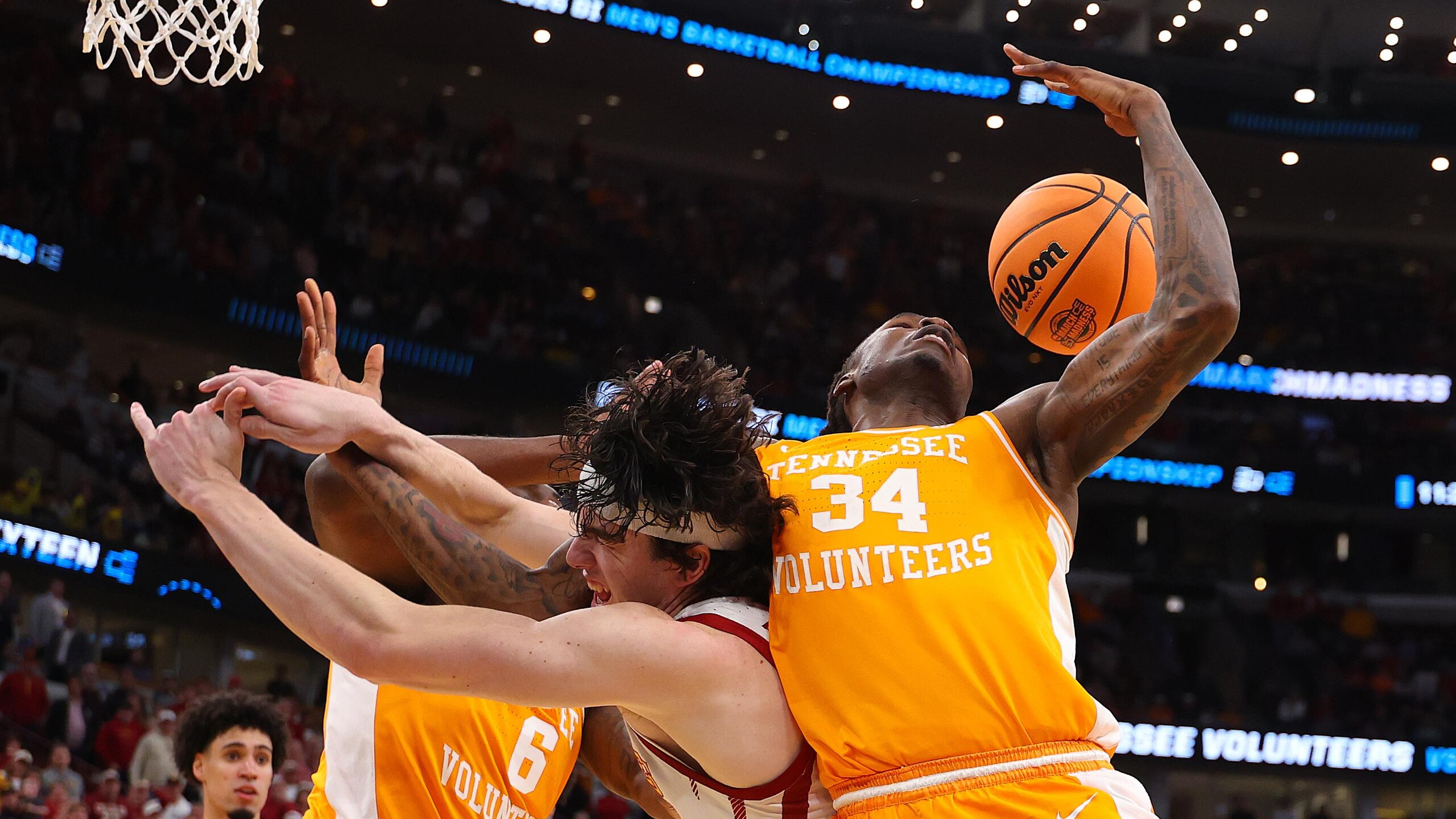
It was no secret coming into Friday's Sweet 16 matchup that Tennessee was going to be an issue on the offensive glass, as they entered the game averaging 15.8 offensive rebounds per game, good for second in the nation.
There was no additional focus or strategy from Iowa State to counter that advantage.
The Volunteers pulled down 16 offensive boards, and carried a staggering 43-22 rebounding advantage overall, which effectively negated the 17 turnovers that the Cyclones defense forced by countering those extra possessions with second chances.
Even with that rebounding disparity, Iowa State could have been right in the thick of things with better free-throw shooting, but that has been an issue all season for the Cyclones with a .677 free-throw percentage that ranks 329th in the nation.
They made just 10-of-20 from the charity stripe in the second half, leaving points on the board in a game where they were hard to come by in any form.
.jpg?w=2560 "Report: Giants Releasing Najee")

.jpg?w=2560 "Bold Predictions for 2026-27 NBA Season 🔮")